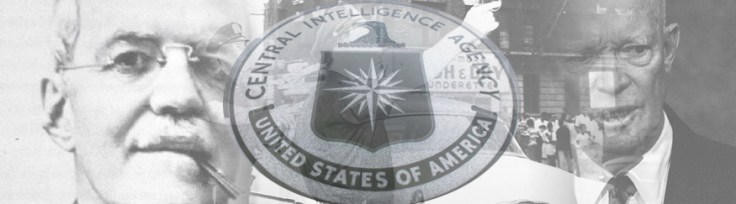
David C Taylor, the author of Night Watch, has been around the block. He says that he and his brother:
“..were free-range children in New York who early on discovered the joys of Times Square, the games arcades, the pool halls, and the jazz clubs.”
Despite this, Taylor went on to graduate from Yale. After volunteering with The Peace Corps he scratched out a living teaching and writing short stories, but eventually had to bite the commercial bullet and had a successful career as a film and TV screenwriter in Los Angeles. He introduced us to the tough 1950s New York cop Michael Cassidy in Night Life (2015) and followed it with Night Work (2017). Cassidy returns now, in Night Watch. He has an unusual background for a New York cop. His father, a refugee from Eastern Europe, is a successful Broadway producer. His godfather is Frank Costello, a Mafia boss.
 Cassidy is an ex-serviceman, and in Night Watch he becomes involved in an issue which is way, way above his pay-grade. The initial reaction of the USA to former Nazis in the months immediately following May 1945 was simple – Hang ‘Em High. But as the government realised that highly trained German scientists and engineers were being harvested by the new enemy – Soviet Russia – the bar was significantly lowered, with the philosophy that these men and women might be bastards, but at least they’re our bastards.
One of Cassidy’s buddies sums up the dilemma perfectly:
“We fight them for years,. We’re told that they’re the worst of the worst, the end of civilisation and freedom if they win, and when it’s all over, the same guys who’ve been telling that stuff start bringing them over here to work for us.”
 concentration camp survivor, ostensibly just an old guy driving tourists around Central Park in his horse cab, but secretly hunting down those who imprisoned him and killed his family, is found dead with strange puncture wounds in his neck. A businessman dives through the high window of his hotel – without bothering to open it first – and no-one saw anything. Not the concierge, and especially not the dead man’s co-workers, who were in an adjacent room. Two deaths. Two cases which Cassidy’s boss wants put to bed as quickly as possible. Two lives snuffed out, and Cassidy senses a connection. A connection leading to money, national security, powerful people – and big, big trouble for a humble NYPD cop.

Not only does Cassidy face a shitstorm of fury from major league conspirators, he has a more personal problem. Someone, maybe a vengeful con, or someone with a huge grudge, is out to kill him. The killer plays with him by trying to push him in front of a subway train, and then reshaping the woodwork of his front door with slugs from a sniper rifle. With a narrative conjuring trick half way through the book, Taylor merges the two threats to Cassidy, and from that point on we must fasten our seat belts for a very fast and bumpy ride.
Like many people, I only know New York in the 1950s from novels and movies. I don’t know for certain David C Taylor’s age and I suspect his 1954 New York would have been viewed through the eyes of a youngster, but, my goodness, what a vivid scene he sets, and what a gritty backdrop he paints for the deeds – and misdeeds – of Michael Cassidy. Who knows if this description is accurate, but more importantly it works like a dream, so who cares?
(The diner) “ …was a Buck Rogers dream of curved aluminium, big slanted windows, Formica-topped tables in weird shapes, and waitresses in high-waisted slacks, ruffled white shirts with black bowties, and funny little hats that looked like fezzes. To pay for all that the joint charged an exorbitant buck twenty-five for a plate of ham and eggs, toast and potatoes, but they threw in the coffee for free.”
 here are one or two significant name drops which help boost authenticity, amongst them a guest appearance by the sinister head of the CIA, Allen Dulles. Cassidy himself doesn’t do wisecracks, but there is plenty of snappy dialogue and verbal slaps in the face to keep us awake. This, after a post mortem:
“ ‘And a couple of other things make him interesting ….’
‘Okay. What?’
‘He had his underpants on backward.’
‘Sure. Why not? What else?’
‘I found someone’s fingertip in his stomach.’ ”
Taylor joins an elite bunch of writers whose novels are set in those turbulent post-war years of urban America. Jim Thompson, Ed McBain, Chester Himes, Walter Mosley, Micky Spillane – there are some big, big names there, but Taylor (below) doesn’t disgrace himself in their company. Cassidy is believable, flawed, but honest and with that elusive moral imperative that he shares with the better-known heroes in the genre. He has limited means, but he’ll be damned if he allows himself to be trampled on.

Night Watch is available in all formats and is published by Severn House.
David C Taylor has his own website, and you can find him on Twitter at @DTNewYorkNoir


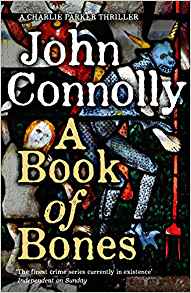 In the previous Charlie Parker novel, The Woman In The Woods, John Connolly introduced us to a frightful criminal predator, Quayle, and his malodorous and murderous familiar, Pallida Mors. Even those with the faintest acquaintance with Latin will have some understanding what her name means and, goodness gracious, does she ever live up to it! Both Quayle and Mors are seeking the final pages of a satanic book, The Fractured Atlas which, when complete, will deliver the earth – and all that is in it – to the forces of evil.

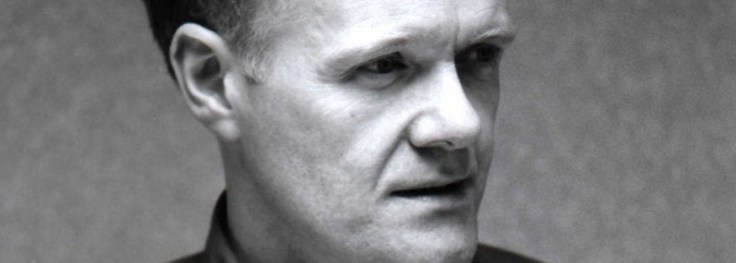
 A Book of Bones is a tour de force, shot through with the grim poetry of death and suffering. Connolly (right) takes the creaky genre of horror fiction, slaps it round the face and makes it wake up, shape up and step up. He might feel that the soubriquet literary is the kiss of death for a popular novelist, but such is his scholarship, awareness of history and sensitivity that I throw the word out there in sheer admiration. Jostling each other for attention on Connolly’s stage, amid the carnage, are the unspeakably vile emissaries of evil, the petty criminals, the corrupt lawyers and the crooked cops. Charlie Parker may be haunted; you may gaze into his eyes and see a soul in ruins; his energy and motivation might be fueled by a desire to lash out at those who murdered his wife and daughter; what shines through the gloom, however, is the tiny but fiercely bright light of honesty and goodness which makes him the most memorable hero of contemporary fiction.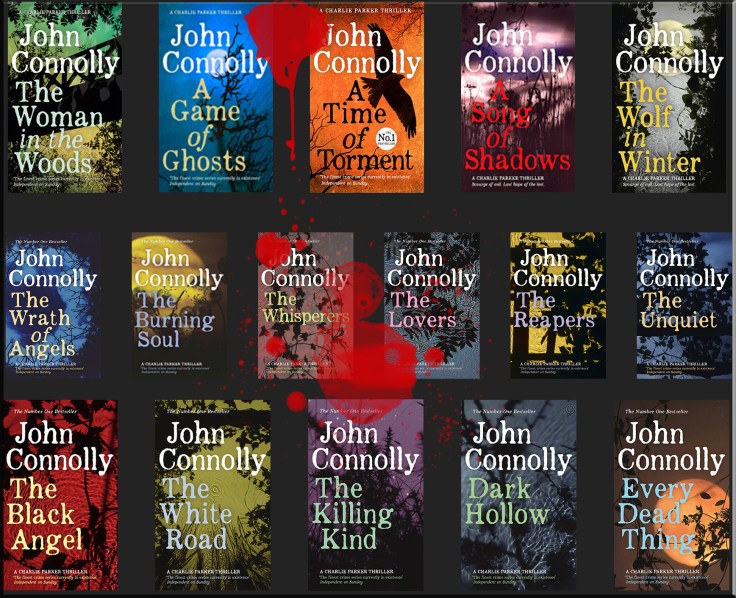


 nspector Shan Tao Yun is a Chinese policeman whose honesty and integrity has discomforted the faceless members of whatever dreadful committee deals with public employees who don’t toe the line. Considered too valuable to be dispatched with a 9mm Parabellum round, he is exiled to the wilds of Tibet to be the constable for the settlement of Yangkar. As an extra insurance, his son is arrested and kept in a prison camp; if Shan’s independent streak becomes too troublesome, then his son will simply become collateral damage.
 In Bones Of The Earth (the tenth and final book in the series) Shan becomes involved in a complex murder mystery involving a massive civil engineering project and a dead American.archaeology student, whose father has come to Tibet to investigate if his daughter’s death was, as the authorities declare, an unfortunate accident or something more sinister. As ever in the series, Shan’s complex relationship with Colonel Tan, the governor of Lhadrung county, is central to the narrative. Tan is as brutal and ruthless as his party masters need him to be, but there is a tiny spark of something – perhaps not integrity, but something close – which enables him to do business with Shan.
 he sheer intensity of the detail Pattison adds to the narrative is astonishing, particularly when he is describing the humdrum world of Yangkar. As eavesdroppers, flies on the wall or what you will, it seems a grey kind of place; the ubiquitous breeze block is everywhere, naked light bulbs swing from the ceilings and even the food – rice, noodles, vegetables, dumplings – is functional and plain. Yangkar is, of course, dwarfed by the sheer immensity of the mountain peaks and snow fields. When colour emerges it is not chromatic in a visual sense, but in the indomitable spirituality and humanity of the Tibetans themselves. Try as they might, the Chinese rarely come close to understanding or even identifying the primal bond the people of Tibet have with their religion. It is a bond partly forged in fear, but also made of a oneness with the caves, the rocks and the wild peaks where the gods – and devils – dwell.
 I doubt that Pattison (right) is on the diplomatic Christmas Card list of President Xi Jinping and, were the author to fly into Lhasa, he is unlikely to be greeted with open arms. His disdain for the charmless and monolithic mindset of The People’s Republic is obvious, but Inspector Shan has to stay alive and keep himself on the outside of the Re-education Camps. Shan reminds me of another great fictional detective who has to do business with monsters: the late Philip Kerr’s Bernie Gunther sits down with minsters such as Goebbels and Heydrich; he will even smoke a cigar with them and accept a snifter of Schnapps while, metaphorically, holding his nose. Such is Shan’s relationship with his Chinese masters. He is a realist. If he says the wrong thing he (or his imprisoned son) is dead. Raymond Chandler’s immortal words fit the Inspector very well:

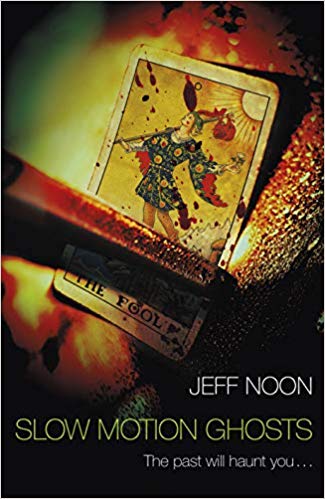 Later that year, with Brixton quieter, despite other English towns and cities erupting in copycat anger, Hobbes has become embroiled in a bitter internal dispute. A fellow copper, Charlie Jenkes (who rescued Hobbs from the mob on that fateful April night) after being indicted for savagely beating a black suspect, has taken his own life. And the officer who testified to Jenkes’s violence? Henry Hobbes, who, with that single act of honesty, is branded as a Judas by his own colleagues.


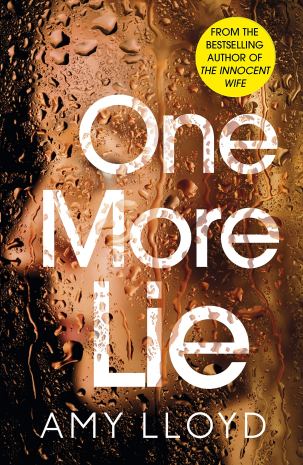 Two children, Sean and Lilly, murder a third child, Luke – disabled physically and mentally. In a case that whips up a storm of public revulsion, both are sentenced to long prison terms. Eventually, both are released on licence subject to supervision. Lilly is now Charlotte, ankle-tagged and nervous about a new world full of strange things that never existed when she lost her liberty all those years ago.
 Secondly, and inevitably, we are drawn into acting as judge and jury about the complex matter of culpability for Luke’s death. Remember, there is no Him:Then. We only see the young Sean through Lilly’s eyes and it seems, for a time at least, that he is the dangerous one, the wild card, the ten year-old Dark Angel, if you will. For sure, he is not neglected in the sense that his home life attracts the attention of Children’s Services, even though the family routine is haphazard. By contrast, Lilly’s life with her bruised and beaten mother ends in tragedy, although once she has moved in with her aunt she receives love, compassion and care. But is she already too badly damaged from the nightmare of her mother’s death for the new life to heal the wounds?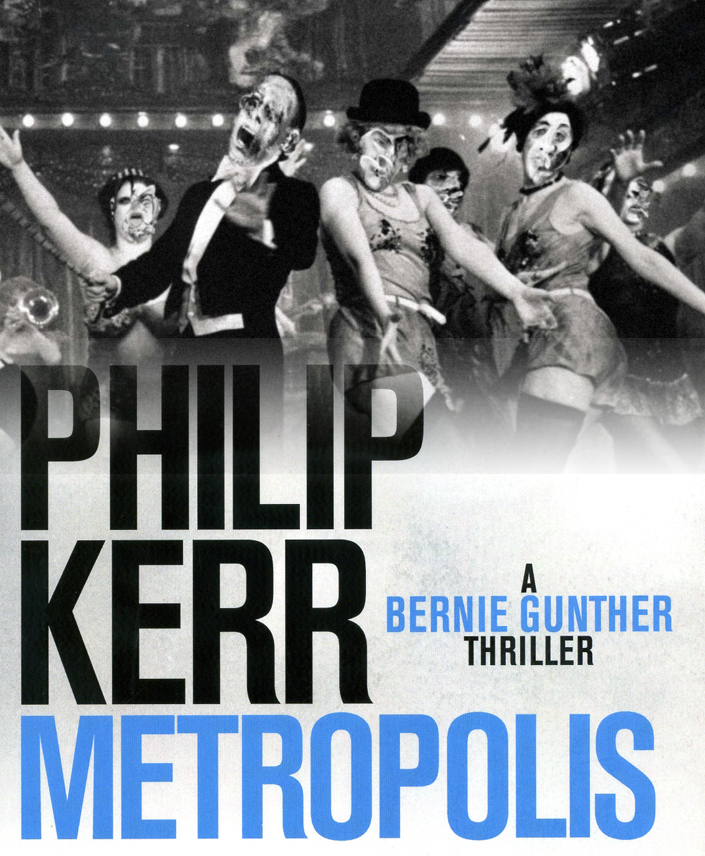

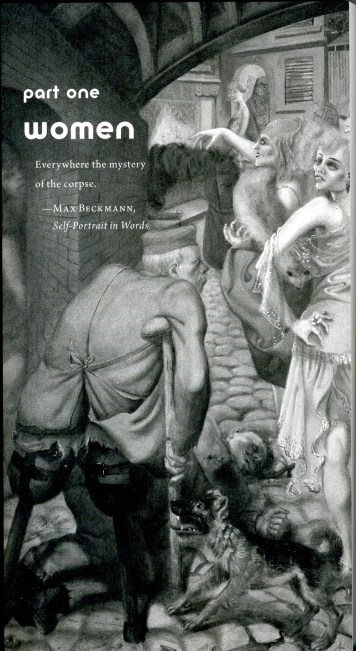 First up, Metropolis is a bloody good detective story. Philip Kerr gives us a credible copper, he lets us see the same clues and evidence that the central character sees and, like all the best writers do, he throws a few false trails in our path and encourages us to follow them. We are in Berlin in the late 1920s. A decade after the German army was defeated on the battlefield and its political leaders presided over a disintegrating home front, some things are beginning to return to normal. Yes, there are crippled ex-soldiers on the streets selling bootlaces and matches, and there are clubs in the city where the determined thrill-seeker can indulge every sexual vice known to man – and a few practices that surely have their origin in hell. The bars, restaurants and cafes of Berlin are buzzing with talk of a new political party, but this is Berlin, and Berliners are much too sophisticated and cynical to do anything other than mock the ridiculous rhetoric coming from the National Socialists. Besides, most of them are Bavarians and since when did a Bavarian have either wit, word or worth?
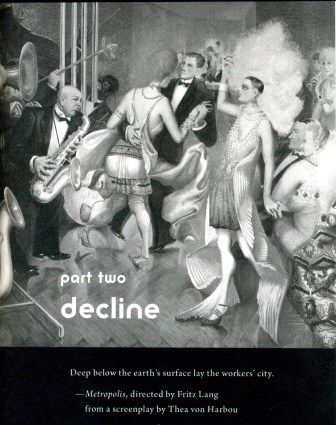 Metropolis sees Gunther in pursuit of a Berlin Jack The Ripper who is certainly “down on whores.” Four prostitutes are killed and scalped, but when the fifth girl to die is the daughter of a well-connected city mobster, her death is a game-changer, and Gunther suddenly has a whole new world of information and inside knowledge at his fingertips. He is drawn into another series of killings, this time the shooting of disabled war veterans. Are the two sets of murders connected? When the police receive gloating letters, apparently from the perpetrator, does it mean that someone from the emergent extreme right wing of politics is, as they might put it, “cleaning up the streets”?
 Mölbling helps Gunther disguise himself as one of the disabled ex-soldiers, as he reluctantly accepts the role in order to attract the killer who, in his letters to the cops, signs himself Dr. Gnadenschuss. Gunther’s trap eventually draws forth the predator, but not in the way either he or his bosses might have anticipated.
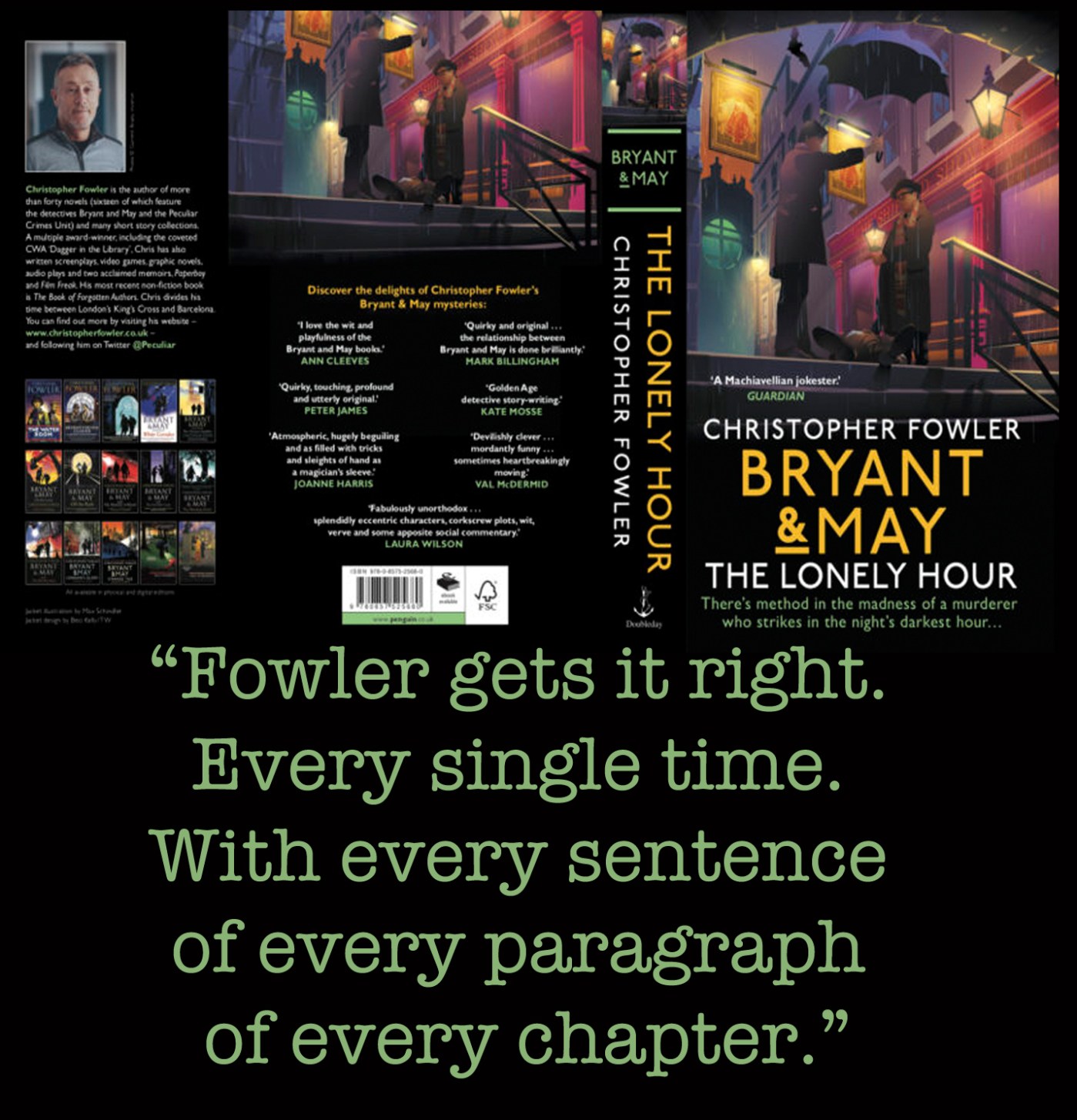
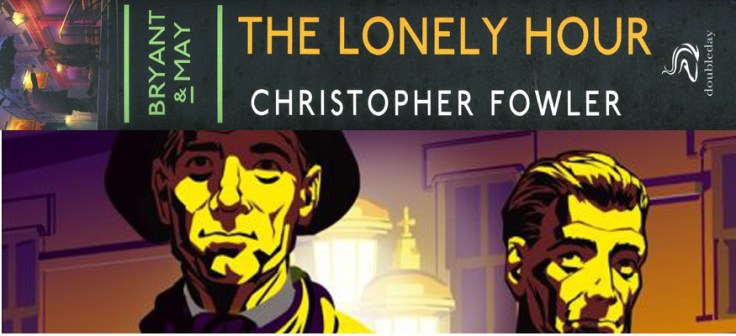
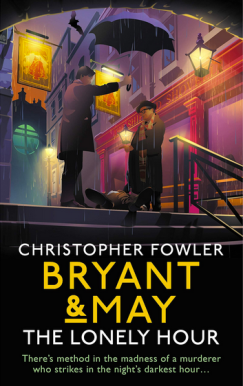 Bryant and May – and the rest of the Peculiar Crimes Unit – have been threatened with closure before, but this time their impatient and disapproving police bosses mean business. The PCU, both collectively and individually flounder around trying to work out what connects the corpses, and who is expertly wielding the trocar. Like Andrew Marvell’s ‘Time’s Winged Chariot’, the accountants and political schemers of the Metropolitan Police are ‘hurrying near’, and failure to catch this killer will certainly mean that the shambolic HQ of the Peculiar Crimes Unit on Caledonian Road will soon be in need of new tenants.
 Thanks to Bryant’s genius, the mystery is solved and the killer brought to justice, but these are certainly the grimmest days ever for the PCU, and as this brilliantly entertaining story reaches its conclusion, Fowler (right) slowly but irrevocably turns the tap marked Darkness to its fully open position. The Lonely Hour is published by Doubleday
 Harper lives above a city pub, the Victoria. His wife, Annabelle, is the landlady, but she is also a fiercely determined advocate of women’s rights, and she has made waves by being elected to the local Board of Guardians, a largely male-dominated organisation which is tasked with administering what, in the dying years of Queen Victoria’s reign, passed for social care. When the brother of Harper’s one-time colleague, Billy Reed, commits suicide the death is dismissed, albeit sadly, as commonplace, but Reed believes that his brother’s death is due to something more sinister, and he asks Harper to investigate.
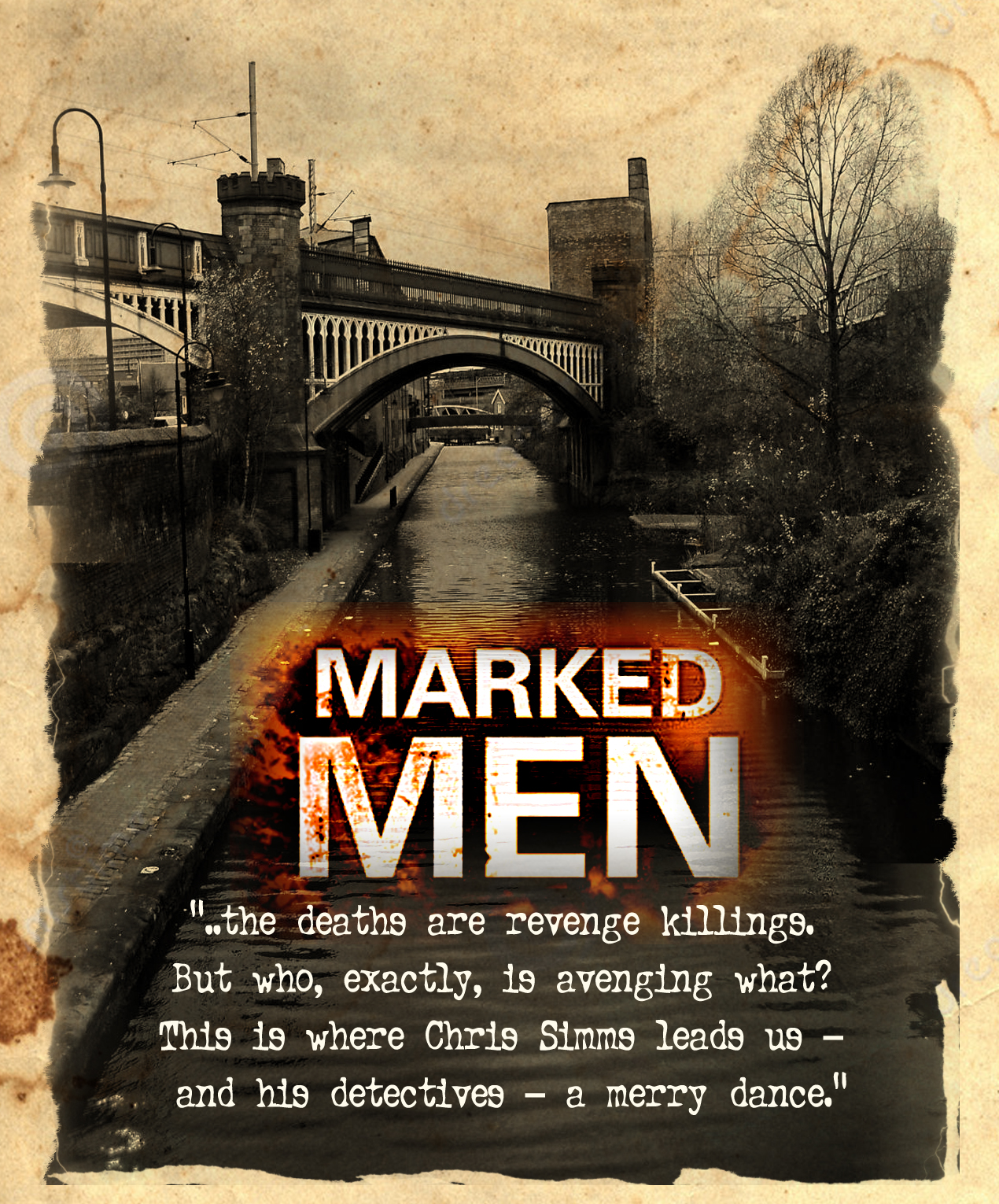
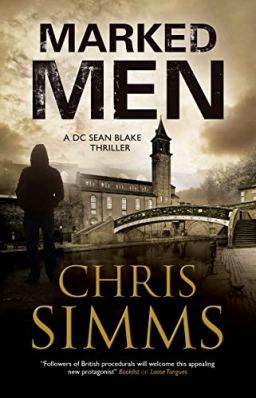 Marked Men begins on an idyllic Spanish beach, but then switches to the less salubrious setting of urban Manchester, and we only learn the significance of the opening much later in the plot. This way of starting a novel has become rather well-worn, but Simms handles it well and times to perfection the revelation of its significance. The Manchester action begins with Blake in waders and hard hat at the bottom of a drained lock on a local canal. There is a body, naturally, with more to follow, and as Blake and his immediate boss, DS Dragomir criss-cross the city trying to make sense of the crime scenes we – like them – are drawn into thinking that the deaths are revenge killings. But who, exactly, is avenging what? This is where Chris Simms leads us – and his detectives – a merry dance. There is a clue, but I have to confess I didn’t get it any quicker than did Blake and Dragomir.