
Jo Spain’s latest stand-alone crime novel begins with a death which is as sudden as it is violent. The victim of this savagery is only a bluebottle fly, slain by a passing bird, but the important part is where the fly has been before it became a Blackbird’s breakfast. Like countless thousands of its fellow Calliphora Vomitoria it has been innocently feasting and laying its eggs on a corpse. A very human corpse. The mortal remains (and not much does) of Olive Collins has been gently liquefying inside her cottage for months. Her neighbours in the exclusive gated hamlet of Withered Vale have been going about their business oblivious to Olive’s fate.
 Withered Vale? Hardly your standard estate agent euphemism. Honeysuckle Meadows, Skylark Leys, Virginia Reach, Lakeside View, maybe, but Withered Vale? Years ago, the man who farmed the fields now built over was over-zealous with his pesticide, and nothing grew ever again. The enterprising developer, alert to a possible marketing triumph, chose to retain the local name, thinking that it had a certain ironic snap to it which might appeal to wealthy young professionals. He was right. No. 4 The Vale – Olive’s cottage – dates from before the development, however, and is dwarfed by the arrivistes.
Once Olive’s demise is discovered, the police descend. Frank Brazil, desperate for retirement and a quiet life, has said his prayers hoping that it is a suicide. His young partner Emma Child gleefully discovers taped up ventilation outlets and a boiler that has been fatally tinkered with, thus suggesting something darker, however, and Spain sets to work describing the other residents of the Vale as, one by one, they all become suspects – and what a brilliantly wicked job she makes of it.
There’s poor porn-addicted George Richmond, set up in his designer home, No. 1, by his wealthy showbiz father, and No. 7 houses debonair ladies’ man Ron Ryan with his sunbed tan and simple philosophy of ‘get it while – and when – you can’. At No. 5 live the Hennessys, Matt, Chrissy and their rather odd son Cam. Spain has shown flashes of dark humour in her previous novels, but she lets her considerable talent for satire off the leash when she lays into David and Lily Solanke, in their self-righteous vegetarian paradise within the walls of No.2. David is so exasperatingly ‘woke’ that Lily, pregnant with the twins, curses his kindness:
“Soon, David was playing music to her bump and lying with his head in her lap so her could hear the twins gurgling in the amniotic fluid. He treated her belly with reverence, gentle and worshipping. She felt like a Fabergé egg. A Fabergé egg that wanted her husband to do her doggy-style because she was so damned horny.”
We meet Ed and Amelia Miller from No. 6 while they are soaking up the sun in their Andalusian apartment, but their reaction when they hear of Olive’s death suggests that her passing lifts a shadow that has been cast over their lives. No. 3 is home to Alison and Holly Daly, single mum and teenage daughter and, like the Millers, neither of them sheds anything resembling a tear.
 Thus Spain sets up a writhing nest of vipers, every one of whom has a very good reason for wanting Olive Collins dead and out of its life. The narrative darts back and forth between the homes as we learn the hopes, sins and insecurities of the residents, each with a flimsy alibi and united by a mixture of fear and loathing for the apparently mild-mannered resident of No. 4 The Vale. As we scratch our heads wondering whodunnit, could we be looking at some kind of collective guilt, à la An Inspector Calls? The solution, when it comes, is deliciously perverse and very satisfying. Jo Spain (right) has a talent to enthrall, and in an afterword to this book she writes of her early love of reading:
“My heart was won by the written word. It’s been a lifelong affair. If I can give anybody the gift of a good story, a gift I still treasure when I cuddle up in the chair with a book at night, then my job is done.”
Her job is indeed done, and done with a sense of élan and literary devilment unmatched by anyone currently writing crime fiction. Dirty Little Secrets is published by Quercus and will be available on 7th February.
Click the links below to read reviews of earlier novels by Jo Spain.
The Darkest Place
The Confession
Sleeping Beauties
Beneath The Surface

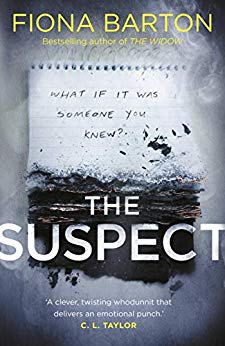 Sensing a very productive headline story that will run and run, Kate Waters uses all her empathy and tricks-of-the-trade to get close to the girls’ families, and the story does indeed have the whole enchilda. Beautiful teenage girls, disappearance in a Bangkok drug den, frantic parents, the possibility of incompetence by foreign police – what could possibly go wrong? Jake Waters is what could possibly go wrong. Kate’s son has been away in Thailand “finding himself” after a failed spell at university, and her journalistic glee at the ramifications of the story is brutally brought up short when she finds that her errant boy might be at the very epicentre of the story she has claimed as her own.
 It must be said that this is a story long on personal misery and rather short on redemption, but it is beautifully written. The nuances of conversation, gesture and body language are exquisitely observed even if they sometimes make for painful reading, such as the bittersweet moments between Bob Sparkes and his dying wife. My own children are, thankfully, well past the age of “doing” Thailand, but my advice to those with gap-year offspring is, with all respect to Fiona Barton (right), don’t read this book! Once your teenagers have shouldered their backpacks and waved goodbye at the departure gate, your mind will hark back to The Suspect it will be nessun dorma for you!


 Bannerman initially lodges with an embittered fellow journalist, Tim Slater, who shares his apartment with his autistic daughter Tania. The child is looked after by a young Englishwoman, Sally Robertson, with whom Bannerman strikes up a relationship. Kale’s victims are Slater himself and a senior British politician but when he strikes he is unaware that Tania is watching from the next room. Mute, she is later unable to tell the police anything, but she draws a picture of what she has seen. The drawing is intensely detailed and very graphic with one exception. The killer has no face.
 How has the book fared, nearly forty years on? Whatever revisions the author has made, he hasn’t pushed the time slot on by four decades, so we are still in the late 1970s, so in a sense the book has become historical crime fiction by default. I don’t know what Peter May (right) thinks about the vexed question of Brexit, but here he paints a picture of the EEC in its all-too-familiar guise as a fraud-riven monolithic haven for thousands of bureaucrats, men and women pushing paper around at huge expense to taxpayers across the continent, but achieving very little except the perpetuation of their own jobs.
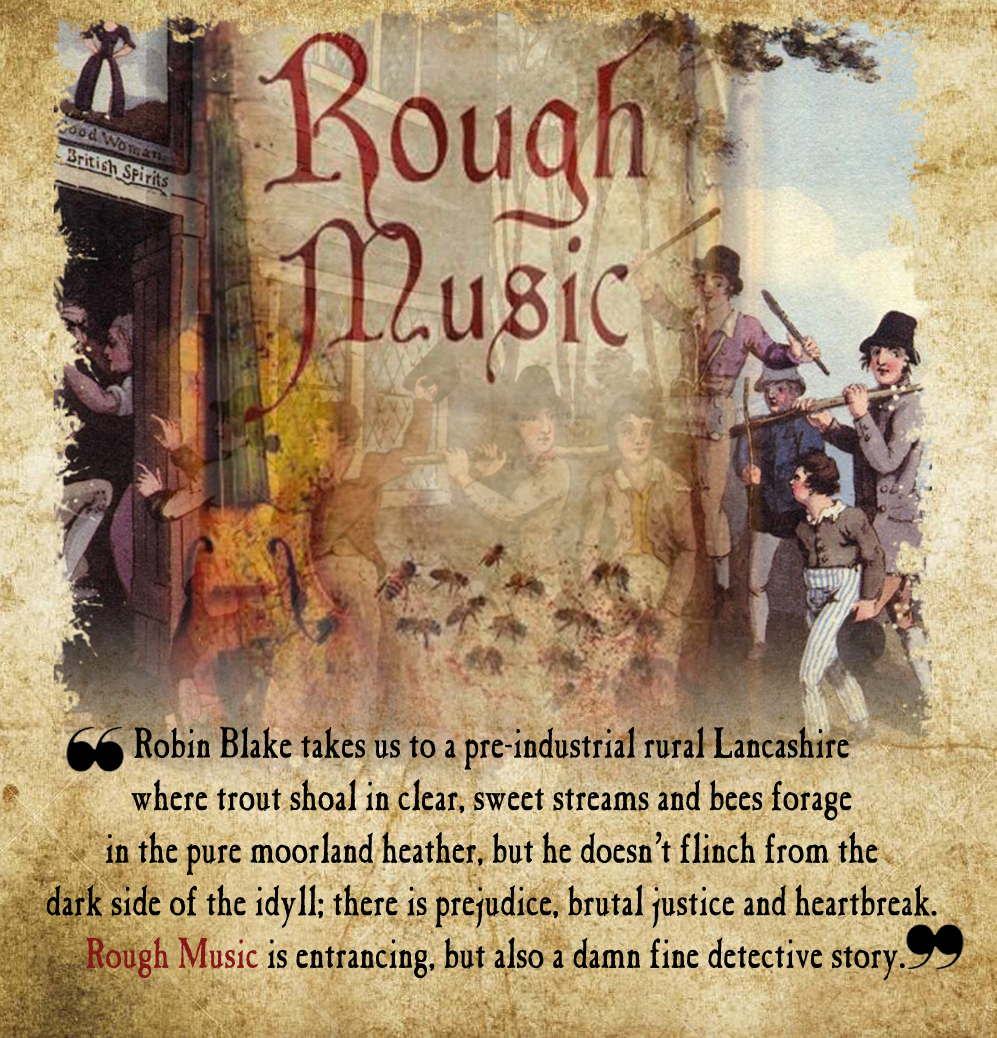

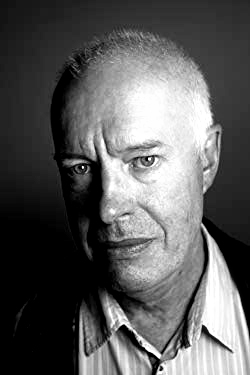 Robin Blake (left) introduced us to Preston coroner Titus Cragg and his physician friend Luke Fidelis in A Dark Anatomy back in 2015, and the pair of eighteenth century sleuths are back again with their fifth case, Rough Music.
 Titus Cragg with his wife and child have retreated from Preston to escape the ravages of a viral illness which has claimed the lives of many infants. They have fetched up in a rented house in Accrington, then little more than a scattering of houses beside a stream. Cragg is drawn into the investigation of how it was that Anne Gargrave died at the hands of her fellow villagers, but his work is complicated by a feud between two rival squires, a mysterious former soldier who may have assumed someone else’s identity, and the difficulty created by Luke Fidelis becoming smitten by the beguiling – but apparently mistreated – wife of a choleric and impetuous local landowner.
 I have to admit to a not-so-guilty-pleasure taken from reading historical crime fiction, and I can say with some certainty that one of the things Robin Blake does so well is the way he handles the dialogue. No-one can know for certain how people in the eighteenth century- or any other era before speech could be recorded – spoke to each other. Formal written or printed sources would be no more a true indication than a legal document would be today, so it is not a matter of scattering a few “thees” and “thous” around. For me, Robin Blake gets it spot on. I can’t say with authority that the way Titus Cragg talks is authentic, but it is convincing and it works beautifully.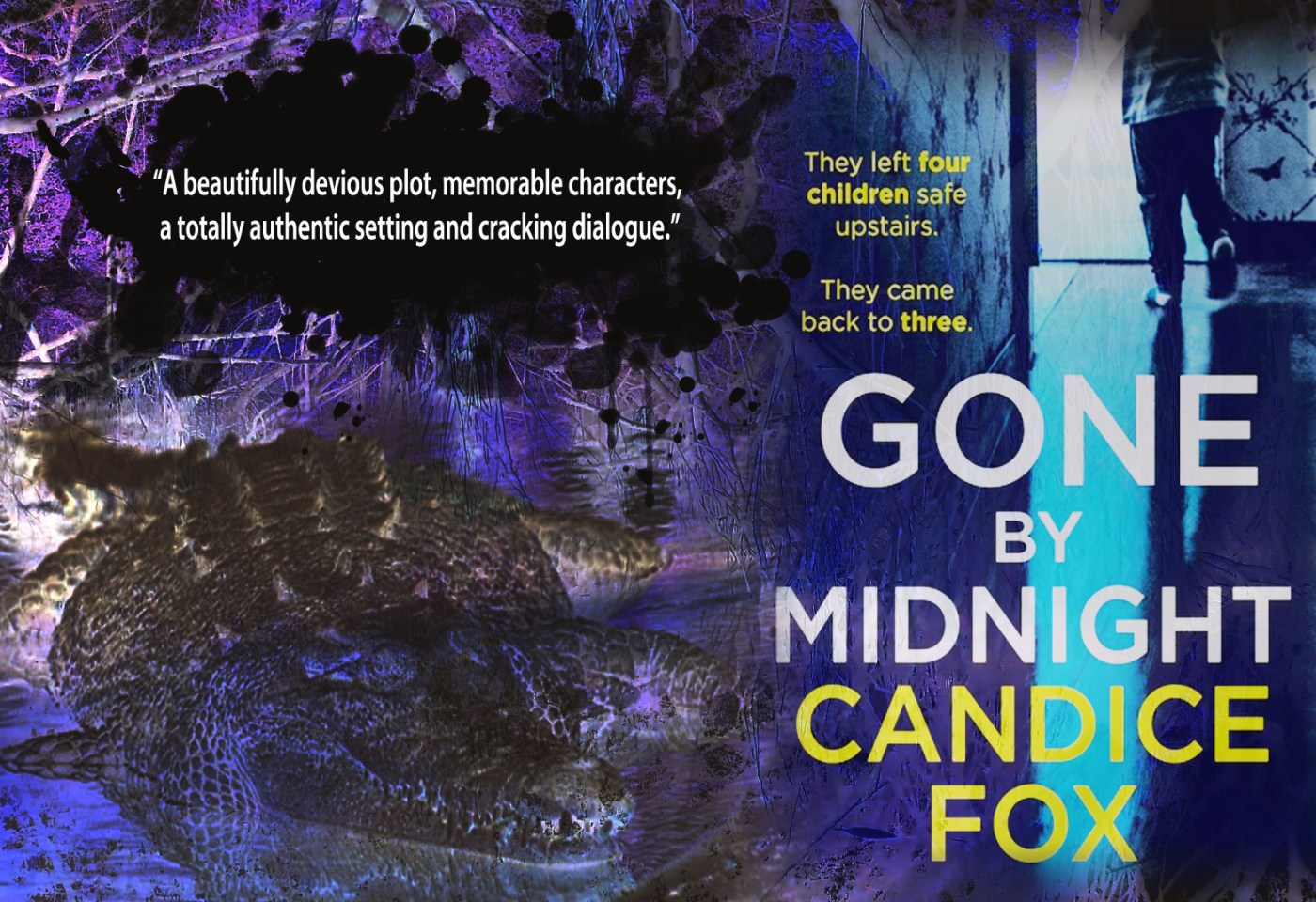

 Australian crime fiction suffered two body blows in 2018 when the two great Peters – Temple and Corris – died within months of each other. While they can never be replaced, there is, thankfully, a younger generation stepping up to the plate, and Candice Fox (left) is in the first rank of these. No-one needs to be reminded of the great detective duos of the past, but Fox has created a partnership for the 21st century in the persons of Ted Conkaffey and Amanda Pharrell.
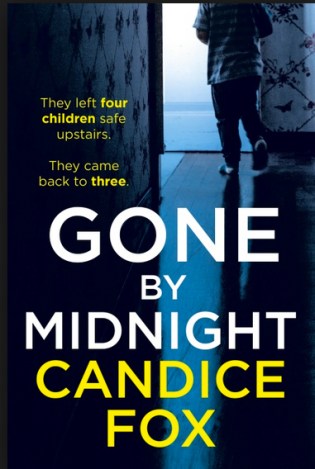 Richie Farrell’s disappearance is less of a conundrum than a downright impossibility. There is no obvious motive, no forensic evidence, and no sign of him – or his abductor – on the plentiful CCTV footage in and around the hotel. When the solution does come, it is extremely ingenious, and owes its surprising nature to the characters in the story – and us readers – making the kinds of assumptions that the great consulting detective of 221B Baker Street was so good at avoiding.










 fullybooked2017