I can almost hear the sneers now:
“Call yourself a crime fiction reviewer?”
“Pull your head out of the sand, mate”
“What next? You have heard of Sherlock Holmes, I take it..”
Actually, no.Crime fiction reviewers tend to be a fairly charitable lot, especially as most of us are not in it for the money, but for the love of reading (and a few ARCs, naturally) But I do have to confess a sense of embarrassment at reading a brilliant book and then realising that it is only the latest in a well established series of which I had been blissfully unaware.
Apology done and, I hope, dusted. Armand Gamache is a senior policeman with the Sûreté in Quebec the francophile province in Canada. He is still under suspension following a controversial drugs case which resulted in one of his colleagues being badly shot up, and a potentially fatal consignment of the opioid fentanyl going missing.
Gamache is informed by a notary that he has been named as an executor of a will. He has, however, never met or even heard of the deceased woman. Intrigued, he goes to meet the notary and his fellow executors at a remote farmhouse. Arriving, in the teeth of a violent blizzard, he is bemused to discover that a friend from his home village of Three Pines, has received the same summons.
The mystery deepens when Gamache learns that the dead woman was a domestic cleaner, and she has bequeathed an estate apparently worth millions of dollars. She used to joke that she was of noble blood, but was her self-mockery founded in fact?
A murder at ‘Baroness’ Baumartner’s ramshackle farmhouse transforms the affair from peculiar to deadly, and Gamache is sucked into an investigation which can only end badly. In addition, he has a two huge problems, massive elephants in the confined space of his professional room. Firstly, Amelia Choqet, an unconventional young police woman who has been mentored by Gamache, has been kicked out for drug offences, and has now apparently reverted to her former lifestyle of street whore and drug abuser. Secondly he is tormented by the fear that if the missing batch of opioids gets onto the streets, there will carnage.
The murder of Anthony Baumgartner takes Gamache and his team into the murky world of investment finance and an environment where millions of dollars are flicked this way and that by financial ‘experts’.
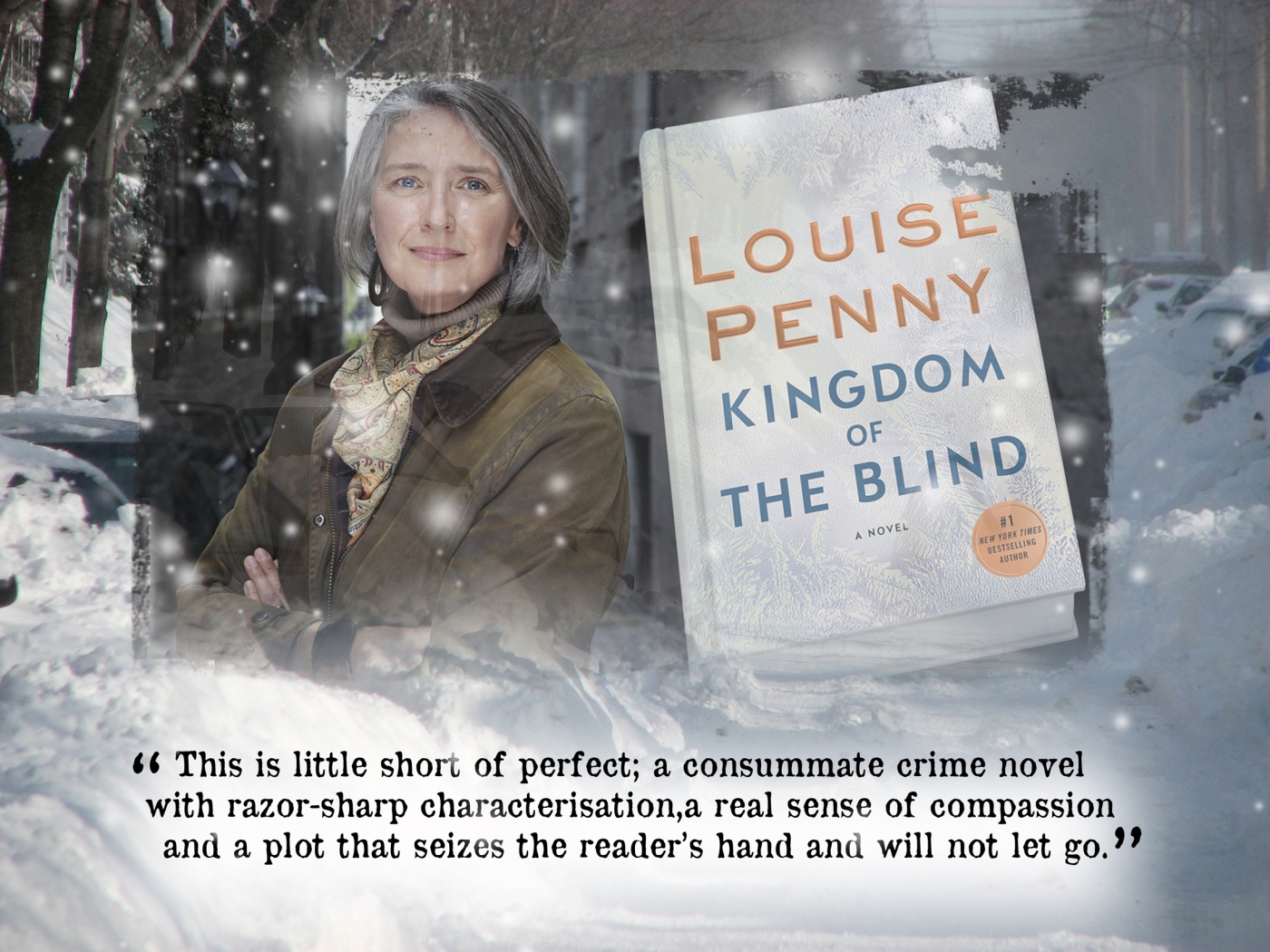
Allegedly, native Canadians have fifty words for snow, and LouisePenny certainly makes us shiver, stamp our frozen feet, and clap our gloved hands together. The weather becomes a baleful and powerful character in The Kingdom Of The Blind, and every step Gamache and his team take is in defiance of snowdrifts, abandoned vehicles and cold of such intensity that exposed skin is first brutalised and then destroyed.

In addition to describing the search for a murderer, Louise Penny cleverly sets off two other plot-lines for us to chase, and she takes great delight in resolving both, but neither in the way we have been led to expect. Kingdom Of The Blind is little short of perfect; a consummate crime novel with razor-sharp characterisation, a real sense of compassion, convincing dialogue and a plot that seizes the reader’s hand and will not let go. Published by Sphere, the novel (the 14th in the series) is out on 27th November.
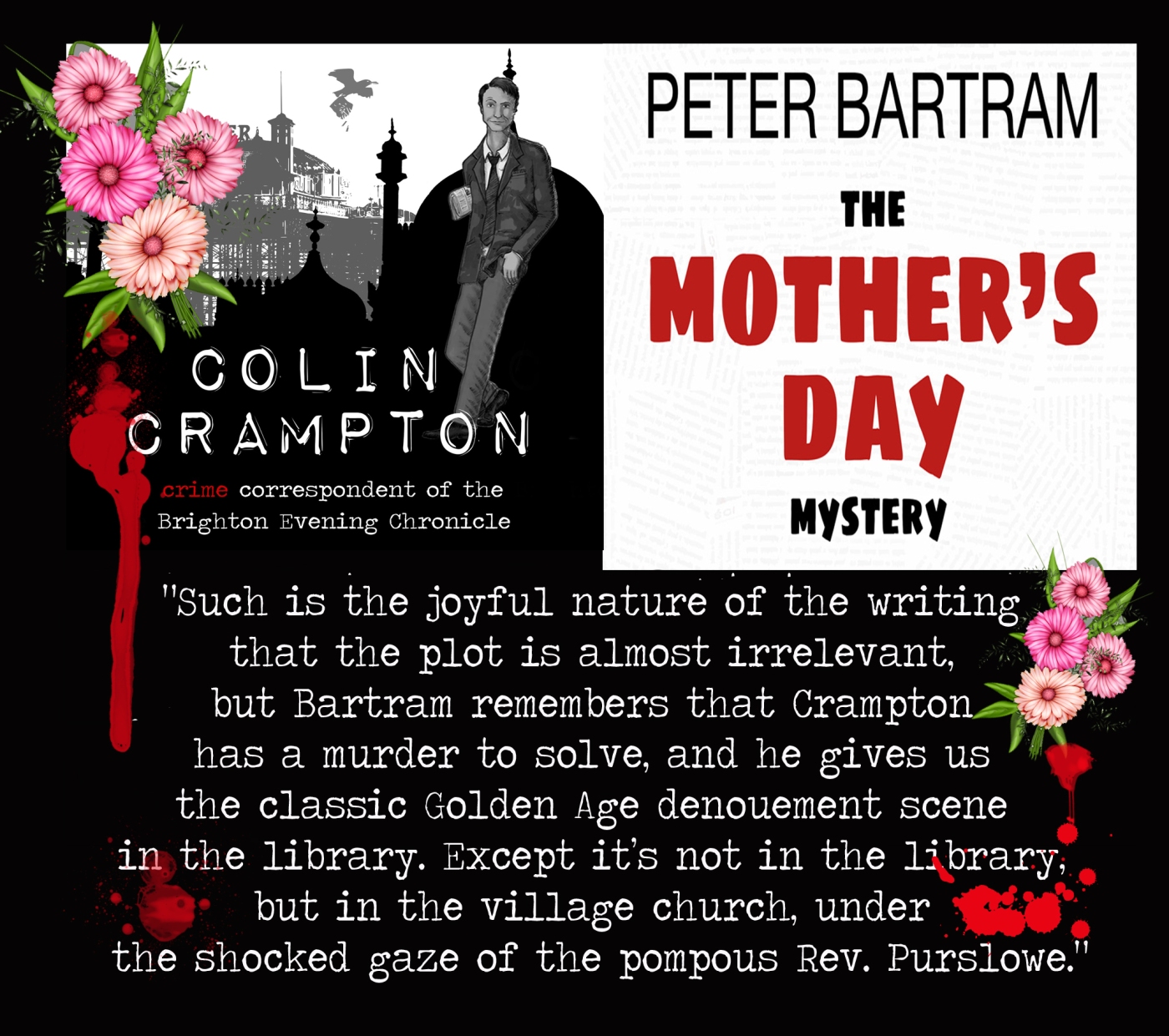
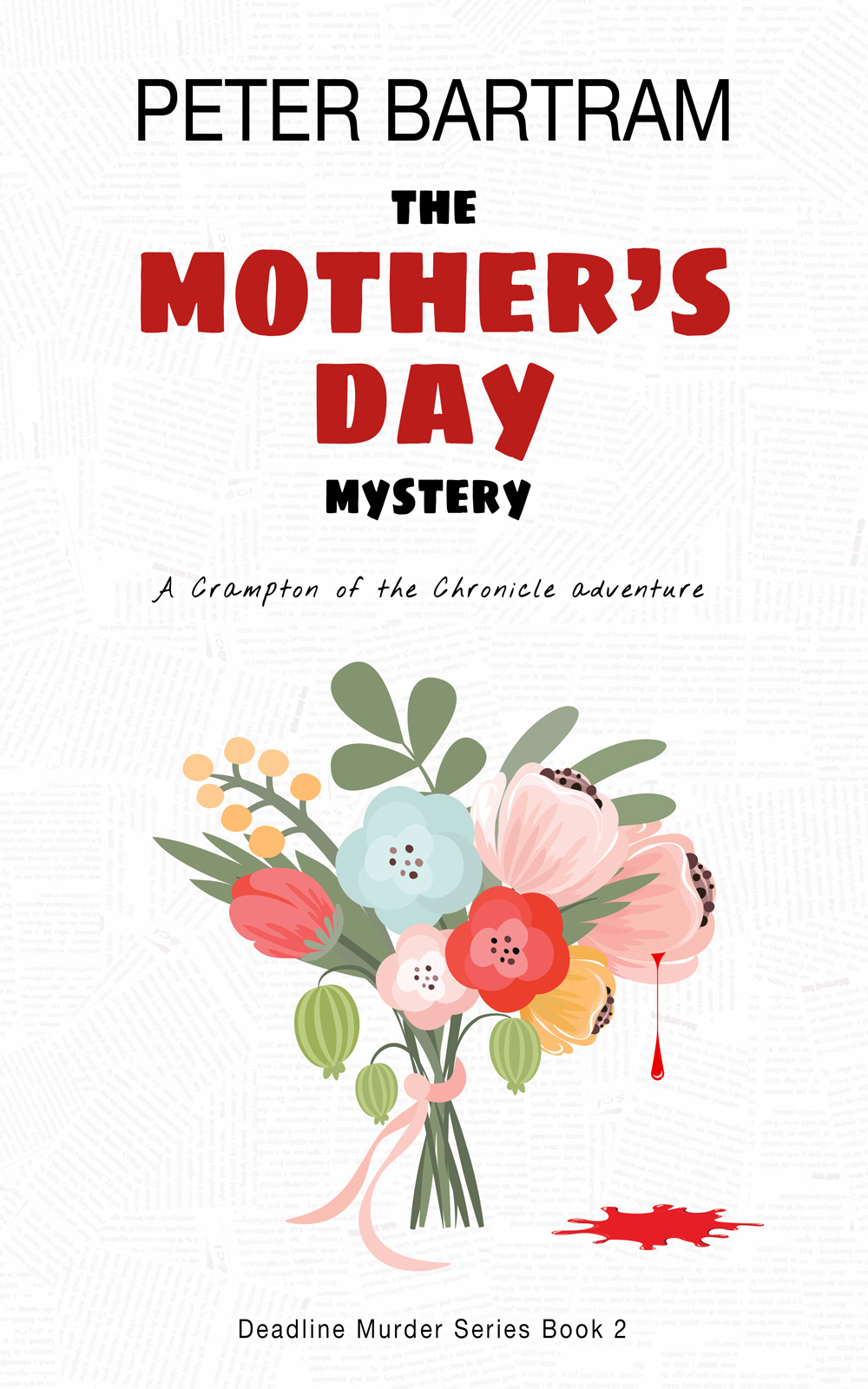 In The Mother’s Day Mystery, Crampton discovers the body of a schoolboy who has evidently been knocked off his bike and fatally injured. What on earth was Spencer Hooke doing away from his dormitory in Steyning Grammar School at the dead of night, cycling along a lonely and windswept clifftop road? In pursuing this conundrum, Crampton whisks us into a world of stage vicars, seedy pub landlords, archetypal leather-elbowed schoolmasters and impecunious toffs. There are jokes a-plenty, and Bartram indulges himself – and those of us who are, similarly, in the autumn of our years – with many a knowing cultural reference that might puzzle younger readers. He takes us into a wonderful sweet shop, the kind which can nowadays only be found in museum recreations:
 Anyone who is a student of English humour will soon see that Bartram is part of a long and distinguished tradition of comic writers who find meat and drink in the absurdities of English life and social structures. In the world of crime fiction, however, comedy does not always sit well with murder and bloodshed. The great and sadly under-appreciated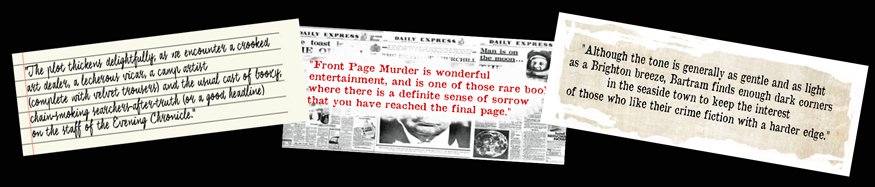
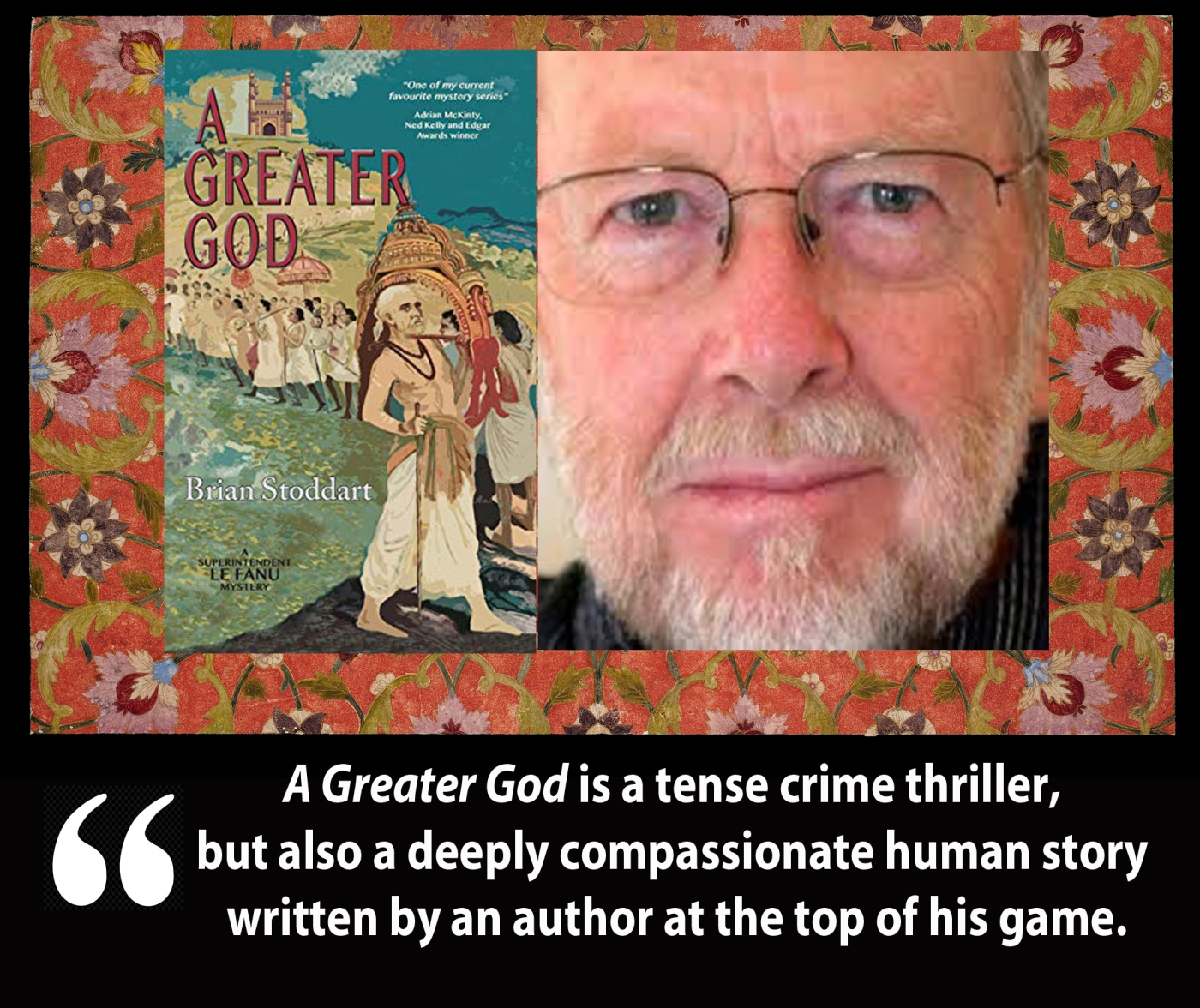
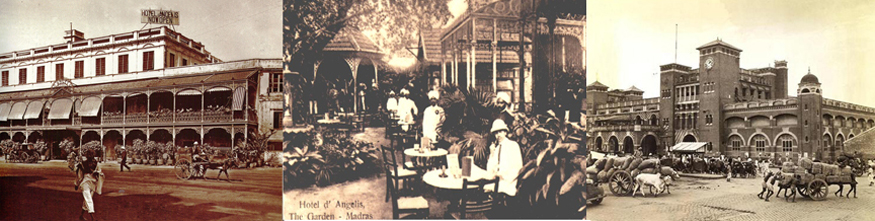
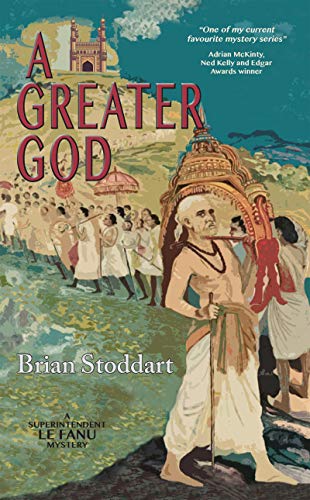 Superintendent Christian Le Fanu makes a welcome return in A Greater God, the fourth in the excellent series of historical crime novels by Brian Stoddart. The previous novel,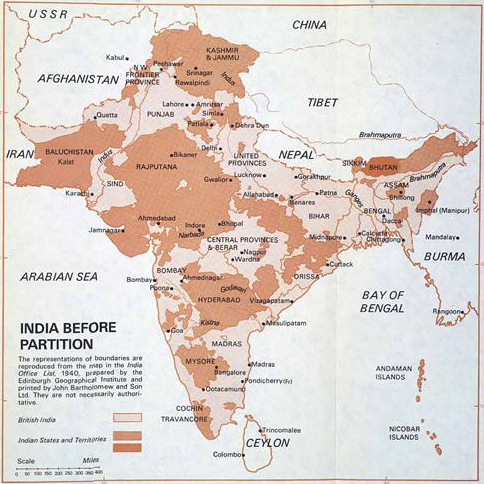
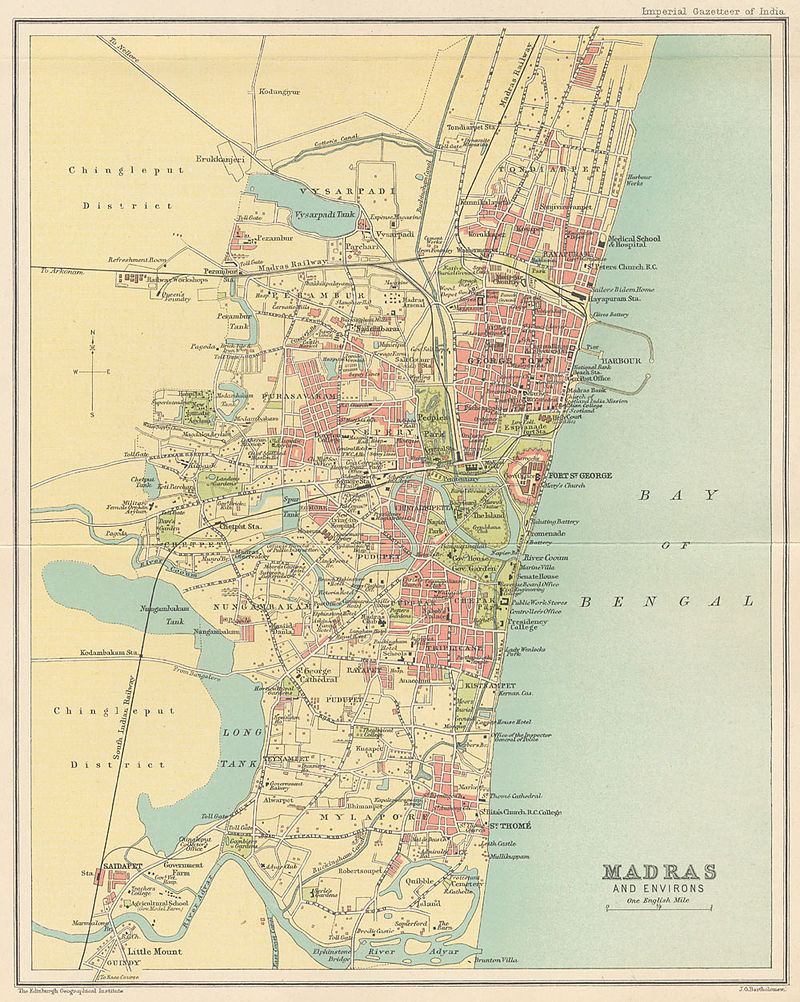

 For those of you who are unfamiliar with the first book in this series, The Word Is Murder (and you can read my review
  The abundance of questions will give away the fact that this is a tremendous whodunnit. Horowitz (right) tugs his forelock in the direction of the great masters of the genre and, while we don’t quite have the denouement in the library, we have a bewildering trail of red herrings before the dazzling final exposition. But there is more. Much, much more. Horowitz’s portrayal of himself is beautifully done. I have only once brushed shoulders with the gentleman at a publisher’s bash, so I don’t know if the self-effacing tone is accurate, but it is warm and convincing. More than once he finds himself the earnest but dull Watson to Hawthorne’s ridiculously clever Holmes.
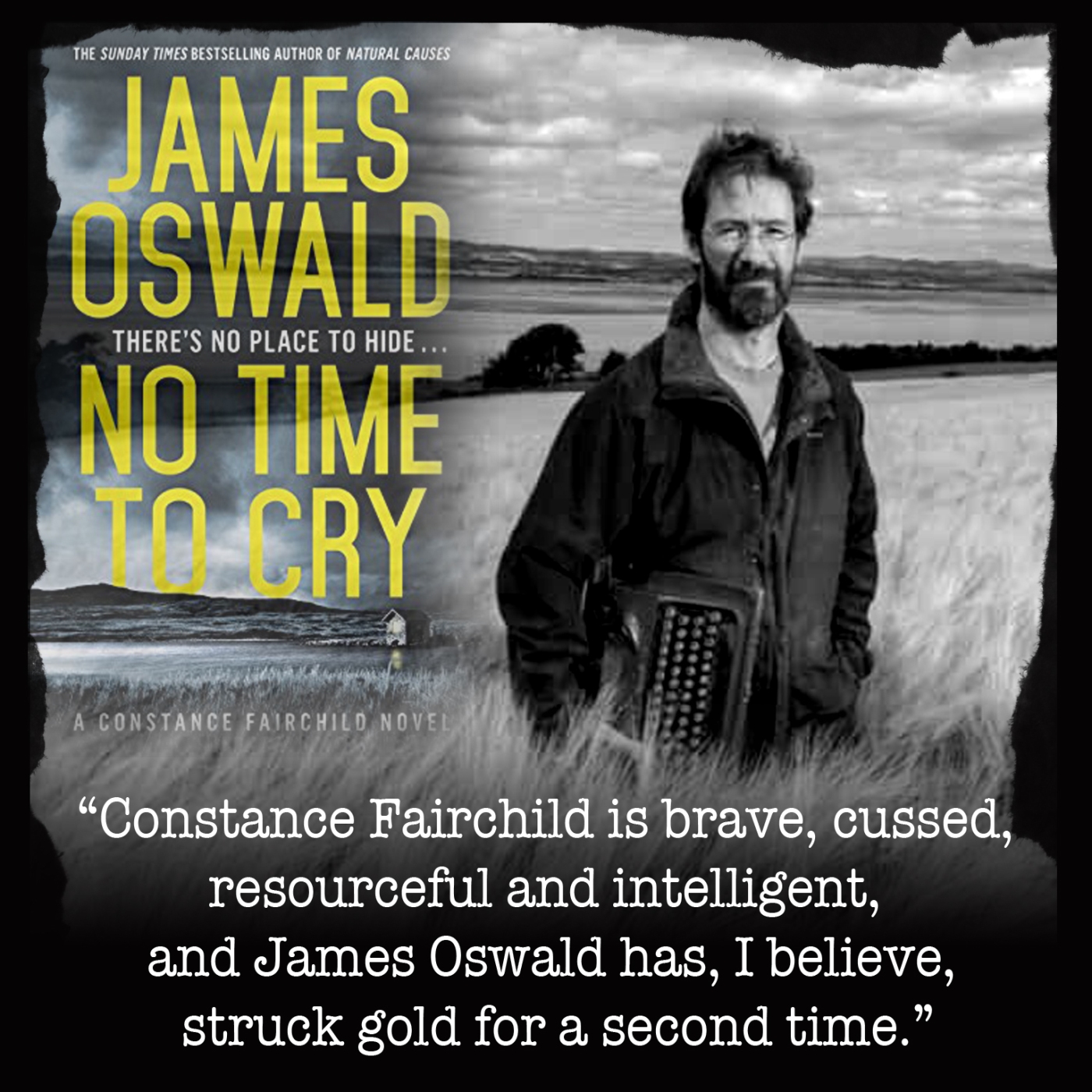

 James Oswald’s Tony McLean has not met with a Reichenbach Falls accident, but at the end of

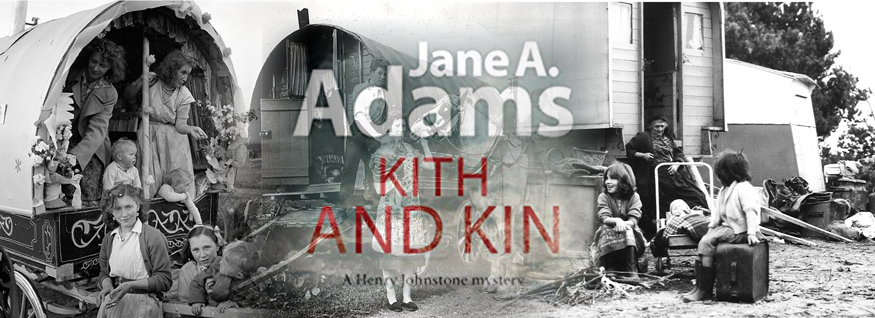
 Coming across a very, very good book by an author one has never encountered before and then realising that she has been around for a while is a shock to the system, and if the downside is that the experience further highlights one’s own ignorance, then the blessing is that as a reviewer and blogger, there is something new to shout about. Jane A Adams made her debut with The Greenway back in 1995, and has been writing crime fiction ever since, notably with four-well established mystery series featuring Mike Croft, Ray Flowers, Naomi Blake and Rina Martin. She began the saga of London coppers Henry Johnstone and Micky Hitchens in 2016, with The Murder Book. Their latest case is Kith and Kin.
 The period is set to perfection, and Adams (right) skilfully combines past, present and future. The past? There can scarcely have been a man, woman or child who escaped the malign effects of what politicians swore would be the war to end wars. The present? 1928 saw devastating flooding on the banks of the River Thames, a book called Decline And Fall was published, and in Beckenham, not a million miles away from where this novel plays out, Robert ‘Bob’ Monkhouse was born. The future? Johnstone’s sister, who has married into money, has a head on her shoulders, and senses that in the financial world, a dam is about to break – with devastating effects.


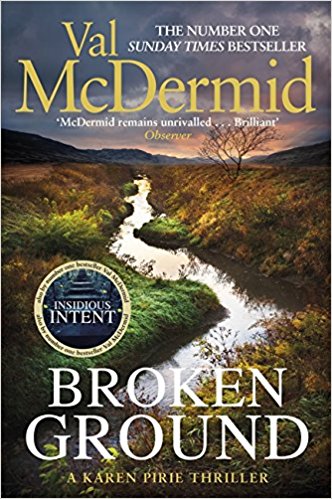 The Body In The Bog is a nicely alliterative strapline normally used to liven up reports of archaeologists discovering some centuries-old corpse in a watery peat grave. The deaths of these poor souls does not usually involve an investigation by the local police force, but as Val McDermid relates, when the preserved remains are wearing expensive trainers, it doesn’t take the tenant of 221B Baker Street to deduce that the chap was not executed as part of some arcane tribal ritual back in the tenth century.
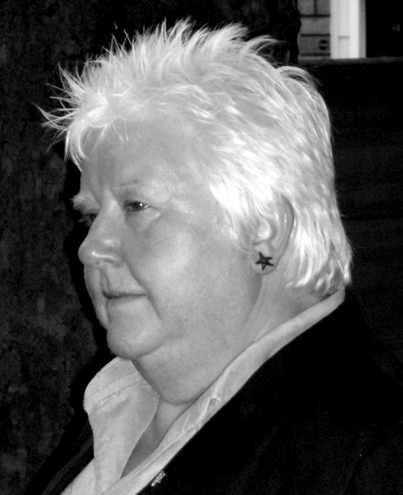 If music halls were still in vogue, McDermid would be the dextrous juggler, the jongleur who defies gravity by keeping several plot lines spinning in the air; spinning, but always under her control. There is the Nike bog body, a domestic spat which ends in savagery, a cold-case rape investigation which ends in a very contemporary tragedy, and an Assistant Chief Constable who is more concerned about her perfectly groomed press conferences that solving crime. They say that the moon has a dark side, and so does Edinburgh: McDermid (right) takes us on a guided tour through its majestic architectural and natural scenery, but does not neglect to pull away the undertaker’s sheet to reveal the squalid back alleys and passageways which lurk behind the grand Georgian facades. We slip past the modest security and peep through a crack in the door at a meeting in one of the grander rooms of Bute House, the official residence of Scotland’s First Minister, even getting a glimpse of the good lady herself, although McDermid is far too discreet to reveal if she approves or disapproves of Ms Sturgeon.

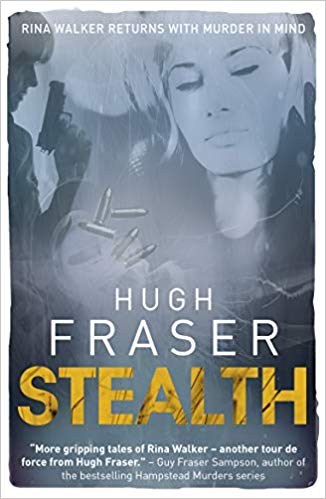 London in 1967 seems to have been an exciting place to live. A play by a budding writer called Alan Aykbourne received its West End premier, Jimi Hendrix was setting fire to perfectly serviceable Fender Strats, The House of Commons passed the Sexual Offences Act decriminalising male homosexuality and Joe Orton and Kenneth Halliwell featured in a murder-suicide in their Islington flat. This is the backdrop as Hugh Fraser’s violent anti-heroine Rina Walker returns to her murderous ways in Stealth, the fourth novel of a successful series.


 The River Thames plays a central part in The Ring. Although Joseph Bazalgette’s efforts to clean it up with his sewerage works were almost complete, the river was still a bubbling and noxious body of dirty brown effluent, not helped by the frequent appearance of human bodies bobbing along on its tides. In this case, however, we must say that the bodies come in instalments, as someone has been chopping them to bits. PC Crossland makes the first grisly discovery:
 MJ Trow (right) has been entertaining us for over thirty years with such series at the Inspector Lestrade novels and the adventures of the semi-autobiographical school master detective Peter Maxwell. Long-time readers will know that jokes are never far away, even when the pages are littered with sudden death, violence and a profusion of body parts. Grand and Batchelor eventually solve the mystery of what happened to Emilia Byng, both helped and hindered by the ponderous ‘Daddy’ Bliss and a random lunatic, recently escaped from Broadmoor. Trow writes with panache and a love of language equalled by few other British writers. His grasp of history is unrivalled, but he wears his learning lightly. The Ring is a bona fide crime mystery, but the gags are what lifts the narrative from the ordinary to the sublime: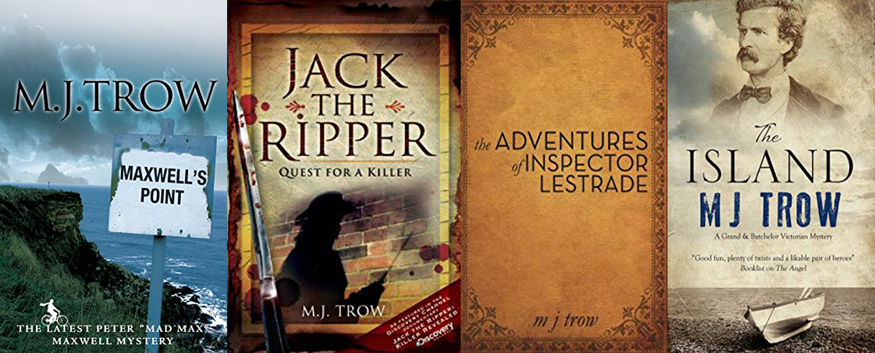


 fullybooked2017