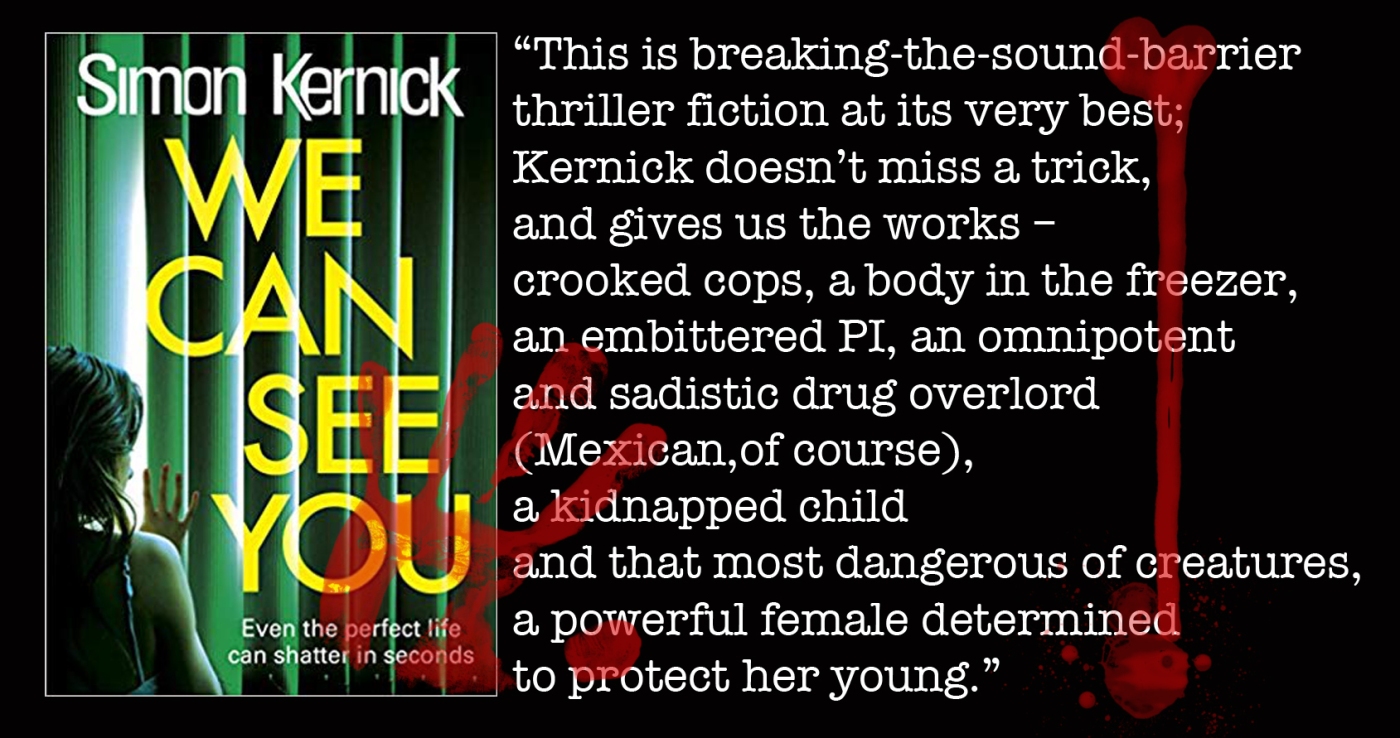


Whatever your view on lifestyle coaches, they certainly have a market, and perhaps nowhere more so than in the ever-so-socially-aware state of California. Brook Connor may not have cornered that market, but she has a best-selling ‘how to come out on top’ guide to her name, as well as wealthy clients and a regular spot on TV. She may not have absolutely everything – after all, her husband is a failed movie actor-cum-tennis coach with a roving eye, but her bank balance is healthy, her home is valued in the millions, and she has an adorable five year-old daughter.
Correction. She did have an adorable five year-old daughter. She returns home after work one day to find both daughter Paige,and nanny Rosa gone, and a chilling note explaining that they have been taken. A severed finger inside a prettily decorated gift box persuades Brook that these people are not fooling around.
As ever in kidnap cases both real and fictional, the bad guys caution against any police involvement, and so Brook and husband Logan get the ransom money together and set off to make the exchange. Of course, the exchange doesn’t go to plan, and Brook is left concussed at the bottom of a gully out in the sticks, the money has gone, and there is the inconvenient matter of a body in the trunk of her SUV, lifeless mainly because of one of her own kitchen knives sticking out of his ribs.
Brook goes on the run, confounded by her initial decision not to involve the police, and also the discovery of the body in the trunk of her car. There is nothing the media loves more than a celebrity criminal, and soon her face is plastered over every news channel. Armed only with her own automatic sidearm and a blazing desire to find her daughter, she leads the law enforcement agencies a merry dance until her race against time comes to an abrupt and bloody end in the personal gym of a notorious ‘businessman’ with links to the infamous cartels from south of the border, down Mexico way.
Kernick very cleverly uses a split time narrative, with one showing Brook in custody facing multiple murder raps, and another detailing the events which have led to her arrest. He is not done with us, though; a seismic plot shift leads to a dramatic conclusion which even Nostradamus would not have seen coming.
This is breaking-the-sound-barrier thriller fiction at its very best; Kernick doesn’t miss a trick, and gives us the works – crooked cops, a body in the freezer, an embittered PI, an omnipotent and sadistic drug overlord (Mexican,of course), a kidnapped child and that most dangerous of creatures, a powerful female determined to protect her young. We Can See You is published by Century and is out today, 29thNovember.



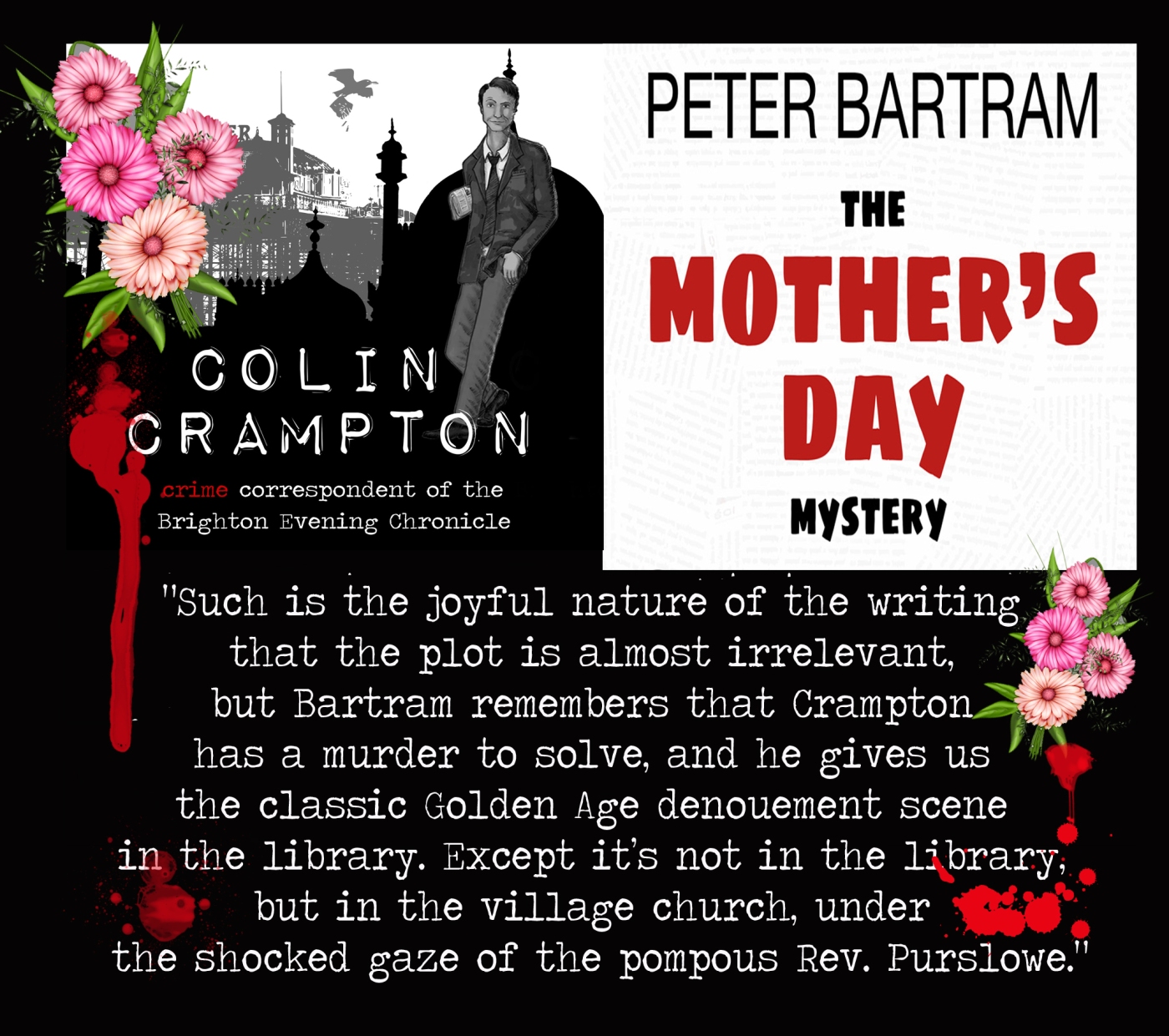
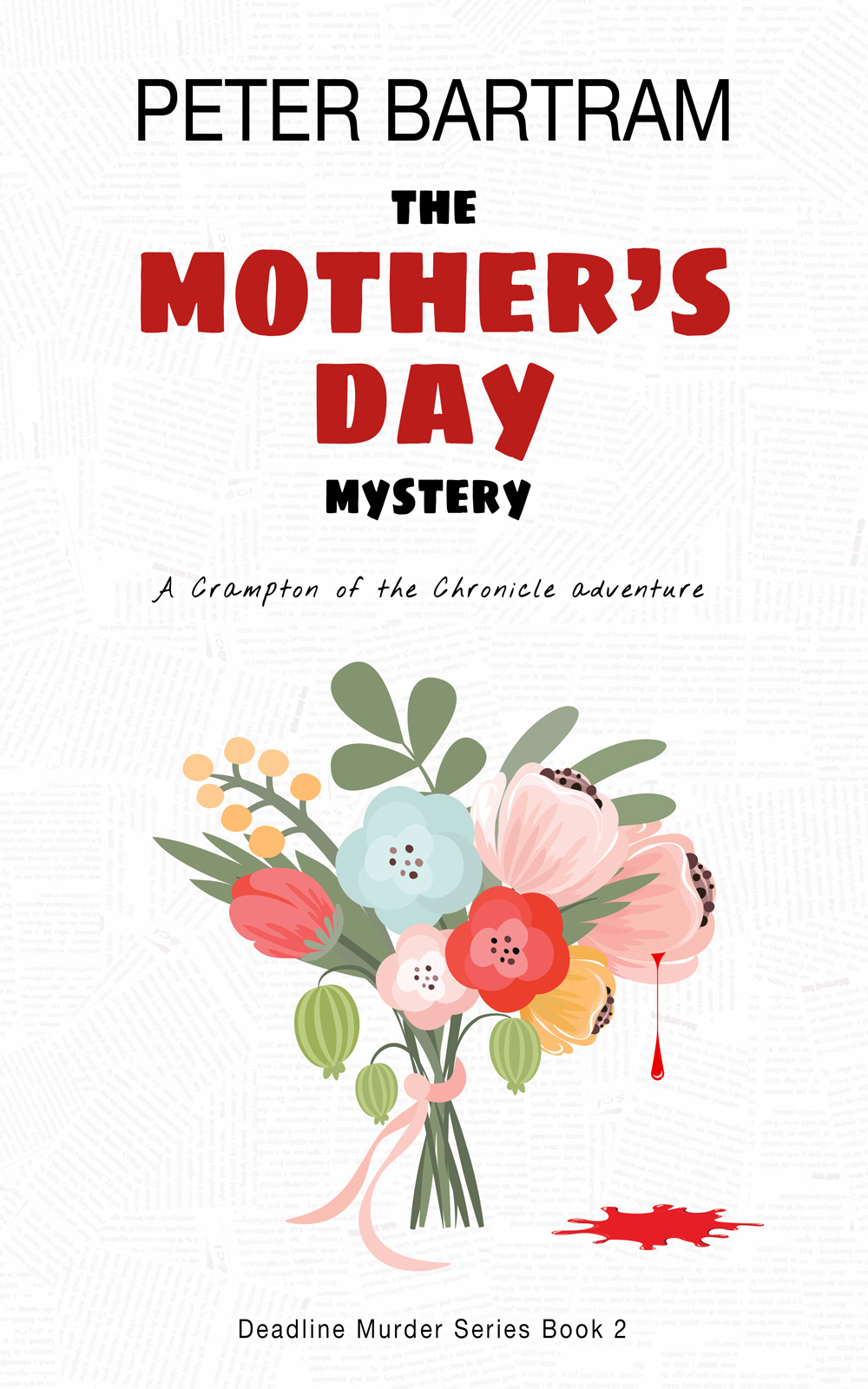 In The Mother’s Day Mystery, Crampton discovers the body of a schoolboy who has evidently been knocked off his bike and fatally injured. What on earth was Spencer Hooke doing away from his dormitory in Steyning Grammar School at the dead of night, cycling along a lonely and windswept clifftop road? In pursuing this conundrum, Crampton whisks us into a world of stage vicars, seedy pub landlords, archetypal leather-elbowed schoolmasters and impecunious toffs. There are jokes a-plenty, and Bartram indulges himself – and those of us who are, similarly, in the autumn of our years – with many a knowing cultural reference that might puzzle younger readers. He takes us into a wonderful sweet shop, the kind which can nowadays only be found in museum recreations:
 Anyone who is a student of English humour will soon see that Bartram is part of a long and distinguished tradition of comic writers who find meat and drink in the absurdities of English life and social structures. In the world of crime fiction, however, comedy does not always sit well with murder and bloodshed. The great and sadly under-appreciated


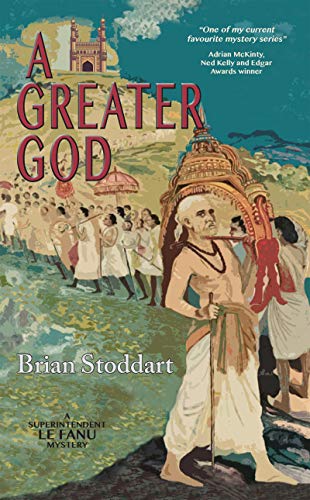 Superintendent Christian Le Fanu makes a welcome return in A Greater God, the fourth in the excellent series of historical crime novels by Brian Stoddart. The previous novel,

 For those of you who are unfamiliar with the first book in this series, The Word Is Murder (and you can read my review
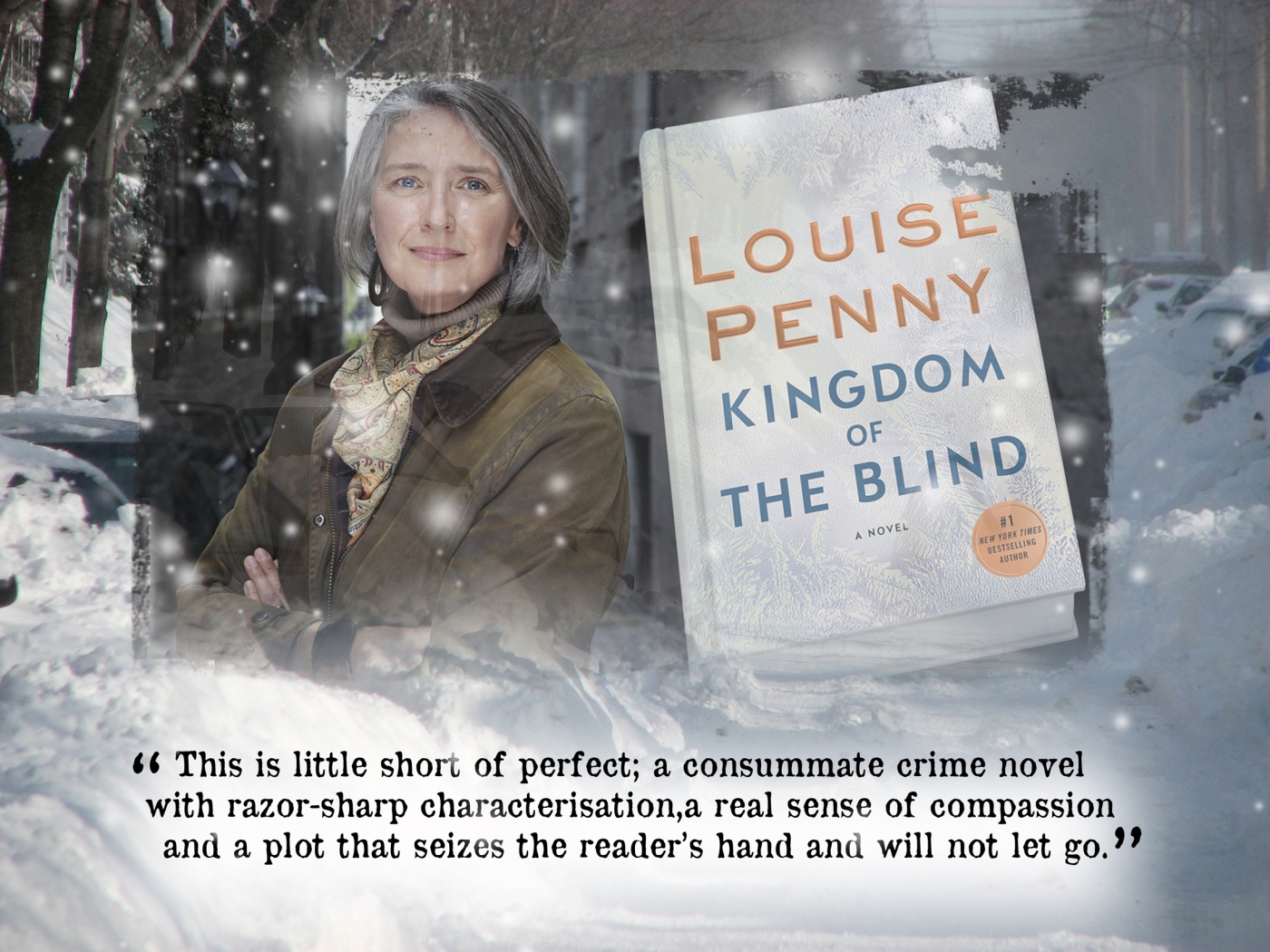
  The abundance of questions will give away the fact that this is a tremendous whodunnit. Horowitz (right) tugs his forelock in the direction of the great masters of the genre and, while we don’t quite have the denouement in the library, we have a bewildering trail of red herrings before the dazzling final exposition. But there is more. Much, much more. Horowitz’s portrayal of himself is beautifully done. I have only once brushed shoulders with the gentleman at a publisher’s bash, so I don’t know if the self-effacing tone is accurate, but it is warm and convincing. More than once he finds himself the earnest but dull Watson to Hawthorne’s ridiculously clever Holmes.
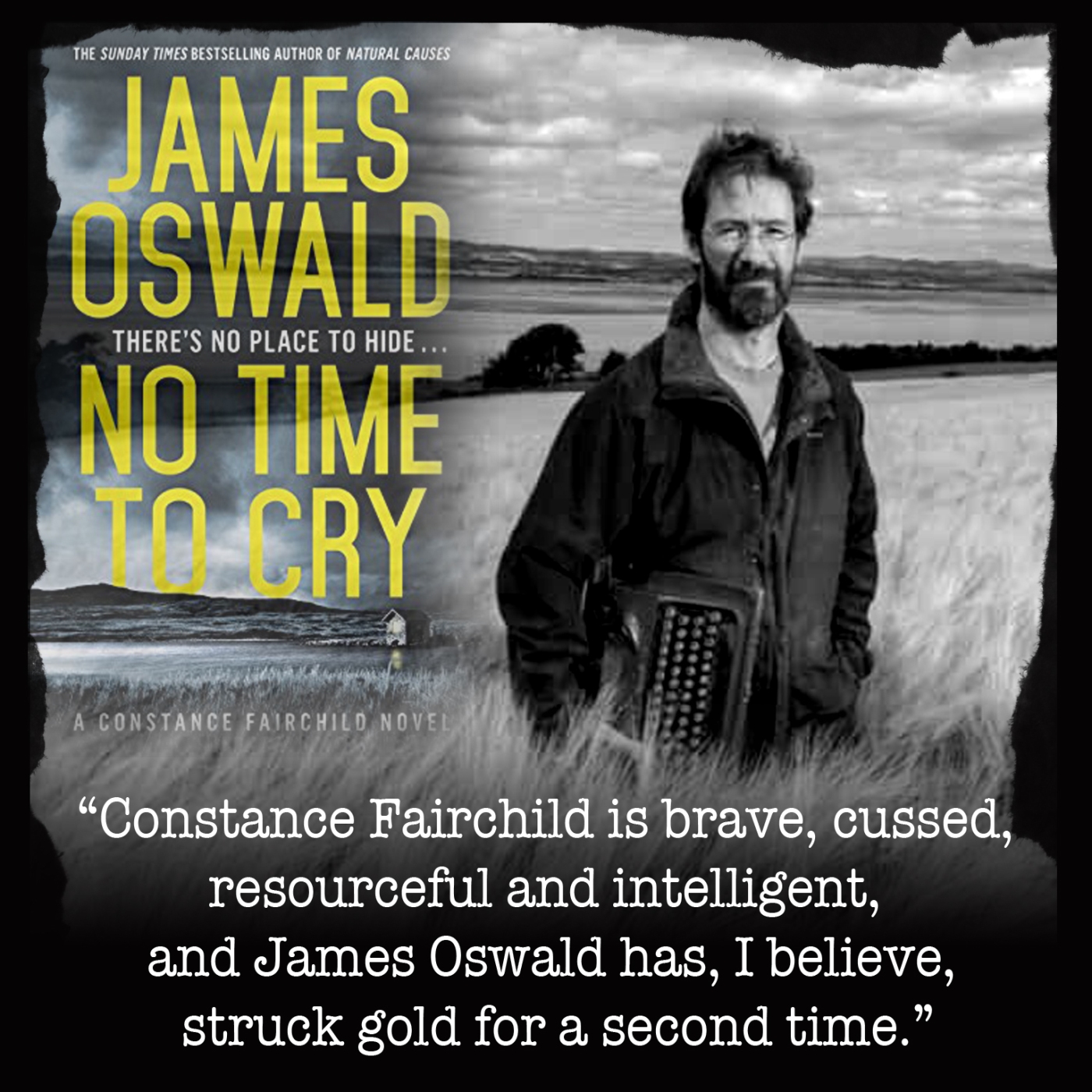

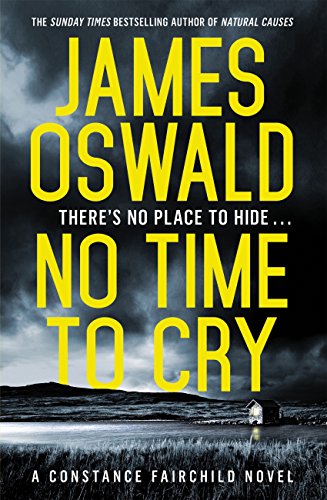 James Oswald’s Tony McLean has not met with a Reichenbach Falls accident, but at the end of


 Coming across a very, very good book by an author one has never encountered before and then realising that she has been around for a while is a shock to the system, and if the downside is that the experience further highlights one’s own ignorance, then the blessing is that as a reviewer and blogger, there is something new to shout about. Jane A Adams made her debut with The Greenway back in 1995, and has been writing crime fiction ever since, notably with four-well established mystery series featuring Mike Croft, Ray Flowers, Naomi Blake and Rina Martin. She began the saga of London coppers Henry Johnstone and Micky Hitchens in 2016, with The Murder Book. Their latest case is Kith and Kin.
 The period is set to perfection, and Adams (right) skilfully combines past, present and future. The past? There can scarcely have been a man, woman or child who escaped the malign effects of what politicians swore would be the war to end wars. The present? 1928 saw devastating flooding on the banks of the River Thames, a book called Decline And Fall was published, and in Beckenham, not a million miles away from where this novel plays out, Robert ‘Bob’ Monkhouse was born. The future? Johnstone’s sister, who has married into money, has a head on her shoulders, and senses that in the financial world, a dam is about to break – with devastating effects.


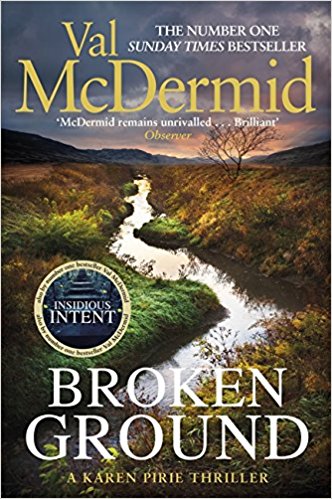 The Body In The Bog is a nicely alliterative strapline normally used to liven up reports of archaeologists discovering some centuries-old corpse in a watery peat grave. The deaths of these poor souls does not usually involve an investigation by the local police force, but as Val McDermid relates, when the preserved remains are wearing expensive trainers, it doesn’t take the tenant of 221B Baker Street to deduce that the chap was not executed as part of some arcane tribal ritual back in the tenth century.
 If music halls were still in vogue, McDermid would be the dextrous juggler, the jongleur who defies gravity by keeping several plot lines spinning in the air; spinning, but always under her control. There is the Nike bog body, a domestic spat which ends in savagery, a cold-case rape investigation which ends in a very contemporary tragedy, and an Assistant Chief Constable who is more concerned about her perfectly groomed press conferences that solving crime. They say that the moon has a dark side, and so does Edinburgh: McDermid (right) takes us on a guided tour through its majestic architectural and natural scenery, but does not neglect to pull away the undertaker’s sheet to reveal the squalid back alleys and passageways which lurk behind the grand Georgian facades. We slip past the modest security and peep through a crack in the door at a meeting in one of the grander rooms of Bute House, the official residence of Scotland’s First Minister, even getting a glimpse of the good lady herself, although McDermid is far too discreet to reveal if she approves or disapproves of Ms Sturgeon.

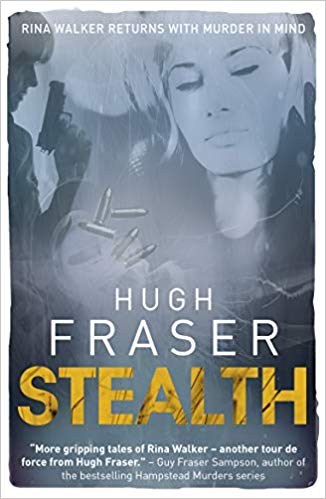 London in 1967 seems to have been an exciting place to live. A play by a budding writer called Alan Aykbourne received its West End premier, Jimi Hendrix was setting fire to perfectly serviceable Fender Strats, The House of Commons passed the Sexual Offences Act decriminalising male homosexuality and Joe Orton and Kenneth Halliwell featured in a murder-suicide in their Islington flat. This is the backdrop as Hugh Fraser’s violent anti-heroine Rina Walker returns to her murderous ways in Stealth, the fourth novel of a successful series.


