 It could be said that fate has not treated Jules Larsen with kindness. Her family disintegrated. Sister Jane mysteriously went missing one night, last seen getting into a black VW Beetle, but never to be seen again. Her mother, literally crippled with cancer and her father, metaphorically so but by unpayable medical bills, perished in a disastrous fire. Jules paid her way through college and graduated with a qualification that secured her a non-job as a gopher and photocopying skivvy in an anonymous New York office. When they decided to ‘rationalise their human resources’ her job was one of the first to go. Ah well, at least Jules had her relationship with sweet, goofy, sexy Andrew, and their shared apartment. Until she came home one time and found lovely Andrew between the legs of some random girl. Andrew is the keyholder, and so adding homelessness to emotional injury, it’s Jules who has to go.
 ules ends up sleeping on the couch of her best college friend, Chloe. Down, definitely, and almost out. Until her daily scan of the situations vacant notices gives her a faint sniff of hope. Someone wants an apartment sitter. It’s not just any old apartment, though. The apartment is in one of New York’s most celebrated buildings – The Bartholomew. Neither as celebrated nor as notorious as The Dakota, The Bartholomew shares spectacular views over Central Park, is built with the same attention to German Gothic details, and is regarded with awe by passers-by as they gaze up at its pediments and gargoyles.
Not only does Jules get to stay in a luxury apartment, but she will be paid what is, to her, a ridiculously high salary. She feels totally intimidated by the interview with The Bartholomew’s expensively dressed agent, but she must have done something right, because she gets the gig.
 here are one or two rules, however. She must never spend a night away from the building. On no account is she allowed visitors, day or night. And under no circumstances must she ever approach or bother any other the bona fide residents of the building, all of whom are madly wealthy, and some of whom are internationally well known.
Too good to be true? Of course it is! It’s not long before the century-old history the building begins to assert itself into Jules’s consciousness. What happened to the previous sitters in apartment 12A? Why did the building’s founder and leading light throw himself to his death from an upper storey while several of his staff were laid out in death, on stretchers lined up on the sidewalk below? Can anyone in the building be trusted? Charlie, the benevolent doorman? Nick, the solicitous and warm-hearted doctor from across the hallway? Greta Manville, the reclusive writer, author of a book which entranced Jules, and thousands of others in their teenage years?
 This is a very clever thriller. Riley Sager (right), as he did in his previous novel Last Time I Lied, flips time sequences to keep us guessing as to precisely what is going on. His solution to the conspiracy which binds all The Bartholomew residents together is totally unexpected, and just about plausible. If you are a fan of claustrophobic Gothick thrillers where even the wallpaper in the bedroom has a sinister intent, and the dumb waiter creaks into view carrying a deadly threat, then you will love this. Lock Every Door is published by Ebury Press and will be available from 25th July.


 This is a chillingly clever whodunnit shot through with a caustic examination of life among the moneyed classes of contemporary Ireland, particularly Dublin’s nouveau riche and their over-indulged teenage children. Fans of Jo Spain’s DI Tom Reynolds will be overjoyed to see him return for his fifth case, and those who know the author only through her spellbinding standalone novels such as
  aniel is related to one of Tom Reynolds’ most respected officers, and when she asks him to take a look at the case, he reluctantly agrees. There are just one or two complications, though. First, Daniel is refusing to say anything – not a word – to investigating officers or his lawyer. Then, Reynolds becomes aware that Daniel is gay, and that, despite protestations from parents and friends, it appears that Danny and Luke were “an item.” Thirdly, the grief of Luke’s parents at his death has to run alongside the tragic demise of Luke’s twin brother Ethan, who is near death in a local hospice.
 Jo Spain is the literary Diva of Deviousness, and while we learn early in the piece that Glenmore House has a bloody history, she waits for some while before reconnecting the earlier slaughter with the death of Luke Connolly. When she does – and Reynolds realises the connection a paragraph or three before we do – the investigation takes on a whole new slant.


 s the immortal Juliet once asked, “What’s in a name?” To her, not very much, as I recall, but it takes a brave novelist – such as Daphne Du Maurier in Rebecca – to keep the narrator and central character anonymous. Jo Baker uses this literary ploy in her latest novel, The Body Lies. Even the title is ambiguous, but the young woman at the centre of this dark domestic thriller is anything but anonymous or sketchily drawn.
 In the absence of a name, what do we know of her? She is a writer who, like so many others in real life, has been published but needs a day job to stay afloat. She is married to a rather dull but worthy London schoolteacher. They have a young son, Sammy and, in an effort to re-establish her identity she makes a successful application for a lecturing job at a university in the north of England. Husband Mark is unwilling to leave his post, and so they agree to live separately but meet up at weekends. At the very beginning of the novel the woman is assaulted by a stranger while she is out jogging: the attack is not physically serious but leaves deep mental scars.
 hen Nicholas and his tutor go beyond the accepted boundaries of student-teacher relationships, the story moves from a wry and sardonic satire on the political and social politics of schools and universities, and takes on a much darker hue. Nicholas disappears, but sends in the weekly updates to his work-in-progress via email – and they are nothing more or less than a blow-by-blow account of his most recent sexual encounter.
 All the familiar tropes of modern British domestic noir kick in, to good effect. We have a stalker, marital infidelity, a woman alone in a remote cottage, the debilitating after effects of recreational drug use, a murder disguised as a suicide and, tellingly, a very scary confrontation on a Wuthering Heights-style moor.


 It is 1965 and we are basking in the slightly faded grandeur of Brighton, on the south coast of England. The town has never quite recovered from its association, more than a century earlier, with the bloated decadence of The Prince Regent, and it shrugs its shoulders at the more recent notoriety bestowed by a certain crime novel brought to life on the big screen in 1947. Brighton has its present-day misdeeds too, and who better to write about it than the intrepid crime reporter for the Evening Chronicle, Colin Crampton?
 rampton is an enterprising and thoroughly likeable fellow, with a rather nice sports car and an even nicer girlfriend, in the very pleasing shape of Australian lass Shirley Goldsmith. Crampton is summoned to the office of his deputy editor Frank Figgis and, barely discernible amid the wreaths of smoke from his Woodbines, Figgis’s face is creased by more worry lines than usual. His problem? The Chronicle’s drama correspondent, Sidney Pinker, has been served with a libel writ for savaging, in print, a local theatrical agent called Daniel Bernstein.
 inker, by the way, is very much in the John Inman school of caricature luvvies, so those with an over-sensitive approach had better look away now. His pale green shirts, flowery cravats and patronage of certain Brighton nightspots are pure (politically incorrect) comedy.
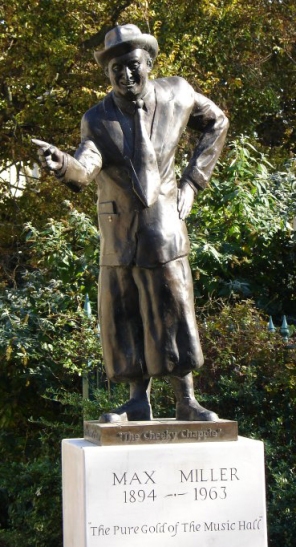 Bernstein’s murder is seen as very much open-and-shut by the Brighton coppers, but Crampton does not believe that Pinker has the mettle to commit physical violence. Instead, his investigation takes him into the rather sad world of stand-up comedians. Today, our stand-up gagsters can become millionaire celebrities, but back in 1965, the old style joke tellers with their catchphrases and patter were becoming a thing of the past, as TV satire was breaking new ground and reaching new audiences. Crampton believes that the murder of Bernstein is connected to the agent’s former association with Max Miller and, crucially, the possession of Miller’s fabled Blue Book, said to contain all of The Cheeky Chappy’s best material – and a few jokes considered too rude for polite company.


 ver the years, missing persons investigator David Raker has, courtesy of his creator Tim Weaver, solved some perplexing cases. There was the man who disappeared into the bowels of London’s underground railway system, the amnesiac who was found on a deserted south coast shingle beach, the straight ‘A’ student with the secret life who just vanishes and, memorably, the time his dead wife walked into a London police station and back into his life. Raker tends to be looking for troubled individuals, as in just the one person. But this time it’s different.
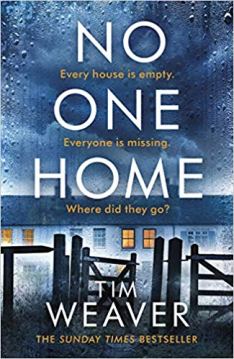 A whole village has disappeared. OK, let’s put that into context. The village is the isolated moorland community of Black Gale, and it consists of a farm and three expensive and fairly recent houses arrayed in a semi-circle around the older building. Black Gale. Population, nine souls. And on Halloween, two years since, they vanished. Into thin air. Like Prospero’s insubstantial pageant, the four families have left not a rack behind.
 aker has problems of his own, principally in the shape of his long time friend, former police officer Colm Healy. Healy featured in the very first Raker mystery Vanished (2012) and his misfortunes have been ever present over the series (No One Home is the 10th book). Healy is officially dead – and buried, He has a gravestone to prove it, but for a variety of reasons the former copper now exists under a variety of aliases, under the protection of David Raker. A persistent and intrusive journalist wants to write Raker’s life story, but also suspects the truth about Healey, and uses his knowledge in an attempt to force Raker to co-operate. Keeping the hack at bay – just – Raker begins to unpick the mystery of Black Gale.
 ans of the series will know that Tim Weaver doesn’t like Raker’s cases to be geographically confined, and so it is that the Black Gale conundrum is linked with a grisly unsolved murder in a flyblown California motel decades earlier. I say “unsolved”. The local Sheriff’s Department think the case is a wrap. They have a vic and a perp and have moved on to other things. Detective Joline Kader, however, has other ideas. She is unconvinced that the body lying face down in a bathtub of muriatic acid is simply the victim of a drug deal gone wrong, and the case stays with her over the years, right through her police career and her subsequent vocation as a college lecturer. Right up until the moment where her old obsession collides with David Raker’s fatal unpicking of a very clever and murderous conspiracy.
 No One Home is a brilliant thriller. It runs to over 500 pages, with not a single one wasted. The action is constant and the plot spins about all over the place, so you will need to be on your mettle to keep track of what is going on. Tim Weaver (right) has never been shy of creating apparently improbable conundrums for Raker to solve, and this is no exception. Suspend your disbelief for a few hours and go with the flow. I read it in three intense sessions and although I don’t use “Wow!” in normal speech, it certainly applies here. No One Home is published by Penguin

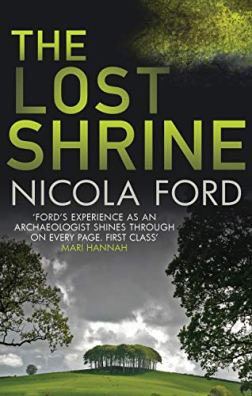 On a lonely and ancient hill in south western England, a group of amiable but earnest hippy cranks prepare to celebrate a pagan festival. What their leader finds when he climbs the hill to consummate the ritual sends him reeling and retching to his knees. There, strung up from the trees is a grisly collection of local wildlife, butchered and bloody. That is bad enough, but the centrepiece of this obscene display is – or was – human.
 ore corpses – both ancient and modern – are discovered, while Clare Hills is run ragged by a combination of unsettling discoveries about her late husband’s business affairs, and a bizarre conspiracy centred on the site, involving the dark and devious word of online antiquity sales.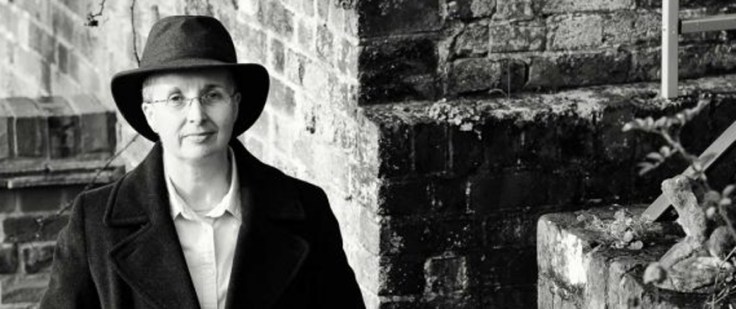


 To be blunt, JLB is getting on a bit, and one wonders how long he can carry on writing such brilliant books. In the last few novels featuring the ageing New Iberia cop, there has been a definite autumnal feel, and The New Iberia Blues is no exception. Like his creator, Dave Robicheaux is not a young man, but boy, is he ever raging against the dying of the light.

 London copper DI Tom Thorne has been entertaining us since his debut in Sleepyhead (2001). His creator, Mark Billingham, (left) has developed an enviably reliable repertory company of other players who share the stage with the main man. There is his best mate Phil Hendricks, a pathologist who, despite being gay, supporting Arsenal against Thorne’s beloved Spurs and having piercings in places where most folk don’t even have places, is the voice of sanity in Thorne’s often chaotic world. Thorne’s love interest (from whom he is currently living apart) is Helen, another police officer, but one who works in the traumatic world of child protection. Nicola Tanner is Thorne’s professional partner and they have history, but not one that either reflects on with much pleasure. Tanner’s partner Susan was brutally killed in a previous episode, and her death hangs over the pair like a pall.
 In an ostensibly unconnected narrative thread, Billingham introduces us to a Sarah, a vulnerable single mum who is anxious to gain the approval of other mums with whom she waits at the primary school gate twice each day. They seem confident, successful and financially comfortable. Sarah tries to join in with their daily sojourn at a pretentious ‘artisan’ coffee shop after the morning school run, but she still feels like the outsider. Her world is just herself and her son Jamie, and she struggles to compete with the gossip and banter that fly like sparks between Karen, Caroline, Savita and Heather. Until. Until the day when, sitting apart at her own table in HazBeanz, Sarah is chatted up by distinctly fanciable slightly older fellow. Almost instantly, Sarah finds the others anxious to swap phone numbers in return for daily updates about the new romance.


 Note:
Note: 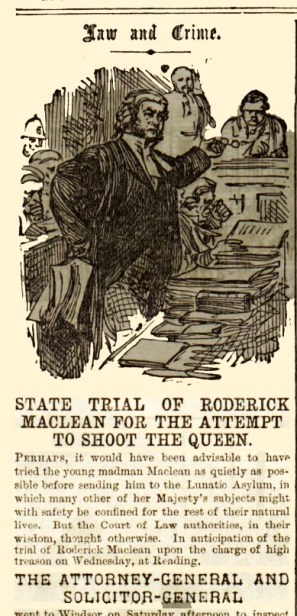 Also on the run is a man convicted of attempting to assassinate Queen Victoria. Sentenced to life imprisonment on the grounds that he was mad,