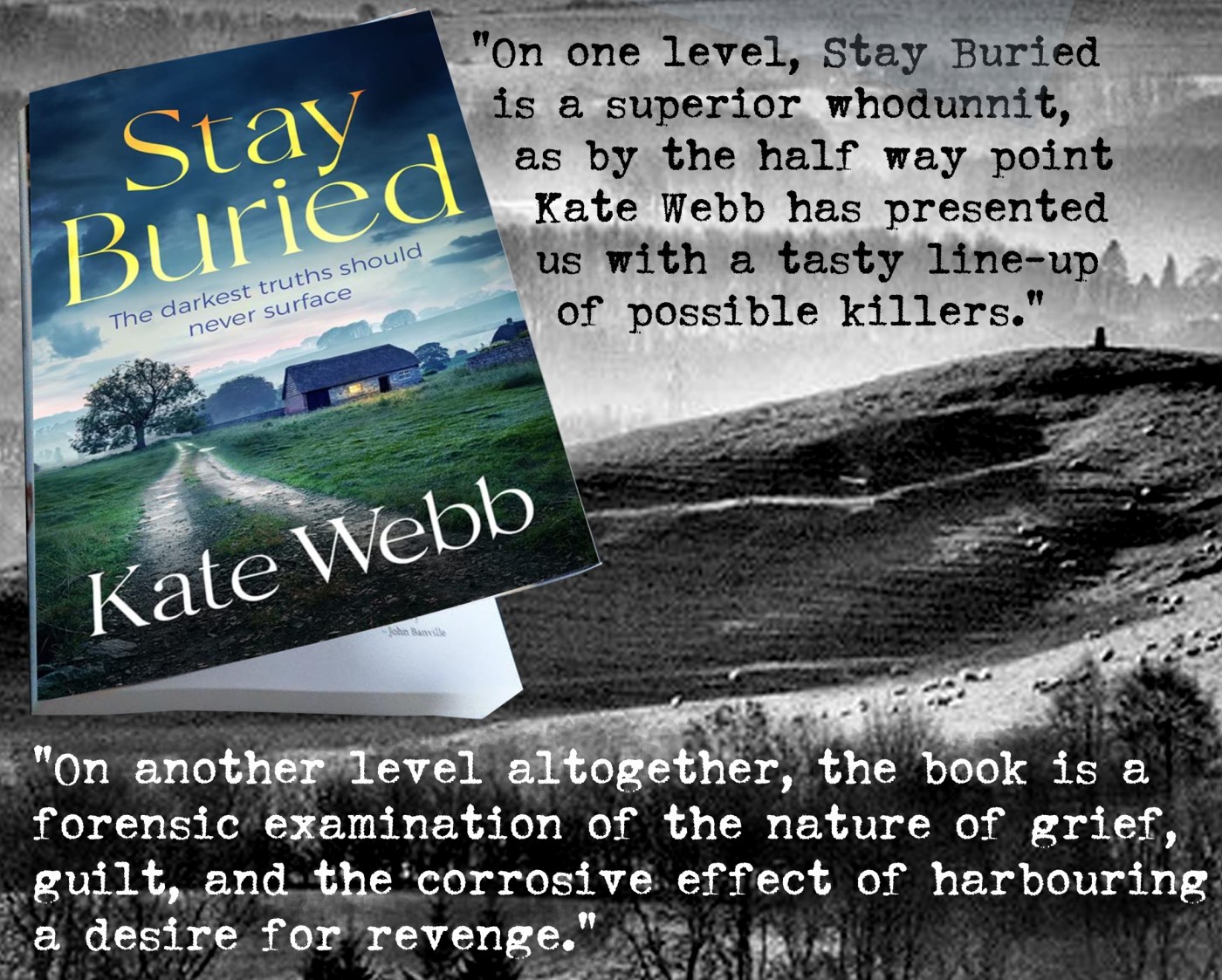

 Writing as Katherine Webb, the author (left) is a well established writer of several books which seem to be in the romantic/historical/mystery genre, but I believe this is her first novel with both feet firmly planted on the terra firma of crime fiction. Wiltshire copper DI Matthew Lockyer, after a professional error of judgment, has been sidelined into a Cold Case unit, consisting of himself and Constable Gemma Broad.
He receives a telephone call from a most unexpected source. His caller is Hedy Lambert, a woman he helped convict of murder fourteen years earlier. The case was full of unexpected twists and turns, none more bizarre than the identity of the victim. Harry, son of Emeritus Professor Roland Ferris had left home as a teenager and, seemingly, vanished from the face of the earth. Then he returns home to the Wiltshire village where his father lives. This variation on the tale of The Prodigal Son, takes a turn for the worse, however, when Harry’s dead body is discovered, and standing over it, clutching the murder weapon, is Ferris’s housekeeper Hedy Lambert. Problem is, it’s not Harry Ferris.
After a few days it transpires the the murder victim is actually Mickey Brown, a Traveller, who superficially resembles Harry. Despite the absence of any plausible motive Hedy Lambert is convicted of murder and found guilty, condemned almost entirely by convincing forensic evidence. Now, Lambert has telephoned Lockyer from her prison to tell him that the real Harry Ferris has returned to his father’s house. Lockyer visits Longacres, Ferris’s house in the village of Stoke Lavington, to find the old man at death’s door with cancer of the blood and Harry Ferris totally unwilling to co-operate with the re-opening of the murder case.
As the story develops, we learn more about Lockyer and his background. His parents are what Americans call hardscrabble farmers, elderly and increasingly unable to make a living out of the farm or see any fruits for their lifetime of hard work. The obvious person to take over the farm was Lockyer’s brother Chris, but he is long dead, having been stabbed in a fracas outside a local pub. His killer has never been brought to justice.
One of the many admirable qualities of this book is that Kate Webb doesn’t take any prisoners in her portrayal of rural Wiltshire. Yes, there are obviously some beautiful places, but there are also farms which are bleak, wind-swept and run-down; there are villages and small towns with rough and tumble pubs which are no strangers to violence. Please don’t expect the sun-kissed limestone cottages and trim thatched roofs of Midsomer; this is Wiltshire in winter from a literal point of view, and metaphorically it is darker territory altogether.
On one level, Stay Buried is a superior whodunnit, as by the half way point Kate Webb has presented us with a tasty line-up of possible killers. There is Paul Rifkin, Ferris’s factotum, the real Harry Ferris, Tor Gravich, the young research assistant who was in Longacres at the time of the murder, Sean Hannington, a violent Traveller thug with a grudge against Mickey Brown, Serena Godwin, and even Roland Ferris himself. Or are we being led up the garden path, and is the killer Hedy Lambert after all? The eventual solution is elegant, complex and unexpected. On another level altogether, the book is a forensic examination of the nature of grief, guilt, and the corrosive effect of harbouring a desire for revenge.
This is excellent crime fiction, with a central character who has the quirks and flaws to make him totally credible. The geographical backdrop against which DI Matt Lockyer does his job is painted ‘warts and all’, lending a psychological darkness to proceedings. Stay Buried is published by Quercus and will available as listed below:
Kindle – 27th October 2022
Audiobook – 27th October 2022
Hardcover – 19th January 2023
Paperback – 29th July 2023



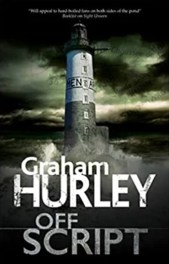
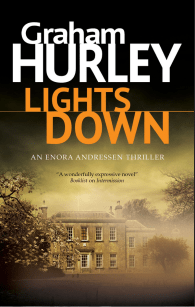 For those new to this wonderful series, here’s the back story. Enora Andressen is an actress in her early forties. She has won fame, if not fortune, by starring in what used to be known as ‘art films’ – often European produced and of a literary nature. She has a twenty-something son, Malo, the product of a one-night-fling with a former drug boss, Harold ‘H’ Prentice. ‘H’ and Enora have become reunited, after a fashion, but it is not a sexual relationship. In the previous novel, ‘H’ is stricken with Covid, and barely survives. That story is told in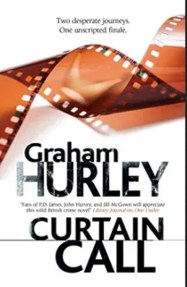

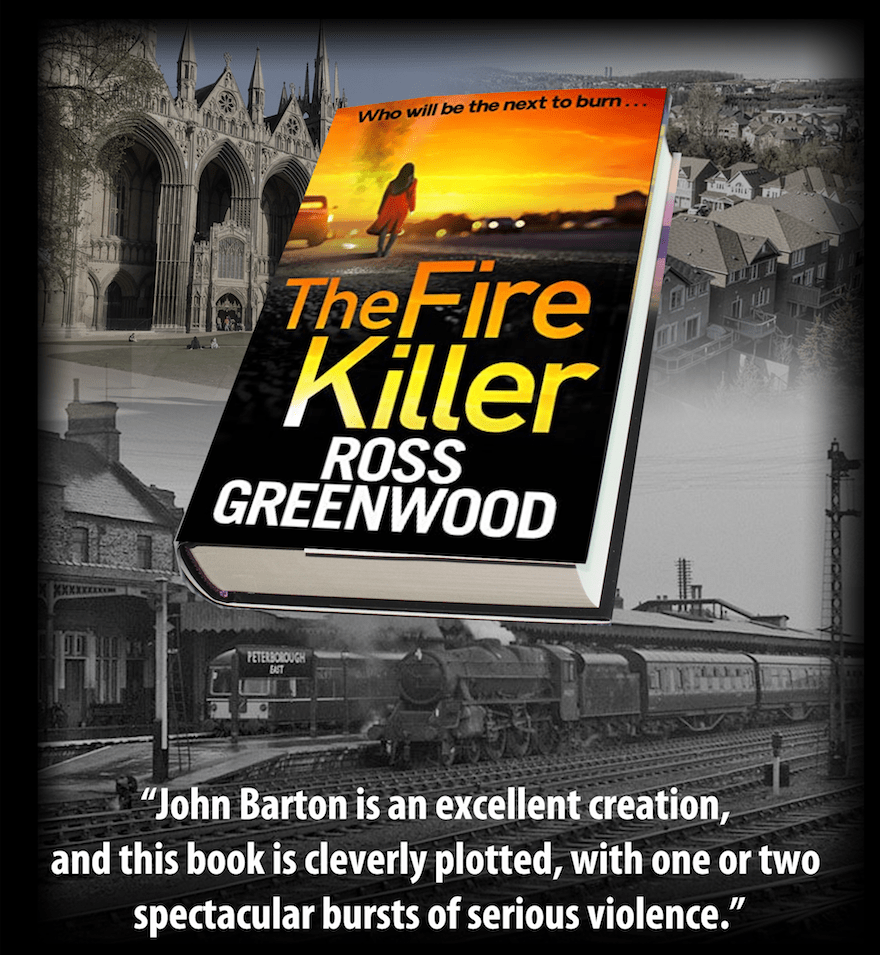

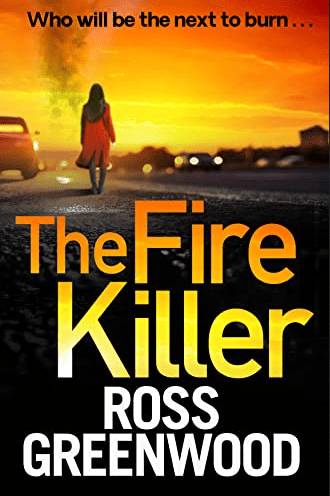 Late again! My excuse is that I am a one-man-band here at Fully Booked, and notwithstanding the occasional erudite contribution from Stuart Radmore (who has forgotten more about crime fiction than most people will ever know), there are only so many books I can read and review properly. My first experience of Peterborough copper DI Barton is the fifth of the series (written by Ross Greenwood), The Fire Killer. Peterborough is a big place, at least for us Fenland townies, but is rarely featured in CriFi novels. I am pretty sure that Peter Robinson’s DI Banks grew up there (The Summer That Never Was) and Eva Dolan’s Zigic and Ferreira books are certainly set in the city.
 Ross Greenwood (right) has fun inviting us to make out own guesses, but also makes the game a little more interesting by giving us intermittent chapters narrated by The Fire Killer, but he is very wary about giving us too many clues. The dead girl, Jess Craven had been involved with a very rich dentist with links – as a customer – to the London drug trade.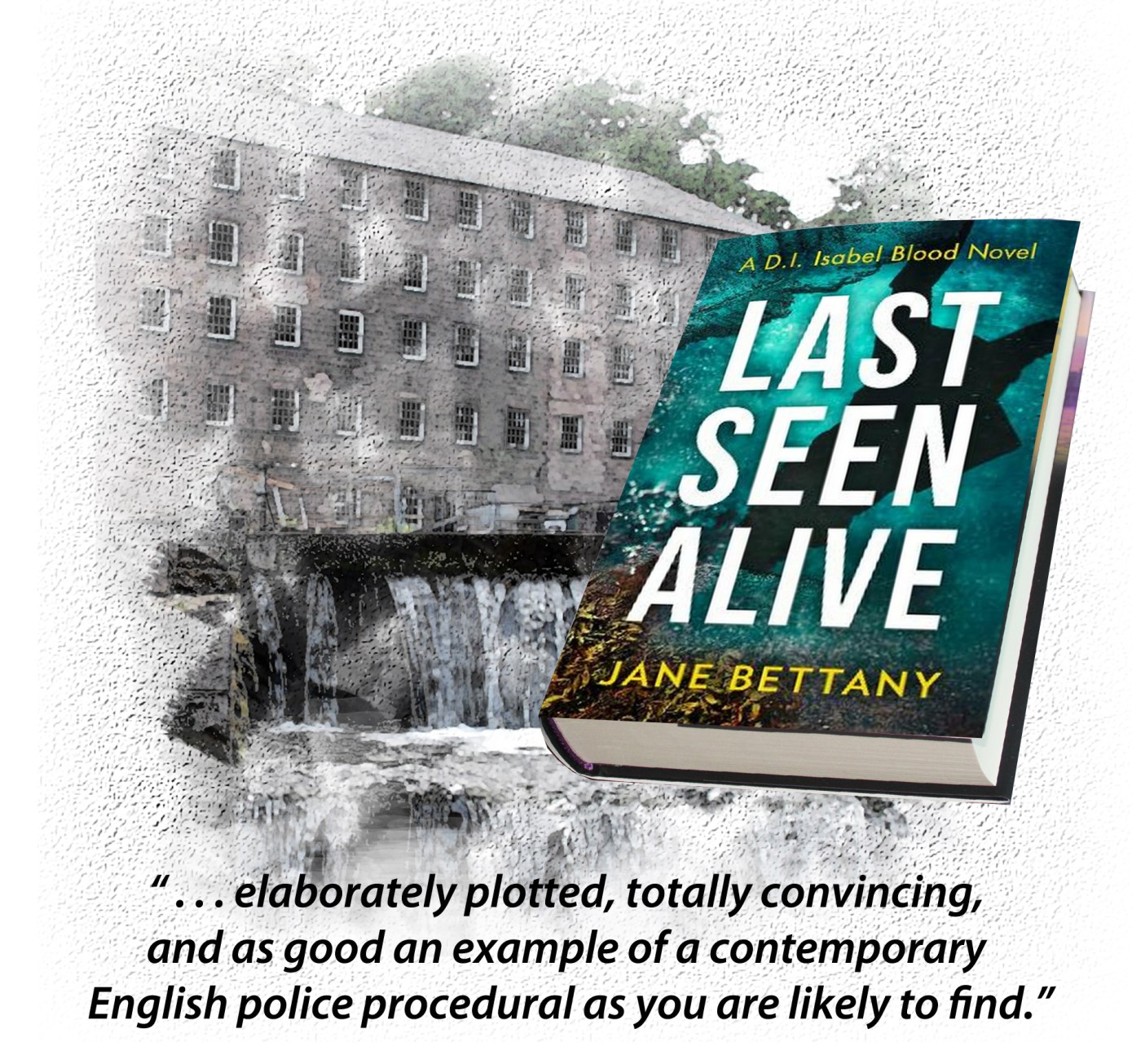

 Last Seen Alive is the third book by Jane Bettany (left) featuring the Derbyshire copper DI Isabel Blood. The story begins when Anna Matheson, a single mother who works at a large confectionery firm, fails to pick up her infant son from the child minder after a social event at work. Lauren Talbot, the child minder, raises the alarm late at night, but precious hours elapse before morning comes and the police are able to start making enquiries.




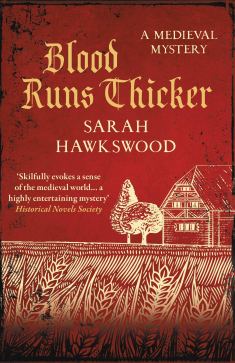
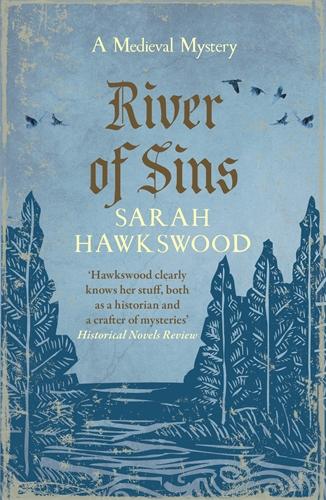
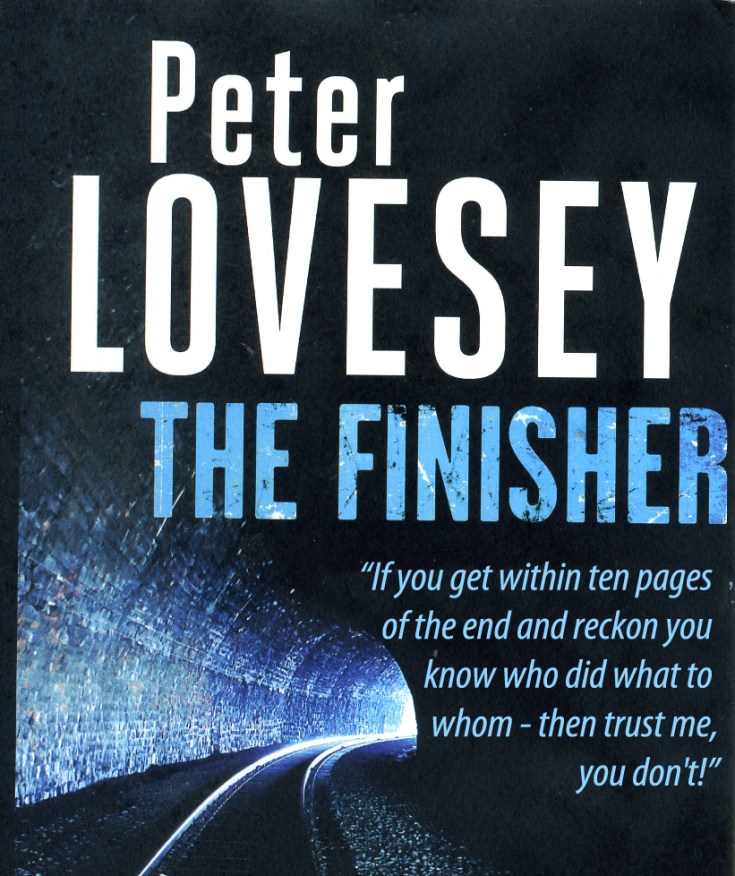
 To Bath now, and a character created by (I think) Britain’s longest living (and still writing good books) crime author. Peter Lovesey was born in Middlesex in September 1936 and, after National Service and a career in teaching, he published his first novel in 1970. Wobble To Death was the first of a hugely successful series of historical novels featuring Sergeant Daniel Cribb and his assistant Constable Thackeray. Older readers will remember the superb BBC TV adaptations starring Alan Dobie (left) as Cribb. The stories were also dramatised by BBC radio.

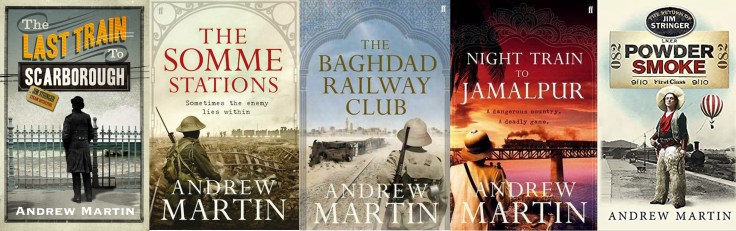
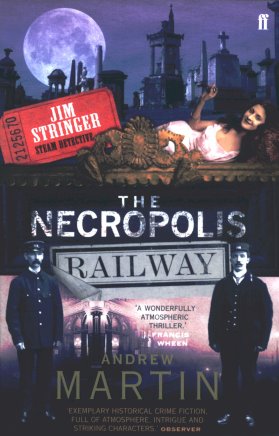 Ever onwards, and ever northward to the ancient city of York. For all that it houses the magnificent medieval minster and has a history going back to the Eboracum of Roman times, fewer people remember that York was also a great railway city, and there can be no more appropriate place to house the National Railway Museum. Like many men now in the autumn of their years I was an enthusiastic trainspotter back in the days of steam, so it is – I hope – perfectly understandable that I have chosen the Jim Stringer novels by Andrew Martin for this stop on our trip. Martin introduced Stringer in The Necropolis Railway (2002) when Stringer is very much at the bottom of the railway hierarchy, and working in London, but by 2004 in The Blackpool Highflyer, Stringer has married his landlord’s daughter – the beautiful Lydia – and has been promoted to a job in York.

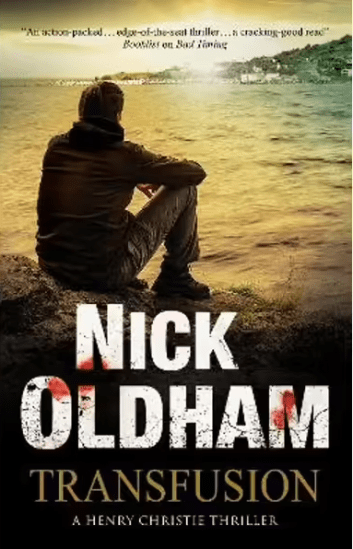
 His creator, Nick Oldham, knows of what he writes, as he is a former police officer, and the 29th book in this long running and successful series is due out at the end of November. So, what can readers expect from a Henry Christie story? It depends where you start, of course, because if you go back to the beginning in 1996, Peter Shilton was still in goal, but for Leyton Orient, England lost to Germany (on penalties, naturally) in the Euros semi-final, the trial of men accused of murdering Stephen Lawrence collapsed and John Major was in his second term as British Prime Minister. In A Time For Justice Christie is a relatively junior Detective Inspector – and someone who is seriously out of favour with his bosses, and has to tackle a cocky mafia hitman who thinks the English police are a joke. As the novels progress over the years, Christie rises through the ranks, but he is still someone who is viewed with some suspicion by the few officers who outrank him – the chief constables and their assistants.
 Henry Christie is always hands on, and he has the scars – mostly physical, but one or two mental lesions – to prove it. His personal life has been a mixture of love, passion, tragedy and disappointment. His geographical battle grounds are usually confined to the triangle formed of Preston, Lancaster and Blackpool. This is an area that Oldham (right) himself knows very well, of course, thanks to his years as a copper, but it is also very cleverly chosen, because it allows the author to play with very different human and geographical landscapes. The brooding moorland to the east is a wonderful setting for all kinds of wrong-doing, while the seaside town of Blackpool, despite the golden sands, donkey rides, candy floss and cheerful seaside ambience, houses one of the worst areas of deprivation in the whole country, with run-down and lawless former council estates controlled by loan sharks, traffickers and criminal families of the worst sort.


 A trip to Scunthorpe might not be too high on many people’s list of literary pilgrimages, but we are calling in for a very good reason, and that is because it was the probable setting for one of the great crime novels, which was turned into a film which regularly appears in the charts of “Best Film Ever”. I am talking about Jack’s Return Home, better known as Get Carter. Hang on, hang on – that was in Newcastle wasn’t it? Yes, the film was, but director Mike Hodges recognised that Newcastle had a more gritty allure in the public’s imagination than the north Lincolnshire steel town, which has long been the butt of gags in the stage routine of stand-up comedians.
 the river to attend Art college in Hull before moving to London to work as an animator. His novels brought him great success but little happiness, and after his marriage broke up, he moved back to Lincolnshire to live with his mother. By then he was a complete alcoholic and he died of related causes in 1982. His final novel GBH (1980) – which many critics believe to be his finest – is played out in the bleak out-of-season Lincolnshire coastal seaside resorts which Lewis would have known in the sunnier days of his childhood. In case you were wondering about how Jack’s Return Home is viewed in the book world, you can pick up a first edition if you have a spare £900 or so in your back pocket.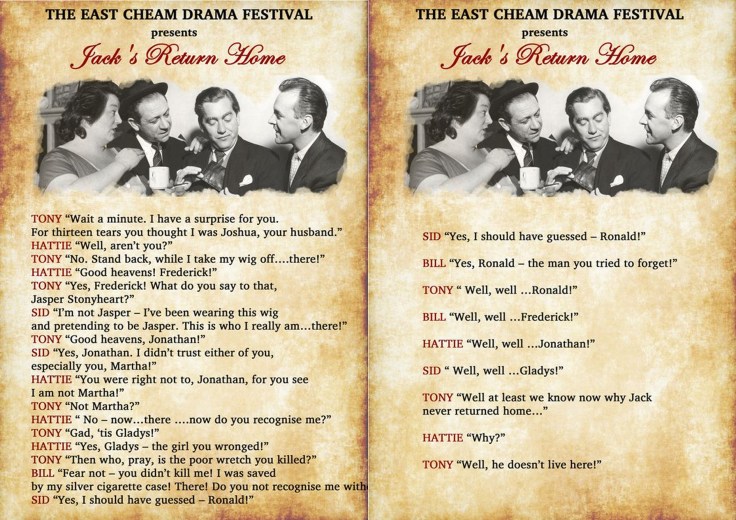



 We are left to imagine what he looks like. He never uses violence as a matter of habit, but his inner rage fuels a temper which can destroy those who are unwise enough to provoke him. Why is he so bitter, so angry, so disgusted? Of himself, he says: