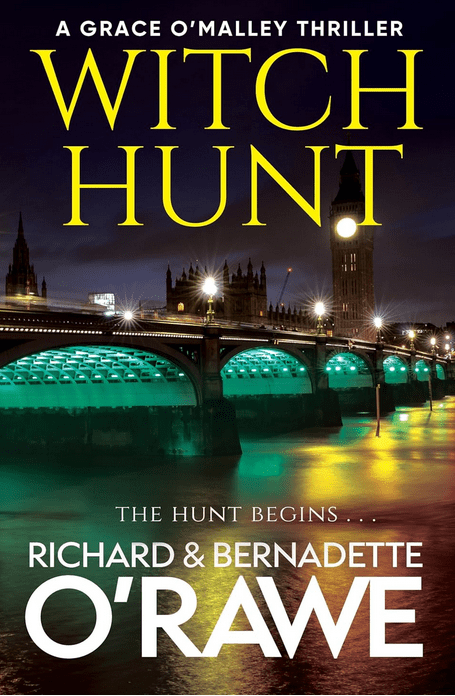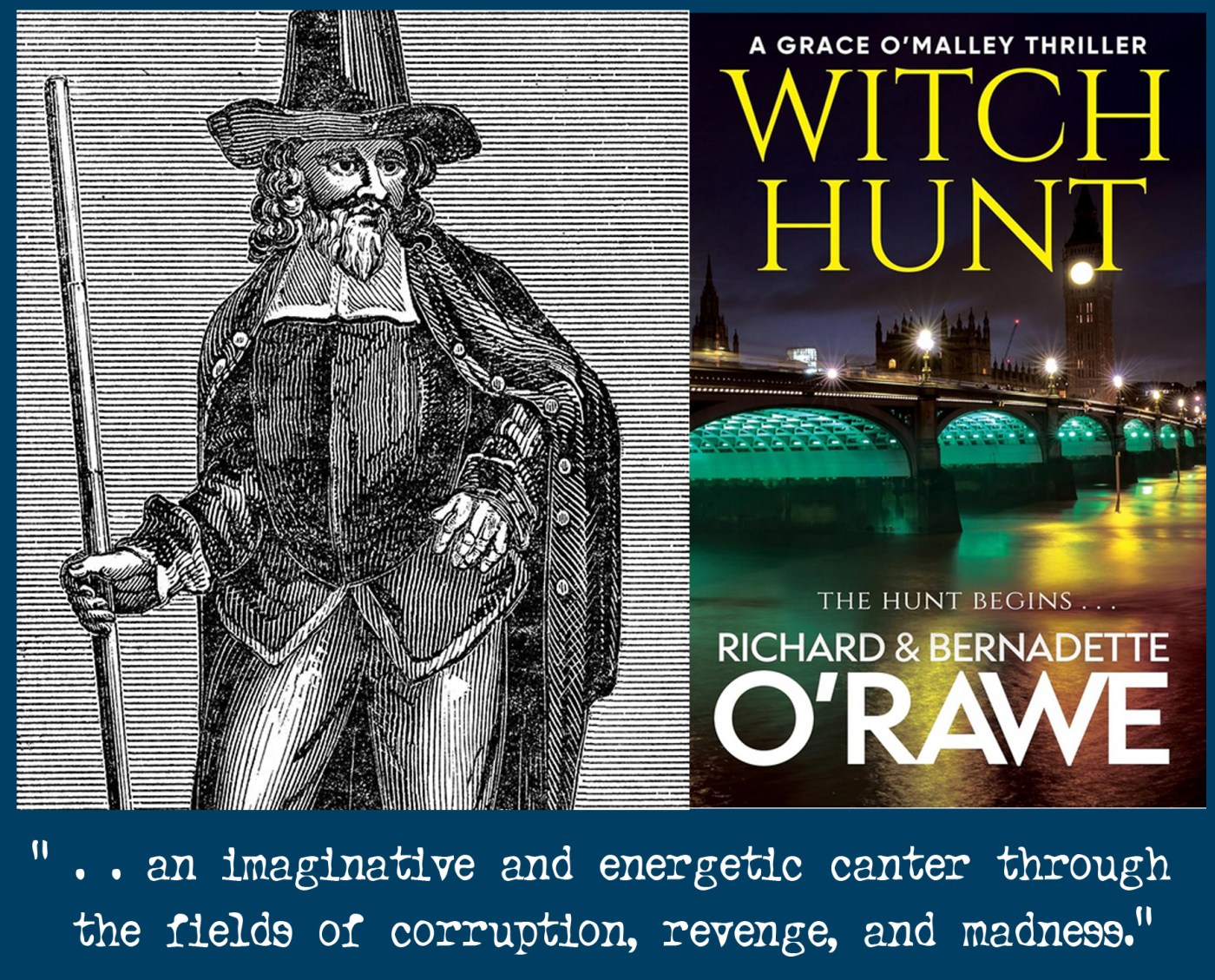

Detective Superintendent Grace O’Malley, of London’s Met Police, is not going to feature in a Sunday evening TV prime time cosy crime series any time soon. She rides a Harley, is rude and abrasive and, for good measure, her husband has a penchant for BDSM sex with students looking to supplement their income. In another part of the city (it is Halloween) we have Juliette Boucher, a TV journalist. She receives a bizarre phone call from a man who calls himself the Witchfinder General. He tells her to be on Westminster bridge just before midnight, where she will witness something beyond newsworthy.
And spectacular it is. And gory. A motor launch comes into view, and it is on fire. On it is standing a woman. She burns, too. Then, there is a series of explosions, and the boat sinks. Here’s the thing. It was the so-called Witchfinder General who phoned Grace to tip her off about her husband’s sexual proclivities. When the police try to trace the owner of the boat, they find that it was sold by a retired civil servant to a man called – wait for it – Matthew Hopkins.
For younger readers, the real Matthew Hopkins was a Protestant zealot who, around the time of the English Civil War, toured the eastern counties of the country – Essex, Suffolk, Norfolk, Cambridgeshire and Huntingdonshire – in search of those he called witches. It is estimated that he had over two hundred women – mostly guilty of nothing more than being herbalists or natural healers – violently put to death.
The man who has named himself after this monster is clearly very clever, has sources inside the police force, and is hell-bent on recreating a reign of terror. His first victim, the woman in the boat? Veronica Crosse, a TV medium and celebrity speaker.
The authors have added another (potentially corrosive) spice to their recipe, and one that is not directly connected to the man who has modeled himself on a 17th century serial killer. Grace’s husband Dominic is himself a copper, but not just any old plod. He is Assistant Commissioner Dominic Boswell, of New Scotland Yard.
We are introduced to a bizarre clergyman named Moses Blackmore, who is the incumbent of a tiny parish near Yeovil. He wears a long black coat, a string tie and has a long silver beard. His human flock (he is also a farmer) are less of a congregation than a cult, and are in thrall to Blackmore’s fire and brimstone brand of protestant fundamentalism. While the police procedural aspect of the book had, this far, been impeccably convincing, I realised that there would be a horror-fantasy element to the narrative, too. That is not a problem. I am a huge fan of John Connolly’s Charlie Parker novels, in which he effortlessly blends the PI genre with the supernatural. It’s just that these days, the Church of England simply does not allow an old fashioned vicar to run a single parish. In real life, Moses Blackmore would be in charge of at least four or five other nearby parishes. And, most likely, he would be a woman.
A little over a third of the way through, there is a dramatic raid and arrest in an upmarket London hotel but, of course, it’s the wrong man, and yet another example of the WFG playing the police like a Stradivarius. There is a second murder, this time of another elderly woman spiritualist, hanged from a church tower and then burned. The WFG (and his associates) cause the filmed scene to be played out on a big screen at a huge public gathering in London on Bonfire Night.
Grace eventually cracks the case (or so she thinks) and finds that the perpetrators are connected to some of the most powerful and influential people in government and public service. There is the mother of all twists in the final pages, but I don’t do spoilers, so you will have to find out for yourself. Witch Hunt is an imaginative and energetic canter through the fields of corruption, revenge, and madness, and it will be published by Severn House on 5th May.