
Search

fullybooked2017

Month

April 2026

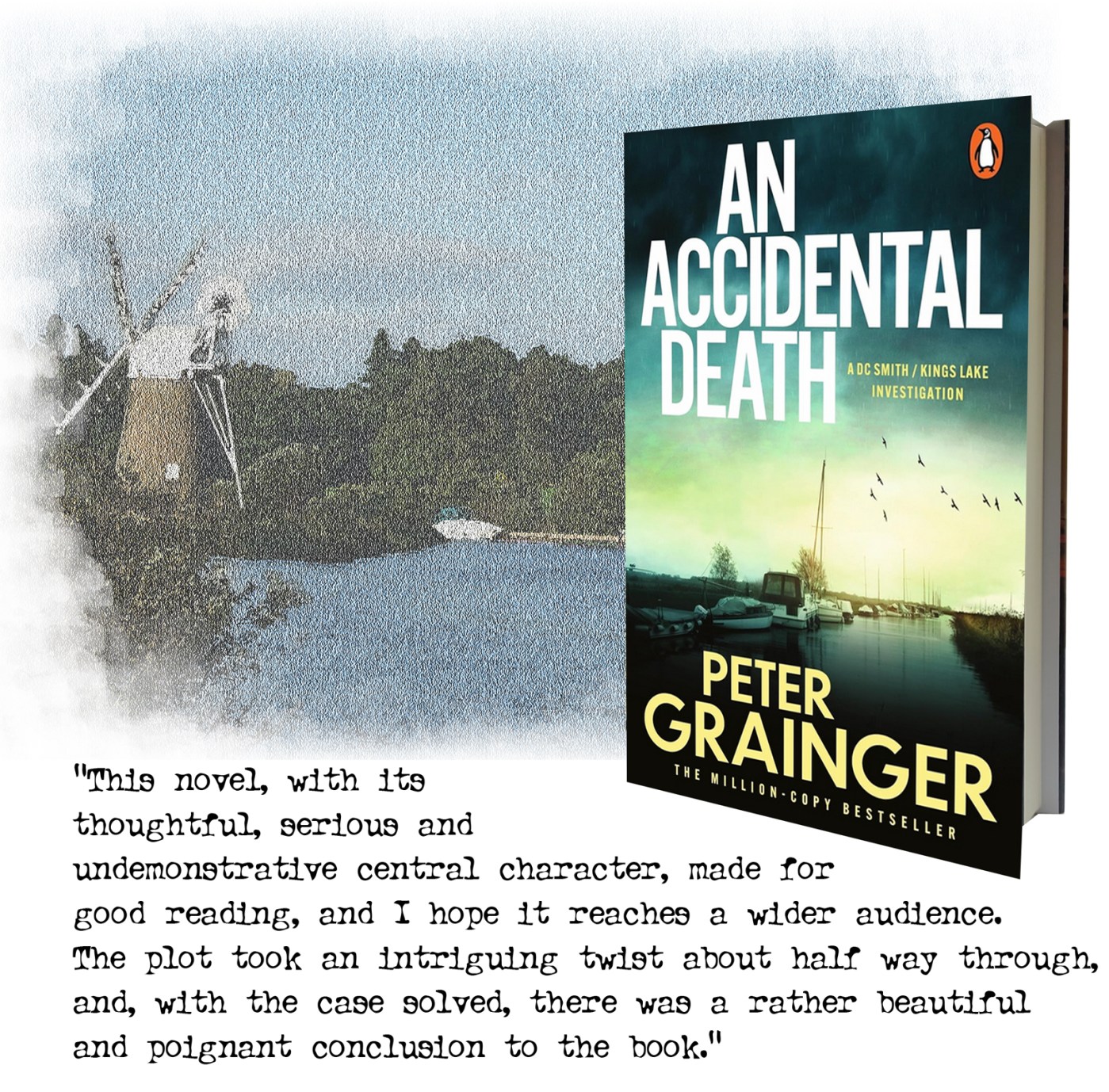
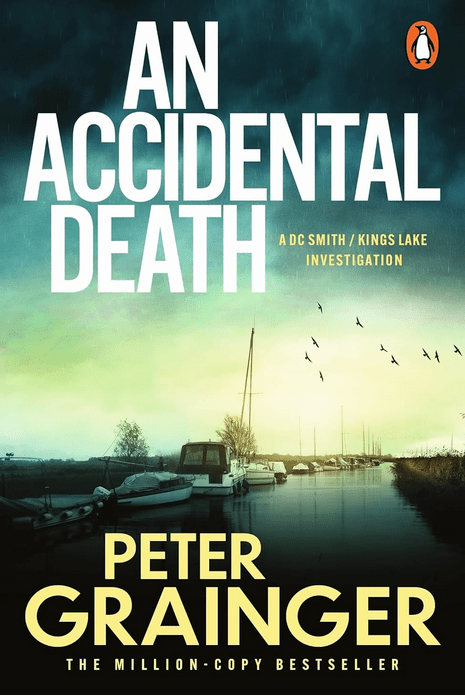
AN ACCIDENTAL DEATH . . . Between the covers

Low ranking coppers are relatively rare in British Cri-Fi. Most central characters are Detective Inspectors. A wise choice, because their rank enables them access to both the grim reality of crime scenes and the frequently fraught pretense of scheduled media briefings. Here, it seems that David Smith, despite being close to retirement age, is still a Detective Sergeant, albeit a very good one. Smith is something of a paradox in that he is both straightforward and complex. His relatively simple approach to detective work involves observation, recording, listening – and then more observation.
We know that he has been demoted from a more senior rank due to a case that went badly wrong. He is a widower, and lives quietly on his own, but we suspect the shade of his wife Sheila is never far away. Despite his appearance – dressed in clean, but slightly shabby, ‘old men’s’ clothes – he is a closet guitarist, and an admirer of both the old blues men and Eric Clapton.This book was first self-published in 2016, but has now been reprinted by Hutchinson Heinemann.
Central to the story is the death of a teenager, found dead in the river after he was last seen diving in, and playing high jinx with a passing canoeist. The setting is the Norfolk town of Kings Lake. A pseudonym for Kings Lynn? Possibly, but not in terms of the river. Lynn’s river, the Great Ouse is very wide, very dirty and very deep – and not the sort of water anyone in their right minds would jump into. This river has more the feel of one of the rivers that make up the Norfolk Broads, full of pleasure boats and picturesque riverside pubs.
When the dead boy’s body is examined, it shows mysterious bruises, and tell-tale signs that someone had tried to administer CPR. Smith persuades his boss that they have, at best a manslaughter on their hands, and possibly a murder. The early investigation centres on the canoeist with whom the dead boy may have had a confrontation. The canoe was hired by ‘a foreign-sounding man’, and Smith, exploring the riverbank a few miles upstream, discovers what is left of it – in the ashes of a bonfire. Nearby is a former stately home, now surrounded by top security fences and – as Smith discovers when he wanders in through a gap in the fence – staffed by serious ex-military types.
Through an old contact, Smith makes enquiries about the man in charge, a suave former army officer. It seems he spent some time in Bosnia in the 1990s, and when a cigarette packet found on the river bank is identified as Bosnian brand, the investigation takes a sinister – and potentially dangerous turn. I wonder if Hutchinson Heinemann was one of the mainstream publisher who rejected this book back when it was first written? Grainger (real name Robert Partridge) subsequently successfully self-published a whole series of novels featuring Detective Sergeant Smith, but now they are being reissued, with the full weight of a major publishing house in support.
Like God, publishing ‘moves in mysterious ways’, but this novel, with its thoughtful, serious and undemonstrative central character. made for good reading, and I hope it reaches a wider audience. The plot took an intriguing twist about half way through, and, with the case solved, there was a rather beautiful and poignant conclusion to the book. It will be available on 30th April.
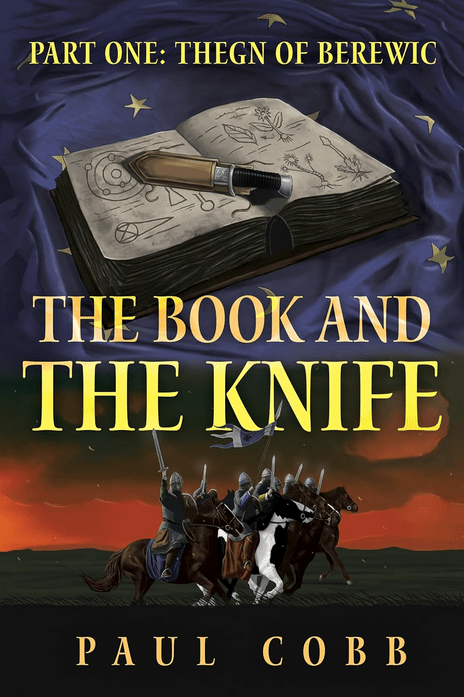
THE BOOK AND THE KNIFE . . . Between the covers

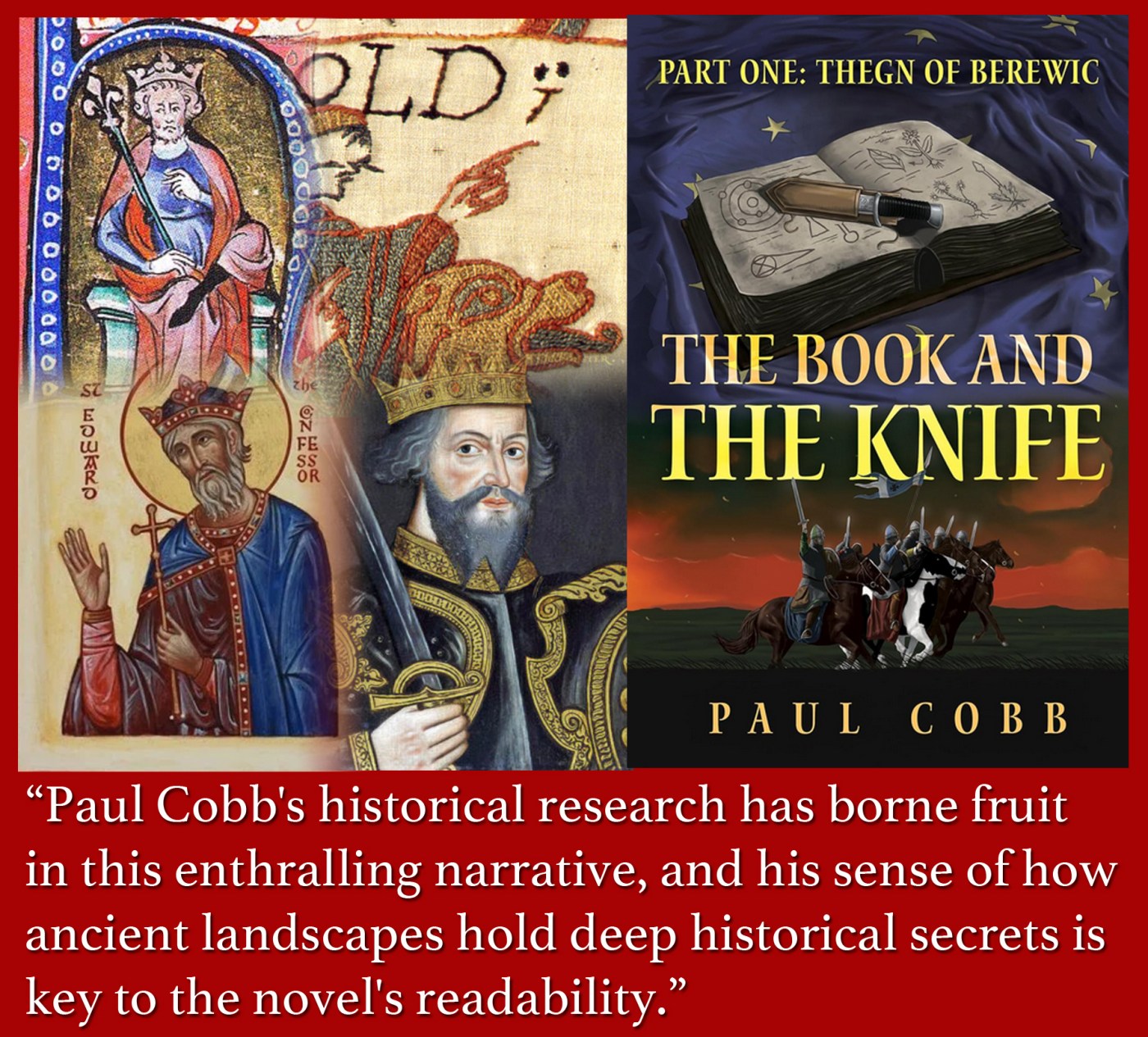
The story begins in 8th century Toledo, but then quickly skips on in time. Same place, but we are in 1031. Three people sit at a table, and there is something close to a seance. The young woman, Samra, is a Sephardic Jew. Felipe is a Benedictine monk from France, while the second man is called Alhacen, and he is an Arabian scientist.. The centre of attention is an ancient book. A spirit voice materialises and, I must confess, my heart sank for a moment, as it seemed I had blundered into some kind of sword and sorcery novel which I avoid like the plague. My fears were unfounded, however, as the narrative soon switches to Sussex, England, also 1031.

A quick historical heads-up. England in 1031 was ruled by the relatively benevolent Dane, Cnut, while the Moors still ruled much of Spain, as they would until the 15th century. Central to the novel is the dynastic struggle between the House of Wessex, basically descendants of King Cnut, and including Edward the Confessor – and the House of Godwin, headed by Earl Godwin, and then his son Harold. In the background, of course is Duke William of Normandy, who we first meet as an eight year-old boy. On a less regal level, Cobb peoples the villages, fields and forests of southern England and Normandy with convincing characters such as Gilbert, the forester from Valognes, and his daughter Estraya.

The titular objects are not in themselves of deep significance to the lordly participants in this drama, but they are of personal moment to certain individuals. That is, until the powerful men battling to rule England, come to believe that the book and knife between them contain powerful portents that will predict the outcome of the conflict. Then, possession of the treasures, becomes a matter of life and death.The book, an ancient repository of learning, science and astronomy, is eventually entrusted to Felipe, while the knife, with the enigmatic inscription, ‘I save a life, I take a life, I make a life’ on its blade is carried by Samra.

For me, the most powerful chapter of the book, called A King Returns, describes how, on a September day in 1041, on a beach in what we now call Hampshire, the exiled Edward of Wessex returned after banishment. Greeted by a potentially hostile group of Godwin’s soldiers, Edward stepped ashore. He would be crowned King of England in April 1043. Our history remembers him as “The Confessor”. Cobb describes Godwin’s men:
“Like Wulfstan, many of these English were blond-haired. Being brought up in an English family, speaking English as much as Norman French, the two young men had thought themselves English. But now that they could see the waiting line of men clearly, their long hair and broad features, the axes some had at their belts, the round shields with heavy centre bosses that one or two carried, they looked a different race.And everywhere the glint of gold from fine metal work on shield and sword, on belt and helm, to fine needlework on cuff and hem. Truly, this was a race of gods, not men.”

Paul Cobb’s historical research has borne fruit in this enthralling narrative, and his sense of how ancient landscapes hold deep historical secrets is key to the novel’s readability.
“England had greater manors in size, wealth and status, but Berewic had what it needed to prosper. It had a thegn of standing, freemen and villeins to work their own land and do his service and slaves to do theirs. It had light workable land on the slopes above the village to go with the fertile wet meadows in the valley bottom. Woodland behind it to draw fuel and timber from. And the river that provided fish and brought vessels and trade from the sea to its little quay.”
The Book and The Knife is published by Troubador, and is available now.

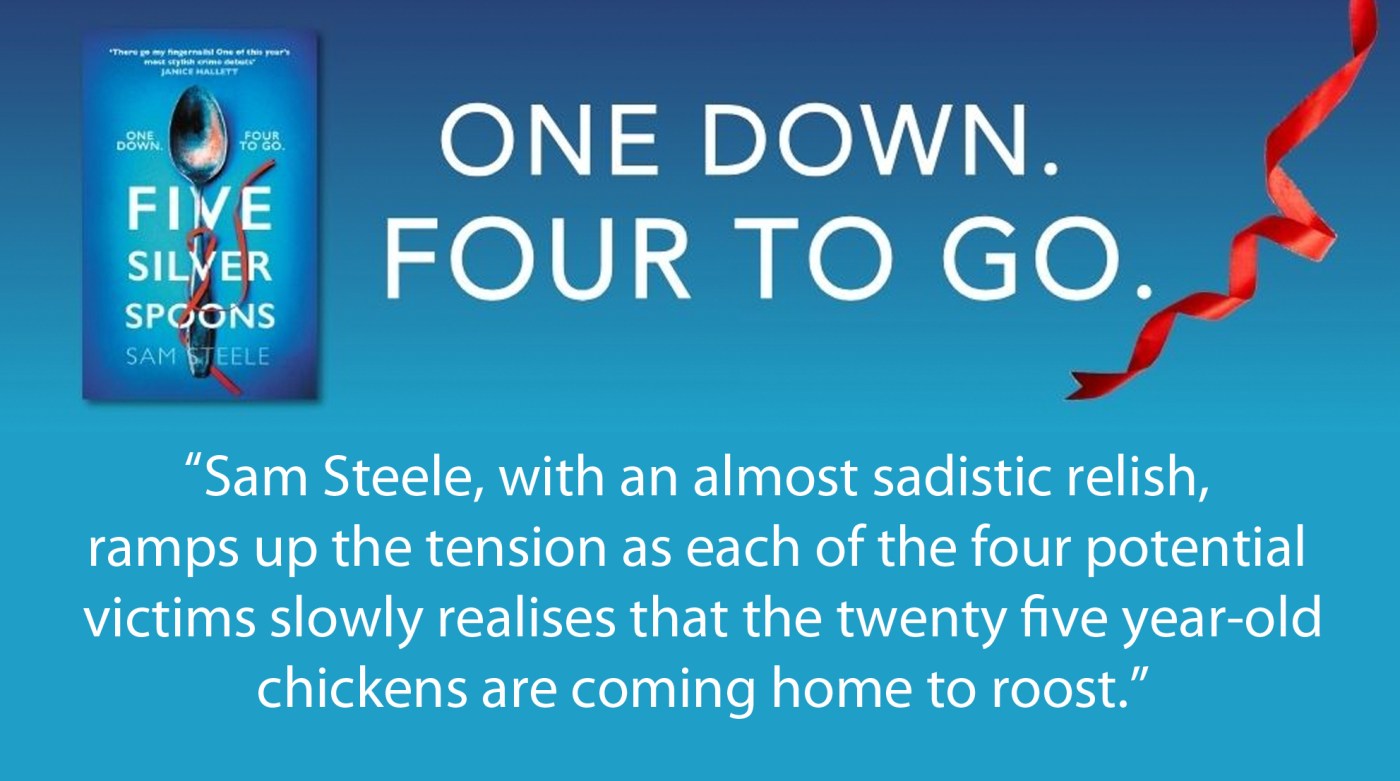
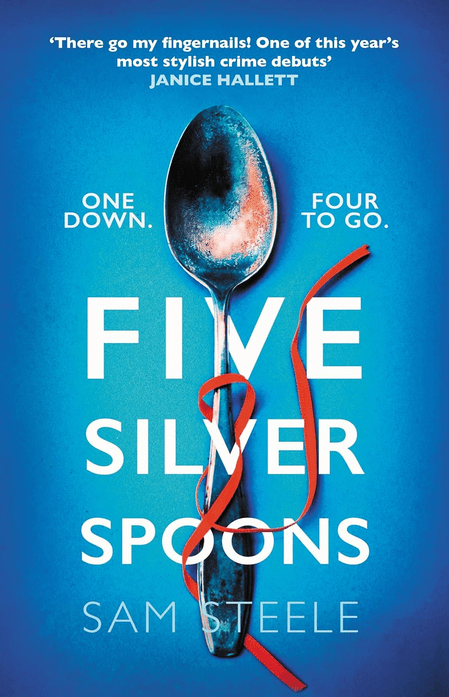
FIVE SILVER SPOONS . . . Between the covers

This a classic revenge thriller. Not quite in The Count of Monte Cristo class, but pretty good. We start in June, and a young serviceman, on leave from his barracks, is cycling to his mother’s house when he is hit by a car. The five young undergraduates in the car leave him for dead, but he survives. Time is supposed to be a great healer, but some wounds remain open and fester.

We skip two decades, and now that man is out for vengeance. The five titular silver spoons have all prospered. In the order they are presented to us they have become a deeply respected surgeon, a supposedly Green media hustler, a university lecturer, a junior cabinet minister and a failed rock star (but very successful junkie). The latter receives a postcard of the Cambridge college he and his four friends attended. On the back is scrawled, “you’re first”. He is soon found dead. The other four occupants of the car on that fateful night have been sent a similar card, each inscribed, “who’s next?”

Author Sam Steele introduces us to DI Hope Fenton. If you were hoping to find a fictional senior copper who is happily married with a smoothly purring domestic background, you will have to look elsewhere. Hope is still married, by the skin of her teeth, to forensic scientist Adam, but he does most of the heavy lifting with their twins, while she prefers the solitude of her father’s barge on the Regent’s Canal.

Sam Steele, with an almost sadistic relish, ramps up the tension as each of the four potential victims slowly realises that the twenty five year-old chickens are coming home to roost. Meanwhile, Hope focuses on a Bulgarian criminal, Jack Garrett’s dealer, who she believes had a hand (and a baseball bat) in his death. She tries to do her job free of emotion and impulse, but sometimes her head is in a different place. The knowledge that her young son Noah was abducted several years ago while they were supermarket shopping, and had never been found, is like a malevolent tinnitus, constantly present and debilitating.

There’s a fatalistic 1830’s poem, known as Sounding Rafters. It has been set to music, and one quatrain reads,

“Stand! stand! to your glasses, steady! 
Tis all we have left to prize; 
One cup to the dead already–
Hurrah! for the next that dies!”


In this case, ‘the next that dies’ is university lecturer Alistair Monroe. Our as-yet-unnamed cyclist from the prologue has also been indulging in some serious blackmail. Ajay Desai, the surgeon, for example, has been siphoning off £500 a month from the savings account set up to pay for a £20K camper van trip around California for himself and family. Former ferocious criminal barrister and now Justice Secretary Lois Blackstock MP was the alpha member of the quintet back in the day, and she remains thus. She meets with the other two survivors – Desai and Gideon Makepeace, the renewables guru, and hatches a plan to fight back.

Just over a third of the way in, we realise that Sam Steele has been playing us, and rather cleverly. We learn that the blackmailer and the killer are not one and the same person. One is identified. He is Ross Livingstone, the odd man out on that corridor in St Giles College all those years ago. The misfit who was ridiculed. The English scholar whose ability dwarfed that of his five potentially high flying room-mates. Now, he lives in a dingy flat and sweeps up rubbish for the council in Gloucester. But is he the killer or the blackmailer?

Gideon Makepeace is murdered, and then Ajay Desai dies. Lois Blackstock is arrested, as DNA traces have been found at the murder sites implicating her. By this time, however, we know who the killer is, and it is a very clever twist inserted by the author into what is already a complex plot. Five Silver Spoons will be published by Allison & Busby on 23rd April.

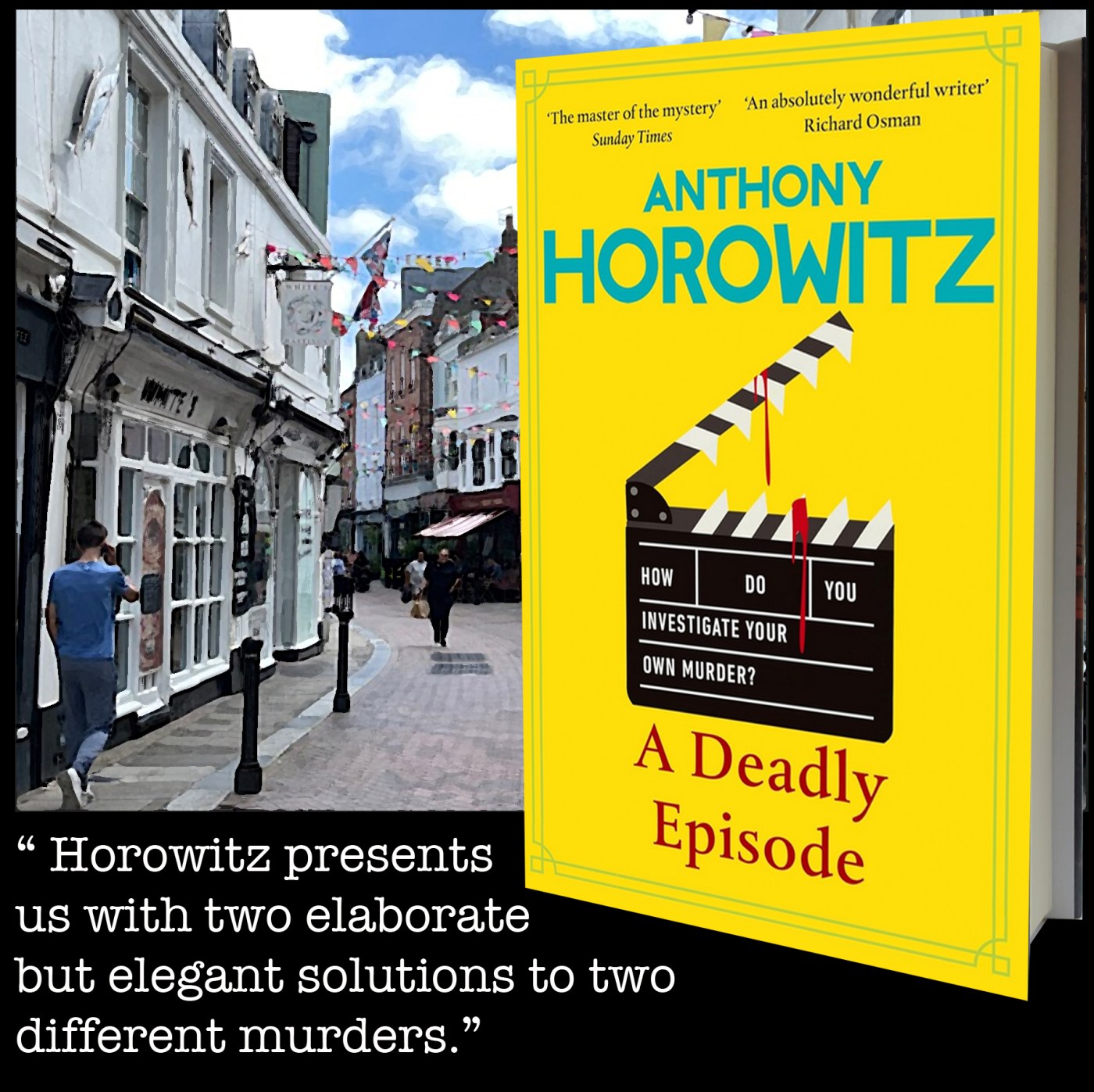
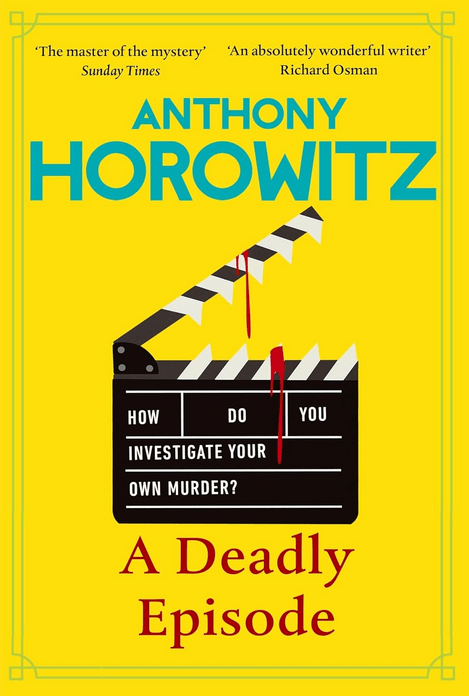
A DEADLY EPISODE . . . Between the covers

For those unfamiliar with the series, the concept is simple, if unusual. Central to the story, and narrator, is Horowitz himself in his real life persona of author and TV screenwriter. The fiction begins with the presence of a former police officer called Hawthorne who now works as a private investigator. The pair originally teamed up when Horowitz hired Hawthorne to provide him with real life mysteries that could be turned into CriFi plots.

Here, things become even more self-referential, as the first book in the series, The Word is Murder, is being turned into a major feature film, but the production, filmed in Hastings, the setting for Horowitz’s finest creation, Foyle’s War, is beset by problems.The screenwriter, producer and director are at each other’s throats, the project is way over budget already and the killer comes – literally – when the actor playing Hawthorne, David Caine, is found dead in his Winnebago, an expensive Japanese kitchen knife embedded in his throat.

Both Horowitz and Hawthorne are quickly called in by the Sussex police to help with the investigation. There are some tasty suspects. James Aubrey is Caine’s agent, but was about to be sacked, despite having played a huge part in the actor’s rise to fame. Teresa de Leon, the producer, having just been filleted for cash by a family dispute, knows that her only salvation is an insurance claim on the abandoned film. Next in the queue is director Cy (Cyril) Truman. He is, as they say, as camp as a row of tents, and admits that he fancied David Craig with a vengeance, and had done all in his power to boost the actor’s career. But was his largely unrequited passion enough to provoke him into a savage knife attack? Then we have the screenwriter. Horowitz is rather naughty in giving us a complete disconnect between her Christian name and her surname. Shanika Harris speaks in a studied Estuary English, and is as woke as a dawn chorus blackbird. She met Caine when she was a student, and was seduced by both his dynamic good looks and his Thunbergian zeal for the the environment and his hatred for those who enjoy a decent steak. Could the revelation that Caine occasionally ‘batted for the other side’ have provoked a frenzied attack?

Just over half way through the book, there is a dramatic shift in the narrative. Horowitz, knowing the stars’ Winnebagos bear the characters’ names, not than those of the actors, wonders if Hawthorne himself may have been the target, rather than the actor. Hawthorne reveals that there is, indeed, someone in Hastings who hates him with a vengeance. We then learn the story of the Murder at Foss Hall, which was Hawthorne’s first case as private detective. In a (rather large) nutshell, Rupert, the son of the Foss Hall owners, was involved in a fatal road accident. Duncan McClintock, the estate factotum, covered up Rupert’s culpability, but blackmailed the young man. When McClintock went missing, presumed dead, his blood was found in Rupert’s car. Hawthorne, a local man, was hired by the family to extricate Rupert from the mess. The result was that Harry Morgan, another estate employee, was convicted of the crime, and it is his widow – a barmaid in a Hastings pub – who has nursed a visceral hatred of Hawthorne since her husband’s death.

The detecting partnership between Horowitz and Hawthorne is Holmesian in one sense. Hawthorne is much the sharper of the two and frequently has to point out clues to his more affable and conciliatory partner. They aren’t even friends, let alone companions, Hawthorne never having had to bother with the drinks party social choreography that writers have to learn in order to pitch stories to agents and sell TV projects to programme commissioners.

Despite one or two interesting discoveries by the fictional Horowitz, it is Hawthorne’s attention to detail that closes the case, and the real Horowitz presents us with two elaborate but elegant solutions to two different murders. You can read my reviews of previous books in the series – The Word is Murder, The Sentence is Death and Close to Death – by clicking the titles. A Deadly Episode will be published by Century on 23rd April.

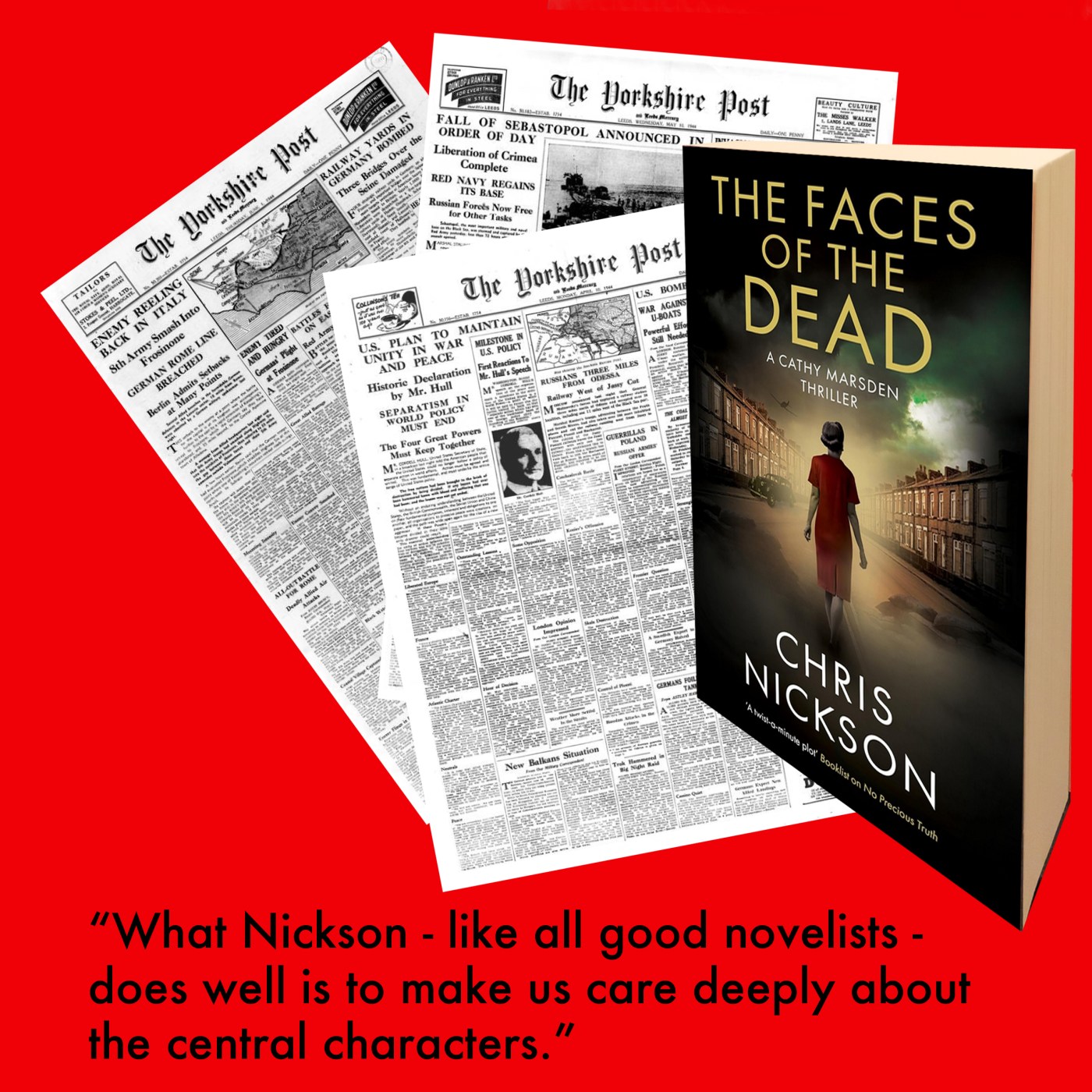
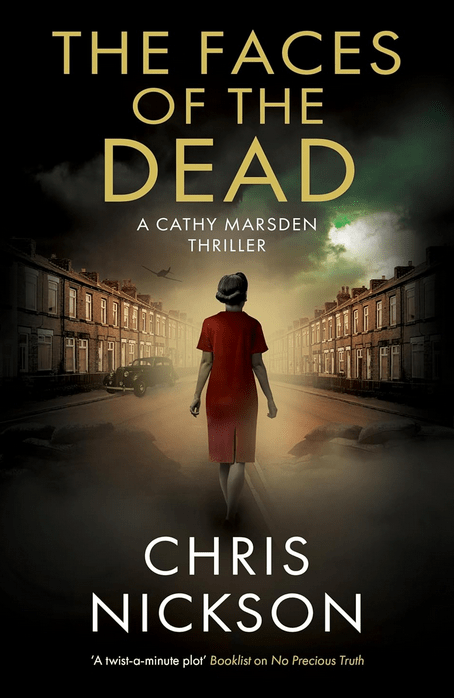
THE FACES OF THE DEAD . . . Between the covers

Can crime novels teach you anything about a location? Fans of the late Phil Rickman would argue that they knew the Hereford/Wales borderlands through his Merrily Watkins novels. Readers of Jim Kelly’s Phillip Dryden books might , as a consequence, claim a nodding acquaintance with the Fens. London? Perhaps too vast and unknowable despite the best efforts of Mark Billingham and Tony Parsons. Leeds? I knew it through countless visits to an undergraduate son, but always found the place rather intimidating. Chris Nickson lives there, and has used it as the background for three series of novels. In those featuring Simon Westow we are in Georgian times. The baton is then handed on to Tom Harper, who bestrides the city like a colossus from Victoria’s reign to the period after The Great War.

Now we are in WW2, with a redoubtable young woman, Cathy Marsden, who has been seconded from the local police force to the Special Investigation Branch, an embryonic group whose work sits in the gap between regular policing and military intelligence. We are in the spring of 1944. Cathy is newly engaged to Tom, a mechanic with the Royal Electrical and Mechanical Engineers. He has served in North Africa, where he has managed to keep himself out of the firing line. Now, after a spell of leave, he has been recalled.

There are rumours that the Allies are building up to ‘something big’. At work, Cathy and her colleagues are investigating a fatal car crash in which a local spiv and his girlfriend were killed. More intriguing is the fact that the boot of the car was filled with handguns stolen from American and British barrack armouries.When another small time local crook, Ricky Hopper, ends up being mangled in the metal waterwheel of a local factory, Cathy realises that these are deep waters, as dark and dangerous as the River Aire itself.

Nickson effortlessly captures the privations of ordinary Britains during the war.
“Cathy settled with her fish paste sandwiches wrapped in greaseproof paper and thermos flask of tomato soup. Her mother made the same thing each week. One more routine of war, she’d be happy to leave behind.”

The author makes other very apposite cultural references. Safe in her own bed, in her own home, Cathy reads herself to sleep with Daphne du Maurier’s Hungry Hill, a romantic saga about an Irish family, published just a year earlier.

Vernon Scannell wrote:
“Whenever war is spoken of
I find
The war that was called Great invades the mind:”

That terrible conflict hangs heavy over the Marsden household. Gassed while ‘doing his bit’, Cathy’s father’s lungs were ruined, and every breath is a struggle. There is a terrible irony that just three decades later, the same mortal enemies are intent on ripping out each others’ hearts.The SIB search narrows in focus. They are looking for two men. Dandy Wilson is the new Mr Big in the Leeds underworld of touts and black marketeers, while Corporal Lyle Brevitt is the source of the pilfered American stores. Anxious to find the latter is US military policeman Frank Graves.The SIB receive reliable information about where to find Wilson, but when they raid the property, their quarry is gone. Given the timescale, the inescapable conclusion is that someone is passing on inside information to the fugitive. Does the leak come from the regular police or – unthinkably – from someone in SIB?

Eventually, both Wilson and Brevitt are tracked down and the traitor within is unmasked. What Nickson – like all good novelists – does well is to make us care deeply about the central characters. Here, we leave Leeds on the eve of ‘D’ Day, and we can only hope that Cathy’s Tom survives what is to come, and returns to claim his bride. The Faces of The Dead was published by Severn House on 7th April.

Blog at WordPress.com.

Up ↑