Search

fullybooked2017

Tag

murder

THE FRITH BANK HORROR . . . A savage murder in 1901 (part two)

FBH header

SO FAR – March, 1901. William Kirk, by trade a plate-layer for The Great Northern Railway lives with his wife and younger children in a modest cottage beside Frith Bank Drain, just north of Boston, Lincolnshire. He has been unable to work for some time, and is convinced that his wife Ellen is having an affair with a younger man – farmer Henry Robinson. Ellen has temporarily gone to stay with the Robinsons – just the other side of the Frith Drain – as Mrs Eliza Robinson is due to give birth, and has asked for nursing.

A newspaper reported on the violent events of Friday 22nd March 1901.

The Murder

Kirk, having virtually decapitated his wife, and threatening to do likewise with Henry Robinson – the man he thought was cuckolding him – headed back to his own home, covered in Ellen’s blood, and with her desperate screams no doubt echoing in his head. Was he insane, as his legal defenders were to claim late, or was it that terrible male anger – repeated in murder after murder over the years – at his woman becoming more attracted to someone else?

Kirk made no attempt to escape the area, but put up a fierce struggle with the police and was soon in custody. The next step was the inquest into the death of Ellen Kirk, and it was held in a back room of The Malcolm Arms, a nearby pub (pictured below)

Malcolm Arms copy

The proceedings were grim for all those present, but the law had to take its course. Unlike today, where news is instant and digital, court reports sold newspapers.

THE INQUEST AT SIBSEY. VERDICT OF WILFUL MURDER AGAINST KIRK

The inquest was opened by the District Coroner (Dr. F. J. Walker, at the Malcolm Inn, Anton’s Gowt, Sibsey, at three o’clock this afternoon. The inn is a quaint brick building, with an old-fashioned swinging sign standing up from pillar on a stone base in front of the house, and is in a picturesque situation. The gowt’s bridge, from which the neighbour takes its name, is close to hand. The inquiry was held in the large parlour, and Mr. Charles Gilliatt was foreman of the jury. Supt. Wood, of the Spilsby police, Supt. Costar, the North Holland police, and Supt. Adcock, of the Boston Borough police, were present. The Coroner having formally opened the inquiry, the jury retired to view the body. On their return Fred Kirk, the accused’s son, was the first witness called. He identified the body as that of his mother, and said she was 46 years of age. He last saw her alive on Friday night. He did not see her again until that day.

In reply to Supt. Wood, witness said was in service at a farm close by, and went home on Thursdays and Sundays. On Thursday night, in answer to a note from his mother, he visited her at the house of Mr. Robinson, Frith Bank. In the kitchen he found his father and mother with Mr. Robinson and   the servant girl. Some unpleasantness had evidently occurred between his father and mother. His father said he should not. allow her to stay at Mr. Robinson’s until Tuesday. Witness tried to persuade his father to treat his mother more kindly.

After a time witness and his father left the house together, and went to his father’s house, where they slept, instead of witness returning to his situation. On the way his father promised to treat his mother more kindly, and said he would go and see after a job at Higdon’s. He would go there on Lady-day. On Thursday morning, at about 11.30, witness was passing Mr. Robinson’s house, and he saw his mother near the front gate. His father was standing also some distance off. His mother made complaint to witness of his conduct towards her. His father came up and said, “What is she she telling you now?” After further conversation, witness went along the road in the direction of his own home.

Henry Robinson, a pleasant-looking young farmer, was the next witness. He said he lived on Frith Bank. On Tuesday evening, Ellen came to nurse his wife. On Friday morning Kirk came into the house, and sat in the kitchen. Witness was in the room about a quarter of hour, and while he was there, there were some words between Kirk his wife. Witness afterwards went about the premises as usual about his work. At about 9.30 maid-servant, Amy Barber, called him into the house where he saw Ellen Kirk lying on the ground with her head on a block wood. Kirk was leaning over her with knife razor cutting the back of her neck, holding the head with his hand.

Witness at once shouted “What are you doing?” Kirk did not answer, but got up, and ran at witness with the weapon in his hand. Witness fetched a manure fork, and told Kirk leave his wife alone, he would knock him down. Kirk then went away. Witness fetched a man named William Bedford, who was at the brickyard close by. On looking at the body, witness found it was lifeless.

Dr. Reginald Tuxford was called. He said on Friday morning went see Mrs. Robinson and found he had already been sent for to see a woman who was lying in the back yard with her throat cut. She was quite dead, and death had taken place immediately. Witness had further examined the body that day and found a large gaping wound in the chin, running across the neck. The blood vessels on the left side were completely divided, and the wind pipe and gullet were separated. There were two or three gashes on the left of the face, near the jaw bone. In addition to these there was a wound at the back of the neck reaching nearly from ear to car, and also a wound down the vertebral column. Witness had also examined the internal organs of the deceased and found them healthy, with the exception of the kidney. The body was absolutely bloodless. He came to the conclusion that death was caused by shock following upon haemorrhage from the injuries caused to the threat.

Screen Shot 2022-05-28 at 15.20.16

Screen Shot 2022-05-29 at 20.07.34Inevitably, William Kirk was found guilty of murder, and his case was sent to the July Assizes in Lincoln. The trial, presided over by Mr Justice Wright (left) was a formality, and Kirk was sentenced to be hanged. Just days before he was due to meet James Billington for the first – and only time – the powers that be judged that he was insane at the time of the killed his wife, and he was reprieved, and sent to Broadmoor.

The future lives of the Kirk children are beyond the scope of this story, but one can only hope that they were not permanently traumatised by the killing of their mother. It is reported that Kirk wrote several letters to them while he was awaiting execution, but none of them ever came to visit him. Public records show that the death of a William E KIrk was registered at Easthampstead, Berkshire, in the summer of 1916. Easthampstead was almost certainly where deaths in Broadmoor were registered, so it seems Kirk reached his allotted three score years and ten without ever leaving the secure hospital. The one flicker of light in this sad tale is that the 1901 census records that the Robinson household now included Walter, aged just two weeks, so it is good to know that the murder of Ellen Kirk had no lasting effect on the woman she was nursing, or the baby she was hoping to help bring into the world.

FOR OTHER LINCOLNSHIRE MURDER STORIES, CLICK THE IMAGE BELOW

County Map

THE FRITH BANK HORROR . . . a savage murder in 1901 (part one)

FBH header

Frith Bank Drain is one of the innumerable channels which bisect the flat lands around Boston. Parts of the area are fens, meaning land reclaimed from fresh water inundation, while others are marshland, i.e. land recovered from salt water flats. Needless to say, the land rarely rises to much more than a couple of metres above sea level and, visually, it presents the visitor with huge skies and long horizons.

Our story centres on two people who lived beside the Frith Bank Drain. William Enoch Kirk was born in the village of Kirkstead in 1846. Kirkstead sits on the River Witham and at Anton’s Gowt, the Frith Bank Drain branches eastward. Gowt, by the way, is believed to be a corruption of ‘go-out’, meaning a sluice or outlet. Ellen Mountain was born in Boston in 1853. Her parents lived in Blue Street. A newspaper report contemporary to the tragic events about to unfold wrote:

Wedding copy

Will and Ellen lived at Kirton for a time, but eventually moved to Frith Bank. Will had a decent job as a plate-layer with the Great Northern Railway Company, and their modest cottage overlooking the Frith Bank Drain was described as “a pleasantly situated dwelling of the plain brick type, comfortable if not exactly roomy within. Attached is a piece of garden land, whereon much produce is cultivated, and the rent is only £5 year, and there were a couple of pigs in the sty, so the family lived “passing well.”

The 1891 census tells us that the Kirks had six children ranging in age from Herbert (14) to Arthur (1).

1891

The address is given as 1 Frith Bank Road which, if we follow modern numbering, puts in north of the drain, but a newspaper reported that the Kirk’s house was on the Boston side of the drain. The adjacent page of the census mentions Pepper Gowt Lot and part of Tattershall Road, which seems to confirm that.

It is rather ironic that when the 1901 census was taken, on the evening of Monday 1st April, the Kirk family were no loner a unit. Arthur, for example, now 11 years old, was described as a boarder in the house of George and Ellen Taylor, of Frithville, while Frank Kirk, again described as a boarder, was living with Henry and Caroline Nixon, Henry Nixon being a stockman on a nearby farm.

The circumstances that led to the terrible events of 22nd March, 1901 are, again, best described in the words of a contemporary newspaper report.

Illness

Money – or the lack of it – was clearly preying on Ellen Kirk’s mind, and she was glad to be offered paid employment as a nurse to supervise the impending birth of a child to Eliza Robinson, the wife of Henry Robinson, who ran a farm on the other side of the Frith Bank Drain. Although the two households were almost a stone’s throw from each other, Ellen Kirk had to cross a trestle footbridge (almost certainly the one pictured below) across the drain to be at the Robinson home. She told William that she would be staying there until the new baby was safely brought into the world.

Footbridge

For reasons best known to himself, William Kirk was convinced that the main reason for Ellen’s visits to the Robinson’s house was that she was having an affair with Henry. In the days leading up to 22nd March, he was haunting the house, turning up at all hours and demanding to speak to his wife.

IN PART TWO
The dreadful events of Friday 22nd March 1901
A family is destroyed
Another job for Mr James Billington

THE FIRE KILLER . . . Between the covers

TFK new header
Screen Shot 2022-05-20 at 19.02.27Late again!
My excuse is that I am a one-man-band here at Fully Booked, and notwithstanding  the occasional erudite contribution from Stuart Radmore (who has forgotten more about crime fiction than most people will ever know), there are only so many books I can read and review properly. My first experience of Peterborough copper DI Barton  is the fifth of the series (written by Ross Greenwood), The Fire Killer. Peterborough is a big place, at least for us Fenland townies, but is rarely featured in CriFi novels. I am pretty sure that Peter Robinson’s DI Banks grew up there (The Summer That Never Was) and Eva Dolan’s Zigic and Ferreira books are certainly set in the city.

Peterborough is a strange city in some ways. Its heart is divided in three. One third is its medieval heritage and its magnificent cathedral; another third is its railway history, while the final slice belongs to the fact that some anonymous civil servants decided, in the 1950s, that it should be a ‘new town’. Hence its sprawling suburbs, divided by interminable dual carriageways and countless roundabouts, stippled with anonymous housing developments, most with the faux-pastoral suffix – choose your own – such as Meadows, Leys, Gardens, Fields and even Waters. I digress. No matter that Peterborough isn’t quite sure whether it is in Cambridgeshire or Northamptonshire, this novel is rather good.

We are in standard police procedural territory here. DI John Barton is large, bald, busy, rather unglamorous, but a decent copper. He and his team are called in to investigate a body found in a skip that has been deliberately set alight. The body is eventually identified as that of a young woman whose life has unraveled after she had fleeting success as a fashion model. Barton and his ‘oppo’, Sergeant Zander, are sure that the culprit lives in one of a row of four shabby terraced houses not far from the skip, but which one is the home of the arsonist?

Screen Shot 2022-05-20 at 19.51.23Ross Greenwood (right) has fun inviting us to make out own guesses, but also makes the game a little more interesting by giving us intermittent chapters narrated by The Fire Killer, but he is very wary about giving us too many clues. The dead girl, Jess Craven had been involved with a very rich dentist with links – as a customer – to the London drug trade.

There are a couple of other mysterious blazes, but when one of Barton’s suspects meets a horrifying end in another fire – but this time in a torched Transit van – the search for The Fire Killer just seems to be chasing its own tale. The rich dentist, Stefan Russo, is clearly hiding something, but he is ‘lawyered up’ and even though he has some very questionable contacts in London, the police are unable to get close to him.

Then, there is a breakthrough – or at least Barton thinks it is – and someone confesses to being The Fire Killer. As readers we can judge how much of the book is left, and it is clear to us that Barton has some work still to do before he closes the case. There is, as we might predict, a very clever twist in the tale, but when an exhausted Barton finally goes off for a family caravan holiday in Sunny Hunny (Hunstanton), we suspect that at the back of his mind there is still a some doubt about the true identity of The Fire Killer.

John Barton is an excellent creation, and this book is cleverly plotted, with one or two spectacular bursts of serious violence. It is published by Boldwood Books, and will be available in paperback and Kindle from 30th May.

DEATH COMES TO BINSWOOD END . . . a dark deed in 1920s Harbury (2)

Harbury header

SO FAR –  Harbury, 1922. Rugby ne’er-do-well William Rider bigamously married Rosilla Patience Borton in 1918. As well as mistreating her, he has become  involved with her (under-age) sister Harriet. Rosilla has left the house in Pennngton Street, Rugby, to seek protection with her mother in the house at Binswood End, Harbury.

Rachel Freeman, Rosilla’s mother, hearing rumours that William Rider has been the seen the previous evening in the area, on the morning of Thursday 7th September had tried to make the house secure fearing that he was a threat. At the coroner’s inquest into the death of Rosilla, Mrs Freeman was questioned about her fears:

Coroner

The next witness called was Harriet, who had been an apparently willing victim of Rider’s womanising. Despite the fact that she knew Rider had just murdered her sister in cold blood, she was what the papers called ‘a recalcitrant witness.’

Harriet

Rider claimed that he had taken the gun only to scare Rosilla into returning to him, and that it had gone off accidentally when she grabbed it in self defence. Rosella had been shot dead with a cartridge from a 16 bore gun. The medical examiner estimated that there were over one hundred pellets from the cartridge embedded in her skull. Neither the coroners inquest nor the magistrates’ court considered Rider’s version of events credible, and he was sent to face trial at Warwick Assizes in November. Meanwhile local papers covered the mournful event of Rosilla’s funeral.

Funeral

Screen Shot 2022-05-19 at 20.13.36

Rider’s trial began on Friday 17th November 1922. Mr. O’Sullivan and Mr. Bartholomew appeared for the prosecution, and Rider, who pleaded not guilty in a firm voice, was defended by Mr. Harold Eadon. In his opening address Mr. O’Sullivan, after outlining the facts of the case, submitted it was clear case of deliberate and premeditated murder. When Rider finally came to the witness box his story was that he had spent the night in the lavatory of the house, and had the gun so he could go out in the morning to shoot rabbits. He said that he went upstairs to see Rose, and she made a gesture from the bed which he interpreted as her wanting him to kiss her. As he stooped down to do so, Mrs Freeman ‘mistaking his kind gesture as a threat’ sprang from her bed and tried to grab the gun, at which point it went off, killing Rosilla instantly.

As preposterous stories go, Rider’s was up there with the best, and the jury took little time in pronouncing him guilty, at which point the judge donned the black cap.

Presiding over Warwick Assizes that November was Montague Lush ( above left) Wikipedia says of him:

“He retired from the bench in 1925 due to deafness, and was made a Privy Counsellor the same year, although he never sat on the Judicial Committee of the Privy Council. Although highly regarded as a barrister, he was not a successful judge: he was said to be too diffident and sometimes let personal feelings influence his decisions.”

William Rider’s legal team may have sensed that Mr Justice Lush’s mediocre reputation  gave them a chance of overturning the death sentence. It was not to be. The appeal was made before The Lord Chief Justice, Gordon Hewart but, like the relatively lowly Southam coroner and magistrates before him, he believed that William Rider was, by the standards of the time, unfit to walk among his fellow men. Regional newspapers across Britain carried this simple story on Tuesday 19th December 1922:

Penalty

FOR MORE WARWICKSHIRE MURDERS, CLICK THE IMAGE BELOW

Warwickshire

DEATH COMES TO BINSWOOD END . . . a dark deed in 1920s Harbury (1)

Harbury header

I’ll be quite upfront. I am in my seventies and most people consider me a reactionary. I rant on with the best (or worst) of them about the decline in modern morality and the collapse of traditional family values, but as I research these old murder cases, it becomes increasingly apparent that the ‘good old days’ of sound and stable families may be something of a false recollection. This case involves a terrible murder in the village of Harbury in September 1922. The victim was a 24 year-old woman called Rosilla Patience Borton.

Rosilla was born in 1898, and she first appears on public records in the census of 1901. She is living in Cross Green, Bishop’s Itchington  a member of a large household headed by William Freeman, and his wife Rachel. Seven of the ten children have the Freeman surname, while Alice Violet (9) Arthur Henry (7) and Rosilla share the surname Constable. Rosilla is described as ‘daughter of the wife’. William Freeman, like many other men in the village was a stone quarryman. So, already, there is something of a puzzle. It seems that Rachel Freeman had a dalliance with someone called Christopher Constable, long enough to produce three children. Constable, incidentally, died in 1898 at the age of 35. Whatever the truth, we mustn’t ponder too long, because there are more mysteries ahead.

Borton Census 1911

In the summer of 1915, Rosilla married Edward James Borton. He and his family are listed in the 1911 census as living in Binswood End, Harbury (above) He was 18 years senior to Rosilla, and died at the age of 36 in April 1917. Rosilla may have mourned his passing, but she was young, and had cause to hope that her best years were yet to come. In January 1918, Rosilla married William Rider, again a much older man. He was a chimney sweep and window cleaner who lived in Rugby. He was, to put it mildly, a ‘wrong ‘un’. It transpired that he had never divorced his first wife, who was still alive. The home, in Pennington Street, Rugby (below),  which Rosilla joined, already had two young women in residence. One was Rider’s daughter by his legal wife, and two were the fruits of Rider’s relationship with yet another woman.

Pennington Street

It was not a happy house, at least for Rosilla, as Rider had started knocking her about. To make matters even worse, Rider seems to have tired rather quickly of his new ‘wife’ and instead began making advances to Rosilla’s half-sister Harriet. Harriet was born in 1906, so she was only just ‘of age’ by the time Rosilla was killed, and it seems she had fallen under Rider’s spell some time before this.

Rosilla had, on several occasions fled the house in Rugby to seek refuge with her mother who, by this time was living in Binswood End, Harbury. Was this the same house previously occupied by the Borton family? I can’t answer that question, sadly.

The Gloucester Echo of 11th September 1922 carried this chilling story:

A Village Tragedy

FOLLOWING, IN PART TWO

A murder
Trial and conviction
A job for Mr John Ellis

ELLIS

A SEA CAPTAIN SPURNED . . . A Grimsby murder, 1893 (part two)

Rumbold feature

SO FAR – It is November 1893. 39 year-old Grimsby fishing smack captain Henry Rumbell (widely called Rumbold in press reports) has been having an affair with a young Grimsby girl, Harriet Rushby. Rumbell, fearing that Rushby was ‘playing the field’ had arranged for her to stay under the watchful eye of one of her relatives while he and his ship set to sea for a long trip.

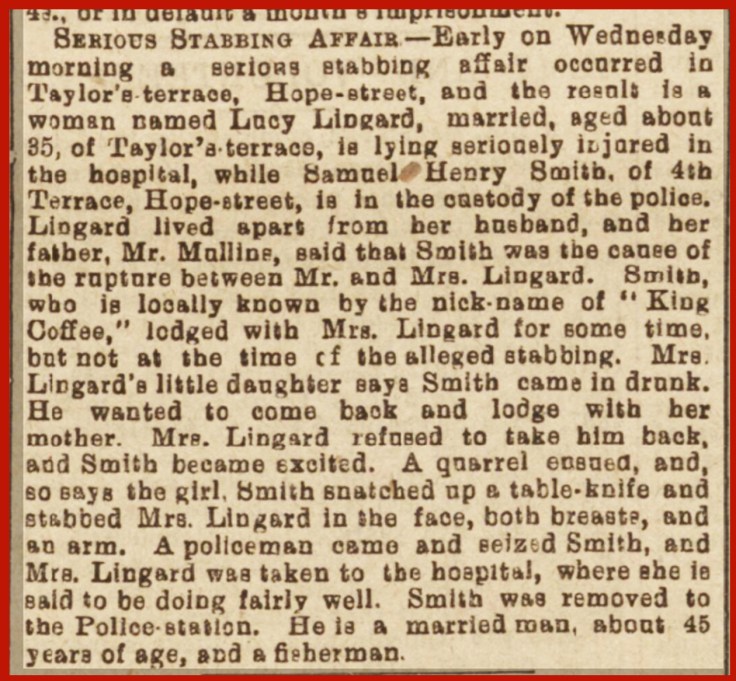
Rumbell’s fishing trips normally lasted eight weeks, but Harriet Rushby was clearly playing on his mind, and after just two weeks at sea, he turned Nightingale round and headed back to Grimsby. On reaching port on the afternoon of Tuesday 7th November, Rumbell made straight for the house in Ayscough Street where he had hoped that that Harriet had been staying under the watchful eye of her cousin Charles. The news that he had seen neither hide nor hair of the young woman sent Rumbell into a barely controlled rage. He set off for Victoria Street where he purchased a revolver and a box of cartridges from a gunsmith’s shop.

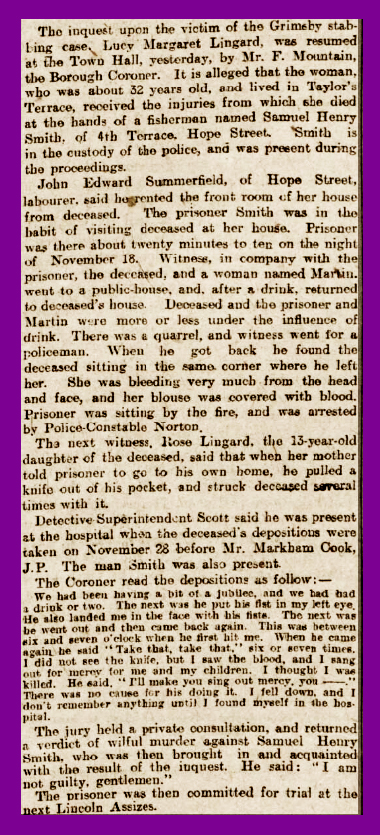
He visited a woman called Ann Widall in Emmerson’s Terrace, and she told him that Harriet had been seen heading for what the press called The Empire Music Hall. This is another of the mysteries in this story. Where it was, I don’t know, as what became known as the Empire Theatre in Cleethorpes wasn’t built until 1895. Eventually Rumbell caught up with Harriet on the Cleethorpes Road. She was in the company of a woman called Mrs Bowdidge and a man called William Burns, who lodged with her at 124 Tunnard Street. The four of them continued an evening’s drinking, ending up at a long-since-closed pub, The Barrel in Lock Hill. At about eleven o’clock, Rumbell and Rushby went to the house in Tunnard Street, where Rumbell demanded to know what the girl had been doing behind his back. When Bowdidge and Burns arrived at the house a short time after, what they heard was reported in a local newspaper:

The Killing

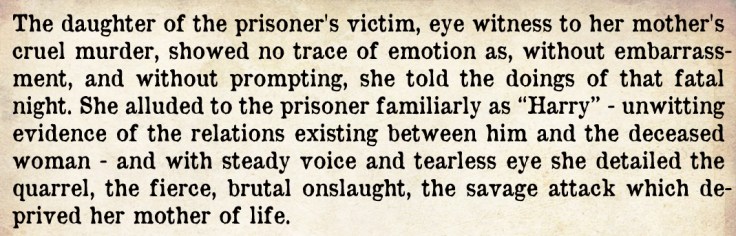
From here, the path from Grimsby police station to the gallows at Lincoln Gaol was straight and smooth. This, once again from a contemporary newspaper:

“Rumbold was tried at Lincoln Assizes on Wednesday, November 29th, before Mr. Justice Charles. There was practically no defence, the only efforts of counsel on behalf of the prisoner being directed to obtain a verdict on the less serious charge of manslaughter. The summing up of the judge was distinctly unfavourable to this view of the case. His Lordship said he did not suppose anyone could have any doubt of the sort of life led at the woman Bowdidge’s house, and there it was that the girl took up her abode whilst the prisoner was away at sea, but in point of law nothing took place that would justify them in reducing the criminality of the charge After nine or ten minutes consideration the jury returned a verdict of guilty, and then it was that the prisoner, who had presented a calm demeanour throughout the four hours’ trial, made most extraordinary statement. He expressed his satisfaction with the verdict, and asked his Lordship to grant him, as he was a great smoker, as many cigars and cigarettes as he wished for between then and the day of his death. ” I want to die an English hero,” said the wretched culprit, ” though,” he added, ” I know it is a disgrace to my country and my friends and comrades.”

Henry Rumbell’s demise on 19th December 1893 was described graphically in a Grimsby newspaper report:

Execution

Tragically, male on female violence, whether fueled by jealous rage or not, shows no sign of abating as we supposedly become more civilised. The list of men who have murdered women is a long one, and includes such infamous names as Dr Crippen, Reginald Christie, John Haigh, Fred West, Harold Shipman, Levi Bellfield and Wayne Couzens. It remains a matter of debate whether the death penalty would have acted as any deterrent in the more recent cases.

FOR OTHER LINCOLNSHIRE MURDERS, FOLLOW THE LINKS BELOW

The Killing of Minnie Kirby

Death comes to Newmarket

The madness of a daughter

A chapter of horrors

The Spalding poisoner

The strange death of Catherine Gear

A SEA CAPTAIN SPURNED . . . A Grimsby murder, 1893 (part one)

Rumbold feature

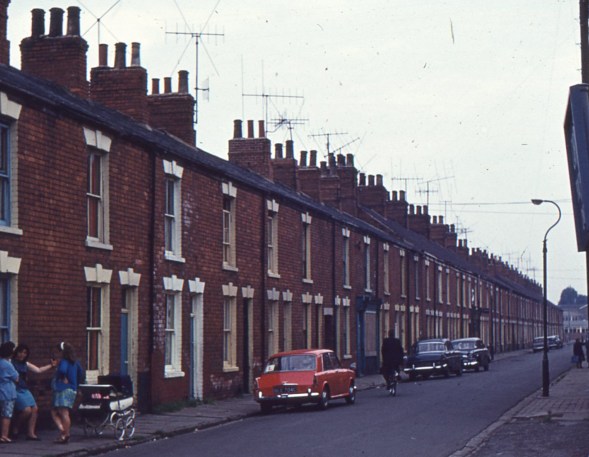
Tunnard Street in Grimsby is in the East Marsh area of the town, cited recently as the most dangerous areas in Lincolnshire in terms of reported crime. Many of the houses just wouldn’t be built today. They are tiny two up-two down terraces, built by 19thC profiteering builders and financiers, eager to make a quick profit. Perhaps violence is embedded in the very ground beneath residents’ feet. But that violence isn’t a recent phenomenon. One of the town’s most infamous murders took place there. 

As far as I can judge, the house that was numbered 124 Tunnard Street no longer exists. Along with its neighbouring houses, it has been demolished and replaced by more modern – and spacious – dwellings. The old chapel on the corner still stands, but rather than being a place where Grimsby’s Pentecostal congregation worshiped, it is now a boxing club.

The old 124 Tunnard Street was, in November 1893, witness to a brutal murder that shocked townsfolk and  attracted attention across England.The two leading players in this fatal drama were Harriet Rushby and Henry Rumbold.

HarrietThe early life *(see footnote) of Harriet Rushby has been difficult to trace. One newspaper report says that she was 24 in 1893, while another says she was 20. There is a death record for December 1893, where a Harriet Rushby was buried in Caistor, aged 22, and a census record for 1881 which gives us a Harriet Rushby living in Lower Burgess Street with her grandparents, but she is listed as being born in 1874.

RumboldHenry Rumbold proved just as problematic, until I realised that his actual surname was Rumbell, and that his family were well known seafarers from Yarmouth. On the night of Sunday 3rd April 1881 he was listed in the census as being on board the ship Tempus Fugit, moored off the Suffolk Coast. It looks as though he was described as Master, while his younger brother Walter was Mate

Census

By 1893, Rumbell was master of Nightingale, a fishing smack operating out of Grimsby. Later reports stated that he had previously been married in Yarmouth, but that the union was  an unhappy one and had not lasted long. In Grimsby, Rumbell had become enchanted by Harriet Rushby, almost half his age, and described as being of ‘very pleasing appearance’. The problem for Rumbell was, however, that his trade meant lengthy absences from Grimsby, and it seems that Harriet Rushby was ready neither to settle down nor to remain faithful to her lover. A contemporary newspaper report primly stated:

“She came of an old Grimsby family, was very respectably connected, but she fell into evil ways, and was the habitual associate of bad men and women. At what time she made the acquaintance of Rumbold is not clear, but at all events an illicit intimacy had existed between them before his last fishing cruise, from which he returned unexpectedly on the fatal 7th of November. “

The pitiful scenario of an older man becoming entranced by a younger woman, and then possessiveness and jealousy leading to tragedy, is as old as humanity itself. It seems that Rumbell had become aware that he was not the only person in Harriet’s life, and in late October,  as he prepared to take Nightingale out into the wintry North Sea for another trip, he had made arrangements. This, from a contemporary newspaper report:

“He had expected being way at sea for eight weeks, and from motives probably of a personal kind had arranged that she should lodge in his absence at the house of her own cousin, Charles Rushby, in Ayscough Street. She did not, however, fall in with his plans. ”

 IN PART TWO

a surprise return
a revolver is purchased
a job for Mr Billington

Screen Shot 2022-05-11 at 20.14.11

* Of the many such cases I have written about over the years, this has been the hardest to research in terms of the people involved. Normally it is possible to trace participants through census and birth/marriage/death records, after picking up the gist of the story from old newspaper reports. This time, however names either don’t exist at all, or don’t match addresses. I suspect, as with Henry Rumbell, names were either miss-spelled or misheard by court reporters and other journalists.

A TASTE FOR KILLING . . . Between the covers

ATFK spine005

Sarah HawkswoodThose of us who are lucky enough to be sent printed copies of novels for review almost certainly have “keepers” – books which don’t go off to friends, free libraries or charity shops once they are read. Looking across at my shelves, I see books by Jim Kelly, Christopher Fowler, Philip Kerr, John Connolly, Phil Rickman, James Oswald, Peter Bartram – and Sarah Hawkswood (left). I was a late arrival at the ‘Bradecote Ball’, but these superb stories of medieval Worcester have joined my list of favourite books which I will not be parted from. A Taste For Killing is the tenth in this splendid series featuring the 12th century Worcester trio of Hugh Bradecote, Serjeant Catchpoll and Underserjeant Walkelin.

Blurb006

It is a bitter January afternoon in Worcester, 1145. The wells have frozen, the streets are empty, and decent folk are huddled around their fires. In the house of Godfrey Bowyer – remember the origin of many surnames – a skilled, but widely disliked maker of longbows, it is supper time. As Godfrey sups his pottage with his wife Blanche, the servants cower in another room, listening to the customary arguments and smashing of crockery. Godfey and Banche (his second wife) frequently disagree, but they are as one when it comes to the adage about it being better to let it all out than to keep it in. Tonight’s row takes an unexpected – and fatal – turn, as both Godfrey and Blanche collapse with the symptoms of poisoning. Blanche recovers quickly enough, but it is to be Godfrey’s last night on earth.

Catchpoll and Walkelin are summoned and are joined – reluctantly – by Bradecote, who was anxiously at the side of his heavily pregnant wife. She has miscarried before, and he is reluctant to leave her, but  suspected murder is what it is, and he joins his two colleagues. The row between Godfrey and Blanche which culminated in a dish of pottage (a soup thickened with grain, containing vegetables and – when available – meat) being thrown at the wall raises the crucial question – the contents of whose bowl redecorated the wall of the house? Was it Blanche’s, and did Godfrey then sup from the bowl intended for his wife? What was the poison, and who put it in the pottage?

It transpires that the Bowyer ménage is far from simple. Runild the servant girl is pregnant, but by whom? Alwin, Bowyer’s apprentice is out of the frame as he is too shy to even look at a girl, let alone do anything more physical, but there is another suspect. The late Godfrey’s  hands often followed not far behind his roving eye, as more than one Worcester woman can testify. Furthermore, what was Blanche’s relationship with the Steward of Worcester Castle, Simon Furneaux, a pompous individual who has a hate-hate relationship with Hugh Bradecote? There was little love lost between Godfrey Bowyer and his younger brother Herluin the Stringere, also a maker of bows, and a man who has his eyes on his late brother’s business. There is even a rumour that they do not share the same father.

medieval-bow-maker_bowyer

One of the many captivating qualities of this book is the reminder of the potent symbolism of the Yew tree in human history. The traditional home of the Yew tree in England is the village churchyard, and there is a deep irony that its wood was used to produce the fine – and lethal – bows that were to dominate medieval warfare. The Yew is also a more direct cause of death, however, as its wood contains toxins that bow makers had to wash from their hands before eating, and the seeds in the delightful red berries contain a deadly alkaloid.

When there is yet another death in the Bowyer household, a local herbalist and bone-setter called Roger the Healer, who has thus far been on the fringe of events, takes centre stage. He suspects that Yew killed Godfrey Bowyer, but a glance at the cover of the novel will give readers a clue as to what caused the second tragedy.

The chemistry between Bradecote, Catchpoll and Walkelin is a work of alchemy in itself. Bradecote is, I suppose, minor nobility, quick-witted and well educated, while Catchpoll is grizzled, rough round the edges, but wily. Walkelin, in the earlier books, was simply a clever but callow lad. Now, however, he uses his apparent naivety and lack of guile to extract information from people who would otherwise be too deferential to Bradecote, or too fearful of Catchpoll’s reputation as a street fighter.

A Taste For Killing is raw-knuckle historical crime fiction which, while it never flinches from describing the often brutal lives of people in 12th century England, still paints a picture of decent, thoughtful folk living honest lives as best they can. Thanks to Sarah Hawkwood’s skill, that picture has a timeless quality. The book is published by Allison & Busby and is out today, 12th May. Click on the images below for my reviews of earlier books in the series.

ROS

BRT

WATD

THE LAST TO DISAPPEAR . . . Between the covers

TLTD header

No-one will ever accuse Jo Spain of being unadventurous. With a best-selling series of police procedurals under her belt – the superb Tom Reynolds novels – a lesser writer might hunker down and play safety first by sticking to the familiar. But that’s not Jo Spain. Her last standalone thriller, The Perfect Lie (click for review), was set in Newport, Rhode Island, and now she takes us to the ski resort of Koppe in icy Finland, where Brit Alex Evans has travelled to identify the murdered body of his sister, Vicky. She was something of a ‘free spirit’, having wandered half the way round Europe doing a variety of temporary jobs (including pole dancing in a Spanish bar), always broke, but always looking for the next big adventure. Her body has been found by an ice fisherman, and has been in the water for some time.

Handling the investigation is local police chief Agatha Koskinen, but Alex is determined to ask his own questions. He discovers that Vicky had been working at a local  hotel and had made friends with an American tourist who is now back in the states, but has an alibi for the time when Vicky disappeared. Agatha has demons of her own to contend with, however, as somewhere out there is the abusive parent of her three children – Luca – and she fears for them should Luca come back into their lives.

As ever, Jo Spain weaves a complex mystery, and gives us a split time narrative. She takes us back to 1998 where we are a fly on the wall in the house of Miika and Kaya Vartinen. Miika is a Sami – one the ethnic people of what used to be known as Lapland. He is a reindeer herder. Kaya is pregnant, but Miika is not the father. She is carefully managing the usual symptoms so that when she tells him,  Miika will believe the child is his.

The significance of the book’s title becomes clear when Alex visits Agatha at her home, and she reveals that Vicky is the latest woman to disappear in a ten-year period, and that Kaya Vatinen was the first. She also tells Alex that Miika Vartinen is widely suspected as being involved in the disappearances, but no evidence has ever emerged to connect him to the cases.

With the most delicate of touches, Jo Spain hints at the darker aspects of life in Koppe, where there is an undercurrent of racism towards the Sami people, and she reminds us of the familiar theme of movers and shakers in tourist resorts – think the Mayor of Amity Island in Jaws –  not wanting anything to disturb the inward flow of visitors and their cash. There is also the spectre of an international mining company sensing a million dollar windfall from the minerals sitting beneath the pristine and picturesque Finnish landscape.

Jo Spain’s tricksy thrillers are very cleverly written. She relies on us making assumptions. She invites us to make these assumptions rather like a fly fisherman casting the cunningly constructed fly on the water, hoping it will fool the fat trout (aka the reader). When we realise we have been gulled, we might turn back a few ages and react with something like, “hang on – didn’t she tell us that …?“, only to find that what she wrote was  perfectly ambiguous, and that we have jumped to the wrong conclusion. Perhaps there’s a few too many mixed metaphors there, but I hope you get my drift.

There are only two predictable things about a Jo Spain thriller. The first? There will be a dramatic plot twist. The second? You won’t see it coming! The Last to Disappear is published by Quercus, and will be out on 12th May. For more of my reviews of Jo’s books, click the image below.

Screen Shot 2022-05-01 at 20.00.42

Blog at WordPress.com.

Up ↑