

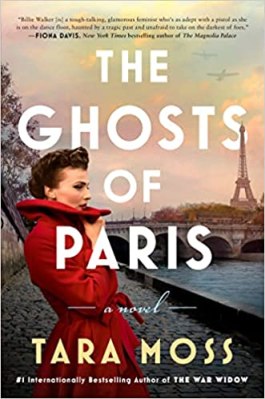
It is 1947, and in Europe both victors and vanquished struggle to rebuild shattered lives, towns, cities and democracy itself. Although nearly 30,000 Australian servicemen lost their lives, their homeland remained physically untouched. Former war reporter Billie Walker has set up as a private investigator in Sydney and, with her assistant Sam, is making a decent go of things, but their cases are very parochial and largely mundane. Then everything changes. She accepts a case to investigate the disappearance of Richard Montgomery, last heard of in London, and possibly Paris.
This book is full of interesting historical detail, some of which was new to me. For example, I never knew that flights between Australia and Britain at the time were often made in hastily converted Lancaster bombers, renamed ‘Lancastrians’. Billie and Sam, aboard one of these lumbering giants, take three days to reach London, and when their hearing and sleep patterns have returned to normal, they begin their investigation.
It soon becomes clear that the Richard Montgomery’s London trail has gone cold, and so the pair move to Paris where, from their luxurious HQ of the Paris Ritz they start to make enquiries. At this point, some of the back-story needs telling. Billie Walker was once married to Jack Rake, another war reporter and photographer, but in the vicious chaos that was wartime Central Europe, they became separated. Jack was last heard of in Poland but Billie has had no communication of any kind from him since then, and she fears he is dead. Back in Australia, on an earlier investigation, Billie had accidentally uncovered part of the ODESSA network. This had nothing to do with the Black Sea port, but was an acronym for Organisation Der Ehemaligen Ss-angehörigen, a highly secret group dedicated to smuggling as many former SS men out from under the noses of the Allies as possible. The encounter pitted Billie against one of the most vicious former Nazis in the organisation. She brought about his downfall, but ODESSA have neither forgotten nor forgiven.

Billie Walker is an admirably resilient and resourceful investigator, and Tara Moss tells a tale that gallops along at a cracking pace, and includes a very cinematic scene where Billie fights for her life on very rickety scaffolding high up on the wall of the Cathédrale Notre-Dame de Paris, with Le Stryge (above) gazing impassively at the struggle. The Ghosts of Paris is published by Dutton (an imprint of the Penguin Group) and is available now.

Author Tara Moss (right) has a pretty impressive CV. She holds joint citizenship of Canada and Australia, and is an international advocate for human rights, particularly those of women and children. She is renowned for researching the physical action in her novels, and this has included shooting firearms, being set on fire, being choked unconscious by Ultimate Fighter ‘Big’ John McCarthy, flying with the Royal Australian Air Force, spending time in morgues and courtrooms and obtaining a licence as a private investigator. She has also been a race car driver (CAMS), and holds a motorcycle licence and a wildlife/snake-handling licence.


 For those new to this wonderful series, here’s the back story. Enora Andressen is an actress in her early forties. She has won fame, if not fortune, by starring in what used to be known as ‘art films’ – often European produced and of a literary nature. She has a twenty-something son, Malo, the product of a one-night-fling with a former drug boss, Harold ‘H’ Prentice. ‘H’ and Enora have become reunited, after a fashion, but it is not a sexual relationship. In the previous novel, ‘H’ is stricken with Covid, and barely survives. That story is told in



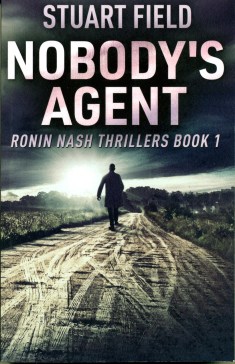 Central character Ronin Nash is a Scot who found himself in America, did a spell in the armed forces, and then worked as an FBI agent. When he is sidelined as a scapegoat in a kidnap case which went tragically wrong, he retreats to a lakeside log cabin hideaway, but is recruited by his former boss to join a new outfit, the Inter-agency Investigation Bureau. He is sent to the small town of Finchley in upstate New York to find out the investigate the discovery of three dead bodies in an abandoned mine just outside the town.
  We learn pretty quickly that something is not quite right in Finchley, but Nash spots this, and realises he is being played. He is smart enough to let the players assume he is ignorant of what is going on and the only question in his mind is just how many of the Sheriff’s Department – and other significant townsfolk – are in on the secret.




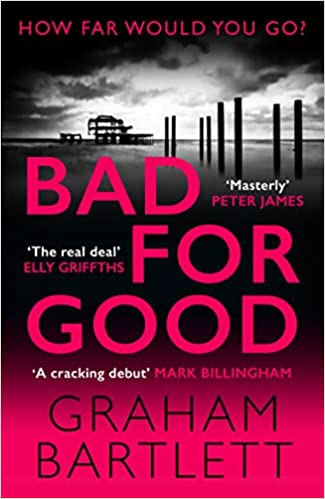 The plot hinges around a series of dire events in the life of Jo Howe’s boss, Detective Chief Superintendent Phil Cooke. Already trying to keep his mind on the job while his wife is dying of cancer, fate deals him another cruel blow when his son Harry, a promising professional footballer, is murdered, seemingly a casualty in a drug turf war. He steps down, but then comes into contact with a shadowy group of apparent vigilantes, who tell him that Harry was not the clean-cut sporting hero portrayed in the local media – he was heavily into performance enhancing drugs. The vigilantes – whose business plan is to provide a highly illegal alternative police force, where customers pay for the quick results that the Sussex Constabulary seem unable to provide – blackmail Phil into standing in the election of Police and Crime Commissioner. He is forced to agree, and is elected.
 Graham Bartlett (right) was a police officer for thirty years and mainly policed the city of Brighton and Hove, rising to become a Chief Superintendent and its police commander, so it is no accident that this is a grimly authentic police procedural. It is also very topical as, away from the violence and entertaining mayhem, it focuses on the seemingly insoluble problem of the divide between the public’s expectations of policing, and what the force is actually able – or willing – to deliver. Bartlett doesn’t over-politicise his story but, reading between the lines – and I may be mistaken – I suspect he may feel that, with ever more limited resources, the police should not be so keen to divert valuable time and resources away from their core job of catching criminals. My view. and it may not be his, is that effusive virtue signaling by police forces in support of this or that social justice trend does them – nor most of us – no favours at all.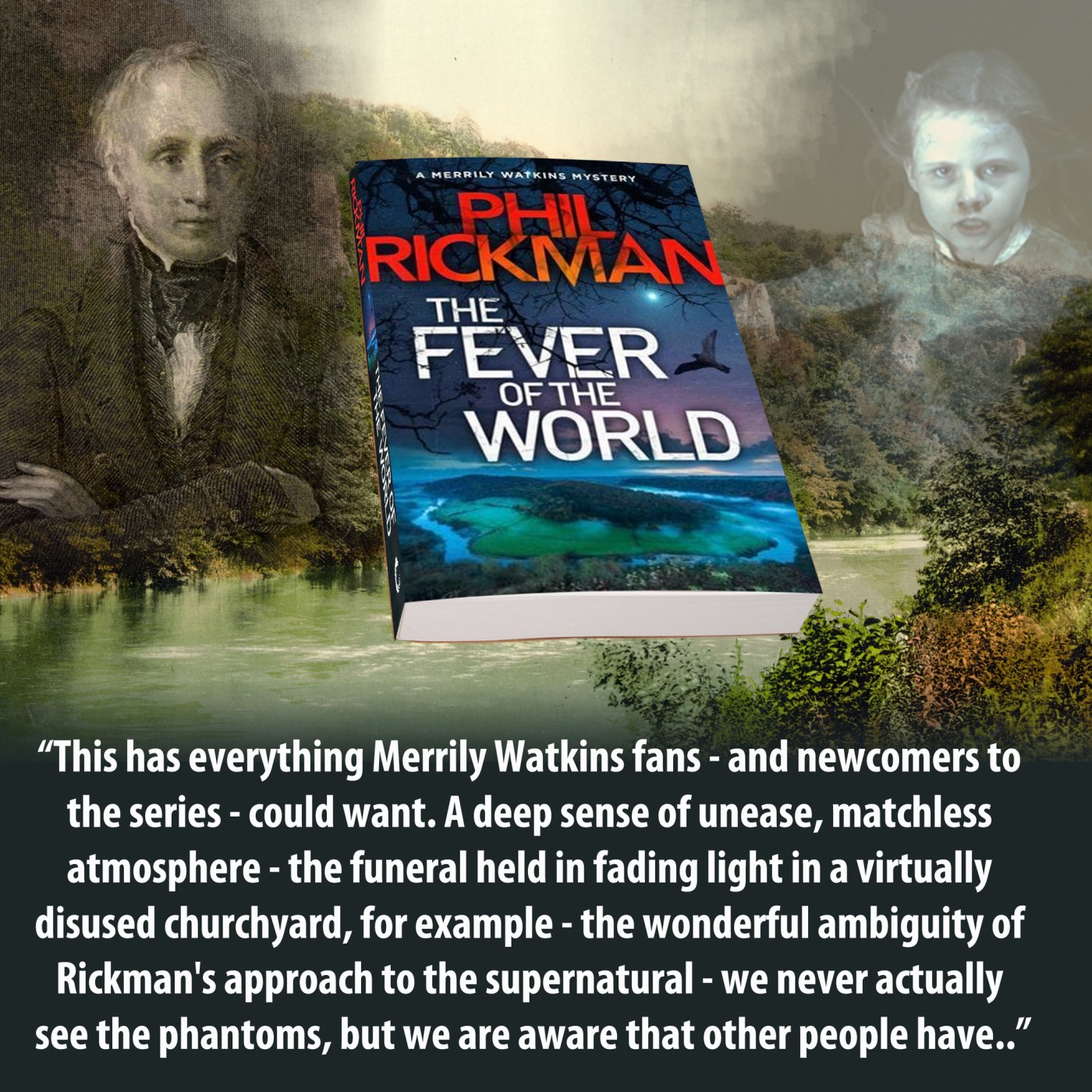




 That is just a quick sample of the whip-crack dialogue in the book, which fizzles and sparks like electricity across terminals. Very soon Mari and Derek realise that the blackmailed judge is also connected to the unsolved murder of a French duel-passport student, Sophie Michaud, and the fate of two women journalists who investigated the case, one of whom is dead and the other missing.
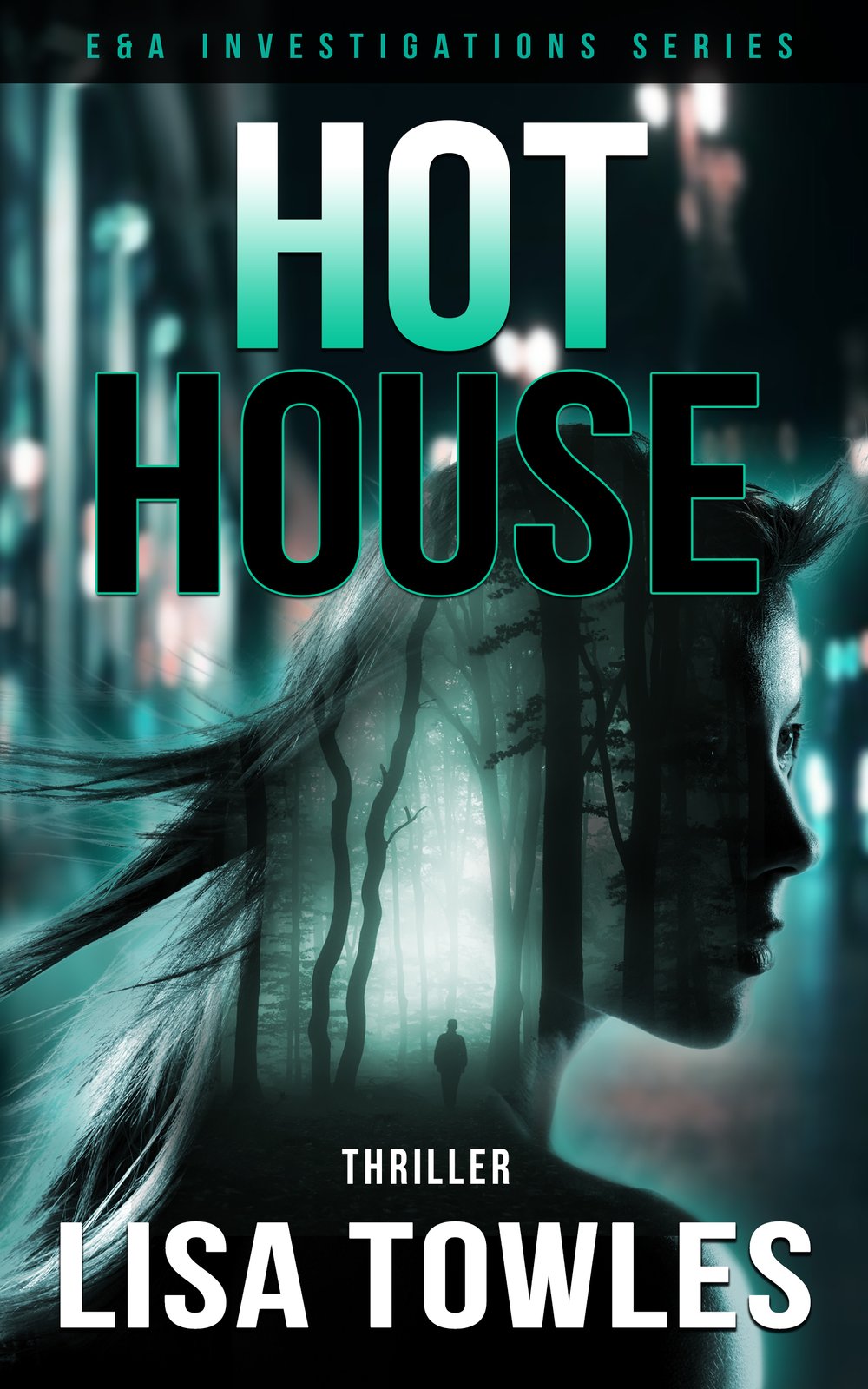
 In the end, the blackmailer of the judge is located, and the killer of Sophie/Sasha is brought to justice, but with literally the last sentence, Lisa Towles poses another puzzle which will presumably be addressed in the next book. Hot House is everything a California PI novel should be. It has pace, great dialogue, totally credible characters and a pass-the-parcel mystery where Lisa Towles (right) has great fun describing how Ellwyn and Abernathy peel back the layers to get to the truth. Sure, the pair might not yet stand shoulder to shoulder with Marlowe, Spade and Archer, or even more modern characters like Bosch and Cole, but they have arrived, and something tells me they are here to stay.

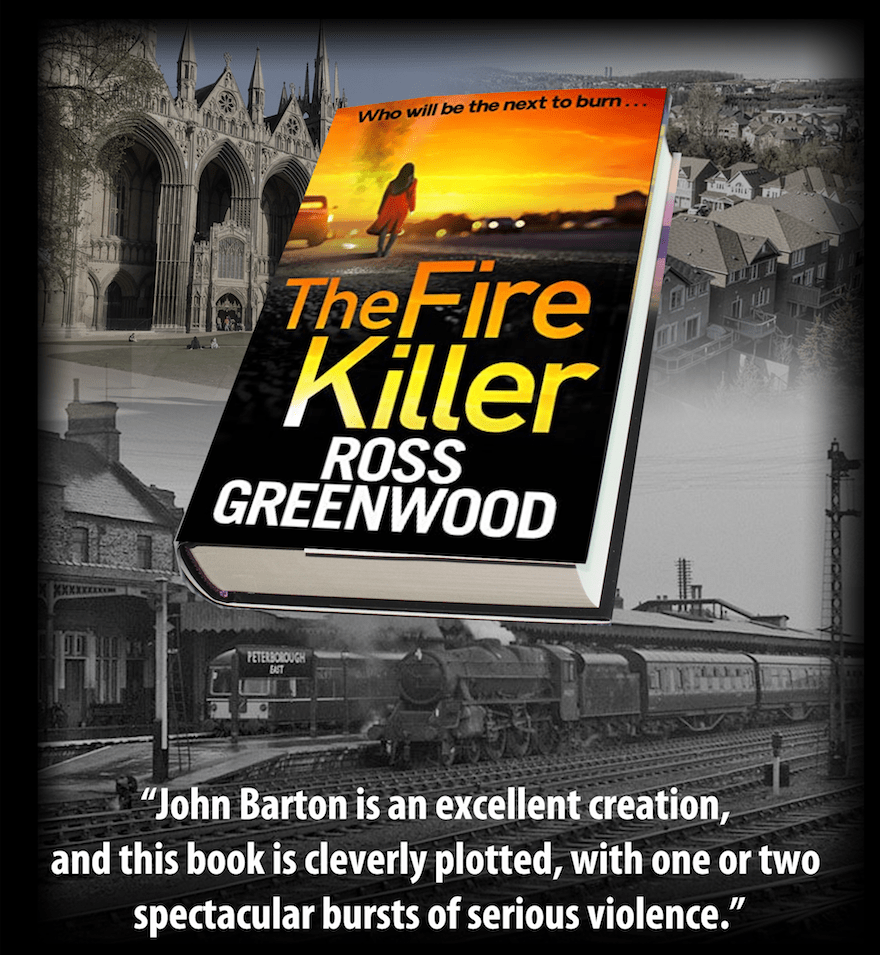

 Late again! My excuse is that I am a one-man-band here at Fully Booked, and notwithstanding the occasional erudite contribution from Stuart Radmore (who has forgotten more about crime fiction than most people will ever know), there are only so many books I can read and review properly. My first experience of Peterborough copper DI Barton is the fifth of the series (written by Ross Greenwood), The Fire Killer. Peterborough is a big place, at least for us Fenland townies, but is rarely featured in CriFi novels. I am pretty sure that Peter Robinson’s DI Banks grew up there (The Summer That Never Was) and Eva Dolan’s Zigic and Ferreira books are certainly set in the city.
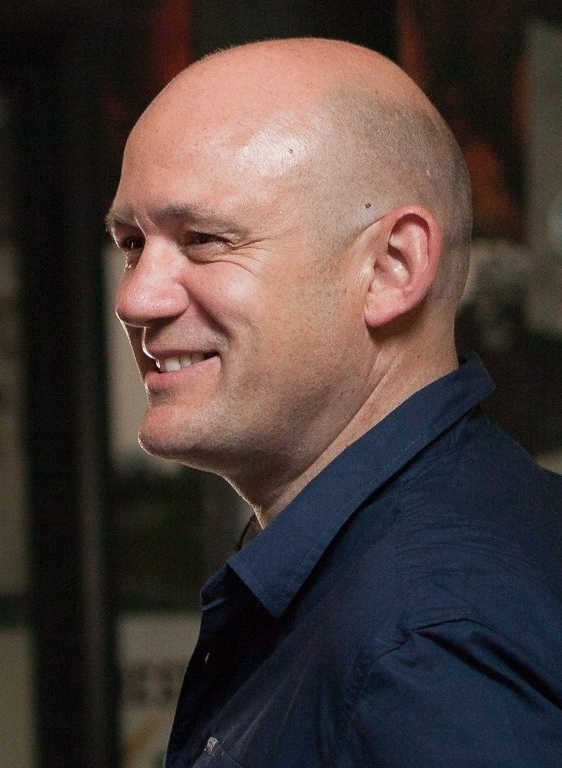 Ross Greenwood (right) has fun inviting us to make out own guesses, but also makes the game a little more interesting by giving us intermittent chapters narrated by The Fire Killer, but he is very wary about giving us too many clues. The dead girl, Jess Craven had been involved with a very rich dentist with links – as a customer – to the London drug trade.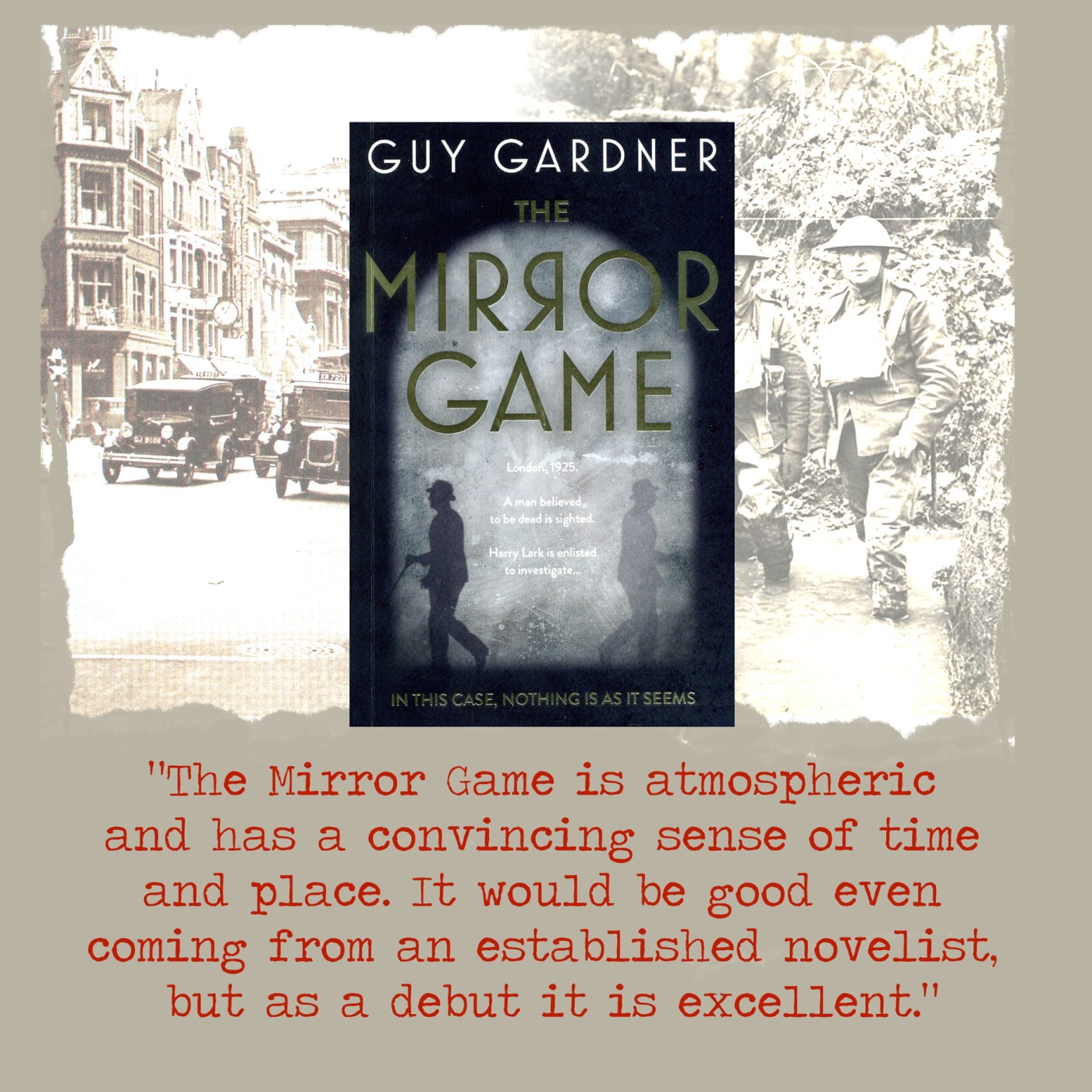

 Investigator and journalist Harry Lark fought for King and Country and emerged relatively unscathed although, like so many other men, the sounds, smells and images of the trenches are ever present at the back of his mind and he has also become addicted to laudanum – a tincture of opium and alcohol. When he is contacted by a friend and benefactor, Lady Charlotte Carlisle, she tells him that she thinks she has seen a ghost. Sitting in Mayfair’s Café Boheme, she has seen a man who is the image of Captain Adrian Harcourt, a pre-war politician who was killed on the Western Front in 1918, and was engaged to be married to her daughter Ferderica. But this man is no phantom who can fade into the wallpaper. Other customers notice him. He is flesh and blood, and approaches Lady Charlotte’s table, stares into her eyes, but then leaves without saying a word. She asks Lark to investigate.
 company, and that some seriously well-connected people have ensured that the truth about their demise has been successfully covered up. Iver’s son has been committed to an institution for mentally and physically damaged WW1 soldiers, and Filton Hall is Harry’s next port of call.


