England. 11th April 1981. While the music charts bubble with the froth of Bucks Fizz, Shakin’ Stevens, Adam and the Ants and The Nolans, London – at least the place south of the river called Brixton – is aflame with violence, racial hatred and mayhem. As the police struggle to control the streets a middle aged Detective Inspector called Henry Hobbes is bused in to help. No matter that Hobbes – and many other senior detectives likewise – is a stranger to riot control, it is a case of all hands on deck.
 Later that year, with Brixton quieter, despite other English towns and cities erupting in copycat anger, Hobbes has become embroiled in a bitter internal dispute. A fellow copper, Charlie Jenkes (who rescued Hobbs from the mob on that fateful April night) after being indicted for savagely beating a black suspect, has taken his own life. And the officer who testified to Jenkes’s violence? Henry Hobbes, who, with that single act of honesty, is branded as a Judas by his own colleagues.
But now Hobbes has something to distract him from his disintegrating family life and his pariah status among fellow officers. A young man is found dead, wth his body gruesomely mutilated. Brendon Clarke was a minor celebrity, the lead singer with an aspiring band called Monsoon Monsoon, whose chief claim to fame is that they play the music of another dead rockstar – Lucas Bell. Bell’s celebrity rests on hs apparent suicide, his angst-ridden persona, and, most of all, his adoption of the identity of King Lost, a charismatic figure with a gruesome mask.
As Hobbes tries to unpick the complex knot which ties together the identities of Brendan Clarke and Lucas Bell, he discovers that the King Lost legend has its roots in a bizarre fantasy world created by a group of teenagers in the Sussex town of Hastings. With more murders being linked to the world of King Lost, Hobbes is drawn into an investigation which exposes child abuse, blackmail, madness and revenge.
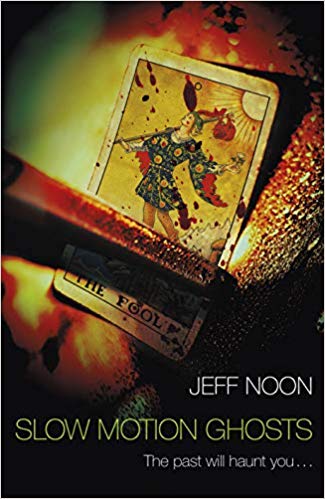
Genre compartmentalising books is not always helpful, but it is fair to say that Noon’s previous novels have used tropes from science fiction, psychedelia and dystopian fantasy. Slow Motion Ghosts adopts conventions of the police procedural, but is more adventurous, asks more questions and has a distinctly noir-ish feel. Noon uses his knowledge of the music scene to bore down into the strange phenomenon of the celebrity cult, and the lengths to which worshippers of dead heroes are prepared to go in order to keep their fantasies alive.
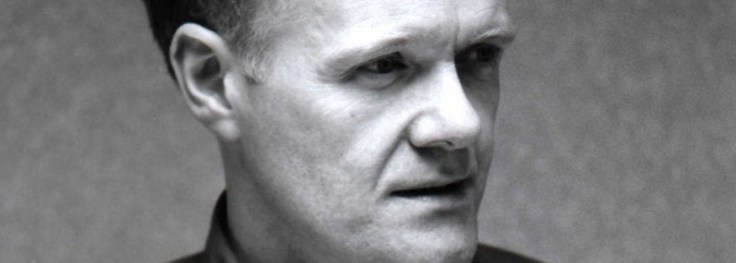
Jeff Noon was born in Droylsden in 1957. He was trained in the visual arts, and was musically active on the punk scene before starting to write plays for the theatre. His first novel, Vurt, was published in 1993 and went on to win the Arthur C. Clarke Award. He reviews crime fiction for The Spectator.
Slow Motion Ghosts is published by Doubleday, and is out now.

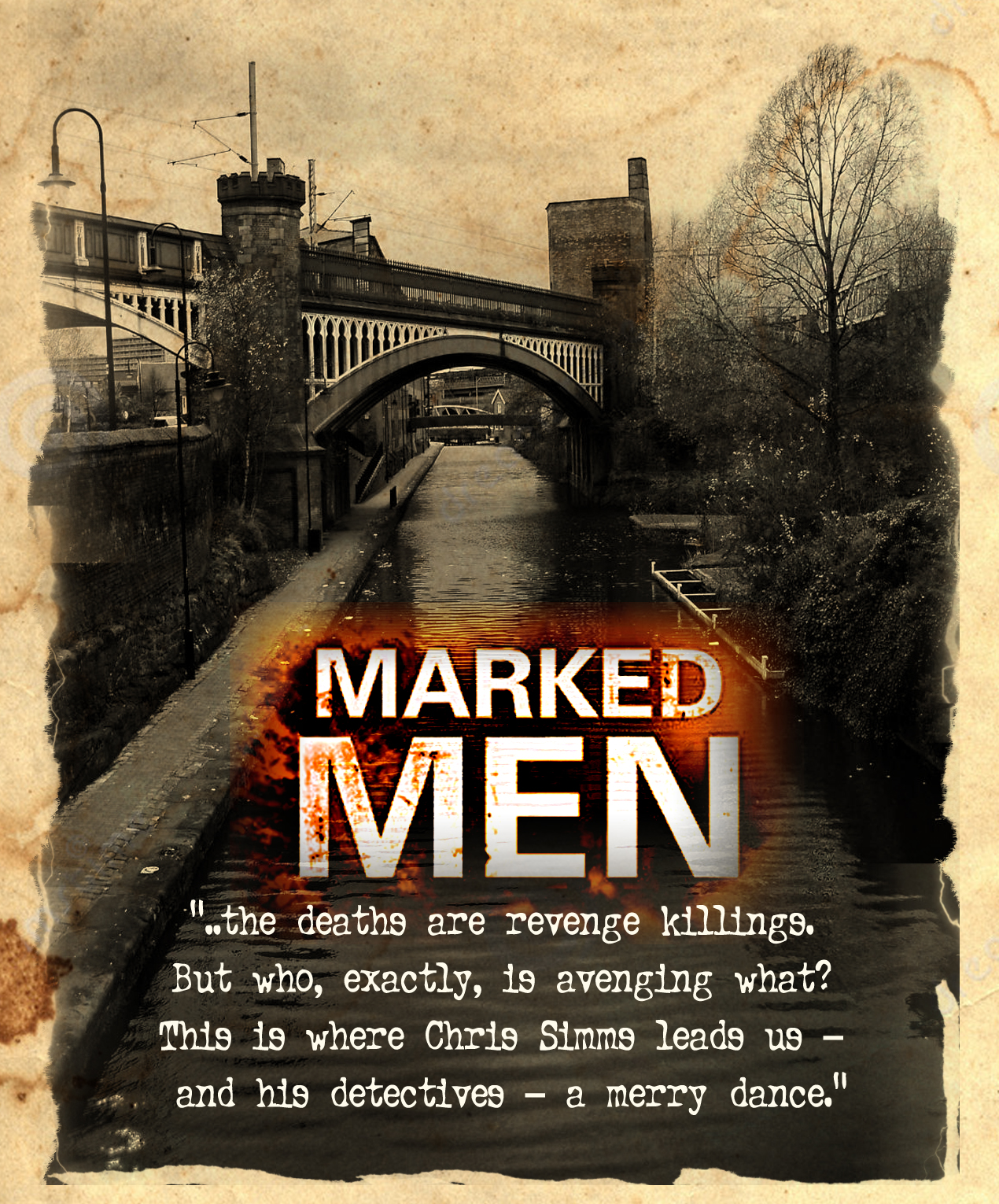
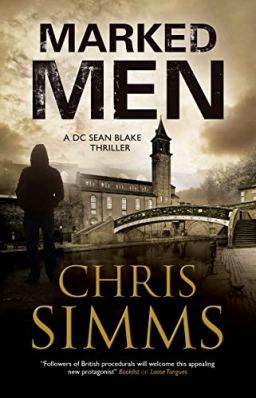 Marked Men begins on an idyllic Spanish beach, but then switches to the less salubrious setting of urban Manchester, and we only learn the significance of the opening much later in the plot. This way of starting a novel has become rather well-worn, but Simms handles it well and times to perfection the revelation of its significance. The Manchester action begins with Blake in waders and hard hat at the bottom of a drained lock on a local canal. There is a body, naturally, with more to follow, and as Blake and his immediate boss, DS Dragomir criss-cross the city trying to make sense of the crime scenes we – like them – are drawn into thinking that the deaths are revenge killings. But who, exactly, is avenging what? This is where Chris Simms leads us – and his detectives – a merry dance. There is a clue, but I have to confess I didn’t get it any quicker than did Blake and Dragomir.



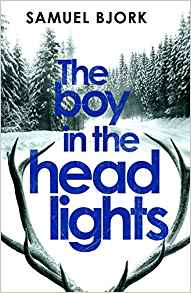 Norway’s Samuel Bjork ticks the boxes with his Olso cops Holger Munch and Mia Krüger. Munch is a bearded bear of a man, overweight and stuffed into his habitual duffel coat like a fat foot into a shoe two sizes too small. His home life is in disarray. Separated from his wife, his daughter Miriam recovering from a serious injury, he seems to treat those people with – at best – edgy tolerance, but his obsession is with the job, and catching criminals. Krüger’s back story makes Munch’s people look like candidates for a TV breakfast cereal advert emphasising warm family values. The story opens with her recovering from – in no particular order – alcoholism, a fatal shoot-out after which she was accused of murder, and the haunting death of her sister, victim of Oslo’s drug scene.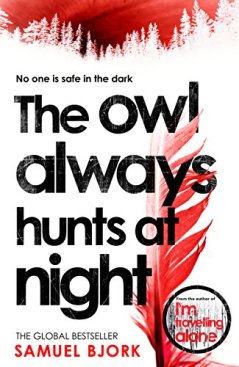


 Forced to play cherchez-la-femme, the detectives stumble down one blind alley after another, but as they do so they learn a few home truths about the fate of the young men who went to fight in the war-to-end-all-wars, and returned home to find that their birthplace was not the ‘land fit for heroes’ glibly promised by politicians. There is a peacetime army with no place for young officers whose courage was welcome in the trenches, but whose humble upbringing is now seen as an embarrassment as the cigars are lit, and the port passed in the correct direction at mess dinners. Such young men, not all heroes, but men nevertheless, are forced to find civilian employment which is neither honest, decent nor lawful.
 Graham Ison is a master story-teller. The Hardcastle books contain no literary flourishes or stylistic tricks – just credible characters, excellent period detail and an engaging plot. Cosy? Perhaps, in the sense that we know how Hardcastle and his officers are going to react to any given situation, and their habits and small prejudices remain unchanged. Comfortable? Only because novels don’t always need to shock or challenge; neither do they always benefit from graphic descriptions of the damage humans can sometimes inflict on one another. Ison (right) credits his readers with having imaginations; he never gilded the lily of English life in the earlier Hardcastle cases which took place during The Great War, and he doesn’t start now, nearly a decade after the final shots were fired. The suffering and trauma of those four terrible years didn’t end at the eleventh hour on that eleventh day; they cast a long and sometimes baleful shadow which frames much of the action of this novel.


 #Taken kicks off, appropriately enough, when a young ballet dancer, Jessica Lyle, is snatched from her borrowed car just yards from the gated luxury home she shares with another girl. From here, Wolfe and his alcoholic boss DCI Pat Whitestone face a veritable University Challenge of questions. Their starter-for-ten is to decide if Jessica was actually the intended victim. Although her father is a retired copper who may have run up an impressive list of enemies, isn’t it more likely that Jessica was mistaken for her flatmate, Snezia? After all, Snezia is not only a dancer of a different kind from Jessica (think ‘gentlemen’s’ clubs, tiny thong and shiny pole) but she is the mistress of fabled former gang boss Harry Flowers. Jessica was driving Snezia’s car when she was taken. Isn’t this just another example of the stupidity of hired thugs?


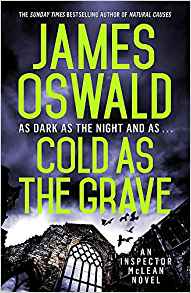 Cold As The Grave is the ninth novel in the Tony McLean series, but fine writers – and Oswald is up there with the very best – make sure that it is never too late to come to the party. For anyone new to the series, McLean is something of an individual. Due to an inheritance, he is exceedingly wealthy, but has a modest lifestyle and chooses to remain a police officer. He has a long-standing ‘significant other’ in Emma Baird, but the previous novel,
 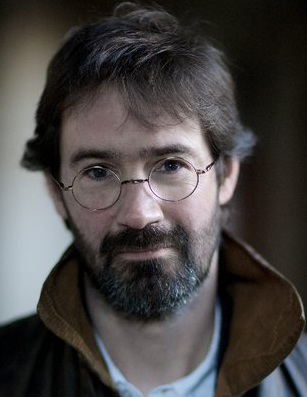 Does McLean follow his head or his heart? The road to the left or the right? Cold As The Grave is a brilliant police procedural, but there is more – so much more – to it. For those who love topographical atmosphere Oswald (right) recreates a wintry Edinburgh that makes you want to turn up the central heating by a couple of notches; for readers drawn by suggestions of the supernatural there is enough here to induce a shiver or three, while making sure the bedroom light remains on while you sleep. The sheer decency and common humanity of Tony McLean – and the finely detailed portraits of the people he works with – will satisfy the reader who demands authentic and credible characterisation.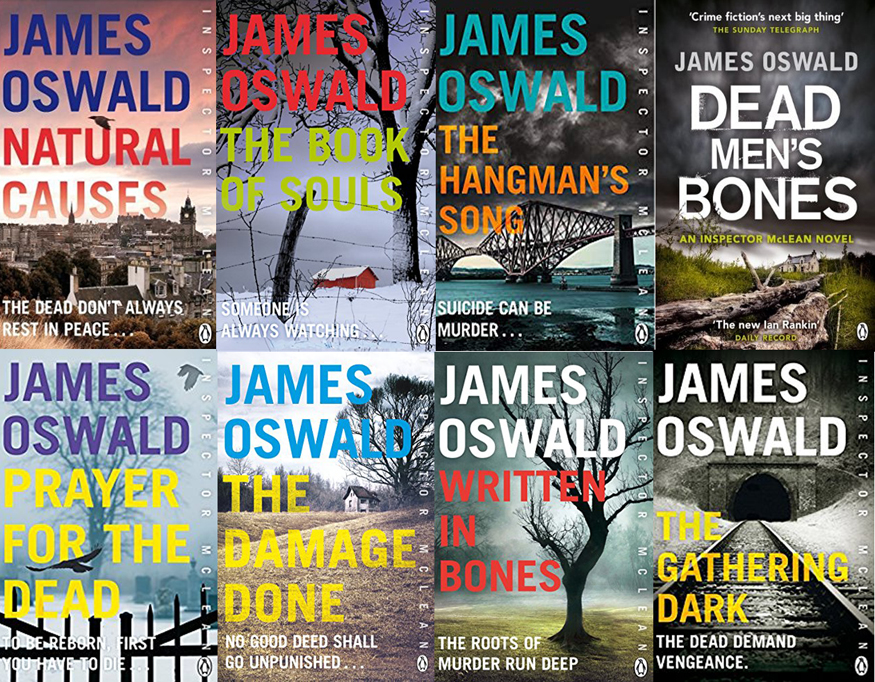
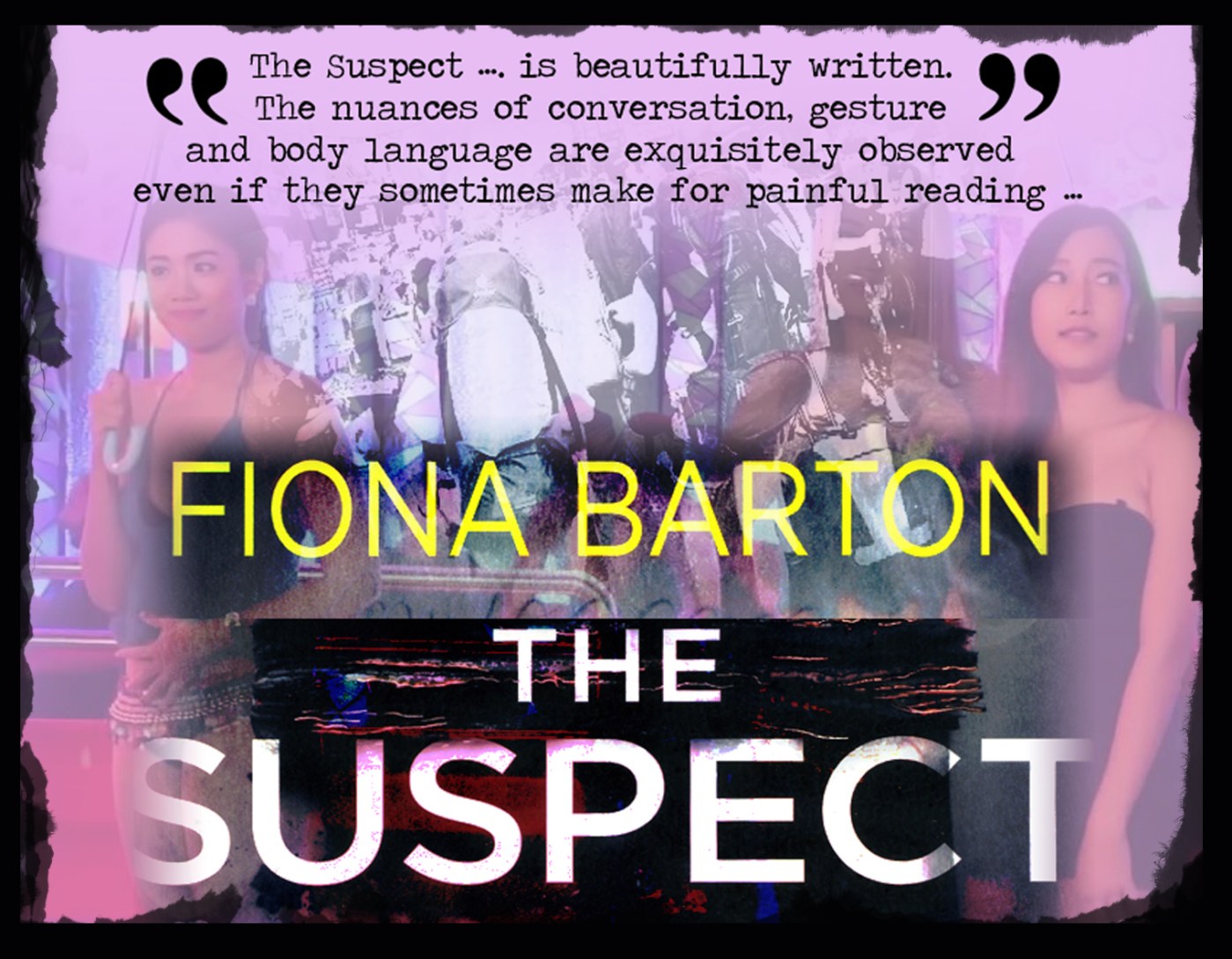

 Sensing a very productive headline story that will run and run, Kate Waters uses all her empathy and tricks-of-the-trade to get close to the girls’ families, and the story does indeed have the whole enchilda. Beautiful teenage girls, disappearance in a Bangkok drug den, frantic parents, the possibility of incompetence by foreign police – what could possibly go wrong? Jake Waters is what could possibly go wrong. Kate’s son has been away in Thailand “finding himself” after a failed spell at university, and her journalistic glee at the ramifications of the story is brutally brought up short when she finds that her errant boy might be at the very epicentre of the story she has claimed as her own.
 It must be said that this is a story long on personal misery and rather short on redemption, but it is beautifully written. The nuances of conversation, gesture and body language are exquisitely observed even if they sometimes make for painful reading, such as the bittersweet moments between Bob Sparkes and his dying wife. My own children are, thankfully, well past the age of “doing” Thailand, but my advice to those with gap-year offspring is, with all respect to Fiona Barton (right), don’t read this book! Once your teenagers have shouldered their backpacks and waved goodbye at the departure gate, your mind will hark back to The Suspect it will be nessun dorma for you!