I can almost hear the sneers now:
“Call yourself a crime fiction reviewer?”
“Pull your head out of the sand, mate”
“What next? You have heard of Sherlock Holmes, I take it..”
Actually, no.Crime fiction reviewers tend to be a fairly charitable lot, especially as most of us are not in it for the money, but for the love of reading (and a few ARCs, naturally) But I do have to confess a sense of embarrassment at reading a brilliant book and then realising that it is only the latest in a well established series of which I had been blissfully unaware.
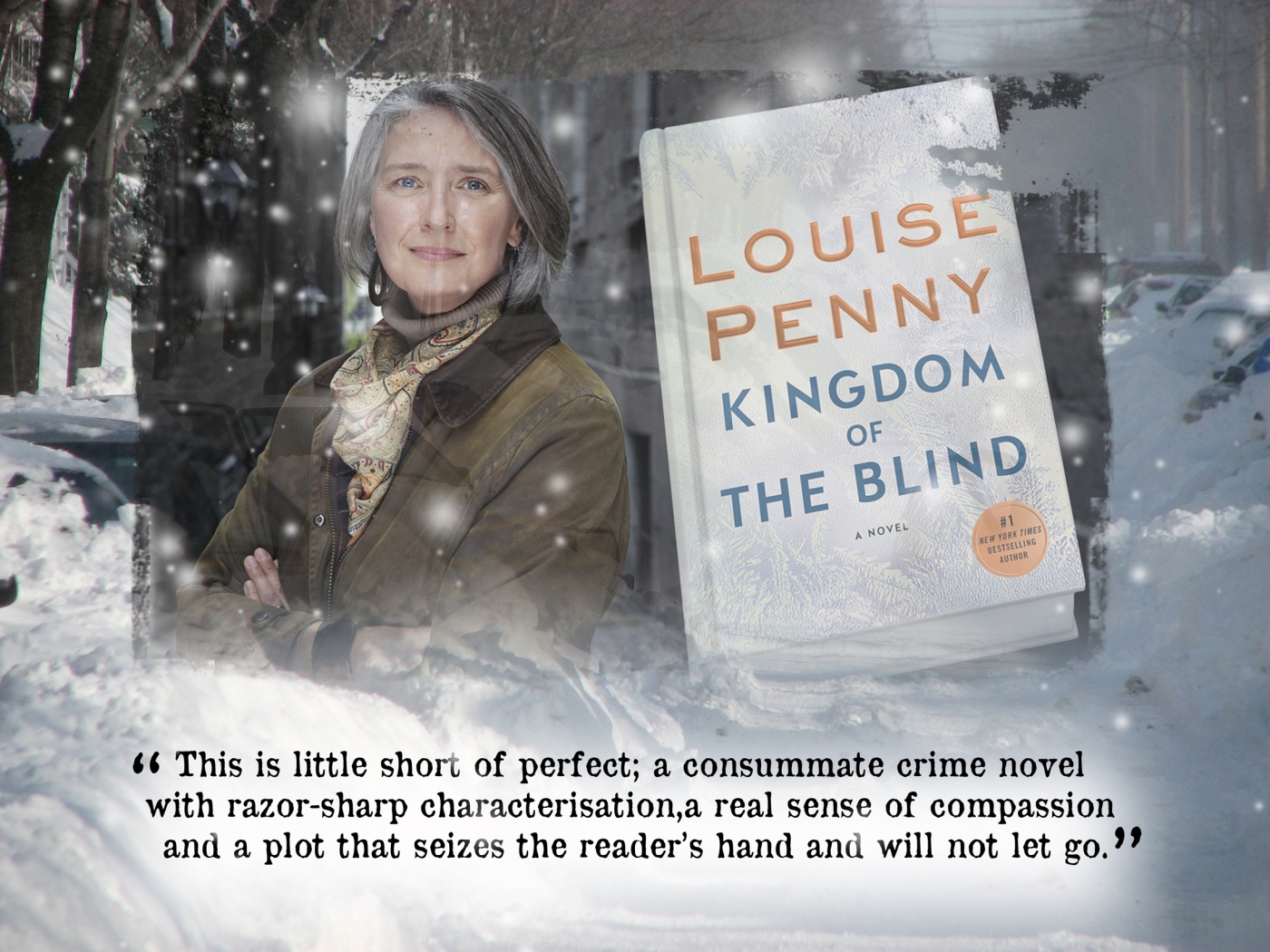
Apology done and, I hope, dusted. Armand Gamache is a senior policeman with the Sûreté in Quebec the francophile province in Canada. He is still under suspension following a controversial drugs case which resulted in one of his colleagues being badly shot up, and a potentially fatal consignment of the opioid fentanyl going missing.
Gamache is informed by a notary that he has been named as an executor of a will. He has, however, never met or even heard of the deceased woman. Intrigued, he goes to meet the notary and his fellow executors at a remote farmhouse. Arriving, in the teeth of a violent blizzard, he is bemused to discover that a friend from his home village of Three Pines, has received the same summons.
The mystery deepens when Gamache learns that the dead woman was a domestic cleaner, and she has bequeathed an estate apparently worth millions of dollars. She used to joke that she was of noble blood, but was her self-mockery founded in fact?
A murder at ‘Baroness’ Baumartner’s ramshackle farmhouse transforms the affair from peculiar to deadly, and Gamache is sucked into an investigation which can only end badly. In addition, he has a two huge problems, massive elephants in the confined space of his professional room. Firstly, Amelia Choqet, an unconventional young police woman who has been mentored by Gamache, has been kicked out for drug offences, and has now apparently reverted to her former lifestyle of street whore and drug abuser. Secondly he is tormented by the fear that if the missing batch of opioids gets onto the streets, there will carnage.
The murder of Anthony Baumgartner takes Gamache and his team into the murky world of investment finance and an environment where millions of dollars are flicked this way and that by financial ‘experts’.
Allegedly, native Canadians have fifty words for snow, and LouisePenny certainly makes us shiver, stamp our frozen feet, and clap our gloved hands together. The weather becomes a baleful and powerful character in The Kingdom Of The Blind, and every step Gamache and his team take is in defiance of snowdrifts, abandoned vehicles and cold of such intensity that exposed skin is first brutalised and then destroyed.

In addition to describing the search for a murderer, Louise Penny cleverly sets off two other plot-lines for us to chase, and she takes great delight in resolving both, but neither in the way we have been led to expect. Kingdom Of The Blind is little short of perfect; a consummate crime novel with razor-sharp characterisation, a real sense of compassion, convincing dialogue and a plot that seizes the reader’s hand and will not let go. Published by Sphere, the novel (the 14th in the series) is out on 27th November.

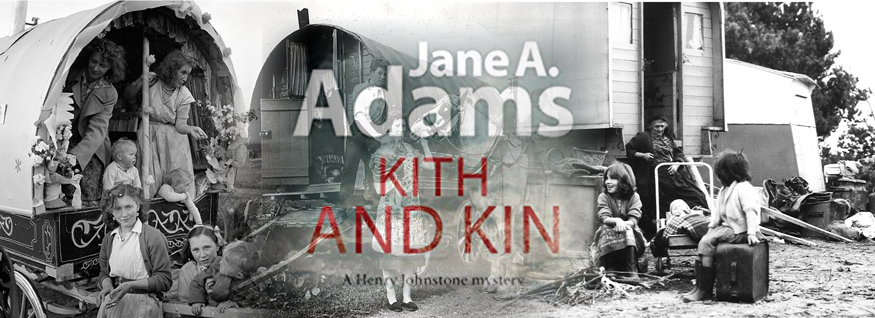
 Coming across a very, very good book by an author one has never encountered before and then realising that she has been around for a while is a shock to the system, and if the downside is that the experience further highlights one’s own ignorance, then the blessing is that as a reviewer and blogger, there is something new to shout about. Jane A Adams made her debut with The Greenway back in 1995, and has been writing crime fiction ever since, notably with four-well established mystery series featuring Mike Croft, Ray Flowers, Naomi Blake and Rina Martin. She began the saga of London coppers Henry Johnstone and Micky Hitchens in 2016, with The Murder Book. Their latest case is Kith and Kin.
 The period is set to perfection, and Adams (right) skilfully combines past, present and future. The past? There can scarcely have been a man, woman or child who escaped the malign effects of what politicians swore would be the war to end wars. The present? 1928 saw devastating flooding on the banks of the River Thames, a book called Decline And Fall was published, and in Beckenham, not a million miles away from where this novel plays out, Robert ‘Bob’ Monkhouse was born. The future? Johnstone’s sister, who has married into money, has a head on her shoulders, and senses that in the financial world, a dam is about to break – with devastating effects.


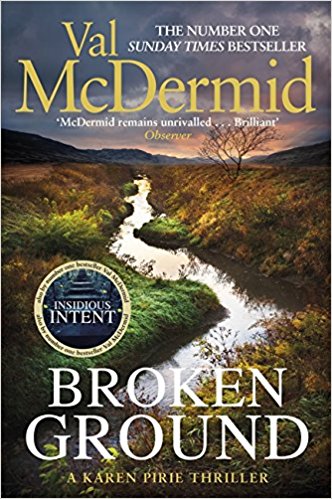 The Body In The Bog is a nicely alliterative strapline normally used to liven up reports of archaeologists discovering some centuries-old corpse in a watery peat grave. The deaths of these poor souls does not usually involve an investigation by the local police force, but as Val McDermid relates, when the preserved remains are wearing expensive trainers, it doesn’t take the tenant of 221B Baker Street to deduce that the chap was not executed as part of some arcane tribal ritual back in the tenth century.
 If music halls were still in vogue, McDermid would be the dextrous juggler, the jongleur who defies gravity by keeping several plot lines spinning in the air; spinning, but always under her control. There is the Nike bog body, a domestic spat which ends in savagery, a cold-case rape investigation which ends in a very contemporary tragedy, and an Assistant Chief Constable who is more concerned about her perfectly groomed press conferences that solving crime. They say that the moon has a dark side, and so does Edinburgh: McDermid (right) takes us on a guided tour through its majestic architectural and natural scenery, but does not neglect to pull away the undertaker’s sheet to reveal the squalid back alleys and passageways which lurk behind the grand Georgian facades. We slip past the modest security and peep through a crack in the door at a meeting in one of the grander rooms of Bute House, the official residence of Scotland’s First Minister, even getting a glimpse of the good lady herself, although McDermid is far too discreet to reveal if she approves or disapproves of Ms Sturgeon.

 With that grim discovery acting as a starting pistol, debut author Robert Scragg (left) starts a middle-distance race to discover who murdered Natasha Barclay. For she is the person, identified by simply reading the opened mail strewn around the tomb-like flat, and checking rental records, whose hand lies in the freezer drawer.
 If ever there were an single implausible plot device, it might be the premise that a suburban London flat, complete with a severed hand sitting quietly in a freezer compartment, could remain untouched, unvisited and unnoticed for over thirty years. It is, however, a tribute to Robert Scragg’s skill as a storyteller that this oddity was so easily forgotten. The dialogue, the twists and turns of the plot, and the absolute credibility of the characters swept me along on the ride. Porter and Styles have made an impressive debut, and the author may well have elbowed them into that crowded room full of other fictional police partners. They are all out there; Bryant & May, Zigic & Ferrera, Rizzoli & Isles, Wolfe & Goodwin, Morse & Lewis, Jordan & Hill, Kiszka and Kershaw – watch out, you have company!


 Dublin copper DI Tom Reynolds is summoned from the dubious delights of his family Christmas to solve a murder. Readers of the previous three Tom Reynolds books might think there is little remarkable about that, but this time the corpse has been in the ground for rather longer than usual. Forty years, in fact. On the island of Oileán na Caillte, the pathologists have been disinterring corpses from a mass grave of the unfortunates who passed away as patients of the long-defunct psychiatric institution, St Christina’s. Those involved in the grim task discover nothing illegal, as all the residents of the burial pit were laid to rest in body bags, tagged and entered onto the hospital records. With one exception. That exception is the corpse of one of St Christina’s medical staff Dr Conrad Howe, who mysteriously disappeared forty Christmases ago. No body bag or tag for Dr Howe, but a rather surreptitious last resting place wedged between two other corpses.
 Other than that dark angel, the cast of suspects includes another former physician, now himself just days away from death, and others whose culpability in the inhuman treatment of St Christina’s patients has left psychological scars, some of which have become dangerously infected. Of course, this being, among other things, a brilliant whodunnit, Jo Spain (right) allows Tom Reynolds – and us readers – to make one major assumption. She then takes great pleasure, the deviously scheming soul that she is, in waiting until the final few pages before turning that assumption not so much on its head as making it do a bloody great cartwheel.
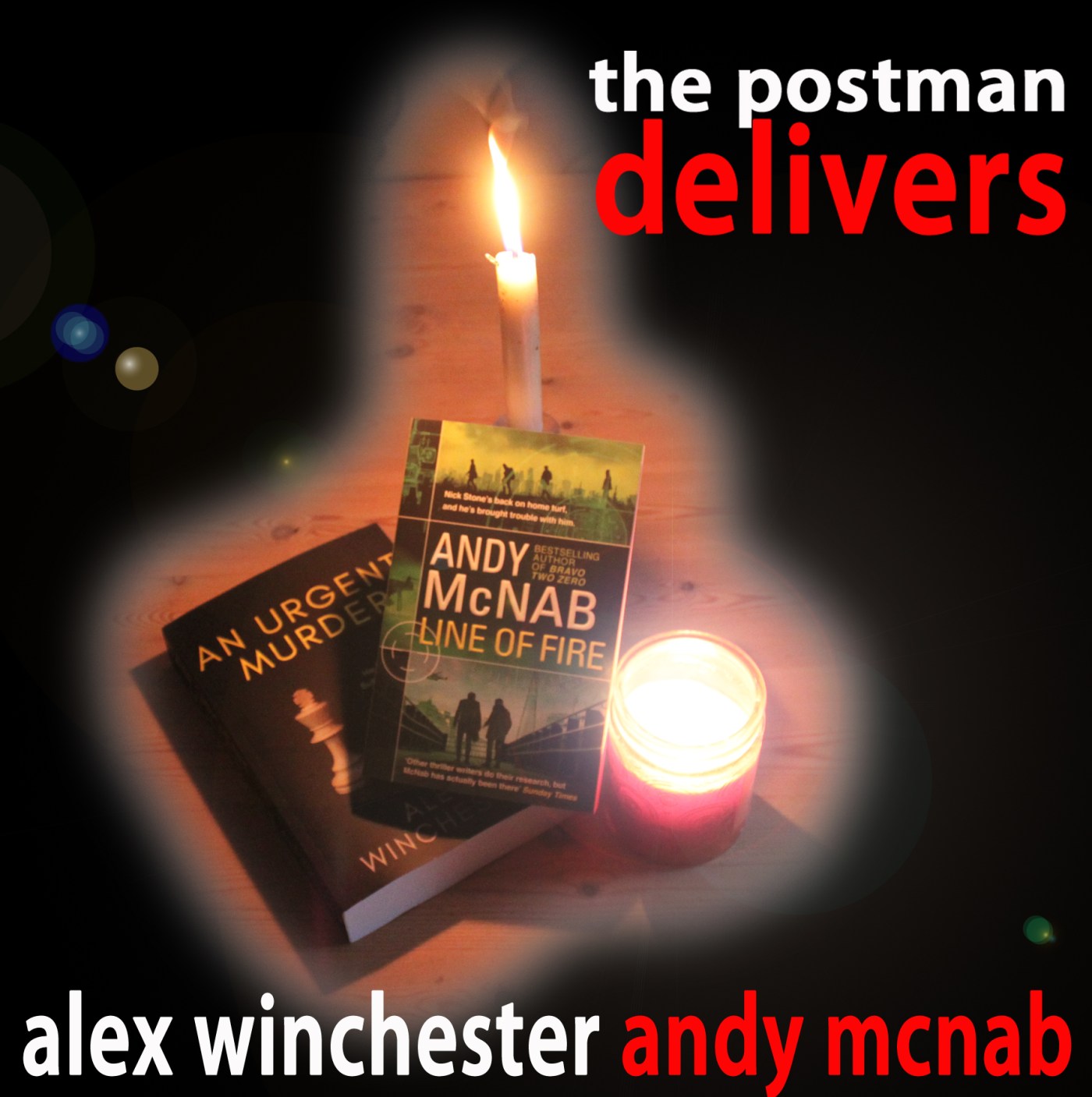
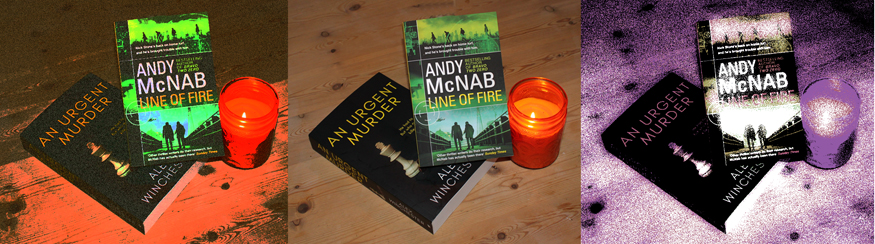
 It is tempting to add the cliché “who needs no introduction” but it won’t hurt to remind potential readers that the man known as Andy McNab is, in real life, a highly decorated soldier. You don’t receive the Distinguished Conduct Medal for services to military administration, nor is the Military Medal awarded for excellence in ceremonial drill. McNab’s most popular fictional hero returns in Line of Fire, and former Special Forces operator Nick Stone is, as usual, up to his eyes in trouble. He has been given the job of taking out an unusual target. One, it’s a woman and, two, she is a hacker so skilled that her clattering keyboard can potentially disrupt commerce, destroy communications and bring down governments. Line of Fire is published by Corgi/Transworld/Penguin Random House and will be available
 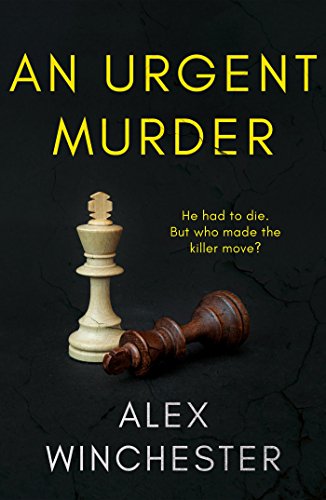 Ex Met-Police detective Winchester says of his debut novel:
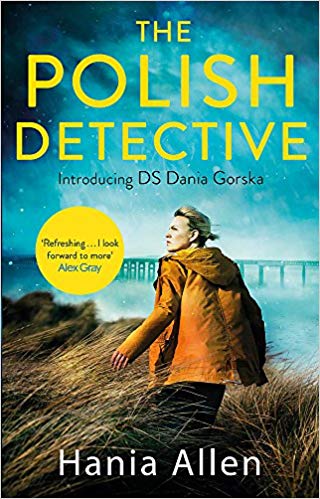 Dania Gorska has come to work in Dundee after starting her career in London with the Met. A divorce from husband Tony (watch out for the clever twist) has left her footloose and fancy free. Her exemplary record has meant she has enjoyed a swift and welcome transfer to Police Scotland. She lodges with her brother Marek, who is an investigative journalist.
 The Polish Detective is in some ways a standard police procedural which chugs along nicely on its accustomed rails. All the usual characters are present and correct; no such story would be complete without a dyspeptic senior officer, the obligatory post mortem scene with a sarcastic medical professor wielding the bone saw, the male junior detective who thinks he’s Jack – or perhaps Jock – the Lad, and the mind numbing tedium of the door knocking and CCTV scanning that sits behind every brilliant solution to a murder mystery. What lifts this book above the average is the character of Dania Gorska herself, and in particular her musical passion for, naturally, her great countryman Frédéric François Chopin and his sublime piano music. Hania Allen (right) describes herself as a pianist who makes up in enthusiasm what she lacks in talent, but under the fingers of DS Gorska, the great man’s preludes and nocturnes shimmer and sparkle throughout the pages, and the darker notes of the Polish soul are never far away.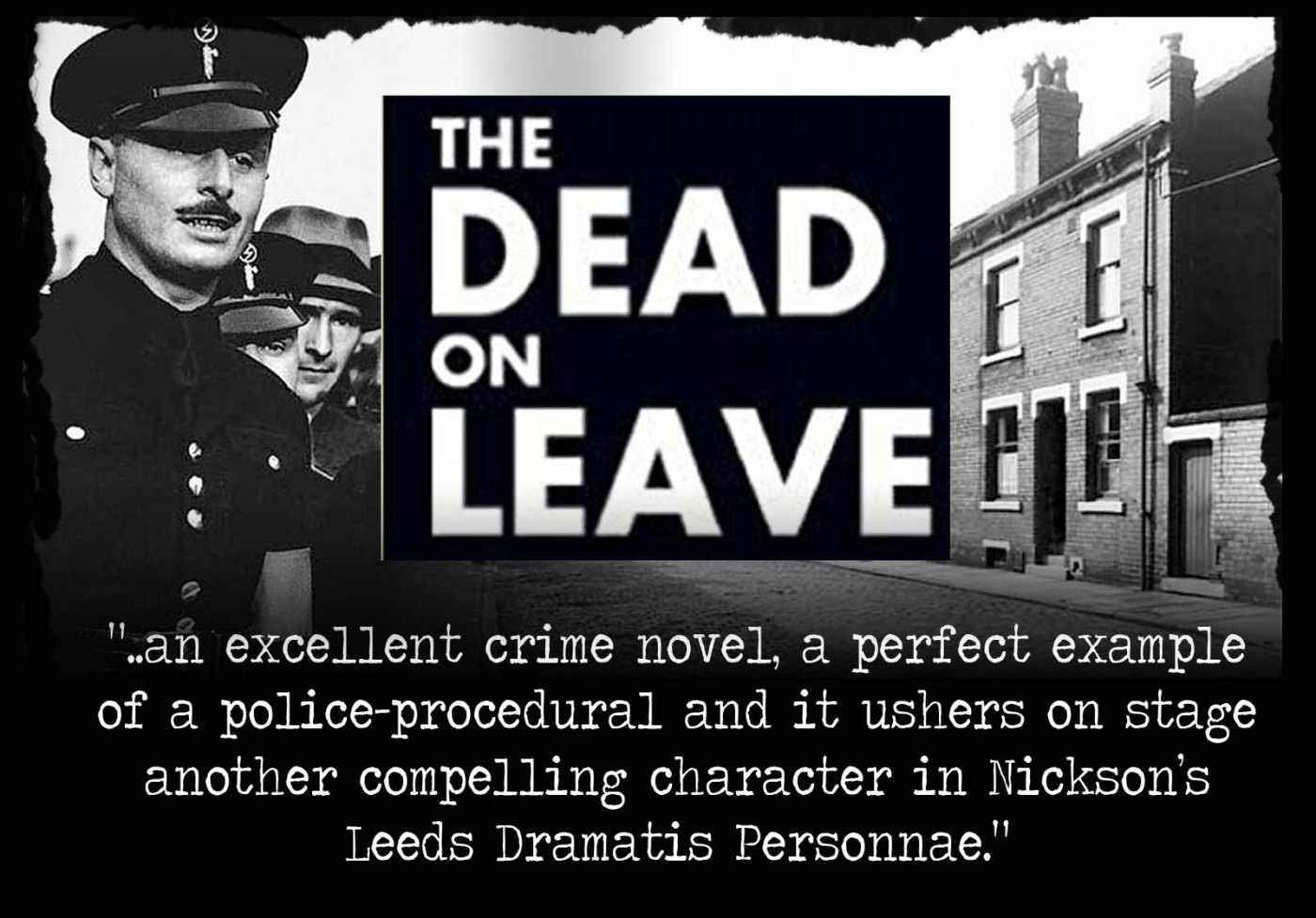
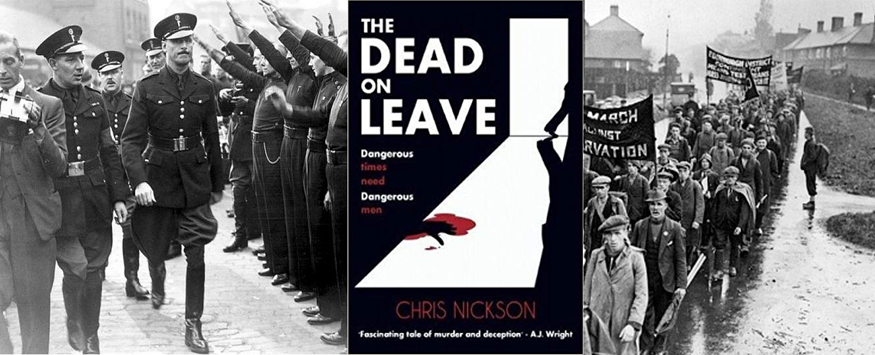
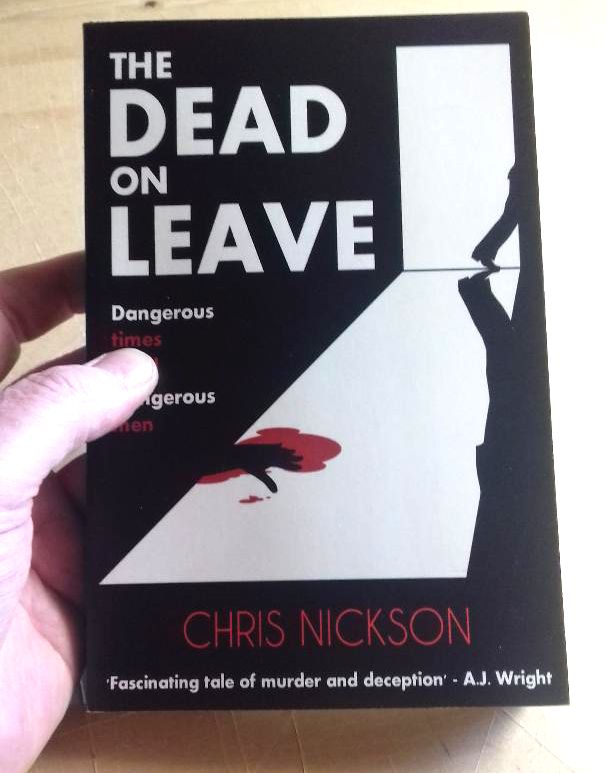 It appears the dead man is a would-be follower of Sir Oswald Mosley, charismatic leader of the British Union of Fascists and, after an appearance in Leeds by Mosley and his Blackshirts turns into a riot, it is tempting for the police to think that the murder is politically inspired. As Raven tries to make sense of the killing, he has his own demons to face. Like many other Yorkshiremen, Raven is a Great War veteran, even though his war was brief and horrific. Only able to see active service in the dog-days of the conflict, he was unlucky enough to be close to a fuel dump which was hit by a stray shell. There’s a line from a song about that war, which goes,
 The Dead On Leave is very bleak in places. Hope is in short supply among the working people in Leeds, and men have no qualms about building a wooden platform for Moseley to rant from, because a job is a job; consciences are a luxury way beyond the reach of folk whose families have empty bellies. Nickson (right) is a writer, with social justice at the front of his mind and he wears his heart on his sleeve. I doubt that he and I agree on much in today’s political world, but I can think of no modern British author who writes with such passion and fluency about historical social issues.
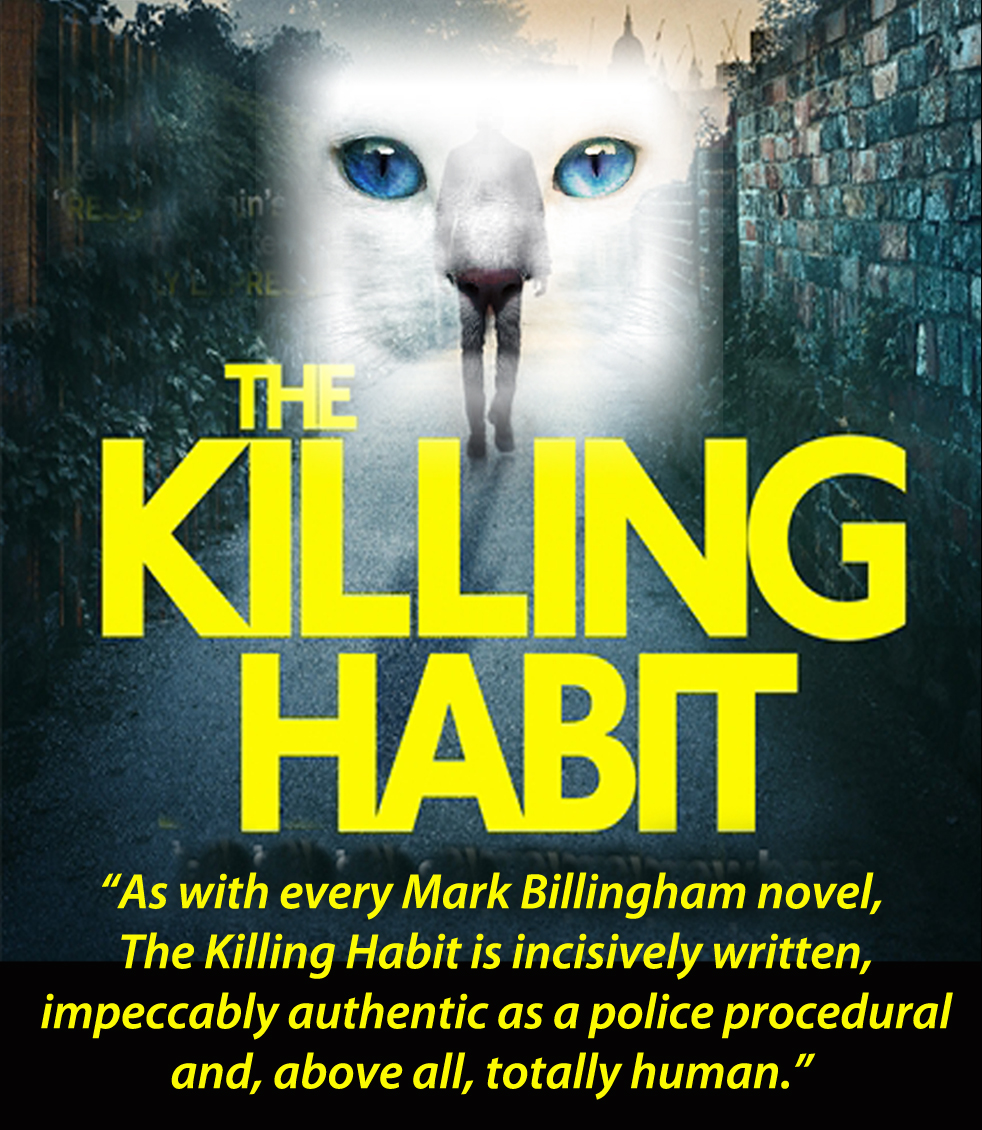

 The Thorne novels have a recurring cast list. As Salvatore Albert Lombino, aka Ed McBain said, quoting a 1917 popular song, “Hail, Hail, The Gang’s All Here!” Indeed they are. Its members include Helen, Tom Thorne’s long suffering partner plus little boy Alfie, and the bizarrely tattooed and pierced Mancunian pathologist Phil Hendricks. We have Nicola Tanner the police officer scarred by the murder of her alcoholic partner, Susan, and the perpetually cautious DCI Russell Brigstocke. Between them, they pursue two killers; one who murders losers-in-the-Game-of-Life on the periphery of a drugs gang, and another who seems to be targeting lonely women via a match-making service.
 Just when you think that he has provided all the answers to the complex plot, and the characters are, to quote the only bit of Milton I can remember from ‘A’ Level, “calm of mind and all passion spent,” Billingham (right) provides a breathtaking epilogue which, in addition to turning my preconception on its head, (feel free to add your own metaphor) bites you on the bum, punches you in the gut, hits you over the head with a piece of four by two, takes the wind out of your sails and grabs you by the short-and-curlies. Hopefully recovering from this multiple assault, you will be hard pushed to disagree with me that this is a brilliant crime thriller written by a master storyteller at the very top of his game.


