

A police detective may like to think he can just walk away from the job that has consumed most of his adult life. He is entitled to believe that a new life in a remote Cornish cottage will wash away the blood of the countless victims whose cases he has investigated, and wipe the images of their broken bodies from his eyes. If anyone is entitled to joys of retirement, it is Frank Elder.
But being a copper isn’t the only thing he has walked away from. There is the wife who betrayed his trust, but more crucially there is the daughter, Katherine whose own life has been fractured, partly by her parents falling out of love, but more savagely by the fact that she herself was at the heart of one of Elder’s cases, when she was abducted, abused and violated by a psychotic killer.
 While Elder whittles away his time helping out the local police force with difficult cases, and his wife gets on with her own life, Katherine is eking out an existence in a North London flat share, trying to hide the scars – both real and figurative – of her abduction. She has taken to modelling for life drawing classes in an effort to pay the rent independent of her mother’s generosity, and this has led her into a relationship with a highly respected artist whose career is on a definite upward surge.
When the artist is found brutally murdered on the floor of his studio, Elder is drawn into the case, first as a suspect himself, albeit briefly, but then in defence of Katherine who the police, in the absence of any other suspects or motives, have decided is a person of interest.
What follows is a multi-faceted precious stone. We have a police procedural, viewed largely through the eyes of the investigating officer in London. We have a whodunnit? with a clever set of misdirections – and clues both false and real. We have John Harvey’s quietly elegant prose, clever observation of character and deep sympathy for decent but flawed individuals who have made wrong choices in their lives. But then – and it is an explosive “but then” – something happens, something unthinkable, something potentially life-changing for Elder and his family, and the whole focus of the novel swings violently in an unforeseen direction.
In my mind I am moving this fine novel from the shelf marked Crime Fiction to the place where I put memorable books that leave a lasting impression. Call them literary fiction if you will, but names and categories aren’t worth a penny piece. Body and Soul is an elegy on everlasting themes that have seared the hearts of great writers down the years. It is about death; it is about regret and longing; it is about duty, loyalty and people who do what they think to be right despite a chorus of lesser mortals who are chanting, “leave it – forget it – don’t get involved.”
 Body and Soul also takes an unflinching look at how love in itself is sometimes not enough – or possibly too much. I read elsewhere that this is to be John Harvey’s last novel. If this is the case then regret is permissible, but dismay would be churlish. We can only thank John Harvey (right) for his matchless legacy. Body and Soul is published by William Heinemann, and is available now.
HOWEVER – and here’s a thing – if you would like a hardback copy of this brilliant novel, I have one (just the one, sadly) up for grabs. The winner will be decided by a draw from a proverbial hat (actually a random number generator, but scrupulously fair!) How do you enter? Dead easy, and you have three ways to enter.
- Email me at fullybooked2016@yahoo.com putting Body and Soul in the subject box.

- On Twitter, just click the ‘heart’ box under one of the many posts about this book. My Twitter name is @MaliceAfore

- On Facebook, go to the Fully Booked page and ‘Like’ the post.

JUST A FEW TaCs:
(1) One entry per person, please.
(2) The competition closes at 10.00pm GMT on Sunday 13th May.
(3) Because of postage costs, the competition is open only to readers in Britain, the Irish Republic and mainland Europe.
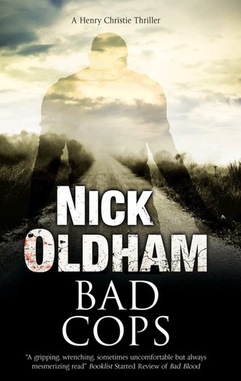 His resolve weakens, however, when he is visited by two of his more senior officers, his own Chief Constable and the newly appointed boss of the Central Yorkshire force, John Burnham. The Yorkshire police has suffered a disastrous inspection, and Burnham has been appointed to cleanse the Augean Stables.
 Oldham (right) is a retired copper himself, so readers are guaranteed procedural details which are described with total authenticity, whether they be the smelly reality of unmarked police cars used for observation, complete with the detritus of discarded fast food wrappers and the inevitable flatulent consequences, and an intriguing – and quite scary – use for Blutac and two pence pieces.

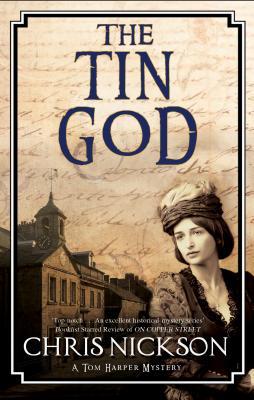 Outraged leading articles appear in local newspapers, but someone believes that the sword – or something equally violent – is mightier than the pen, and a homemade bomb destroys a church hall just before Annabelle Harper is due to speak to her supporters. The caretaker is tragically killed by the explosion, and matters go from bad to worse when more bombs are found, and several of the women candidates are threatened.




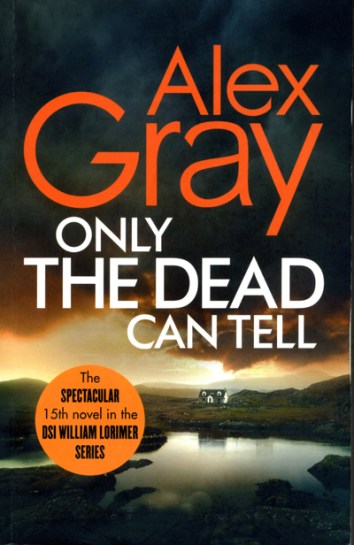 Lorimer has become bogged down in a partially – and only partially – successful investigation into murder, prostitution and people trafficking based in Aberdeen. In the Granite City some entrepreneurs, denied a living by the decline in the oil and gas industries, have taken to trading in other commodities – human lives. However, to borrow the memorable line from The Scottish Play, Lorimer’s team have “scotch’d the snake, not kill’d it.” The head of the gang responsible for taking young and innocent Romany women from impoverished Slovakian villages, and setting them to work in Scottish brothels is known only as “Max”. The very mention of his name is enough to silence witnesses, even those who have every reason to long for his downfall. But how – if at all – is Max connected to Peter Guilford, arrested for his wife’s murder, but now beaten within an inch of his life while on remand in Glasgow’s Barlinnie prison?
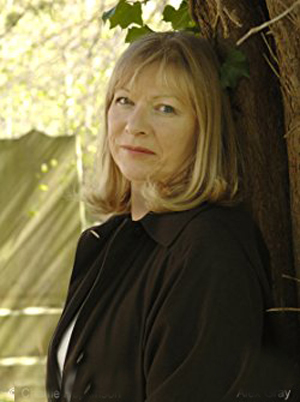 The British police procedural – the Scottish police procedural, even – is a crowded field, and each author and their characters tries to bring something different to choosy readers. Where Alex Gray (right) makes her mark, time and time again, is that she is unafraid to show the better things of life, the timeless touches of nature in a summer garden, or the warmth of affection between characters, particularly, of course, the bond between William and Margaret Lorimer. Here is one such moment:


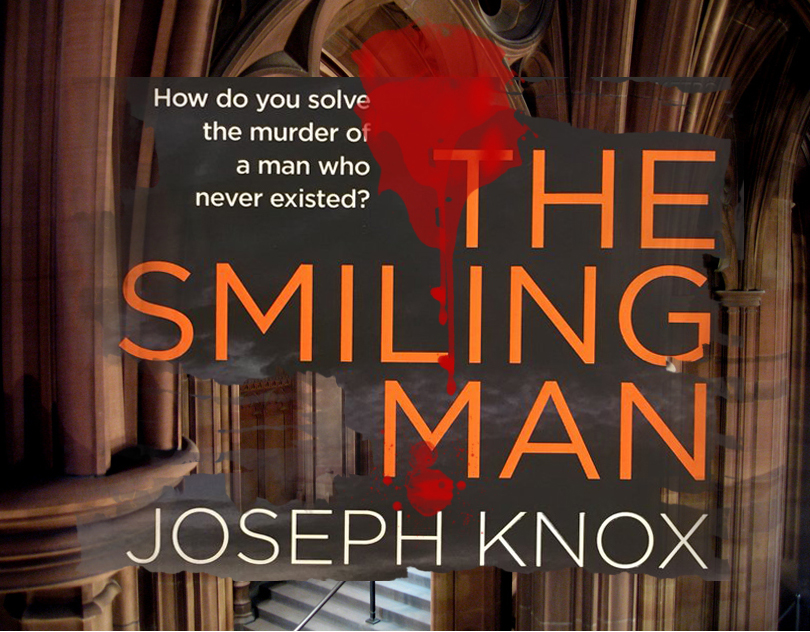

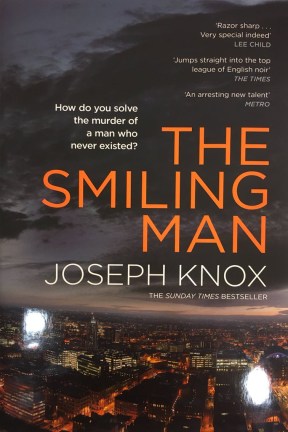 This is all too much like hard work for Sutcliffe, but despite warnings from his saturnine superior, Superintendent Parr, Waits digs deeper. He uncovers a labyrinthine series of connections between an absent solicitor doing his rich-white-man things among the bar girls of Thailand, an apparently gay businessman and his estranged wife, the corpse (now renamed The Smiling Man), and another hotel room, its floor saturated with pint after pint of human blood.
 This is little short of a modern masterpiece. You might imagine Joseph Knox (right) to be a weathered, life-weary cynical misanthrope, hunched in a corner of the pub, savouring a roll-up, rather like a latter day Derek Raymond, but anyone who has had the privilege of meeting Joseph will know that this is far from the case. He is well versed in the art of Noir, though, as he revealed when he spoke to us around the time that his first novel, Sirens, was published.
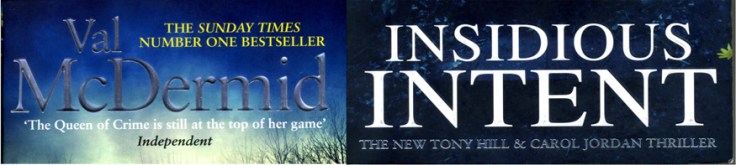
 But there is still a job to be done, and in Carol Jordan’s case this is to head up a new police unit, called ReMIT – Regional Major Investigations Team – and their first case is a shocker. In a windswept lay-by on a lonely moorland road, a car is discovered, blazing out of control. When the flames die back sufficiently for the emergency services to get close, the charred remains of a young woman are discovered in the driving seat. The post mortem reveals that she has been strangled, and the blaze started, of all things, by a large box of potato crisp packets. Another such death soon follows, and the ReMIT team discover that they are dealing with a supremely clever killer who befriends his victims at weddings. He ‘crashes’ the wedding with consummate ease, and then targets young women who have attended the wedding unaccompanied. Spinning a yarn that he is a widower still mourning his late wife’s death from cancer, he seems to be the perfect gentleman. Caring, considerate, sexually undemanding – to the unfortunate women he seems like all their Christmases have come at once.


 We are taken to an autumnal Boston. Initially, Warren has nothing more on her mind than the consequences of giving in to the demands of her young son that they should adopt a dog. Her domestic reverie is rudely and violently interrupted when she is called to a house in the Brighton district of the city, where she is confronted by a scene of carnage. Householder Charlie Boyd is sitting on his sofa, as dead as a doornail. His girlfriend Juanita Baez is in the kitchen, shot as she was taking something from the cupboard. In the bedroom, even worse horrors await. Lola and Manny Baez, two of Juanita’s children, are clasped in a protective embrace, but just as dead as the adults.


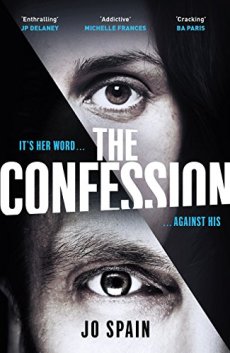 Jo Spain not only takes on the challenge, but she meets it head on and completes it with subsequent pages of The Confession which manage to be, as night follows day, bravura, intense, full of authentic and convincing dialogue, utterly mesmerising and, in places, literally breathtaking. A countryman of Spain’s began his most famous novel with “Stately, plump Buck Mulligan came from the stairhead, bearing a bowl of lather on which a mirror and a razor lay crossed.” She counters with:
 Of course, we get there in the end, and understand why JP Carney has exacted such an emphatic revenge on the handsome, charismatic and plausible Harry McNamara, but sometimes book reviews have to stop dead in their tracks, and say, “Trust me, this is a brilliant novel, but to tell you any more would be little short of criminal.” Yes, The Confession is a brilliant novel. Yes, I read it through in one sitting, deep into the early hours of a winter morning. Yes, I am a fan of Jo Spain (right). Yes, if you don’t get hold of your own copy of this, you will receive scant sympathy from me. The Confession is published by Quercus, and will be on sale as a Kindle from 11th January, and as a hardback from 25th January. Check online buying choices


