
Detective Inspector David Vogel, of Avon and Somerset Police, cuts a rather different dash from many of his fellow fictional DIs. He is a tall, bespectacled and slightly shambling figure, teetotal and resolutely vegetarian. His only leisure pursuit is assembling crossword puzzles. Formerly with the Metropolitan Police in London, he, wife Mary and daughter Rosamund had moved from their Pimlico flat out to the suburbs of Bristol to an unassuming bungalow which had an unusual attraction – its own swimming pool. Rosamund has cerebral palsy, and we are told:
“She was a happy and intelligent girl, trapped within a body that consistently failed her, except when she was in water………the water gave her freedom. In water, her body was no longer an encumbrance.”
 When the battered body of teenager Melanie Cooke is found amid the garbage bins in a seedy Bristol alleyway, it is obvious that she has been murdered. Only fourteen, she is dressed in the kind of clothes which would be considered provocative on a woman twice her age. Vogel goes to make the dreaded ‘death call’, but he only has to appear on the doorstep of the girl’s home for her mother and father to sense the worst. Like many rebellious teenagers before her, Melanie has told her parents that she is going round to a mate’s house to do some homework. When she failed to come home, their first ‘phone call confirmed Melanie’s lie, and thereafter, the long dark hours of the night are spent in increasing anxiety and then terror, as they realise that something awful has happened.
 The book actually starts with a prologue which at first glance appears to be nothing to do with Melanie’s death. It is only later – much later – that we learn its true significance. Bonner (right) is determined not to give us a straightforward narrative. The progress of Vogel’s attempts to find Melanie’s killer are sandwiched between accounts from three different men, each of whom is living a life where all is not as it seems.
Saul is socially inept and has reached early middle age without achieving his ambition to become a caring husband and father. His first attempt at marriage had been a disaster, and subsequent efforts to find a life partner have been impeded by his inner sense that his mind harbours demons over which he has little or no control should they choose to wake within him. He settles for internet dating, and heads up his CV as follows:
“My name is Saul and I am a 33 year-old supply teacher. I live in a village near Swindon and I would like to meet a young woman of around my age whose intentions are as serious as mine….. my interests are simple and quiet. I like to read and go to the cinema. If you are out there, please get in touch. I need you.”
Leo is a very different kind of fellow. He spends his leisure time cruising gay bars and clubs in London. He clearly has some kind of day job where ‘coming out’ is not an option. He cultivates the blokeish image when at work, but when he goes to London he adopts a different persona, but one with which he is not entirely at ease.
“I didn’t have the slightest desire to be gay. I didn’t even like the word. I’ve never liked euphemisms and that’s surely what ‘gay’ is. When you called yourself a homosexual it didn’t sound quite so modern and attractive. And what about queer? Is that what I was, queer?
Leo’s misgivings are put to one side, however, when he goes on the prowl. Just as he puts on the skinny Levis, gels his hair, squeezes into a black T shirt that reveals his six-pack and insouciantly slings his studded leather jacket over his shoulder, Leo adopts a different mental mindset from his ‘one of the lads’ image.
While Bonner might coax a sliver of sympathy from us as we read of the personal lives of Saul and Leo, when Al introduces himself it is abundantly clear from the start that he is a wrong ‘un.
“They get what they deserve, these young girls in their skimpy skirts and the little shorts they call hot pants. They’re hot all right. Everything about them is hot. Burning hot.”
Al cruises around the streets of Bristol, usually in a stolen van, ogling schoolgirls, and occasionally trying to bring his sordid fantasies to reality, but without success. Until he discovers a teen dating site on the internet, and he is amazed at the ease with which he can construct a fake profile and attract the attention of a teenage girl whose hormones are racing in the opposite direction to the concerns and limitations her parents seek to impose.
Deadly Dance works very effectively as a police procedural. Vogel is an interesting character, very much left field of his fictional contemporaries, and I anticipate that he will have a long and successful career between the covers of British crime novels. Bonner’s solution to the apparent dislocation between Vogel’s investigation and the lives of Saul, Leo and Al is audacious. To reveal any more would be to give the game away, and no-one will thank me for that. Does it work? I think it does, but you must be the judge. Deadly Dance will be published by Severn House next month, August 2017.


 By 22nd March 2018, there should be catkins on the willow and hazel, daffodils should be getting into their stride and, even if it’s a little early to be looking for summer migrants like swallows and warblers, nothing will be more welcome to lovers of good crime fiction than the return of William Lorimer in another – the fifteenth, unbelievably – police procedural set in Scotland. Since Alex Gray (left) saw Never Somewhere Else published in 2002, she has made Lorimer and his world one of the go-to destinations for anyone who loves a well-crafted crime novel, with a sympathetically portrayed central character.

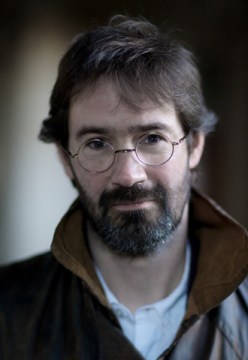 I should add, at this point, that James Oswald (left) is not your regulation writer of crime fiction novels. He has a rather demanding ‘day job’, which is running a 350 acre livestock farm in North East Fife, where he raises pedigree Highland Cattle and New Zealand Romney Sheep. His entertaining Twitter feed is, therefore, just as likely to contain details of ‘All Creatures Great and Small’ obstetrics as it is to reveal insights into the art of writing great books. But I digress. I don’t know James Oswald well enough to say whether or not he puts anything of himself into the character of Tony McLean, but the scenery and routine of McLean’s life is nothing like that of his creator.
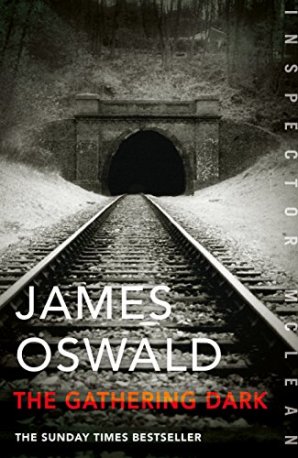 McLean is going about his daily business when he is witness to a tragedy. A tanker carrying slurry is diverted through central Edinburgh by traffic congestion on the bypass. The driver has a heart attack, and the lorry becomes a weapon of mass destruction as it ploughs into a crowded bus stop. McLean is the first police officer on the scene, and he is immediately aware that whatever the lorry was carrying, it certainly wasn’t harmless – albeit malodorous – sewage waste. People whose bodies have not been shattered by thirty tonnes of hurtling steel are overcome and burned by a terrible toxic sludge which floods from the shattered vehicle.




 After I had read Death In Profile, and saw that it was billed as the first of an intended series, I did softly uttered something akin to “hmmmm…?”, quietly questioning if there was any room in the crowded contemporary crime fiction market for books which unashamedly borrowed tropes and mannerisms from books written seventy years ago. I have just finished A Death In The Night, the fourth in the series, and I am now a true believer, and devoted disciple. Guy Fraser-Sampson (left) has created a delightful repertory company of characters, and set them to work catching killers in the highly exclusive avenues and cul de sacs of London’s Hampstead.


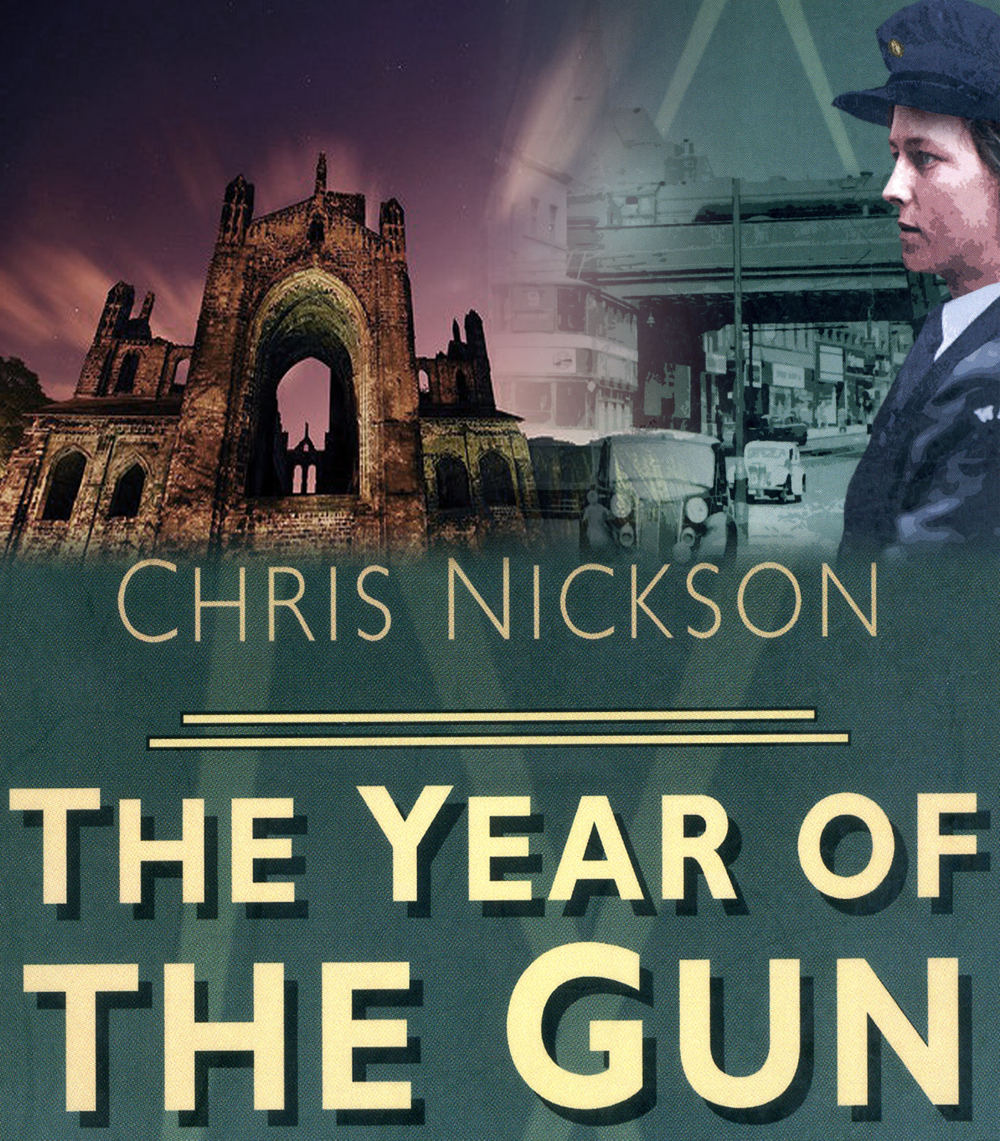
 So, Lottie is back in uniform again, but this time as a lowly member of the Women’s Auxiliary Police Corps. Her main job is to drive her boss, Detective Superintendent McMillan, to wherever he needs to go. McMillan, a veteran of The Great War, certainly needs his transport as a killer seems to be stalking vulnerable young women across the city. Kate Patterson, a Private in The Auxiliary Territorial Service (ATS) is found dead in the sombre ruins of the medieval Kirkstall Abbey. She is the first victim, but others follow, and Lottie and McMillan are soon convinced that the killer is a member of the American forces based in the city.
 You will note the date – spring 1944 – and will not need a degree in military history to work out what those ‘vital operations’ might be. Invasion or no invasion, McMillan still has a job to do, and the murderer is eventually cornered. Don’t anticipate a comfortable outcome, however. Nickson (right) doesn’t do cosy, and the conclusion of this fine novel is as dark as a blacked out city street.


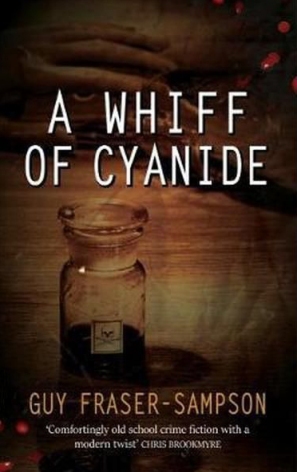 Readers of the two previous books in the Hampstead Murders series, Death In Profile and Miss Christie Regrets, will know what to expect, but for readers new to the novels here is a Bluffers’ Guide. The stories are set in modern day Hampstead, a very select and expensive district of London. The police officers involved are, principally, Detective Superintendent Simon Collison, a civilised and gentlemanly type who, despite his charm and urbanity, is reluctant to climb the promotion ladder which is presented to him. Detective Sergeant Karen Willis is, likewise, of finishing school material, but also a very good copper with – as we are often reminded – legs to die for. She is in love, but not exclusively, with Detective Inspector Bob Metcalfe, a decent sort with a heart of gold. If he were operating back in the Bulldog Drummond era he would certainly have a lantern jaw and blue eyes that could be steely, or twinkle with kindness as circumstances dictate.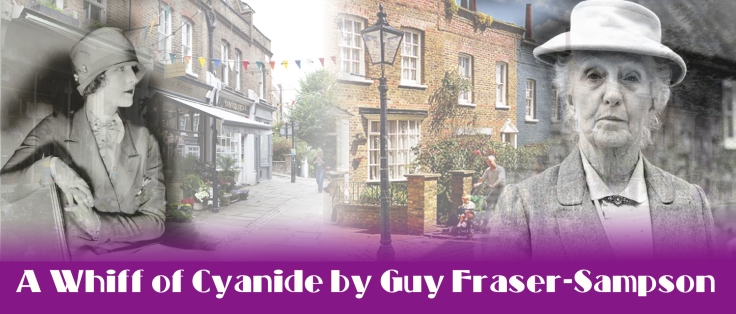


 Now, Thorne becomes involved in another kind of hell on earth, and one where all absent devils have been called home, all leave cancelled, and any recently retired fallen angels pressed back into duty. The fires stoked in this particular hellish pit illuminate the ghastly world inhabited by some British Asian communities who sanction murder in the name of their warped concept of family honour. Among the ghosts which inhabit the darker parts of Thorne’s memory is that of Meena Athwal. She was killed, he is certain, at the behest of her family, but her death remains unavenged in a court of justice.
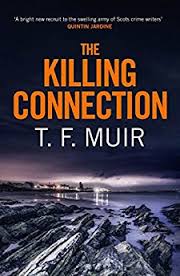

 The woman is eventually identified as Alice Hickson, a journalist, and the woman who provided the ID, a literary editor called Manikandan Lal, is flying home from holiday to give further background to her friend’s disappearance and death. ‘Kandi’ Lal fails to make her appointment with Gilchrist, however, and soon the police team realise that they may be hunting for a second victim of whoever killed Alice Hickson. Gilchrist’s partner, DS Jessie Janes has problems of own, which are become nagging distractions from her professional duties. As if it were not bad enough to learn that her junkie mother has been murdered by a family member, Jessie is faced with the heartbreaking task of explaining to her son that an operation to correct his deafness has been cancelled permanently.
 Detective Inspector characters have become a staple in British crime fiction, mainly because their position gives them a complete overview of what is usually a murder case, while also allowing them to “get their hands dirty” and provide us readers with action and excitement. So, the concept has become a genre within a genre, and there must be enough fictional DCIs and DIs to fill a conference hall. This said, the stories still need to be written well, and Frank Muir (right) has real pedigree. This latest book will disappoint neither Andy Gilchrist’s growing army of fans nor someone for whom reading The Killing Connection is by way of an introduction.


