

 Thrill Kill is a brisk, no-nonsense police procedural thriller set amidst the hurley burley of Carnival season in New Orleans. Homicide cop Quentin ‘Q’ Archer sets out to bring to justice a serial killer whose calling card is a can of aerosol coolant – tradename ‘Chill’ – beside the bodies of his victims. Archer burns the midnight oil to solve the crime, but it is not the only thing on his mind. He is not a native of The Big Easy, but a displaced person from Detroit, where his police career became violently complex when his wife was mown down by a car, and Archer was forced to turn against his own family in a personal war against police corruption, drugs and racketeering.
Don Bruns gives us a vivid and totally unsentimental account of the brand known as NOLA – New Orleans, Louisiana. We see a Mardi Gras which is joyous, celebratory, but also perverse and venal in the extreme. Central to the story is Archer’s relationship with a young woman Solange Cordray. Cordray is described in the publicist’s gush as a “voodoo queen”, which does neither her nor the book justice. Cordray certainly makes a living out of selling charms, herbal remedies and artifacts associated with the supernatural, but she also has a gift which can prove unwelcome and a burden to her – she has second sight.
Archer is, initially, completely sceptical about what Solange Cordray senses and feels, but he is conflicted by his growing physical attraction to her. Meanwhile, the killings continue, and it slowly dawns on Archer that they are not the work of a single murderer, but the result of a looming turf war between rival gangs. As ever, drugs are the main commodity, and their transit from South America to the streets of New Orleans is as clear as day, but the police simply do not have the resources to tackle the flow.
Even more worrying is the trade in human beings. The tragic irony is that much of America’s prosperity, particularly in the Deep South, was historically based on such a trade, but the new merchandise does not consist of strapping men brought in to pick cotton, but young – sometimes terribly young – women who are swept up from poverty in places like Mexico and Ecuador with the promise that they will soon be earning enough money to send home to their struggling families. In reality, the jobs consist of – at best – stripping but, more usually, outright prostitution. The money they earn is taken from them, and not one nickel, not one dime goes anywhere but into the pockets of the pimps.
 Don Bruns himself (right) is an interesting character. As well as the first book in the Quentin Archer series Casting Bones, he has written two other series, Caribbean and Stuff. He describes himself as “a musician, song writer, advertising guru, painter, cook, stand-up comic and novelist who has no idea what he wants to be when he grows up.” His music is mainstream country, but with a little twist of this and that to spice things up. You can hear samples of his music here and I was amused to see the wonderfully titled Get Your Tongue Out Of My Mouth I’m Kissin’ You Goodbye as part of his repertoire. I always thought it was a spoof title, rather like If You Leave Me, Can I Come Too? and You Were Only A Splinter As I Slid Down The Bannister Of Life, but I am clearly wrong!
With a help from the insights of Solange Cordray, and a good-hearted stripper, Archer sets up a sting to bring down the main characters in the turf war between the rival gangs, and in doing so rips away the drapes that have been concealing the fact that the whole dreadful enterprise of importing Colombian Marching Powder and young flesh is controlled by those who are right at the top of the political tree. Thrill Kill is published by Severn House and is available here.


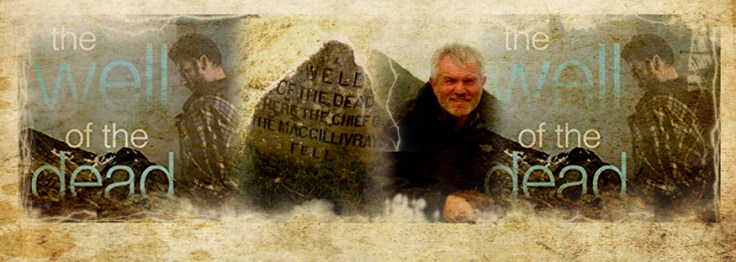
 In the icy Scottish dawn of 16th April 1746, the last battle to be fought on British soil was just hours away. The soldiers of the Hanoverian army of William Duke of Cumberland were shaking off their brandy-befuddled sleep, caused by extra rations to celebrate the Duke’s birthday. Just a mile or two distant, the massed ranks of the Scottish clans loyal to Charles Edward Stuart, the Young Pretender, were shivering in their plaid cloaks, wet and exhausted after an abortive night march to attack the enemy.
 The Well Of The Dead is a winning combination of several different elements. It’s a brisk and authentic police procedural, written by someone who clearly knows how a major enquiry works. For those who enjoy a costume drama with a dash of buried treasure, there is interest a-plenty. Military history buffs will admire the broad sweep of how Allan (right) describes the glorious failure that was the Jacobite rebellion, as well as being gripped by the detailed knowledge of the men who fought and died on that sleet-swept April day in 1746, bitter both in the grim weather conditions and what would prove to be a disastrous legacy for the Scottish Highlanders and their proud culture.

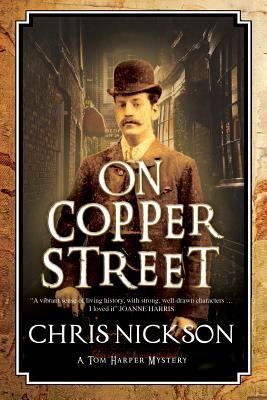 On Copper Street opens in grim fashion, with death and disfigurement. The dead pass in contrasting fashion. Socialist activist Tom Maguire dies in private misery, stricken by pneumonia and unattended by any of the working people whose status and condition he championed. The death of petty crook Henry White is more sudden, extremely violent, but equally final. Having only just been released from the forbidding depths of Armley Gaol, he is found on his bed with a fatal stab wound. If all this isn’t bad enough, two children working in a city bakery have been attacked by a man who threw acid in their faces. The girl will be marked for life, but at least she still has her sight. The last thing the poor lad saw – or ever will see – is the momentary horror of a man throwing acid at him. His sight is irreparably damaged.
 Nickson is a master story teller. There are no pretensions, no gloomy psychological subtext, no frills, bows, fancies or furbelows. We are not required to wrestle with moral ambiguities, nor are we presented with any philosophical conundrums. This is not to say that the book doesn’t have an edge. I would imagine that Nickson (right) is a good old-fashioned socialist, and he pulls no punches when he describes the appalling way in which workers are treated in late Victorian England, and he makes it abundantly clear what he thinks of the chasm between the haves and the have nots. Don’t be put off by this. Nickson doesn’t preach and neither does he bang the table and browbeat. He recognises that the Leeds of 1895 is what it is – loud, smelly, bustling, full of stark contrasts, yet vibrant and fascinating. Follow this link to read our review of the previous Tom Harper novel,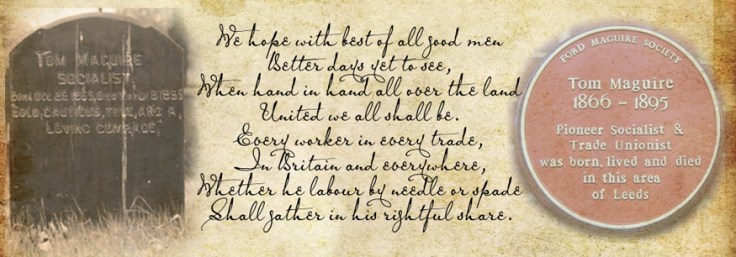
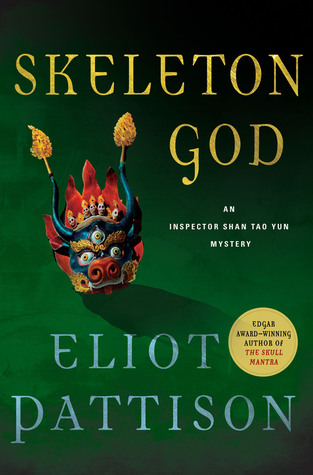

 The book actually begins with Shan rescuing one of the aforementioned yaks, but events take a more sinister turn. An ancient grave is uncovered, but the inhabitants are unlikely bedfellows. The original occupant is a long dead priest, mummified and gilded. But his companions are the remains of a Chinese soldier, and the very recent corpse of an American visitor. There is cultural confusion when a mobile ‘phone, presumably not the property of either the priest of the soldier, chimes out Handel’s Hallelujah Chorus across the chill mountain air and into the ears of alarmed Yangkar locals.
 masters far away to the east is described with wit and a certain degree of compassion. I am never completely convinced by the regular use of italicised foreign language nouns in novels, particularly when the original words would have used an entirely different alphabet, but this is a tiny complaint dwarfed by what is a brilliant and evocative police procedural, albeit one set in a world as far away from our European certainties as it is possible to recreate. Pattison (right) has written a novel which reminds us that China’s eminence as a world power has not been achieved painlessly.

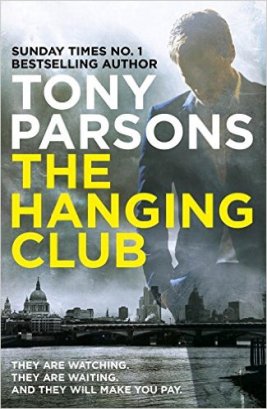
 His London copper, DC Max Wolfe, becomes involved when a refrigerated lorry is abandoned on a street in London’s Chinatown. The emergency services breathe a huge sigh of relief when they discover that the truck is not carrying a bomb, but their relaxed mood is short-lived when they break open the doors to discover that the vehicle contains the frozen bodies of twelve young women. The bundle of passports – mostly fake – found in the lorry’s cab poses an instant conundrum. There are thirteen passports, but only twelve girls. Who – and where – is the missing person?
 Max Wolfe certainly gets around for a humble Detective Constable, but he is an engaging character and his home background of the Smithfield flat, young daughter, motherly Irish childminder and adorable pooch make a welcome change from the usual domestic arrangements of fictional London coppers with their neglected wives, alcohol dependency and general misanthropy. Parsons (right) is clearly angry about many aspects of modern life in Britain, but he is too good to allow his writing to descend into mere polemic. Instead, he uses his passion to drive the narrative and lend credibility to the way his characters behave.


 A 15 year-old girl, Tania Mills, walks out of her front door and out of the lives of her parents, her family and her friends. She becomes just another statistic. Just another missing person for the police to make a dutiful attempt to appear involved. Just another file, first of all gathering dust on a shelf, and then occupying a tiny space on someone’s hard drive.


 As the pathologists – literally – piece together the evidence they conclude that the shattered remains in the tree is that all that is left of Bill Chalmers, a copper who was not so much bent as tangled and doubled up on himself. After surviving a jail sentence for his misdeeds, he used his connections and his wits to found a drug rehabilitation charity, which drew immense support from the community.

 The random murder of an innocent man? Not exactly. Mahmud Irani was part of a gang of men who groomed, raped and abused a number of white teenage girls. He served a jail term which many believe was too short, considering his crimes.

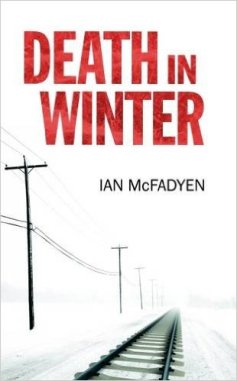 Hayley Bell has not returned home after a night out with some lady friends, and husband Duncan is seriously concerned. Mr Bell is a disagreeably pompous fellow with some serious affectations, such as calling four rooms in his grand house after the seasons, and decorating them accordingly. Carmichael and his team, however, have no reason to suspect Duncan Bell – despite his unpleasant manner – of having anything to do with his wife’s disappearance.


