
For readers new to this excellent series from Graham Hurley, here’s what you need to know. The central character is Enora Andressen, an English stage and screen actress in her early forties. She is in remission from a brain tumour, lives in Holland Park and is in a platonic relationship with a former cocaine baron, now a ‘reputable’ businessman, Hayden Prentice. He is the father of Enora’s son Malo, the product of a drunken fling on a yacht moored at Cannes a couple of decades earlier. Like ‘Bazza’ Mackenzie, the memorable anti-hero of Hurley’s magnificent Joe Faraday books, Prentice – nicknamed HP or ‘Saucy’ – has his tribal roots in the violent world of Portsmouth football supporters.
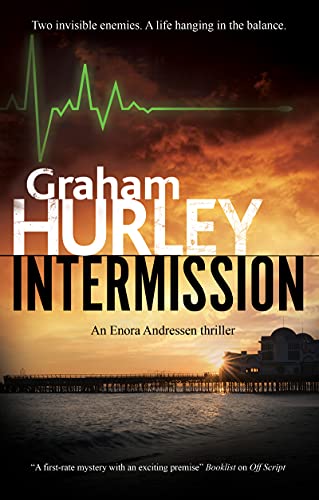 Intermission is, I am sure, the only novel I have read so far that has, as its spine, the Covid-19 pandemic. The action begins in that fateful early spring of 2020, and Hayden Prentice learns that one of his old friends, a former bent copper known as Fat Dave has been laid low with the virus and is in the local ICU, and not expected to live. Visiting is, of course, completely off limits, but the sight – via a video link – of his friend expiring amidst a sea of tubes and monitors chills HP to the bone. He travels from his Dorset manor house and summons Enora down to Portsmouth, where they have been given the use of a shabby flat owned by HP’s solicitor.
Fat Dave dies, and the newly announced lockdown measures prevent HP from organising the kind of send-off he was planning. Then, another bombshell. HP contracts the virus himself but refuses point blank to go into hospital. Enora has previously learned, via Malo, that due to the collapse of an insurance business he has set up, HP – formerly awash with the money he made in his criminal days – is in serious financial difficulties, but trapped in the claustrophobic flat Enora and Malo have no option but to buy in private care, involving a rotating shift of nurses, the attention of a consultant, and specialist medical equipment. The cost of all this is going to prove ruinous, but Enora is told by a violent psychopath called Wesley Kane – a sometime employee of HP – that before the virus laid him low, HP had a little investment plan. A plan that didn’t involve the risky world of insurance, hedge funds or commodity futures, but one where huge percentage profits are almost guaranteed – class “A” drugs. Back in his Dorset mansion, HP has kept a substantial stash of cash – in the proverbial used notes – and his housekeeper Jessie delivers this to Enora.
It seems that there is a woman in town named Shanti who has a long history of drug dealing. The restaurant she runs has gone bust, the power has been cut off, and she is hungry for money. Despite her attempts to run a straight business, she has retained contacts with the wholesalers of the ever-popular pharmaceuticals, and Enora pays her a visit.
There are complications, however. Enora meets Dessie Wren, a serving police officer and former colleague of the late Fat Dave, but rather more honest. He makes it very clear that the Hampshire police have not given up on their long running campaign to nail Hayden Prentice for his past misdeeds. To add to the woes of HP – and those close to him – someone whose father died as ‘collateral damage’ in a drug deal that went wrong is out for revenge.
There are so many good things about this series (click the links to read reviews of the earlier books Off Script, Sight Unseen and Curtain Call). Graham Hurley is a brilliant storyteller and a man of great learning and wide interests; as if the Joe Faraday books, the Jimmy Suttle series and these books are not sufficient evidence of that, he also writes superb military history thrillers like Kyiv. Enora herself is a wonderfully nuanced character. There is nothing remotely criminal about her, but through loyalty she is drawn into the murky world of Hayden Prentice, rather like Chandler’s investigator who finds that, “down these mean streets a man must go who is not himself mean, who is neither tarnished nor afraid.”
The best contemporary English crime writers always give us an almost palpable sense of place; Christopher Fowler gives us London, Phil Rickman draws us into the haunted borderland between England and Wales; Chris Nickson has us treading the cobbles and breathing in the dense air of industrial Leeds, while Jim Kelly leaves us with the quiet menace of the Fen country. Graham Hurley has a recurrent major character in many of his novels, and it is the city of Portsmouth itself. Enora muses:
“It’s an island community. It’s a bit cut off, a bit claustrophobic. It seems to expect the worst, and I get the feeling that it’s rarely disappointed, but for all its stoicism, it remains oddly upbeat. It also has a long memory. The thirst for a fight evidently lies deep in the city’s DNA, and I get the feeling the Pompey tribes have been picking quarrels for ever. Tim, my thespy friend, is very good on this. First, he says, Pompey’s finest went to sea and took on the Spanish, then the Dutch, and then the French. Trafalgar was a great moment, a really tasty ruck, and then came two world wars and shoals of sneaky U-boats. The monument on the front, visible from this flat, tallies the thousands of lives lost, but even so the city has never abandoned its passion for lots of blood and lots of treasure.”
Intermission is published by Severn House and is out now.


 We are left to imagine what he looks like. He never uses violence as a matter of habit, but his inner rage fuels a temper which can destroy those who are unwise enough to provoke him. Why is he so bitter, so angry, so disgusted? Of himself, he says:



 The team investigating the murder is led by Detective Inspector Isabel Blood, her Sergeant and a brace of DCs. They soon learn that the dead man is Kevin Spriggs, a middle-aged car mechanic, with a failed marriage behind him, an estranged son – and an argumentative temperament often fueled by drink. The murder raises many questions for Blood and her people. How did Spriggs and the person who killed him gain access to a locked house? Who hated Spriggs – admittedly not one of life’s natural charmers – enough to kill him? After all, he was something of a nobody, tolerated rather than loved by most people who knew him, but why this brutal – and mysterious – death?

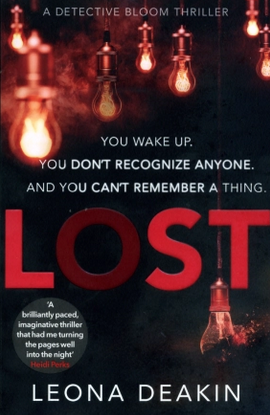
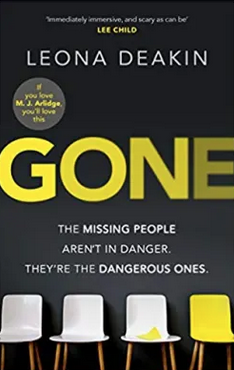
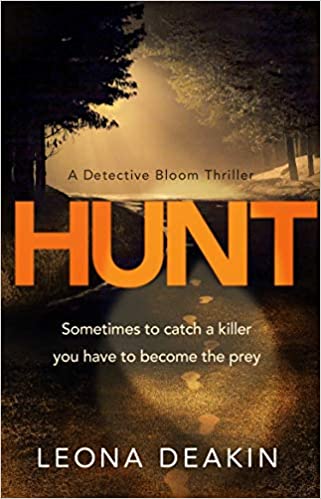 The answer to that conundrum forms the central premise of the book. Porter’s niece Scarlett has been drawn into the orbit of a feminist organisation called Artemis led by a charismatic woman called Paula Kunis. Porter will only answer police questions about his activities if Bloom undertakes to track down Scarlett and extract her from the clutches of Artemis. Bloom is smart enough to realise that Porter is up to something, but cannot work out why he is so worried about his niece, when every other aspect of his behaviour suggests that he is a cold and devious man, with psychopathological elements to his character.
 century Professor Moriarty, who has crossed swords with Bloom and Jameson before. Thirdly, Gerald Porter has inexplicably disappeared from police custody and, almost immediately, a huge social media campaign vilifying Paula Kunis and Artemis has been launched, with the result that scores of husbands and fathers of women “poached” by Artemis have headed to the Scottish retreat and are angrily congregating at its gates.



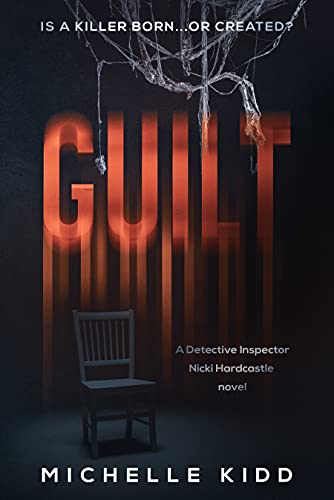 Nikki Hardcastle


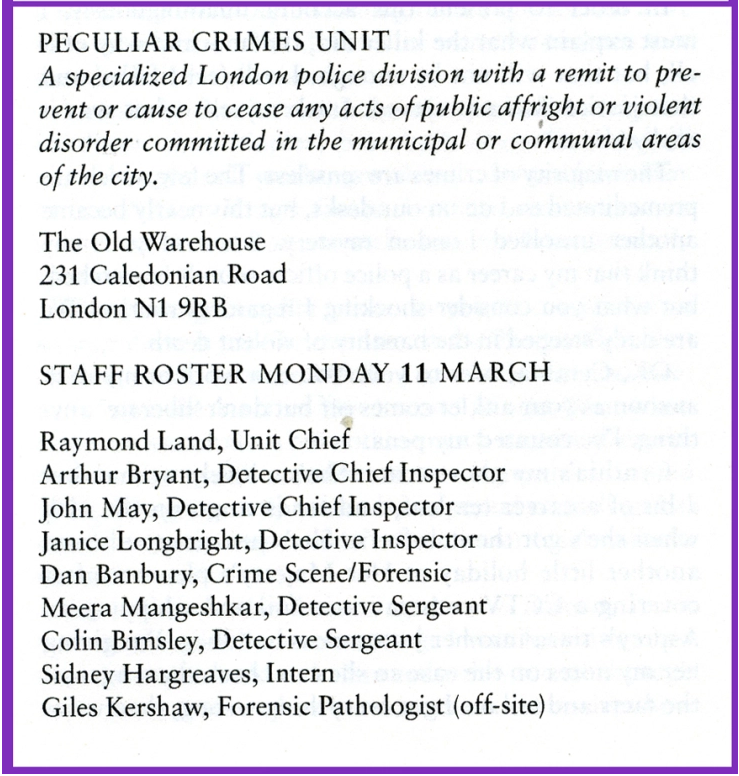






 As the plot develops we learn that the dead woman, Becca O’Brien, was pretty much human wreckage, drug addicted and feckless. Interestingly, her daughter (who now lives in sheltered accommodation0, was involved in an act of criminality which happened twenty five years earlier (see first paragraph) at a moorland location called Gorse Farm, where human bones have recently been discovered. In an ostensibly separate plot thread, Calladine is being threatened by a criminal adversary (something of a stage eastern European gangster) called Lazarov. When Lazarov threatens to harm Calladine’s grand-daughter if he doesn’t facilitate the Bulgarian’s take-over of the Leesdon drug scene, the tension ratchets up several notches.




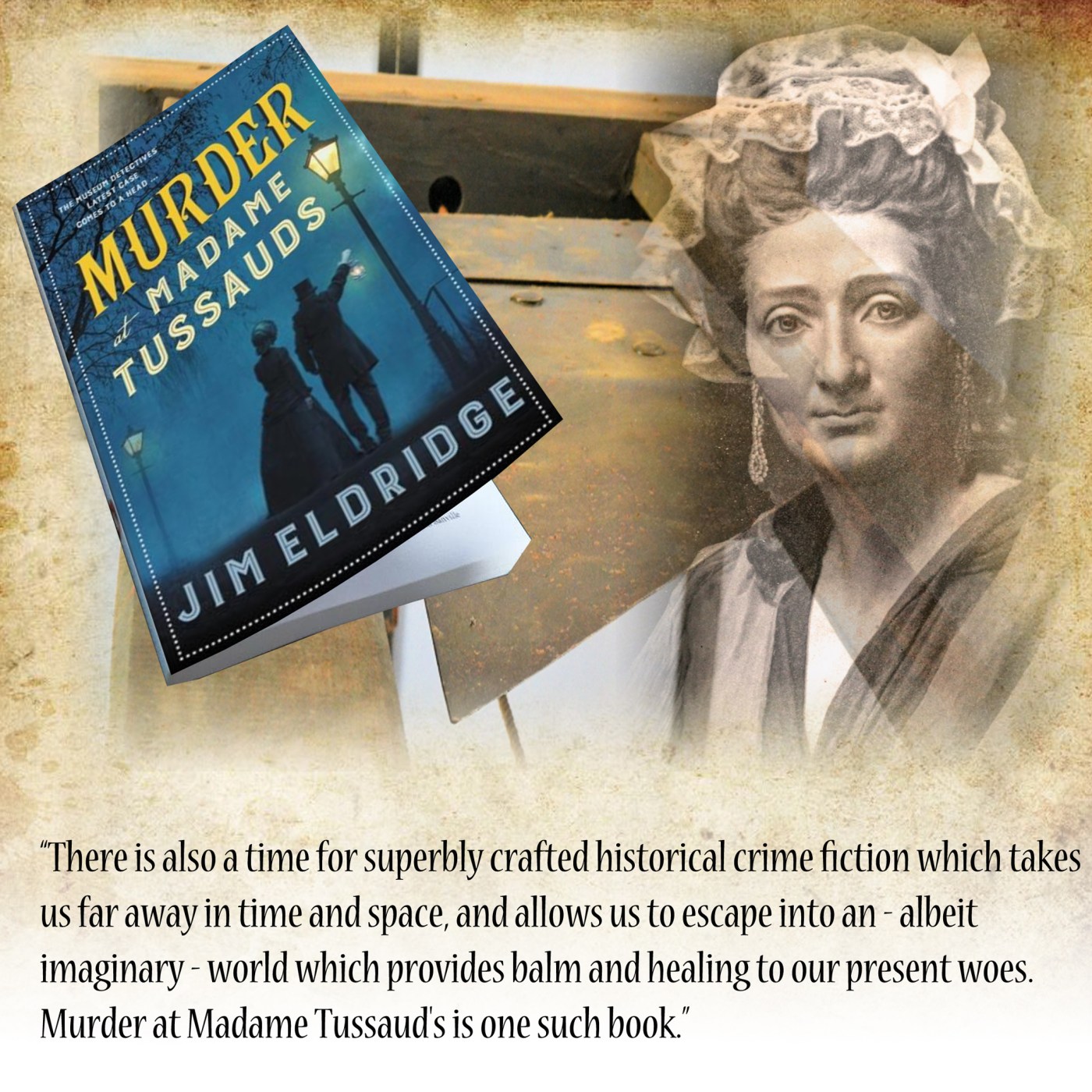
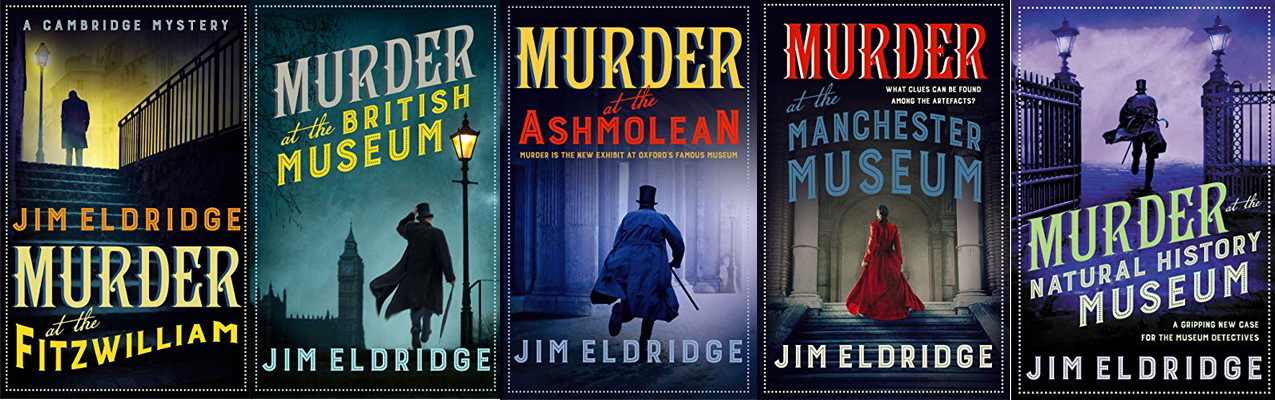
 This shouldn’t be dismissed as ‘comfort reading’. Yes, we know what we are going to get – the atmospheric late Victorian setting, the warm human chemistry between Daniel and Abigail, the absence of moral ambiguity and the certainty that good will prevail. Any genuine reader of fiction – and in particular, crime fiction – will know that, rather in the manner of Ecclesiastes chapter III , there is a time for everything; there is a time for the dark despair of Derek Raymond, there is a time for the intense psychological dramas of Lisa Jewell, and a time for workaday police procedurals by writers like Peter James and Mark Billingham. There is also a time for superbly crafted historical crime fiction which takes us far away in time and space, and allows us to escape into an – albeit imaginary – world which provides balm and healing to our present woes. Murder at Madame Tussaud’s is one such book. It is published by Allison & Busby and is


 fullybooked2017