

When you read a Jo Spain stand-alone novel, you know you are going to be misled, made a fool of, and led up the garden path – all in the nicest possible way. Her Tom Reynolds police procedurals (see some reviews here are more straightforward and stick to the conventions of the genre, but when she spins a yarn outside of those confines, you learn to trust her narrators about as far as you can throw a grand piano.
 Such is the case in The Perfect Lie. Erin Kennedy – an Irish lass – works in publishing in New York, is married to American cop Danny Ryan, and they live in Newport, Rhode Island. No, Danny is not a fellow Celt, despite his surname, but beautifully black, at least in Erin’s eyes. One morning, she answers the doorbell to their apartment and admits Danny’s cop colleague Ben – stern of face – and a couple of fellow officers. Within seconds Danny, freshly showered and shaved for the day’s shift has walked to the balcony and jumped to his death on the concrete four floors below.
What follows is a journey into a labyrinth of blind alleys and false assumptions. Erin learns that Danny was the subject of an internal police inquiry, and was about to be arrested for corruption. She later discovers that he had secret bank accounts containing tens of thousands of dollars. Two other significant characters are introduced; Cal Hawley, the scion of a wealthy local family who has some connection with what Danny Ryan was involved in before his death, and Karla Delgado, a feisty lawyer who agrees to work for Erin pro-bono.
The split narratives of the book are not for complacent or inattentive readers. A couple of times I had to check back and make sure that I knew exactly what was going on. The viewpoints are these:
- Erin on the morning of Danny’s death, and the weeks following.
- The retrospective account of a young woman called Ally, a proctor at Harvard University.
- Erin, over a year after Danny’s death, when she is in custody and in court being tried for her husband’s murder.
Bullet points one and three seem to be incompatible, so you might think that the obvious solution is that Danny did not die as we are told in the first few pages. The fact that Erin is not allowed to ID her husbands body, and that he is cremated in a closed casket suggests that something strange is going on, but what, exactly – and why? Eventually, the link between Ally, her mentee Lauren Gregory, and the Danny Ryan/ Erin Kennedy story is revealed. And Jo Spain has tricked us – well, I certainly fell for it – into making a huge assumption.
Jo Spain has has created her own version of the classic locked room mystery. It happened, yet it is impossible that it could have happened. She is The Queen of The Night in terms of misdirection and she entices us into a spider’s web where we thrash helplessly until she puts us out of our misery. In the end, however, she can put on her best innocent face and say’ “who…me?’ because when the penny drops we realise we have misled ourselves.This is another masterpiece from, in my opinion, Ireland’s finest contemporary writer. The Perfect Lie is published by Quercus, and is out today, 13th May.
My reviews of other books by Jo Spain can be found HERE
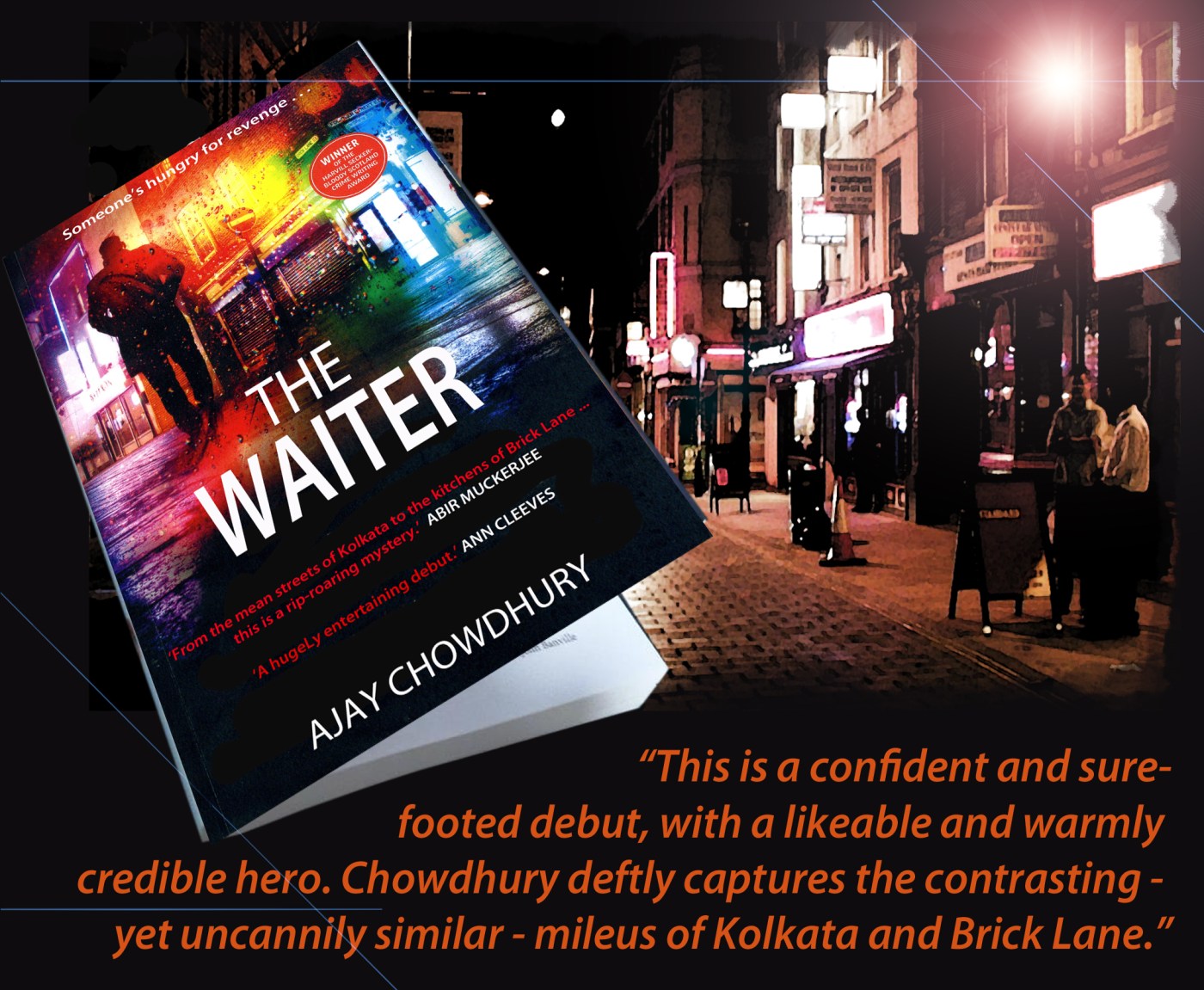

 The restaurant is run by his relatives Saibal and Maya, with help from their daughter Anjali. At this point is worth reminding people that families are the big thing in the sub-continent, and most of the characters in the book are related in one way or another. The story starts on the evening that the restaurant has been booked to provide the food for the lavish 60th birthday party of rich entrepreneur Rakesh Sharma. He and his new wife Neha – half his age – are installed in a lavish mansion on Billionaire’s Row near Hampstead Heath. It’s also worth mentioning at this point that Sharma’s first wife (and son by that union) are still very much on the scene.




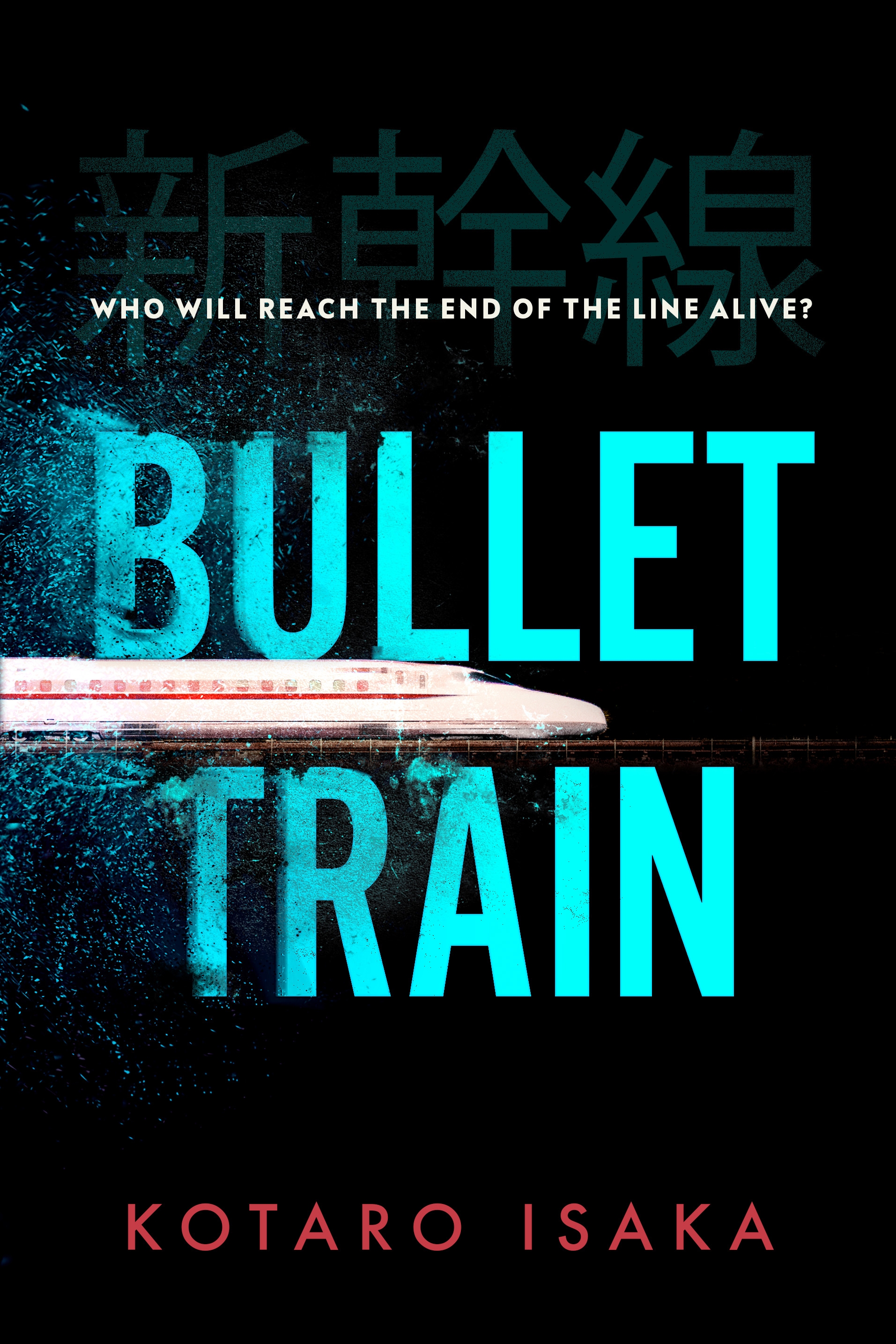 Satoshi ‘The Prince’ Oji is the darkest character of the five. He is utterly without compassion. Other human beings – school teachers, teenage friends, other adults – only have value to him in the sense that they can be used for his entertainment. He is highly intelligent, but one of the more malevolent fictional villains I have encountered in recent times. Everything is thought through and planned in the minutest detail, such as his grip on Kamura. The grizzled gangster could, physically, chew up Satoshi and spit out the bones, but the teenager convinces Kamura that he has an insider in the hospital where the man’s son is lying in a coma, and should Satoshi fail to answer periodic calls to his mobile ‘phone, then this insider will find a way to disconnect the little boy’s life support system.

 While reporting on the death and mutilation of a young rent boy, Russell is asked by a friend to take on another case, this time on behalf of a senior army officer whose daughter is missing. It is a delicate business, because there is a strong suspicion that Lili Zollitsch has run off with a boyfriend who is an active member of the Kommunistische Partei Deutschlands.

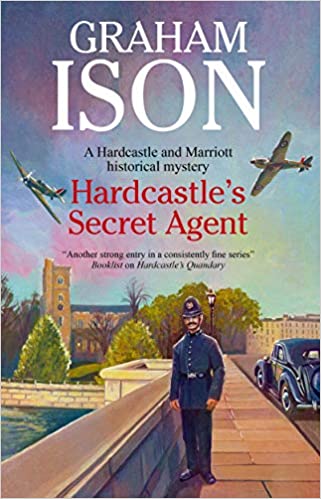 We are, as ever, in London, but it is 1940. The Phony War is over, and the Luftwaffe are targetting industrial sites they believe to be involved in making parts for military aircraft. When several important employees of one such factory are burgled – clearly by an expert – but with nothing other than trinkets stolen, Hardcastle believes he may be on the track of a German spy on the look-out for plans, blueprints or important military information. Hardcastle has to deal with The Special Branch, but finds them about as co-operative as they were with his father a couple of decades earlier. This has a certain tinge of irony, as part of the author’s distinguished police career was spent as a Special Branch Operative.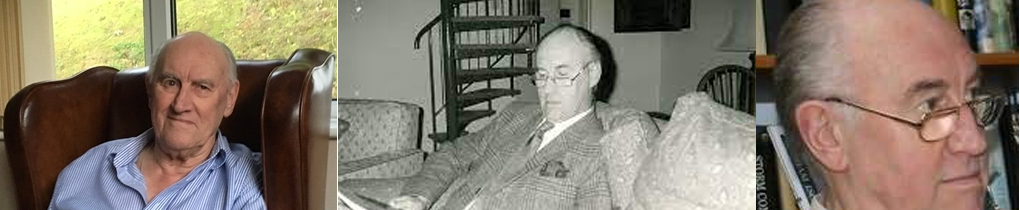


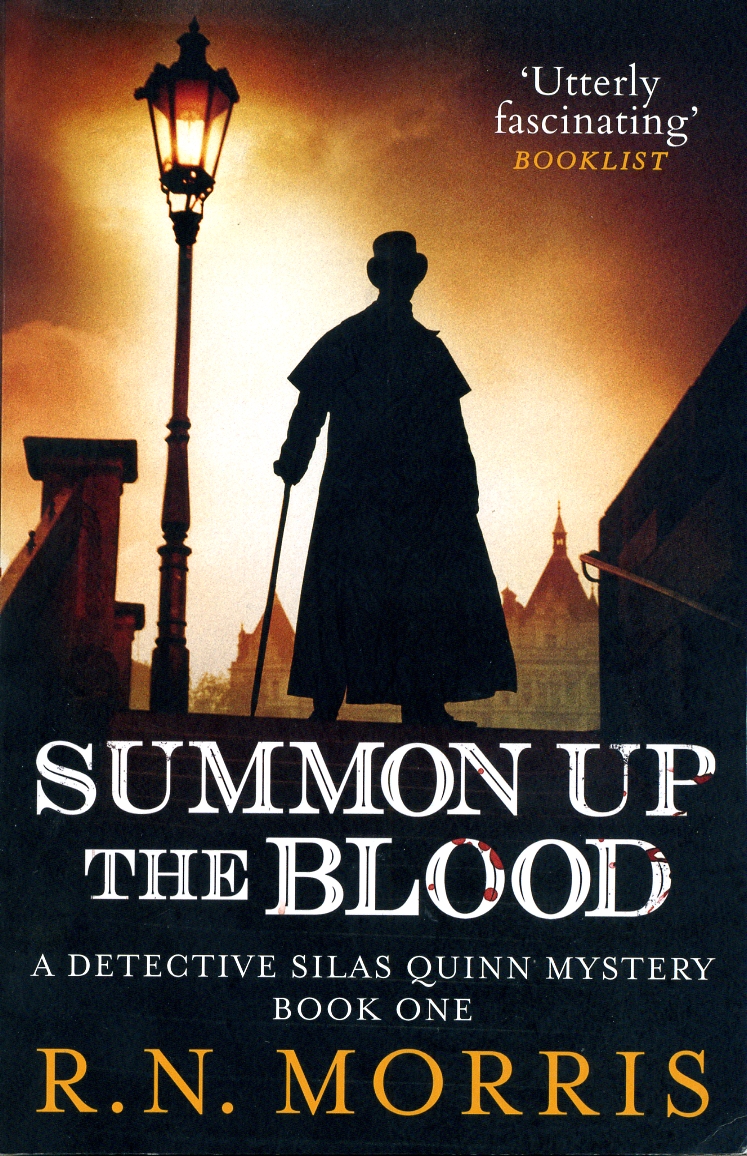 When a rent boy is found dead, his throat cut from ear to ear, there is initially little interest by the police, as the lad is just assumed to have paid the price for being in a risky line of business, but when the post mortem reveals that he has had every drop of blood drained from his body, Quinn is summoned and told to investigate. After a droll episode where Quinn decides to pose as a man smitten by “the love that dare not speak its name”, and blunders around in a dodgy bookshop, but he does find out that the dead youngster was called Jimmy, and had links to a ‘gentleman’s club’ where he would find men appreciative of his talents.
 Thankfully, Morris makes no attempt to get in the politics of homosexuality and the law: his characters simply inhabit the world in which he puts them, and their thoughts, words and deeds resonate authentically. In 1914, remember, the trial of Oscar Wilde and the Cleveland Street Scandal were still part of folk memory. It’s an astonishing thought that had Morris been writing about similar murders, fifty years later in 1964, virtually nothing would have changed – think of the scandals involving such ‘big names’ as Tom Driberg, Robert Boothby and Ronnie Kray, and how their lives have been written up by such novelists as Jake Arnott, John Lawton and James Barlow.

 The Steiners are also well-connected. Politicians great and small, financiers, socialites, fund-raisers – mostly anyone who is anyone in Boston and further afield – all tip their hats to the Steiners. Neither does it hurt that the Steiners’ clout enables them to hire serious muscle from the criminal underworld and, as most of the child rape is conducted on a private island somewhere in the vicinity of the Bahamas, neither the Boston Police Department nor the FBI can do anything to intervene.

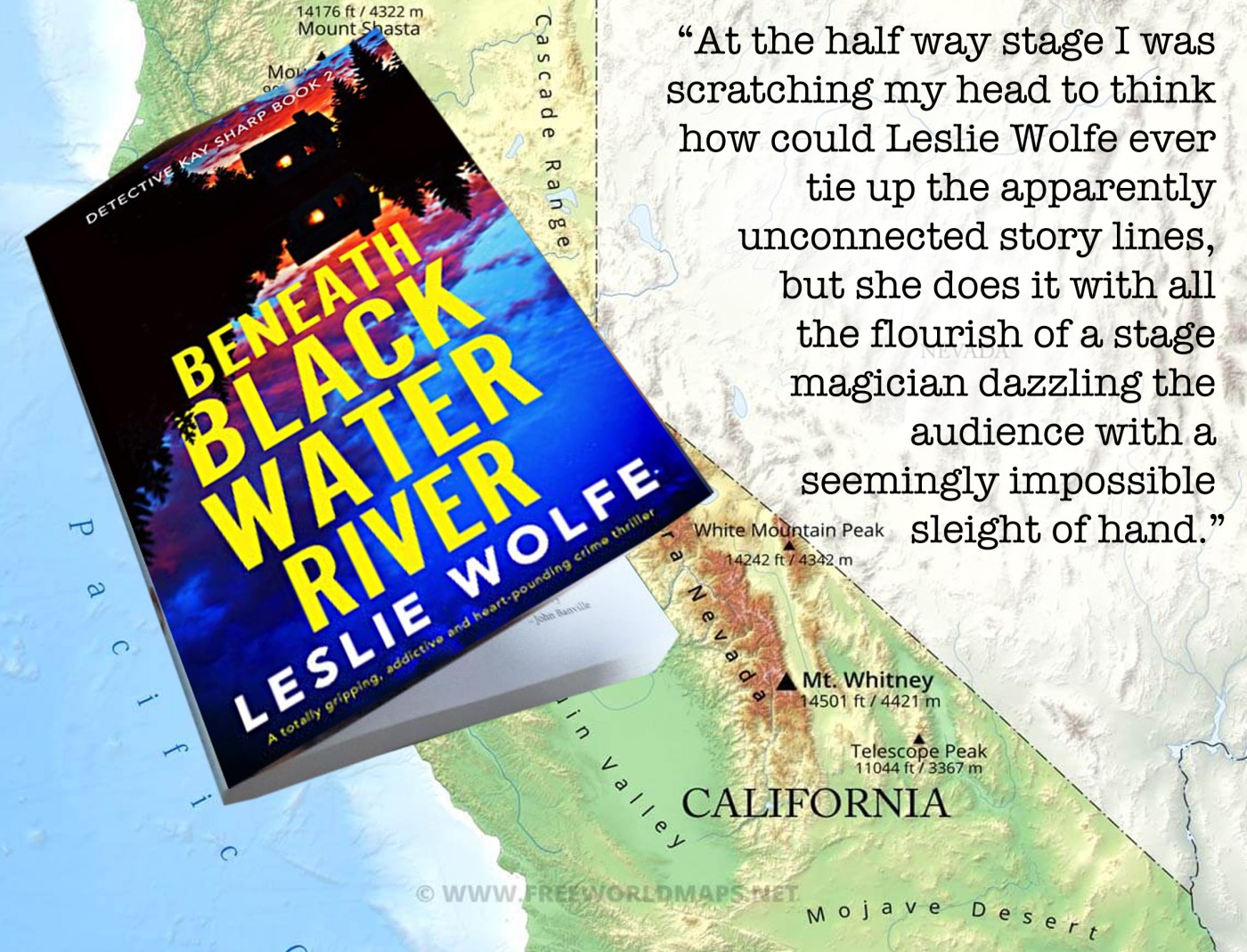

 Leslie Wolfe has, then, set several hares running, to use the venerable English metaphor. The rogue cop – Herb Scott – is a truly nasty piece of work, and seems to have half the Sheriff’s Department under his thumb, as when his wife, Nicole, has reported her many beatings as a crime, nothing ever happens. The mis-identification of the murdered girl is a seemingly unsolvable mystery. Were there ever two girls, or are they one and the same? Does the conundrum stem from a complex inheritance issue involving the wealthy Caldwell family? The Caldwells are magnificently disfunctional, riven with bitterness and jealousy, and to spice matters up even more, there is the deadly whiff of incest in the air.


