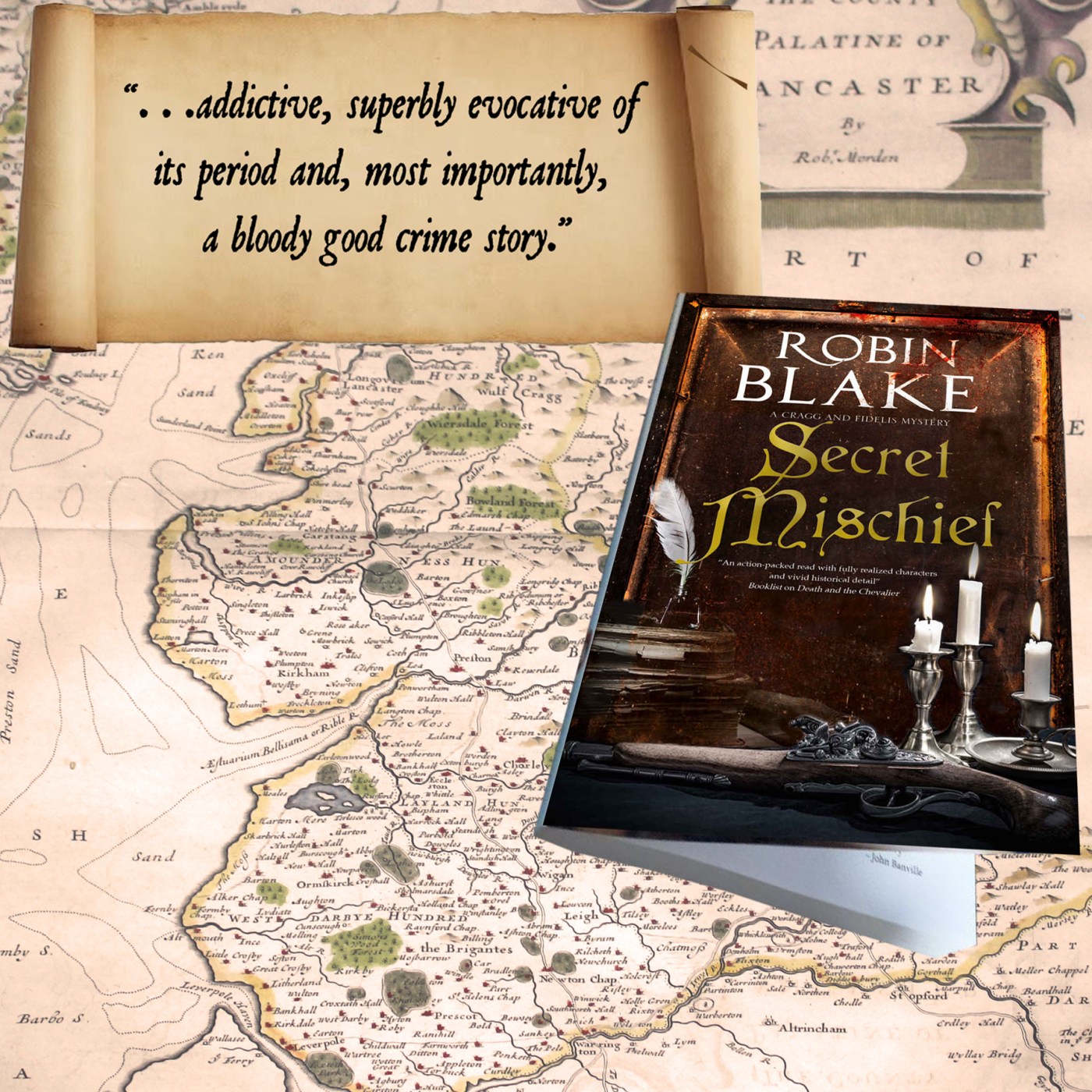

A new Cragg and Fidelis mystery from Robin Blake is always an event, so thank you, Severn House, for the review copy. For those who have yet to meet this pair of 18th century investigators, here’s a quick heads-up. We are in the mid 1700s, in Lancashire, and King George II has not long since led his army in the field to defeat the dastardly French at The Battle of Dettingen. Titus Cragg is the County Coronor, and lives with his wife and son in Preston. His friend Luke Fidelis is a local doctor who is much admired by his patients, but viewed as highly suspect by some of the older medical fraternity in the area. This is the seventh in the series, and you can read my reviews of of a couple of the earlier novels here.
 As ever, murder is the word, and a series of deaths in and around the town of Omskirk are linked to an archaic form of business plan for raising money, known as a Tontine. The investment plan was named after Neapolitan banker Lorenzo de Tonti and, to put it simply, was a pot of money where a number of people contributed an equal sum. The money would either be invested, with interest paid to the members, or used to fund capital projects. As time went on, and investors died, the fund became the property of the remaining members, until the last man (or woman) standing hit the jackpot.
Sounds like a good excuse to bump off a few people? Doesn’t it just! The first victim is, comically enough, a prize porker called Geoffrey. When Cragg is called to examine the corpse he thinks his time is being wasted, but when the late pig’s owner – one of the Tontine members – is shot dead a few days later, Cragg realises that the pig took a bullet aimed at his owner, and the shooter came back to finish the job.
 One by one the Tontine signatories come to sticky ends: one is, apparently, hit by the sail of a windmill; another is found dead on Crosby beach, apparently drowned, but Luke Fidelis conducts a post mortem and finds that the dead man’s body has been dumped on the seashore. Things become even more complex when a reformed ‘lady of the night’, now a maid, is accused of pushing the poor woman into the path of the windmill sail. Cragg is convinced she is innocent, but faces an uphill struggle against a corrupt judge.
Not the least of the charms of these books is the description of Luke Fidelis as a medical man who questions existing – and faulty – medical procedures. There is a melancholy moment when he examines the young daughter of one of Cragg’s relatives, and finds that she is suffering from Consumption and is terminally ill. ‘Consumption’ is, obviously, archaic, but so descriptive of a disease that did, until relatively recent times, almost literally consume its victims.
Titus Cragg gets to the bottom of the mystery eventually, of course, even the investigation has his ship sailing dangerously close to members of his own extended family. Off at a slight tangent, I do love books with a map as part of the frontispiece. What was good enough for the Macmillan editions of Thomas Hardy’s novels is plenty good enough for Robin Blake, too. Another left-field thought: the Cragg and Fidelis tales occupy the same geography as the excellent Henry Christie novels by Nick Oldham (click to read reviews) – just a few centuries earlier.
Secret Mischief is addictive, superbly evocative of its period and, most importantly, a bloody good crime story. Also – and I can’t remember a novel doing so in a long time – it features a cricket match as part of the plot! It is published by Severn House and is available now.
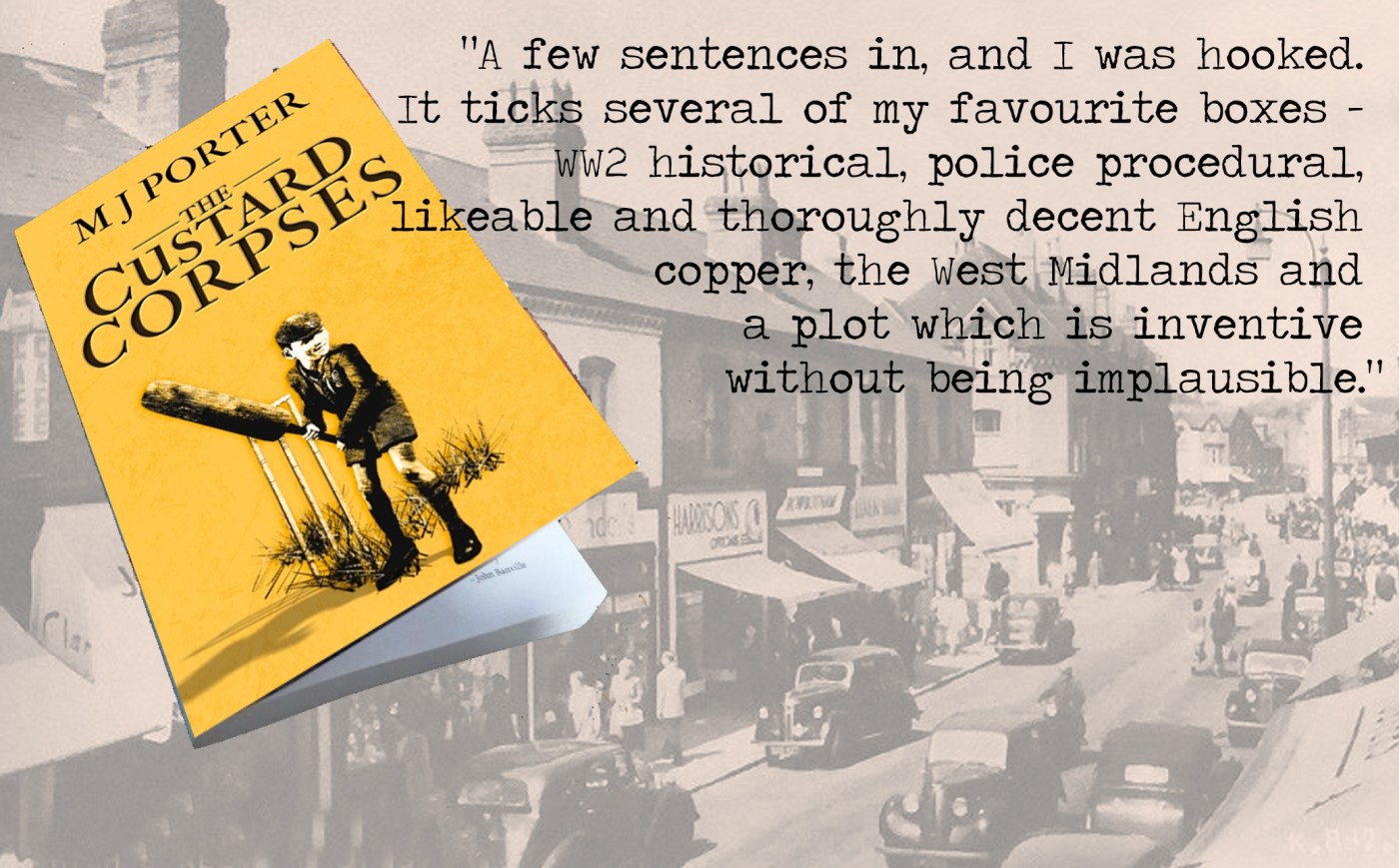
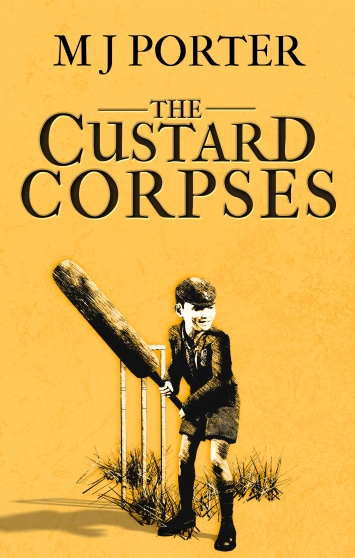 Mason is a man given to reflection, and a case from his early career still troubles him. On 30th September 1923, a boy’s body was found near the local church hall. Robert McFarlane had been missing for three days, his widowed mother frantic with anxiety. Mason remembers the corpse vividly. It was almost as if the lad was just sleeping. The cause of death? Totally improbably the boy drowned. But where? And why was his body so artfully posed, waiting to be found?


 After a few days




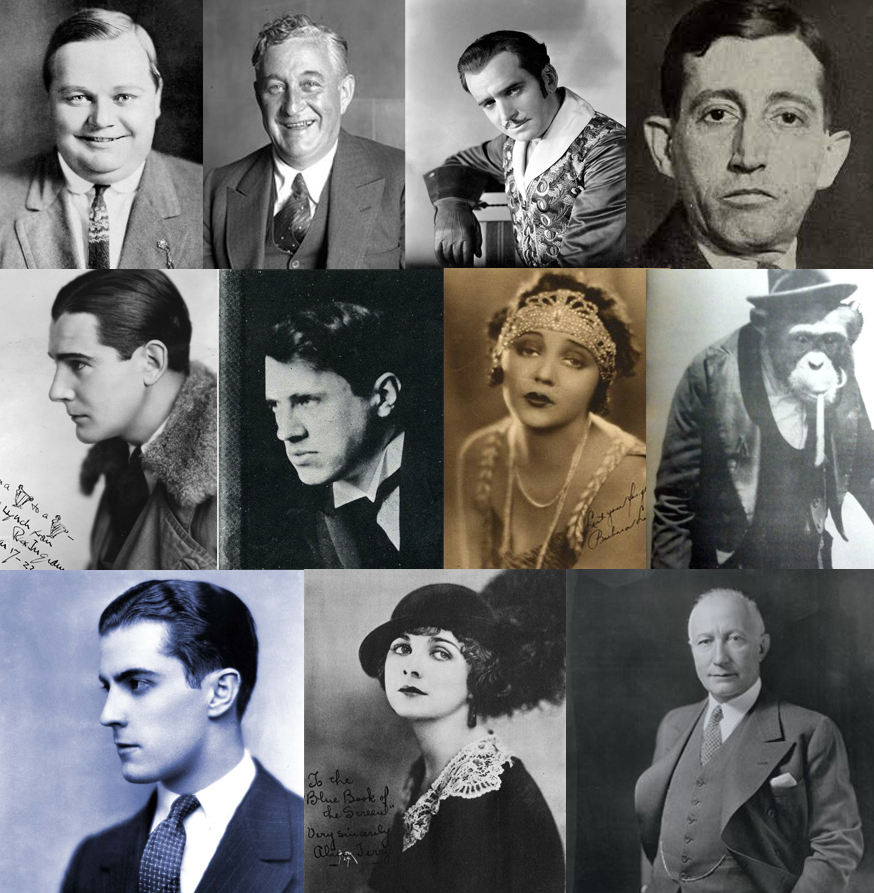
 Former city cop Collins has earned a reputation among movie producers and stars as a man who gets things done, but in a discreet way, and here he becomes involved in getting to the bottom of a nasty blackmail case involving one of Hollywood’s rising stars. José Ramón Gil Samaniego is a young man who was to become better know as Ramon Novarro, star of many hit movies, and an heir to the throne of screen heart-throb vacated by Rudolf Valentino after his untimely death. O’Donovan peoples his story with actual real life characters as far as possible, and it is a winning formula. Samaniego is in trouble because there are intimate photographs of him taken a notorious club for homosexuals. Both he and his studio bosses are desperate that these photos and the negatives are found and destroyed.

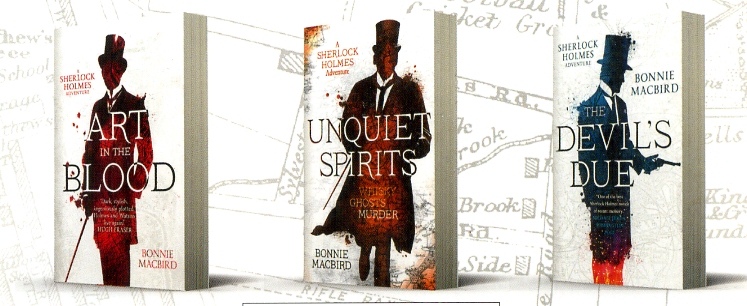
 In a sappingly hot Indian Summer in central London, Dr John Watson is sent – by a relative he hardly remembers – a mysterious tin box which has no key, and no apparent means by which it can be opened. Watson and his companion Sherlock Holmes have become temporarily estranged, not because of any particular antipathy, but more because the investigations which have brought them so memorably together have dwindled to a big fat zero.
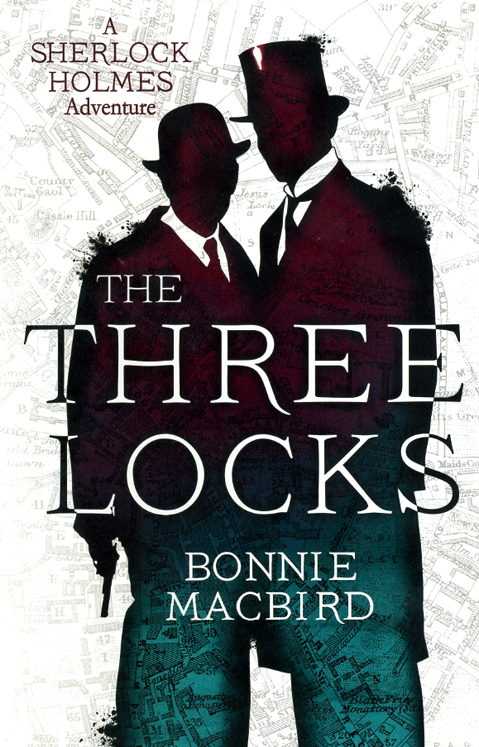 But then, in the space of a few hours, Watson shows his mysterious box to his house-mate, and the door of 221B Baker Street opens to admit two very different visitors. One is a young Roman Catholic novice priest from Cambridge who is worried about the disappearance of a young woman he has an interest in, and the second is a voluptuous conjuror’s assistant with a very intriguing tale to tell. The conjuror’s assistant, Madam Ilaria Borelli is married to one stage magician, Dario ‘The Great’ Borelli, but is the former lover of his bitter rival, Santo Colangelo. Are the two showmen trying to kill each other for the love of Ilaria? Have they doctored each other’s stage apparatus to bring about disastrous conclusions to their separate performances?


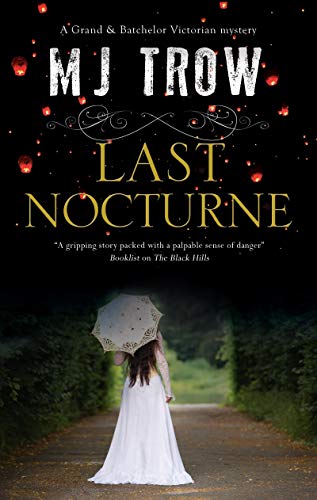 Grand & Batchelor are private investigators based in 1870s London and – much to the relief of James Batchelor, who is a terrible traveller – Last Nocturne has its feet securely on home soil. Grand is from a wealthy New England family, and fought bravely for the Union in The War Between The States, while Batchelor is a journalist by trade. Murder – what else? – is the name of the game in this book, and the victims are, you might say ‘on the game’. Cremorne Gardens were popular pleasure gardens beside the River Thames in Chelsea, but after dark, the ‘pleasure’ sought by its denizens was not of the innocent kind. ‘Ladies of the Night’ are being murdered – poisoned with arsenic – but the killer doesn’t interfere with them, as the saying goes, but instead leaves books by their dead bodies.


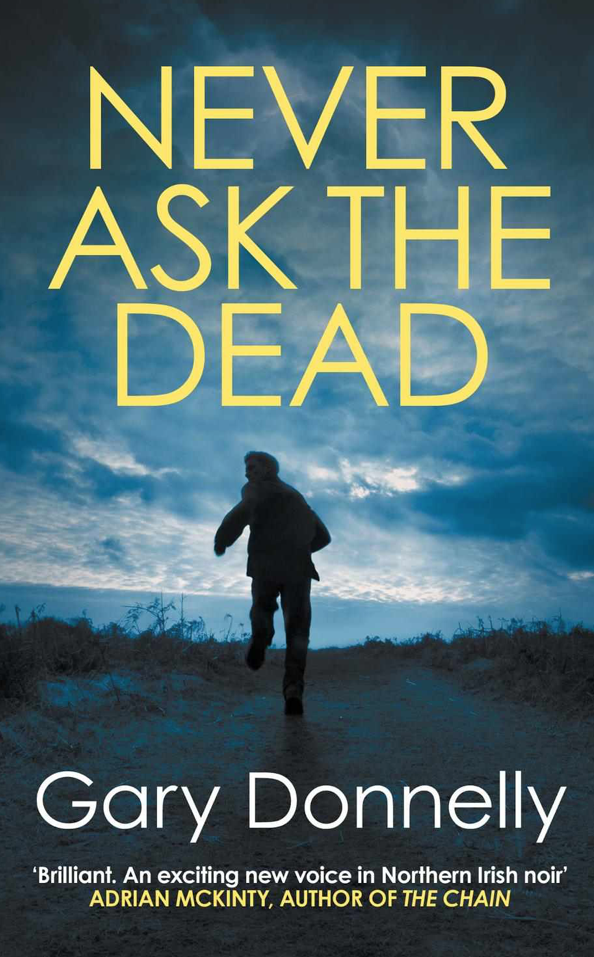 Sheen is given the task of re-investigating the Cyprus shootings, with a strong hint that it would suit the contemporary political narrative were the SAS men to be found guilty of unlawful killing. As he turns over the stones, Sheen isn’t surprised to see all kinds of unpleasant creatures scuttling away from the light. He has his own issues, as his own brother was the collateral damage of a terrorist bomb in their childhood street while they were kicking a football about.
 Donnelly has written a brilliant and terrifying novel that should remind people that despite the outward air of calm and reconstruction there is a parallel Belfast – a place where grievances are bone-deep and still burning white hot.
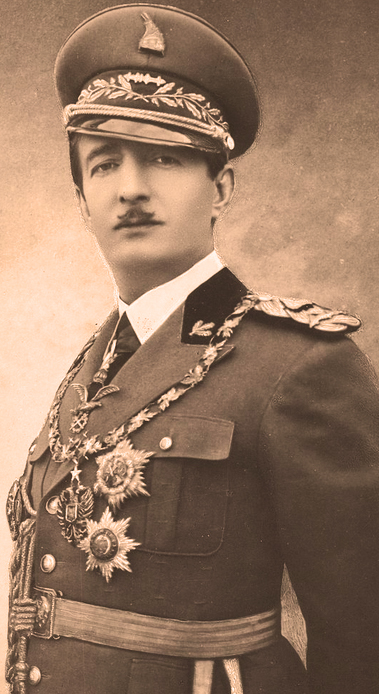 Any novel which features – in no particular order – Commander Ian Fleming, King Zog of Albania, a dodgy lawyer called Pentangle Underhill, and a Detective Chief Inspector named The Hon. Edgar Walter Septimus Saxe-Coburg promises to be a great deal of fun, and Murder At The Ritz by Jim Eldridge didn’t disappoint. It is set in London in August 1940, and Ahmet Muhtar Zogolli, better known as King Zog of Albania (left) has been smuggled out of his homeland after its invasion by Mussolini’s Italy, and he has now taken over the entire third floor of London’s Ritz Hotel, complete with various retainers and bodyguards – as well as a tidy sum in gold bullion.
  Back to the story, and when a corpse is discovered in one of the King’s suites, Coburg is called in to investigate. The attempt to relieve the Albanian monarch of his treasure sparks off a turf war between two London gangs who, rather like the Krays and the Richardsons in the 1960s, occupy territories ‘norf’ and ‘sarf’ of the river. After several more dead bodies and an entertaining sub-plot featuring Coburg’s romance with Rosa Weeks, a beautiful and talented young singer, there is a dramatic finale involving a shoot-out near the Russian Embassy. This is a highly enjoyable book that occupies the same territory as John Lawton’s


