Search

fullybooked2017

Category

REVIEWS

CRY BABY . . . Between the covers

CB header

Mark Billingham is certainly a man of many parts. To name a few, there is Gary, the dim-but-lovable stooge to the Sheriff of Nottingham in Maid Marian and her Merry Men, stand up comedian and scriptwriter, acoustic guitarist with Fun Lovin’ Crime Writers and, of course, best selling crime novelist. But author of historical fiction? Well yes, in a manner of speaking. In his afterword to his latest novel Cry Baby, Billingham says that in writing this prequel to the Tom Thorne series he had to imagine a world of clunky computers the size of refrigerators, telephone boxes and ‘phone cards, and pubs where people smoked.

We are, as ever in London, but it is the summer of 1996. The city and the country – at least many of the menfolk thereof – are transfixed with the European Cup. Crosses of St George flutter from the aerials of Mondeos up and down the land and pubs are rammed with supporters of Shearer, Sheringham, Southgate and company. Detective Sergeant Tom Thorne is trying to schedule his work around the matches, but when a boy is abducted from a London park, football has to take a back seat.

54502348._UY2560_SS2560_Kieron Coyne is playing with his mate Josh under the watchful eyes of their mothers, Cat and Maria. Cat goes off for a pee, Maria settles back on the park bench and lights a fag. One minute Kieron is there, the next he has disappeared. Josh emerges from the little wood where the boys were playing hide and seek. He neither saw nor heard anything of his friend.

A major police investigation kicks in, with Thorne doing the leg work at the best of his incompetent boss. We learn that Cat and Maria are both single mothers – had ‘lone parents’ been invented in 1996? – but in different circumstances. Kieron’s father is doing a long spell in a maximum security prison, while Maria’s doctor husband divorced her a couple of years back.

Hours turn into days and there is no sign of Kieron, dead or alive. A birdwatcher thinks he saw a boy getting into a car with a man he obviously knew, and a Crimewatch presentation by the late lamented Jill Dando turns up nothing more useful than imagined sightings the length and breadth of the country, and the usual false confessions from the mentally ill.

Thorne does find a suspect – a neighbour of Cat’s with a suspicion of ‘form’ for dodgy sexual activity – but the arrest of Grantleigh Figgis does not go well for either the police of the suspect.

Billingham manages the historical details very well, and we meet one or two regular characters from the Thorne series for the first time, none more dramatically than Phil Hendricks, the much-tattooed and oft-pierced pathologist. In a rare droll moment in a seriously dark book, Billingham has gentle fun with making Thorne’s gaydar so wonky that he has our man making enquiries as to why Hendricks hasn’t found the right woman to settle down with. We also meet Thorne’s soon-to-be-ex wife Jan, and fellow copper Russell Brigstocke who, as lovers of the series know, manages subsequently to keep his CV much cleaner than Thorne.

Fans of Billingham’s novels, both the Tom Thorne series and the stand-alones, know that he likes nothing better than a dramatic twist in the final few pages, and he doesn’t let us down here. There is something of a ‘where the **** did that come from’ moment when all the patient door-knocking, statement-taking and deduction of the coppers is spun on its head in a few dazzling pages of revelation. Cry Baby is published by Little, Brown and is out now.

LOST SOULS . . . Between the covers

header

51K-Sy2OGJL._SX323_BO1,204,203,200_Lost Souls is something of an oddity, and no mistake. There’s nothing at all wrong with the novel itself apart from something of an identity crisis. Search for it on Amazon UK, and up it comes, but the page URL contains the title Half Moon Bay. Search for Half Moon Bay and up comes the same novel, but with a different cover. It looks as though Half Moon Bay is the Penguin Random House American title, while on this side of the Atlantic Century are going with Lost Souls.

Deputy US Coroner Clay Edison first appeared in Crime Scene (2017). That was followed by A Measure of Darkness in 2018, and now Edison returns but this time with baby Charlotte to look after when his wife is out on shift in her hospital. The Edisons live in that eternal bastion of West Coast sensibilities, Berkeley, and it is in the infamous People’s Park that the case begins.

LS illustration

Clay Edison is called to the park, scene of decades of hippy protest. Two bodies have been found during building excavation. The first is neither human nor animal. It is a stuffed blue teddy bear, missing an eye. The second is the skeleton of a baby, and the glare of the pathologist’s strip lights reveal that it was once a little boy. Edison is drawn into an investigation to see if the teddy bear and the boy are connected, and this means he has to visit a truly terrifying settlement of biker red-necks:

“I bounced along the tracks, wheels spitting gravel. Slowly the smudge began to resolve like a body surfacing in swamp water. Structures, then vehicles, then living things: gaunt dogs and children chasing one another, their roles as hunter or prey in constant flux. Bare feet raised a dusty haze. ….. Amid a weedy patch a woman slouched in a lawn chair. Pustulant acne ravaged her face; she could have been eighteen or forty. A slack-limbed toddler slept on her chest.”

51wZ1Fd-WIL._SX327_BO1,204,203,200_As Edison tries to link the skeleton of the baby with the abandoned cuddly toy, he accepts an ‘off-the-books’ job. A wealthy businessman, Peter Franchette, asks him to try to find the truth about his missing sister. Possibly abducted, perhaps murdered, she has disappeared into a complexity of disfunctional family events – deaths, walkouts, divorces, remarriages and rejections.

The Kellermans clearly have an ambivalent view of Berkeley. A place perhaps, where a seventy-something former revolutionary might wake up and imagine, for a fleeting moment, before old age and reality kick in, that it is 1966, and everything is still possible. The reality is more sobering, however:

” … and the countless others, men and women alike, who’d found their way to the Pacific, only to find that it was not the golden bath they’d expected but a terrifying force of nature, immense and violent and indifferent.”

I’ll be blunt and say that I have never understood the concept of writing partnerships in fiction. Over many years I enjoyed Jonathan Kellerman’s Alex Delaware books. They are slick and formulaic, but never less than gripping, and it is obvious that Kellerman is a gifted writer. Why he should want to want to pair up with someone else – even if it is his son – is for him to know and me to be left wondering. Lost Souls reads as if it has been written by one person, so I suppose that is all that matters.

Lost Souls is cleverly written and has a plot which is, like Chandler’s immortal The Big Sleep, deeply complex. Rather like the anecdote which has Chandler being asked who killed the chauffeur, and him replying that he wasn’t sure, I couldn’t put my hand on my heart and say that Edison finds Peter Franchette’s missing sister. I think he does, but you must judge for yourselves.

Lost Souls and/or Half Moon Bay are out now, and available here.

AFTER THE FIRE . . . Between the covers

ATF header

Jo Spain’s Irish copper Tom Reynolds – now Detective Chief Superintendent, if you please – returns in After The Fire and we are, as ever, in Dublin’s Fair City. Are the girls still ‘So Pretty’? The young woman walking naked down the city street, much to the astonishment of shoppers might have been pretty once, but now she is in a terrible state. Hair awry, skin blackened with dirt and a look of sheer terror in her eyes.

Except that is not dirt on her skin. It is soot, and she has escaped, traumatised, from a catastrophic house fire. The terraced house is in an area which has moved upmarket because of its proximity to the The International Financial Services Centre (IFSC) but the services being offered at the ruined house were something different altogether. First one body is recovered, and then another, and as the young woman – a Russian –  recovers in hospital, it becomes clear to the police that the house was a brothel, and she was one of the items on the grisly menu.

As a DCS, Tom Reynolds is not meant to get his hands dirty at an investigational level, but there is no drama in balancing budgets and supervising staff deployment, so the admirable Mrs Spain has Tom notionally taking a spot of leave so that he can lend a hand in the case which is being led by his former protégé Laura Lennon.

Tyanna, the woman who fled the fire, is too terrified of the people who controlled the trade at 3 Shipping Row to be of much use, but she has mentioned a baby, now missing, the child of a young woman whose corpse was discovered in the building. Another frightened young woman – Nina Cusack – who was bought and sold there has also emerged, but she has sought sanctuary with her parents and is, again, too terrified to divulge much about the identities of the guilty men who are controlling the brutal trade.

The sheer fluency of Jo Spain’s writing will come as no surprise to those of us who are long term admirers, and the bottom line is that every book she writes is, quite simply, a bloody fine read. It is, however, worth taking a moment to look at just how and why she is so good. Lesser writers will seed their narratives with gore and gruesome detail, while Spain leaves us in no doubt about how brutal people can be, but in a much more subtle way.

Some police procedurals rely too much on the central copper being a maverick, or a bitter misanthrope, or a damaged person with a hundred different devils to fight each day. Tom Reynolds doesn’t distract us in that way – he is a decent man who has been dealt a fair hand by fate, and so we don’t waste valuable time having to understand him by examining his CD collection. (Yes, I know CDs are so very yesterday, but you get my drift)

As for elaborate scene setting with endless paragraphs about how Dublin looks, smells, sounds and feels, Jo Spain puts us in the place with a couple of telling sentences. We know we are in Dublin – that’s fine – but then she gets on with the important stuff. The important stuff? That is the story and above all, Jo Spain is a storytelling genius. Those who follow her career will know she is also much sought after as a screenwriter. The Tom Reynolds books and the stand-alones are not written for the screen, but they may as well be because every page, every paragraph and every sentence comes to life as vividly – and as visually – as if we were standing right there, watching.

After The Fire is published by Quercus. It is available now as a Kindle, and will be out in paperback on 6th August.

For more on Jo Spain and her novels, click the image below.

image

ORANGES AND LEMONS . . . Between the covers

OAL header027

For a good part of its long and curious history, it seems that The Peculiar Crimes Unit of London’s Metropolitan Police has been under threat. Civil servants and box-tickers without number have tried to close it down; it has endured bombs (courtesy of both the Luftwaffe and those closer to home); it has suffered plague and the eternal pestilence of whatever vile tobacco Arthur Bryant happens to stuffing into his pipe at any particular moment. The PCU has become:

“..like a flatulent elderly relative in a roomful of
millennials,a source of profound embarrassment..”

But now, yet another crisis seems to be the fatal straw that will break the back of the noble beast. Bryant’s partner John May (the sensible one) is on sick leave recovering from a near-fatal gunshot wound. Mr B has gone AWOL (trying to have his memoirs published), and the office has been invaded by a tight lipped (and probably ashen-faced) emissary from the Home Office who has instructions to observe what he sees and then report back to Whitehall.

The PCU creaks into arthritic action when Arthur Bryant puts his literary ambitions on hold, and links three apparently random deaths. A Romanian bookseller’s shop is torched, and he dies in police custody; a popular and (unusually) principled politician is grievously wounded, apparently by a pallet of citrus fruit falling from a lorry; a well-connected campaigning celebrity is stabbed to death on the steps of a notable London church. For Bryant, the game is afoot, and he draws on his unrivaled knowledge of London’s arcane history to convince his colleagues that the killer’s business is far from finished. His colleagues? Regular B&M fans will be relieved to know that, in the words of the 1917 American song (melody by Sir Arthur Sullivan) “Hail, Hail – The Gang’s All Here!”

roster

An intern in the PCU? Yes, indeed, and in the words of Raymond Land;

“You may have noticed there’s an unfamiliar name attached to the recipients at the top of the page. Sidney Hargreaves is a girl. She’s happy to be called either Sid or Sidney because her name is, I quote, ‘non gender specific in an identity-based profession.’ It’s not for me to pass comment on gender, I got lost somewhere between Danny la Rue and RuPaul.”

There are more deaths and Arthur Bryant is convinced that the killings are linked to the London churches immortalised in the old nursery rhyme, with its cryptic references:

Poem

But what links the victims to the killer? Beneath the joyous anarchy Arthur Bryant creates in the incomprehending digital world of modern policing, something very, very dark is going on. Fowler gives us hints, such as in this carefully selected verse between two sections of the book:

“The past is round us, those old spires
That glimmer o’er our head;
Not from the present are their fires,
Their light is from the dead.”

Also, underpinning the gags and joyfully sentimental cultural references there are moments of almost unbearable poignancy such as the moment when the two old men meet, as they always have done, on Waterloo Bridge, and think about loves won and lost and how things might have been.

There is no-one quite like Christopher Fowler among modern authors. He distills the deceptively probing gaze of John Betjeman, the sharp humour of George and Weedon Grossmith, the narrative drive of Arthur Conan Doyle and a knowledge of London’s darker corners and layers of history quite the equal of Iain Sinclair and Peter Ackroyd,  The result? A spirit that is as delicious as it is intoxicating. Oranges and Lemons is published by Doubleday and is out now.

More about the unique world of Arthur Bryant and John May can be found here, while anyone who would like to learn more about the origin of the rather sinister verse quoted earlier should click on the picture of its author, below, Letitia Elizabeth Landon.

Letitia_Elizabeth_Landon_-_Pickersgill

THE FINISHER . . . Between the covers

Finisher018

51bAlRSlCzL._SX323_BO1,204,203,200_Fictional police officers come in an almost infinite number of guises. They can be lowly of rank, like Tony Parsons’ Detective Constable Max Wolfe, or very senior, such as Detective Superintendent William Lorimer, as imagined by Alex Gray. Male, female, tech-savvy, Luddite, happy family folk or embittered loners – there are plenty to choose from. So where does Peter Lovesey’s Peter Diamond fit into the matrix? As a Detective Superintendent, he pretty much only answers to the Assistant Chief Constable, but for newcomers to the well established series, what sort of a figure does he cut? Lovesey lets us know fairly early in The Finisher, the nineteenth in a series that began in 1991 with The Last Detective. Diamond is on plain clothes duty keeping a wary eye on a half marathon race in the historic city of Bath:

“Difficult to tell whether Detective Superintendent Peter Diamond, on duty in the gardens, was overt or covert. If he had been in the race, you might have taken him for one of the jokers in fancy dress. He might have stepped out of a nineteen-forties film, a sleuth on the trail of Sydney Greenstreet. The gabardine trench coat and dark brown trilby, his so-called plain clothes, weren’t plain at all in twenty-first century Bath.”

Neither is Peter Diamond a vain man, nor one who gives excessive attention to his personal appearance:

“He didn’t waste time showering or shaving. A swish of tap water took the sleep from his eyes and a squirt of deodorant completed his grooming. Unshaven jowls were standard among the younger members of his team.”

The book’s title is a clever play on words and has a double significance. It can be someone who manages to complete ‘The Other Half’ – an alternative half marathon pounded out along the elegant streets, disused railway tunnels and steep wooded hillsides of Bath. It also has a more sinister connotation – a person who gets things done, even if doing so involves a lack of compassion and, even, a willingness to use violence.

Lovesey’s clever novel combines the events surrounding the race, as well as a particularly brutal example of modern day slavery – illegal immigrants forced to work for a pittance, housed in grim conditions, and for ever in thrall to men and women who earn fortunes exploiting the vulnerable.

Finisher021There’s a dazzling array of characters to act out the drama. We have an earnest school teacher who forces herself to run the race in order to make good a lost donation to a charity; there is a statuesque Russian, wife of a cynical businessman, determined to lose weight and gain her husband’s respect; instant villainy is provided by a paroled serial seducer and sex-pest who has taken on a new role as personal trainer to the rich; at the bottom of the pond, so to speak, are a pair of feckless Albanian chancers who have escaped from an illegal work gang, and are trying to avoid the retribution of their controllers.

Throw into this mix a fascinating geographical background which comes vividly to life, even to someone like me, who has only a limited knowledge of Bath. Like most, I knew of its Roman heritage and the wonderful Georgian architecture, but I was totally unaware that the hills surrounding the city conceal warrens of quarries, caves and tunnels from which the beautiful local limestone was hewn.

Throughout his long and celebrated writing career, Lovesey has never given away his solutions without putting the reader through their own private marathon of false clues, and misdirections. So it is with The Finisher. If you get within ten pages of the end and reckon you know who did what to whom – then trust me, you don’t! This wonderfully entertaining novel by one of our finest living writers is published by Sphere and is out now.

Finisher020

FIND THEM DEAD . . . Between the covers

dead012

Brighton copper Roy Grace seems to have been with us for ever. Since Peter James introduced him in 2005 there have been sixteen episodes in the career of the resolutely honest and decent man who shares none of the character faults of some of his fictional contemporaries. Yes, there was the protracted mystery of his missing wife – now solved, thank goodness – but Grace has few demons; certainly none that involve drink, drugs, dodgy tastes in music or sexual fallibility. Neither is Roy Grace, perceptive and intuitive though he may, cursed with second sight or prone to supernatural whimsies.

So what keeps him as a permanent resident in the crime fiction best-seller charts? It hasn’t hurt that Peter James has pretty much patented the use of that potent four-letter word DEAD in his titles. Simple, Looking Good, Not … Yet, At First Sight are just a few of the the inventive titles James has used. I’ll answer my own question with a simple reply. Peter James is a bloody good writer. End of.

dead013Strangely though, Find Them Dead sees Roy Grace rather in the background. He binds the narrative together by his presence, of course he does, but he mostly takes a back seat in this tale of drug dealers, bent lawyers and jury-nobbling. He has returned to Sussex after a spell working with the Metropolitan Police in London. The sheer depth and depravity of London’s crime has been an eye-opener, but the south coast is not without its villains.

A Brighton solicitor called Terence Gready – what a wonderful Dickensian name – has been arrested on suspicion of being near the top of a multi-million pound drug ring. His favourite modus operandi has been importing the pharmaceuticals packed into bodywork cavities of fake classic cars. His main man on the ground has also been arrested and Gready is in grave danger of spending the rest of his life in jail.

The spine of Find Them Dead concerns the ordeal of Meg Magellan, a middle-aged widow who has been summoned for jury service in the trial of Terence Gready. The bent solicitor is not quite at the apex of his organisation; his bosses believe that his downfall would also implicate them,and so they they target the jury – Meg in particular – in whose hands Gready’s fate lies.

Meg’s daughter is on a gap-year jaunt to Ecuador, and it is by threatening her that the bad guys hope to persuade Meg to emulate Henry Fonda’s Davis in the 1957 classic Twelve Angry Men. If Meg can persuade her fellow jurors that Gready is innocent, then all will be well. If she fails, then Laura will never leave Ecuador alive.

James ratchets up the tension with the true zeal of a torturer. As Grace – and his long term offsiders Norman Potting and Glenn Branson try to get to the bottom of who knows what in the case, we tread a tightrope of anxiety where it is never clear what the next step will bring.

Find Them Dead is published by Macmillan and is out now.

DARK WATERS . . . Between the covers

DW header

Police Scotland DI Monica Kennedy is a distinctive woman. Tall, angular, gaunt, even. She can seem forbidding, and has little personal life outside of bringing up her daughter with the help of her long suffering mother. Monica Kennedy can be brusque with her young male DCs, Fisher and Crawford, but she is not without charm. Towards the end of the book, she and Crawford are having a rare bevy in an Inverness bar.

He tilted his head. She could tell he was already a little drunk.
“You know, you could be a model.”
Monica laughed. Almost choking on the mouthful of vodka and orange she’d just taken. Sensing the hysteria that proximity to death seemed to encourage. Sex, anger, laughter – anything to keep the reaper at bay.
“What?”
Crawford screwed his forehead up and glanced round the pub.
“You’re statuesque. It was a compliment.”
“You’re funny, Crawford.”
She finished her drink and stood up to leave, but lingered for a second, glancing around the bar. The sounds of casual drunken conversation were a comforting reminder of normality.’

DW coverThe dark waters of the title are both literal and metaphorical. Deep in a cave system beneath a mountain lies a sump, whose black depths feature in the tense and frightening final stages of this story. The dark metaphorical waters are mainly centred on a deeply disturbed – and disturbing – family who have lived their lives in a remote Highland glen, happily divorced from civilisation and its moral code. If I drop the names Deliverance and The Hills Have Eyes, you should get a snapshot of the Slate family.

In a nutshell the plot of Dark Waters is that the remains of two horribly butchered men have been found, separately, in water near a huge hydro-electric dam in the Highlands. The autopsy reveals that the atrocities inflicted on the bodies were not the cause of death. As Kennedy and her lads try to identify the two men, and unpick the tangled knot of how they came to be where they were found, Halliday has a neat little game going on. A young woman disappears in the same area. The police have no idea she is missing, let alone know who she is, but we do. The first paragraph of the book is a cracker:

“When she still had all of her arms and legs, Annabelle liked to drive. And it was while she was on one of her drives that she made her first mistake.”

We share every agonising second of Annabelle’s fate,and I should mention that people with even a hint of claustrophobia or nyctophobia will not enjoy parts of this entertaining novel, nor do those who enjoy a good plate of meat get off scot-free.

halliday006Talking of Scots, GR Halliday (right) has an interesting bio:

“G.R. Halliday was born in Edinburgh and grew up near Stirling in Scotland. He spent his childhood obsessing over the unexplained mysteries his father investigated, which proved excellent inspiration for his debut novel. He now lives in the rural Highlands outside of Inverness, where he is able to pursue his favourite past-times of mountain climbing and swimming in the sea, before returning to his band of semi-feral cats.”

I might be mistaken, but I think the author makes a brief appearance in his own novel. Monica’s daughter Lucy has long wanted a cat, and Monica knows just the person to provide one:

“Michael Bach was outside in the hall, crouched over a cat basket. He stood up when he heard the door opening. He was almost as tall as Monica and seemed even larger than the last time they’d met, months before. Michael was a social worker Monica and Crawfor had previously collaborated with on a case. More important on this occasion was the fact that a number of semi-feral cats had moved in with him at his remote croft house.”

Dark Waters is a gripping crime thriller, well crafted and certainly not for the squeamish. It is published by Harvill Secker and will be out on 16th July.

FAR FROM THE TREE . . . Audio book

FFTT HEADER

There’s a first time for everything, even when you are a conservatively-minded old curmudgeon who has, begrudgingly, accepted that digital books are here to stay. But audio books? Never – until now. Faced with the fact that the latest novel by one of my favourite writers – Rob Parker –  is only going to be printed on paper next year, I bit the bullet and accepted what I suppose could be called an Advanced Listening Copy of Far From The Tree.

Brendan Foley is a Detective Inspector with Cheshire Police, based in Warrington. If the name Cheshire conjures up a gentle county famed for its delicious cheese and half-timbered villages, that would not be wrong, but Warrington is a place with rougher edges. Situated on the River Mersey it grew in the Industrial Revolution with its steel (particularly wire), textiles, brewing, tanning and chemical industries. The word ‘industrial’ is what comes to mind when Foley is called out one Sunday morning to investigate not just one corpse, but twenty seven of them. All neatly packaged in heavy-duty plastic, and laid to rest – if that is the correct word – in a shallow trench.

Foley has been called away from the christening of his youngest child, but when he is summoned back to the venue to pay the caterers, we learn that his family is far from being a collection of model citizens. It is, nevertheless, with a deep sense of shock that when he attends the post mortem of the first batch of the corpses, he recognises that one is his nephew.

Screen Shot 2020-07-09 at 18.05.57This is a very different Rob Parker (left) from the previous novels of his that have come my way. Crook’s Hollow (click the links to read my reviews) was rather like The Archers meets The Hills Have Eyes, while his Ben Bracken Books, Morte Point, The Penny Black, and Till Morning Is Nigh are hugely entertaining but somewhat escapist in places. Far From The Tree is real. Very, very real. It is dark, unflinching, and, to my mind, Parker’s best book yet.

Foley is a superbly drawn character – a decent man who has to face a shocking challenge, involving his own flesh and blood, and a brave man, too, as he is forced to make decisions which would unhinge a lesser person. I also enjoyed his sidekick – Sergeant Iona Madison – who among other things is a boxer. Rob Parker himself is a pugilist, and he allows himself a little enjoyment as he describes Iona’s battles in the ring.

Not the least of the pleasures of Far From The Tree is that it is read by none other than Warren Brown, of Luther fame. It certainly does no harm to the authenticity of the recording that Brown – like Rob Parker –  was born and bred in Warrington!

Far From The Tree is an Audible Original and is available here.

WHITETHROAT . . . Between the covers

Whitethroat header

There are locations for British crime novels that fit certain moods. You can have rural idylls which are shattered by evil deeds – the Cotswolds, the Yorkshire Dales and the majestic Scottish Highlands all fit that bill. Then you have the criminals hiding behind the bright lights of cities like London, Glasgow, and Manchester. James Henry has chosen a rather more understated milieu for his Nick Lowry police novels – Essex, and in particular, the garrison town of Colchester.

9781529401134Essex has become something of a trigger word in recent years, conjuring up images such as lavish mansions owned by London gangsters and dumb bottle-blondes with their perma-tanned, medallioned boyfriends. James Henry, however, takes us back forty years to the 1980s. DI Nick Lowry and his boss, Chief Superintendent Sparks, inhabit a police HQ which leaks, has rotten floorboards, and is maybe only months away from the demolishers’ wrecking ball. Sparks contemplates his desk:

“He studied the wooden surface of his desk. Countless semicircles, rings from years of mugs, cups, scotch glasses, placed carelessly and staining the untreated grain. The there were more pronounced wounds and scars: cigarette burns, knife scores, unusual marks – traces of events only the man behind the desk could read.”

Since Roman times, the history of Colchester has been inextricably intertwined with that of soldiering, and it is the death of a young ‘squaddie’ (an unranked private soldier) that Lowry investigates. Improbably, it seems that the dead man was shot in a Victorian-style duel, complete with gentlemanly observance and the presence of Seconds. With the help of his friend Captain James Oldham, of the Military Police, Lowry discovers that the two men had been fighting over a woman. But who was the other duellist, and who was the woman?

The plot goes this way and that, but this is a book that is always about the quality of the prose. Lowry has a young subordinate called Kenton, who has been on leave since being traumatised by the death of a young girl. Kenton is clever, well-educated, but enjoys his stimulants. In pursuit of the more legal kind, he observes pub life:

“..it was different being here as a punter. You saw the place through different eyes; peaceful and inviting and shabbily familiar. Flaking paintwork, worn hardwood surfaces, the yellow, cracked ceiling; a naked aging structure smoothed by the warmth of alcohol and density of cigarette smoke.”

And again:

“The first to arrive were the regulars. Men in their sixties. One, Wilf, was already in situ, perched quietly at a corner table, steadfastly drinking IPA. He would sut there until last orders, then leave as silently as he had arrived. Around midday, the bohemian set – ‘intellectual dossers’, Sparks called them – would drift in. Young men clutching tatty paperbacks. Sucking the end of biros and staring pensively into the middle distance.”

Like most self-respecting fictional police detectives, Lowry’s personal life is something of a wasteland. He is divorced, and his wife has poisoned their son against him. He feels that the years are taking their toll on him, but he remains compassionate:

“Lowry moved to place his arm across Sparks’s shoulders, but instead grasped the nearest arm, squeezed the firm bicep and bowed his head. He was winded by a surge of sympathy, revealing an attachment to the older man that seldom surfaced. Even now – more and more, in fact, the older he became – life caught Lowry out, introducing unsolicited emotions and concerns, age bringing with it a new sort of awareness.”

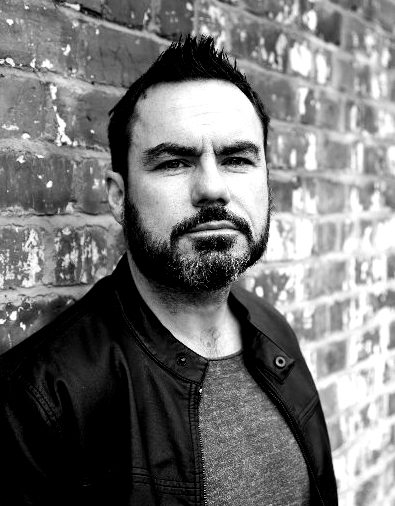
HenryThe plot is the least important part of this fine novel, but it unfolds gradually. The woman whose favours are being fought over by the duellists is not a woman at all, but a fifteen year-old schoolgirl, the daughter of a local businessman. He, in turn, has unfinished business with a local enrepreneur, and business that dates back to a racial attack three decades earlier. We are in a world of simmering resentment born out of old slights, and the result? The proverbial dish that is best served cold.

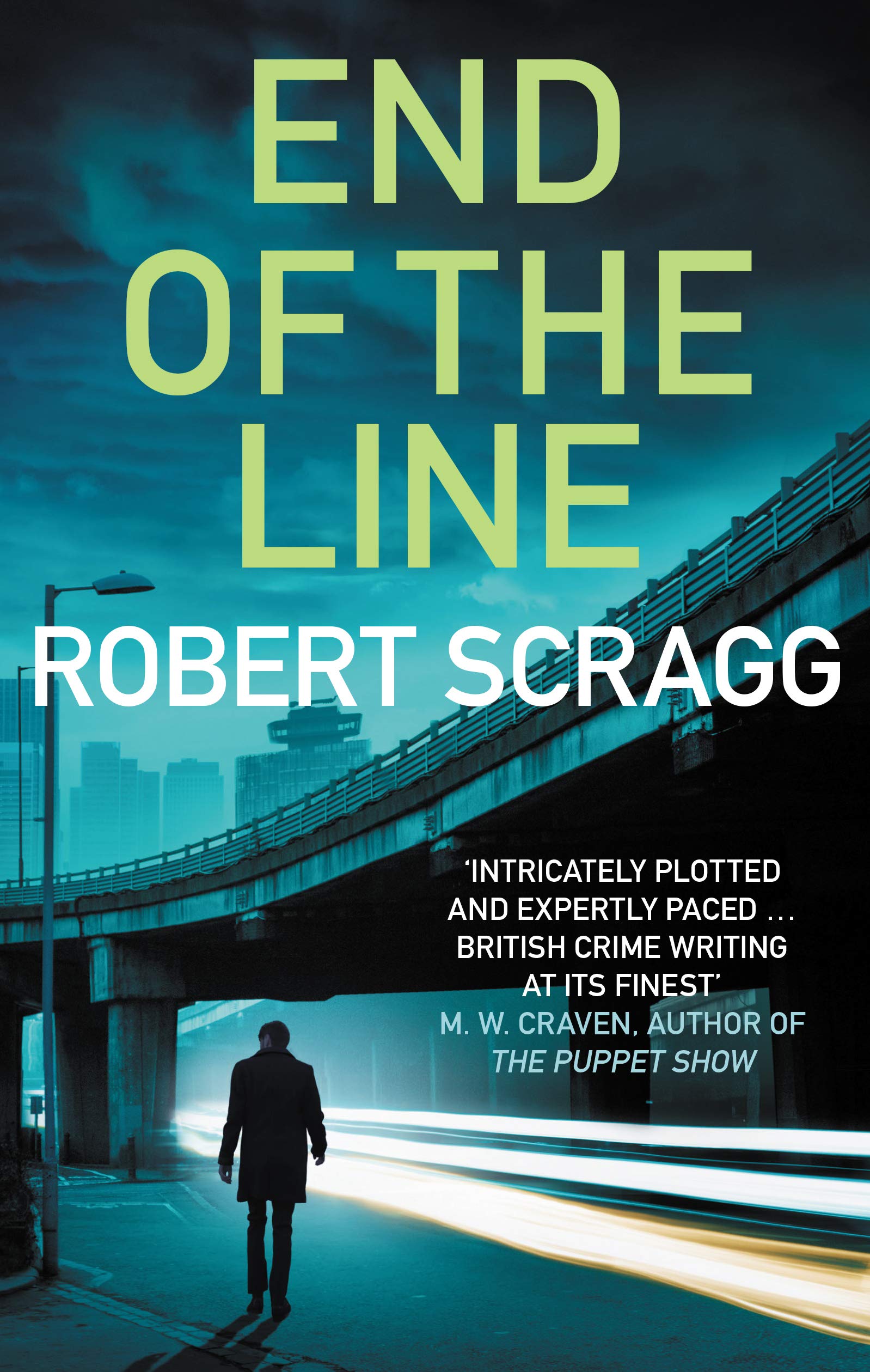
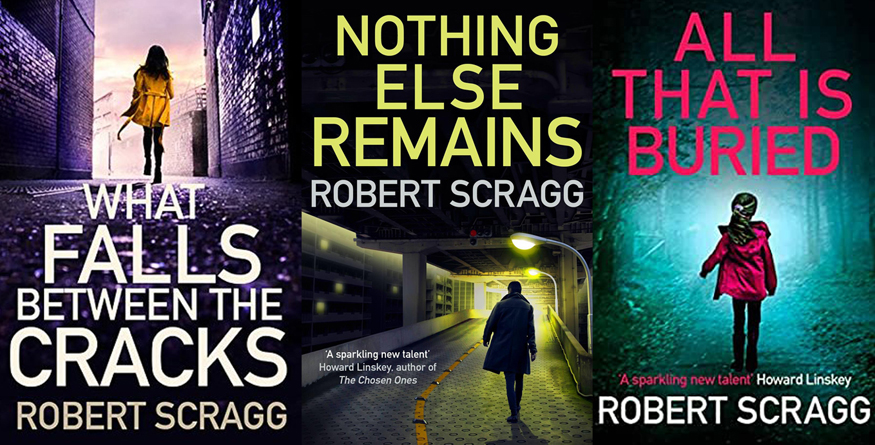
Whitethroat is bleak, downbeat and mesmerising; a subtle, compassionate and beautifully written novel that is something of an elegy to a way of policing – and living – that is gone for ever. James Henry (above right), as James Gurbutt, has also written prequels to RD Wingfield’s Jack Frost series. Whitethroat is published by Riverrun and will be out in hardback on 9th July. The two previous Nick Lowry novels are pictured below.

Books

Blog at WordPress.com.

Up ↑