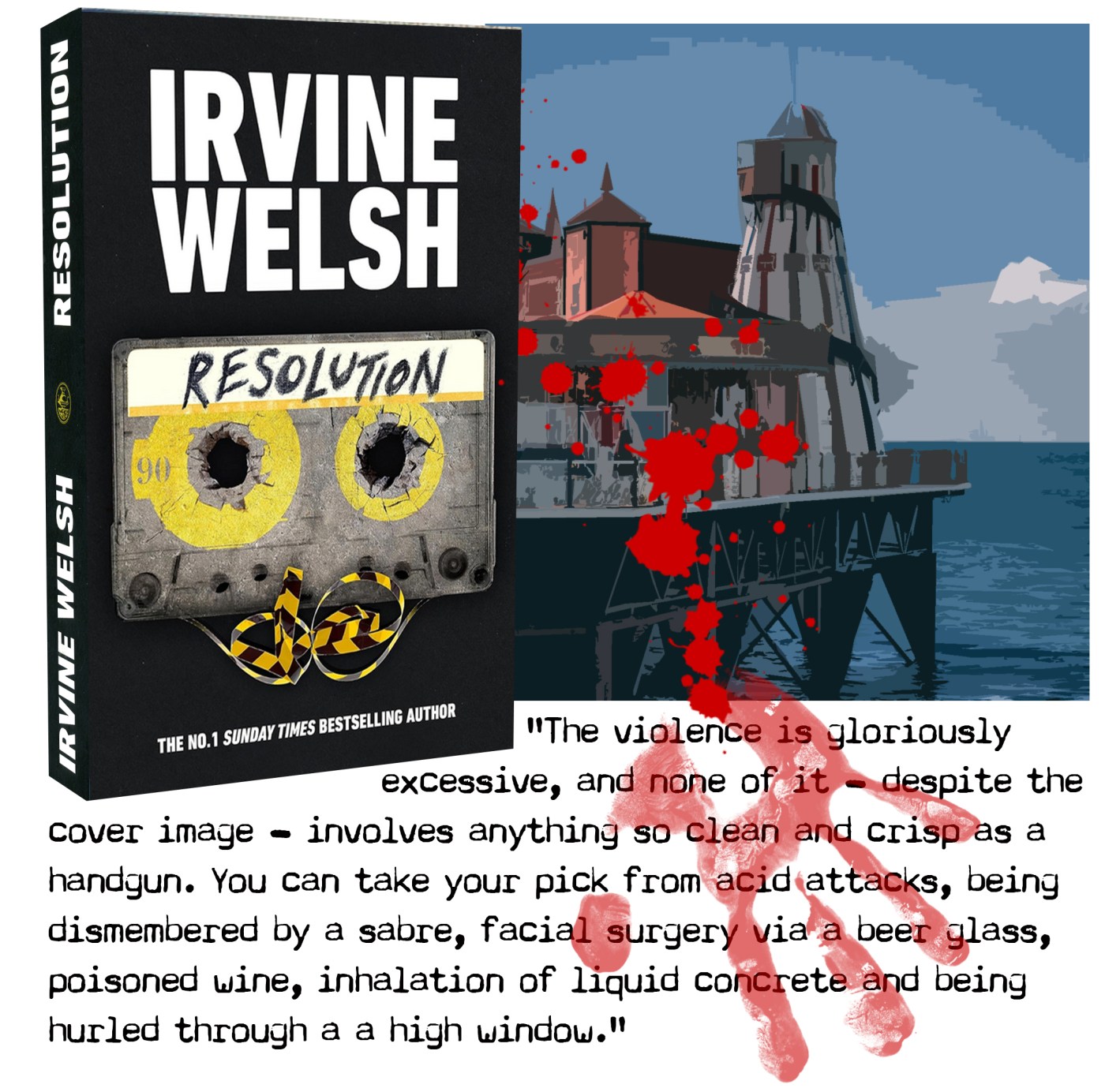

Edinburgh copper Ray Lennox last appeared a couple of years ago in The Long Knives. Now, he has quit the force and, given his predilections, is in a strange place on what might be thought foreign soil – England’s south coast, a partner in a security firm based in Horsham, with his customer base ranging from the gay green madness of Brighton, to the villas of Eastbourne, where the silence is only punctuated by the quiet hum of wheelchair tyres and the creak of zimmer frames.
His business partner is George Marsden, in some ways the antithesis of Lennox, in that he is English public school, suave, urbane, and speaks the esoteric language of the English middle classes. He is no man’s dupe, however, as we are given hints that he once served with the Special Boat Service.
Lennox is deeply in lust with a local chemistry lecturer, Carmel Devereux, some years his junior, and it is at a meet and greet party with potential wealthy sponsors of her research, that he is staggered to see the face of Mathew Cardingworth, a character from wounding nightmares. In an Edinburgh underpass, all those years ago, Cardingworth was one of a gang that captured Lennox and his teenage mate Les Brodie, and subjected them to grim sexual and physical abuse.
Fantasising about getting even with Cardingworth, Lennox actually meets him socially and then makes the error of accepting Cardingworth’s offer of a couple of tickets for the executive box at Brighton’s next Premiership home game against Liverpool. An even worse mistake is inviting Les Brodie down from Scotland, standing him the air fare as a treat. Whereas Lennox’s vengeance against his abuser have stayed firmly inside his head, Les Brodie is more volatile. He catches sight of Cardingworth as they drink their pints and graze at the buffet; it only takes seconds for Brodie to recognise his abuser, and he is just as quick to smash his glass on the bar counter and thrust it into Cardingworth’a face.
As his obsession with Cardingworth deepens, Lennox discovers that there is a tenuous – but intriguing link between the businessman and several youngsters who disappeared from the ‘care’ of Sussex Children’s Services. The fact that all local and national newspaper references to those years – print, microfiche and digital – have all disappeared. In another puzzle, at least for the reader, one of the non-Brighton, non-now narratives in the book is in the voice of an Englishman, perhaps a merchant seaman, who has killed a man in a Shanghai bar fight and been incarcerated sine die in a vile Chinese prison. He is clearly a deeply damaged and dangerous man, and he appears to be directing his story at Lennox, but who is he?
Lennox, as he peels back the layers of the recent past, all too late realises he is in way over his head, but with almost suicidal and terrier-like tenacity, he presses on regardless, perhaps echoing the thoughts of his famous fictional countryman, who mused:
“I am in blood
Stepped in so far, that, should I wade no more,
Returning were as tedious as go o’er”
Fans of Welsh will love this, and feel at home with how the story darts back and forth between various characters, the Scottish conversational vernacular, the violence, the sex – and the grim humour. There is one wonderful example of the latter when contractors installing a new security system in a retirement home fall foul of a particularly demented resident, and all hell breaks loose. The titular resolution does not happen until the final pages of the book and it occurs, ironically, in the same care home where the contractors came so comically to grief. The violence is gloriously excessive, and none of it – despite the cover image – involves anything so clean and crisp as a handgun. You can take your pick from acid attacks, being dismembered by a sabre, facial surgery via a beer glass, poisoned wine, inhalation of liquid concrete and being hurled through a a high window. Resolution is published by Jonathan Cape and will be out on 11th July.





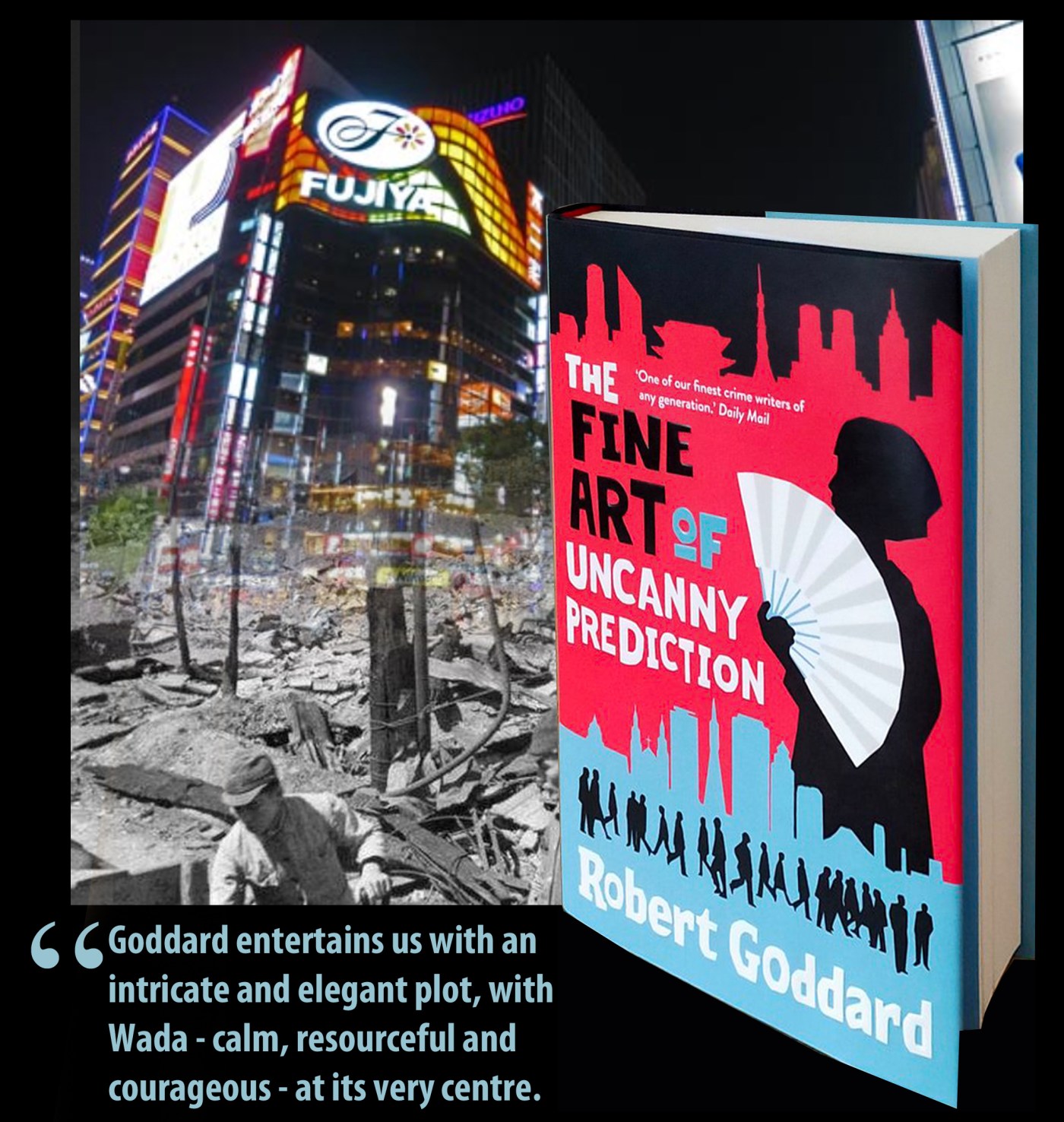

 I must confess to not having read anything by Robert Goddard (left) for a few years. Back in the day I enjoyed his James Maxted trilogy, which comprised The Ways of the World (2013), The Corners of the Globe (2014) and The Ends of The Earth (2015), which focused on a young former RAF pilot and his involvement in the political fallout in Europe after the Versailles Conference ended in 1920. I reviewed his standalone novel








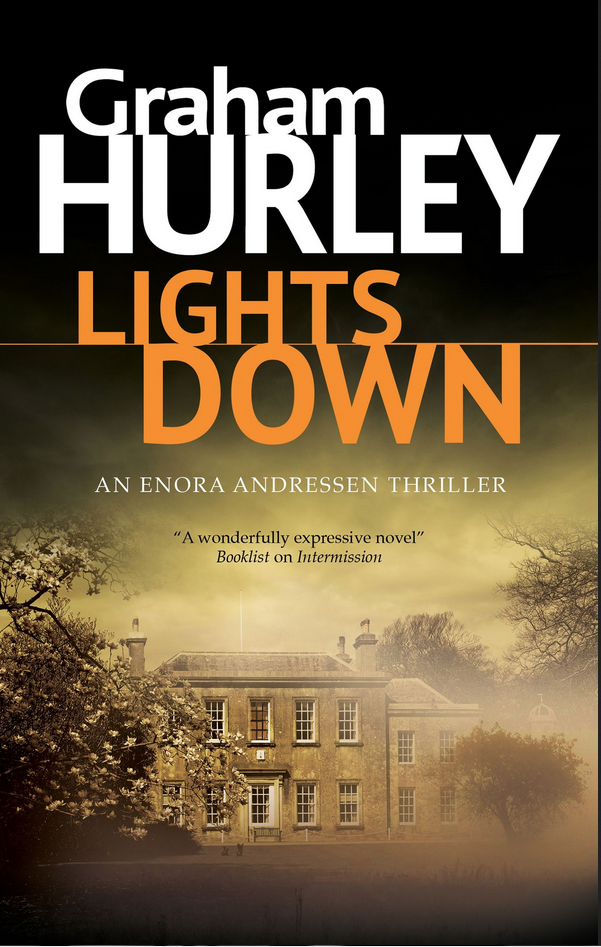 For those new to this wonderful series, here’s the back story. Enora Andressen is an actress in her early forties. She has won fame, if not fortune, by starring in what used to be known as ‘art films’ – often European produced and of a literary nature. She has a twenty-something son, Malo, the product of a one-night-fling with a former drug boss, Harold ‘H’ Prentice. ‘H’ and Enora have become reunited, after a fashion, but it is not a sexual relationship. In the previous novel, ‘H’ is stricken with Covid, and barely survives. That story is told in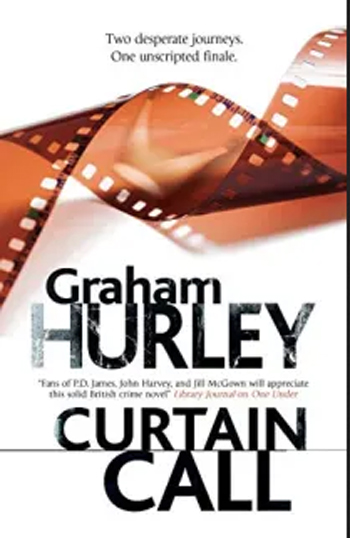


 Central character Ronin Nash is a Scot who found himself in America, did a spell in the armed forces, and then worked as an FBI agent. When he is sidelined as a scapegoat in a kidnap case which went tragically wrong, he retreats to a lakeside log cabin hideaway, but is recruited by his former boss to join a new outfit, the Inter-agency Investigation Bureau. He is sent to the small town of Finchley in upstate New York to find out the investigate the discovery of three dead bodies in an abandoned mine just outside the town.
  We learn pretty quickly that something is not quite right in Finchley, but Nash spots this, and realises he is being played. He is smart enough to let the players assume he is ignorant of what is going on and the only question in his mind is just how many of the Sheriff’s Department – and other significant townsfolk – are in on the secret.


