

Mari E is an LA private investigator, distinctly low-rent to judge by her business premises, a converted container in a down-at-heel part of the city. Her premises neighbours are mostly scammers and grifters of one kind or another. She is a former government agent. She has been hired by an federal appellate judge to find out who is blackmailing him. Whoever it is wants her off the case and has been threatening her with anonymous notes. She is also certain she is being followed. For back-up she hires a partner, former LAPD detective, and now a PI himself, Derek Abernathy. He is very smart, though, and soon works out that Mari E leads a double life.
“So I have two jobs, what’s the big deal? A girl’s gotta make a living, right?”
“Jobs? More like lives,” he hissed back, pointing outside towards the parking lot.
“Mari E, as you call yourself, drives a fifteen year-old dented Honda and wears a weathered hoodie artificially inseminated with the smell of smoke and vanilla cologne. Mar-ISSA, on the other hand, drives a freaking Porsche and buys her eight-hundred-dollar Ferragamo shoes in Beverly Hills, which she wears to her Culver City art gallery!”
 That is just a quick sample of the whip-crack dialogue in the book, which fizzles and sparks like electricity across terminals. Very soon Mari and Derek realise that the blackmailed judge is also connected to the unsolved murder of a French duel-passport student, Sophie Michaud, and the fate of two women journalists who investigated the case, one of whom is dead and the other missing.
Mari has her own crusade, which is related to her being shot while on a case twelve months or so previously. Her father resolved to take his own revenge on the European crime boss responsible, but neither has been seen since. She realises that if she can discover who killed Sophie, the rest of house of cards will come tumbling down. Big problem, though. She discovers that Sophie was not just one person. Yes, physically she was one body, but psychologically two separate beings lived under that particular roof, and were even known by different names – Sophie and Sasha. One was a dreamy and talented creative artist, while the other was a calculating sexual schemer who used information about potential blackmail victims with the ruthless logic of a criminal Marie Kondo.
Good crime writers can be lyrical when they need to be, and if there were any doubt that LIsa Towles is a genuine California Girl, this passage dispels it.
“There were some places where the quality of the light is always good, and others where it’s never quite right. Too bright to see an incoming text, too dark to find your keys in the bottom of your bag. Besides California, I’d lived in three other states, and somehow the light in LA had a quality that didn’t exist anywhere else. Sometimes the sun was so high and bright, it bled out all detail leaving a luminous silvery cloak over the sand and surf. Then at dusk, that same beachfront hides in climbing shadows, with only small details visible beneath the streetlamps. It was the unsinkable promise of light and dark that anchored me to this place, this stretch of rugged coastline with its seagulls and secrets.”
 In the end, the blackmailer of the judge is located, and the killer of Sophie/Sasha is brought to justice, but with literally the last sentence, Lisa Towles poses another puzzle which will presumably be addressed in the next book. Hot House is everything a California PI novel should be. It has pace, great dialogue, totally credible characters and a pass-the-parcel mystery where Lisa Towles (right) has great fun describing how Ellwyn and Abernathy peel back the layers to get to the truth. Sure, the pair might not yet stand shoulder to shoulder with Marlowe, Spade and Archer, or even more modern characters like Bosch and Cole, but they have arrived, and something tells me they are here to stay.
Hot House is published by Indies United Publishing House, LLC, and will be available in the UK as a Kindle, audiobook and hardback from 15th June. The paperback was published in March. For my reviews of three earlier novels by Lisa Towles, just click on the cover images


 The answer to that conundrum forms the central premise of the book. Porter’s niece Scarlett has been drawn into the orbit of a feminist organisation called Artemis led by a charismatic woman called Paula Kunis. Porter will only answer police questions about his activities if Bloom undertakes to track down Scarlett and extract her from the clutches of Artemis. Bloom is smart enough to realise that Porter is up to something, but cannot work out why he is so worried about his niece, when every other aspect of his behaviour suggests that he is a cold and devious man, with psychopathological elements to his character.
 century Professor Moriarty, who has crossed swords with Bloom and Jameson before. Thirdly, Gerald Porter has inexplicably disappeared from police custody and, almost immediately, a huge social media campaign vilifying Paula Kunis and Artemis has been launched, with the result that scores of husbands and fathers of women “poached” by Artemis have headed to the Scottish retreat and are angrily congregating at its gates.




 But back to Clay Edison. He is a Deputy US Coroner in Berkeley, California, and The Burning begins, quite topically, with a destructive bush fire that has knocked out power supplies for everyone except those with their own generators. When Edison and his partner are summoned to retrieve a corpse from a mansion up in the hills, they find that Rory Vandervelde – a multi millionaire – has died from gunshot wounds. He was an avid collector. Rare baseball and basketball memorabilia, Swiss watches, antique knives – you name it, and Vandervelde had bought it. It is when Edison is inspecting the dead man’s astonishing collection of classic cars, stored in a huge garage, that he discovers something that sends a shiver down his spine, and not in a pleasant way.
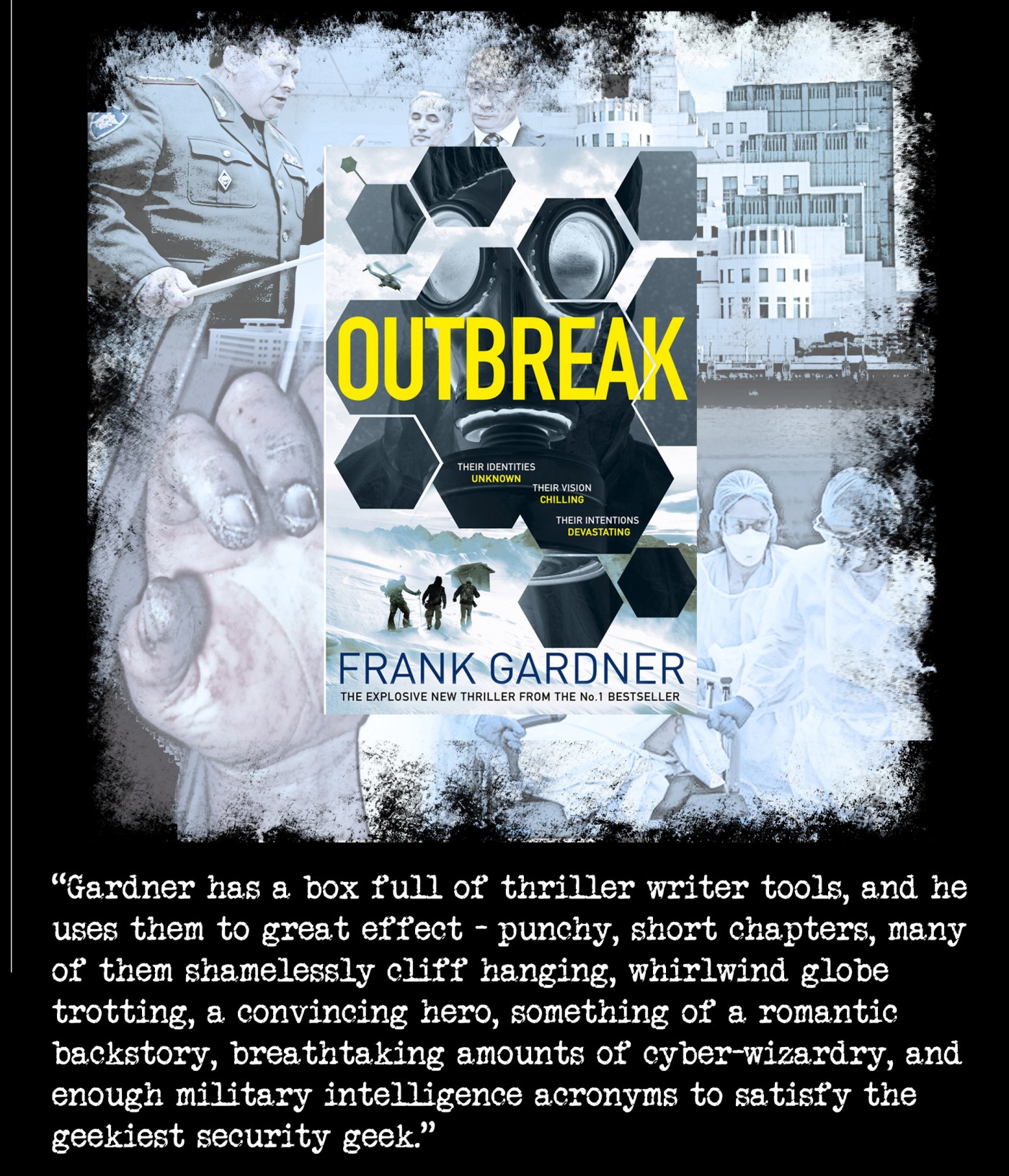

 That, then, is the Aliens moment. Events move with terrifying speed. Mackenzie is airlifted back to England and isolation and the wheels of government and the intelligence agencies begin to whirr. Given that there is a large Russian presence in Svalbard, ostensibly for mining operations, the fingers of guilt begin to point towards Moscow, particularly when the virus is found to be man-made.


 Stafford’s triumph has won him some influential friends, but also some deadly enemies. You don’t take on powerful international criminal gangs without there being a downside, and when two of Stafford’s long time buddies pay the ultimate price for being associated with him, it’s payback time. Stafford’s first job is to protect those around him from further harm, but once that is done, he will be taking no prisoners.


 While reporting on the death and mutilation of a young rent boy, Russell is asked by a friend to take on another case, this time on behalf of a senior army officer whose daughter is missing. It is a delicate business, because there is a strong suspicion that Lili Zollitsch has run off with a boyfriend who is an active member of the Kommunistische Partei Deutschlands.

 The Steiners are also well-connected. Politicians great and small, financiers, socialites, fund-raisers – mostly anyone who is anyone in Boston and further afield – all tip their hats to the Steiners. Neither does it hurt that the Steiners’ clout enables them to hire serious muscle from the criminal underworld and, as most of the child rape is conducted on a private island somewhere in the vicinity of the Bahamas, neither the Boston Police Department nor the FBI can do anything to intervene.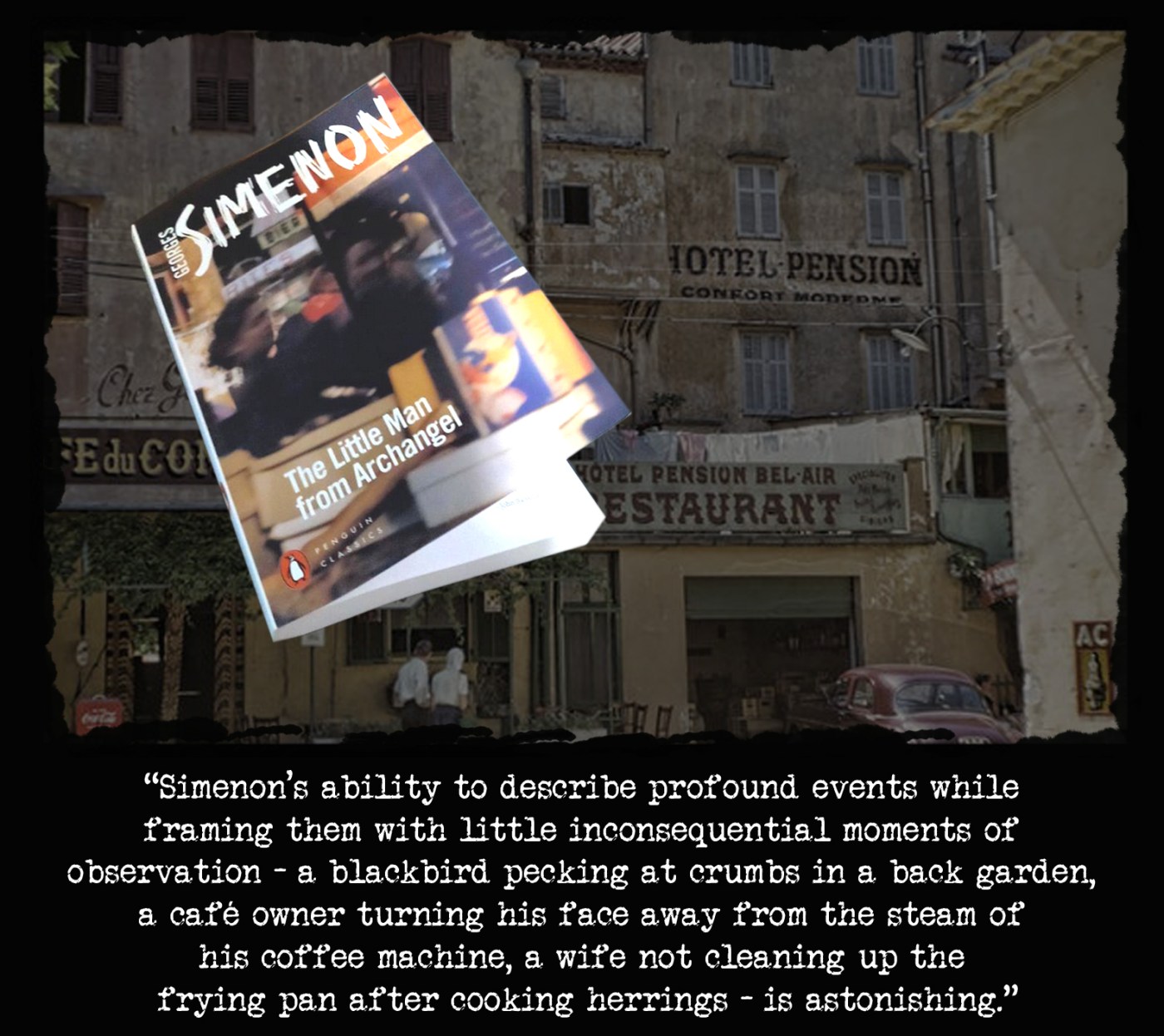


 We are in an anonymous little town in the Berry region of central France, and it is the middle years of the 1950s. Jonas Milk is a mild-mannered dealer in second hand books. His shop, his acquaintances, the c
 Jonas Milk has a wife. Two years earlier he had converted to Catholicism and married Eugénie Louise Joséphine Palestri – Gina – a voluptuous and highly sexed woman sixteen years his junior. No doubt the frequenters of the Vieux-Marché have their views on this marriage, but they are polite enough to keep their opinions to themselves, at least when Jonas is within earshot. But then Gina disappears, taking with her no bag or change of clothing. The one thing she does take, however, is a selection of a very valuable stamp collection that Jonas has put together over the years, not through major purchases from dealers, but through his own obsessive examination of relatively commonplace stamps, some of which turn out to have minute flaws, thus making their value to other collectors spiral to tens of thousands of francs.


