
There’s a first time for everything, even when you are a conservatively-minded old curmudgeon who has, begrudgingly, accepted that digital books are here to stay. But audio books? Never – until now. Faced with the fact that the latest novel by one of my favourite writers – Rob Parker – is only going to be printed on paper next year, I bit the bullet and accepted what I suppose could be called an Advanced Listening Copy of Far From The Tree.
Brendan Foley is a Detective Inspector with Cheshire Police, based in Warrington. If the name Cheshire conjures up a gentle county famed for its delicious cheese and half-timbered villages, that would not be wrong, but Warrington is a place with rougher edges. Situated on the River Mersey it grew in the Industrial Revolution with its steel (particularly wire), textiles, brewing, tanning and chemical industries. The word ‘industrial’ is what comes to mind when Foley is called out one Sunday morning to investigate not just one corpse, but twenty seven of them. All neatly packaged in heavy-duty plastic, and laid to rest – if that is the correct word – in a shallow trench.
Foley has been called away from the christening of his youngest child, but when he is summoned back to the venue to pay the caterers, we learn that his family is far from being a collection of model citizens. It is, nevertheless, with a deep sense of shock that when he attends the post mortem of the first batch of the corpses, he recognises that one is his nephew.
 This is a very different Rob Parker (left) from the previous novels of his that have come my way. Crook’s Hollow (click the links to read my reviews) was rather like The Archers meets The Hills Have Eyes, while his Ben Bracken Books, Morte Point, The Penny Black, and Till Morning Is Nigh are hugely entertaining but somewhat escapist in places. Far From The Tree is real. Very, very real. It is dark, unflinching, and, to my mind, Parker’s best book yet.
Foley is a superbly drawn character – a decent man who has to face a shocking challenge, involving his own flesh and blood, and a brave man, too, as he is forced to make decisions which would unhinge a lesser person. I also enjoyed his sidekick – Sergeant Iona Madison – who among other things is a boxer. Rob Parker himself is a pugilist, and he allows himself a little enjoyment as he describes Iona’s battles in the ring.
Not the least of the pleasures of Far From The Tree is that it is read by none other than Warren Brown, of Luther fame. It certainly does no harm to the authenticity of the recording that Brown – like Rob Parker – was born and bred in Warrington!
Far From The Tree is an Audible Original and is available here.

 I first encountered Lisa Gardner’s entertaining ensemble of law enforcers just over a year ago in
  he storytelling technique which uses multiple narrators is much used and, it must be said, often abused, but Kisa Gardner nails it here, particularly through the eyes of Bonita, a Mexican girl maimed in childhood, unable to speak and used as a maid-of-all-work in an ostensibly respectable Victorian mansion, now an upmarket Bed & Breakfast facility in Niche, Georgia – the nearest settlement to where the human remains have been uncovered. Bonita is not her real name. Only her late mother knows what it is, but when D.D. Warren meets her during the investigation, she says:
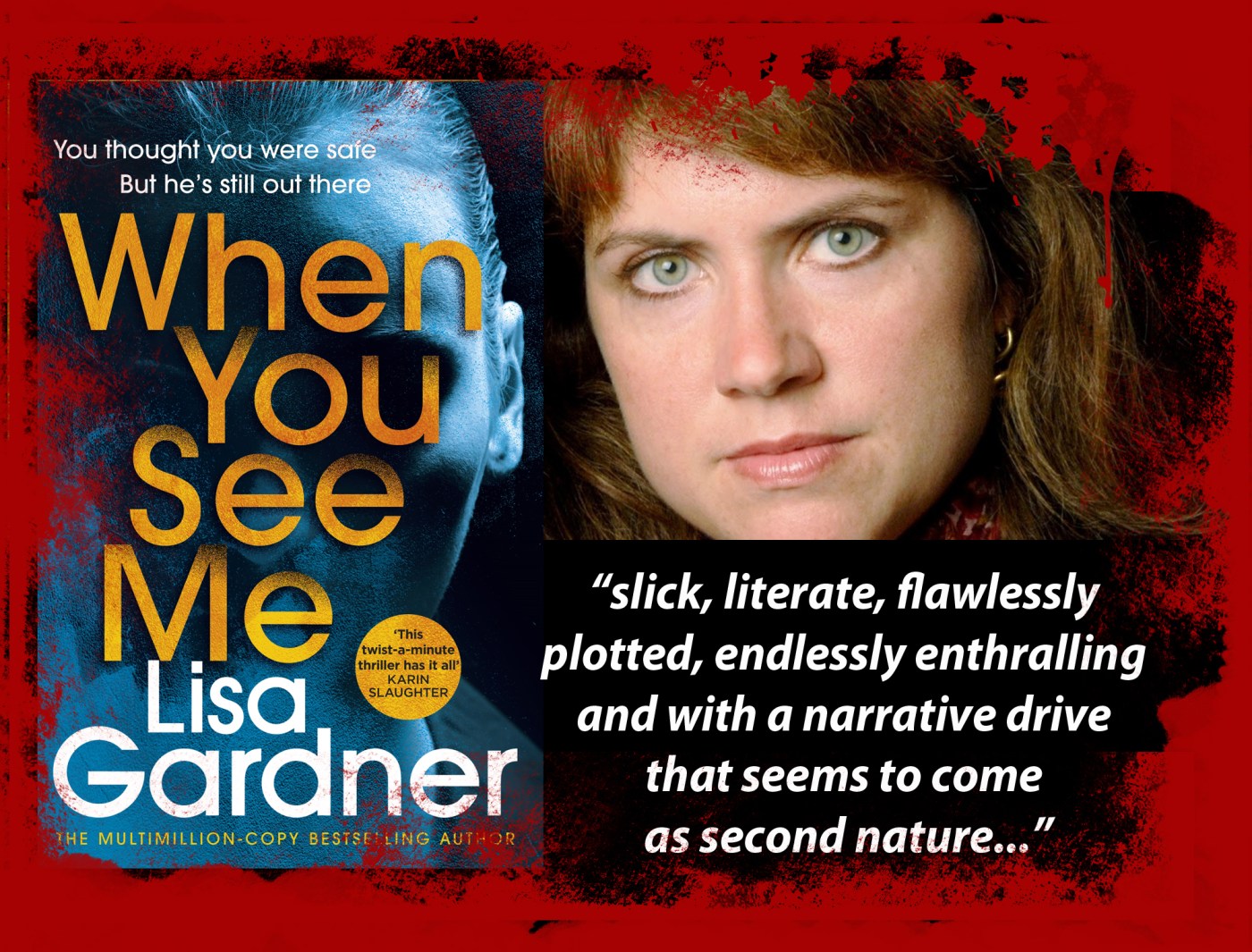
 Almost inevitably, the dreadful goings on in the mountains surrounding Niche must involve some of the locals, but Lisa Gardner (right) lays out several enticing red herrings before revealing precisely which of the eminent townsfolk are involved in a dreadful conspiracy, a toxic cocktail of abduction, sexual slavery and-ultimately-murder. Flora, D.D. and the other members of the team eventually corner the evil genius at the centre of Niche’s darkest secret, but not before we are treated to a spectacularly violent finale involving secret tunnels, torture and, intriguingly, death-by-dishwasher.
 merican crime fiction is a huge, diverse and somewhat unwieldy beast, but at its best it is slick, literate, flawlessly plotted, endlessly enthralling and with a narrative drive that seems to come as second nature to such writers as Lisa Gardner. When You See Me will be out in Kindle,
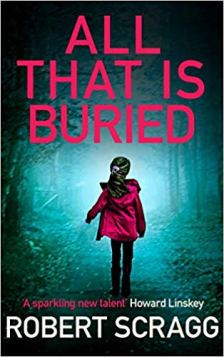 All the fun of the fair? They are strange throwbacks to an earlier, perhaps more innocent time, these funfairs that travel the country setting up in this or that town for a few days of loud music, strings of multicoloured light bulbs swinging in the wind, the shrieks of excited children and the unique smell of candyfloss and toffee apples. All That Is Buried, the latest case for Robert Scragg’s coppers Jake Porter and Nick Styles begins with an abduction in one such fair, pitched on a field in a London suburb. We see some of the story through the eyes of the killer. Our man – if he is indeed the culprit – describes the fair:
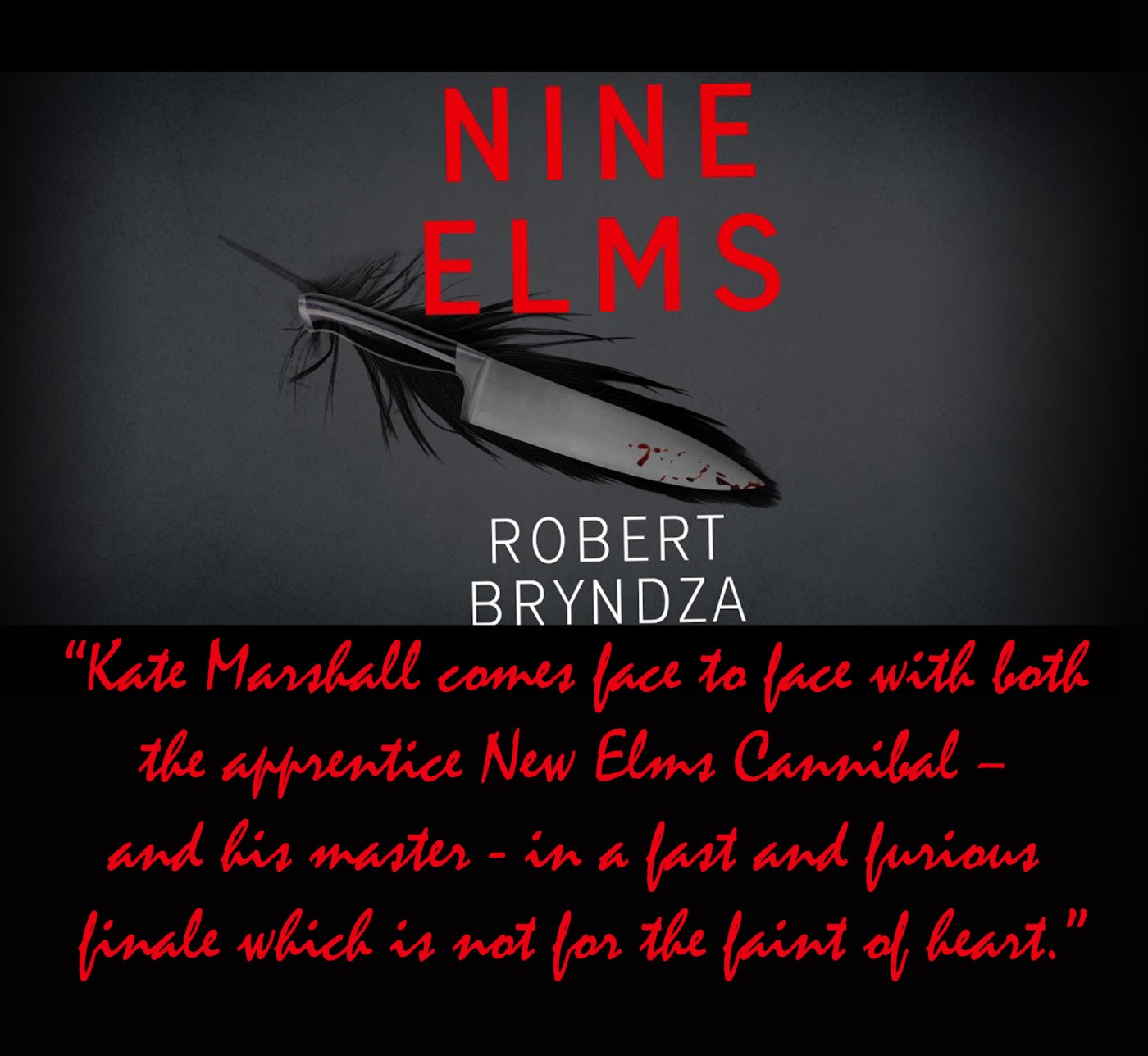

 ate Marshall lectures in criminology at a university in the south west of England, but when she speaks to her students it is not as an academic, making judgments based purely on the research of others; neither does she approach the subject as an outsider, albeit one who is well read and well prepared. Fifteen years earlier, when she was a humble detective constable with London’s Metropolitan Police, she brought to justice one of the country’s most prolific and perverted serial killers. In doing so, she paid a heavy price; only skilled surgeons prevented her death from terrible injuries, but her career – and personal reputation – were both beyond saving.
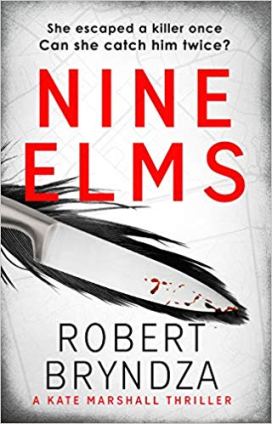 Fifteen years on, the former police officer dubbed The Nine Elms Cannibal is serving multiple life sentences in a secure mental institution, and Kate Marshall, if not exactly dining out on her experiences, uses her involvement in the case as part of the course she delivers. She lives alone and while not exactly lonely, she is a changed woman from her days as part of London’s police force. She battles alcoholism, but with the support of Alcoholics Anonymous and, in particular, a local AA member called Myra, Kate sips her iced tea and pretends it contains a hefty shot of Jack Daniels.
 ith her research assistant Tristan Harper, Kate tries to reassemble the pieces of an increasingly complex puzzle, but it is not until events take a spectacular turn that she comes face to face with both the apprentice New Elms Cannibal – and his master – in a fast and furious finale which is not for the faint of heart.
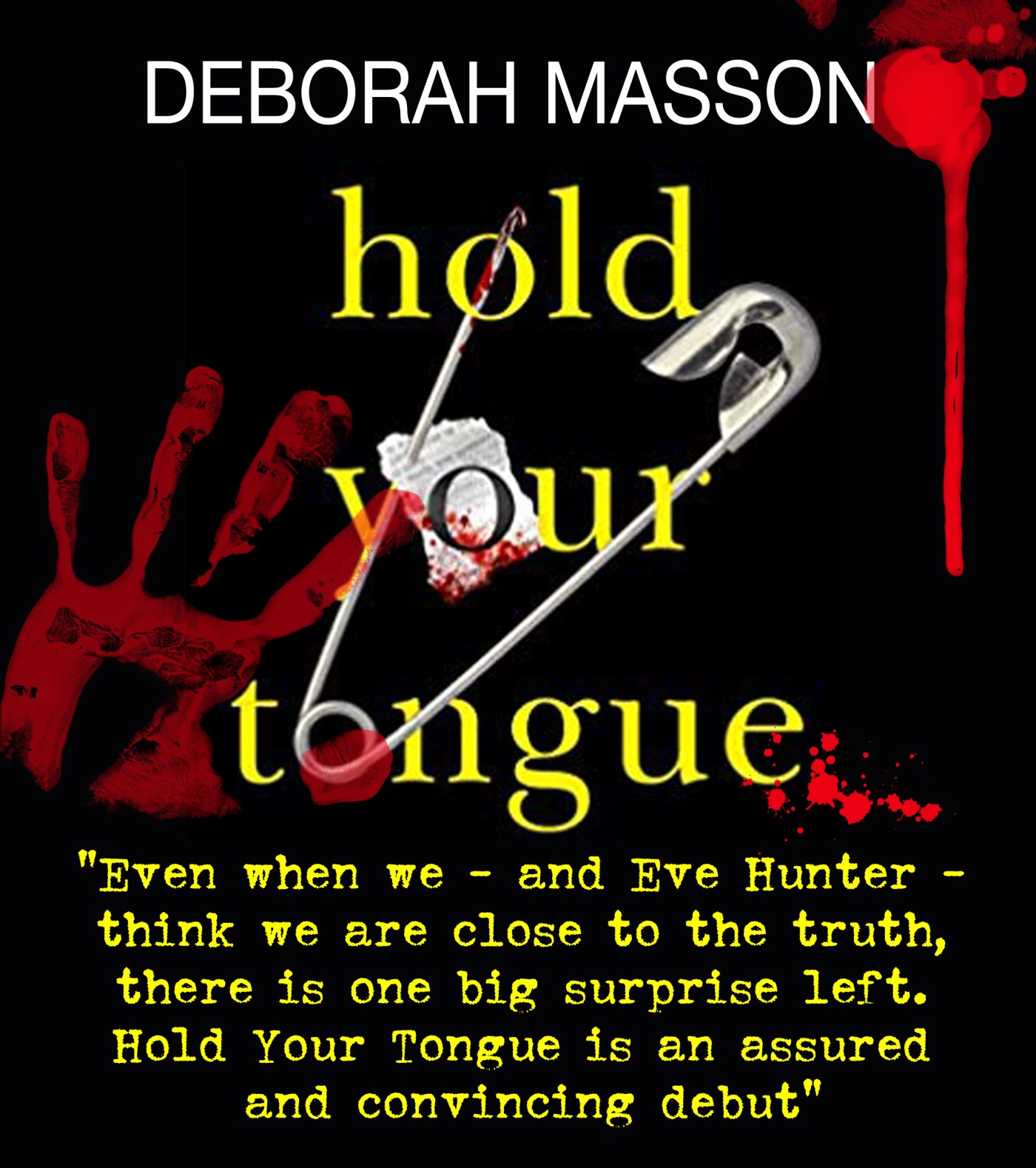

 Deborah Masson’s police procedural Hold Your Tongue is as gritty as the granite in the Aberdeen where it is set. Fictional Detective Inspectors tend to be brilliant, yet with fatal flaws; perceptive, but incapable of managing calm personal lives; honest and principled, but concealing their own dark secrets. Masson’s Eve Hunter ticks all the boxes, and adds a few of her own. She is returning to work after a catastrophic encounter with a notorious criminal family. After the son of the crime gang’s Capo sustains life changing injuries in a car chase, Johnny MacNeill has exacted brutal revenge resulting in Hunter’s partner DS Nicola Sanders being paralysed from the neck down, while Hunter herself has a permanently damaged leg and intense psychological scarring.
 As the killer works towards the Sabbath Day child, Hunter and her colleagues dash this way and that, always vital hours behind the murderer. Masson (right) contributes to the mayhem with some elegantly clever misdirection. Early in the piece she teases us with the suggestion that the series of murders has something to do with brothers and sisters, but even when we – and Eve Hunter – think we are close to the truth, there is one big surprise left. Hold Your Tongue is an assured and convincing debut, and I hope there will be more cases to come for Eve Hunter. The book is out now, and


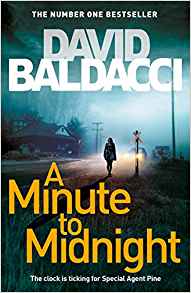 Atlee Pine has anger management issues, and A Minute To Midnight begins as she is put on gardening leave for kicking the you-know-what out of a child rapist. She decides to use this enforced leisure time in another attempt to find out what happened on the fateful night when her sister was abducted and she was left with a fractured skull. Accompanied by her admin assistant Carol Blum, she revisits the scene of the trauma, the modest town of Andersonville, Georgia. Tumbleweed is the word that first comes to mind about Andersonville, but it scrapes a living from tourists wishing to visit the remains of the Confederate prisoner of war camp which, in its mere fourteen months of existence, caged over thirty thousand Union prisoners of whom nearly thirteen thousand were to perish from wounds, disease and malnutrition.
 A series of apparently motiveless murders in Andersonville diverts Pine from the search for her own personal truth, and she is soon enlisted to help the understaffed and under-resourced local cops. The first murder victims – a man and a woman – are killed elsewhere but then delivered to Andersonville bedecked as bride and groom respectively. When it turns out that they were both involved in the porn industry, what first appears to be a significant lead runs into a brick wall.

 Alyssa Wyatt is pretty much your showcase American Mom. Not Middle American geographically, as she lives in New Mexico, but she ticks most of the other boxes; handsome successful husband, two teenage kids, nice house and a fulfilling career – as a cop. Like so many fictional law enforcement types, she has a dark past centred in childhood trauma, but what is done is done, and she lives for Holly, Isaac and husband Brock.
 harly Cox reveals to us the identity of the bad guy fairly early in the piece. Or, rather, she doesn’t. Over enigmatic? Quite probably, but to say more would ruin the fun. Alyssa and Cord chase their tails with more determination than success, while the sadist at the centre of the mayhem plans his next atrocity.
 on’t be misled, however, into thinking that All His Pretty Girls is Chick Lit. Yes, a female is the central character, but there’s no shortage of graphic violence and enough of the ‘mean streets’ to satisfy fans of hard-boiled crime.


 al McDermid was anxious that over-enthusiastic reviewers and fans might give away the ending of her previous Carol Jordan and Tony Hill novel,
 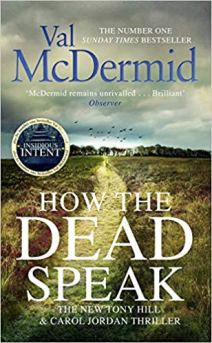 After the events of which we will not speak, Jordan’s Regional Major Incident Team has been disbanded while the woman who was its beating heart and soul keeps her fragile psyche from harm by continuing to renovate her home, a former barn on a heather covered northern hillside. Visitors are few and usually unwelcome, but none more so than Tony Hill’s vindictive and manipulative mother Vanessa who, after inflicting her abrasive personality on her son in a prison visit, coerces Jordan into using her investigative skills to track down a fraudster who has conned her out of a small fortune. Only slightly less welcome is Bronwen Scott, Tony Hill’s solicitor. She also has a job for Jordan, but this time it is to establish grounds for an appeal against a murder conviction handed down to a gay man who, the jury believes, has murdered a rent boy.
 eanwhile, back in the fictional city of Bradfield (which I have always assumed to be Leeds/Bradford) Jordan’s old ReMIT has been given the kiss of life. Its first post-resuscitation job, under the ambitious but box-ticking leadership of DCI Ian Rutherford, is to investigate the gruesome discovery of dozens of human remains in the grounds of a former Roman Catholic children’s home. I am not privy to Val McDermid’s religious beliefs, if she has them, but she certainly gets stuck into the darker side of Roman Catholicism’s social policy. OK, perhaps it’s something of an open goal these days, but as the RMIT try to discover the why and when of the St Margaret Clitherow Refuge skeletons, we learn some dark and unpalatable truths about the ‘Brides of Christ’ whose singular duty is to obey, no matter what the command.
 nd there is a bonus. McDermid – who, as fans of her band will know, is no mean singer – might just be performing a cover version of one of my favourite songs Save The Best For Last (below). If any potential readers are sentimental old (or young) sods like me, you will be permitted a little sniffle and a dab at a moist eye when you read the final pages.


 I’m new to the Angela Marsons Kim Stone series, which is good a cue as any to adapt a cartoon by one of my favourite illustrators, HM Bateman. It is clear that the Kim Stone novels, which began in 2015 with Silent Scream are hugely popular and although her millions of existing readers will not give a hoot what I think, I can now see why.
 Unsurprisingly, her chosen mode of transport is a powerful Kawasaki motorbike, the ultimate solo kick where all that exists is the rushing road, the wind and the scream of the engine:
 Marsons (left) takes us down and dirty into the visceral world of police work:


 fullybooked2017