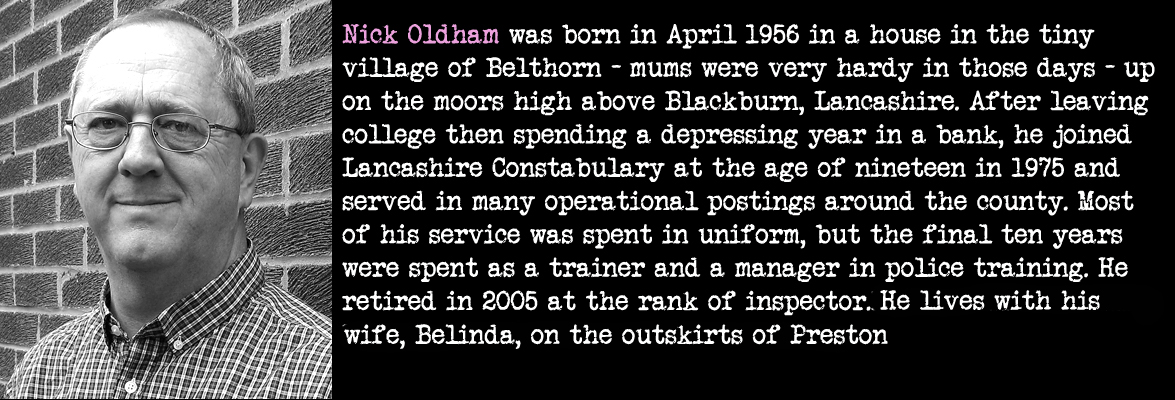
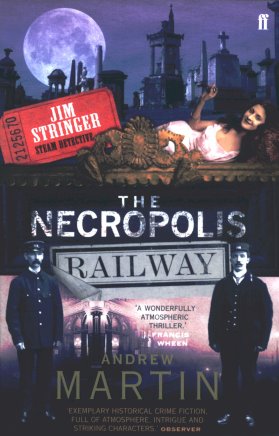
 Ever onwards, and ever northward to the ancient city of York. For all that it houses the magnificent medieval minster and has a history going back to the Eboracum of Roman times, fewer people remember that York was also a great railway city, and there can be no more appropriate place to house the National Railway Museum. Like many men now in the autumn of their years I was an enthusiastic trainspotter back in the days of steam, so it is – I hope – perfectly understandable that I have chosen the Jim Stringer novels by Andrew Martin for this stop on our trip. Martin introduced Stringer in The Necropolis Railway (2002) when Stringer is very much at the bottom of the railway hierarchy, and working in London, but by 2004 in The Blackpool Highflyer, Stringer has married his landlord’s daughter – the beautiful Lydia – and has been promoted to a job in York.

The next four novels see Jim rising steadily through the ranks of railway nobility, but in 1914 the world changes for ever, and Jim, like tens of thousands of other fathers, husbands, brothers and sons, answers the country’s call and joins up to fight the Kaiser, but with his expertise as a railwayman. The Great War, while not as completely global as the conflict that followed just twenty five years later, was not confined to the blood-soaked farmlands of France and Flanders. After solving a front-line murder in The Somme Stations (2011) Jim goes east in The Bagdhad Railway Club (2012) and Night Train To Jamalpur (2013) and emerges some years after the war, more or less unscathed and back home in York, in Powder Smoke (2021)

Andrew Martin is many things – steeped in railway lore from his childhood, Oxford graduate, qualified barrister, performing musician, born in York and writer of novels light years distant from crime fiction. If he were ever to have a tombstone inscription, I do hope he would include (in brackets) “also known as Jim Stringer”. Stringer is a brilliant creation; not a ‘bish-bash-bosh’ hero, for sure, but a man with a well-defined moral compass and a gimlet eye for wrong-doing – be it in railway procedure or life in general.
Although I don’t quite belong to Jim Stringer’s era, when I read his books I am back in my relatively blameless youth (remember when Philip Larkin said sex was invented) and I am on a station platform somewhere in the Midlands, probably showered with soot from a venting steam engine, pen in one hand, notebook in the other, and with a school satchel containing sandwiches and a bottle of pop slung over my shoulder.
We now face a long haul over The Pennines and, just after the ancient town of Skipton, we trade the white rose for the red, and pass into the County Palatine of Lancashire. It is just possible that we might pass within a stone’s throw of a moorland pub called The Tawny Owl. Were we to call in for refreshment we might be serves by a fifty-something chap called Henry Christie. More than likely, though he will be out somewhere between Preston and Blackpool ‘helping police with their inquiries’. In Henry’s case, however, this is not the standard police cliché for being ‘nicked’ but is to be taken absolutely literally, as retired copper Christie has a new role as a consultant to his former colleagues.
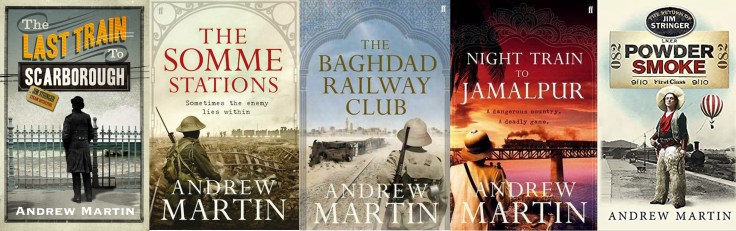
 His creator, Nick Oldham, knows of what he writes, as he is a former police officer, and the 29th book in this long running and successful series is due out at the end of November. So, what can readers expect from a Henry Christie story? It depends where you start, of course, because if you go back to the beginning in 1996, Peter Shilton was still in goal, but for Leyton Orient, England lost to Germany (on penalties, naturally) in the Euros semi-final, the trial of men accused of murdering Stephen Lawrence collapsed and John Major was in his second term as British Prime Minister. In A Time For Justice Christie is a relatively junior Detective Inspector – and someone who is seriously out of favour with his bosses, and has to tackle a cocky mafia hitman who thinks the English police are a joke. As the novels progress over the years, Christie rises through the ranks, but he is still someone who is viewed with some suspicion by the few officers who outrank him – the chief constables and their assistants.
 Henry Christie is always hands on, and he has the scars – mostly physical, but one or two mental lesions – to prove it. His personal life has been a mixture of love, passion, tragedy and disappointment. His geographical battle grounds are usually confined to the triangle formed of Preston, Lancaster and Blackpool. This is an area that Oldham (right) himself knows very well, of course, thanks to his years as a copper, but it is also very cleverly chosen, because it allows the author to play with very different human and geographical landscapes. The brooding moorland to the east is a wonderful setting for all kinds of wrong-doing, while the seaside town of Blackpool, despite the golden sands, donkey rides, candy floss and cheerful seaside ambience, houses one of the worst areas of deprivation in the whole country, with run-down and lawless former council estates controlled by loan sharks, traffickers and criminal families of the worst sort.
What comes as standard in this superb series is tight plotting, total procedural authenticity, some pretty mind blowing violence and brutality but – above all – an intensely human and likeable main character. Click on the images below to read reviews of some of the more recent Henry Christie novels.


 The team investigating the murder is led by Detective Inspector Isabel Blood, her Sergeant and a brace of DCs. They soon learn that the dead man is Kevin Spriggs, a middle-aged car mechanic, with a failed marriage behind him, an estranged son – and an argumentative temperament often fueled by drink. The murder raises many questions for Blood and her people. How did Spriggs and the person who killed him gain access to a locked house? Who hated Spriggs – admittedly not one of life’s natural charmers – enough to kill him? After all, he was something of a nobody, tolerated rather than loved by most people who knew him, but why this brutal – and mysterious – death?

 Investigating duos are always a reliable way to spin a police novel, and in this case we have Inspector Harvey Marmion and Sergeant Joe Keedy of the Metropolitan Police. Marmion is married to Ellen, with a son and daughter. Son Paul has been mentally damaged by his time on the Western Front, and has now disappeared leaving no clue as to his whereabouts, while daughter Alice – also a service police officer – is engaged to Keedy.
 Edward Marston

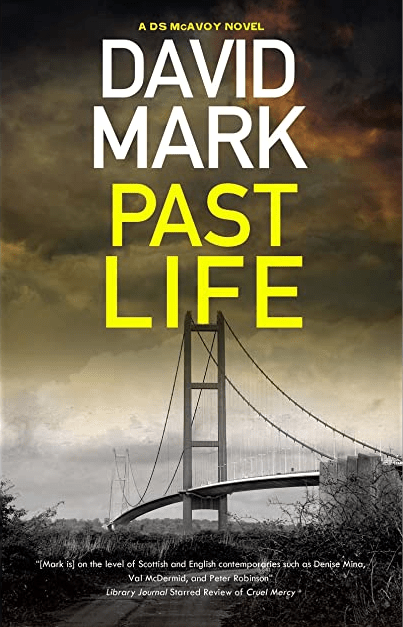 The story begins with a murder, graphically described and, at this point in the review, it is probably pertinent to warn squeamish readers to return to the world of painless and tidy murders in Cotswold manor houses and drawing rooms, because death in this book is ugly, ragged, slow and visceral. The victim is a middle-aged woman who makes a living out of reading Tarot cards, tea leaves, crystal balls and other trinkets of the clairvoyance trade. She lives in an isolated cottage on the bleak shore of the Humber and, one evening, with a cold wind scouring in off the river, she tells one fortune too many.
 “She has found herself some mornings with little horseshoe grooves dug into the soft flesh of her palms. Sometimes her wrists and elbows ache until lunchtime. She sleeps like a toppled pugilist: a Pompeian tragedy. She sees such terrible things in the few snatched moments of unconsciousness.”

 Nikki Hardcastle


 As the plot develops we learn that the dead woman, Becca O’Brien, was pretty much human wreckage, drug addicted and feckless. Interestingly, her daughter (who now lives in sheltered accommodation0, was involved in an act of criminality which happened twenty five years earlier (see first paragraph) at a moorland location called Gorse Farm, where human bones have recently been discovered. In an ostensibly separate plot thread, Calladine is being threatened by a criminal adversary (something of a stage eastern European gangster) called Lazarov. When Lazarov threatens to harm Calladine’s grand-daughter if he doesn’t facilitate the Bulgarian’s take-over of the Leesdon drug scene, the tension ratchets up several notches.



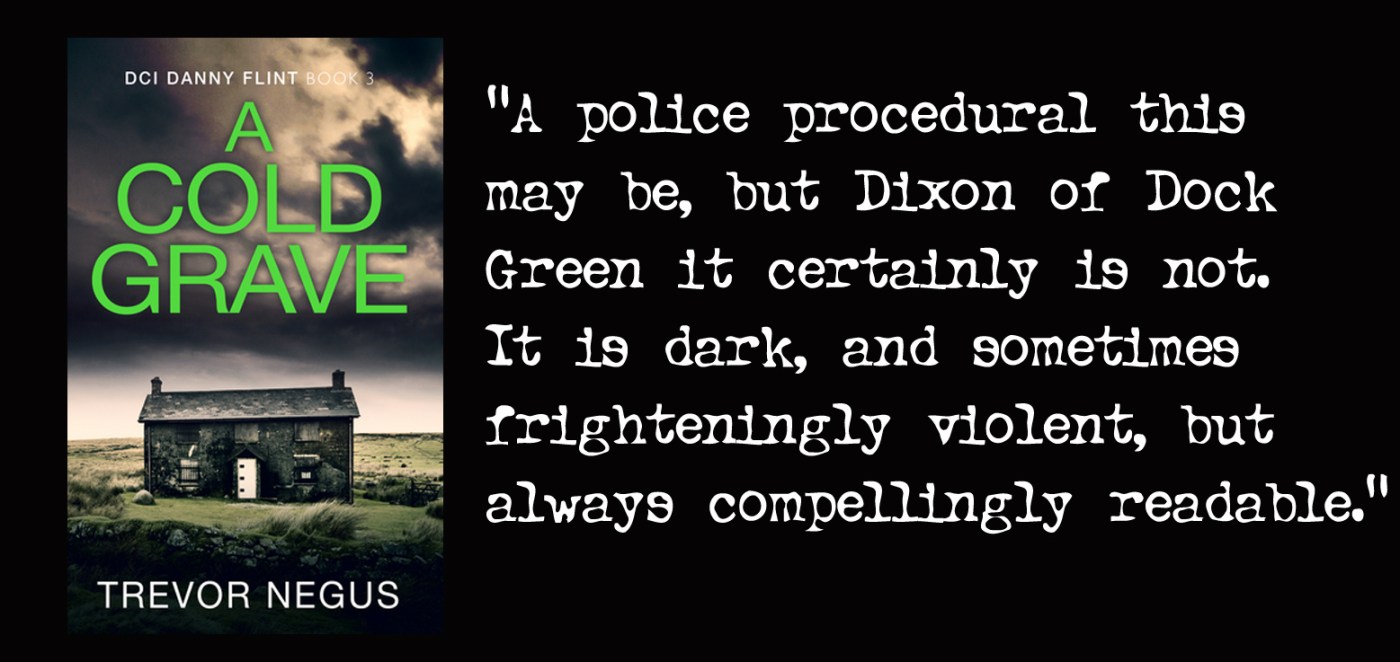


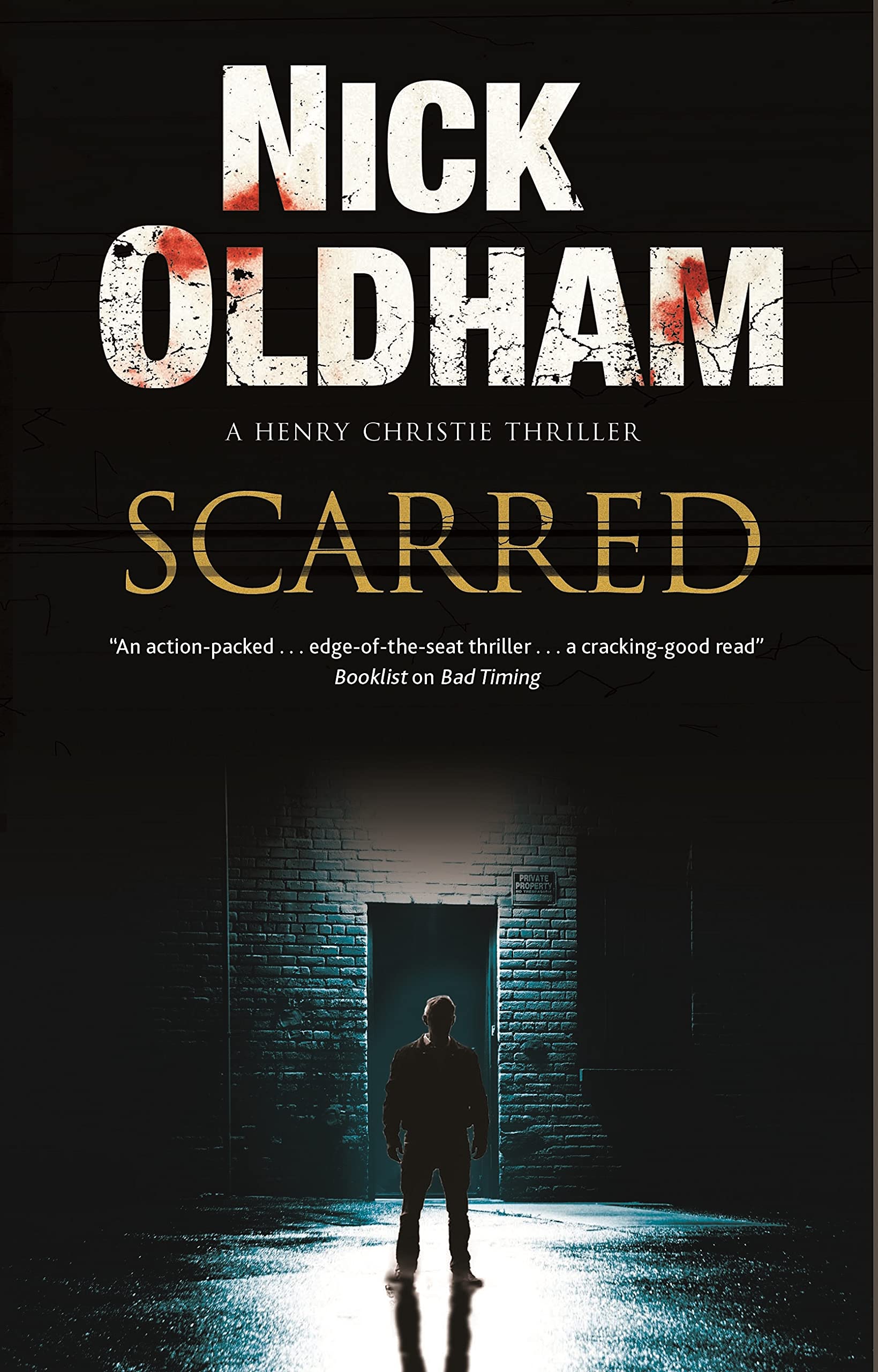 The 1985 episode links crucially with the second part of the book which is firmly in present day Covid-restricted Lancashire, complete with masks and elbow bumps. A teenage boy who was the object of Christie’s near fatal pursuit – but then disappeared off the face of the earth – turns up again, but in an unexpected and deeply disturbing way.