
Former Lancashire copper and now best-selling novelist Nick Oldham doesn’t muck about. By the time you have read the first half dozen pages of his latest Henry Christie novel, we have had a gangster shot dead in his own swimming pool, another very rich but rather ‘iffy’ businessman bludgeoned to death with a huge spanner he has been using to rebuild a WW2 aircraft – and Henry himself dodging bullets.
High speed back story for new readers (Where have you been? This is book 30 in the series!) Henry Christie, former senior copper, now in his 50s, rather tragic ‘love life’, runs a pub in Kendleton on the Lancashire moors, frequently engaged by his former employers as a civilian investigator, usually involving crimes committed by local gangsters operating a kind of triangle-of-death between Preston, Blackpool and Fleetwood. No kiss-me-quick hats here, just deprivation, drugs and violence.
As has been customary in the recent novels, Christie is signed back on to help with the two murders – a perfectly plausible move by the Lancashire Constabulary, as their staffing levels have taken a hit through Covid. Henry’s police ‘chaperone’ is DS Deb Blackstone. She is a feisty and competent officer who just happens to dress like a slightly deranged Goth, with spiked pink hair and all the trimmings.
Our man has other things on his plate, too. One of the regular groups to meet in his pub rather like rural Lancashire’s answer to The Thursday Murder Club, and the case they are currently working on is not so much cold as embedded in the permafrost. It concerns the murder of Lucas Grundy, back in 1941, and spice is added to the investigation by the fact that Eric, the murdered man’s brother is still alive, albeit aged 100. Christie learns from an elderly woman in the village that she believes Eric Grundy raped her, many decades earlier, but the crime was never properly dealt with.
A couple of days before Lucas Grundy was murdered, a Heinkel bomber, damaged in a raid, crashed on the moors nearby. Three of the five-man crew died at the scene and were buried in the local churchyard, but nothing was ever found of the other two. Was it possible that they were somehow involved in Grundy’s death, and how did they simply seem to disappear of the face of the earth?
As a humble reviewer, I can’t begin to comprehend how Nick Oldham keeps so many sub plots going at the same time without the narrative collapsing in confusion. One metaphor, I suppose, is that of the plate-spinning juggler, who manages not to break any of the plates, but stacks them neatly one on top of the other at the end of his performance. Oldham rounds off the action with his customary inventiveness and panache, but be warned – there is a particularly venomous sting in the tail. Demolition is published by Severn House, and is available now.
FOR REVIEWS OF EARLIER NOVELS IN THE SERIES,
CLICK THE AUTHOR’S IMAGE BELOW



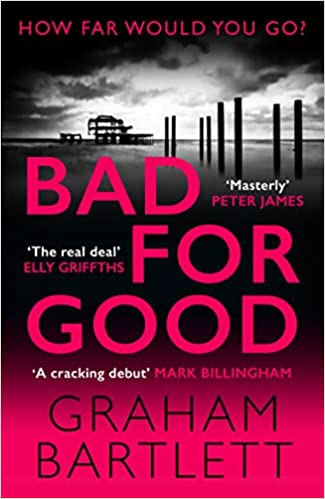 The plot hinges around a series of dire events in the life of Jo Howe’s boss, Detective Chief Superintendent Phil Cooke. Already trying to keep his mind on the job while his wife is dying of cancer, fate deals him another cruel blow when his son Harry, a promising professional footballer, is murdered, seemingly a casualty in a drug turf war. He steps down, but then comes into contact with a shadowy group of apparent vigilantes, who tell him that Harry was not the clean-cut sporting hero portrayed in the local media – he was heavily into performance enhancing drugs. The vigilantes – whose business plan is to provide a highly illegal alternative police force, where customers pay for the quick results that the Sussex Constabulary seem unable to provide – blackmail Phil into standing in the election of Police and Crime Commissioner. He is forced to agree, and is elected.
 Graham Bartlett (right) was a police officer for thirty years and mainly policed the city of Brighton and Hove, rising to become a Chief Superintendent and its police commander, so it is no accident that this is a grimly authentic police procedural. It is also very topical as, away from the violence and entertaining mayhem, it focuses on the seemingly insoluble problem of the divide between the public’s expectations of policing, and what the force is actually able – or willing – to deliver. Bartlett doesn’t over-politicise his story but, reading between the lines – and I may be mistaken – I suspect he may feel that, with ever more limited resources, the police should not be so keen to divert valuable time and resources away from their core job of catching criminals. My view. and it may not be his, is that effusive virtue signaling by police forces in support of this or that social justice trend does them – nor most of us – no favours at all.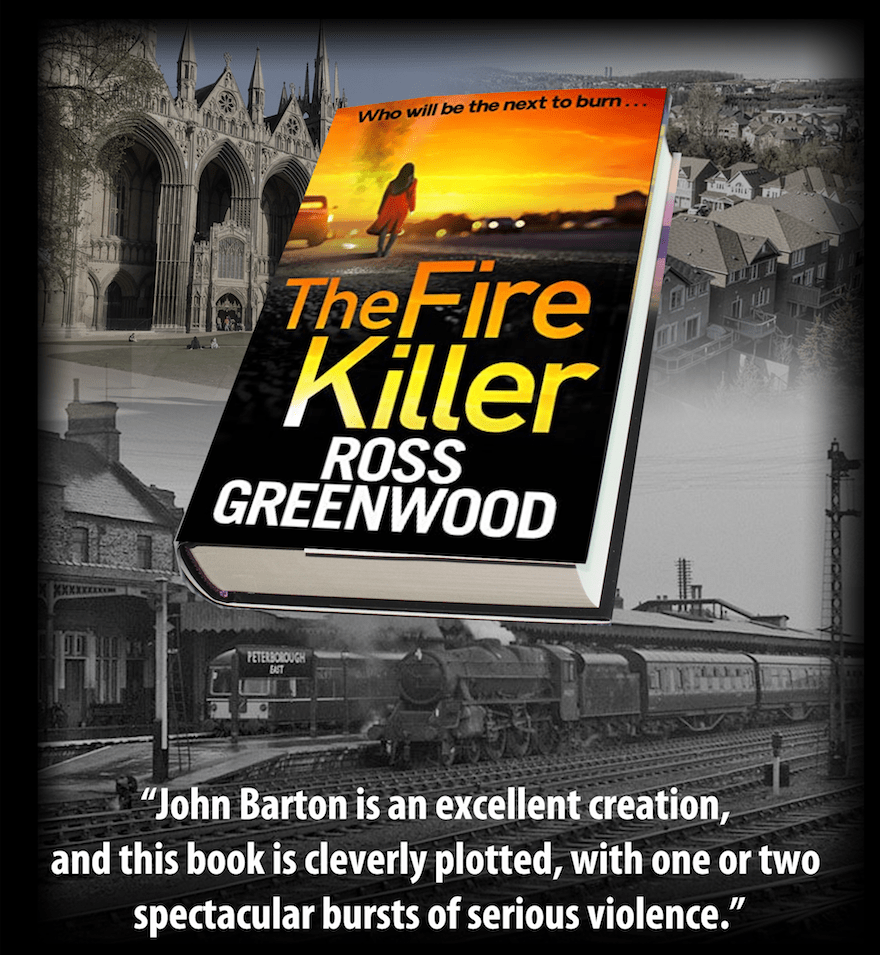

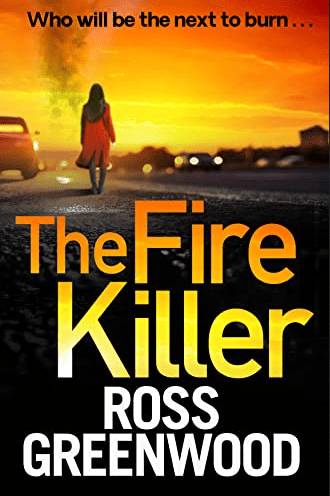 Late again! My excuse is that I am a one-man-band here at Fully Booked, and notwithstanding the occasional erudite contribution from Stuart Radmore (who has forgotten more about crime fiction than most people will ever know), there are only so many books I can read and review properly. My first experience of Peterborough copper DI Barton is the fifth of the series (written by Ross Greenwood), The Fire Killer. Peterborough is a big place, at least for us Fenland townies, but is rarely featured in CriFi novels. I am pretty sure that Peter Robinson’s DI Banks grew up there (The Summer That Never Was) and Eva Dolan’s Zigic and Ferreira books are certainly set in the city.
 Ross Greenwood (right) has fun inviting us to make out own guesses, but also makes the game a little more interesting by giving us intermittent chapters narrated by The Fire Killer, but he is very wary about giving us too many clues. The dead girl, Jess Craven had been involved with a very rich dentist with links – as a customer – to the London drug trade.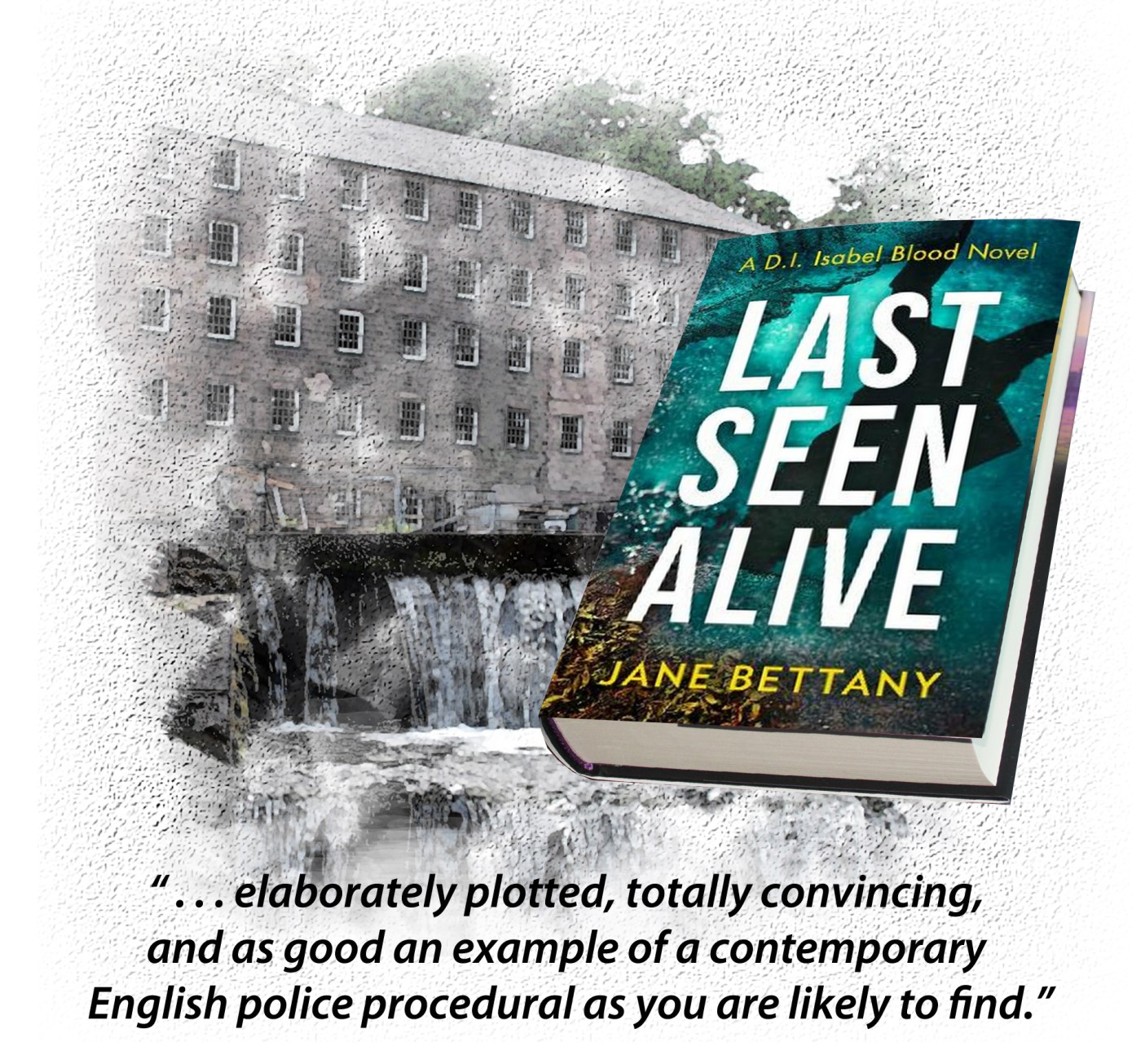

 Last Seen Alive is the third book by Jane Bettany (left) featuring the Derbyshire copper DI Isabel Blood. The story begins when Anna Matheson, a single mother who works at a large confectionery firm, fails to pick up her infant son from the child minder after a social event at work. Lauren Talbot, the child minder, raises the alarm late at night, but precious hours elapse before morning comes and the police are able to start making enquiries.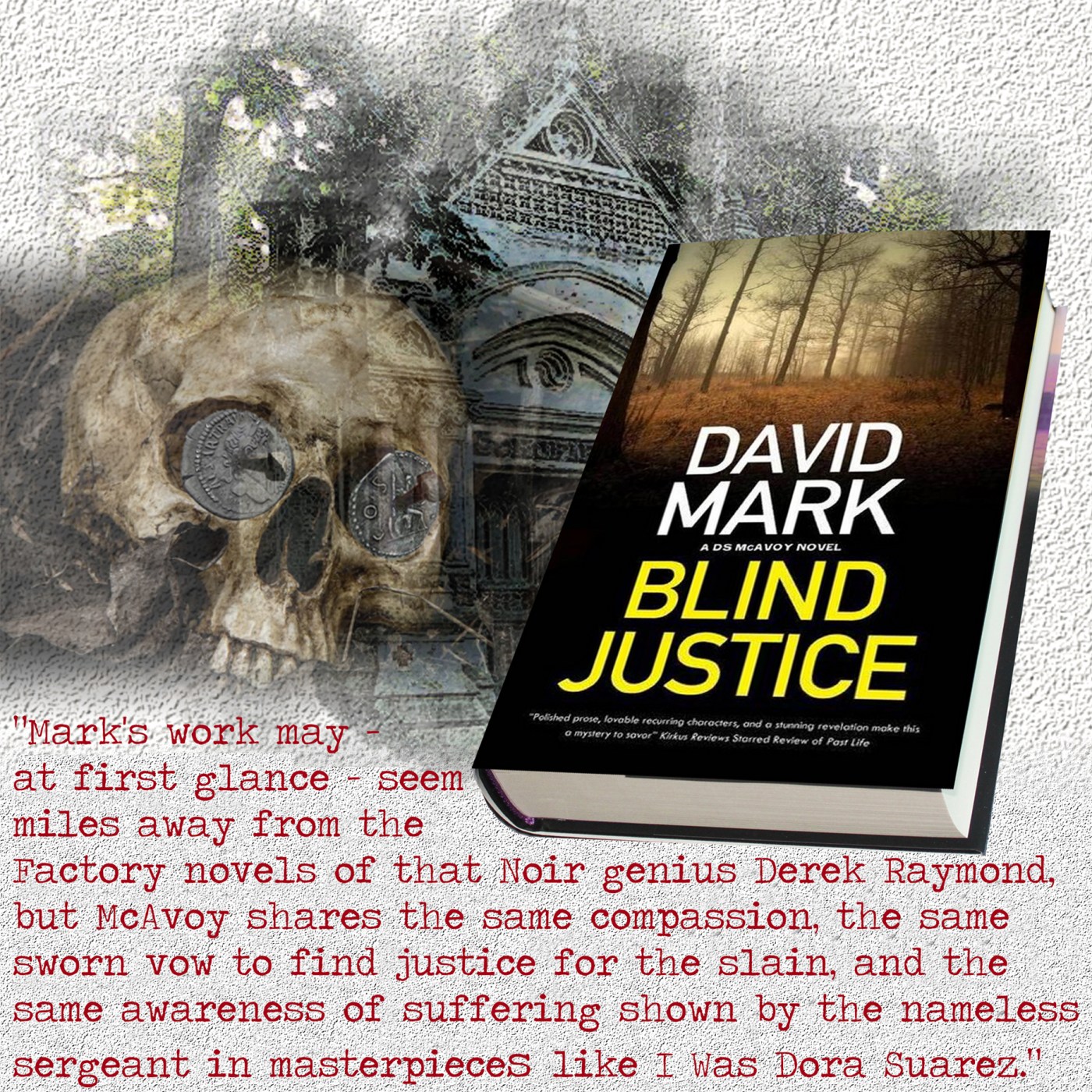
 The book begins with a flashback to an attempt by young men to carry out what seems to be a robbery in an isolated rural property. It ends in horrific violence, matched only by the destructive storm that rages over the heads of the ill-advised and ill-prepared group. Cut to the present day, and another storm has lashed Humberside, bringing down power lines, flooding homes, and uprooting trees. One such tree, an ancient ash, reveals something truly awful – a human body, mostly decayed, entwined within its roots in a macabre embrace.
 David Mark (right) writes with a sometimes frightening intensity as dark events swirl around Aector McAvoy. The big man, gentle and hesitant though he may seem, is, however, like a rock. He is one of the most original creations in a very crowded field of fictional British coppers, and his capacity to bear pain for others – particularly in this episode his son Fin and Trish Pharoah – is movingly described. Mark’s work may – at first glance – seem miles away from the Factory novels of that Noir genius Derek Raymond, but McAvoy shares the same compassion, the same sworn vow to find justice for the slain, and the same awareness of suffering shown by the nameless sergeant in masterpieces like I Was Dora Suarez.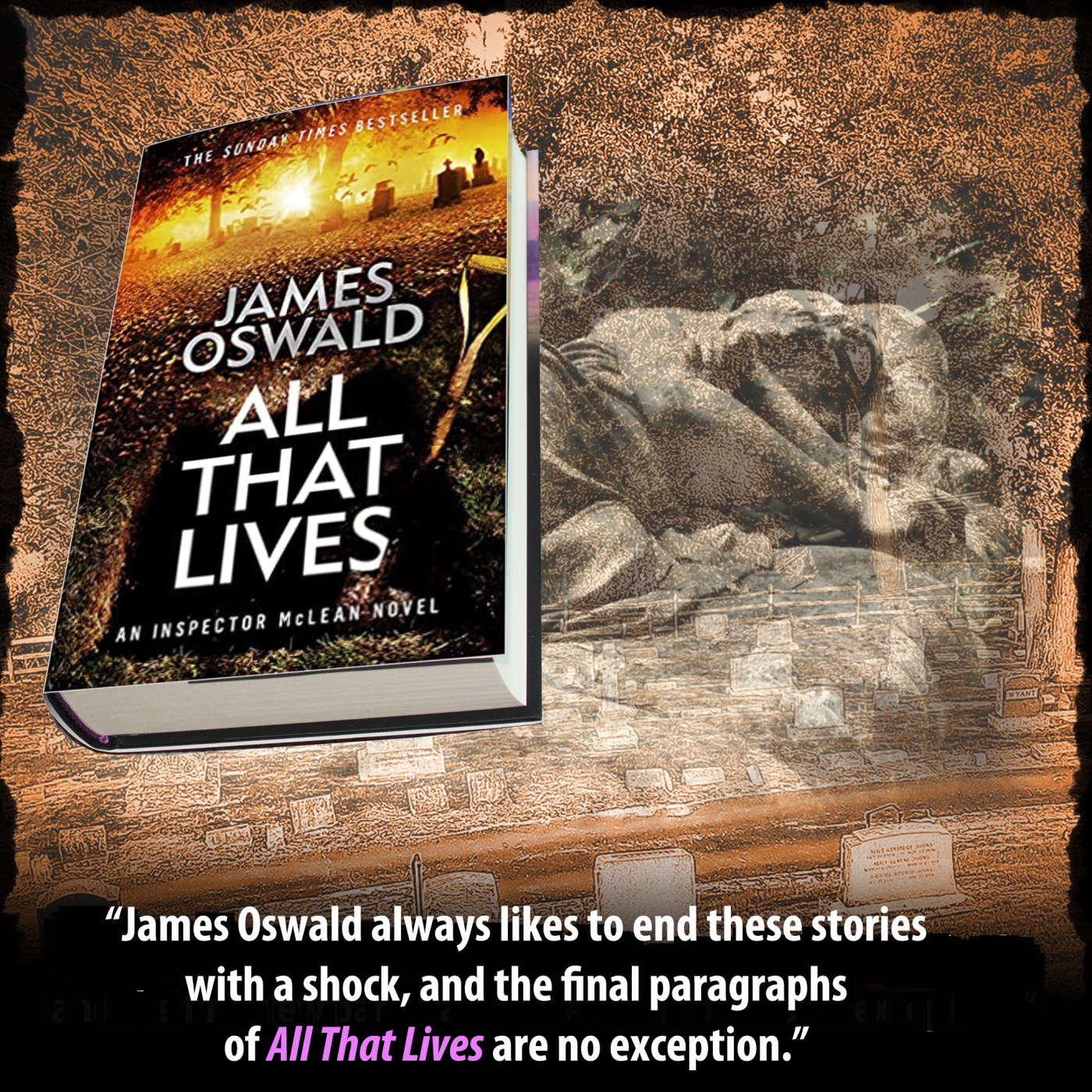

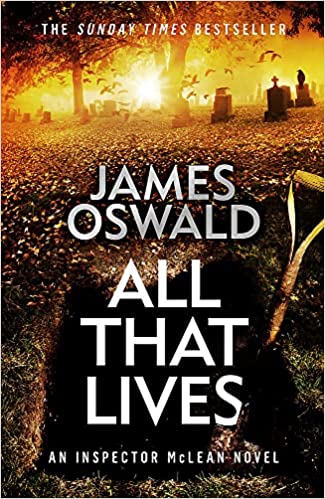 That reminiscence may seem unrelated to a book review, but it is relevant. When reviewing the latest book in a long and successful series it is tempting to think that all prospective readers will be fully up to speed with the quirks and history of the main characters. But that’s not so. Thankfully, people come to books at different times and for different reasons, so a paragraph about Edinburgh copper DI Tony McLean won’t be wasted. If you already know, then just skip ahead.


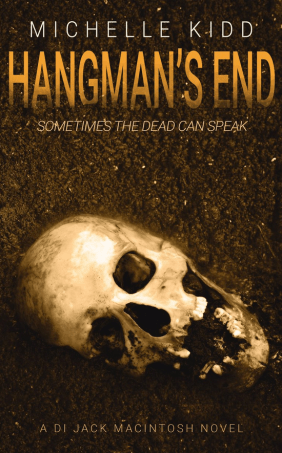 We have the advantage over the police in that we are introduced early on to the man who dropped the suitcase from the bridge into the mud. We are not sure if he is the actual slaughterman, or merely the butcher, but we do learn the whereabouts of the child’s head. The victim is soon identified as Maisie Lancaster, but a visit to her parents’ house brings MacIntosh into a collision with the metaphorical runaway car of one of his previous cases.

 When the cops investigate the house from which the young man ran, they find the second corpse of the morning, with her throat slit. She is – or rather was – Cordi Gannet. She made a decent living producing lifestyle videos for YouTube, full of cod psychology and trite advice about life improvement strategies. Her psychology degree was apparently bought mail-order from an on-line university, and when Alex Delaware gets to the scene with Milo, he remembers that he was once involved in a child custody case where Cordi Gannet was introduced as an expert witness – with disastrous consequences.
 Watching the Delaware-Sturgis partnership work on a case is fascinating. Yes, by my reckoning this is the 37th in the series. No, that’s not a typo. Thirty seven since their debut in When The Bough Breaks (1985). 1985. Blimey. Amongst other ground-breaking events in that year, I read that Playboy stopped stapling its centrefolds, the first episode of Eastenders was broadcast, and Freddie Mercury stole the show at Live Aid. But I digress.


