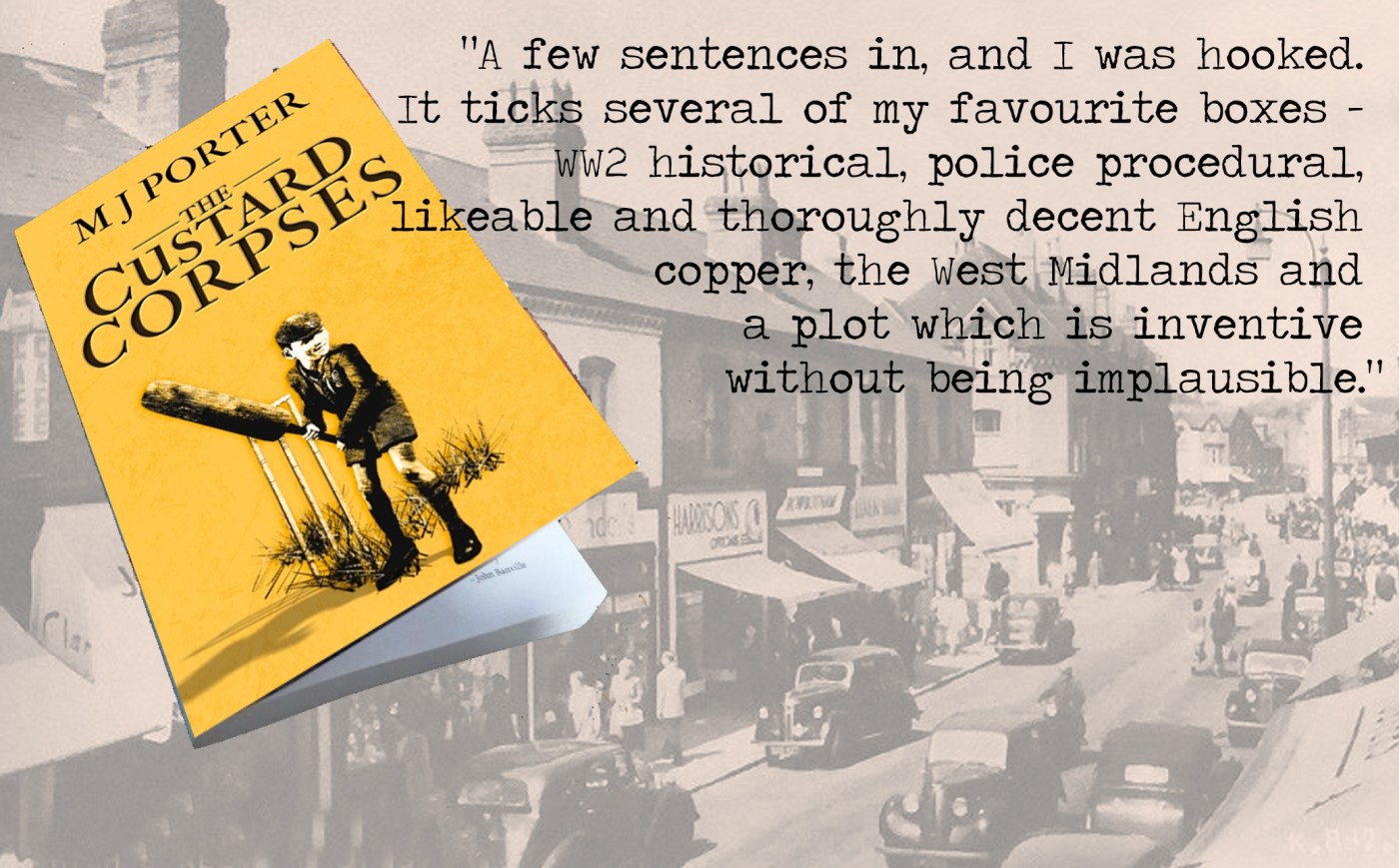
Sometimes a book comes along with very little by way of advanced publicity or hype, and it hits the sweet spot right away. One such is The Custard Corpses by MJ Porter. Strangely-named it might be but the reason for the title becomes more obvious - and appropriate - the more one reads. A few sentences in, and I was hooked. It ticks several of my favourite boxes - WW2 historical, police procedural, likeable and thoroughly decent English copper, the West Midlands and a plot which is inventive without being implausible.

We are in the Birmingham district of Erdington. It is 1943 and Great War veteran Sam Mason is a uniformed Chief Inspector at the local nick. He is not yet on the downward slope heading for retirement, but he is like Tennyson's Ulysses:
“Tho’ much is taken, much abides; and tho’
We are not now that strength which in old days
Moved earth and heaven, that which we are, we are;
One equal temper of heroic hearts,
Made weak by time and fate, but strong in will
To strive, to seek, to find, and not to yield.”
 Mason is a man given to reflection, and a case from his early career still troubles him. On 30th September 1923, a boy’s body was found near the local church hall. Robert McFarlane had been missing for three days, his widowed mother frantic with anxiety. Mason remembers the corpse vividly. It was almost as if the lad was just sleeping. The cause of death? Totally improbably the boy drowned. But where? And why was his body so artfully posed, waiting to be found?
Mason and his then boss, Chief Inspector Fullerton, had never solved the crime, and Mrs McFarlane died without knowing the whys and wherefores of her son’s death. When Mason learns that there had been a similar case, a couple of years later, he is close to despair that it hadn’t come to light earlier. He realises that the fault was theirs. They hadn’t circulated the strange details of Robert’s death as widely as they should.
Attempting to make amends, albeit two decades too late, he has a circular drawn up, and sent to the police forces across England, Scotland and Wales. To his dismay, a succession of unsolved killings come to light; the dead youngsters are of different ages, but there is one bizarre common factor – the bodies have been posed as if in some kind of sporting action. Mason is given permission to devote his energies to this macabre series of killings, and with the resourceful Constable O’Rourke, he sets up an incident room, and begins to receive case notes and crime scene photographs from places as far apart as Inverness, Weston, Conway and Berwick.
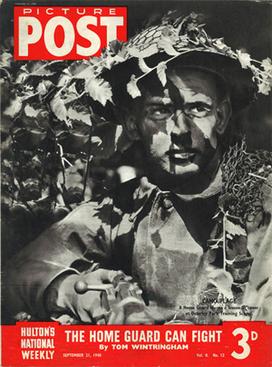 One evening, after he has taken images and documents home with him, his wife Annie makes a startling discovery. Like nearly two million other readers across the country, she is a great fan of the magazine Picture Post, and while thumbing through a recent copy she notices that the sporting youngster drawn in an advertisement for a well-known brand of custard is posed in a way that has a chilling resemblance to the way one of the victims that Sam is investigating.
At this point, the investigation sprouts wings and takes flight and, in a journey that takes them across England, Mason and O’Rourke eventually uncover a tale of horror and obsession that chills their blood. MJ Porter has written a series of historical and fantasy novels, mostly set in what we call The Dark Ages – Vikings, Goths and those sorts of chaps. That doesn’t tend to be ‘my thing’ but, my goodness, Porter is a good writer. The Custard Corpses goes straight onto my early shortlist for Book of The Year, and I do hope that he can tear himself away from his tales of ravens, rape, swords and general pillage to bring us another novel featuring Sam Mason. The Custard Corpses is out now.












 The dead man is quickly identified as the brother of a long-disappeared Scottish public figure. Iain Auld, depending on your cultural terms of reference, did either a Reggie Perrin, John Stonehouse or Lord Lucan a decade earlier. He has officially been declared dead, but Pirie’s antennae are set all of a quiver, as her investigations into Auld’s disappearance have been fruitless.

 Kieron Coyne is playing with his mate Josh under the watchful eyes of their mothers, Cat and Maria. Cat goes off for a pee, Maria settles back on the park bench and lights a fag. One minute Kieron is there, the next he has disappeared. Josh emerges from the little wood where the boys were playing hide and seek. He neither saw nor heard anything of his friend.

 Strangely though, Find Them Dead sees Roy Grace rather in the background. He binds the narrative together by his presence, of course he does, but he mostly takes a back seat in this tale of drug dealers, bent lawyers and jury-nobbling. He has returned to Sussex after a spell working with the Metropolitan Police in London. The sheer depth and depravity of London’s crime has been an eye-opener, but the south coast is not without its villains.


