

 n a fictional world overflowing with disfunctional detectives who happen to be rather good at their jobs, Joseph Knox has raised, or perhaps lowered, the bar considerably with his DC Aidan Waits. We first met Waits in Sirens (2017) and then in The Smiling Man (2018). Now, in The Sleepwalker, Knox takes us on another guided tour of the dystopian underbelly of contemporary Manchester.
 Together with his grotesque partner and immediate boss, DI Peter Sutcliffe, Waits always gets the shitty end of the stick. ‘Sutty’ Sutcliffe is, you might say, a good old fashioned copper. Waits goes to meet him in a dingy rock-and-roll boozer:
“Sutty was standing in the corner, explaining something to one of the other customers. To make sure the man was really listening, he’d lifted him off the ground by his ears and begun banging his head into the wall to the beat of the drum.
He let the smile slide, dramatically, off his face when he saw me.
‘Oh’, he said, over the music. ‘It’s the great depression. Shouldn’t you be queuing up for a loaf of bread instead of buying beer?’ “
Waits and Sutcliffe have been assigned to a Death Watch. In hospital, a notorious serial killer nicknamed The Sleepwalker because of the bizarre circumstances of his arrest, is dying of cancer. Years ago, he was convicted of slaughtering a family – wife and children – and the older daughter’s body has never been found. In the faint hope that Martin Wick’s dying breath will reveal the final resting place of twelve year-old Lizzie Moore – a sombre echo of the misplaced faith that believed Ian Brady would finally say where he had buried Keith Bennett – Waits and Sutcliffe sit by the dying man’s bedside, their ears close to whatever utterance escapes his shriveled lips.
 hy is Aidan Waits such a tortured character? Well, how long have you got? His childhood was loveless and chaotic, and spent largely in institutions where he rubbed shoulders with trainee failures, malcontents and killers. Echoing Nietzsche’s chilling remarks about the moral abyss, Waits has, more recently, gazed too long into a chasm inhabited by a repellent Manchester crime lord called Zane Carver. Carver has fed Waits’s drug habit, and the two have fought over women. Carver has a particular talent with women:
“Zain Carver was a magician when it came to ruining women’s lives.
He surrounded himself with these beautiful assistants and then delighted in sawing them up, making them disappear. Sometimes a new girl on his arm might end up on the game, or in hospital, or back with her parents feeling five years older, a permanent faraway look in her eyes.”
 s distinctive as Knox is as a stylist, and as much as he is a master of the inky black metaphor, he has a tale to tell and a plot to spin. The sepulchral calm of Martin Wick’s closely guarded hospital room is shattered by a savage attack which Waits survives, but puts him at the head of the queue as the police and the gutter press search for scapegoats. With Carver having decided to exact revenge on Waits by donning his black cap and pronounced the death sentence, Waits is on the run both from the gangster and, no less implacably, his politically motivated senior officers, but he keeps them at bay. He discovers faint-but-fatal fault lines in the original case against Martin Wicks, and finds that both Kevin Blake, the detective who brought Wicks to justice, and Frank Moore, the father of the murdered children, still have songs to sing.
 Joseph Knox writes like an angel. Possibly an Angel of Death, but he grasps the spluttering torch of English Noir once carried by such writers as Derek Raymond, and runs with such vigour that the flame burns brightly once again. He is not without humour, and there are many – if unrepeatable – gags exchanged between the cynical cops and their low-life prey. The politically correct nature of modern policing doesn’t escape his attention, either:
“The conference space and interview rooms had a bland, mass-produced, modern aesthetic. If Hitler’s bunker had been designed by Travelodge, it couldn’t have communicated quiet despair any more effectively.”
No-one who has had the misfortune to require A & E treatment on any given weekend evening – in Manchester, Middlesborough, Maidenhead or Milton Keynes – will be unfamiliar with this baleful description, as Waits searches for a suspect:
“I looked about me. Bloodshed, fist-fights and stab wounds. Confused, stunned people, drunk, on drugs, with life-altering injuries. Stick-thin single mothers on food bank diets, with morbidly obese babies.”
 nox has his grim fun with a Manchester police force that is barely honest, city down-and-outs who have lost most of the trappings of humanity, and an infestation of tattooed, Spice-addicted thugs straight from Central Casting – with Hieronymus Bosch as the agency’s head of HR. He also leaves us with a delightfully enigmatic final few pages. The Sleepwalker is published by Doubleday and will be on the shelves from 11th July

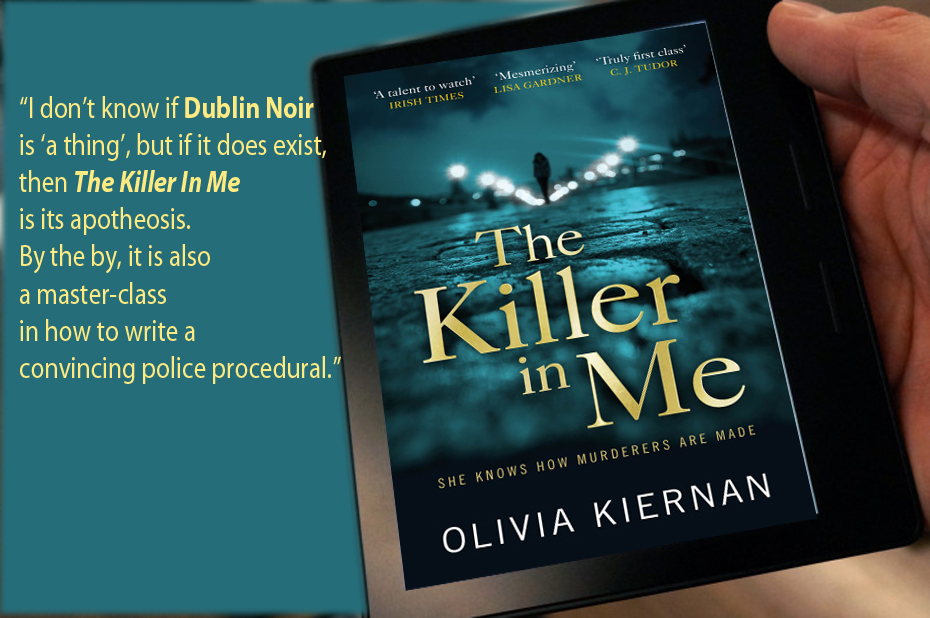

 hief Superintendent Frankie Sheehan is the leader of an elite crime unit of Dublin’s An Garda Síochána, known as The Bureau. She has been asked by her sister in law – who works for a human rights group called Justice Meets Justice – to look over the evidence and paperwork related to a horrific historic crime, where a teenager called Seán Hennessy was convicted of the savage murder of his mother and father, and the attempted murder of his young sister. Now, Hennessy has been released, and he is the latest cause célèbre for JMJ. Sheehan reluctantly agrees, but her attention is quickly diverted to a double murder.
 Two bodies have been found in a church in the well-to-do coastal suburb of Clontarf. The victims are identified as a local woman and her husband, but their deaths seem strangely disconnected. Geraldine Shine has been stabbed, but her husband Alan was strangled, has been dead for much longer, and his corpse shows every sign of having been kept in a freezer.
 I don’t know if Dublin Noir is ‘a thing’, but if it does exist, then The Killer In Me is its apotheosis. By the by, it is also a master-class in how to write a convincing police procedural. Sheehan shares her modus operandi when interviewing a reluctant suspect:
 ark, complex, brutal but full of compassion, The Killer In Me is breathtakingly good. It is published by riverrun (a literary imprint of Quercus) and is available now


 t takes a very ingenious – not to say devious mind – to fashion a fiction plot which meshes together a whole bagful of disparate elements to make a satisfying whole that challenges the imagination but does not exceed it in possibility. Adam Loxley has done just that in his latest thriller The Artemis File. George Wiggins is Mr Ordinary. He lives in what would have been called, years ago, a bijou residence in the twee Kentish town of Tenterden. He is not Mr Stupid, however. He travels into ‘town’ each day to sit at his desk in Fleet Street where he composes the daily crossword for The Chronicle under his pseudonym Xerxes. Aficionados know that in reality, all that is left of the newspaper industry in Fleet Street are the buildings, and the use of the term to denote popular journalism, but we can forgive Loxley for having the good, old-fashioned Chronicle hanging on by the skin of its teeth when all its fellows have decamped to Wapping or soulless suburbs somewhere off a dual carriageway.
 When George has a rather startling experience in his local pub after a couple of pints of decent beer, the other elements of the story – MI5, the CIA, Russian agents, immaculately dressed but ruthless Whitehall civil servants and, most crucially, the most infamous unsolved incident of the late 20th century – are soon thrown into the mix. Such is George’s conformity, it is easily compromised, and he is blackmailed into writing a crossword, the answers to which are deeply significant to a very select group of individuals who sit at the centres of various spiders’ webs where they tug the strands which control the national security of the great powers.
 eorge Wiggins might have been easily duped and he has few means to fight back, but he recruits an old chum from the Chronicle whose knowledge of the historical events of the 1990s proves key to unraveling the mystery of who wanted the crossword published – and why. While the pair rescue a dusty file from an obscure repository and pore over its contents, elsewhere a much more visceral struggle is playing out. A ruthless MI5 contract ‘fixer’ called Craven is engaged on a courtly dance of death with a former CIA agent, current American operatives and their Russian counterparts.
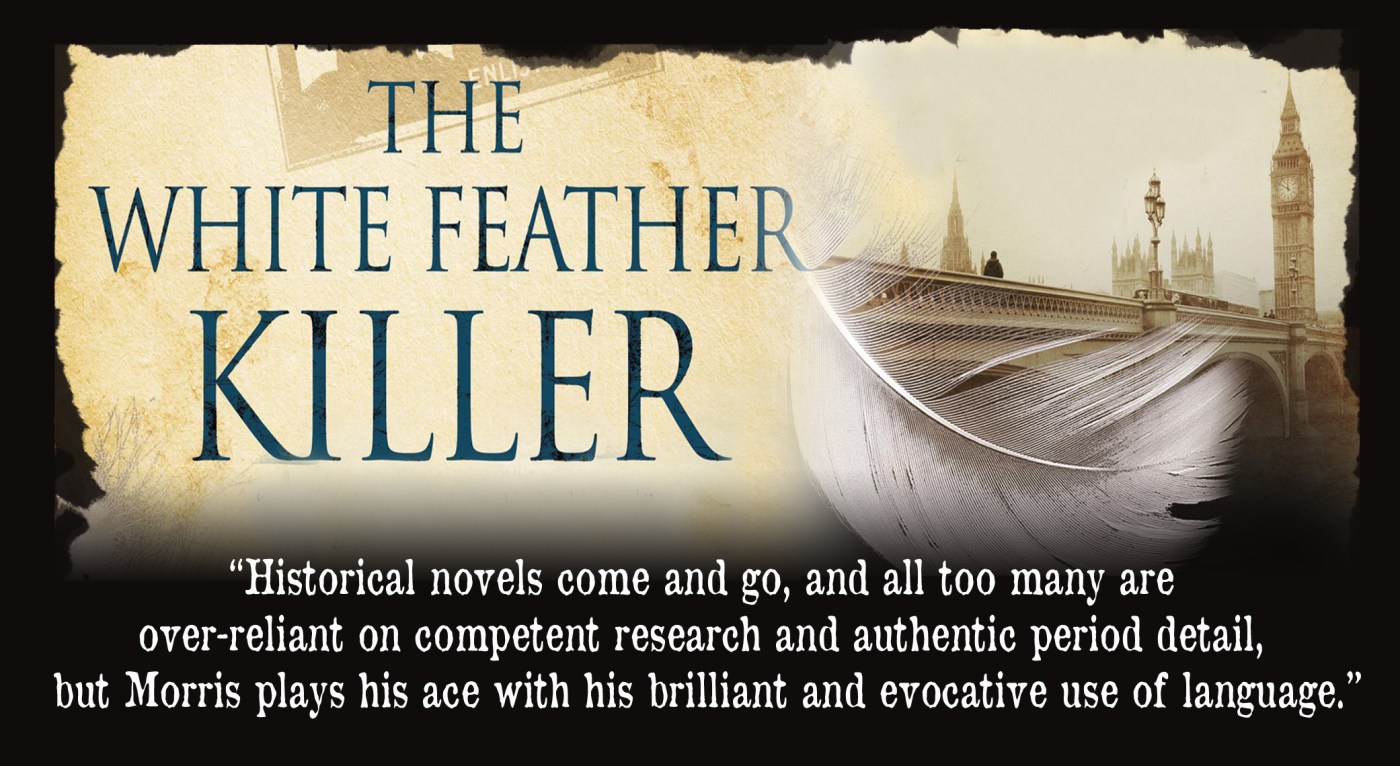
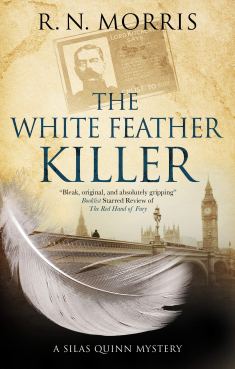 I’m a great fan of historical crime fiction, particularly if it is set in the 19th or 20th centuries, but I will be the first to admit that most such novels tend not to veer towards what I call The Dark Side. Perhaps it’s the necessary wealth of period detail which gets in the way, and while some writers revel in the more lurid aspects of poverty, punishment and general mortality, the genre is usually a long way from noir. That’s absolutely fine. Many noir enthusiasts (noiristes, perhaps?) avoid historical crime in the same way that lovers of a good period yarn aren’t drawn to existential world of shadows cast by flickering neon signs on wet pavements. The latest novel from RN Morris, The White Feather Killer is an exception to my sweeping generalisation, as it is as uncomfortable and haunting a tale as I have read for some time.
 orris takes his time before giving us a dead body, but his drama has some intriguing characters. We met Felix Simpkins, such a mother’s boy that, were he to be realised on the screen, we would have to resurrect Anthony Perkins for the job. His mother is not embalmed in the apple cellar, but an embittered and waspish German widow, a failed concert pianist, a failed wife, and a failed pretty much everything else except in the dubious skill of humiliating her hapless son. Central to the grim narrative is the Cardew family. Baptist Pastor Clement Cardew is the head of the family; his wife Esme knows her place, but his twin children Adam and Eve have a pivotal role in what unfolds. The trope of the hypocritical and venal clergyman is well-worn but still powerful; when we realise the depth of Cardew’s descent into darkness, it is truly chilling.
 Historical novels come and go, and all too many are over-reliant on competent research and authentic period detail, but Morris (right) plays his ace with his brilliant and evocative use of language. Here, Quinn watches, bemused, as a company of army cyclists spin past him:
 uinn has to pursue his enquiries in one of the quieter London suburbs, and makes this wry observation of the world of Mr Pooter – quaintly comic, but about to be shattered by events:

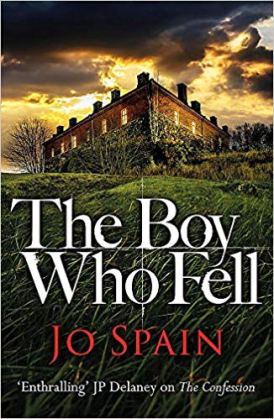 This is a chillingly clever whodunnit shot through with a caustic examination of life among the moneyed classes of contemporary Ireland, particularly Dublin’s nouveau riche and their over-indulged teenage children. Fans of Jo Spain’s DI Tom Reynolds will be overjoyed to see him return for his fifth case, and those who know the author only through her spellbinding standalone novels such as
  his particular dark night ends in tragedy, as after he and his friends indulge in some horseplay with an ouija board, young Luke Connolly plunges to his death from an upstairs window. The youngsters involved in the escapade are not, however, from some run down social housing estate, the victims of neglect, poor schooling and brutalised by deprivation. No, Luke, Charlotte, Hazel, Brian, Jacob and Dylan are all students at the prestigious and very expensive Little Leaf College and their parents, while possibly having more money than sense, are pillars of the community. But. And there is a rather large but in the person of Daniel Konaté Jones. Daniel is mixed race, has a ‘job’ as a DJ, and is tolerated by the group as something rather exotic, like a strange tropical orchid springing up in the herbaceous border . The police investigating the death are quick to arrest Daniel, and their case against him is sewn up with speed and, to mix metaphors, seen as tighter than a camel’s arse in a sandstorm.
 Jo Spain is the literary Diva of Deviousness, and while we learn early in the piece that Glenmore House has a bloody history, she waits for some while before reconnecting the earlier slaughter with the death of Luke Connolly. When she does – and Reynolds realises the connection a paragraph or three before we do – the investigation takes on a whole new slant.


 It is 1965 and we are basking in the slightly faded grandeur of Brighton, on the south coast of England. The town has never quite recovered from its association, more than a century earlier, with the bloated decadence of The Prince Regent, and it shrugs its shoulders at the more recent notoriety bestowed by a certain crime novel brought to life on the big screen in 1947. Brighton has its present-day misdeeds too, and who better to write about it than the intrepid crime reporter for the Evening Chronicle, Colin Crampton?
 inker, by the way, is very much in the John Inman school of caricature luvvies, so those with an over-sensitive approach had better look away now. His pale green shirts, flowery cravats and patronage of certain Brighton nightspots are pure (politically incorrect) comedy.
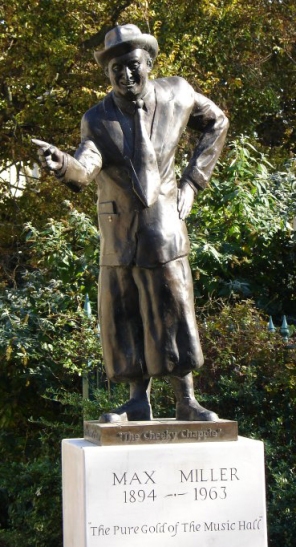 Bernstein’s murder is seen as very much open-and-shut by the Brighton coppers, but Crampton does not believe that Pinker has the mettle to commit physical violence. Instead, his investigation takes him into the rather sad world of stand-up comedians. Today, our stand-up gagsters can become millionaire celebrities, but back in 1965, the old style joke tellers with their catchphrases and patter were becoming a thing of the past, as TV satire was breaking new ground and reaching new audiences. Crampton believes that the murder of Bernstein is connected to the agent’s former association with Max Miller and, crucially, the possession of Miller’s fabled Blue Book, said to contain all of The Cheeky Chappy’s best material – and a few jokes considered too rude for polite company.


 ver the years, missing persons investigator David Raker has, courtesy of his creator Tim Weaver, solved some perplexing cases. There was the man who disappeared into the bowels of London’s underground railway system, the amnesiac who was found on a deserted south coast shingle beach, the straight ‘A’ student with the secret life who just vanishes and, memorably, the time his dead wife walked into a London police station and back into his life. Raker tends to be looking for troubled individuals, as in just the one person. But this time it’s different.
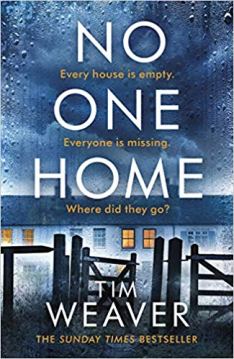 A whole village has disappeared. OK, let’s put that into context. The village is the isolated moorland community of Black Gale, and it consists of a farm and three expensive and fairly recent houses arrayed in a semi-circle around the older building. Black Gale. Population, nine souls. And on Halloween, two years since, they vanished. Into thin air. Like Prospero’s insubstantial pageant, the four families have left not a rack behind.
 aker has problems of his own, principally in the shape of his long time friend, former police officer Colm Healy. Healy featured in the very first Raker mystery Vanished (2012) and his misfortunes have been ever present over the series (No One Home is the 10th book). Healy is officially dead – and buried, He has a gravestone to prove it, but for a variety of reasons the former copper now exists under a variety of aliases, under the protection of David Raker. A persistent and intrusive journalist wants to write Raker’s life story, but also suspects the truth about Healey, and uses his knowledge in an attempt to force Raker to co-operate. Keeping the hack at bay – just – Raker begins to unpick the mystery of Black Gale.
 ans of the series will know that Tim Weaver doesn’t like Raker’s cases to be geographically confined, and so it is that the Black Gale conundrum is linked with a grisly unsolved murder in a flyblown California motel decades earlier. I say “unsolved”. The local Sheriff’s Department think the case is a wrap. They have a vic and a perp and have moved on to other things. Detective Joline Kader, however, has other ideas. She is unconvinced that the body lying face down in a bathtub of muriatic acid is simply the victim of a drug deal gone wrong, and the case stays with her over the years, right through her police career and her subsequent vocation as a college lecturer. Right up until the moment where her old obsession collides with David Raker’s fatal unpicking of a very clever and murderous conspiracy.
 No One Home is a brilliant thriller. It runs to over 500 pages, with not a single one wasted. The action is constant and the plot spins about all over the place, so you will need to be on your mettle to keep track of what is going on. Tim Weaver (right) has never been shy of creating apparently improbable conundrums for Raker to solve, and this is no exception. Suspend your disbelief for a few hours and go with the flow. I read it in three intense sessions and although I don’t use “Wow!” in normal speech, it certainly applies here. No One Home is published by Penguin

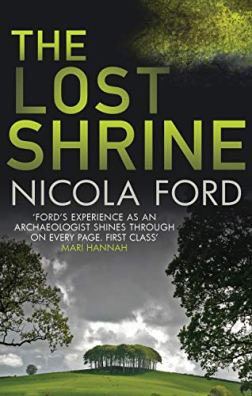 On a lonely and ancient hill in south western England, a group of amiable but earnest hippy cranks prepare to celebrate a pagan festival. What their leader finds when he climbs the hill to consummate the ritual sends him reeling and retching to his knees. There, strung up from the trees is a grisly collection of local wildlife, butchered and bloody. That is bad enough, but the centrepiece of this obscene display is – or was – human.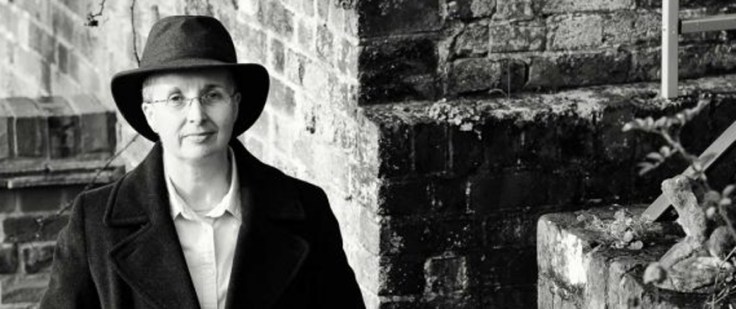

 London copper DI Tom Thorne has been entertaining us since his debut in Sleepyhead (2001). His creator, Mark Billingham, (left) has developed an enviably reliable repertory company of other players who share the stage with the main man. There is his best mate Phil Hendricks, a pathologist who, despite being gay, supporting Arsenal against Thorne’s beloved Spurs and having piercings in places where most folk don’t even have places, is the voice of sanity in Thorne’s often chaotic world. Thorne’s love interest (from whom he is currently living apart) is Helen, another police officer, but one who works in the traumatic world of child protection. Nicola Tanner is Thorne’s professional partner and they have history, but not one that either reflects on with much pleasure. Tanner’s partner Susan was brutally killed in a previous episode, and her death hangs over the pair like a pall.
 In an ostensibly unconnected narrative thread, Billingham introduces us to a Sarah, a vulnerable single mum who is anxious to gain the approval of other mums with whom she waits at the primary school gate twice each day. They seem confident, successful and financially comfortable. Sarah tries to join in with their daily sojourn at a pretentious ‘artisan’ coffee shop after the morning school run, but she still feels like the outsider. Her world is just herself and her son Jamie, and she struggles to compete with the gossip and banter that fly like sparks between Karen, Caroline, Savita and Heather. Until. Until the day when, sitting apart at her own table in HazBeanz, Sarah is chatted up by distinctly fanciable slightly older fellow. Almost instantly, Sarah finds the others anxious to swap phone numbers in return for daily updates about the new romance.


