

I was gifted this to review by Head of Zeus, so huge thanks to them. The Distant Dead is the eighth in a series by Lesley Thomson, so I am coming late to the party. What attracted me to the book? Two things, really. Firstly there was a mention of a WW2 element, and I am a sucker for anything war-related. Secondly, some of the action takes place in the Gloucestershire town of Tewksbury. Years ago now, a very dear friend of mine, Miles Amherst – long since gone,sadly – founded a choir school at Tewksbury Abbey. I had taught with him in Ely, but we had gone our separate ways. When the choir school was running, I was teaching in a Shropshire prep school, and I always had a half day on Mondays. It was a bit of a drive, but sometimes I used to motor down to Tewksbury, rehearse with the choir and help them sing Evensong. Afterwards was always beer, food – and an small-hours drive back to Salop.
So, happy memories, but what of the book? I am not the biggest fan of split time narratives, but many authors are, so it is what it is. In this case, at least, the connection between the narratives is clear. In Blitz-torn London, a young woman is found dead – strangled in an abandoned house. The pathologist called to the scene, and who later carries out the post mortem, is a man called Aleck Northcote. He tells the police investigating the case that the woman, Maple Greenhill was a common prostitute.
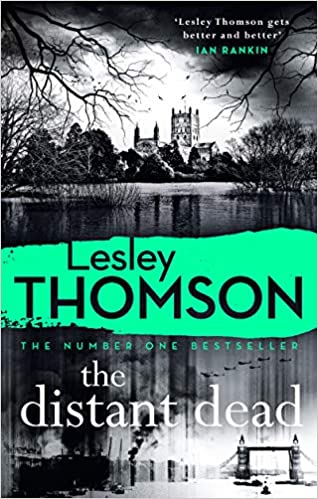 Years later, Northcote has retired to Tewksbury, but is found dead. His wastrel son is convicted of his murder. Pretty much present day, Stella Darnell, the daughter of a policeman, now working as a contract cleaner in Tewksbury, meets a man named Roddy March who has produced a podcast about the 1963 murder of Northcote. Roddy investigates cases where he thinks the wrong person went to prison – or, in this case, the gallows. When Roddy is found murdered next to an ancient tomb in Tewksbury Abbey, Stella feels connected enough to find out the truth about how past and present have merged – with fatal consequences.
So, what exactly happened in 1940?. We know – from the prologue – that Maple Greenhill has gone into an empty house with a man friend, and that he strangles her. When her body is found, London copper George Cotton is called, but his investigation leads nowhere until a cigarette lighter is found at the scene. It is engraved with the initials AXN. Cotton puts two and two together, and assumes that the pathologist – Aleck Xavier Northcote – must have dropped it when he was called to look at the body. Then, in a separate breakthrough, a garment repair ticket is found in Maple’s coat. When Cotton visits the tailor, he is astonished to be joined by a woman who says she has lost the self-same ticket. The woman is Mrs Aleck Northcote.
Lesley Thomson switches the narratives very cleverly and poses important questions as the book progresses. Was Northcote Maple’s man-friend, and did he kill her? If he did, how then did he avoid prosecution and survive to be murdered in his own house twenty three years later? And if Giles Northcote – who had visited his father on than fateful evening to ask for money to pay off a gambling debt – didn’t kill his father, then who did? And was the killer somehow connected to the death of Maple Greenhill.
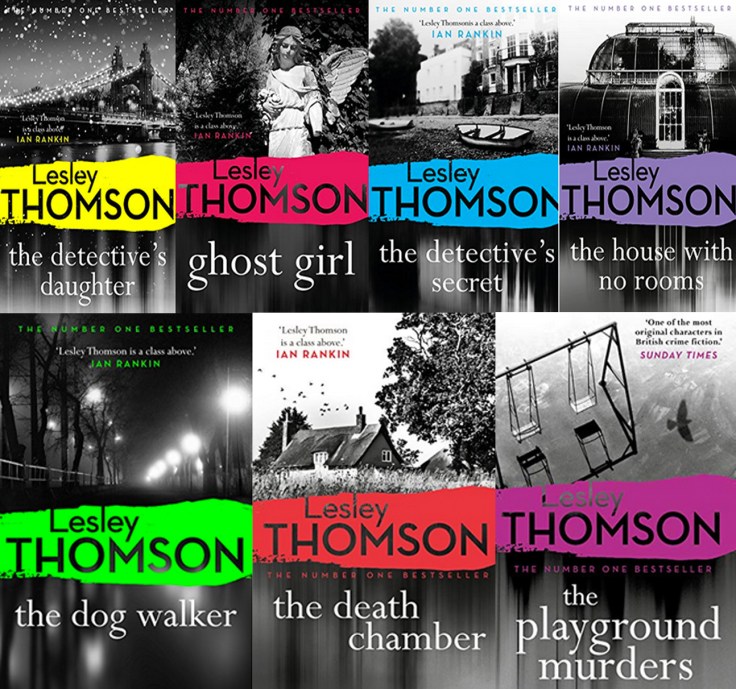
Obviously, I am not about to reveal the answer to the conundrum, but you will enjoy – as I did – how Lesley Thomson has Stella Darnell – and her companions – searching for, and then finding, the truth. The actual solution to what turns out to be multiple murders is breathtakingly complex, but this a clever, literate and totally convincing murder mystery – and thoroughly, thoroughly English. People who follow the news know that Tewksbury is notoriously susceptible to flooding, standing as it does at the confluence of the rivers Severn and Warwickshire Avon, and Lesley Thomson uses the power of the river as it hurtles over weirs and beneath bridges as a very effective metaphor for the violence in human souls. The Distant Dead is available now, and the previous books in the series are pictured below. If you click the image, you will be taken to Lesley Thomson’s website.







 This has the most seriously sinister beginning of any crime novel I have read in years. DI Henry Hobbes (of whom more presently) is summoned by his Sergeant to Bridlemere, a rambling Edwardian house in suburban London, where an elderly man has apparently committed suicide. Corpse – tick. Nearly empty bottle of vodka – tick. Sleeping pills on the nearby table – tick. Hobbes is not best pleased at his time being wasted, but the observant Meg Latimer has a couple of rabbits in her hat. One rabbit rolls up the dead man’s shirt to reveal some rather nasty knife cuts, and the other leads Hobbes on a tour round the house, where he discovers identical sets of women’s clothing, all laid out formally, and each with gashes in the midriff area, stained red. Sometimes the stains are actual blood, but others are as banal as paint and tomato sauce.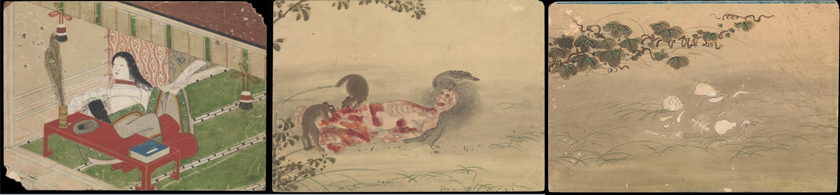
 My verdict on House With No Doors? In a nutshell, brilliant – a tour de force. Jeff Noon (right) has taken the humble police procedural, blended in a genuinely frightening psychological element, added a layer of human corruption and, finally, seasoned the dish with a piquant dash of insanity. On a purely narrative level, he also includes one of the most daring and astonishing final plot twists I have read in many a long year.


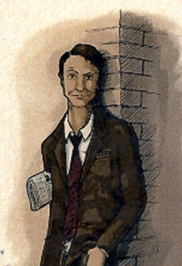


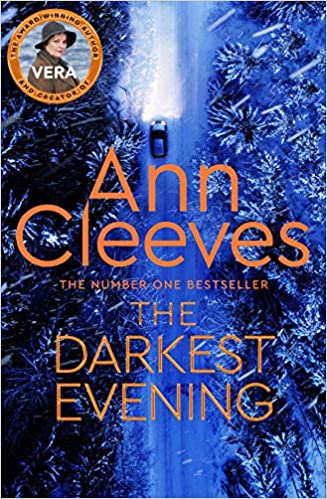 The story begins in a blinding December snowstorm, as Vera takes a wrong turning on her way home, and unwittingly steps onto the stage of a murder mystery. For newbugs like myself, this gives Cleeves a chance to flesh out part of Vera’s back story. The early action in The Darkest Evening takes place near a crumbling stately home – Brockburn – to which Vera has familial connections via her father Hector who, we learn, was rather a bad lot. The current residents of Brockburn are Harriet, the widow of Crispin Stanhope, and her daughter Juliet and husband Mark. Mark has thrown a party for the local gentry in order to get them on board with his plan to turn the old house into a vibrant regional theatre. The evening takes a turn for the worse when the body of Lorna Falstone is found outside in the snow. She has been bludgeoned to death.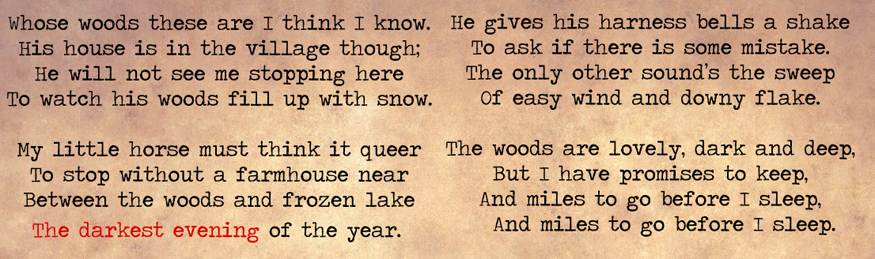




 fullybooked2017