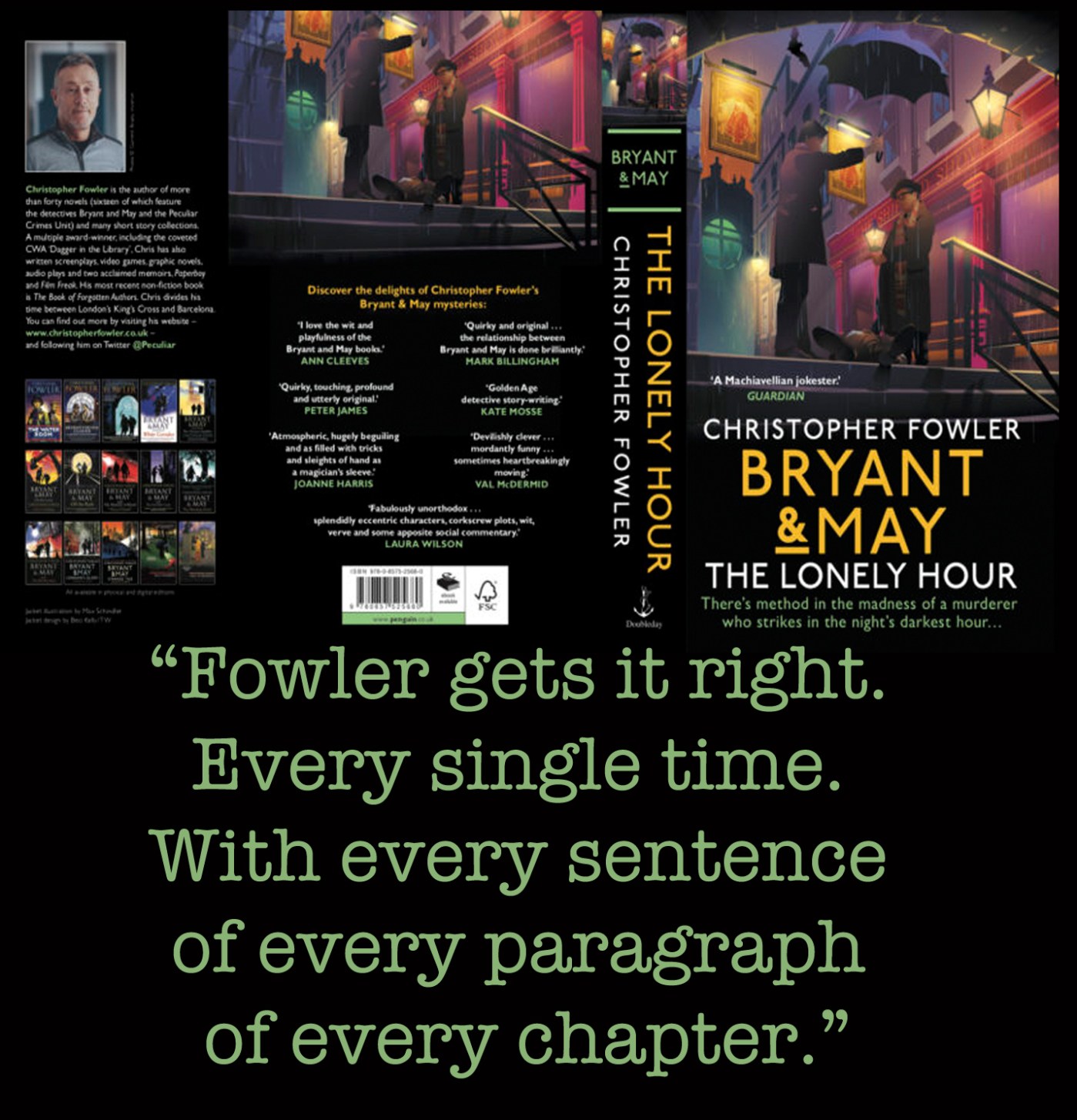
The impossibly geriatric constabulary codgers Arthur Bryant and John May return for another journey into London’s darkside in pursuit of those who kill. This time, the killer appears to be armed with a trocar – an obscure but deadly surgical instrument originally intended to penetrate the body allowing gases or fluid to escape. From the undergrowth of a copse on Hampstead Heath, and the unforgiving undertow of the Thames, via an exclusive multi-story apartment complex, to the pedestrian walkway of a Thames bridge, the victims seems to have nothing in common except the time of their demise – the deadly hour of 4.00 am.
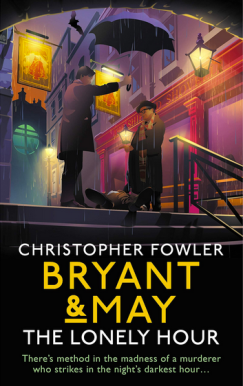 Bryant and May – and the rest of the Peculiar Crimes Unit – have been threatened with closure before, but this time their impatient and disapproving police bosses mean business. The PCU, both collectively and individually flounder around trying to work out what connects the corpses, and who is expertly wielding the trocar. Like Andrew Marvell’s ‘Time’s Winged Chariot’, the accountants and political schemers of the Metropolitan Police are ‘hurrying near’, and failure to catch this killer will certainly mean that the shambolic HQ of the Peculiar Crimes Unit on Caledonian Road will soon be in need of new tenants.
Don’t be misled by the jokes, delightful cultural references, and Arthur’s frequent put-downs of the PCU’s hapless boss, most of which go over Raymond Land’s head but, fortunately, not ours. Physicists will probably say that their world has different rules, but in literature light can only exist relative to darkness, and Fowler does not allow the chiffon gaiety within the Peculiar Crimes Unit to disguise a dystopian London woven from a much darker thread. He says:
“Approaching midnight, the black and grey striped concourse of King’s Cross Station remained almost as busy as it had been during the day. Some Italian students appeared to be having a picnic under the station canopy. A homeless girl ms on her knees next to a lengthy cardboard message explaining her circumstances. A Jamaican family dressed in home-made ecclesiastical vestments were warning everyone that hell awaited sinners. A phalanx of bachelorettes in tiny silver dresses, strappy shoes and bunny ears marched past, heading to their next destination like soldiers on a final tour of duty. Inside the station, tourists were still lurking round the Harry Potter trolley that had been originally set there as a joke by the station guards, then monetized when queues appeared. As flinty-eyed and mean as it had ever been, London was good at making everyone pay.”
If a better paragraph about London has been written in recent years, I have yet to read it
Fowler’s London is a place where the same streets, courtyards, alleys and highways have been walked for centuries; Roman legionaries, Norman functionaries, medieval merchants, Tudor politicians, Restoration poets, Georgian gamblers, Victorian philanthropists, Great War Tommies, and now City spivs with their dreams and nightmares spinning about in front of them on their smartphones – all have played their part in treading history down beneath their feet into a compressed and powerful seam of memory. This memory, whether they know it or not, affects the lives of those who live, work, lust, learn and – ultimately – die in London. Other writers, notably Peter Ackroyd, have been drawn to this lodestone and tapped into its power. Some authors have taken up the theme but befuddled readers with too much arcane psychogeography. Fowler gets it right. Every single time. With every sentence of every paragraph of every chapter.
Bryant is neither Mr Pastry, Charles Pooter nor Mr Bean. He is as sharp as a tack despite such running gags as his coat pockets being full of fluff covered boiled sweets long since disappeared from English shelves. If we knew no better, we might describe him as having a personality disorder somewhere on the autism spectrum, but there are precious moments in The Lonely Hour where the old man brings himself up short with the realisation that he is, most of the time, chronically selfish.
 Thanks to Bryant’s genius, the mystery is solved and the killer brought to justice, but these are certainly the grimmest days ever for the PCU, and as this brilliantly entertaining story reaches its conclusion, Fowler (right) slowly but irrevocably turns the tap marked Darkness to its fully open position. The Lonely Hour is published by Doubleday and is out now.
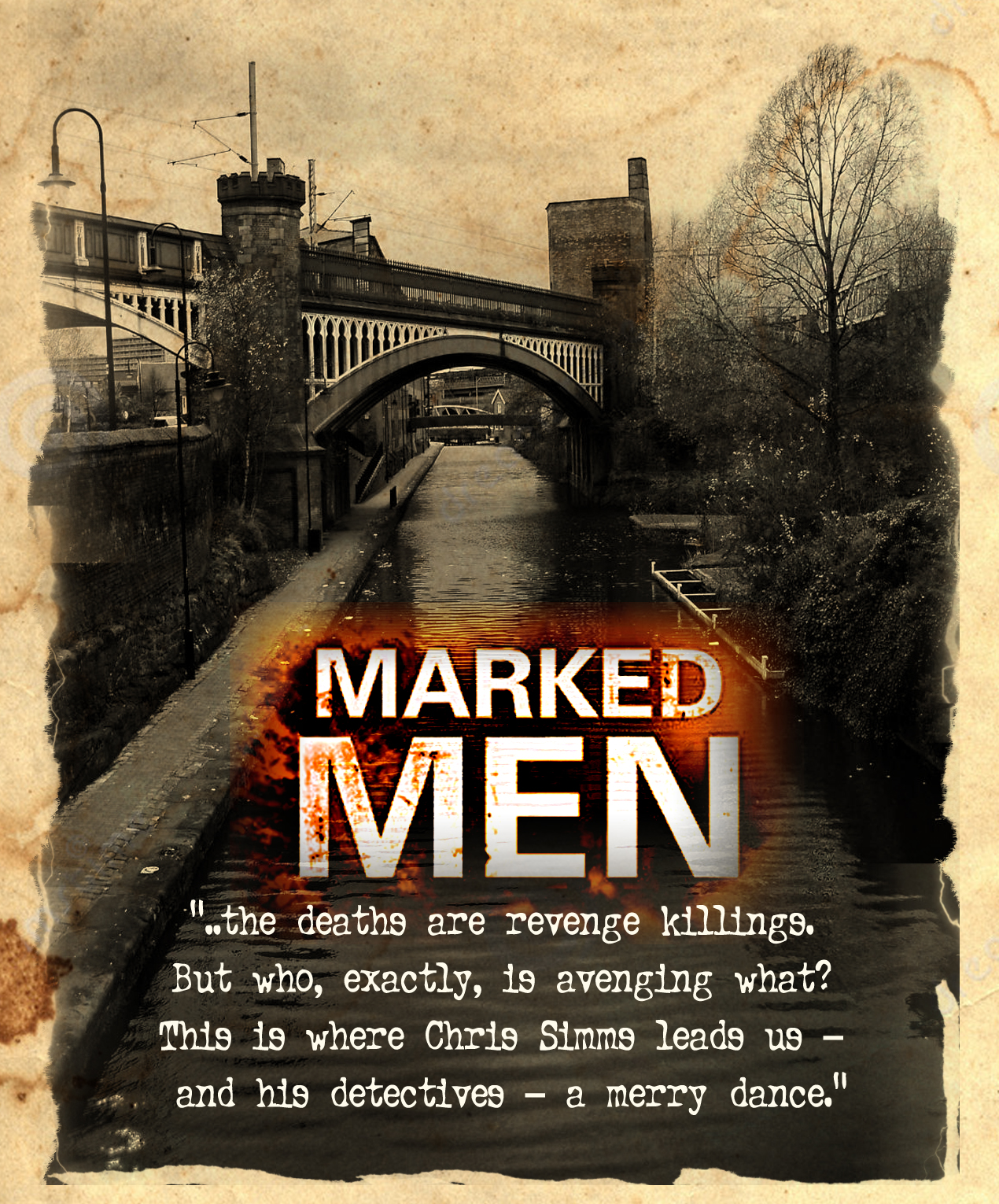
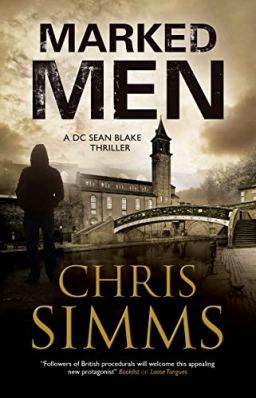 Marked Men begins on an idyllic Spanish beach, but then switches to the less salubrious setting of urban Manchester, and we only learn the significance of the opening much later in the plot. This way of starting a novel has become rather well-worn, but Simms handles it well and times to perfection the revelation of its significance. The Manchester action begins with Blake in waders and hard hat at the bottom of a drained lock on a local canal. There is a body, naturally, with more to follow, and as Blake and his immediate boss, DS Dragomir criss-cross the city trying to make sense of the crime scenes we – like them – are drawn into thinking that the deaths are revenge killings. But who, exactly, is avenging what? This is where Chris Simms leads us – and his detectives – a merry dance. There is a clue, but I have to confess I didn’t get it any quicker than did Blake and Dragomir.



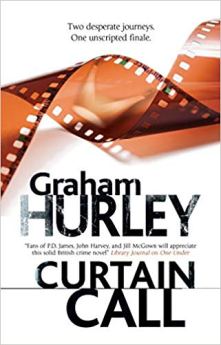 Enora’s reunion with her one-time lover has unintended consequences, particularly in relationship to her son, who turns up in London having fallen out with his father who, in turn is facing bankruptcy after a severe career downturn. There is crime – of a sort – in the novel, most horrifically when Culligan’s Syrian boyfriend is beaten within an inch of his life, but Curtain Call is much more complex and multi-layered. Admirers of the Faraday novels will love the fact that Saucy was a long-time confrère of the ebullient and occasionally unhinged King of the Portsmouth underworld, Bazza Mackenzie, a nemesis who Joe Faraday spent twelve memorable novels trying to put behind bars.

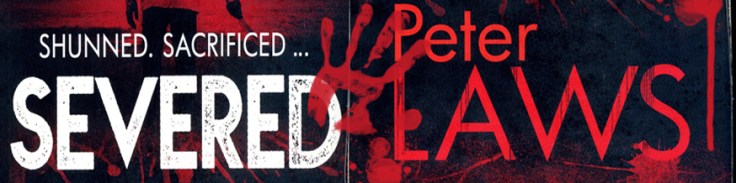
 Thus begins another case for Professor Matt Hunter, a university lecturer in religion and belief. He has previously helped the police in cases which involve sacred or supernatural matters (see the end of this review) and he is called in when it becomes clear that the wielder of the axe was none other than the teenage son of the Reverend David East, and that the boy was under the spell of a cult of deviant Christians whose central belief is that God The Father is a brutal tyrant who murdered his only son. They are also convinced that all other humans but them are ‘Hollows’ with evil in their eyes. Consequently, they shun all contact with the outside world, and live in a remote farmhouse, deep in the hills at the end of a rutted farm track.
 One of the most intriguing aspects of the Matt Hunter books is the relationship between the fictional former man of God and the very real and present minister in the Baptist church, the Reverend Peter Laws himself . We get a very vivid and convincing account of how Hunter has lost his faith, but also the many facets of that belief that he has come to see as inconsistent, illogical, or just plain barbaric. It suggests that Laws has identified these doubts in his own mind but, presumably, answered them. In these days of CGI nothing is impossible, so a live debate between Reverend Laws and Professor Hunter would be something to behold.
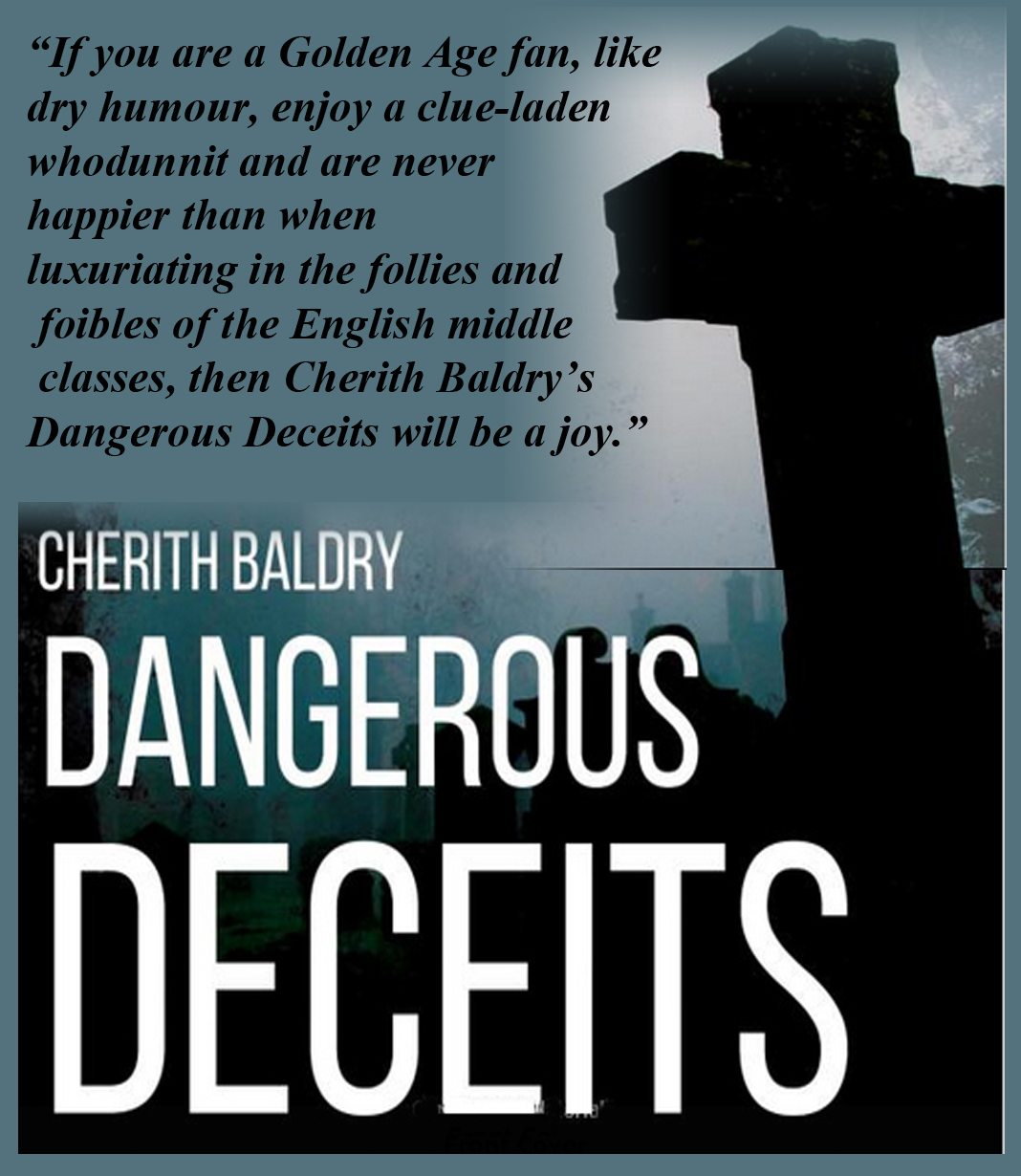
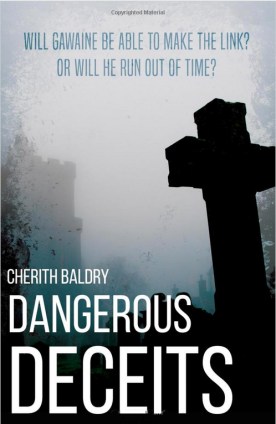 You might guess that a crime novel featuring an amateur detective called Gawaine St Clair is not going to take you down many mean streets; furthermore, were one to Frenchify its chromatic tint, then it would probably be nearer beige than noir. This being said, if you are a Golden Age fan, like dry humour, enjoy a clue-laden whodunnit and are never happier than when luxuriating in the follies and foibles of the English middle classes, then Cherith Baldry’s Dangerous Deceits will be a joy.
 Gawaine may be too arch and precious for some tastes but he fits perfectly into the Home Counties landscape with its manicured village greens and faux Tudor dwellings. I thoroughly enjoyed Dangerous Deceits and Father Tom’s killer is unmasked not amid the dusty shelves of a country house library, but in the altogether more fractious atmosphere of an extraordinary (in the procedural sense) meeting of the Ellingwood PCC. The solution, as in many a whodunnit, rests with everyone – including Gawaine, the local coppers and, in this particular case, me – making a seemingly obvious assumption early in the piece.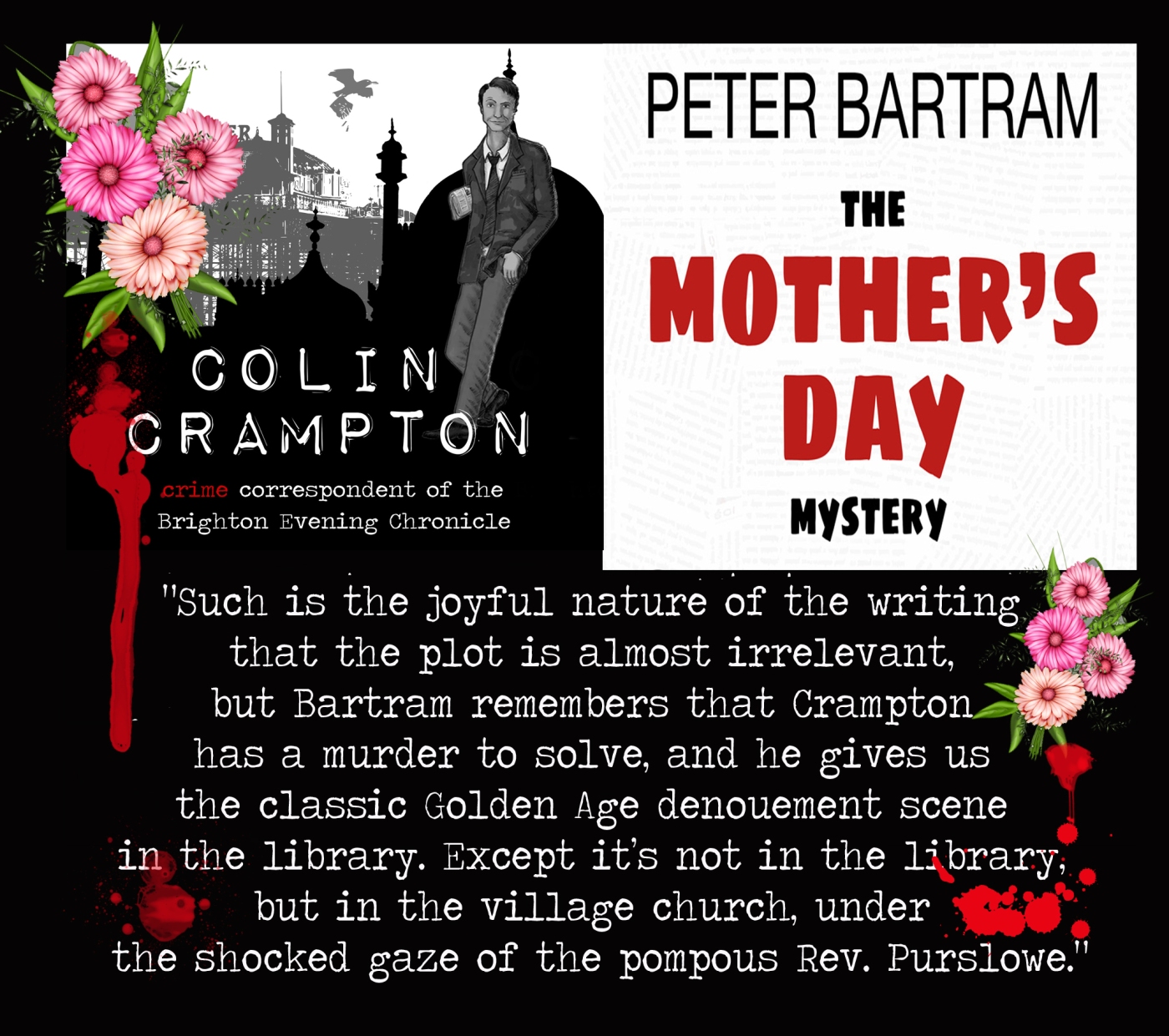
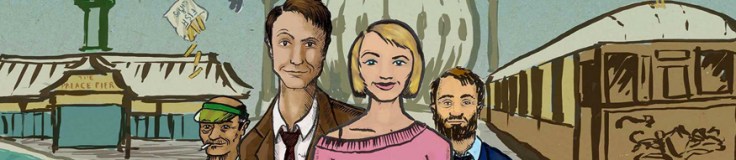
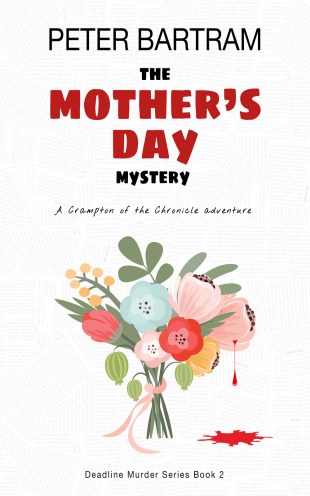 In The Mother’s Day Mystery, Crampton discovers the body of a schoolboy who has evidently been knocked off his bike and fatally injured. What on earth was Spencer Hooke doing away from his dormitory in Steyning Grammar School at the dead of night, cycling along a lonely and windswept clifftop road? In pursuing this conundrum, Crampton whisks us into a world of stage vicars, seedy pub landlords, archetypal leather-elbowed schoolmasters and impecunious toffs. There are jokes a-plenty, and Bartram indulges himself – and those of us who are, similarly, in the autumn of our years – with many a knowing cultural reference that might puzzle younger readers. He takes us into a wonderful sweet shop, the kind which can nowadays only be found in museum recreations:
 Anyone who is a student of English humour will soon see that Bartram is part of a long and distinguished tradition of comic writers who find meat and drink in the absurdities of English life and social structures. In the world of crime fiction, however, comedy does not always sit well with murder and bloodshed. The great and sadly under-appreciated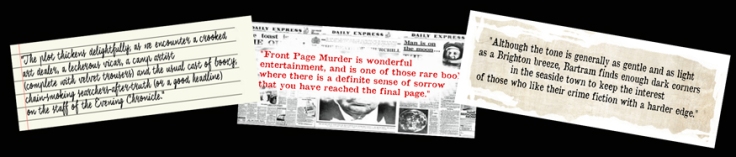
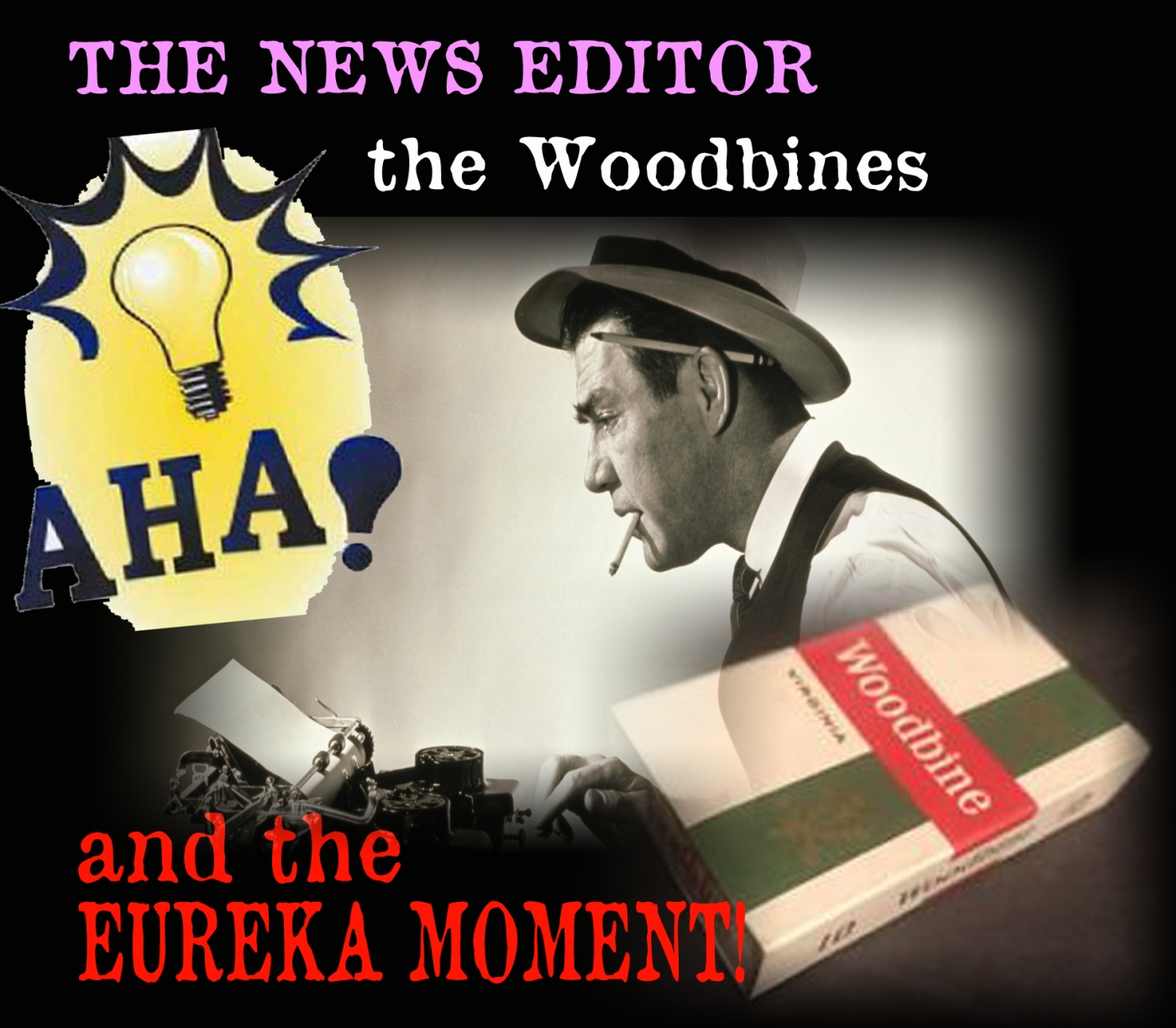
 Peter Bartram (left) is an old school journalist who has turned his life’s work into an engaging crime series set in 1960s Brighton, featuring the resourceful reporter on the local paper, Colin Crampton. Peter now reveals how he came to invent his alter ego. You can read reviews of three Crampton of The Chronicle novels by clicking the title links below.
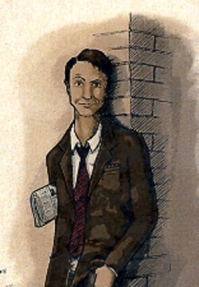 And that was when I remembered my first news editor. I never saw him without a Woodbine hanging off his lower lip. And so Frank Figgis, news editor of the Evening Chronicle, was born. Of course, there was still lots to think about – especially more regular characters. But with Colin (right) and Frank I felt I was on my way. Both of them have big roles to play – along with other regulars, especially Colin’s girlfriend Shirley Goldsmith – in the latest tale The Mother’s Day Mystery.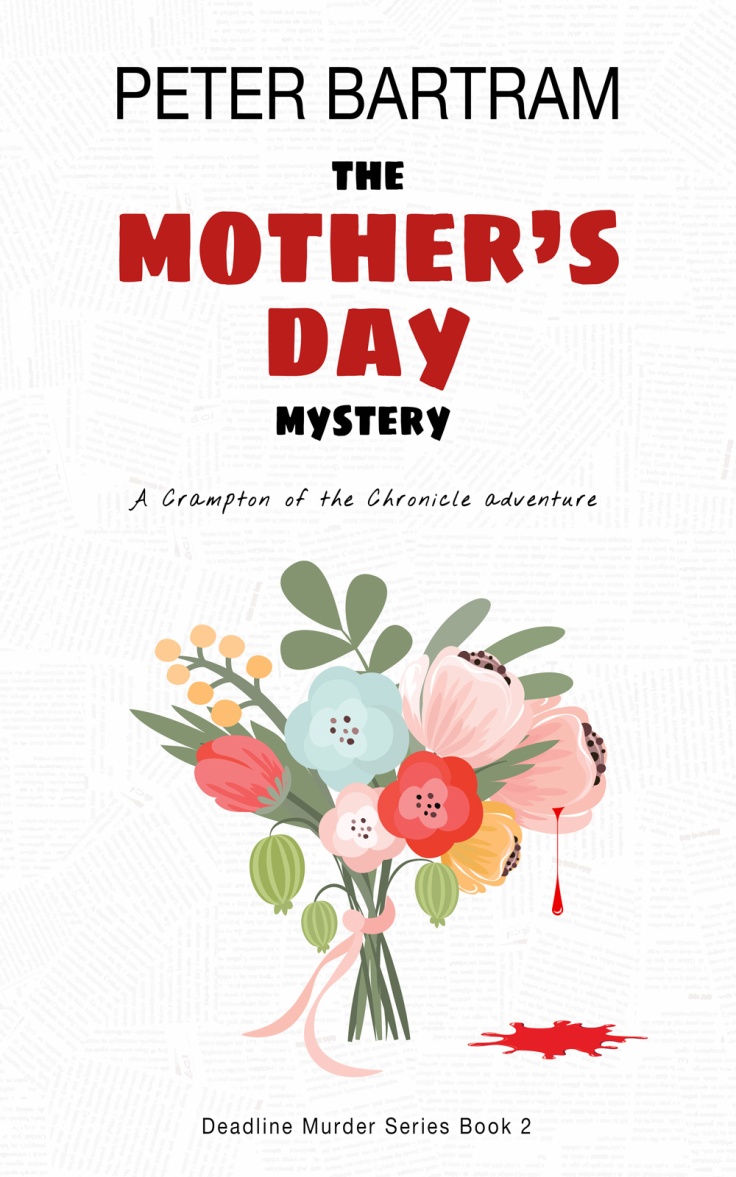


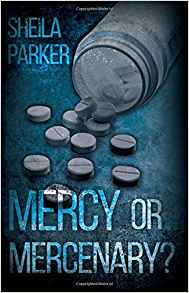 This very English mystery revolves around the death of a distinguished biographer, Ralph Maguire. Maguire is in the terminal throes of dementia, and in his moments of lucidity he is trying finish his book about a celebrated actor.