

 After I had read Death In Profile, and saw that it was billed as the first of an intended series, I did softly uttered something akin to “hmmmm…?”, quietly questioning if there was any room in the crowded contemporary crime fiction market for books which unashamedly borrowed tropes and mannerisms from books written seventy years ago. I have just finished A Death In The Night, the fourth in the series, and I am now a true believer, and devoted disciple. Guy Fraser-Sampson (left) has created a delightful repertory company of characters, and set them to work catching killers in the highly exclusive avenues and cul de sacs of London’s Hampstead.
Principally, we have a quartet of investigators. Chief Superintendent Simon Collison, Inspector Bob Metcalfe and Sergeant Karen Willis all work for the Metropolitan Police, while Dr Peter Collins is a psychologist and criminal profiler who acts as consultant to the Hampstead coppers. In the first three books, Metcalfe and Collins are jointly suitors of the radiant and ravishing Willis. This strange ménage à trois has now resolved itself, however; Collins has Willis to himself, and Metcalfe has a new object of his passion. (To read our review of an earlier book in the series, A Whiff of Cyanide, just click the link)

Naturally enough, this being a murder mystery, the examining pathologist discovers not only that Bowen was murdered by smothering, but she was also three months pregnant. Further investigations by Collison and colleagues uncover that Bowen was in a relationship – along with countless other bedazzled women – with a libidinous and charismatic QC, Simon Fuller. It seems that he and his wife have come to ‘an arrangement’. Mrs F has neither interest nor ability in the sexual side of marriage, so she is quite content to let Mr F seek his pleasures where he will, provided that he remains her husband, in a strictly social sense.

As Collison and Co. scrape away at the wall of lies and deflection which surrounds the truth about Bowen’s murder, they get the distinct feeling that as fast as they chip and chisel, someone else is busy repairing and replacing the brickwork. Of course, the killer is revealed in the end, but not before Fraser-Sampson puts his company through their paces. Collison is educated, urbane and thoroughly professional. Metcalfe is dogged, decent and determined. Willis belongs on the cover of Vogue, but is also blindingly intelligent, and a damn good copper. Collins? Well, he is an exercise in eccentricity. He is possessed of a mind which can think three or four steps ahead of less gifted people, but he does have his little moments. Such as when, in times of great stress, he imagines that he is Lord Peter Wimsey, and that Karen Willis is his Harriet Vane.
To borrow and adapt from Matthew chapter 7, verse 20, “Therefore by their tea-times ye shall know them..”, we are not surprised that Peter Collins serves up Earl Grey to accompany anchovy toast: we would expect nothing less of him. Without extending the metaphor too much beyond its breaking point, I can say that Fraser-Sampson’s writing is – just like Dr Peter’s four o’clock fare – elegantly presented, fragrant, but with a salty piquancy to add balance. I have become a great admirer of the Hampstead Murders series. They may be making a reverential nod in the direction of Christie, Sayers and Allingham et al, but they are beautifully written, cleverly plotted and, above all, superbly entertaining. After all, isn’t that why we open crime fiction books in the first place?
You can buy A Death In The Night here, but if you fancy a freebie, simply click on the image below, and that will take you to our competition page.

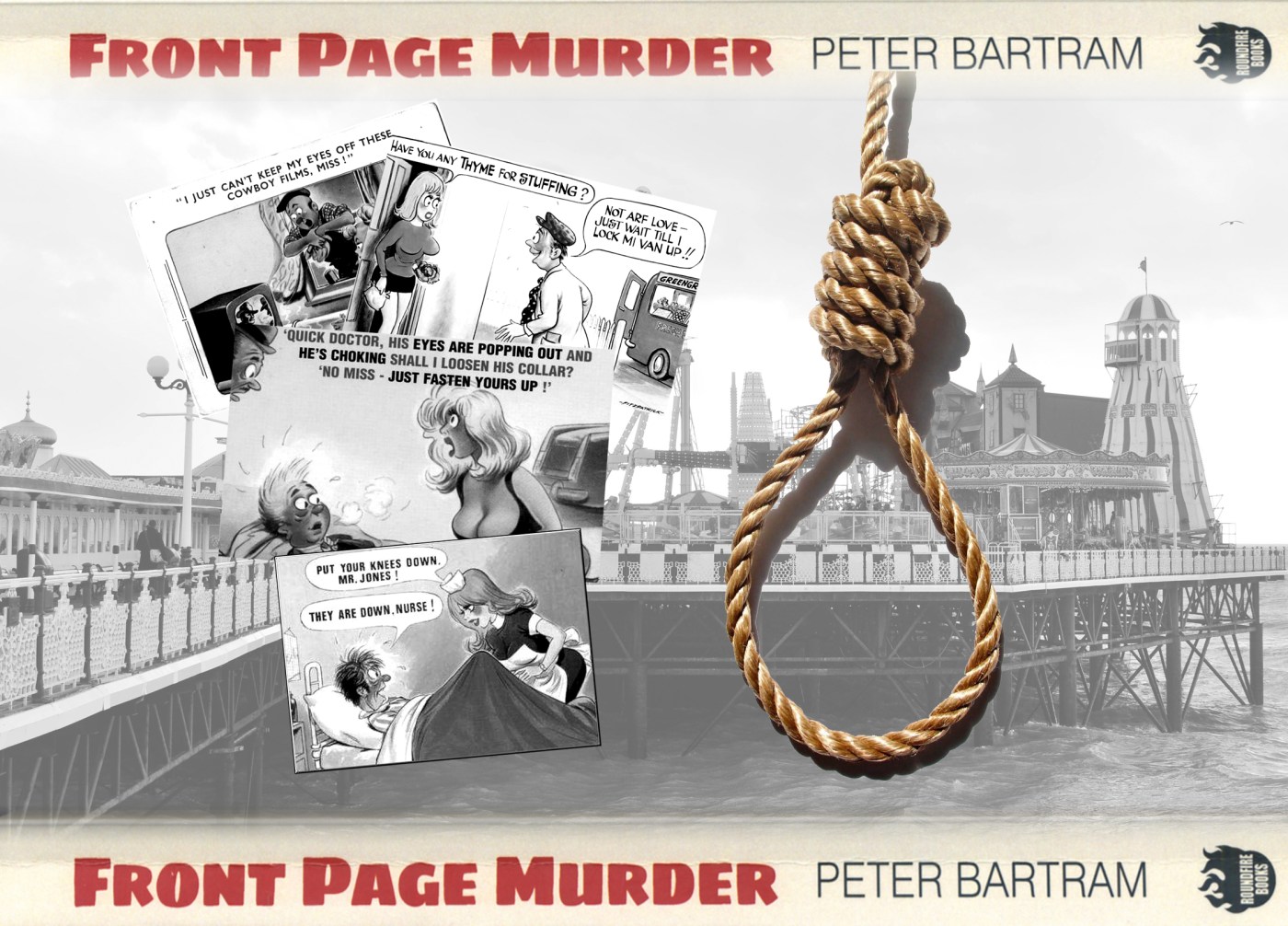

 In the latest novel from Peter Bartram (left) his alter ego Colin Crampton, a reporter for the Evening Chronicle in 1960s Brighton, faces his toughest challenge yet. Local artist Archie Flowerdew is due to be hanged on Christmas Eve unless Crampton and his intrepid Australian girlfriend Shirley can stop this affront to Christmas cheer by proving that Flowerdew did not murder a rival artist.
 Persuaded by the condemned man’s niece, Tammy, Crampton gets to work, and finds no shortage of other Brighton folk who would have clapped their hands in glee upon hearing of Despart’s demise. The plot thickens delightfully, as we encounter a crooked art dealer, a lecherous vicar, a camp artist (complete with velvet trousers) and the usual cast of boozy, chain-smoking searchers-after-truth (or a good headline) on the staff of the Evening Chronicle.
 Bartram introduces a fascinating contemporary note by featuring the Home Secretary at the time, Henry Brooke. He was appointed by Harold Macmillan after the Prime Minister’s infamous ‘Night of The Long Knives in 1962. Brooke (left) was to prove one of the least distinguished holders of the post, however, and he was pilloried without mercy by the BBC’s satirical show That Was The Week That Was. They dubbed the hapless Brooke ‘The most hated man in Britain’, and Bartram recalls their mocking phrase, “If you’re Home Secretary, you can get away with murder.”


 I have become a huge admirer of the writing of Chris Nickson (left) . He says on his website:
 You will be pushed to find better opening words to a novel even were you to search all year:


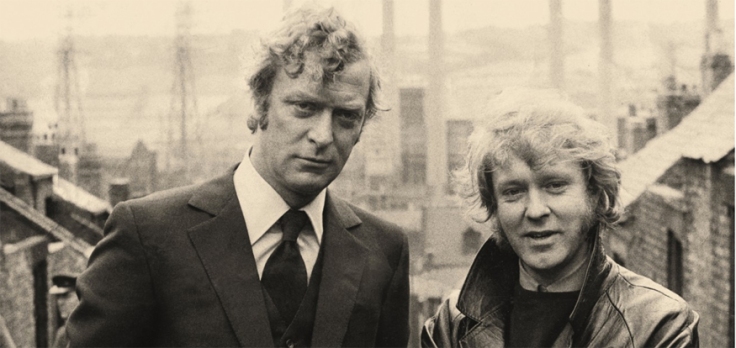
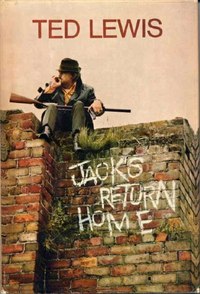 In 1965, All the Way Home and All the Night Through was published. It is a thinly disguised autobiographical novel, but Lewis’s breakthrough came in 1970 with the publication of Jack’s Return Home. The title was, bizarrely, taken from a spoof melodrama acted out by Tony Hancock, Hattie Jacques, Sid James and Bill Kerr as an episode of Hancock’s Half Hour. The novel, however, has few laughs. It describes the revenge mission of a London-based enforcer, Jack Carter, as he returns to his northern home town to investigate the death of his brother. The novel was adapted and filmed as Get Carter, and the rest, as they say, is history. Fame – and money – did not sit comfortably on Lewis’s shoulders, however. A mixture of drink and personal demons led to the break-up of his marriage, and a solitary return to Barton to live with his widowed mother. He died there, of heart failure connected to his ruinous drinking, in 1982.
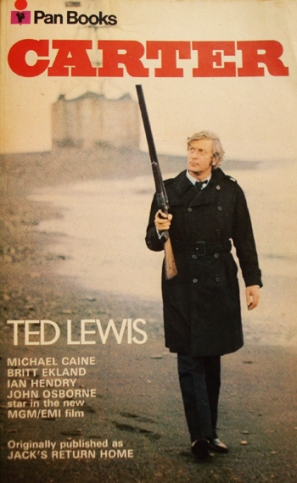 The centrepiece of Triplow’s book is, quite rightly, concerned with the novel itself, and its journey from a brutally honest and ground-breaking novel through to a partial re-imagining as one of the finest crime films ever made. Of Jack Carter, Triplow stresses that, despite the iconic image created by Michael Caine and director Mike Hodges
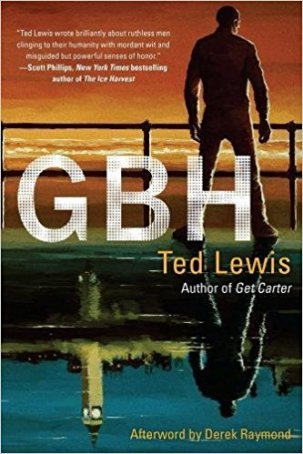 Aside from describing what must have been harrowing conversations with Lewis’s widow and children, Triplow employs both the depth and breadth of his knowledge of British crime fiction to convince us just how good Ted Lewis was. It is intriguing that Triplow, supported by no less an authority than the magisterial Derek Raymond, makes a fascinating case for GBH being the apotheosis of Lewis’s talent, despite the groundbreaking style and success of Jack’s Return Home. Getting Carter is a sober and sombre account of the life of a man whose talent both defined and destroyed him, and Triplow makes no attempt to sanitise his subject. Lewis was clearly a man of huge personal charm when not in the grip of drink, but from the early days of illegally bought pints of beer in the 1950s through to the grim years of decline and death, alcohol had him firmly by the throat.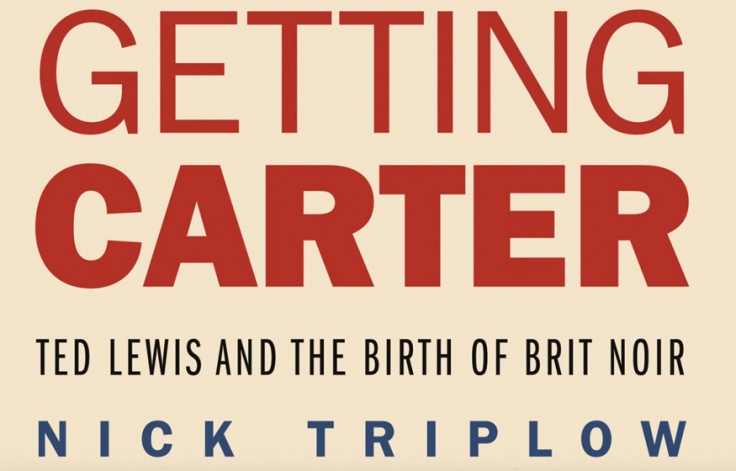
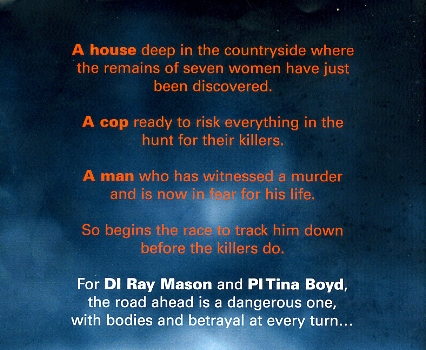

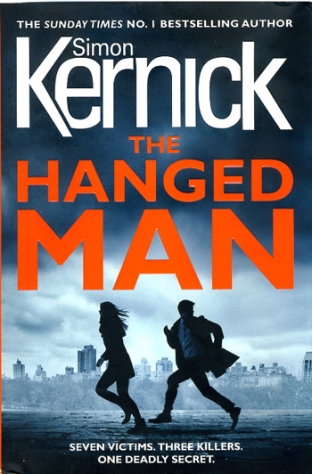 In The Bone Field, Mason tried – and failed – to bring the gang down. The bloody conclusion to the confrontation at a remote Welsh farm haunts him. His bitterness and sense of a score still not settled drive him on, but he is now working under the mandate of the National Crime Agency – and they play by the rules. The fire and desire for retribution burning in Mason’s soul will force him to abide by those rules only as far as they suit him. His personal background – a childhood shaped by violence and cruelty – has endowed him with a sense of what is right and what is wrong which diverges dramatically from the code followed by his boss, Sheryl Trinder.
 Mason has a girl-friend. Tina Boyd is a former copper herself, but fate has forced her to ‘go private’ and she is now a successful and well-known enquiry agent. As she tries to unravel the complex tangle of relationships and loyalties which bind together the various members of Kalaman’s gang, she puts herself in harm’s way. She is smart and has a nose for danger, but does she have the killer gene which will enable her to tackle Mr Bone on his own terms?


 Alex Cross is in trouble. Big trouble. He is the victim of a beyond-the-grave revenge attack from his very first opponent, Gary Soneji. Gary is long dead, blown up by his own bomb in a subway. It is not beyond Patterson’s audacity to resurrect someone, but in this case it is supporters of the late Mr Soneji who are responsible for Cross being accused of homicide. He is lured to a warehouse where members of the Soneji cult are waiting for him. In the fire fight that follows, members of the cult are killed and wounded, but when Cross summonses emergency backup, no weapons other than Cross’s own can be found. The words happy, trigger and cop are immediately rearranged into a well-known phrase or saying by the sensation-hungry media.
 Hand on heart, I have to admit to really enjoying this book. Patterson (right) hasn’t achieved his world-wide pre-eminence as a best selling writer by not being able to tell a story. The action comes thick and fast and in this book at least, the portrayal of Cross disproves the old adage about familiarity breeding contempt. Yes, Nana Mama is still there, serving up delicious meals for all and sundry and being annoyingly stoical in the face of her grandson’s adversity. Yes, Cross’s annoyingly geeky nine year-old son spots something that a top FBI data analyst has missed, but at least our man’s current love interest seems to be a good sort.
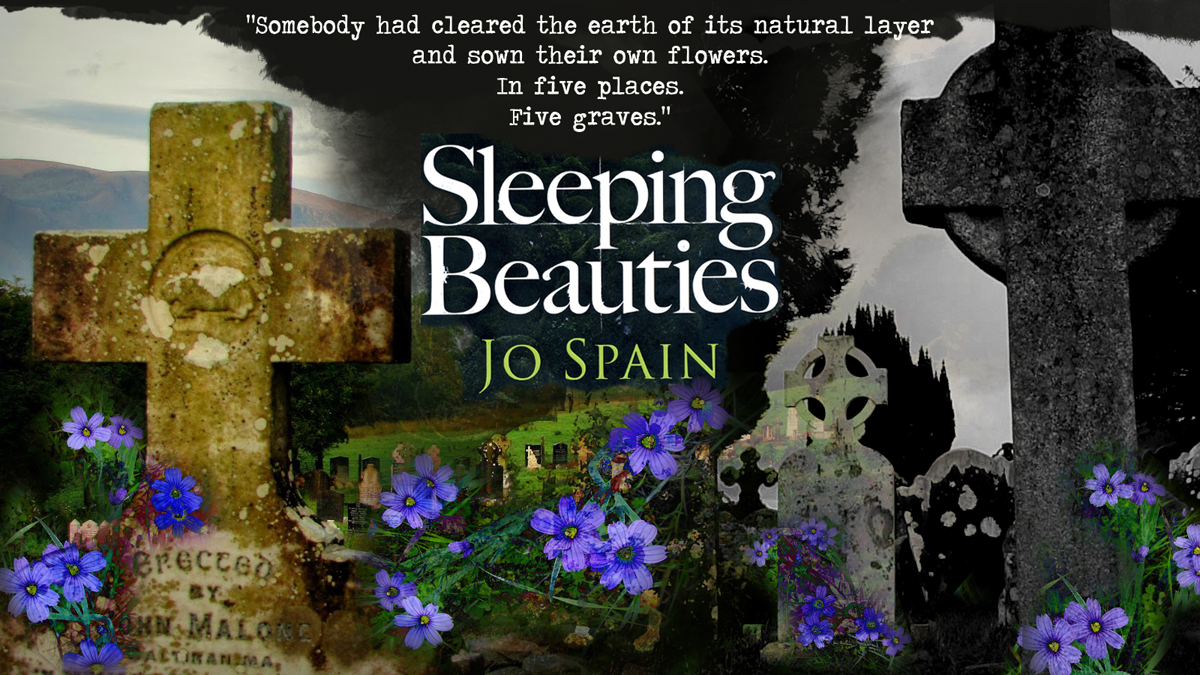

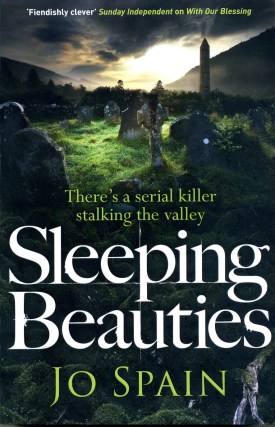 In the beautiful valley of Glendalough there are ancient stones, shades and spirits of the holy men who prayed in the monastery – and in the cemetery, lichen-covered headstones of generations of Byrnes, Cullens, Farrells, Nolans, Waldrons – all, both monks and villagers, at peace now. But the body of a young woman has been found. Interred without sacrament, beyond the gaze of those who would mourn her. In a shallow grave on a hillside, wearing the clothes she disappeared in. It is all that remains of Una Dolan, a twenty four year-old lass from Waterford. Last seen April 29th, 2011.
 Jo Spain writes like an angel. No fuss. No bother. No pretension. The narrative flows as smoothly as a glass of Old Bushmills slips down the appreciative throat, and she has us looking this way and that as we stand beside Tom Reynolds as he searches for the killer. This is, on one level, a police procedural, but Jo Spain doesn’t let methodology bog the story down. We know that she knows how the police operate, and that is more than enough. Her rural Ireland is beautifully described without unnecessary frills and furbelows, and she gives us as perceptive a story of the heights and depths of human behaviour as you will read all year. If you have come a little late to the Tom Reynolds party, the first episode of his career is
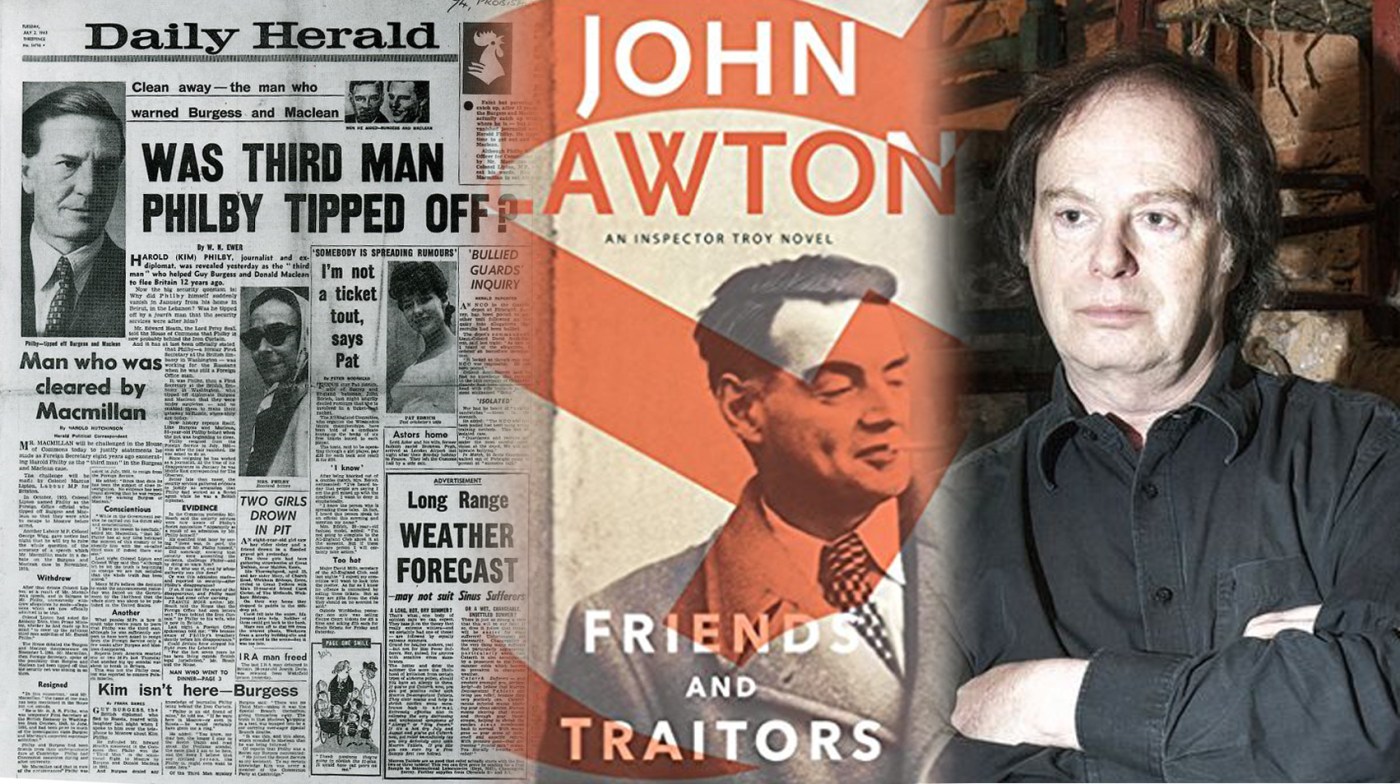

 Friends and Traitors focuses mostly on the 1951 defection – and its aftermath – of intelligence officer Guy Burgess, to the Soviet Union. A huge embarrassment to the British government at the time, it was also about personalities, Britain’s place in the New World Order – and its attitudes to homosexuality. Burgess’s usefulness to the Soviets was largely symbolic, but the crux of the story is the events surrounding Burgess’s regrets, and heartfelt wish to come home. Troy interviews him in a Vienna hotel.
 Lawton (right) was born in 1949, so would have only the vaguest memories of growing up in an austere and fragile post-war Britain, but he is a master of describing the contradictions and social stresses of the middle years of the century. Here, he describes Westcott, a notoriously persistent MI5 interrogator, sent to quiz Troy on the events in Vienna:
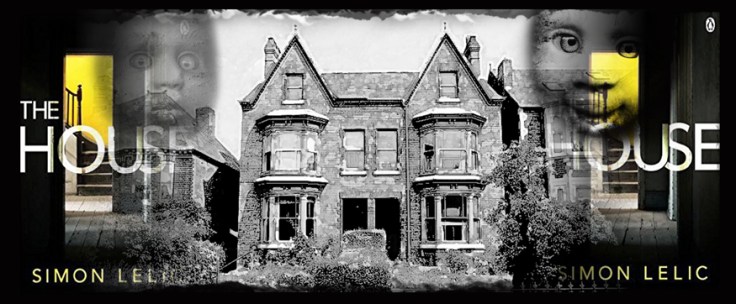
 There is, however, that strange smell. A certain je ne sais quoi which will not go away, despite the couple’s best efforts. When Jack finally plucks up the courage to climb up into the roof space, he finds the physical source of the smell but unpleasant as that is, he also finds something which is much more disturbing. Simon Lelic (right) then has us walking on pins and needles as he unwraps a plot which involves obsession, child abuse, psychological torture and plain old-fashioned violence.


 fullybooked2017