
Occasionally I review a novel which lies outside the crime fiction genre, but within my own field of interest. Such a book is The Photographer of The Lost by Caroline Scott. It is centred on the events of 1914-18 but, more particularly, their aftermath. Picture a Britain where over 800,000 fathers, brothers, husbands and sons have been killed. The vast majority of those – if they have a known grave – are buried far from home. Sometimes the only things relatives have left are the initial fatal letter from the authorities, a mass-produced scroll of honour ‘signed’ by the King on behalf of a grateful nation and probably a Death Penny – a large copper disc bearing a picture of Britannia and inscribed with the name of the deceased.

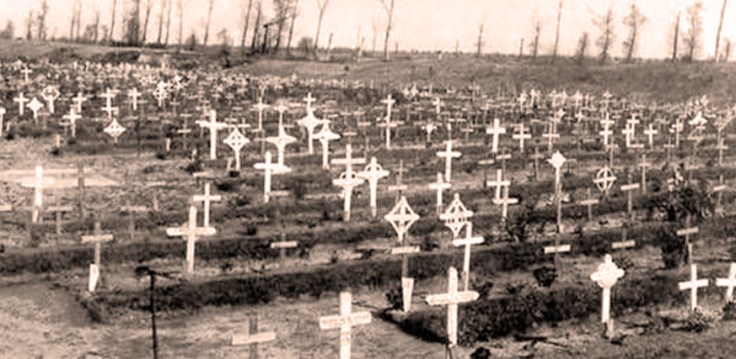
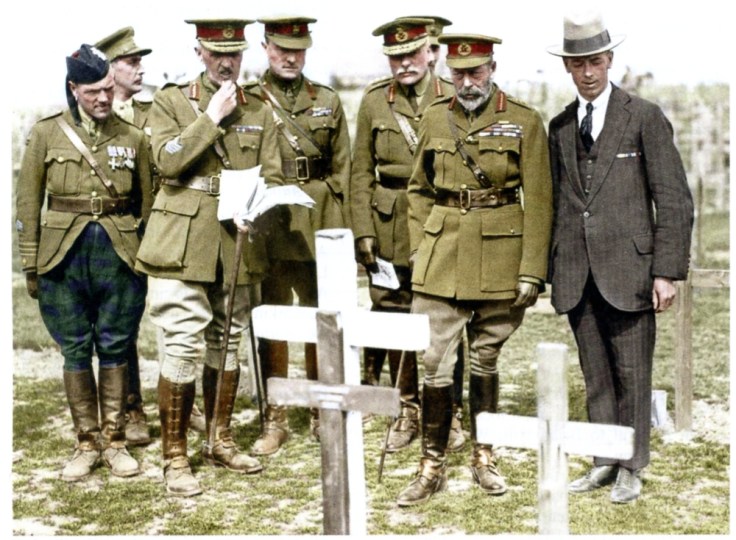
 It is 1921. In Britain, dignified war memorials, paid for by public subscription, are beginning to be dedicated. In France and Belgium most cities and towns within artillery range of the Old Front Line stand in ruins, while villages are usually reduced to random piles of shattered bricks. The dead are everywhere. In places where the living have yet to re-establish themselves there are crosses. Thousands upon thousands of simple wooden crosses, distinguished one from the other with a basic aluminium strip, letters stamped on it and pinned to the wood. A former officer, now a worker for what would become the Commonwealth War Graves Commission explains his mission:
“There are going to be cemeteries with white grave markers – gardens of sleep – real English gardens. There will be wallflowers and forget-me-nots and pansies and bible words cut in stone. They’ll be places that their families can visit and hopefully find some comfort. I was meant to bring their boys home; this is the best alternative that I’m able to offer.”
 arry Blythe makes his living meeting a macabre but necessary demand. He travels the shattered countryside, on commission from relatives, taking photographs of the crosses, or the places of which dead men spoke in their letters home. There were three Blythe brothers, Will, Harry and Francis. Only Harry has survived the conflict. As in other silent houses across the country, mothers did what mothers always do – adjust and try to get on with things:
“In the weeks after Will’s death, Margaret Blythe had cleaned out his room, boxing up her son’s books, birds’ eggs and football boots ….. everything of Will had moved up into the attic.”
The story hinges on Harry and Francis’s widow Edie. Edie has received an envelope in which is photograph of Francis. No words. No explanation. No sender. The postmark is smudged beyond interpretation. She and Harry have, in the years since Francis was reported missing in action, exhausted themselves interrogating an overwhelmed bureaucracy in a vain attempt to locate a grave.

“Most of the burials here have no names, he sees. These men have all been swallowed up by the earth, their identities gone, along with their futures. Thy have lost their bones, their blood, and the name that bound it all together and made them into that particular man.”
Harry and Edie travel to The Old Front Line independently, but their paths converge. There is a painful frisson running through the narrative because Harry is – and probably always was – deeply in love with Edie, and in one of their last conversations, fuelled by whisky and within the sound of the guns, Francis bitterly confronts his brother with the prospect of Edie being a fraternal legacy after his own death.
 y 1921, pilgrimages to The Old Front Line have become big business. Visitors are everywhere, armed with commercially printed guide books; some search for graves, others visit their old haunts. Caroline Scott lets us shadow Harry and Edie on their heartbreaking journey from the Houthulst Forest and Ypres in the north, via Arras and down further south to the point where the French manned the front line trenches of a line that ran from the Belgian coast to Switzerland.
Ironically, the answer to the mystery of Francis and the anonymous letter is revealed not on Flanders Fields but far away in the dusty south, in a sun kissed village physically untouched by the carnage, but with a brand new memorial to its missing sons waiting to be unveiled.
 ilfred Owen wrote, concerning his work, “The Poetry is in the pity.” Caroline Scott echoes this message. Such was the disconnect between life in the trenches and home that, for many men, returning on leave was not the joyous temporary reprieve from hell that we might imagine:
“How could she admit to anyone how difficult she had found it to be with him? That she didn’t know how to speak to him? That she felt some relief when the week ended and he went back? How can she tell anyone how she opened all the windows after he went, and scrubbed the floors, and boiled the bed sheets?”
The power and poignancy of this novel will cause it to be spoken of alongside such classics as Covenant With Death, the Regeneration Trilogy and Birdsong. It is available now, and published by Simon & Schuster.


 Atlee Pine has anger management issues, and A Minute To Midnight begins as she is put on gardening leave for kicking the you-know-what out of a child rapist. She decides to use this enforced leisure time in another attempt to find out what happened on the fateful night when her sister was abducted and she was left with a fractured skull. Accompanied by her admin assistant Carol Blum, she revisits the scene of the trauma, the modest town of Andersonville, Georgia. Tumbleweed is the word that first comes to mind about Andersonville, but it scrapes a living from tourists wishing to visit the remains of the Confederate prisoner of war camp which, in its mere fourteen months of existence, caged over thirty thousand Union prisoners of whom nearly thirteen thousand were to perish from wounds, disease and malnutrition.
 A series of apparently motiveless murders in Andersonville diverts Pine from the search for her own personal truth, and she is soon enlisted to help the understaffed and under-resourced local cops. The first murder victims – a man and a woman – are killed elsewhere but then delivered to Andersonville bedecked as bride and groom respectively. When it turns out that they were both involved in the porn industry, what first appears to be a significant lead runs into a brick wall.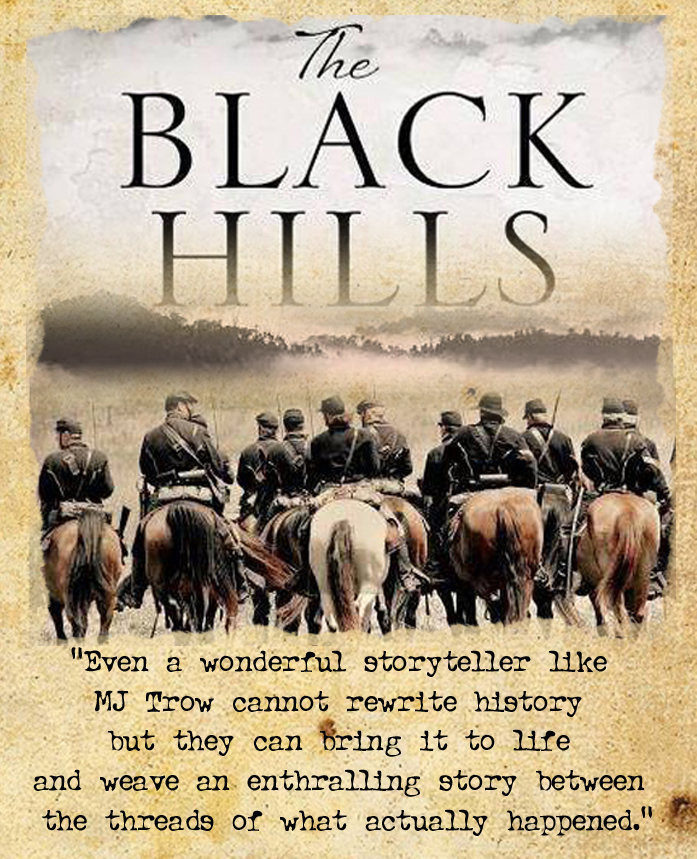
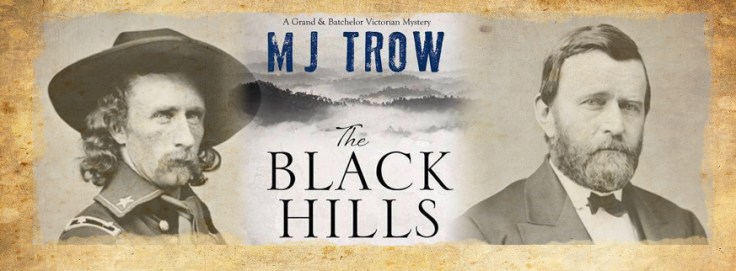
 One of the enjoyable conceits of the series is the comparison of how the two men behave when out of their cultural comfort zone. Grand is no gnarled backwoodsman, as his parents are wealthy New Hampshire patricians, but there is generally more fun to be had when Batchelor is trying to navigate the social niceties – or lack of them – in America. Trow, like MacDonald Fraser and Kerr, is a shameless name-dropper and we are not many pages into The Black Hills before we have bumped into George Armstrong Custer and broken into The White House to have a conversation with its current occupant, Ulysses Simpson Grant.
 I readily put my hand up. When I read the words The Black Hills, the first image that flashed before my eyes was that of Doris Day in her buckskins and with her blonde bob under a troopers’ hat. Yes, my age is showing, but the 1953 film Calamity Jane starring Doris Day in the title role featured great songs like The Deadwood Stage, Secret Love and The Black Hills of Dakota. Trow is pretty much of my generation. He was a couple of years behind me at a minor public school (but don’t hold that against either of us). Never one to miss a trick, he features Calamity Jane in The Black Hills but, my oh my, Doris Day she ain’t. Short, pug-ugly and a stranger to personal hygiene, Jane Cannery is a fixture at Fort Abraham Lincoln. She is rarely sober and earns her living by washing the long johns of the Seventh Cavalry men who guard the frontier. She is notoriously quick on the draw with her Navy Colt, and the soldiers take care to give her a wide berth when she is in one of her moods.


 or newcomers to the sublime world of Arthur Bryant and John May, the new collection of short stories written by their biographer, Christopher Fowler, contains a handy pull-out-and-keep guide to the personnel doings of London’s Peculiar Crimes Unit. OK, I lie – don’t try and pull it out because it will wreck a beautiful book, but the other bits are true.
 Leaving aside the pen pictures, introductions and postscripts, there are twelve stories. They are, for the most part, enjoyably formulaic in a Sherlockian way in that something inexplicable happens, May furrows his brow and Arthur comes up with a dazzling solution. Think of a dozen elegant variations of The Red Headed League, but with one or two being much darker in tone. Bryant & May and the Antichrist, for example, is a sombre tale of an elderly woman driven to suicide by the greed of a religious charlatan, while Bryant & May and the Invisible Woman reflects on the devastating effects of clinical depression. The stories are, of course set in London, apart from the delightfully improbable one where Arthur and John solve a murder within the blood-soaked walls of Bran Castle, once the des-res of Vlad Dracul III. Bryant & May and the Consul’s Son revisits Fowler’s fascination with the lost rivers of London, while Janice Longbright and the Best of Friends lets the redoubtable Ms L take centre stage.
 he gags are as good as ever. While investigating a crime in a tattoo parlour, Arthur is mistaken for a customer and asked if he has a design in mind:
 don’t know Christopher Fowler personally, but I infer from his social media presence that he is a thoroughly modern and cosmopolitan chap and, with his spending his time between homes in Barcelona and King’s Cross, he could never be described as a Little Englander. How wonderful, then, that he is the most quintessentially English writer of our time. His Bryant & May stories draw in magical threads from English culture. There is the humour, which recalls George and Weedon Grossmith, WS Gilbert, and the various ‘Beachcombers’ down the years, particularly DB Wyndham Lewis and JB Morton. Fowler’s eagle eye for the evocative power of mundane domestic ephemera mirrors that of John Betjeman, while his fascination with the magnetic pull of the layers of history beneath London’s streets channels Peter Ackroyd and Iain Sinclair.


 Alyssa Wyatt is pretty much your showcase American Mom. Not Middle American geographically, as she lives in New Mexico, but she ticks most of the other boxes; handsome successful husband, two teenage kids, nice house and a fulfilling career – as a cop. Like so many fictional law enforcement types, she has a dark past centred in childhood trauma, but what is done is done, and she lives for Holly, Isaac and husband Brock.
 harly Cox reveals to us the identity of the bad guy fairly early in the piece. Or, rather, she doesn’t. Over enigmatic? Quite probably, but to say more would ruin the fun. Alyssa and Cord chase their tails with more determination than success, while the sadist at the centre of the mayhem plans his next atrocity.
 on’t be misled, however, into thinking that All His Pretty Girls is Chick Lit. Yes, a female is the central character, but there’s no shortage of graphic violence and enough of the ‘mean streets’ to satisfy fans of hard-boiled crime.


 immy Mullen has been round the block. In the Falklands War his ship takes a direct hit from an Argentine fighter bomber and he watches his mates consumed by the ensuing fireball. Back home recuperating, with a pittance of a pension, he stacks supermarket shelves, battles with his nightmares and presides over the slow erosion of his marriage as drink becomes his only solace. Walking home one night from the boozer, he intervenes to prevent a girl being slapped around by her boyfriend. All very gallant, but the result is the boyfriend (an off-duty copper) lying insensible on the pavement in an expanding pool of blood.
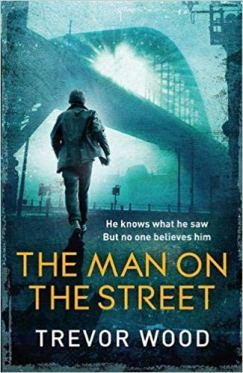 After the inevitable prison sentence Jimmy is now out on early release, but homeless, his ex-wife now remarried, and his daughter a complete stranger to him. Home is anywhere he can kip out of the rain. His social circle? A few fellow vagrants, raddled by drink, mental instability, drugs – or a toxic combination of all three. Their home-from-home is a charity called The Pit Stop where volunteers provide, food, showers and clothing.
 ome time later Jimmy sees a newspaper article featuring a young woman appealing for news about her missing father. The picture she is holding is of a man Jimmy thinks he recognises. It is the smaller man from the argumentative pair who disturbed his sleep a few weeks since. Or is it? With the help of a couple of his more social-media-savvy pals from The Pit Stop, Jimmy contacts the woman – Carrie Carpenter – and they are drawn into a mystery involving police (both complacent and corrupt), environmental activists, crooked businessmen and – as we learn near the end of the book – grim sexual deviancy.
 uthor Trevor Wood (right) has lived in Newcastle for 25 years and considers himself an adopted Geordie, though he says that he still can’t speak the language. Despite this, his phonetic version of the unique Geordie accent is good. Normally, I shy away from books where writers try too hard to convey accents in dialogue, but I think Trevor Wood does rather well here. Perhaps this is a result of my addiction to my box set of When The Boat Comes In.


 nora Andresson is a distinguished English actress. Perhaps slightly past her youthful allure, she remains a beauty who can pick and choose her projects, and her films are highly thought of. She has three problems clouding her horizon. The first is, as they say, a bastard. She has a brain tumour. It has been treated but she is only too aware that she may have won a battle, but not the war. Problems two and three are related – literally. She is separated from her Swedish husband, but they have a son – a young man called Malo – who is something of a wrong ‘un. The third problem relates to the words “they have a son”. Fact is, she does – her husband doesn’t. Malo’s father is actually a millionaire businessman named Hayden Prentice, and Malo was conceived during a drunken one-nighter just before Enora’s wedding. So why is Harold a problem? Although he is now an honest man, with legitimate investments and business interests, he made his initial fortune as a drug baron.
 he main plot of Sight Unseen hinges around the kidnapping of Malo’s Colombian girlfriend Clemmie. When a ransom demand of a million dollars is received her father, who, like many rich men from that benighted republic, has kidnap insurance, simply hands the case over to the experts. H, however, has other ideas, and decides to do things his way.
 Hayden Prentice is a brilliant creation and is, in many ways, at the centre of the book, as he was when we first met Enora in

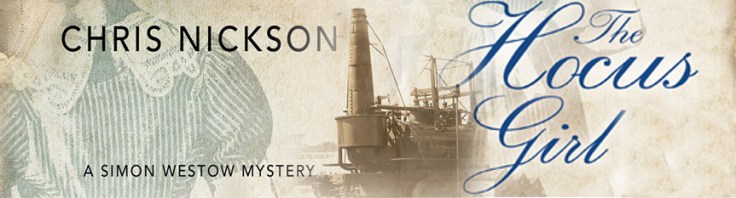
 t was not until the middle of the nineteenth century that Britain had anything like an organised police force. The Hocus Girl is set well before that time, and even a developing community like Leeds relied largely on local Constables and The Watch – both institutions being badly paid, unsupported and mostly staffed by elderly individuals who would dodder a mile to avoid any form of trouble or confrontation. There were, however, men known as Thieftakers. The title is self-explanatory. They were men who knew how to handle themselves. They were employed privately, and were outside of the rudimentary criminal justice system.
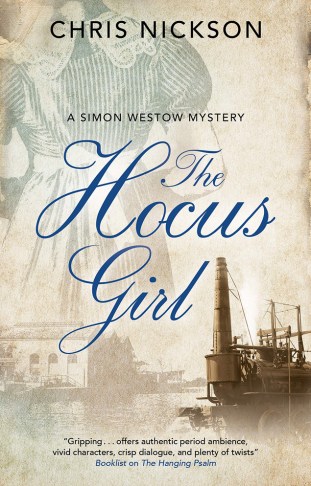 Such a man is Simon Westow. He is paid, cash in hand, to recover stolen goods, by whatever means necessary. His home town of Leeds is changing at an alarming rate as mechanised cloth mills replace the cottage weavers, and send smoke belching into the sky and chemicals into the rivers. We first met Westow in The Hanging Psalm, and there we were also introduced to young woman called Jane. She is a reject, a loner, and she is also prone to what we now call self-harm. She is a girl of the streets, but not in a sexual way; she knows every nook, cranny, and ginnel of the city; as she shrugs herself into her shawl, she can become invisible and anonymous. Her sixth sense for recognising danger and her capacity for violence – usually via a wickedly honed knife – makes her an invaluable ally to Westow. I have spent many enjoyable hours reading the author’s books, and it is my view that Jane is the darkest and most complex character he has created. In many ways The Hocus Girl is all about her.
 he 1820s were a time of great domestic upheaval in Britain. The industrial revolution was in its infancy but was already turning society on its head. The establishment was wary of challenge, and when Davey Ashton, a Leeds man with revolutionary ideas is arrested, Simon Westow – a long time friend – comes to his aid. As Ashton languishes in the filthy cell beneath Leeds Moot Hall, Westow discovers that he is treading new ground – political conspiracy and the work of an agent provocateur.


 very so often a book comes along that is so beautifully written and so haunting that a reviewer has to dig deep to even begin to do it justice. Shamus Dust by Janet Roger is one such. The author seems, as they say, to have come from nowhere. No previous books. No hobnobbing on social media. So who is Janet Roger? On her website she says:
 o, what exactly is Shamus Dust? Tribute? Homage? Pastiche? ‘Nod in the direction of..’? ‘Strongly influenced by ..’? Pick your own description, but I know that if I were listening to this as an audio book, narrated in a smoky, world-weary American accent, I could be listening to the master himself. The phrase ‘Often imitated, never bettered’ is an advertising cliché and, of course, Janet Roger doesn’t better Chandler, but she runs him pretty damn close with a taut and poetic style that never fails to shimmer on the page.


 fullybooked2017