

 Lost Souls is something of an oddity, and no mistake. There’s nothing at all wrong with the novel itself apart from something of an identity crisis. Search for it on Amazon UK, and up it comes, but the page URL contains the title Half Moon Bay. Search for Half Moon Bay and up comes the same novel, but with a different cover. It looks as though Half Moon Bay is the Penguin Random House American title, while on this side of the Atlantic Century are going with Lost Souls.
Deputy US Coroner Clay Edison first appeared in Crime Scene (2017). That was followed by A Measure of Darkness in 2018, and now Edison returns but this time with baby Charlotte to look after when his wife is out on shift in her hospital. The Edisons live in that eternal bastion of West Coast sensibilities, Berkeley, and it is in the infamous People’s Park that the case begins.

Clay Edison is called to the park, scene of decades of hippy protest. Two bodies have been found during building excavation. The first is neither human nor animal. It is a stuffed blue teddy bear, missing an eye. The second is the skeleton of a baby, and the glare of the pathologist’s strip lights reveal that it was once a little boy. Edison is drawn into an investigation to see if the teddy bear and the boy are connected, and this means he has to visit a truly terrifying settlement of biker red-necks:
“I bounced along the tracks, wheels spitting gravel. Slowly the smudge began to resolve like a body surfacing in swamp water. Structures, then vehicles, then living things: gaunt dogs and children chasing one another, their roles as hunter or prey in constant flux. Bare feet raised a dusty haze. ….. Amid a weedy patch a woman slouched in a lawn chair. Pustulant acne ravaged her face; she could have been eighteen or forty. A slack-limbed toddler slept on her chest.”
 As Edison tries to link the skeleton of the baby with the abandoned cuddly toy, he accepts an ‘off-the-books’ job. A wealthy businessman, Peter Franchette, asks him to try to find the truth about his missing sister. Possibly abducted, perhaps murdered, she has disappeared into a complexity of disfunctional family events – deaths, walkouts, divorces, remarriages and rejections.
The Kellermans clearly have an ambivalent view of Berkeley. A place perhaps, where a seventy-something former revolutionary might wake up and imagine, for a fleeting moment, before old age and reality kick in, that it is 1966, and everything is still possible. The reality is more sobering, however:
” … and the countless others, men and women alike, who’d found their way to the Pacific, only to find that it was not the golden bath they’d expected but a terrifying force of nature, immense and violent and indifferent.”
I’ll be blunt and say that I have never understood the concept of writing partnerships in fiction. Over many years I enjoyed Jonathan Kellerman’s Alex Delaware books. They are slick and formulaic, but never less than gripping, and it is obvious that Kellerman is a gifted writer. Why he should want to want to pair up with someone else – even if it is his son – is for him to know and me to be left wondering. Lost Souls reads as if it has been written by one person, so I suppose that is all that matters.
Lost Souls is cleverly written and has a plot which is, like Chandler’s immortal The Big Sleep, deeply complex. Rather like the anecdote which has Chandler being asked who killed the chauffeur, and him replying that he wasn’t sure, I couldn’t put my hand on my heart and say that Edison finds Peter Franchette’s missing sister. I think he does, but you must judge for yourselves.
Lost Souls and/or Half Moon Bay are out now, and available here.





 Fictional police officers come in an almost infinite number of guises. They can be lowly of rank, like Tony Parsons’ Detective Constable Max Wolfe, or very senior, such as Detective Superintendent William Lorimer, as imagined by Alex Gray. Male, female, tech-savvy, Luddite, happy family folk or embittered loners – there are plenty to choose from. So where does Peter Lovesey’s Peter Diamond fit into the matrix? As a Detective Superintendent, he pretty much only answers to the Assistant Chief Constable, but for newcomers to the well established series, what sort of a figure does he cut? Lovesey lets us know fairly early in The Finisher, the nineteenth in a series that began in 1991 with The Last Detective. Diamond is on plain clothes duty keeping a wary eye on a half marathon race in the historic city of Bath:
 There’s a dazzling array of characters to act out the drama. We have an earnest school teacher who forces herself to run the race in order to make good a lost donation to a charity; there is a statuesque Russian, wife of a cynical businessman, determined to lose weight and gain her husband’s respect; instant villainy is provided by a paroled serial seducer and sex-pest who has taken on a new role as personal trainer to the rich; at the bottom of the pond, so to speak, are a pair of feckless Albanian chancers who have escaped from an illegal work gang, and are trying to avoid the retribution of their controllers.


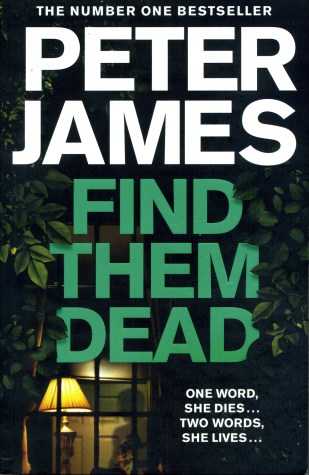 Strangely though, Find Them Dead sees Roy Grace rather in the background. He binds the narrative together by his presence, of course he does, but he mostly takes a back seat in this tale of drug dealers, bent lawyers and jury-nobbling. He has returned to Sussex after a spell working with the Metropolitan Police in London. The sheer depth and depravity of London’s crime has been an eye-opener, but the south coast is not without its villains.

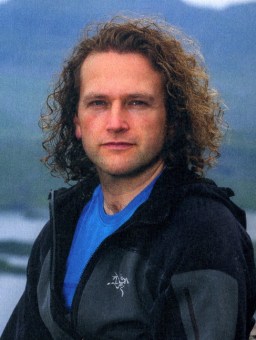

 This is a very different Rob Parker (left) from the previous novels of his that have come my way.

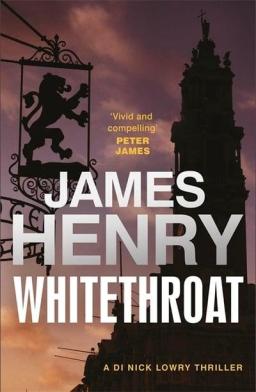 Essex has become something of a trigger word in recent years, conjuring up images such as lavish mansions owned by London gangsters and dumb bottle-blondes with their perma-tanned, medallioned boyfriends. James Henry, however, takes us back forty years to the 1980s. DI Nick Lowry and his boss, Chief Superintendent Sparks, inhabit a police HQ which leaks, has rotten floorboards, and is maybe only months away from the demolishers’ wrecking ball. Sparks contemplates his desk:
 The plot is the least important part of this fine novel, but it unfolds gradually. The woman whose favours are being fought over by the duellists is not a woman at all, but a fifteen year-old schoolgirl, the daughter of a local businessman. He, in turn, has unfinished business with a local enrepreneur, and business that dates back to a racial attack three decades earlier. We are in a world of simmering resentment born out of old slights, and the result? The proverbial dish that is best served cold.


