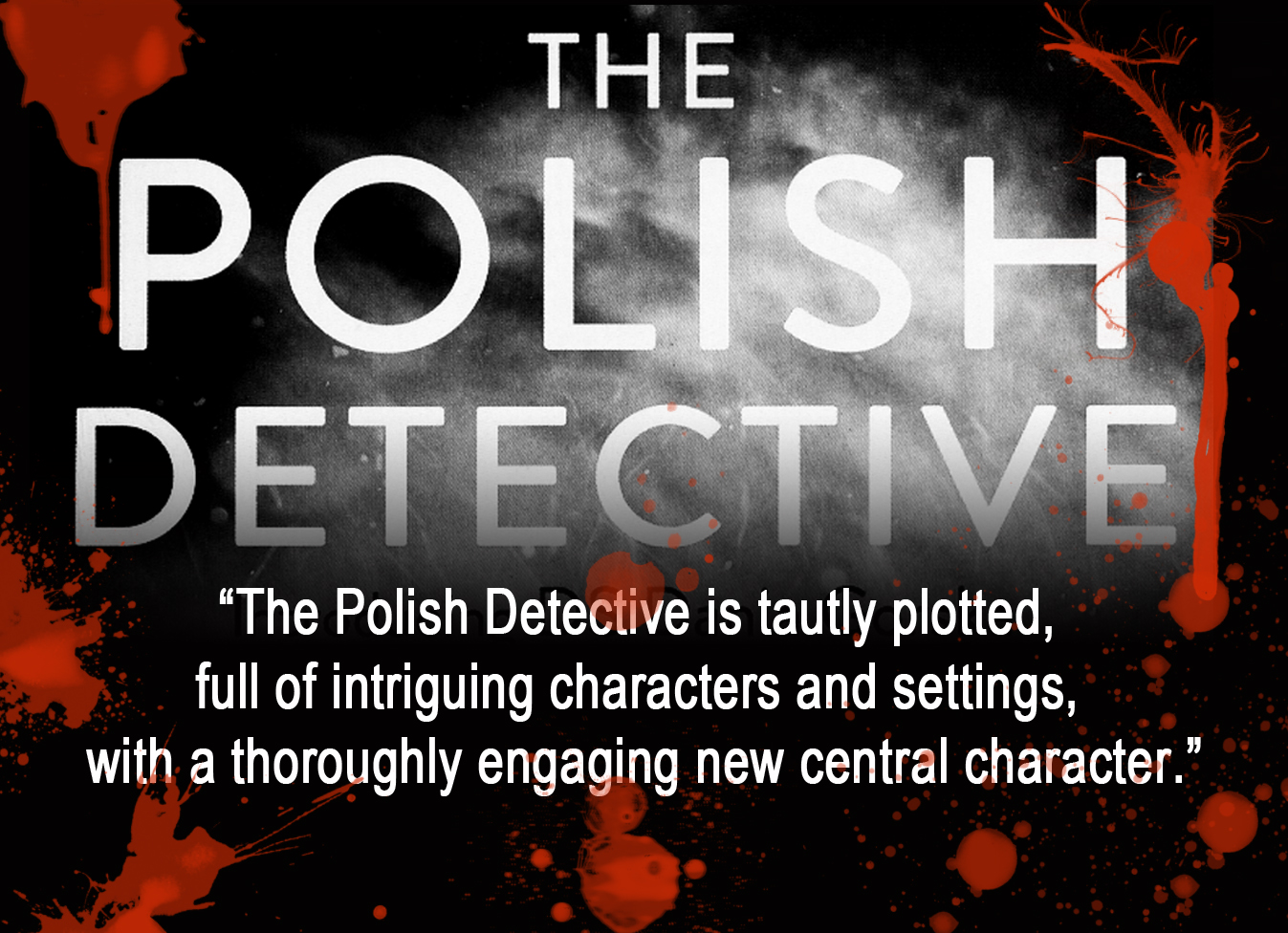
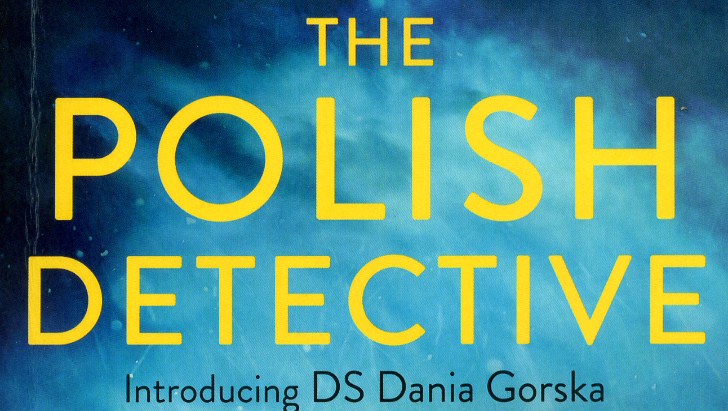
FICTIONAL SCOTTISH COPPERS – rather like single malt whiskies – are spread the length and breadth of that fine country. Highlands, Lowlands, islands, stately university cities, gritty oil and gas ports, mistily romantic glens and litter-strewn council estates where hope goes to die. Chris Longmuir has set her DS Bill Murphy novels in Dundee, but she has by no means cornered the Tayside market, for now comes Hania Allen with the first in a series set in Dundee and featuring Polish-born DS Dania Gorska.
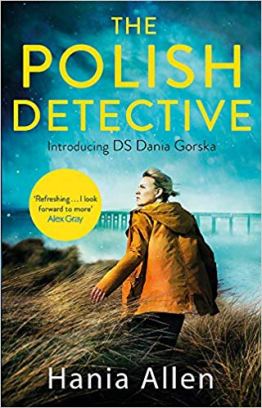 Dania Gorska has come to work in Dundee after starting her career in London with the Met. A divorce from husband Tony (watch out for the clever twist) has left her footloose and fancy free. Her exemplary record has meant she has enjoyed a swift and welcome transfer to Police Scotland. She lodges with her brother Marek, who is an investigative journalist.
The discovery, in a farmer’s field, of the body of a female academic displayed in the manner of a scarecrow sets in train a murder enquiry which takes Gorska and her colleagues down a twisty and circuitous road where they come across Druids, an eccentric Laird, two missing schoolgirls – and another girl obsessed with studying how dead creatures decay. As you might expect, the killer hasn’t finished and more corpses end up on the pathologist’s cutting table. Early on in the narrative, one of the characters comes across as a definite ‘wrong ‘un’, but Allen weaves the threads of the plot into a cunning riddle with a surprising and satisfying solution.
 The Polish Detective is in some ways a standard police procedural which chugs along nicely on its accustomed rails. All the usual characters are present and correct; no such story would be complete without a dyspeptic senior officer, the obligatory post mortem scene with a sarcastic medical professor wielding the bone saw, the male junior detective who thinks he’s Jack – or perhaps Jock – the Lad, and the mind numbing tedium of the door knocking and CCTV scanning that sits behind every brilliant solution to a murder mystery. What lifts this book above the average is the character of Dania Gorska herself, and in particular her musical passion for, naturally, her great countryman Frédéric François Chopin and his sublime piano music. Hania Allen (right) describes herself as a pianist who makes up in enthusiasm what she lacks in talent, but under the fingers of DS Gorska, the great man’s preludes and nocturnes shimmer and sparkle throughout the pages, and the darker notes of the Polish soul are never far away.
The events in The Polish Detective take place on the eve of the June 2016 EU referendum, the result of which I suspect Hania Allen disapproves, as she has her heroine declaring at one point, that Chopin was “ also a European, as we all are..” I live in a town full of lovely Polskie people who have come to Britain in the last fifteen years or so, and those that I know well are intensely proud – in the best way possible – of their nation and its culture. Dania Gorska’s claim, therefore, may be something of a leap of faith, but Hania Allen makes a serious point about the debt this country owes to Polish men and women stretching back to the dark days of WW2.
Politics aside, Hania Allen may be allowed self deprecation of her skills as a pianist, but on this evidence there is do doubt whatsoever about her skills as a crime novelist. The Polish Detective is tautly plotted, full of intriguing characters and settings, with a thoroughly engaging new central character. It is published by Constable and is out in paperback on 9th August.
Fans of Scottish crime fiction might like to see what Fully Booked has in the way of reviews and features centred on this popular genre. Click the blue link to see what’s on offer.

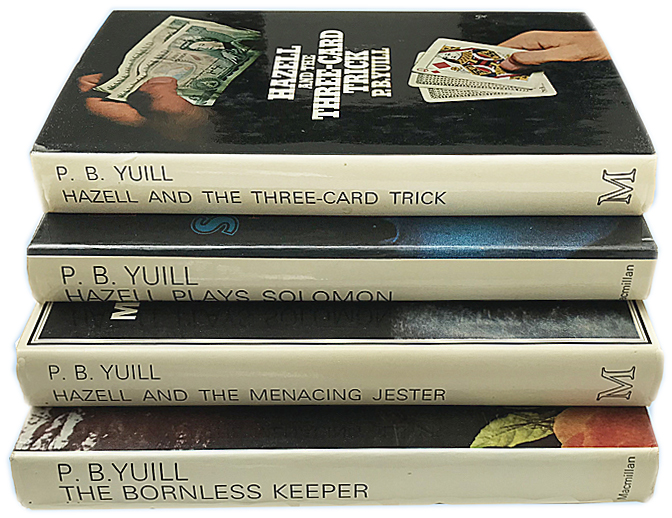 Something we do all too rarely on Fully Booked, mea culpa, is to feature articles and reviews by guest writers. I am delighted that an old mate of mine, Stuart Radmore (we go back to the then-down-at-heel Melbourne suburbs of Carlton and Parkville in the 1970s, where he was a law student and I was teaching art at Wesley College) has written this feature on a writer who, as an individual, never actually existed. Stuart’s knowledge of crime fiction is immense, and so I will let him take up the story.
 Their first joint outing (published under their own names) was They Used To Play On Grass (1971). Described, not incorrectly, on the paperback cover as “the greatest soccer novel ever”, it’s still an enjoyable read, with each man’s contribution being pretty obvious.
 The authors were keen to develop the Hazell character into a possible TV series, and the later two books seem to be written with this in mind. This duly came to pass, via Thames Television, and the first series was broadcast in 1978, starring Nicholas Ball as a youthful James Hazell. Gordon Williams, with Venables (right) and other writers, was responsible for a number of the episodes (including ‘Hazell Plays Solomon’), and it remains a very watchable series. The second, and final, series broadcast in 1979/80 was not so successful. The hardness was gone, Hazell and Inspector ‘Choc’ Minty had become something of a double act and, while not outright comedy, it came close at times. It’s not surprising to learn that Leon Griffiths, one of the second series screenwriters, went on to create and develop the very successful series Minder later that year.

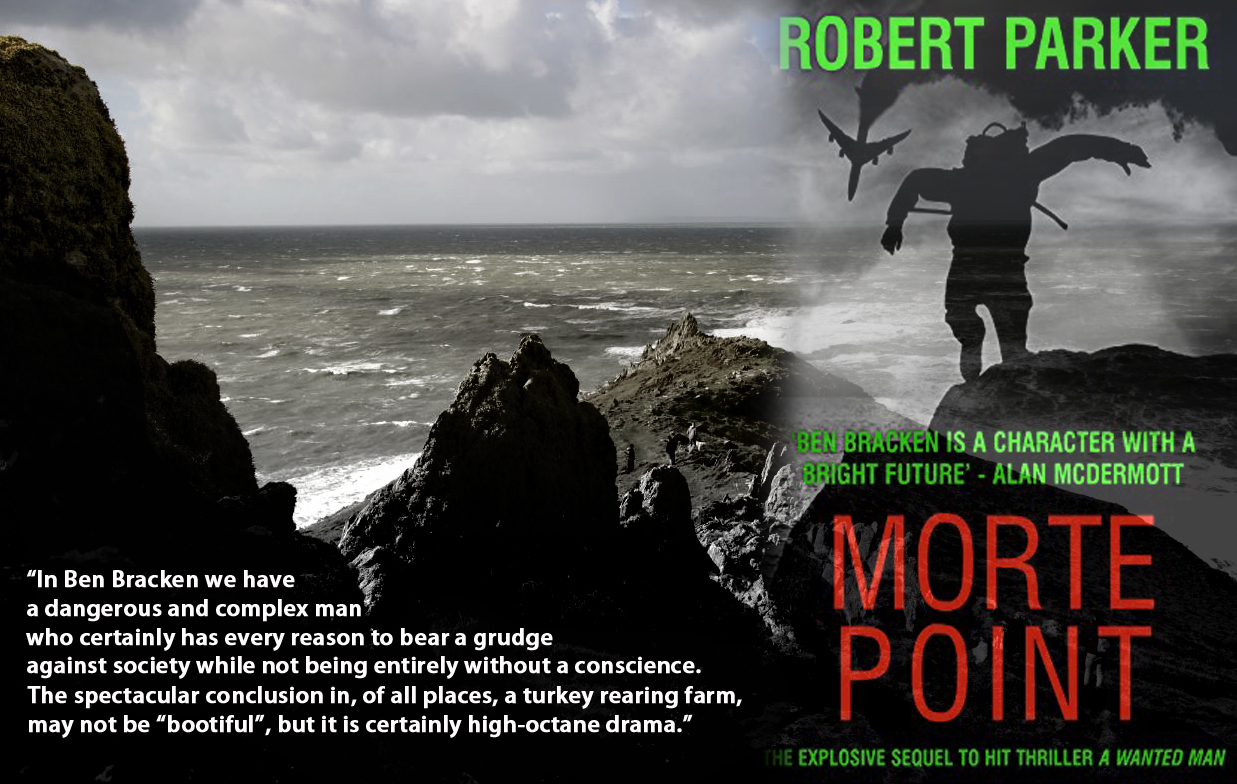
 Parker is on similar form here in Morte Point which, as Devonians know, is a rocky peninsula on the north west coast of that county. Rather than the bitterly feuding rural families in Crook’s Hollow, Mr P gives us a jailbird ex SAS soldier, a mysteriously beautiful Kosovan biochemist, a sunken plane wreck containing only the body of a woman (minus her head), a senior British government minister determined to engineer the biggest international shock since Hitler declared war and Stalin, a bloody shoot-out in London’s most prestigious hotel and – at the centre of the drama – a phial containing a synthesised botulism capable of killing millions.
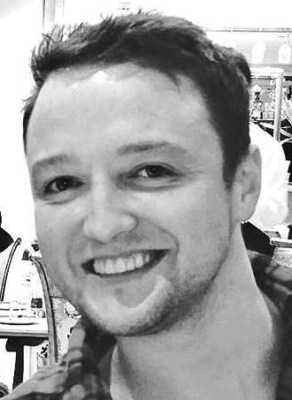 What follows is, to my mind, the best part of the book. Back in the day when the mysterious Andy McNab (and his ever-present black rectangle) was the media’s darling, survival skills, initiative in the wild and hiding in plain sight were familiar tropes in thrillers and on the screen, but Parker (right) has revitalised the idea. Bracken manages to stay half a step – but no more – ahead of his pursuers as he travels rough on his way north to meet up with Salix. You might scoff, and say that rural Devon is hardly the Iraqi desert, but Bracken realises that he is Britain’s most hunted man and, in these days of 24 hour news coverage on a bewildering range of devices, he knows that he has no friends, and no ally except his own resources and awareness of nature. He comes unstuck, however, after a chance encounter with vipera berus, and from this point the story takes a very different direction.


 In his debut thriller, James Brabazon enlists that familiar but effective trope, the elusive and anonymous killer who does unpleasant things for his country’s government, despite the knowledge that he ever gets caught, his paymasters will, like the biblical Peter, deny him thrice. Max McLean is one such ‘invisible man’ but when his bravest and most reliable colleague falls foul of the official machine, Max tears up his contract and goes to the violent wastelands of Sierra Leone in search of the men who have destroyed his best friend. The Break Line is published by
 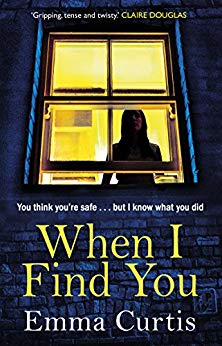 There is a bona fide medical condition called face blindness, and sufferers lack the vital mental ability to retain data about another person’s appearance in order to recognise them at a future meeting. Laura is one such, but she can relate people to clothing. When she wakes up, hungover after a woks Christmas bash, she remembers that she slept with a man in a pink shirt. Or did she? When she realises that the shirt on her bedroom floor is blue, her troubles are only just beginning. Transworld Digital publish the Kindle version of
 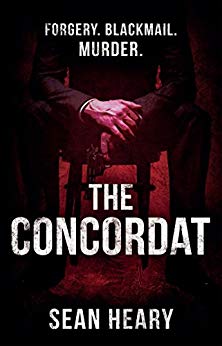 Central to the story is an all-powerful Russian President who sits like a spider at the centre of a web which is designed to snare unwary political and military flies across the world. Sounds familiar? Well, maybe, but this guy is called Alexander Volkov, and he plans to boost his power by revealing a potentially damaging historical pact between the Vatican and Hitler’s Germany. Lorenzo Rossi is the Head of the modern day Vatican police and his quest to limit Volkov’s malign intentions leads him into clear and present danger. If you are minded to grab this thriller, it is available now in paperback and as a Kindle, courtesy of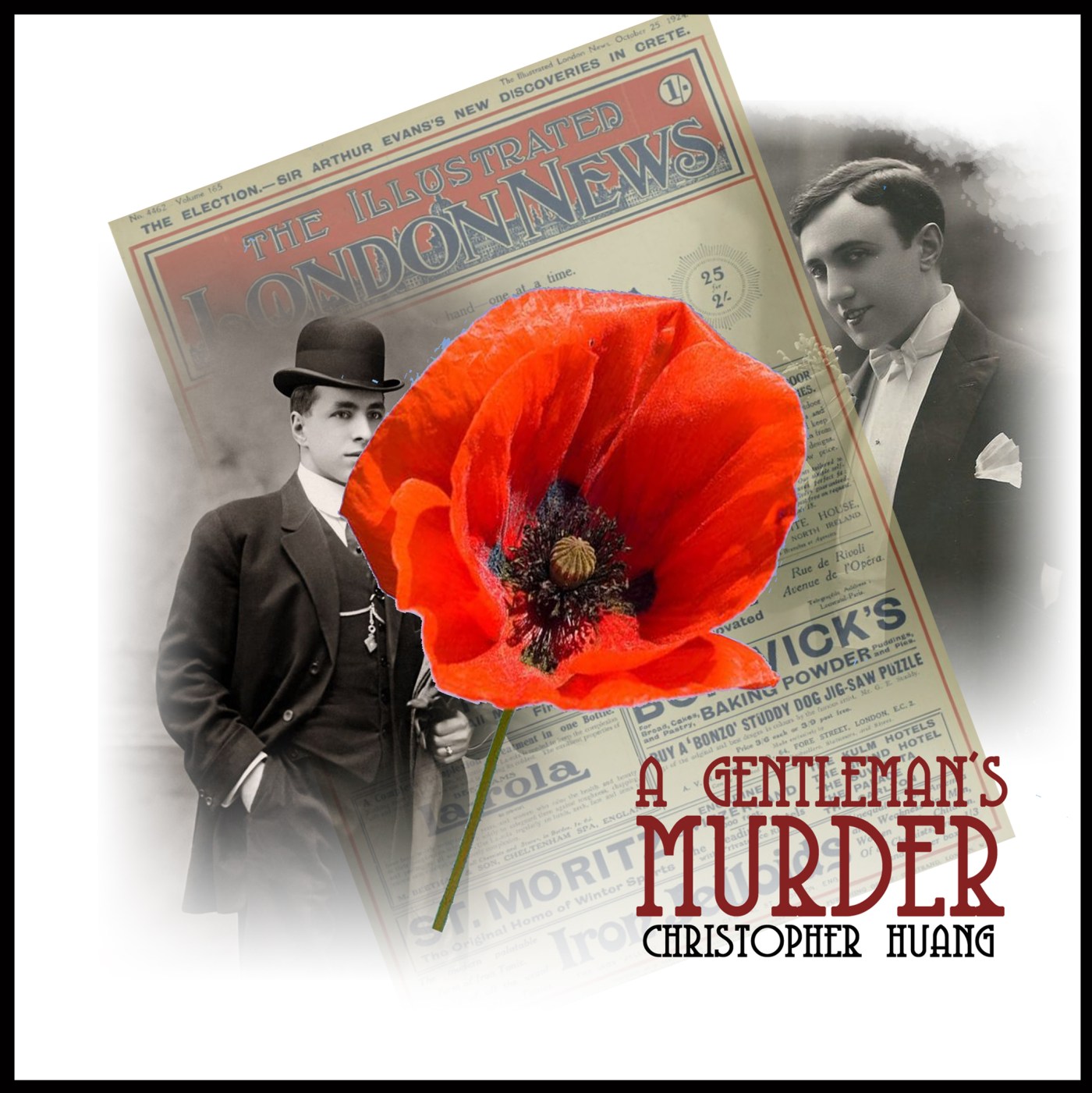
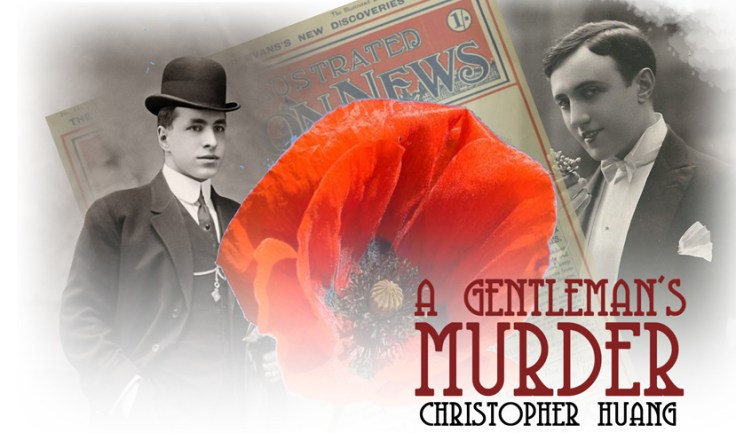
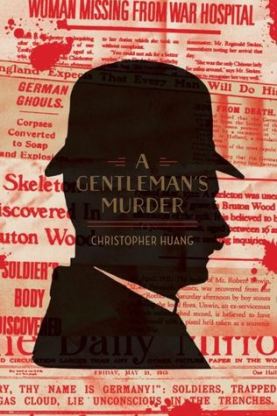 Eric Peterkin is one such and, although he carries his rank with pride, he is just a little different, and he is viewed with some disdain by certain fellow members and simply tolerated by others. Despite generations of military Peterkins looking down from their portraits in the club rooms, Eric is what is known, in the language of the time, a half-caste. His Chinese mother has bequeathed him more than enough of the characteristics of her race for the jibe, “I suppose you served in the Chinese Labour Corps?” to become commonplace.
 Christopher Huang (right) was born and raised in Singapore where he served his two years of National Service as an Army Signaller. He moved to Canada where he studied Architecture at McGill University in Montreal. Huang currently lives in Montreal.. Judging by this, his debut novel, he also knows how to tell a story. He gives us a fascinating cast of gentleman club members, each of them worked into the narrative as a murder suspect. We have Mortimer Wolfe – “sleek, dapper and elegant, hair slicked down and gleaming like mahogany”, club President Edward Aldershott, “Tall, prematurely grey and with a habit of standing perfectly still …like a bespectacled stone lion,” and poor, haunted Patrick “Patch” Norris with his constant, desperate gaiety.
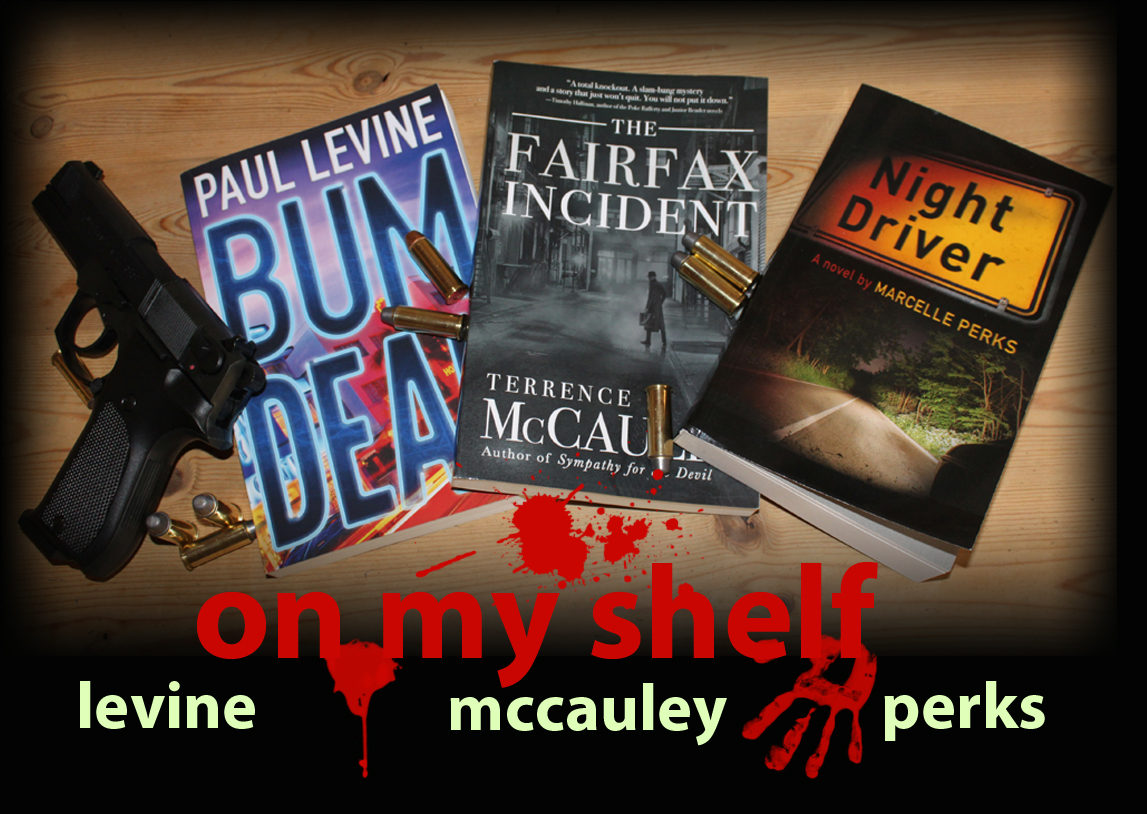

 Paul Levine is an American author of crime fiction, particularly legal thrillers. He has written two series, known generally by the names of the protagonists: Jake Lassiter and Solomon vs. Lord. In Bum Deal, published by Thomas & Mercer
  Terrence McCauley is an enthusiastic contributor to Thuglit, which describes itself thus:
 Marcelle Perks is no novice writer, but with earlier titles such as Incredible Orgasms: Yes, Yes, Yes, Yes and Secrets of Porn Star Sex: Brilliant Ideas for No-holds Barred Pleasure, this thriller signals a temporary change of direction. Perks lives and works in Germany, and it is there that we meet Frannie, an English expat, heavily pregnant and with her marriage on the rocks. Having learnt to drive in a bid to boost her self esteem, she takes to deserted early-hours roads to build her confidence at the wheel. Fate takes a hand, however, and when her path crosses that of Lars Stigelegger, a homicidal truck driver, Frannie is drawn into a world of trafficking, prostitution and violence. Pre-publication comments suggest that Night Driver is:


 Watching You by Lisa Jewell takes us to the chic urban village of Melville Heights. Jack Mullen is a successful consultant in cardiology, while his wife Rebecca is “something in systems analysis.” A couple of doors down live the Fitzwilliam family. Tom is a charismatic and nationally renowned Head Teacher with an impressive record of turning round failing high schools. His adoring wife Nicola has no CV as such, unless you want to list an over-awareness of body image and a devotion to the latest fads in fashion and diet. Their teenage son, Freddie – an only child, naturally – is very keen on all things technical, particularly digital binoculars, spy software, and a fascination with the lives and movements of anyone he can see from his bedroom window.
 This is a clever, clever murder mystery. Lisa Jewell gives us the corpse right at the beginning – while keeping us guessing about whose it is – and then, by shrewd manipulation of the timeline we are introduced to the possible perpetrators of the violent death. By page 100, they have formed an orderly queue for our attention. Of course there’s beautiful, feckless Joey and her husband Alfie. Freddie Fitzwilliam is clearly at the sharp end of the Asperger spectrum, but what about his bird-like – and bird-brained mother? Schoolgirls Jenna and Bess are clearly fixated – for different reasons – on their headteacher, and as for Jenna’s mum, with her persecution complex and incipient madness, she is clearly on the brink of doing something destructive, either to herself or someone else. And who is the mysterious woman who flew into a rage with Tom ten years earlier while the Fitzwilliams were on a family holiday to the Lake District?
 Lisa Jewell peels away veil after veil, but like Salome in front of Herod, she tantalises us with exquisite cruelty. Just when we think we have understood the truth about the complex relationships between the characters, we are faced with another enigma and a further conundrum. There are flashes of absolute brilliance throughout this gripping novel. The relationship between Jenna and Bess is beautifully described and even though we suspect he may end up with blood on his hands, Freddie’s strange but exotic view of the world around him makes him completely appealing. In the end, of course,we learn the identity of the corpse and that of the murderer but, just like the Pinball Wizard, there has got to be a twist. Lisa Jewell (left) provides it with the last 39 words of this very special book, and it is not so much a twist as a breathtaking literary flourish.

 I have a close friend who keeps himself fit by walking London suburbs searching charity shops for rare – and sometimes valuable – crime novels. On one particular occasion he was spectacularly successful with a rare John le Carré first edition, but he is ever alert to particular fads and enthusiasms of mine. Since I “discovered” PM Hubbard, thanks to a tip-off from none other than
  Seldom, however, can a treasure have been protected by two more menacing guardians in Aunt Elizabeth and her maid-of-all-work Coster. Remember Blind Pew, one of the more terrifying villains of literature? Remember Tod Browning’s Freaks (1932) and the decades that it was hidden from sight? With a freedom that simply would not escape the censor today, Hubbard (right) taps into our visceral fear of abnormality and disability. Hubbard has created two terrifying women and a dog which is makes Conan Doyles celebrated hound Best In Show. The dog first:


 fullybooked2017