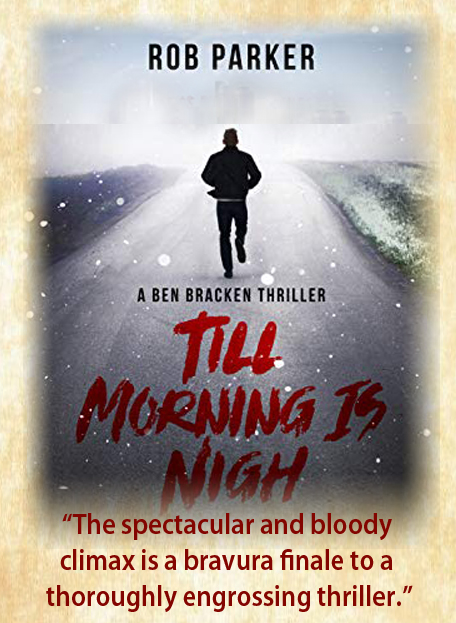

 here is an debate in the Twittersphere at this time of year about whether Die Hard is, or isn’t a Christmas movie. Maybe there is also a discussion to be had as to whether this latest adventure for Rob Parker’s invincible iron man, Ben Bracken, is a Christmas thriller. Those with young children, or fond memories of their own childhood, will surely recognise the source of the book’s title. Preface it with the words “And stay by my cradle ..” and you should have the answer.
 We are in a wintry Manchester. The time is the present. As usual, the giant plastic Santa is hoist by his breeches on the Victorian gothic façade of the town hall, dispensing silent jollity to the shoppers and merry-makers scurrying beneath his furry boots. In Albert Square, homeless men try to find solace in their threadbare coats, wondering where the next coffee, the next Greggs pasty – or the next fix of chemical oblivion – is going to come from.
 mong these sad footnotes to the tidings of comfort and joy, Ben Bracken moves, asking questions. The former soldier, imprisoned in nearby Strangeways for something he didn’t do, has escaped and now leads a perilous existence employed by a shadowy government agency who have uses for his particular skillset, which involves an immense capacity for violence and superb fieldcraft honed both in the killing fields of Afghanistan and the mean streets of Britain’s cities.
Bracken has been tasked with investigating the brutal murder of a young undercover police officer working for the National Crime Agency. Executed in front of an audience of drug dealers and sleazeballs, probably pour encourager les autres, DC Mark Kyle may have become too close for comfort to a dangerous new player in the Manchester drug scene. Bracken asks the right questions of the right people, and finds he is being led not towards an organised criminal gang of swarthy Albanian malcontents, but to a group which has it roots much closer to home.
 ack in the real world for a moment, we are told by experts that the biggest terrorist threat to our society in Britain comes from right wing extremist organisations. Only a few days ago a number of men – all fans of Hitler, Breivik and other assorted homicidal lunatics – were convicted of planning terrorism via social media. The fictional group which Ben Bracken infiltrates are, however, not pimply twenty-somethings operating out of a bedroom in their mum’s house, but serious players, ex-military and financing their ambitions via the trade in hard drugs. They are well trained, armed with more than just a Facebook account, and they mean business.
The St George Patriots are led by Helen Broadshott. Perhaps modeled on someone across the Channel, she is vivacious, attractive, a brilliant communicator, and someone who knows how to tap into the seam of opinion which has been crystalised by feelings of resentment about immigration, perceived inequality, lack of political representation and frustration about rapid social change. The Patriots are planning a major event which will catapult them from obscurity onto the front pages of the print media, boost their social media following and make them headline news on every TV bulletin.
he irony is, of course, that in order to prevent the planned atrocity, Bracken has to ingratiate himself with the group and make them give him a central role in proceedings hoping, all the while, that his employers will be ready to intervene at the crucial moment.
 Parker is a fine young writer. He can muse ruefully on the inadequate protection the human body has against steel wielded with extreme malice:
“Blood and organs artfully arranged on bone. No myth, no mysticism. We are made of soft material that splits and spills, nothing more.”
There is also a more reflective side to his writing. In between energetically demolishing bad people, Bracken has moments of quieter reflection:
“And they weren’t lying when they said the Guinness was the best either – it’s an epiphany as pure and revelatory as finding Jesus and Elvis, all at once, in the same tall glass.”
The spectacular and bloody climax to this excellent thriller will settle the question I posed earlier about Till Morning Is Nigh being a Christmas novel. It is a bravura finale to a thoroughly engrossing thriller.
Till Morning Is Nigh is published by Endeavour Media and will be available from 13th December. Click on the text below to read reviews of other novels by Rob Parker.
ROB PARKER NOVELS



 eaders of a Simon Kernick thriller should know by now what they are getting. There will be violence a-plenty, betrayal, corrupt cops, unscrupulous politicians, improbable escapes from certain death and a narrative style which grips the reader from start to finish. Like many popular writers he has separate series on the go, but Kernick isn’t averse to cross-referencing characters. By my reckoning, Die Alone is the eleventh book to feature the abrasive and resourceful Tina Boyd – once a copper but, in this novel a private investigator. The main man I Die Alone is another copper – Ray Mason. He first featured in The Witness (2016). Then came The Bone Field (2017) and The Hanged Man (2018) but with Tina Boyd – and her former lover Mike Bolt – in attendance.
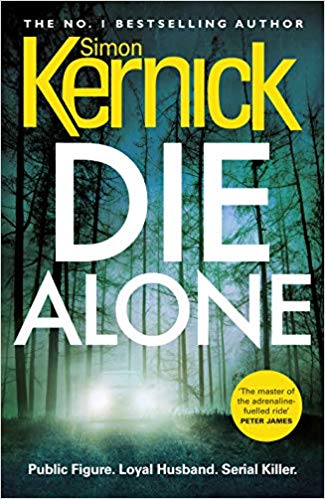 We start with Mason in the Vulnerable Prisoner wing at a high security British prison. He is serving life sentences for the killing of two deeply unpleasant characters in the course of his duties. The deaths were judged not to be judicial, and so Mason inhabits a world shared with paedophiles, rapists, child pornographers – and disgraced coppers. When he is injured on the periphery of a prison riot, he is taken off to hospital in a supposedly secure van, which is then hijacked – the target being Mason himself. He is taken to what seems to be some kind of safe house run on government lines and, after being well fed and housed for a couple of days, he is given an ultimatum by the masked official who is in charge of things – carry out a hit on a Very Important target. He is left in no doubt as to what will happen if he refuses, but he takes little persuading, as the intended victim is someone whose life Mason would have little compunction in ending.
 y now Kernick has introduced us to the repulsive Alastair Sheridan, a millionaire former hedge fund manager who has found his niche in politics and is regarded as everyone’s favourite to reach the top because of his affable style, movie star good looks and undoubted charisma. What the adoring public, and a bevy of fellow MPs who are about to support his leadership don’t now is that Sheridan is a sadistic sexual killer with links to organised crime and some of the most evil people in Europe.
 ecuring the help of former colleague Tina Boyd gets Mason out of one scrape, but as he avoids the clutches of one set of villains, the next shootout or escape in the boot of someone’s car is just around the corner, with the action ranging from oily Tottenham car workshops, to rural Essex and then via Brittany to the bloodstained hills surrounding Sarajevo.


 Alyssa Wyatt is pretty much your showcase American Mom. Not Middle American geographically, as she lives in New Mexico, but she ticks most of the other boxes; handsome successful husband, two teenage kids, nice house and a fulfilling career – as a cop. Like so many fictional law enforcement types, she has a dark past centred in childhood trauma, but what is done is done, and she lives for Holly, Isaac and husband Brock.
 harly Cox reveals to us the identity of the bad guy fairly early in the piece. Or, rather, she doesn’t. Over enigmatic? Quite probably, but to say more would ruin the fun. Alyssa and Cord chase their tails with more determination than success, while the sadist at the centre of the mayhem plans his next atrocity.
 on’t be misled, however, into thinking that All His Pretty Girls is Chick Lit. Yes, a female is the central character, but there’s no shortage of graphic violence and enough of the ‘mean streets’ to satisfy fans of hard-boiled crime.

 isa Towles is a California Girl by residence, but she hails from New England. She writes crime novels when she isn’t putting her IT Management MBA to good use in The Sunshine State’s tech industry. Long time followers of Fully Booked will recall my enthusiastic review of her earlier book Choke (2017) and will remember that I began that review with the words:
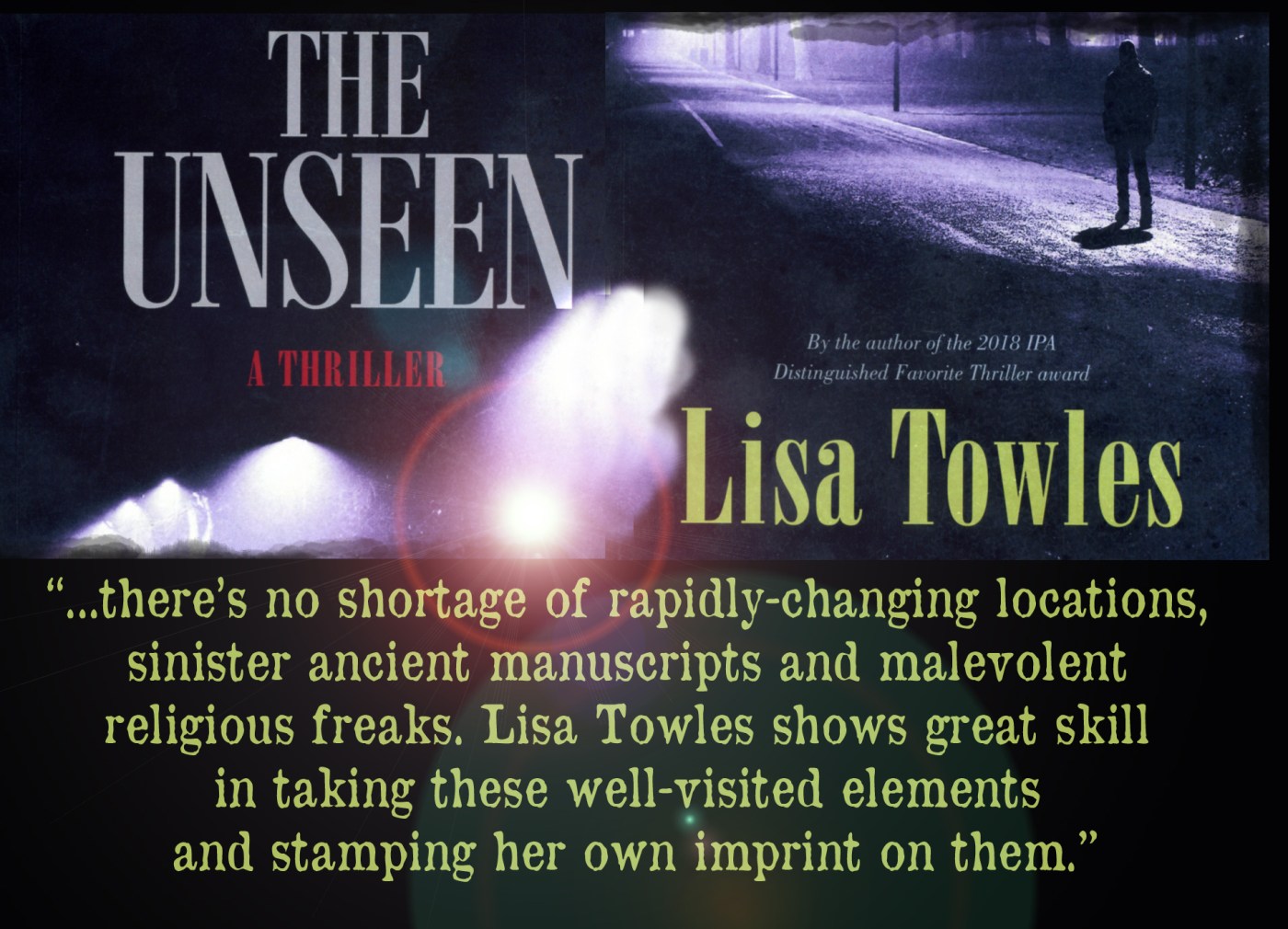
 She is back with a vengeance – and that same imaginative flair – with her new mystery thriller The Unseen and the action is just as breathless. We have a story that spans five decades and whirls us between Dublin, the Egyptian desert, Boston Massachusetts, London and Rome. With a cast of larger-than-life characters including archaeologists, journalists, hit men – and a direct descendant of an Eastern Orthodox Pope – the story is never short of surprises and dramatic twists.
 hat starts off in a rather Indiana Jones vein quickly morphs into Robert Langdon territory and there’s no shortage of rapidly-changing locations, sinister ancient manuscripts and malevolent religious freaks. Lisa Towles shows great skill in taking these well-visited elements and stamping her own imprint on them. The Unseen is published by 9mm Press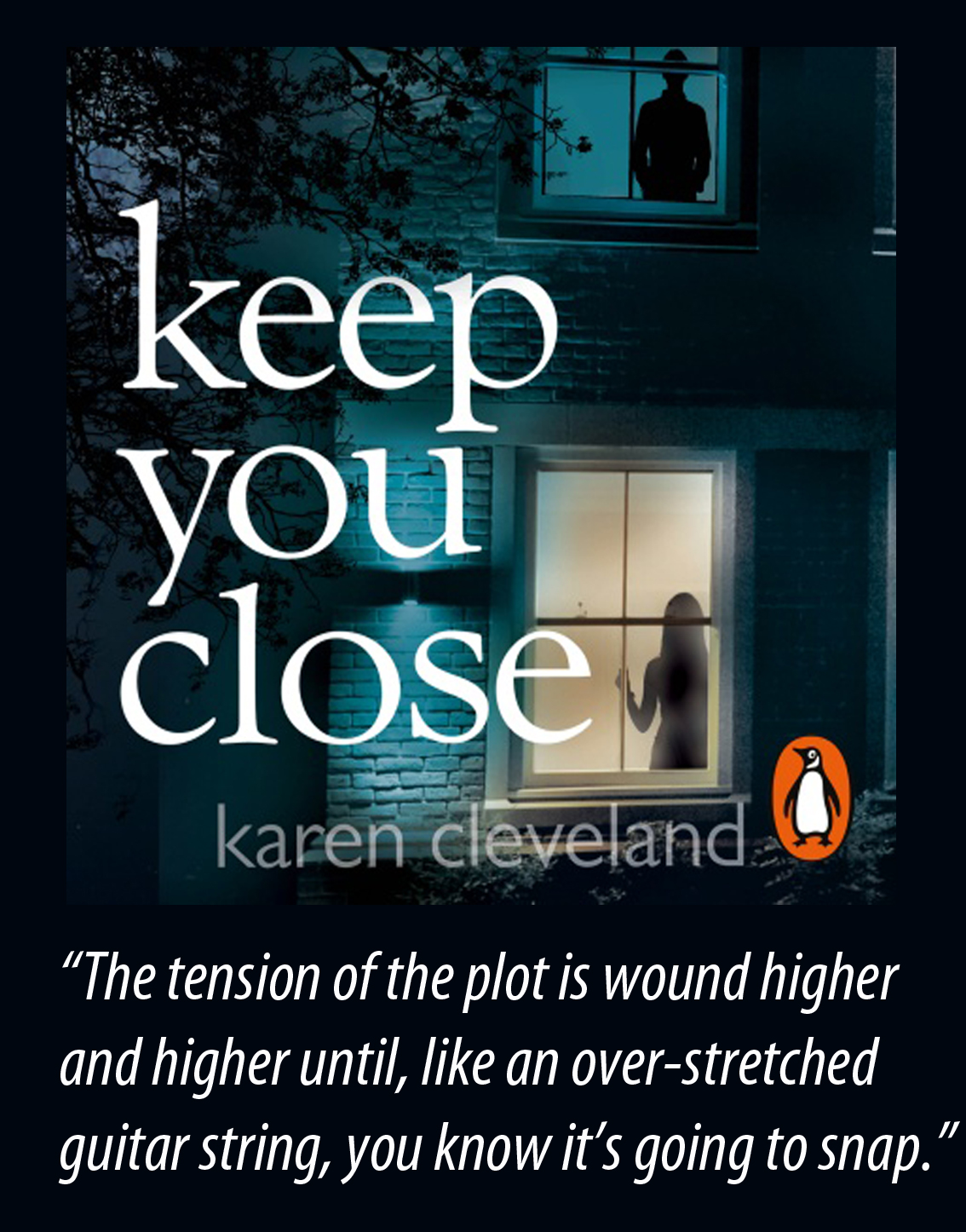

 For Agent Maddox, however, The FBI Experience is something other than a theme park visit. Gender equality has come at a price, and she is viewed with a certain degree of suspicion by many of her male colleagues, particularly as she is – and feel free to use the ‘woke’ description of your choice – a single mother, lone parent or head of a one-parent family. The blunt truth is that Steph has brought up Zachary largely on her own from day one. Not only that, but she has steadfastly refused to reveal the identity of his father.

 aren Cleveland, to say the very least, knows of what she writes. She is a former CIA analyst herself, and her experience translates into a swiftly moving and convincing narrative. Steph Maddox is torn between fighting her son’s corner – he is innocent, surely? – and preventing a major terrorist assassination attempt. As in the real world of political and military intelligence gathering, nothing is what it seems, and no-one is above suspicion.
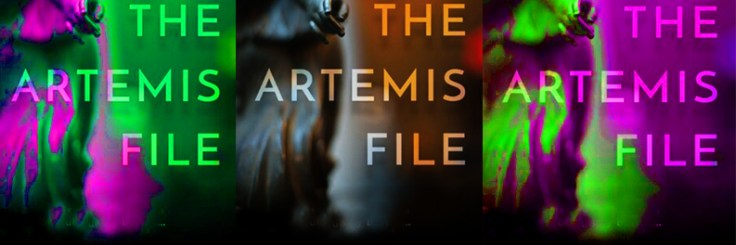
 t takes a very ingenious – not to say devious mind – to fashion a fiction plot which meshes together a whole bagful of disparate elements to make a satisfying whole that challenges the imagination but does not exceed it in possibility. Adam Loxley has done just that in his latest thriller The Artemis File. George Wiggins is Mr Ordinary. He lives in what would have been called, years ago, a bijou residence in the twee Kentish town of Tenterden. He is not Mr Stupid, however. He travels into ‘town’ each day to sit at his desk in Fleet Street where he composes the daily crossword for The Chronicle under his pseudonym Xerxes. Aficionados know that in reality, all that is left of the newspaper industry in Fleet Street are the buildings, and the use of the term to denote popular journalism, but we can forgive Loxley for having the good, old-fashioned Chronicle hanging on by the skin of its teeth when all its fellows have decamped to Wapping or soulless suburbs somewhere off a dual carriageway.
 When George has a rather startling experience in his local pub after a couple of pints of decent beer, the other elements of the story – MI5, the CIA, Russian agents, immaculately dressed but ruthless Whitehall civil servants and, most crucially, the most infamous unsolved incident of the late 20th century – are soon thrown into the mix. Such is George’s conformity, it is easily compromised, and he is blackmailed into writing a crossword, the answers to which are deeply significant to a very select group of individuals who sit at the centres of various spiders’ webs where they tug the strands which control the national security of the great powers.
 eorge Wiggins might have been easily duped and he has few means to fight back, but he recruits an old chum from the Chronicle whose knowledge of the historical events of the 1990s proves key to unraveling the mystery of who wanted the crossword published – and why. While the pair rescue a dusty file from an obscure repository and pore over its contents, elsewhere a much more visceral struggle is playing out. A ruthless MI5 contract ‘fixer’ called Craven is engaged on a courtly dance of death with a former CIA agent, current American operatives and their Russian counterparts.
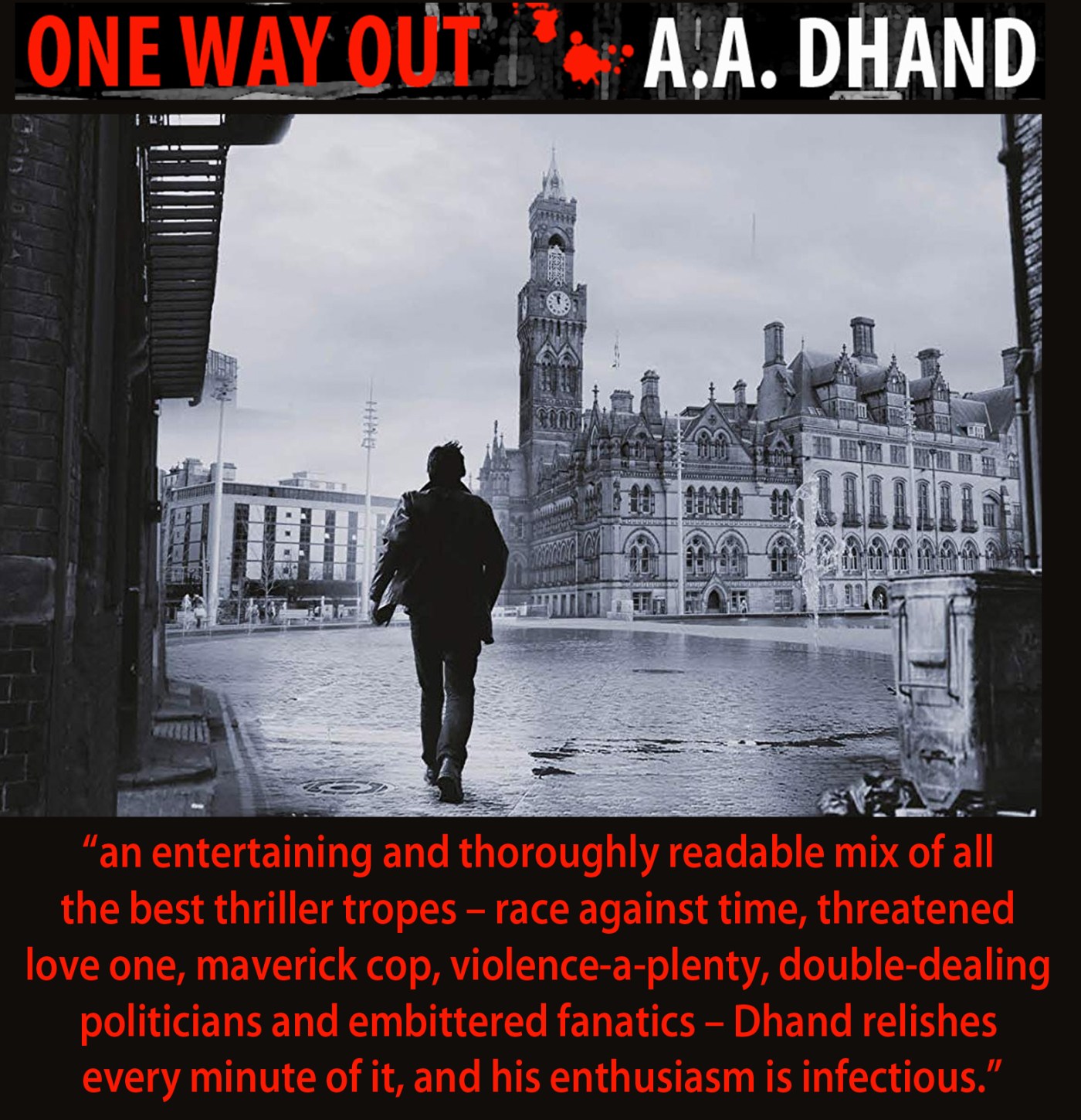

 f fictional coppers need to be idiosyncratic to attract readers, then DI “Harry” Hardeep Singh Virdee ticks all the required boxes and also a good few new ones of his own devising. The Bradford policeman is a Sikh, but has enraged his father and his wider community by doing the unthinkable in marrying a Muslim woman. His brother Ronnie also happens to be a ruthless career criminal.
 The latest novel from AA Dhand is a gripping thriller which goes well beyond the constraints of the conventional police procedural. One Way Out begins with a huge bomb going off in the centre of Bradford. Although there has been sufficient warning to minimise civilian casualties, the perpetrators – an extreme right wing group known as The Patriots – have a further trick up their sleeve. It is a Friday, and with all 105 mosques in the Yorkshire city being full of worshippers, the terrorists announce that they have planted a bomb in one of the mosques, and it will be detonated unless the police track down and hand over the members of a notorious Islamic militant group called Almukhtaroon. The Patriots have pre-empted the obvious evacuation of the mosques by stating that if one single worshipper attempts to leave, the bomb will be detonated.
 hat we then have is an entertaining and thoroughly readable mix of all the best thriller tropes – race against time, threatened love one, maverick cop, violence-a-plenty, double-dealing politicians and embittered fanatics – Dhand relishes every minute of it, and his enthusiasm is infectious.
 Dhand is a Bradford man, born and bred, and he paints a vivid – if occasionally depressing – picture of the results of racial and religious bigotry. While he is justifiably harsh on right-wing extremism, he doesn’t spare the blushes of the Asian community, whether they are warring Muslim factions or Sikhs with more angry pride in their hearts than compassion. I’m not sure I totally bought into the relationship between Virdee and Tariq Islam, but no matter what the plot, suspension of disbelief is what we fiction readers are good at, otherwise we would spend our days reading history books or browsing the Argos catalogue.


 s the immortal Juliet once asked, “What’s in a name?” To her, not very much, as I recall, but it takes a brave novelist – such as Daphne Du Maurier in Rebecca – to keep the narrator and central character anonymous. Jo Baker uses this literary ploy in her latest novel, The Body Lies. Even the title is ambiguous, but the young woman at the centre of this dark domestic thriller is anything but anonymous or sketchily drawn.
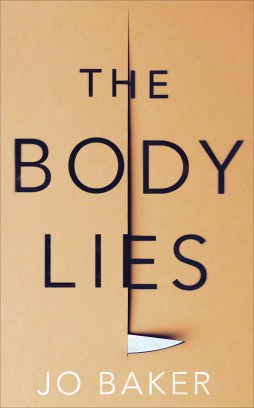 In the absence of a name, what do we know of her? She is a writer who, like so many others in real life, has been published but needs a day job to stay afloat. She is married to a rather dull but worthy London schoolteacher. They have a young son, Sammy and, in an effort to re-establish her identity she makes a successful application for a lecturing job at a university in the north of England. Husband Mark is unwilling to leave his post, and so they agree to live separately but meet up at weekends. At the very beginning of the novel the woman is assaulted by a stranger while she is out jogging: the attack is not physically serious but leaves deep mental scars.
 All the familiar tropes of modern British domestic noir kick in, to good effect. We have a stalker, marital infidelity, a woman alone in a remote cottage, the debilitating after effects of recreational drug use, a murder disguised as a suicide and, tellingly, a very scary confrontation on a Wuthering Heights-style moor.


 ver the years, missing persons investigator David Raker has, courtesy of his creator Tim Weaver, solved some perplexing cases. There was the man who disappeared into the bowels of London’s underground railway system, the amnesiac who was found on a deserted south coast shingle beach, the straight ‘A’ student with the secret life who just vanishes and, memorably, the time his dead wife walked into a London police station and back into his life. Raker tends to be looking for troubled individuals, as in just the one person. But this time it’s different.
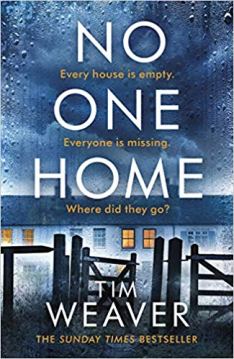 A whole village has disappeared. OK, let’s put that into context. The village is the isolated moorland community of Black Gale, and it consists of a farm and three expensive and fairly recent houses arrayed in a semi-circle around the older building. Black Gale. Population, nine souls. And on Halloween, two years since, they vanished. Into thin air. Like Prospero’s insubstantial pageant, the four families have left not a rack behind.
 ans of the series will know that Tim Weaver doesn’t like Raker’s cases to be geographically confined, and so it is that the Black Gale conundrum is linked with a grisly unsolved murder in a flyblown California motel decades earlier. I say “unsolved”. The local Sheriff’s Department think the case is a wrap. They have a vic and a perp and have moved on to other things. Detective Joline Kader, however, has other ideas. She is unconvinced that the body lying face down in a bathtub of muriatic acid is simply the victim of a drug deal gone wrong, and the case stays with her over the years, right through her police career and her subsequent vocation as a college lecturer. Right up until the moment where her old obsession collides with David Raker’s fatal unpicking of a very clever and murderous conspiracy.
 No One Home is a brilliant thriller. It runs to over 500 pages, with not a single one wasted. The action is constant and the plot spins about all over the place, so you will need to be on your mettle to keep track of what is going on. Tim Weaver (right) has never been shy of creating apparently improbable conundrums for Raker to solve, and this is no exception. Suspend your disbelief for a few hours and go with the flow. I read it in three intense sessions and although I don’t use “Wow!” in normal speech, it certainly applies here. No One Home is published by Penguin


