
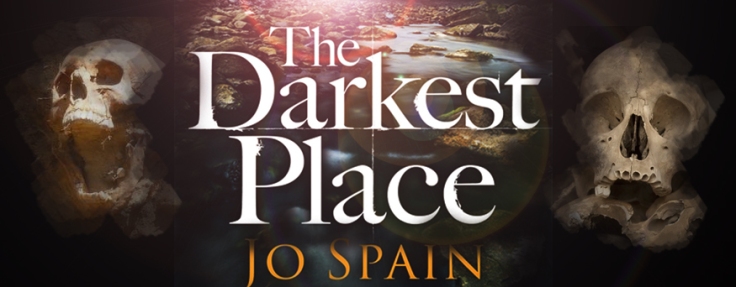
There can be few tropes – either using visual imagery or words – to match the allure of an disused and desolate lunatic asylum. The more Victorian and ‘Gothick’ the building is, the more it is likely to attract both those brave but foolhardy folk known as Urban Explorers – and writers of atmospheric thrillers. Place the building on a desolate island off the south western coast of Ireland and we have a dream – or nightmare – location for a murder mystery. Then let the tale be told by one of our finest modern writers of crime fiction and, as Wilkins Micawber once said, “Result, happiness.” Happiness at least for those of us who love a good read, but there is less joy for the characters in Jo Spain’s latest novel, The Darkest Place.
 Dublin copper DI Tom Reynolds is summoned from the dubious delights of his family Christmas to solve a murder. Readers of the previous three Tom Reynolds books might think there is little remarkable about that, but this time the corpse has been in the ground for rather longer than usual. Forty years, in fact. On the island of Oileán na Caillte, the pathologists have been disinterring corpses from a mass grave of the unfortunates who passed away as patients of the long-defunct psychiatric institution, St Christina’s. Those involved in the grim task discover nothing illegal, as all the residents of the burial pit were laid to rest in body bags, tagged and entered onto the hospital records. With one exception. That exception is the corpse of one of St Christina’s medical staff Dr Conrad Howe, who mysteriously disappeared forty Christmases ago. No body bag or tag for Dr Howe, but a rather surreptitious last resting place wedged between two other corpses.
For Howe’s widow Miriam the discovery comes as a shock but a release of sorts. For all the Christmases in between she has, like a latter day Mrs Hailsham, laid out the seasonal trappings in the same way each year, half hoping that her husband would return. Her children, now grown up, have humoured her in this ritual up to a point, as has a doctor colleague of her husband’s, Andrew Collins, who retains his connection to Oileán na Caillte. The fact that Collins has been hopelessly in love with Miriam all this time is not lost on Reynolds as he tries to discover who killed Howe with – as tests on his bones reveal – a length of electrical flex which left copper traces on his thoracic vertebrae.
Reynolds is no-one’s fool. As he pores through the almost indecipherable scrawl of Howe’s diary (we share that task with him, but minus the scrawl) he realises that the truth about who killed the idealistic physician involves not only the dead of Oileán na Caillte, but those who are still very much alive. One of the most telling lines in the diary says:
“It is though we are sharing this island with the devil.”
 Other than that dark angel, the cast of suspects includes another former physician, now himself just days away from death, and others whose culpability in the inhuman treatment of St Christina’s patients has left psychological scars, some of which have become dangerously infected. Of course, this being, among other things, a brilliant whodunnit, Jo Spain (right) allows Tom Reynolds – and us readers – to make one major assumption. She then takes great pleasure, the deviously scheming soul that she is, in waiting until the final few pages before turning that assumption not so much on its head as making it do a bloody great cartwheel.
Jo Spain is a brilliant writer. It really is as simple as that. She takes the humble police procedural and not only breathes new life into it, but makes it dance and jitterbug like a flapper on cocaine. Not content with that, she shifts a heavy old stone covering some of the less palatable aspects of her country’s history, and lets us gaze squeamishly at some of the nasty things that click and scuttle about beneath, disturbed by exposure to the light.
The previous Tom Reynolds novel was Sleeping Beauties, and you can check that out by clicking the blue link. Do the same to see the review of her brilliant standalone novel The Confession. The Darkest Place is published by Quercus and will be available on 20th September.

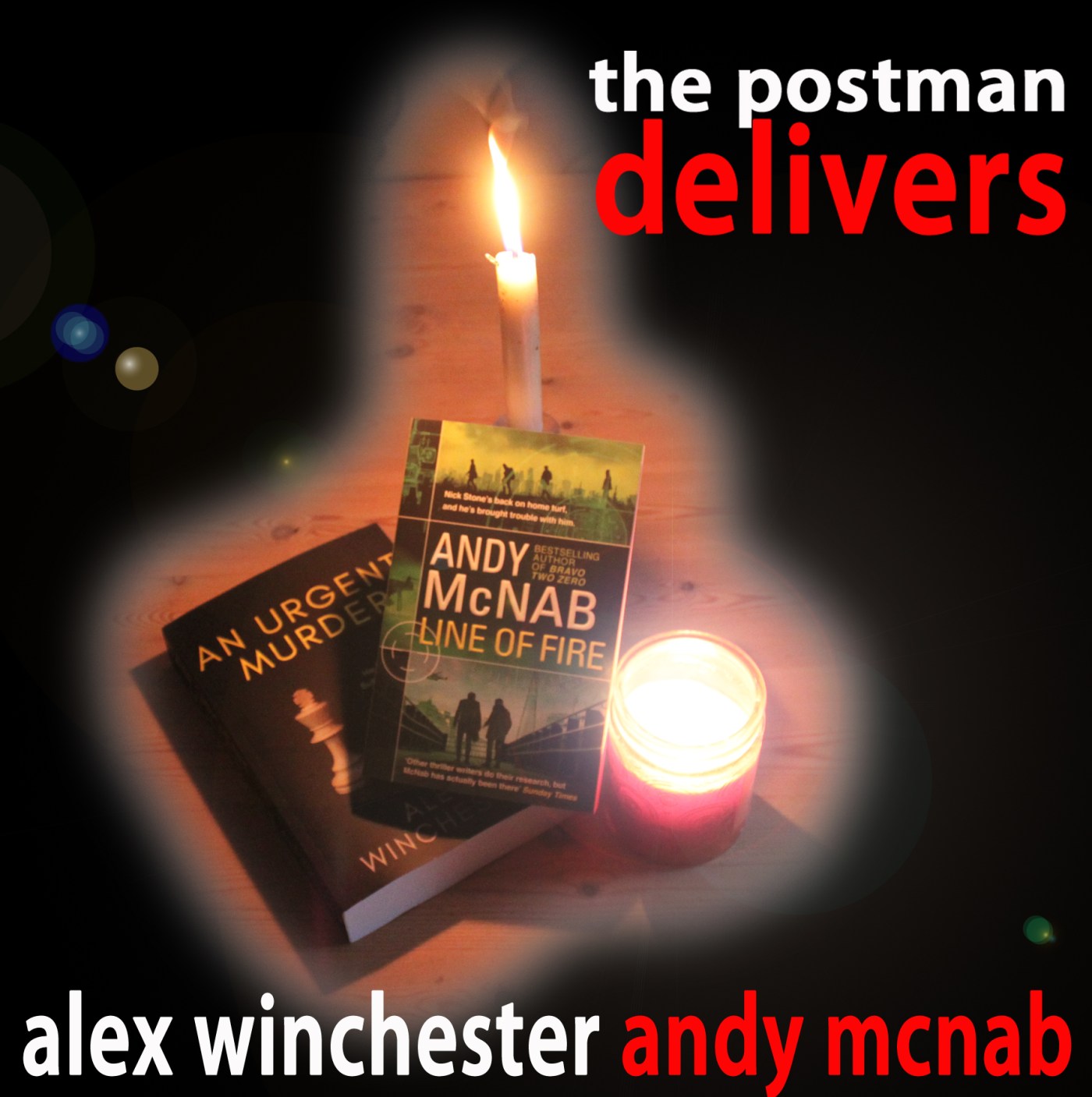

 It is tempting to add the cliché “who needs no introduction” but it won’t hurt to remind potential readers that the man known as Andy McNab is, in real life, a highly decorated soldier. You don’t receive the Distinguished Conduct Medal for services to military administration, nor is the Military Medal awarded for excellence in ceremonial drill. McNab’s most popular fictional hero returns in Line of Fire, and former Special Forces operator Nick Stone is, as usual, up to his eyes in trouble. He has been given the job of taking out an unusual target. One, it’s a woman and, two, she is a hacker so skilled that her clattering keyboard can potentially disrupt commerce, destroy communications and bring down governments. Line of Fire is published by Corgi/Transworld/Penguin Random House and will be available
 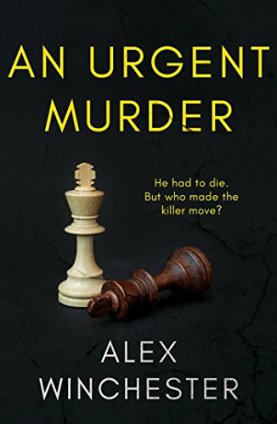 Ex Met-Police detective Winchester says of his debut novel:
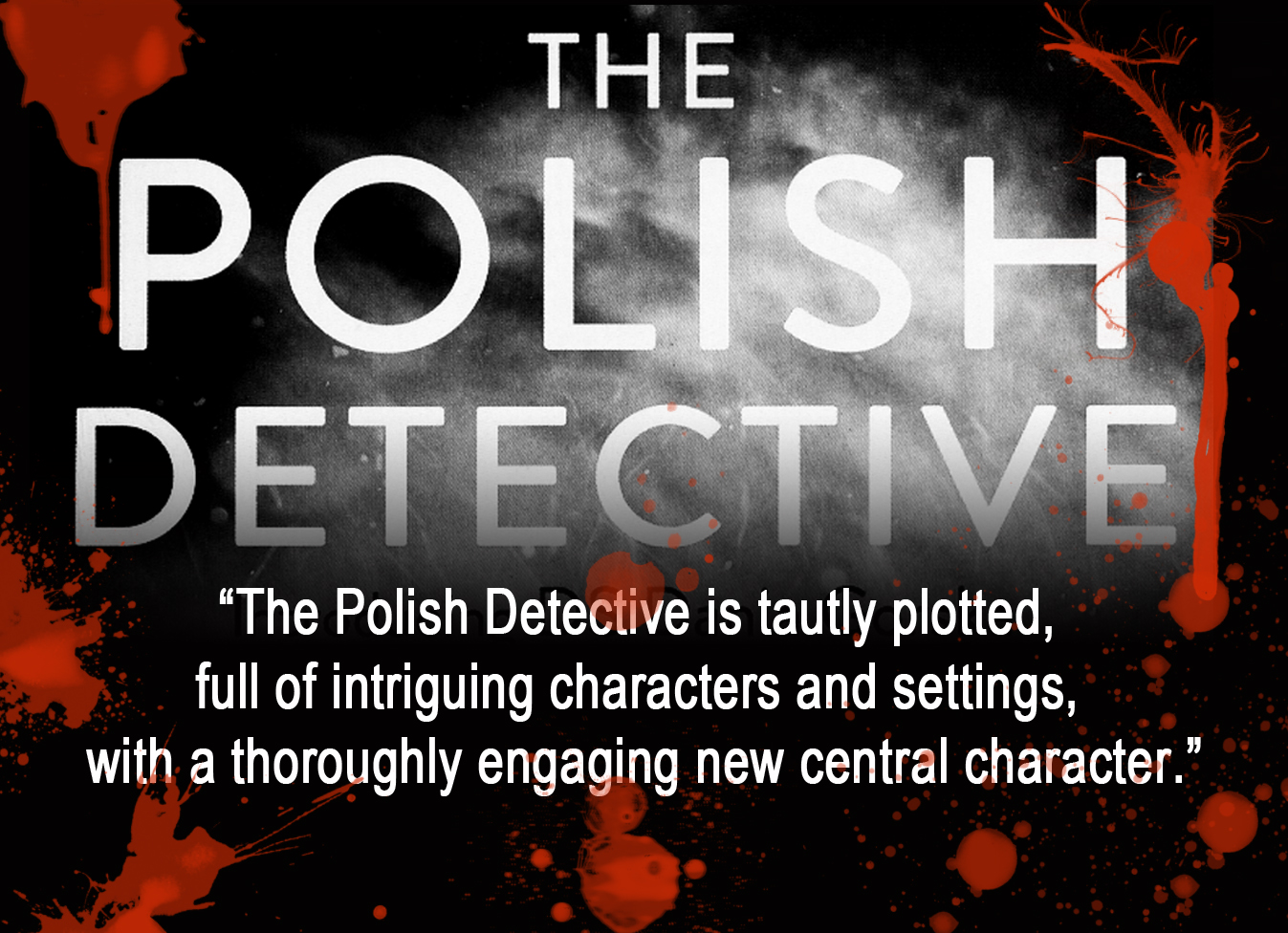
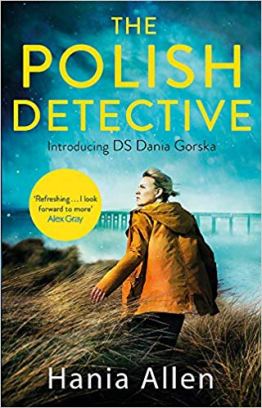 Dania Gorska has come to work in Dundee after starting her career in London with the Met. A divorce from husband Tony (watch out for the clever twist) has left her footloose and fancy free. Her exemplary record has meant she has enjoyed a swift and welcome transfer to Police Scotland. She lodges with her brother Marek, who is an investigative journalist.
 The Polish Detective is in some ways a standard police procedural which chugs along nicely on its accustomed rails. All the usual characters are present and correct; no such story would be complete without a dyspeptic senior officer, the obligatory post mortem scene with a sarcastic medical professor wielding the bone saw, the male junior detective who thinks he’s Jack – or perhaps Jock – the Lad, and the mind numbing tedium of the door knocking and CCTV scanning that sits behind every brilliant solution to a murder mystery. What lifts this book above the average is the character of Dania Gorska herself, and in particular her musical passion for, naturally, her great countryman Frédéric François Chopin and his sublime piano music. Hania Allen (right) describes herself as a pianist who makes up in enthusiasm what she lacks in talent, but under the fingers of DS Gorska, the great man’s preludes and nocturnes shimmer and sparkle throughout the pages, and the darker notes of the Polish soul are never far away.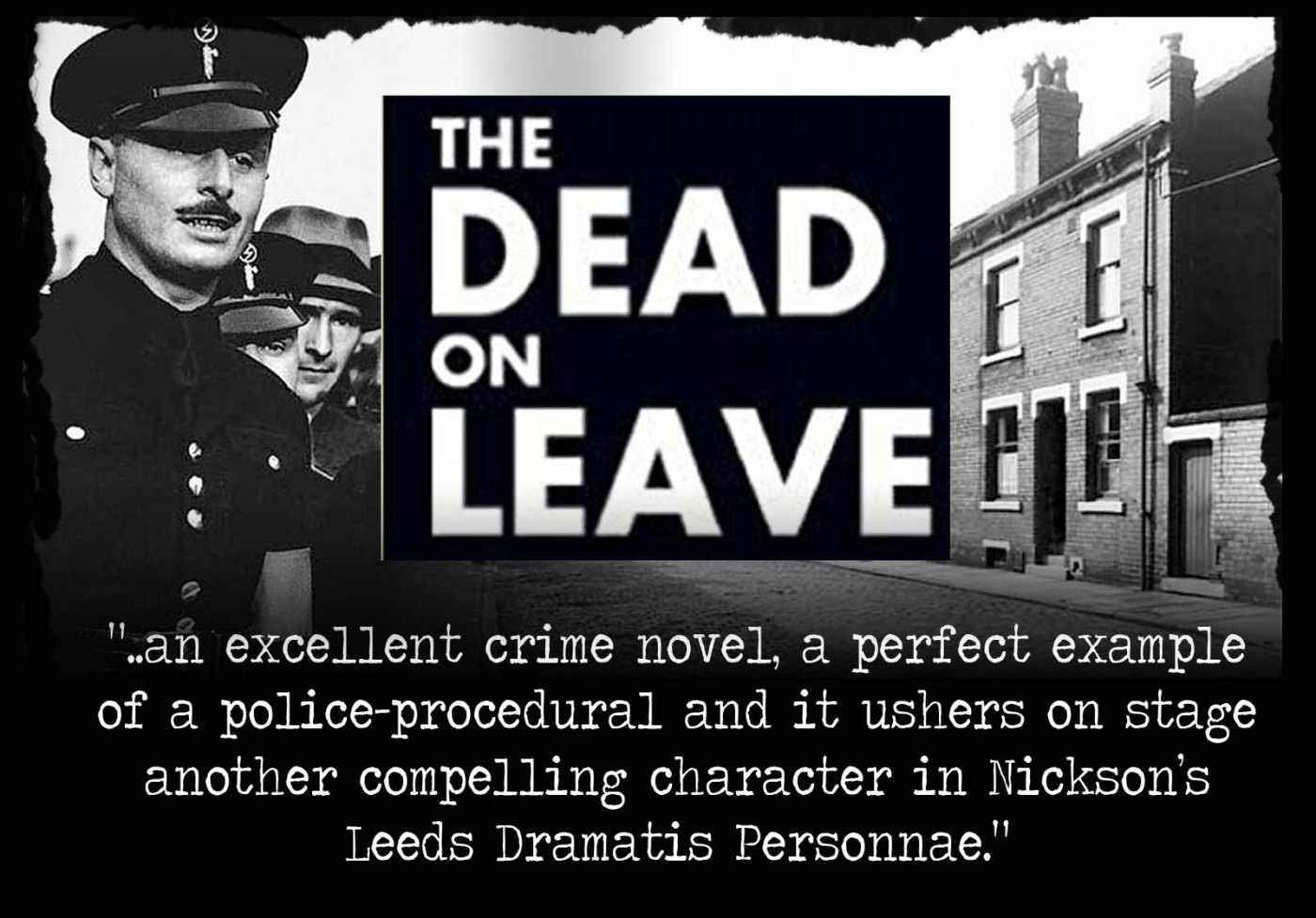

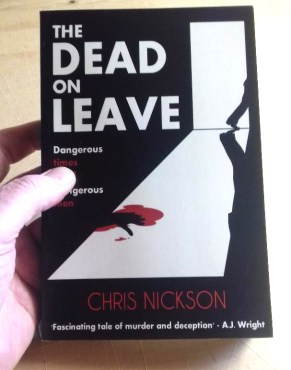 It appears the dead man is a would-be follower of Sir Oswald Mosley, charismatic leader of the British Union of Fascists and, after an appearance in Leeds by Mosley and his Blackshirts turns into a riot, it is tempting for the police to think that the murder is politically inspired. As Raven tries to make sense of the killing, he has his own demons to face. Like many other Yorkshiremen, Raven is a Great War veteran, even though his war was brief and horrific. Only able to see active service in the dog-days of the conflict, he was unlucky enough to be close to a fuel dump which was hit by a stray shell. There’s a line from a song about that war, which goes,
 The Dead On Leave is very bleak in places. Hope is in short supply among the working people in Leeds, and men have no qualms about building a wooden platform for Moseley to rant from, because a job is a job; consciences are a luxury way beyond the reach of folk whose families have empty bellies. Nickson (right) is a writer, with social justice at the front of his mind and he wears his heart on his sleeve. I doubt that he and I agree on much in today’s political world, but I can think of no modern British author who writes with such passion and fluency about historical social issues.
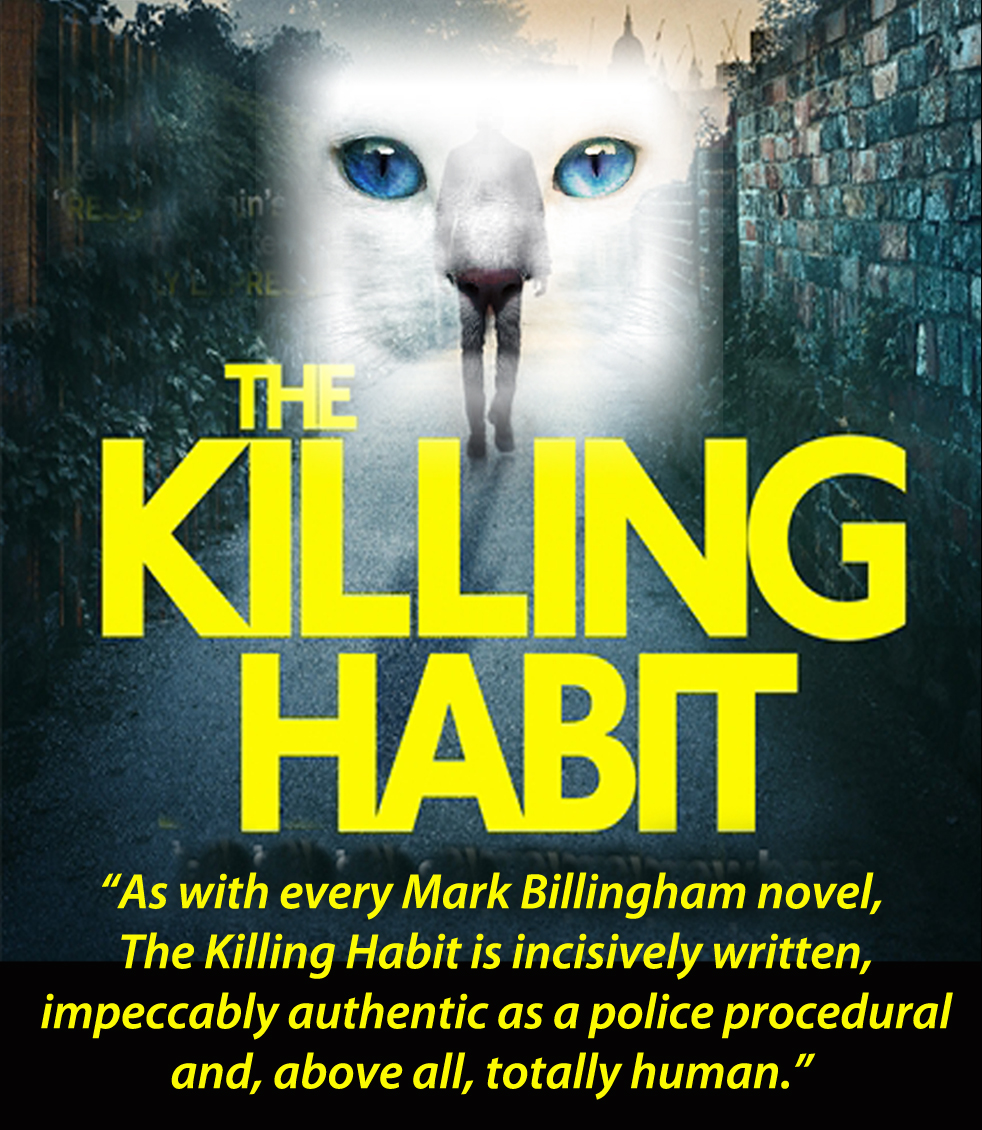

 The Thorne novels have a recurring cast list. As Salvatore Albert Lombino, aka Ed McBain said, quoting a 1917 popular song, “Hail, Hail, The Gang’s All Here!” Indeed they are. Its members include Helen, Tom Thorne’s long suffering partner plus little boy Alfie, and the bizarrely tattooed and pierced Mancunian pathologist Phil Hendricks. We have Nicola Tanner the police officer scarred by the murder of her alcoholic partner, Susan, and the perpetually cautious DCI Russell Brigstocke. Between them, they pursue two killers; one who murders losers-in-the-Game-of-Life on the periphery of a drugs gang, and another who seems to be targeting lonely women via a match-making service.
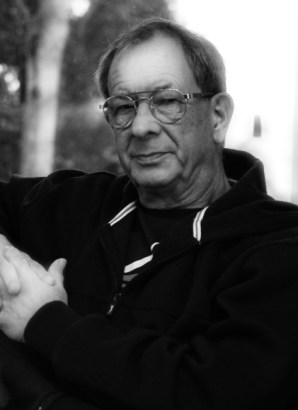
 Just when you think that he has provided all the answers to the complex plot, and the characters are, to quote the only bit of Milton I can remember from ‘A’ Level, “calm of mind and all passion spent,” Billingham (right) provides a breathtaking epilogue which, in addition to turning my preconception on its head, (feel free to add your own metaphor) bites you on the bum, punches you in the gut, hits you over the head with a piece of four by two, takes the wind out of your sails and grabs you by the short-and-curlies. Hopefully recovering from this multiple assault, you will be hard pushed to disagree with me that this is a brilliant crime thriller written by a master storyteller at the very top of his game.

 While Elder whittles away his time helping out the local police force with difficult cases, and his wife gets on with her own life, Katherine is eking out an existence in a North London flat share, trying to hide the scars – both real and figurative – of her abduction. She has taken to modelling for life drawing classes in an effort to pay the rent independent of her mother’s generosity, and this has led her into a relationship with a highly respected artist whose career is on a definite upward surge.
 Body and Soul also takes an unflinching look at how love in itself is sometimes not enough – or possibly too much. I read elsewhere that this is to be John Harvey’s last novel. If this is the case then regret is permissible, but dismay would be churlish. We can only thank John Harvey (right) for his matchless legacy. Body and Soul is published by William Heinemann,



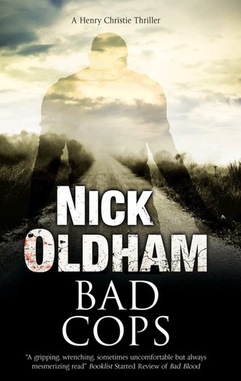 His resolve weakens, however, when he is visited by two of his more senior officers, his own Chief Constable and the newly appointed boss of the Central Yorkshire force, John Burnham. The Yorkshire police has suffered a disastrous inspection, and Burnham has been appointed to cleanse the Augean Stables.
 Oldham (right) is a retired copper himself, so readers are guaranteed procedural details which are described with total authenticity, whether they be the smelly reality of unmarked police cars used for observation, complete with the detritus of discarded fast food wrappers and the inevitable flatulent consequences, and an intriguing – and quite scary – use for Blutac and two pence pieces.

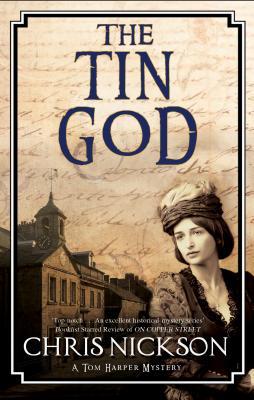 Outraged leading articles appear in local newspapers, but someone believes that the sword – or something equally violent – is mightier than the pen, and a homemade bomb destroys a church hall just before Annabelle Harper is due to speak to her supporters. The caretaker is tragically killed by the explosion, and matters go from bad to worse when more bombs are found, and several of the women candidates are threatened.




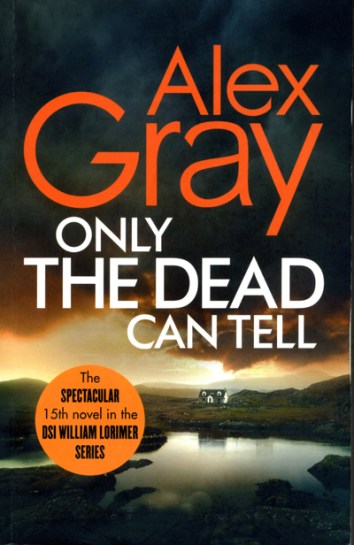 Lorimer has become bogged down in a partially – and only partially – successful investigation into murder, prostitution and people trafficking based in Aberdeen. In the Granite City some entrepreneurs, denied a living by the decline in the oil and gas industries, have taken to trading in other commodities – human lives. However, to borrow the memorable line from The Scottish Play, Lorimer’s team have “scotch’d the snake, not kill’d it.” The head of the gang responsible for taking young and innocent Romany women from impoverished Slovakian villages, and setting them to work in Scottish brothels is known only as “Max”. The very mention of his name is enough to silence witnesses, even those who have every reason to long for his downfall. But how – if at all – is Max connected to Peter Guilford, arrested for his wife’s murder, but now beaten within an inch of his life while on remand in Glasgow’s Barlinnie prison?
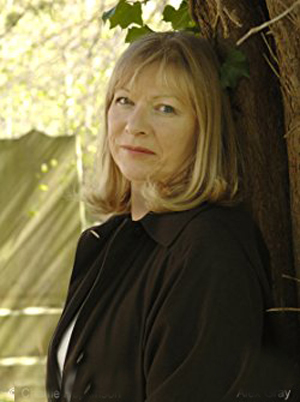 The British police procedural – the Scottish police procedural, even – is a crowded field, and each author and their characters tries to bring something different to choosy readers. Where Alex Gray (right) makes her mark, time and time again, is that she is unafraid to show the better things of life, the timeless touches of nature in a summer garden, or the warmth of affection between characters, particularly, of course, the bond between William and Margaret Lorimer. Here is one such moment:


 fullybooked2017