
 he name Maurice Procter is not one that is regularly bandied around at crime fiction festivals when the Great and The Good are discussing pioneering and innovative writers of the past. He is, just about, still in print thanks to the wonders of Kindle and specialist reprinters such as Murder Room. I’m reluctant to use the fatal words “in his day”, but Procter was a prolific and popular writer of crime novels between 1947 and 1969.
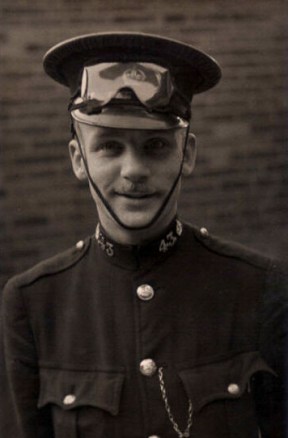 Born in the Lancashire weaving town of Nelson, Procter (left) joined the police force in nearby Halifax in 1927 and remained a serving officer until the success of his novels enabled him to write full time. In 1954 he published the first of a fifteen book series of police procedurals featuring Detective Inspector Harry Martineau. Martineau is a detective in the city of Granchester. Replace the ‘Gr’ with “M’ and you have the actual location pegged.
Hell Is A City is a dark tale which pivots around the enmity between Martineau and a violent and resourceful criminal called Don Starling. Starling is as hard as nails and doesn’t shrink from brutality towards fellow men – or women. Starling is ‘doing time’ but acts like a reformed man in order to escape close prison supervision. Naturally, he seizes his moment and goes over the wall and on the run.

 tarling wastes no time in organising his next heist, and it is a daring cash grab. The victims are two hapless young clerks who work for city bookmaker Gus Hawkins. On their way to the bank with a satchel full of takings from Doncaster races, they are waylaid. Colin Lomax is coshed and left with a serious head injury but Cicely Wainwright fares even worse. Because the money bag is chained to her wrist, she is flung into the back of the getaway van and is killed by Starling as the gang make their escape over the moors to the east of the city. The bag is cut from Cicely’s wrist, and her body is dumped. Of course, this ups the stakes, much to the discomfort of Starling’s gang members, each of whom realises that they face the hangman’s noose if they are caught and convicted as accessories to murder. The hangman, by the way, is a well-known local resident:
“Clogger and Jakes turned their heads quickly, their smiles fading. They stared. Then Jakes pulled Starling’s knee aside and looked down at the girl’s face.
‘Cripes!,’ he said unhappily, “She’s croaked.’
Starling nodded. ‘Some time ago,’ he said.
‘You bloody fool,’ said Jakes, his voice rising with panic.
‘Hell fire!’ Clogger whispered, and he had indeed turned pale. ‘You didn’t have to do that, did you?’
Laurie Lovett was silent. He kept his eyes on the road as if nothing had happened. But a muscle of his jaw had started to twitch.
The same fear was upon them all. They were reminded of a man they knew by sight. He kept a pub in Hollinwood. The name of the pub was Help The Poor Struggler. The man’s name was Albert Pierrepoint.”
 I was quickly hooked by this novel, for a variety of reasons. Anyone who has driven east out of Manchester in the direction of Sheffield (which makes a brief apparance as Hallam City) will recognise the changeless face of the moors, with their isolated pubs and gritstone houses clinging to the roadside. What has changed, however, is the view back towards Manchester. Where, in the early 1950s Martineau saw mill chimneys belching smoke, today we could probably, apart from the haze of vehicle emissions , see almost to the Irish Sea. We also know that Cicely Wainwright’s’s body would not be the last to be abandoned in the cottongrass, heather and bilberry of the Dark Peak.
CriFi buffs know that fictional Detective Inspectors are meant to have disfunctional personal lives. Few and far between are happy family men and women with faithful and understanding spouses who understand and compensate for the rigours of police work. Intriguingly, it is Martineau’s wife who is, at least initially, the guilty party. She is vain, socially over-conscious and, perhaps, sexually repressed.
“Julia Martineau was not unfaithful and it was impossible to suspect that she ever would be. She was only interested in fine clothes, social standing, attractive houses, and the affairs of her acquaintances. The connubial behaviour of other people (as a topic of scandalous conversation) was of more interest to her than her own or her husband’s. She was rarely aroused. The conjugal act was sometimes a duty, sometimes a favour to be granted, and always a ceremony which she allowed to be performed after it had been suitably prayed for. Lately, Martineau had ceased to pray.”
here are few happy marriages or standard relationships in Hell Is A City. Gus Hawkins has a young wife is a libidinous and money-grabbing charmer who has history with the dangerous Starling. Martineau’s driver and gofer, DC Devery, has a loving but precarious relationship with the beautiful Silver, who is a deaf mute. By the by, your Starter For Ten: which legendary fictional policeman is married to a beautiful deaf mute? No prizes, but that detective operates a long, long way from Manchester.
It would be pretentious and anachronistic to push this novel into the category box labelled Noir. That said, its low-key realism and unflinching depictions of the criminal class not only reflects Procter’s time with the police service but a reveal a gift for brevity and the essentials of story-telling which mark him out as a natural author, untaught but with an acute ear for dialogue and a genuine sense of the rough edges and frailties of human lives where unfulfilled aspirations nag away at happiness.
Murder Room do a budget-printed paperback of Hell Is A City, and second-hand editions are also available if you are prepared to splash the cash. The novel was made into a film, starring Stanley Baker as Martineau, and I will write about that in a later post.
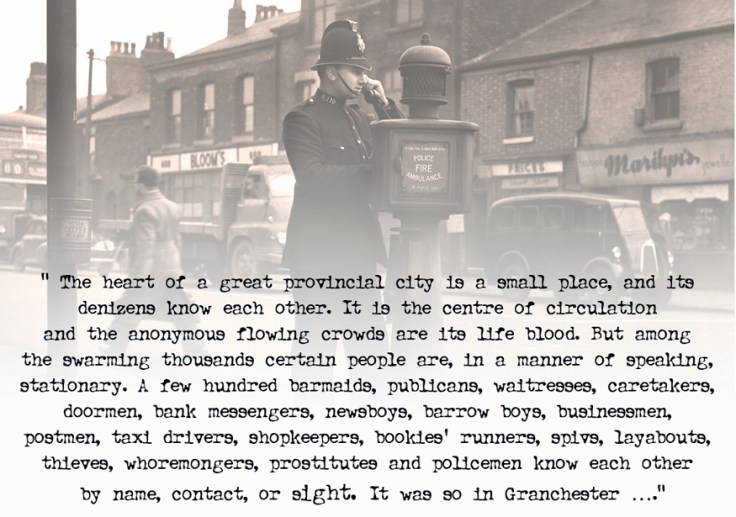


 n a fictional world overflowing with disfunctional detectives who happen to be rather good at their jobs, Joseph Knox has raised, or perhaps lowered, the bar considerably with his DC Aidan Waits. We first met Waits in
  Together with his grotesque partner and immediate boss, DI Peter Sutcliffe, Waits always gets the shitty end of the stick. ‘Sutty’ Sutcliffe is, you might say, a good old fashioned copper. Waits goes to meet him in a dingy rock-and-roll boozer:
 hy is Aidan Waits such a tortured character? Well, how long have you got? His childhood was loveless and chaotic, and spent largely in institutions where he rubbed shoulders with trainee failures, malcontents and killers. Echoing Nietzsche’s chilling remarks about the moral abyss, Waits has, more recently, gazed too long into a chasm inhabited by a repellent Manchester crime lord called Zane Carver. Carver has fed Waits’s drug habit, and the two have fought over women. Carver has a particular talent with women:
 s distinctive as Knox is as a stylist, and as much as he is a master of the inky black metaphor, he has a tale to tell and a plot to spin. The sepulchral calm of Martin Wick’s closely guarded hospital room is shattered by a savage attack which Waits survives, but puts him at the head of the queue as the police and the gutter press search for scapegoats. With Carver having decided to exact revenge on Waits by donning his black cap and pronounced the death sentence, Waits is on the run both from the gangster and, no less implacably, his politically motivated senior officers, but he keeps them at bay. He discovers faint-but-fatal fault lines in the original case against Martin Wicks, and finds that both Kevin Blake, the detective who brought Wicks to justice, and Frank Moore, the father of the murdered children, still have songs to sing.
 Joseph Knox writes like an angel. Possibly an Angel of Death, but he grasps the spluttering torch of English Noir once carried by such writers as Derek Raymond, and runs with such vigour that the flame burns brightly once again. He is not without humour, and there are many – if unrepeatable – gags exchanged between the cynical cops and their low-life prey. The politically correct nature of modern policing doesn’t escape his attention, either:
 nox has his grim fun with a Manchester police force that is barely honest, city down-and-outs who have lost most of the trappings of humanity, and an infestation of tattooed, Spice-addicted thugs straight from Central Casting – with Hieronymus Bosch as the agency’s head of HR. He also leaves us with a delightfully enigmatic final few pages. The Sleepwalker is published by Doubleday and will be
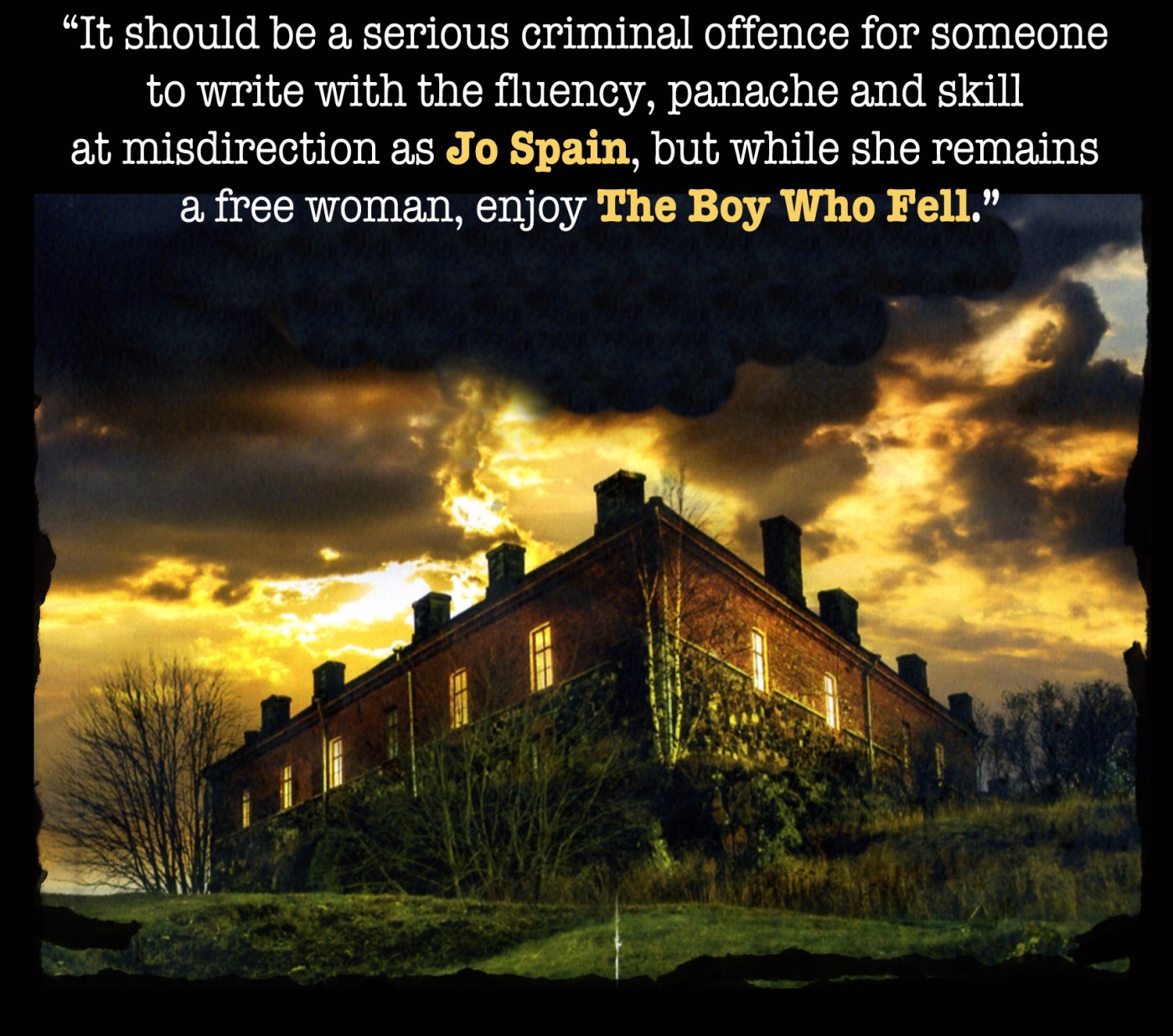

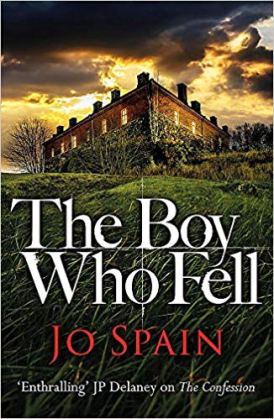 This is a chillingly clever whodunnit shot through with a caustic examination of life among the moneyed classes of contemporary Ireland, particularly Dublin’s nouveau riche and their over-indulged teenage children. Fans of Jo Spain’s DI Tom Reynolds will be overjoyed to see him return for his fifth case, and those who know the author only through her spellbinding standalone novels such as
  aniel is related to one of Tom Reynolds’ most respected officers, and when she asks him to take a look at the case, he reluctantly agrees. There are just one or two complications, though. First, Daniel is refusing to say anything – not a word – to investigating officers or his lawyer. Then, Reynolds becomes aware that Daniel is gay, and that, despite protestations from parents and friends, it appears that Danny and Luke were “an item.” Thirdly, the grief of Luke’s parents at his death has to run alongside the tragic demise of Luke’s twin brother Ethan, who is near death in a local hospice.
 Jo Spain is the literary Diva of Deviousness, and while we learn early in the piece that Glenmore House has a bloody history, she waits for some while before reconnecting the earlier slaughter with the death of Luke Connolly. When she does – and Reynolds realises the connection a paragraph or three before we do – the investigation takes on a whole new slant.
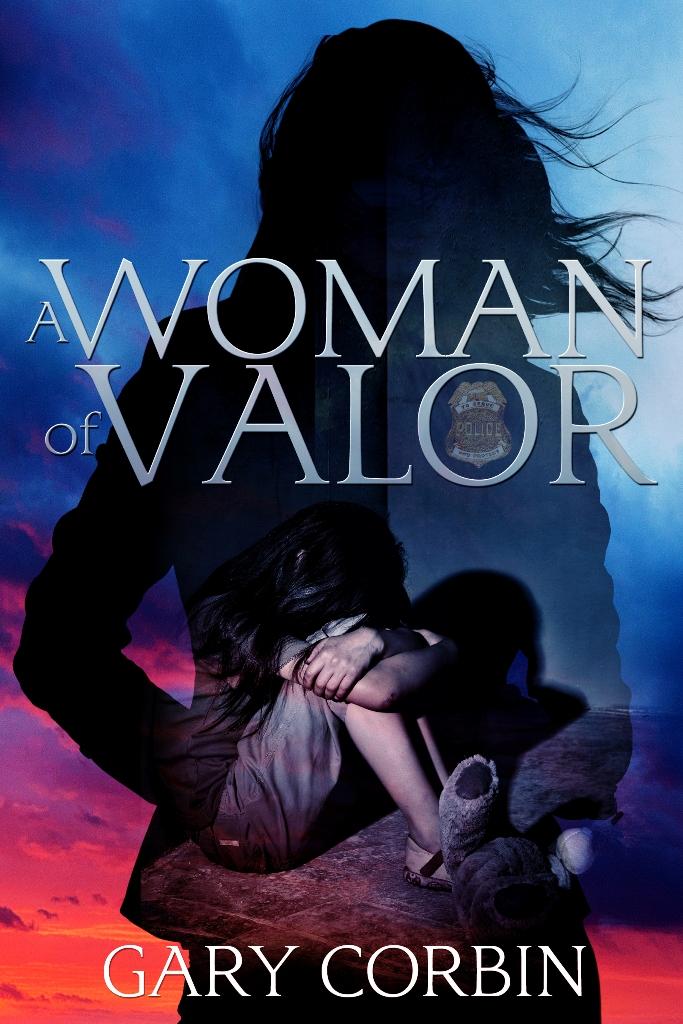

 Okay, so this was the ePostman rather than the local Royal Mail employee, but US writer Gary Corbin has a new book out, and his stuff is always worth a mention.
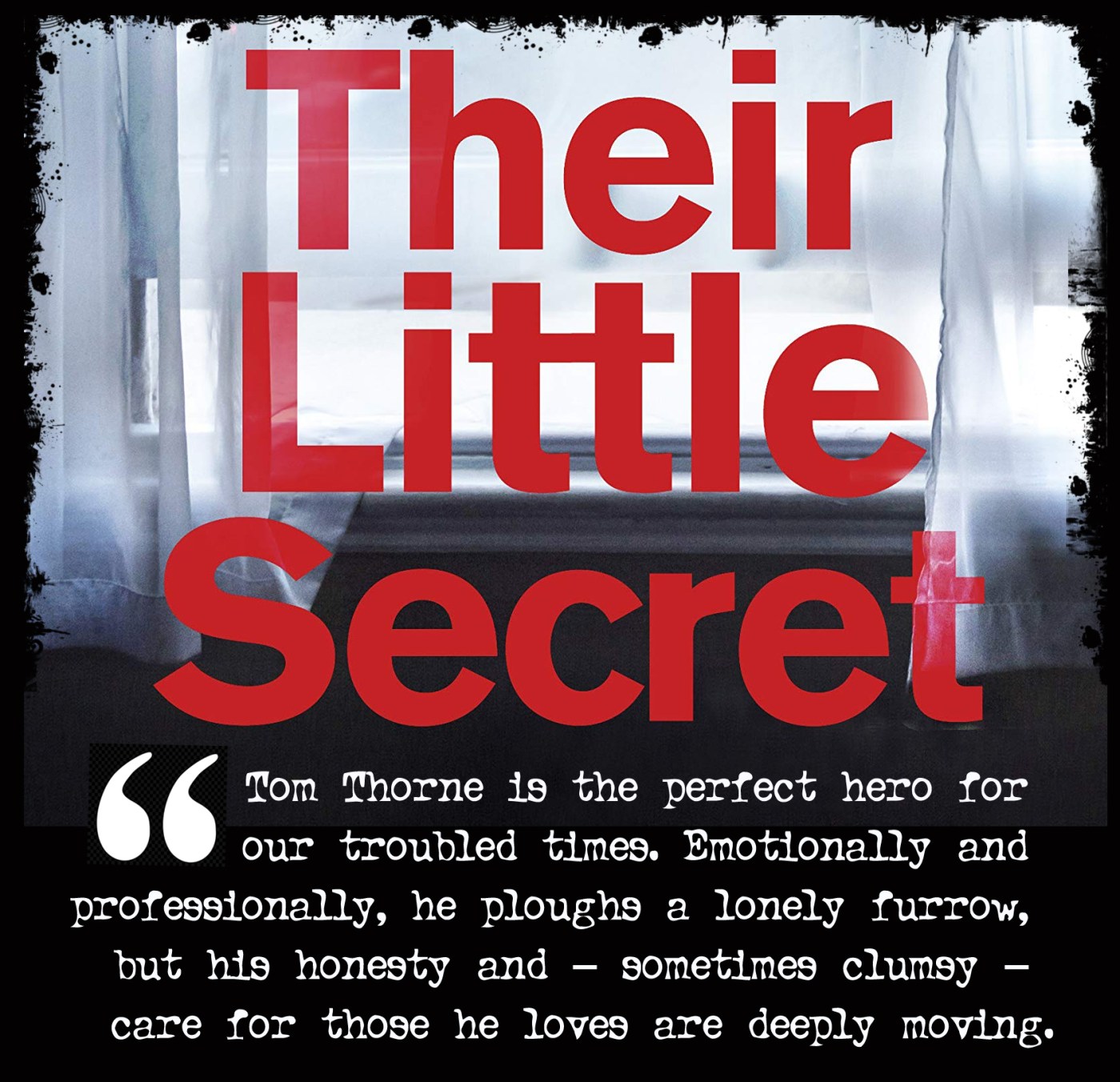

 London copper DI Tom Thorne has been entertaining us since his debut in Sleepyhead (2001). His creator, Mark Billingham, (left) has developed an enviably reliable repertory company of other players who share the stage with the main man. There is his best mate Phil Hendricks, a pathologist who, despite being gay, supporting Arsenal against Thorne’s beloved Spurs and having piercings in places where most folk don’t even have places, is the voice of sanity in Thorne’s often chaotic world. Thorne’s love interest (from whom he is currently living apart) is Helen, another police officer, but one who works in the traumatic world of child protection. Nicola Tanner is Thorne’s professional partner and they have history, but not one that either reflects on with much pleasure. Tanner’s partner Susan was brutally killed in a previous episode, and her death hangs over the pair like a pall.
 In an ostensibly unconnected narrative thread, Billingham introduces us to a Sarah, a vulnerable single mum who is anxious to gain the approval of other mums with whom she waits at the primary school gate twice each day. They seem confident, successful and financially comfortable. Sarah tries to join in with their daily sojourn at a pretentious ‘artisan’ coffee shop after the morning school run, but she still feels like the outsider. Her world is just herself and her son Jamie, and she struggles to compete with the gossip and banter that fly like sparks between Karen, Caroline, Savita and Heather. Until. Until the day when, sitting apart at her own table in HazBeanz, Sarah is chatted up by distinctly fanciable slightly older fellow. Almost instantly, Sarah finds the others anxious to swap phone numbers in return for daily updates about the new romance.


 Later that year, with Brixton quieter, despite other English towns and cities erupting in copycat anger, Hobbes has become embroiled in a bitter internal dispute. A fellow copper, Charlie Jenkes (who rescued Hobbs from the mob on that fateful April night) after being indicted for savagely beating a black suspect, has taken his own life. And the officer who testified to Jenkes’s violence? Henry Hobbes, who, with that single act of honesty, is branded as a Judas by his own colleagues.
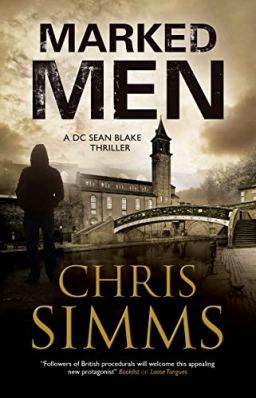 Marked Men begins on an idyllic Spanish beach, but then switches to the less salubrious setting of urban Manchester, and we only learn the significance of the opening much later in the plot. This way of starting a novel has become rather well-worn, but Simms handles it well and times to perfection the revelation of its significance. The Manchester action begins with Blake in waders and hard hat at the bottom of a drained lock on a local canal. There is a body, naturally, with more to follow, and as Blake and his immediate boss, DS Dragomir criss-cross the city trying to make sense of the crime scenes we – like them – are drawn into thinking that the deaths are revenge killings. But who, exactly, is avenging what? This is where Chris Simms leads us – and his detectives – a merry dance. There is a clue, but I have to confess I didn’t get it any quicker than did Blake and Dragomir.




 Norway’s Samuel Bjork ticks the boxes with his Olso cops Holger Munch and Mia Krüger. Munch is a bearded bear of a man, overweight and stuffed into his habitual duffel coat like a fat foot into a shoe two sizes too small. His home life is in disarray. Separated from his wife, his daughter Miriam recovering from a serious injury, he seems to treat those people with – at best – edgy tolerance, but his obsession is with the job, and catching criminals. Krüger’s back story makes Munch’s people look like candidates for a TV breakfast cereal advert emphasising warm family values. The story opens with her recovering from – in no particular order – alcoholism, a fatal shoot-out after which she was accused of murder, and the haunting death of her sister, victim of Oslo’s drug scene.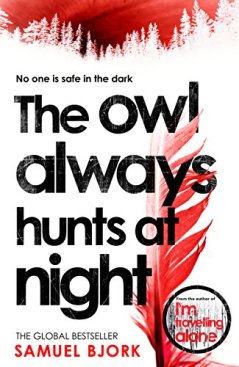


 Forced to play cherchez-la-femme, the detectives stumble down one blind alley after another, but as they do so they learn a few home truths about the fate of the young men who went to fight in the war-to-end-all-wars, and returned home to find that their birthplace was not the ‘land fit for heroes’ glibly promised by politicians. There is a peacetime army with no place for young officers whose courage was welcome in the trenches, but whose humble upbringing is now seen as an embarrassment as the cigars are lit, and the port passed in the correct direction at mess dinners. Such young men, not all heroes, but men nevertheless, are forced to find civilian employment which is neither honest, decent nor lawful.
 Graham Ison is a master story-teller. The Hardcastle books contain no literary flourishes or stylistic tricks – just credible characters, excellent period detail and an engaging plot. Cosy? Perhaps, in the sense that we know how Hardcastle and his officers are going to react to any given situation, and their habits and small prejudices remain unchanged. Comfortable? Only because novels don’t always need to shock or challenge; neither do they always benefit from graphic descriptions of the damage humans can sometimes inflict on one another. Ison (right) credits his readers with having imaginations; he never gilded the lily of English life in the earlier Hardcastle cases which took place during The Great War, and he doesn’t start now, nearly a decade after the final shots were fired. The suffering and trauma of those four terrible years didn’t end at the eleventh hour on that eleventh day; they cast a long and sometimes baleful shadow which frames much of the action of this novel.


 fullybooked2017