
Search

fullybooked2017

Tag

murder

ALL THAT LIVES . . . Between the covers

atl011 copy

Back in the day I was a school music teacher, and I remember one Christmas – always the busiest time of year – turning out one cold night for yet another carol service. I remember saying something along the lines of, “I never want to hear ‘O Little Town of Bethlehem’ ever again in my life!” An older and wiser colleague said, “Yes this is the sixth carol service you’ve played at in as many days, but you need to remember that for most of the people here tonight, it’s their only one this Christmas, and those are the people you are playing for.”

ATL coverThat reminiscence may seem unrelated to a book review, but it is relevant. When reviewing the latest book in a long and successful series it is tempting to think that all prospective readers will be fully up to speed with the quirks and history of the main characters. But that’s not so. Thankfully, people come to books at different times and for different reasons, so a paragraph about Edinburgh copper DI Tony McLean won’t be wasted. If you already know, then just skip ahead.

DI Tony McLean is a middle-aged police officer, but not your normal fictional copper. For a start he is very rich, thanks to a family inheritance. He was educated privately at a boarding school in England, an experience he hated at the time, and it still gives him nightmares. His significant other is a woman called Emma, and author Oswald gives her an interesting role in the books. She has been subject to various health scares in the past – including a tragic miscarriage – and she has always seemed the vulnerable one in the partnership. McLean has been gifted – or cursed – with a certain sensibility towards things paranormal, and although the supernatural is not overplayed in the books, there is a sense that McLean sees – and feels – things that his colleagues cannot. One of his acquaintances is a person who lives his life as a female psychic called Rose, and she is frequently warns McLean of things which he may not yet be aware of. McLean’s nemesis (apart from his various bosses) is a mysterious woman called Mrs Saifre, ostensibly a rich patron of charitable causes, but with a sinister hand in all manner of more dubious enterprises.

Still with me? Good! So, to All That Lives, the twelfth in an unfailingly brilliant series. The core of the novel is the police search for the source of a virulent narcotic which, when ingested, causes extremely violent – and fatal –  seizures. Just as troubling for McLean is a pair of discovered bodies – one from medieval times, and another from the 1990s. What disturbs him, is that the positioning of the bodies is unusual – and identical in both cases. A third body is discovered and the circumstances match the previous two. What hellish connection links the three corpses over a period of 700 years?

Things go from bad to worse for McLean’s major Incidents Team. First McLean is distracted by Emma falling seriously ill, and he wears himself thin between being at her bedside and trying to solve the case. When he himself disappears, the investigation is in danger of imploding. Detective Sergeant Janie Harrison, with the help of Grumpy Bob – the pensioned-off copper who is in charge of old case files – manages to find what links the bodies and the fatal drug, and the conclusion is violent and dramatic. James Oswald always likes to end these stories with a shock, and the final few paragraphs of All That Lives which is published by Wildfire on 17th February – are no exception. For reviews of earlier books in this series, click the author’s image below.

JO

THE SPALDING POISONER . . . Edward Bell (3)

TSP HEADER

SO FAR: Spring, 1899. Spalding farm labourer Edward Bell, seeking a relationship with a more sexually attractive woman, has poisoned his wife, Mary Eliza. While playing the part of the grieving husband at her graveside, he has already sent a telegram to the object of his affections, Mary Hodson.

On Sunday 30th April 1899, Edward Bell proposes marriage to Mary Hodson, and she accepts. Less than a week later, Mary Fox – Mary Eliza Bell’s mother receives an anonymous letter. It reads:
|Letter

In a case full of improbabilities, this is the strangest occurrence of all. Why would Bell, believing that he had fooled everyone, then send a letter to his mother-in-law. virtually confessing to the murder of his wife? Whoever actually wrote the letter, there were immediate repercussions. Mrs Fox wasted no time in bringing the letter to the attention of the Spalding police, and Bell was arrested on suspicion of murder.

One might have hoped that Mary Eliza Bell’s sufferings had ended with her burial in the quiet churchyard of All Saints Orby, but she was to have one final indignity inflicted on her. On the order of the Boston Coroner, her body was exhumed,and she was eviscerated, her internal organs sent in glass jars to a senior pathologist in London, and he found ample traces of the poisons that caused her death.

Edward Bell’s luck had run out, after an improbable series of deceptions of family members, the medical profession, and the police. On Tuesday May 9th, 1899, he was arrested on suspicion of having murdered his wife. After a series of magistrate hearings and coroner’s inquests, he was sent for trial at the summer Assizes in Lincoln.

As Bell made a sequence of public appearances at hearings and inquests, one might have thought that public anger would be directed his way, but the crowds that use such court hearings as entertainment were more exercised about his love interest, Mary Skeels Hodson (below)

Hodson

Edward Bell was hanged in LIncoln Gaol on Tuesday 25th July 1899. A newspaper reported the solemn occasion:

“The prison bell began to toll at about a quarter to nine, but some time before that Bell had been removed from the condemned call to the pinioning room. It was here that he was engaged in prayer with the Chaplain when the High Sheriff’s representative entered. The process of pinioning was then immediately began, Bell submitting himself with perfect quietness. While this fearful ordeal was in progress Bell turned to Dr. Mitchinson and, in voice that betrayed little agitation, thanked him for his kindness and attention, and then turning to the officials thanked them for their kindness. When all these preliminaries had been duly observed, the procession moved towards the scaffold. Bell walked with a firm step, and as soon as he stood on the fatal drop Billington speedily strapped his legs and adjusted the noose. The white cap was then drawn over the prisoner’s face, shutting out the light of earth from his eyes for ever.”

I  research and write about many historical true crimes. Almost all are committed by men, and with most of those, the victims are women. This story is from 1899, a time where women couldn’t vote, and had few legal rights regarding money and property. What chills my blood with this story is the stark reminder of the dire state of what we would now call sexual politics back in the day. Mary Eliza Bell – the victim in this case had, since she married Edward Bell in 1893, been constantly pregnant for as long as it was medically possible. From their marriage until her death in 1899, she had given birth to six children. Two survived. It doesn’t take a huge leap of imagination to conclude that Edward Bell, faced with his wife’s understandable weariness with sex, would look elsewhere. He was still relatively young, virile, and presentable. Who better to satisfy his needs than a young woman, unburdened and undamaged by childbirth, in an adjacent cottage?

Edward Bell paid the ultimate price for his misplaced sexual energy, and we can only tip our hats to the wisdom of the judge and jury at his trial. He killed a decent and caring woman in, perhaps, the most brutal and excruciating way possible. For me, Edward Bell can rot in hell, but spare a thought for the countless women who, before the days of safe and effective birth control, bore the pain of being the legal victims of what used to be called ‘conjugal rights’.

A FATAL CROSSING . . . Between the covers

Untitled-1

There’s a pleasantly old fashioned feel to Tom Hindle’s debut novel, and that’s not simply because it is set on board a transatlantic liner in 1924. Neither is it because Hindle (below) has chosen to write a pastiche of a Golden Age murder mystery. It’s more to do with the patient and careful plotting, and the absence of distracting then-and-now time frames and tricksy playing around with multiple narrators. So, what do we have?

Screen Shot 2022-01-25 at 18.36.03

The Endeavour is sailing from England to America with 2000 passengers and crew. November in the Atlantic is not a time for the travelers to be spending much time on deck taking the sea air, but the atmosphere becomes distinctly chillier when an elderly man is found dead at the bottom of a companionway. Endeavour’s Captain – on his final voyage before retirement – and Ship’s Officer Timothy Birch are anxious to log the death as an unfortunate accident on a slippery surface, but another passenger – English Detective Inspector James Temple – is not so sure. He is heading for New York on police business, about which he initially remains tight-lipped, but he is convinced that the death of Denis Dupont is no accident.

The essence of the problem facing Birch and Temple is that once Endeavour docks in New York, the passengers, including the murderer, will disperse to the four winds. Fans of true crime will be reminded of the real life drama which was played out on the Atlantic liner Montrose in 1910 when Hawley Harvey Crippen was arrested trying to flee British justice. Things are not so straightforward for Temple and Birch, however, as they uncover a complex plot involving other passengers, art fraud and various other deceptions.

I said at the outset that the book’s style is relatively straightforward, but Tom Hindle delivers one major plot twist which turns the narrative on its head. We are drip-fed information about Birch’s personal life. We know he was wounded in The Great War, and is estranged from his wife. But what is the fragment of yellow ribbon he carries with him at all times? What is the heartbreak that seems to shadow his every waking moment? When we find out, it is a crucial and disturbing revelation.

Tom Hindle’s bio tells us that he is a Yorkshireman spending his days in the south. He hopes to one day live by the coast, with a golden retriever, as a full-time writer. For the time being though, he lives in Oxfordshire with two tortoises and works for a public relations agency. When he isn’t writing, Tom can often be found playing some kind of musical instrument, baking a mean batch of brownies or watching a film that’s likely to involve dinosaurs, superheroes or time travel. A Fatal Crossing is published by Century/Penguin and is out now.

HANGMAN’S END . . . Between the covers

Hangmans header

Where would crime-writers be without dog-walkers? Michelle Kidd’s latest novel begins with this most reliable of tropes when a dog sniffs out a suitcase in the low tide mud beneath a bridge over the River Thames. The contents are not for the squeamish. Inside is the torso, arms and legs of a little girl. The head is elsewhere. DI Jack MacIntosh and his team are soon on the case, but there investigations of the crime scene are hindered by the rising tide of Old Father Thames.

Screen Shot 2022-01-06 at 18.37.43We have the advantage over the police in that we are introduced early on to the man who dropped the suitcase from the bridge into the mud. We are not sure if he is the actual slaughterman, or merely the butcher, but we do learn the whereabouts of the child’s head. The victim is soon identified as Maisie Lancaster, but a visit to her parents’ house brings MacIntosh into a collision with the metaphorical runaway car of one of his previous cases.

“Previous” is the key word here, as Michelle Kidd delicately negotiates the problems of having a main character with a troubled past, with the  events having occurred earlier in the series. This is the fifth in the Jack MacIntosh series, and so Kidd has to strike a balance between boring the readers who are well aware of the back-story, and not baffling those new to the books. She carries out this piece of legerdemain very cleverly. Looking at the title, readers will think, “Hang on, we haven’t had capital punishment in the UK since the mid 1960s, so why the reference?” Again , Michelle Kidd has the answers, and they lie in a macabre piece of London history While dodging the tides and trying to investigate the gruesome suitcase, the investigators find more human remains, but this time they are much older. The bleached skull and assorted remnants of its skeleton pose just another headache for MacIntosh and his team.

At one point, I was beginning to feel that there were too many loose ends and plot threads going off at a tangent, and I wondered if Michelle Kidd could – or would – resolve them, but my lack of faith was knocked firmly on the head as the different directions merged, and even the back-story behind the back-story became transparent and lucid. In a startling conclusion, Jack MacIntosh comes face to face with the demons – both human and metaphorical – who plague both his dreams and his waking hours

This is a tense and brutal journey through the dark waters of life that Jack MacIntosh and his colleagues have to wade through. Past and present collide in unpredictable ways. Hangman’s End is published by Question Mark Press and is out now.

I reviewed an earlier book, Guilt, from a different series by Michelle Kidd, and you can read what I thought by clicking the link.

Michelle Kidd is a self-published author best known for the Detective Inspector Jack MacIntosh series of novels set in London. She has also recently begun a new series which is set in her home town of Bury St Edmunds in Suffolk – starring Detective Inspector Nicki Hardcastle.

She qualified as a lawyer in the early 1990s and spent the best part of ten years practising civil and criminal litigation.

In 2018 Michelle self-published The Phoenix Project and has not looked back since. There are currently five DI Jack MacIntosh novels, and the first DI Nicki Hardcastle story was released in August 2021. Follow her at:

Facebook: www.facebook.com/michellekiddauthor

Instagram: https://www.instagram.com/michellekiddauthor/

Twitter: https://twitter.com/AuthorKidd

Website : www.michellekiddauthor.com


THE SWAFFHAM HORROR . . . Tragedy at Town Farm (3)

Header

SO FAR: 1925, and Swaffham farm labourer Herbert George Whiteman (now calling himself Bloye) has been sent for trial at Norwich Assizes for the murder of his mother-in-law Clara Squires. In the same attack, he badly wounded his wife Alice, and she has subsequently died of her injuries.

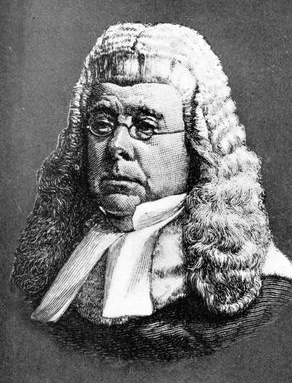
The Assizes opened on Monday 19th October and, as was customary, the dignitaries – in particular the Lord Chief Justice himself, Lord Hewart went to the cathedral, no doubt to pray for wisdom.

Assizes

There is very little on record about the trial of Herbert George Whiteman, probably because it took up little of the court’s time. Whiteman’s barristers on Tuesday 20th October went down the only route available to them, which was to plead that when he struck the fatal blows back in June, he was temporarily insane. Neither the jury, nor Lord Hewart, were having any of this. Whiteman, under his adopted surname Bloye, was found guilty and sent back to Norwich Gaol in Mousehold Heath to await the ministrations of the hangman. Photographs rarely appeared in local newspapers in those days, but the Daily Mirror provided the only surviving image of Herbert George Whiteman, (even if they didn’t get his name quite right) and I post it alongside the image of the man who sentenced him to death.

Bloye

What does deem unsatisfactory, at least in my eyes, is that Whiteman’s murder of his wife was not proceeded with. Perhaps this was so as not to ‘waste the court’s time’. The outcome of the case – as well as the sentence – was never in doubt, but it had the effect of reducing Alice Whiteman to a mere footnote, as shown on this document recording details of criminals.

Calendar of Prisoners

On Thursday 12th November, Herbert George Whiteman paid the ultimate penalty for his crimes.This is a detailed report from The Lynn News the following day.

“George Bloye, who was recently sentenced to death by the Lord Chief Justice at the Norfolk Assizese, for the murder of his mother-in-law, Clara Squires, was executed at Norwich prison yesterday (Thursday) morning. It will be remembered that the man was charged also with the murder of his wife, who died as the result of injuries inflicted by him on the same day – June 15th – but this indictment was not proceeded with in the Assizes Court. Punctually at o’clock yesterday morning Bloye walked from a cell near the coach-house with the support a warder on either hand, at the bead of the procession being the Rev. T. E. Hoyden, chaplain of the prison, who recited the usual sentences from the Burial Office. The Sheriff for the County (Mr. Walter K Hansen) was present, and there were also present a prison doctor, the prison governor, and two representatives of the Press. Baxter was the executioner and Taylor his assistant.

Bloye, who at the time of his conviction was stated to be 27 years of age, and was described as a labourer. was a sturdily built man of middle height. He walked firmly and with no sign of acute feeling to the chalk mark on the flap-doors of the scaffold. His death was instantaneous. Less than thirty seconds must have elapsed between the time when he first saw the instrument of death and the time of his decease. There was no tremor or other sign of life after the drop had fallen.”

There were more than two victims of Whiteman’s murderous acts on 15th June 1925. His own blood family would be shamed by his infamy for the rest of their lives, while the Squires would have their own grief to deal with. What became of the two youngest players in this grim drama, Herbert RW Whiteman and his sister Evelyn? They were, of course, orphans. It is always easier to trace males in genealogy research, and the 1939 wartime register has Herbert working at Moat Farm, Tutbury, Staffordshire. He died at Haverford West in September 1992. Evelyn is more tricky. We have two Evelyn E Whiteman possibilities; one marrying a Mr Tingley in Eastbourne in 1954, and another marrying a Mr Jeffrey at Tonbridge in 1947. Either is feasible, but let us end with hoping that Evelyn had no memory of that tragic day in a field just outside Swaffham as she lay in her pram.

THE SWAFFHAM HORROR . . . Tragedy at Town Farm (2)

Header

SO FAR: Swaffham, in the summer of 1925. Herbert George Whiteman and Alice Squires had married in 1921, and after the premature deaths of two babies, they now have a healthy son and daughter, Herbert and Evelyn. The marriage is on the rocks, however, and Alice has been granted a separation order, taken the children and gone to live with her parents.

On the morning of Monday 15th June, William Squires was working in a field known as Heathlands  near Town Farm. His wife Clara was similarly busy in an adjacent field. Just before mid-day, Alice Squires, with her two children brought her father his lunch, and walked off in the direction of her mother. Shortly afterwards, Squires heard a terrible scream. He threw down his tools and ran in the direction Alice had taken. He found her lying on the ground, blood pooling around her head. Baby Evelyn was still asleep in her pram, but two year-old Herbert looked on, uncomprehending. Alice was unable to speak, but Squires looked across to where his wife had been working, and saw her tussling with a man. Before he could reach her, she fell to the ground. Running away from the scene was a man, later identified as Herbert George Whiteman.

Others, working nearby, ran to the scene. The police were summoned, as was Dr William Thorpe, and an ambulance was called to take the stricken women to Swaffham Cottage Hospital. Clara Squires died two days later without ever recovering consciousness.

Screen Shot 2022-01-22 at 18.30.45Meanwhile, what of George Whiteman? After the attack on the two women he had headed north across the railway line in the direction of his mother’s cottage near what was known as Great Friars Thornes. Mrs Whiteman was standing in the yard of the farm with another woman, Frances Turner, who later testified:

‘Whiteman came round the corner of the yard. He had blood on his coat and hands, and said to his mother, “Don’t grieve for me, they can’t make you suffer for my sins. I’ve done the two in. I could not kill my two dear children. I want to say goodbye to my father, as the police will be after me in a few minutes.”‘

Whiteman was carrying a large agricultural spanner, and when he went with his mother to her house, he asked to hide it. She put it under a pile of firewood, but it was later discovered there by Police Constable Walmsley. Whiteman was arrested and taken to the cells at Swaffham Police Station. He was brought before the magistrates at the Shire Hall, Swaffham (below) on Tuesday 30th June.

Shire hall

Bizarrely, Whiteman insisted that he now be known as Bloye – his mother’s maiden name. The Yarmouth Independent reported the hearing thus:

Remarkable confessions wore made Herbert George Bloye (Whiteman) – labourer, when charged Swallham Tuesday with the murder of his mother-in-law, Mrs. Squire, and the attempted murder of his wife. He declared that after kissing his wife he hit her on the head with piece of iron, and later attacked his mother-in-law in a similar fashion. The older woman died two days later, and the wife is not yet out of danger. The prisoner sat with folded arms and impassive demeanour, head held high, while the evidence was given, even the distress of his white-haired mother apparently leaving him unmoved. When asked if he had any questions to ask of the witnesses, he stood smartly to attention and replied, “None at all. sir.”

Only once did he interrupt the evidence, and that was when the police read his statement that he said to the dead woman, when she began to cry before striking her, “Guilty conscience needs no accusing.” He then exclaimed. ” right!”

On the way from the police-station to the court-room, faced with several photographers, he smiled and tried to pose, but was hurried on by the police in charge of him.

It appeared that  in May the prisoner’s wife obtained separation order against him, and the prisoner was apparently under the impression that she was influenced in this by her mother. He seemed have made up his mind to murder his wife’s mother. The attack which formed the subject of the charge occurred on June 15th, and Mrs. Squires died two days later.

Dr. Kenneth Thorpe, Swaffham, said about 1.40 p.m. on the 15th June he was called to the Town Farm, about two miles out of the town, and saw Mrs. Whiteman lying on the side of Green Lane. She was unconscious and bleeding from wounds on the head, which he attended to temporarily. There were 24 wounds in all, and one had fractured the skull. They were not severe in themselves, but the number made them severe. Mr. Squires showed him where his wife was lying in the field. She was unconscious and bleeding from a large ragged wound on the left temple, about five inches long, from which the brain was protruding.

This particular newspaper report also expressed optimism about the condition of Alice Whiteman, even going as far as to say that she was expected to make a full recovery. They were wrong. Alice Whiteman hovered between life and death in the hospital for almost a month, but since her mental state had deteriorated owing to the terrible head wound she had sustained, she was transferred to Norwich Mental Hospital on 23rd July, but she was beyond medical help and died there on Monday 3rd August. A separate inquest on her death was held in Norwich, and was not without incident. By this time, the magistrates had found Whiteman guilty of the murder of Clara Squires, and he was sent to stand trial at the Autumn Assizes in Norwich.

Inquest

IN THE CONCLUDING PART
Trial and justice – of a kind

THE SWAFFHAM HORROR . . . Tragedy at Town Farm (1)

Header

I have been researching and writing about these tragedies for many years, and one thought never fails to cross my mind when I look into the backgrounds of the people involved. What if their paths had never crossed? What was the fateful moment when the die was cast, and it was almost inevitable that there would be a tragic outcome? The three principle characters in this drama are Herbert George Whiteman, Alice Squires – who would go on to become Alice Whiteman – and her mother, Clara Squires. The two families had much in common. Both lived in Swaffham, or nearby, Both relied upon the hard grind of agricultural labour to keep a roof over their heads and food on the table.

The 1911 census has Whiteman, simply listed as George (aged 12) living in Newton by Castle Acre with his father Walter (49) his mother Hannah (neé Bloye) and two younger siblings Thomas and Julia. The same census gives us, at Tower Court in Lynn Street, Swaffham, Alice Squires (9), along with parents William and Clara, and siblings.

We know little about what happened to George and Alice until the years after The Great War. George Whiteman served as a Private in The Norfolk Regiment, but not for the duration of the war. He was still at home in November 1916, as we know from a bizarre brush with the criminal justice system,mas reported in The Lynn News.

NUTS

At some point, either through volunteering or by conscription he went ‘to do his bit’, and thanks to pension records, we know he was discharged in the spring of 1919, with a disability pension. What this disability was remains unclear. There were reports later that something he had seen or experienced while on service had caused him to have fits. The pension system was complex, but put simply, a man with a severe disability such as loss of limbs or severe mental damage was entitled to a maximum of forty shillings (£2) a week. The army had a scale of payments for lesser injuries, and Whiteman’s pension card reveals he was to receive five shillings and sixpence each week –  a pension of around 13% of the maximum.

We do not know if George and Alice ‘courted’ during the war years, but we do know that they married in January 1921, in Swaffham. It is almost certain that Alice was ‘in the family way’, because in March 1921 she was delivered of a daughter, Dorothy Mary, but the child was not long for the world. Parish records show she died on 14th May.

Dorothy May death

Interestingly, this is the first time the name of Town Farm crops up in the narrative. The Whitemans were to fare no better with their second child, Kathleen Violet, who survived only a matter of hours.

Kathleen V death

The Whitemans persisted, and with better luck. Herbert RW Whiteman was born on 16th February 1923, and then came Evelyn E Whiteman in October 1924. It seems that by the time of Evelyn’s birth the marriage was in trouble, mainly due to George Whiteman’s violence towards his wife, and by the early summer of 1925, Alice had left him, and moved back in with her parents, taking the two youngsters with her.

Station Street

Screen Shot 2022-01-21 at 20.29.21There is more than one Town Farm near Swaffham, but I am certain that the one central to this story is the farm that sits on Shoemakers Lane. My reasons for this are that immediately after the terrible events of Monday 15th June, George Whiteman is described as making his escape across the railway line in the direction of his mother’s house at Great Thorne. Nothing else makes sense, so I am convinced that this is the correct location. In part two, I will describe the tragic events of that June day, and how justice was done in the case of George Whiteman’s mother in law, if not with regards to his young wife.

IN PART TWO – A county in deep shock, an arrest, a confession, and an appointment with both The Lord Chief Justice of the land and the hangman.

CITY OF THE DEAD . . . Between the covers

cotd012 copy

This is another case for psychologist  Professor Alex Delware and his buddy, LAPD cop Lieutenant Milo Sturgis. As ever, the book is brimming with all the joys of Californication – fake lifestyle gurus, washed-up former pop stars, bent lawyers, damaged families and dead bodies – always plenty of dead bodies. The first of these is of a young man, stark naked, who – in an apparent psychotic episode – runs out from a house in a smart district in the LA suburbs, at 4.00am – and straight into the side of a moving truck. Instant fatality.

cotd013When the cops investigate the house from which the young man ran, they find the second corpse of the morning, with her throat slit. She is – or rather was – Cordi Gannet. She made a decent living producing lifestyle videos for YouTube, full of cod psychology and trite advice about life improvement strategies. Her psychology degree was apparently bought mail-order from an on-line university, and when Alex Delaware gets to the scene with Milo, he remembers that he was once involved in a child custody case where Cordi Gannet was introduced as an expert witness – with disastrous consequences.

They soon find that Cordi Gannet’s family background was suitably California Chaotic – no known father, a mother who scraped by waiting tables until she got lucky and married an affluent surgeon. As for the young man, after much tail-chasing they learn that he was a harmless and affable young hairdresser who had something of a ‘gay-crush’ on Ms Gannet with all her pan flutes and whale songs, but had no obvious enemies.

The investigation meanders, slows – and then grinds to a halt. Delaware and Sturgis are sidetracked by another murder – the killing of a violent testosterone-fueled bodybuilder whose onetime business partner was a former adversary of Delaware’s in the family courts. This one they manage to crack, but it is not until Delaware goes back to the day job and begins consultation sessions with another pair of warring parents – one of whom was a  near neighbour of Cordi Gannet, that the breakthrough comes.

Screen Shot 2022-01-19 at 19.13.17Watching the Delaware-Sturgis partnership work on a case is fascinating. Yes, by my reckoning this is the 37th in the series. No, that’s not a typo. Thirty seven since their debut in When The Bough Breaks (1985). 1985. Blimey. Amongst other ground-breaking events in that year, I read that Playboy stopped stapling its centrefolds, the first episode of Eastenders was broadcast, and Freddie Mercury stole the show at Live Aid. But I digress.

There are no surprises in City of The Dead, at least in terms of the personal dynamics between the investigators. Delaware is super-cool, Sturgis has zero dress sense and is inveterate fridge raider, and the pair never really get ‘down and dirty’ with the criminals they hunt. In spite of the familiar formula, this is still a cracking read and cleverly plotted, with Kellerman (right)  setting several snares for the unwary reader. City of The Dead is published by Century, and will be available from 17th February.

FOUR MORE ANGELS IN HEAVEN TONIGHT . . . The Wimblington Tragedy (2)

Header4A

SO FAR – It is February 1896, and Mary Jane Farnham has moved back to Wimblington following the death of her husband, Henry, a former Stationmaster in Essex. She has five children, but is  comfortably provided for, thanks to savings, insurance and a pension from the Railway Benevolent Fund. She and the children have rented a roomy cottage, not far from Wimblington railway station. The children are universally liked, and she is regarded as a quiet and respectable woman. She and the four younger children – Lucilla, aged 12, is in service with a family in nearby March – are regular church-goers. But something is very wrong. She has mentioned to her parents that the strain of being alone troubles her. Her words were later quoted in the press:

Quote

It can have been no comfort to Mary Jane Farnham to be living within sight and sound of Wimblington railway station, and it must have been a daily reminder of better days, when she and her husband lived in a similar building, were pillars of the community, and with their whole lives ahead of them.

I have been researching and writing these true crime stories for many years, and I can truthfully say that none of the human tragedies I have investigated comes close to this one in terms of loss and despair. The Farnhams were last seen alive at some time on Saturday 15th February. It needs to be remembered that communities were much smaller and ‘in-each-other’s-pockets’ in those days, and the comings and goings of villagers in a place like Wimblington were very public. Bit by bit, villagers suspected that something was wrong.

Unease

What the Peacock brothers and the village policeman found in the upstairs bedrooms would probably haunt them for the rest of their lives. Marjorie May, 11, Sidney Harold, 8, Henrietta Mary, 6, and Dorothy Esther, 4, were dead in their beds, killed while they slept, and their throats cut so deeply that their heads were nearly severed. Beside them was the body of their mother, a white handled knife, savagely sharp, in her dead hand. The bedsheets around the bodies were saturated with blood. It was.literally, a bloodbath.

This was no spur of the moment act of desperation by Mary Jane Farnham. On a table in the house was an envelope containing the outstanding rent on the cottage. Even more chilling, It was later revealed that she had sent a letter to the Railway Benevolent Fund requesting that her widow’s pension be terminated. This mixture of propriety and savagery is hard to comprehend, even though a century and more has passed.

The inquest verdict on the five dead was a formality – murder and suicide while temporarily insane. To the eternal credit of the community, Mary Jane Farnham was not separated from her children even in death, and their joint funeral, just seven days after their deaths, attracted widespread attention. 

Funeral

This remarkable photograph of the funeral is used with permission of its owners, the Fisher Parkinson Trust, a local heritage archive.

Funeral

These accounts of man’s inhumanity to man are not intended as judgments, or condemnations, but it is difficult to balance out sympathy for Mary Jane Farnham’s grief and the sheer inhumanity she showed when she cut the throats of her four younger children. They all had lives to lead, as we can see by following the progress of Lucilla, the daughter who was lucky enough to be elsewhere on that fateful Saturday night in February 1896. By 1901, she was living in Leeds with her aunt, working as a draper’s assistant, by 1911 she had moved to Bournemouth, and  in 1917 the records tell us that she married Daniel Meaney in Exeter. She died in 1968 at the age 0f 86.

Judgement is for God alone, so I conclude this sad tale with a picture taken in the churchyard at Wimblington. (NB – the ages of the two younger children are incorrectly inscribed)

Gravestone

Blog at WordPress.com.

Up ↑