
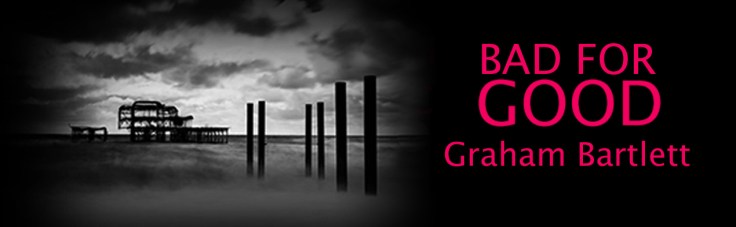
This hard-hitting police thriller is set in an English city renowned for its sea air, Regency buildings and – latterly – the Green-ness of its politics. It has also been a surprisingly popular setting for crime novels. Think Pinkie Brown, Roy Grace and Colin Crampton. We are talking, of course, about Brighton. Now we have a new character on the scene, in the shape of Joanne Howe, Detective Superintendent with Sussex police.
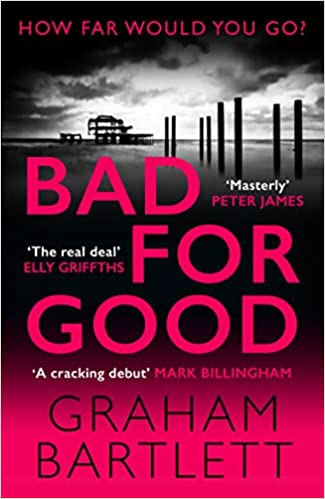 The plot hinges around a series of dire events in the life of Jo Howe’s boss, Detective Chief Superintendent Phil Cooke. Already trying to keep his mind on the job while his wife is dying of cancer, fate deals him another cruel blow when his son Harry, a promising professional footballer, is murdered, seemingly a casualty in a drug turf war. He steps down, but then comes into contact with a shadowy group of apparent vigilantes, who tell him that Harry was not the clean-cut sporting hero portrayed in the local media – he was heavily into performance enhancing drugs. The vigilantes – whose business plan is to provide a highly illegal alternative police force, where customers pay for the quick results that the Sussex Constabulary seem unable to provide – blackmail Phil into standing in the election of Police and Crime Commissioner. He is forced to agree, and is elected.
Meanwhile, things go from bad to worse for Jo Howe and her team. As they try to get to the bottom of Harry Cooke’s murder, an arrest goes badly wrong, and one of her Detective Inspectors – Bob Heaton – kills the suspect with his baton. He is jailed. Howe realises that there is some kind of vigilantes-for-profit group at large and she organises a sting operation at a local pub. When the bad guys flee the scene the ensuing pursuit goes pear-shaped, an officer is badly injured and the targets escape. Then the vigilantes fire bomb the pub in retaliation, the landlord dies and Howe has a furious dressing down from her chief constable. All is not what it seems, however, and Graham Bartlett lets us know that people very high up in the senior ranks of the police are as crooked as the proverbial dog’s hind leg.
The vigilantes are operating under the banner of an ostensibly respectable security outfit, but both they and the police seem equally clueless as to the identity of Harry Cooke’s killer. Bob Heaton’s boyfriend Chris – aka ‘Crush’ – works for the security firm, and Jo Howe persuades Bob – now released from jail but jobless – to infiltrate the organisation. Harry Cooke’s killer is finally identified, and the race is on to see who can get to him first, the police or the vigilantes.
 Graham Bartlett (right) was a police officer for thirty years and mainly policed the city of Brighton and Hove, rising to become a Chief Superintendent and its police commander, so it is no accident that this is a grimly authentic police procedural. It is also very topical as, away from the violence and entertaining mayhem, it focuses on the seemingly insoluble problem of the divide between the public’s expectations of policing, and what the force is actually able – or willing – to deliver. Bartlett doesn’t over-politicise his story but, reading between the lines – and I may be mistaken – I suspect he may feel that, with ever more limited resources, the police should not be so keen to divert valuable time and resources away from their core job of catching criminals. My view. and it may not be his, is that effusive virtue signaling by police forces in support of this or that social justice trend does them – nor most of us – no favours at all.
Bad From Good is an excellent debut novel. I hope it heralds a long running series, and I eagerly await the follow-up. Published by Allison & Busby, the book is out in all formats on 23rd June.
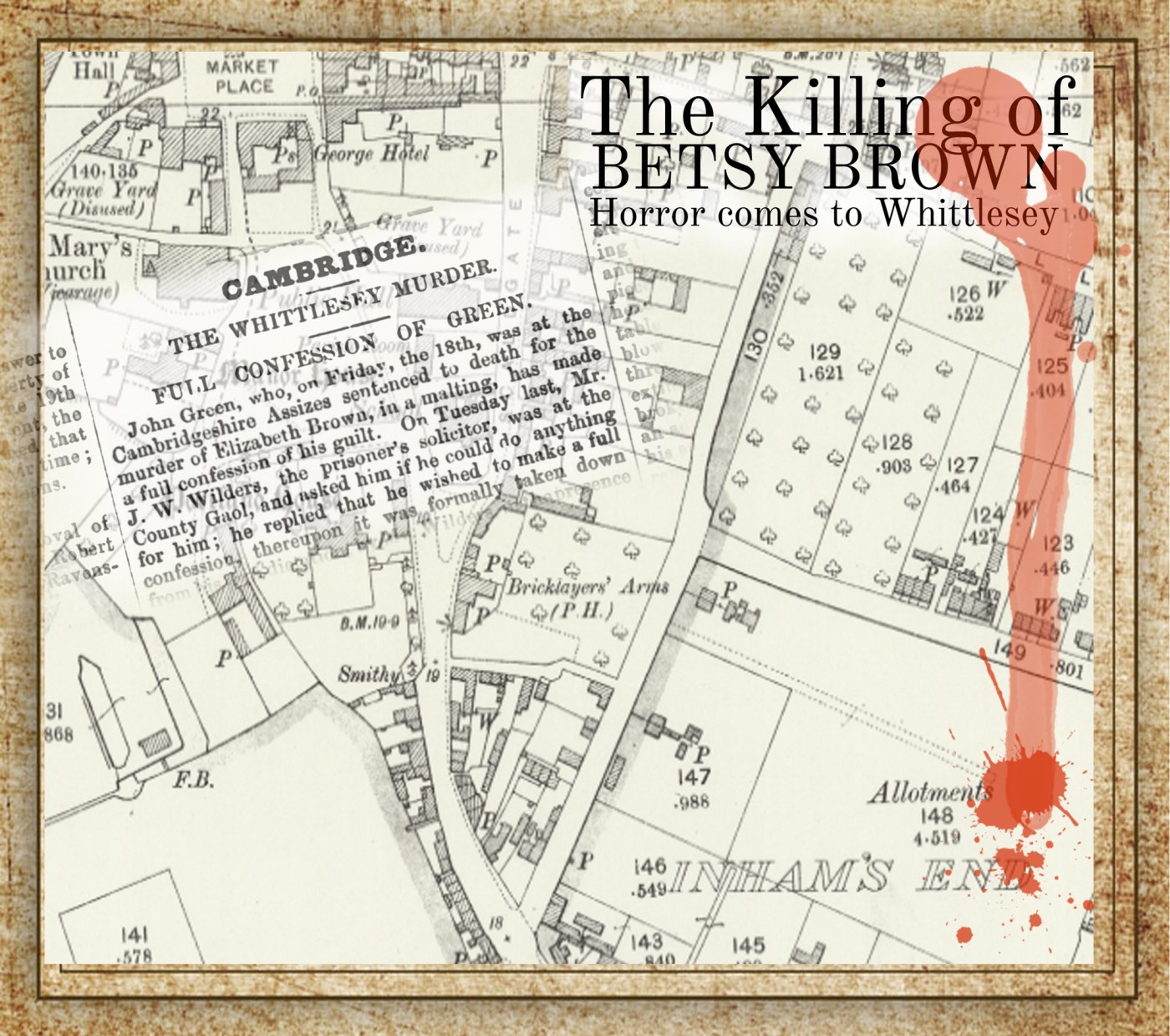

 She (Brown) was at that time smoking a long pipe, and when we got into the furnace room, I drew a quart pitcher full of gin out of the bottle, and sat down on the settle and drank most of it, if not all of it, both of us smoking. We had sat down for half hour, when I wanted to have connection with her, but she would not. I pulled her off the settle. She kicked and knocked about, and got hold of my hair, and I tried and tried as long as I could to have connection with her, and when she would not, I hit her on the body with my fists, and she fell on the floor. I then kicked her on the body more than once. She did not scream out. I then felt so bad that I did not know what to do, as I felt I had killed her. I stooped down and got hold of her and shook her, and I found that she was really dead. I then drank hearty of some gin.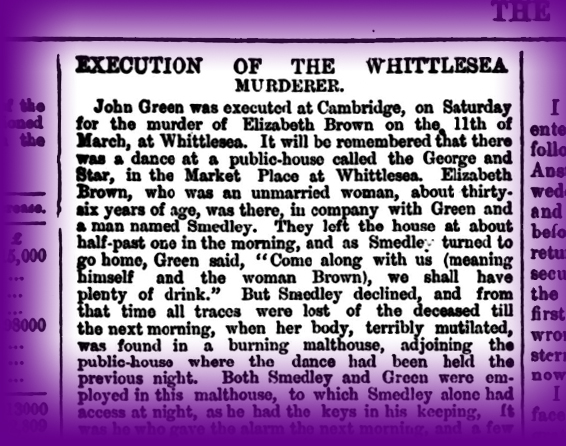
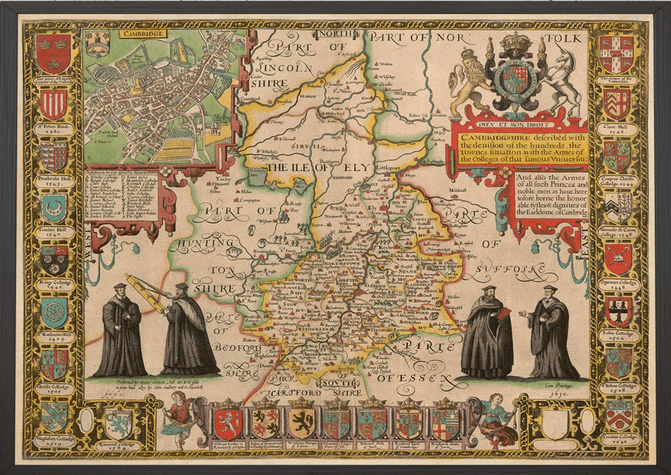


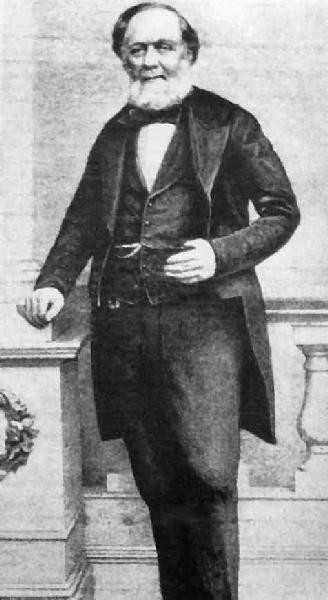
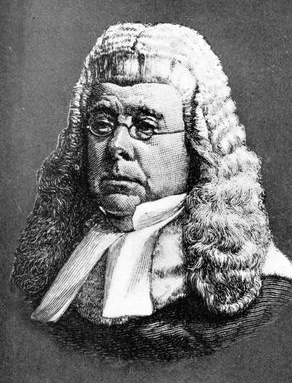 The presiding judge was Sir Samuel Martin QC (1801-1883), Anglo-Irish Baron of the Exchequer (left). The first thing he did was to dismiss all charges against William Smedley. He said: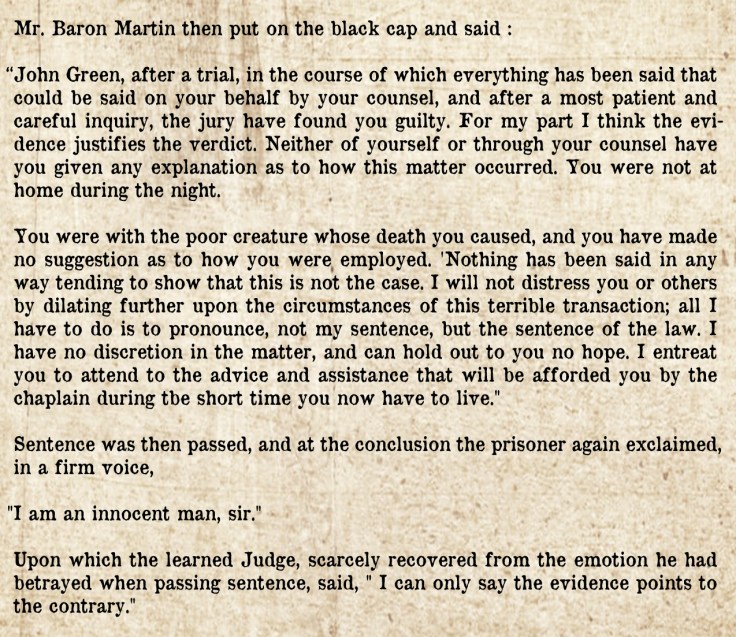



 That is just a quick sample of the whip-crack dialogue in the book, which fizzles and sparks like electricity across terminals. Very soon Mari and Derek realise that the blackmailed judge is also connected to the unsolved murder of a French duel-passport student, Sophie Michaud, and the fate of two women journalists who investigated the case, one of whom is dead and the other missing.
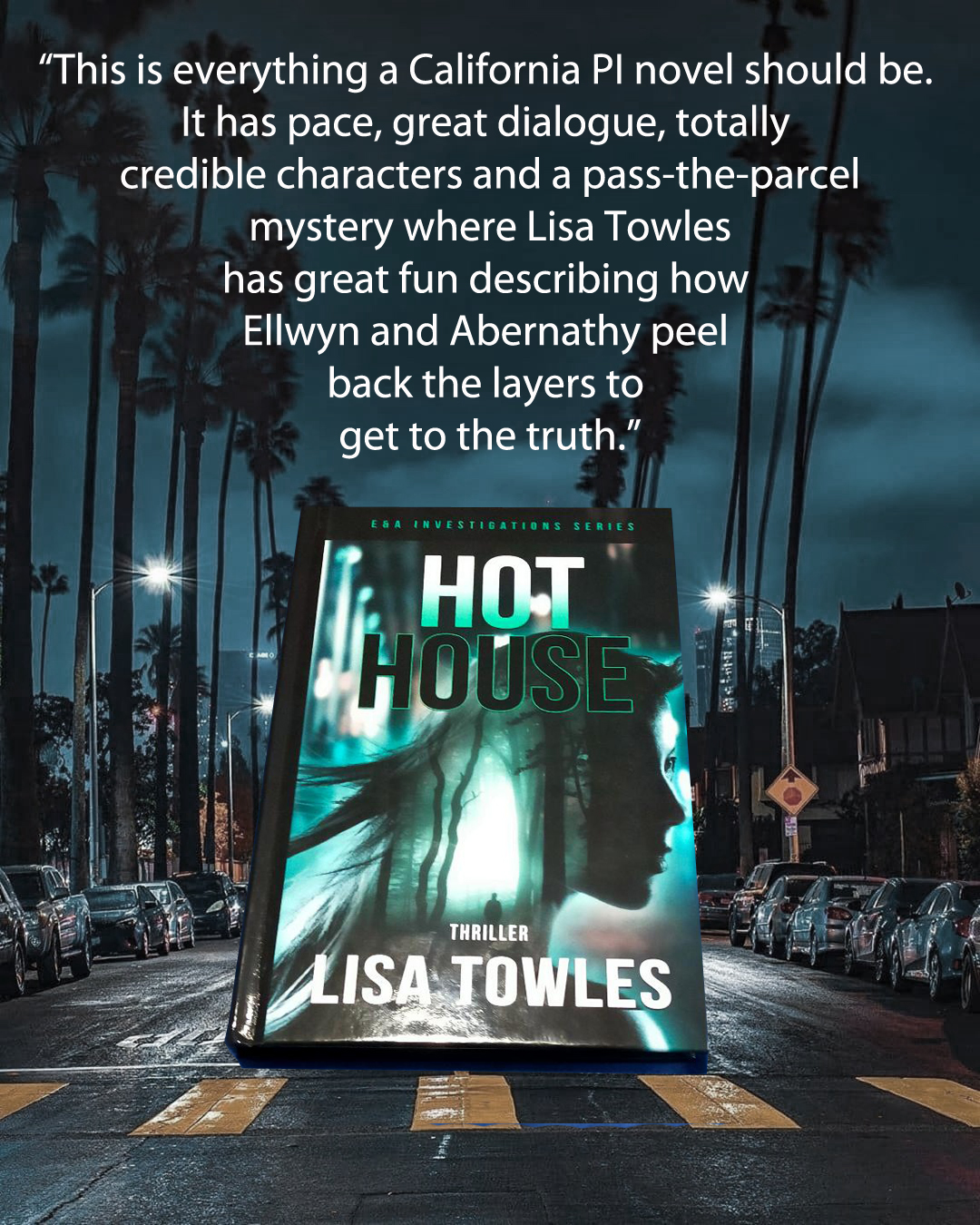
 In the end, the blackmailer of the judge is located, and the killer of Sophie/Sasha is brought to justice, but with literally the last sentence, Lisa Towles poses another puzzle which will presumably be addressed in the next book. Hot House is everything a California PI novel should be. It has pace, great dialogue, totally credible characters and a pass-the-parcel mystery where Lisa Towles (right) has great fun describing how Ellwyn and Abernathy peel back the layers to get to the truth. Sure, the pair might not yet stand shoulder to shoulder with Marlowe, Spade and Archer, or even more modern characters like Bosch and Cole, but they have arrived, and something tells me they are here to stay.


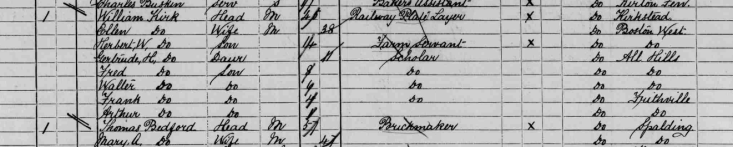
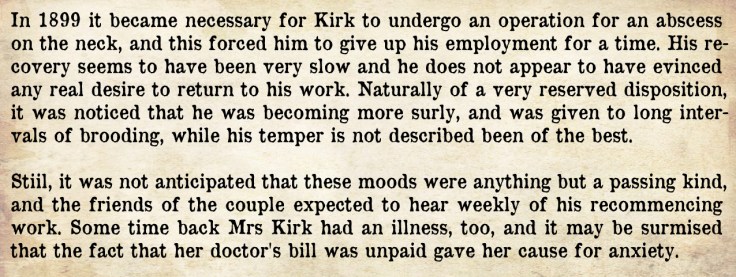
 Inevitably, William Kirk was found guilty of murder, and his case was sent to the July Assizes in Lincoln. The trial, presided over by Mr Justice Wright (left) was a formality, and Kirk was sentenced to be hanged. Just days before he was due to meet James Billington for the first – and only time – the powers that be judged that he was insane at the time of the killed his wife, and he was reprieved, and sent to Broadmoor.


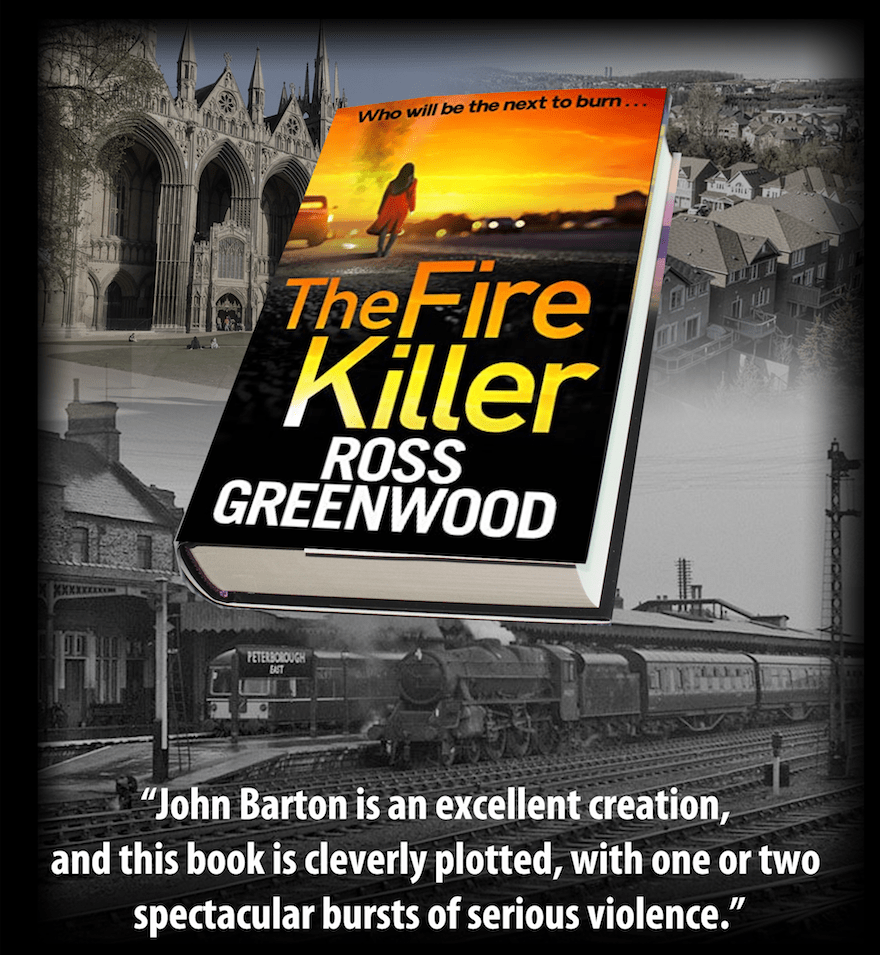

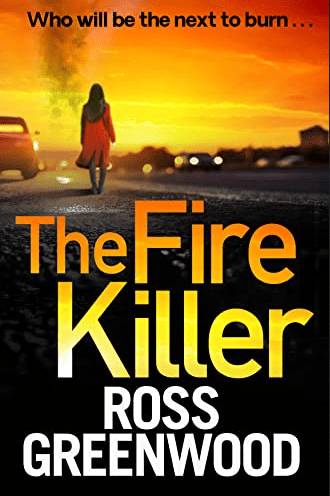 Late again! My excuse is that I am a one-man-band here at Fully Booked, and notwithstanding the occasional erudite contribution from Stuart Radmore (who has forgotten more about crime fiction than most people will ever know), there are only so many books I can read and review properly. My first experience of Peterborough copper DI Barton is the fifth of the series (written by Ross Greenwood), The Fire Killer. Peterborough is a big place, at least for us Fenland townies, but is rarely featured in CriFi novels. I am pretty sure that Peter Robinson’s DI Banks grew up there (The Summer That Never Was) and Eva Dolan’s Zigic and Ferreira books are certainly set in the city.
 Ross Greenwood (right) has fun inviting us to make out own guesses, but also makes the game a little more interesting by giving us intermittent chapters narrated by The Fire Killer, but he is very wary about giving us too many clues. The dead girl, Jess Craven had been involved with a very rich dentist with links – as a customer – to the London drug trade.





 fullybooked2017