
 James Barlow was a Birmingham-born novelist who served as an air gunner with the RAF in WWII. Invalided out of service when he contracted tuberculosis, he faced a long convalescence. He began writing at this time, and after he worked in his native city as, of all things, a water rates inspector, he made the decision to write for a living. His first novel, The Protagonists, was published in 1956, but made little impact. It wasn’t until Term of Trial (1961) that he began to make a decent living from writing, and then more because film director Peter Glenville saw the cinematic potential in the story of an alcoholic school teacher whose career is threatened when he is accused of improper behaviour with a female pupil. The subsequent film had a star-studded cast including Sir Laurence Olivier, Simone Signoret, Sarah Miles, Terence Stamp, Hugh Griffith, Dudley Foster, Thora Hird and Alan Cuthbertson.
 Term of Trial was a powerful and controversial film, but clearly had nothing to do with crime fiction. Barlow’s 1968 novel The Burden of Proof was another matter. By the time it was published, the Kray twins’ days as despotic rulers of London’s gangland were numbered. They were arrested on 8th May in that year and the rest, as they say, is history. The Burden of Proof is centred on a Ronnie Kray-style gangster, Vic Dakin. Dakin is psychotic homosexual, devoted equally to his dear old mum and a succession of pliant boyfriends, while finding time to be at the hub of a violent criminal network.
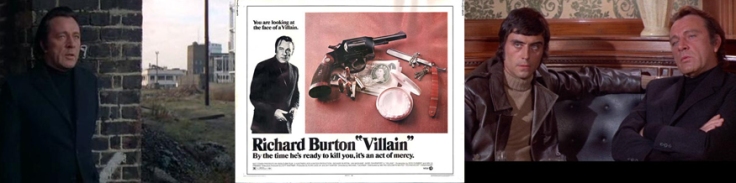
The cast of the subsequent film version of The Burden of Proof was similarly stellar to that of Term of Trial. Villain (1971) starred none other than Richard Burton, Ian McShane, Nigel Davenport, Joss Ackland, Donald Sinden and T.P, McKenna.
Barlow seems to have been a fairly misanthropic fellow who raged at what he believed was a gathering darkness afflicting an England that he once loved. A year after The Burden of Proof was published he decided he’d had enough, and decided to relocate to a place to which many Englishmen of a previous generation were sent as a punishment – Van Diemen’s Land, latterly rebranded as Tasmania. Barlow’s departure was accompanied by a fanfare of his own devising, a rancorous demolition job on what he saw as a corrupted and increasingly shallow country – Goodbye England (1969)
Much of Barlow’s intense disgust at what was happening around him spills out onto the pages of The Burden of Proof. The crime plot centres on Dakin’s plan to pull off a lucrative wages heist, but this almost becomes secondary to Barlow’s polemic about his homeland being reduced to what he saw as an obscene freak show where morality and integrity were turned on their heads in favour of a mindless and debased popular culture. Re-reading the novel exactly half a century after it was published, I am astonished by how contemporary his words sound. They could be put in the mouths of many modern alt-right commentators. Given access to today’s social media he would rage like an Old Testament prophet and, just like his modern counterparts, he would enrage and delight in equal measure.
Barlow on Speakers’ Corner and the how the statuary of London acts as a metaphor:
“The small indifferent crowds hung around the rostrums on Sundays, laughing at the remnants of free speech. The pigeons excreted as they stood on the heads of statues of forgotten men of a time despised now by the liberals who knew better …”
1960s London is portrayed in the bleakest of descriptions:
“London was tired, seedy, cunning, ugly, here and there beautiful. In 1914 it had been at its most powerful; in 1940 at its most heroic. Now, in the 1960s, it was impotent and had the principles and self-importance of an old queer.”
As I read Barlow’s cri de cœur about what he clearly saw as the triumph of the metropolitan elite, I might have been something by Rod Liddle in one of his recent rants in The Spectator or The Sunday Times;
“Nobody could do anything now without being accountable to the scorn of the liberal intellectuals in print or on television. England was too articulate at the top. Nobody, even in a Socialist liberal permissive society, had the slightest notion of the wishes of the people, out there beyond the great conversational shop of London.”
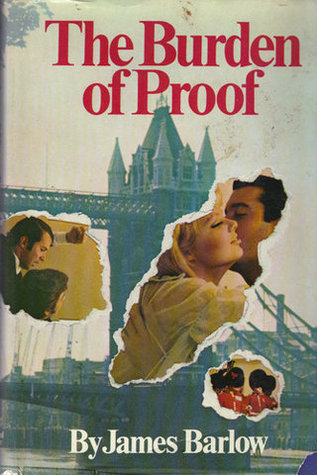 In the city which is portrayed as little more than a moral sewer, we have the vile Dakin and his criminal associates; we have an earnest and incorruptible copper, Bob Matthews who Barlow sets up – along with Bob’s mild-mannered and decent wife Mary – as the apotheosis of what England used to be before the plague took hold. We have Gerald Draycott, a dishonest and manipulative MP who flirts with the dangerous world of gambling clubs, casinos, girls-for-hire and drugs-for-sale, but still dreams of becoming a cabinet minister.
Back to the crime story. Dakin’s attempted wage-snatch, described in terrifying detail, does not go according to plan, but such is the depth, ferocity and intensity of the man’s evil, that there are casualties a-plenty beforte he gets his come-uppance. There is also a terrible incident, unconnected and not criminal by intent but more a result of negligence, which is described in horrific detail and left me dry-mouthed with a mixture of pity and shock. Of the people, volunteers, who help with the consequences of the disaster, Barlow says;
“They came when England and London needed them, and sank back into obscurity afterwards while the more important people postured before cameras with their guitars or explained the need to hate Rhodesians, or Arabs, or Israelis, or Americans…”
Nothing else I have read by Barlow comes close to The Burden of Proof in terms of its rage, its disgust and the sheer firepower of words when used by someone who believes he is on a mission. You may be appalled, you may be left thanking whoever you believe in that we live in more ‘enlightened’ times, but if you read this bitter and brilliant novel and don’t experience an emotional jolt then you may well be in a permanent vegetative state.
For a more recent slant on the real life connection between Ronnie Kray and powerful political figures in the 1960s, take a look at Simon Michael’s novel Corrupted.


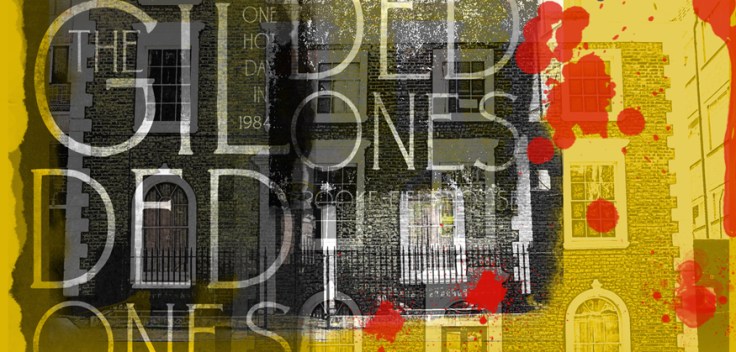
 This is a curious and quite unsettling book which does not fit comfortably into any crime fiction pigeon-hole. I don’t want to burden it with a flattering comparison with which other readers may disagree, but it did remind me of John Fowles’s intriguing and mystifying cult novel from the 1960s, The Magus. I am showing my age here and, OK, The Gilded Ones is about a quarter of the length of The Magus, it’s set in 1980s London rather than a Greek island and the needle on the Hanky Panky Meter barely flickers. However we do have a slightly ingenuous central character who serves a charismatic, powerful and magisterial master and there is a nagging sense that, as readers, we are having the wool pulled over our eyes. There is also an uneasy feeling of dislocated reality and powerful sensory squeezes, particularly of sound and smell. Author Brooke Fieldhouse (left) even gives us female twins who are not, sadly, as desirable as Lily and Rose de Seitas in the Fowles novel.
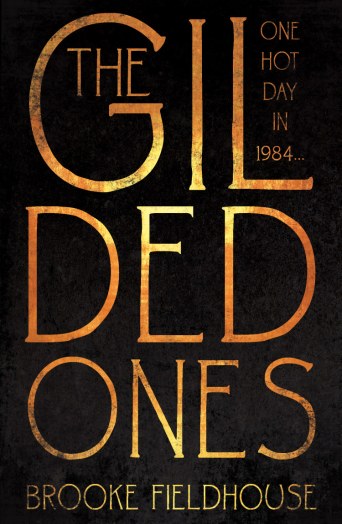 Lloyd Lewis is the Magus-like figure. He is so thumpingly male that you can almost smell him, and he rules those around him, with one exception, with an almost feral ferocity. So who are ‘those around him’? Ever present psychologically, but eternally absent physically, is his late wife Freia, the subject of Pulse’s dream. Martinique is Patrick’s girlfriend, and loitering in the background are his children, step-child and office gofer Lauren. Lauren, who has “thousand-year-old eyes”, is of the English nobility, but quite what she is doing in the Georgian townhouse we only learn at the end of the book. The one person to whom Patrick defers is his Sicilian friend Falco. Equalling the Englishman’s sense of menace, the sinister Falco appears briefly but is, nonetheless, memorable.
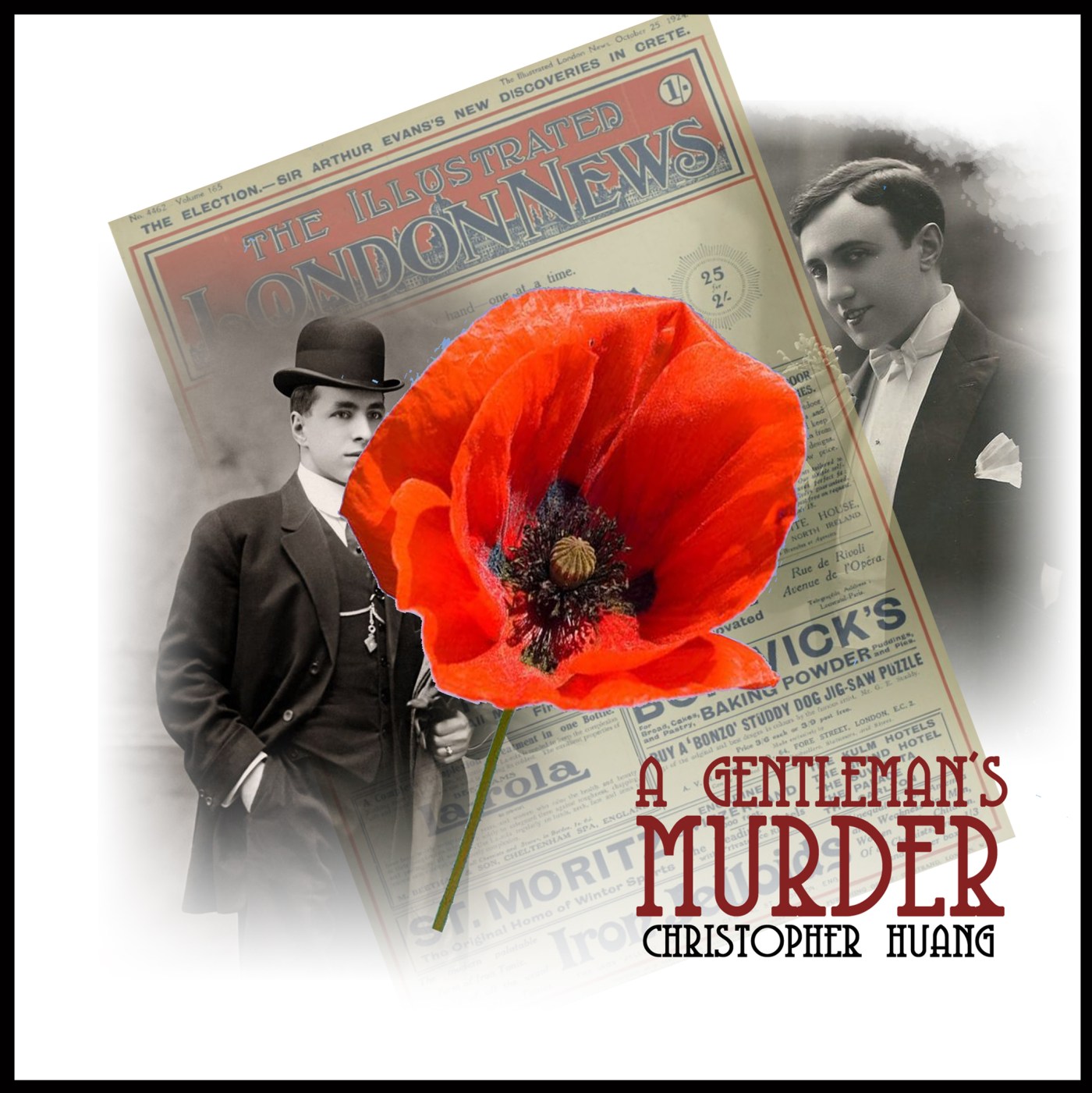
 Eric Peterkin is one such and, although he carries his rank with pride, he is just a little different, and he is viewed with some disdain by certain fellow members and simply tolerated by others. Despite generations of military Peterkins looking down from their portraits in the club rooms, Eric is what is known, in the language of the time, a half-caste. His Chinese mother has bequeathed him more than enough of the characteristics of her race for the jibe, “I suppose you served in the Chinese Labour Corps?” to become commonplace.
 Christopher Huang (right) was born and raised in Singapore where he served his two years of National Service as an Army Signaller. He moved to Canada where he studied Architecture at McGill University in Montreal. Huang currently lives in Montreal.. Judging by this, his debut novel, he also knows how to tell a story. He gives us a fascinating cast of gentleman club members, each of them worked into the narrative as a murder suspect. We have Mortimer Wolfe – “sleek, dapper and elegant, hair slicked down and gleaming like mahogany”, club President Edward Aldershott, “Tall, prematurely grey and with a habit of standing perfectly still …like a bespectacled stone lion,” and poor, haunted Patrick “Patch” Norris with his constant, desperate gaiety.


 The ‘Bow’ in the title is not some fabric adornment, but the working class district in East London. If you were born within earshot of its church bells, then you were said to be a true Cockney. It’s December, and the nineteenth century is on its last legs. A dense morning fog, aided and abetted by the smoke of a million coal fires, swirls around the mean streets.
 The formidable lady has overslept, but after lighting the downstairs fire, she remembers to wake one of the lodgers. Arthur Constant is an idealist, and a campaigner for workers’ rights. She bangs on his bedroom door, then makes the day’s first pot of tea. Taking a tray upstairs, she calls again. Still no response. She peeps through the keyhole, but the key is firmly in place. As she pounds on the door once again, she has a premonition that something is very, very wrong. So she summons her neighbour, the redoubtable retired detective Mr George Grodman. He batters down the door, which was locked and bolted from the inside, and is forced to cover Mrs Drabdump’s eyes from the horrors within…
 Some contemporary critics were puzzled and irritated by Zangwill’s satirical style. They felt that there was no place for comedy in the tale of a young man, dead in his bed, his throat cut from ear to ear. The exchanges in the court scenes between pompous officials and outspoken ‘low life’ types on the jury are delightfully reminiscent of similar encounters between Mr Pooter and disrespectful tradesmen in that classic of English humour, The Diary of A Nobody.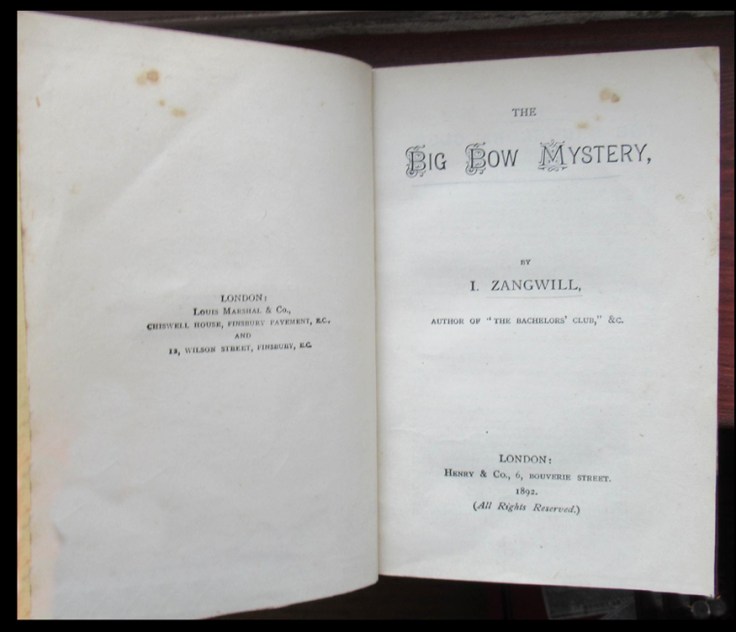
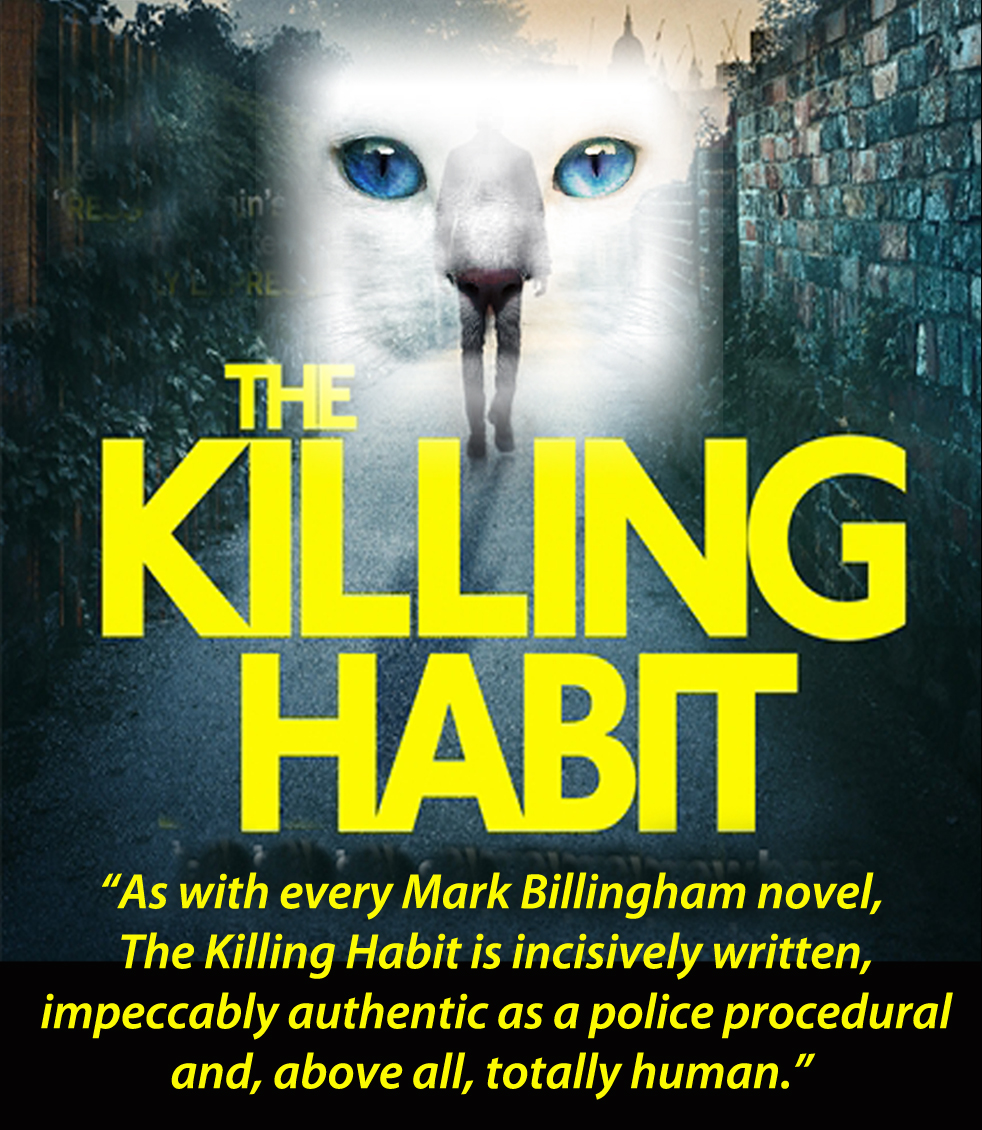

 The Thorne novels have a recurring cast list. As Salvatore Albert Lombino, aka Ed McBain said, quoting a 1917 popular song, “Hail, Hail, The Gang’s All Here!” Indeed they are. Its members include Helen, Tom Thorne’s long suffering partner plus little boy Alfie, and the bizarrely tattooed and pierced Mancunian pathologist Phil Hendricks. We have Nicola Tanner the police officer scarred by the murder of her alcoholic partner, Susan, and the perpetually cautious DCI Russell Brigstocke. Between them, they pursue two killers; one who murders losers-in-the-Game-of-Life on the periphery of a drugs gang, and another who seems to be targeting lonely women via a match-making service.
 Just when you think that he has provided all the answers to the complex plot, and the characters are, to quote the only bit of Milton I can remember from ‘A’ Level, “calm of mind and all passion spent,” Billingham (right) provides a breathtaking epilogue which, in addition to turning my preconception on its head, (feel free to add your own metaphor) bites you on the bum, punches you in the gut, hits you over the head with a piece of four by two, takes the wind out of your sails and grabs you by the short-and-curlies. Hopefully recovering from this multiple assault, you will be hard pushed to disagree with me that this is a brilliant crime thriller written by a master storyteller at the very top of his game.
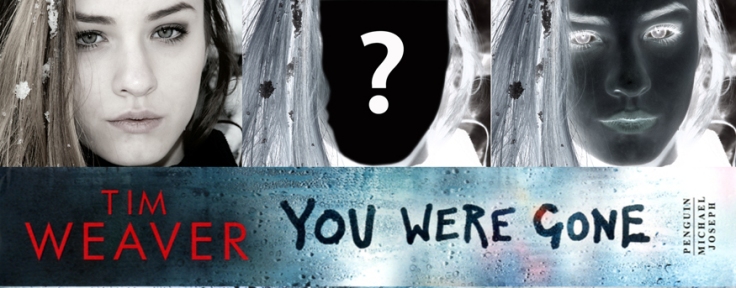
 But he has, as far as is possible, moved on. He has an unexpected family in the form of a daughter from an early relationship, and he keeps his chin up and his eyes bright. Because to do otherwise would mean self destruction, and he owes the physically absent but ever-present spirit of Derryn that much. His world, however, and such stability as he has been able to build into it, is rocked on its axis when a woman turns up at a West End police station claiming to be his wife. Derryn. Dead and buried these nine years. Her fragile remains consigned to the earth. He sees the woman through a viewing screen at the police station and he is astonished. In front of him sits his late wife, the love of his life, and the woman for whom he has shed nine years of tears.
 So many questions. The answers do come, and the whole journey is great fun – but occasionally nerve racking and full of tension. Tim Weaver (right) has crafted yet another brilliant piece of entertainment, and placed a further brick in the wall built for people who know that there is nothing more riveting, nothing more calculated to shut out the real world and nothing more breathtaking than a good book.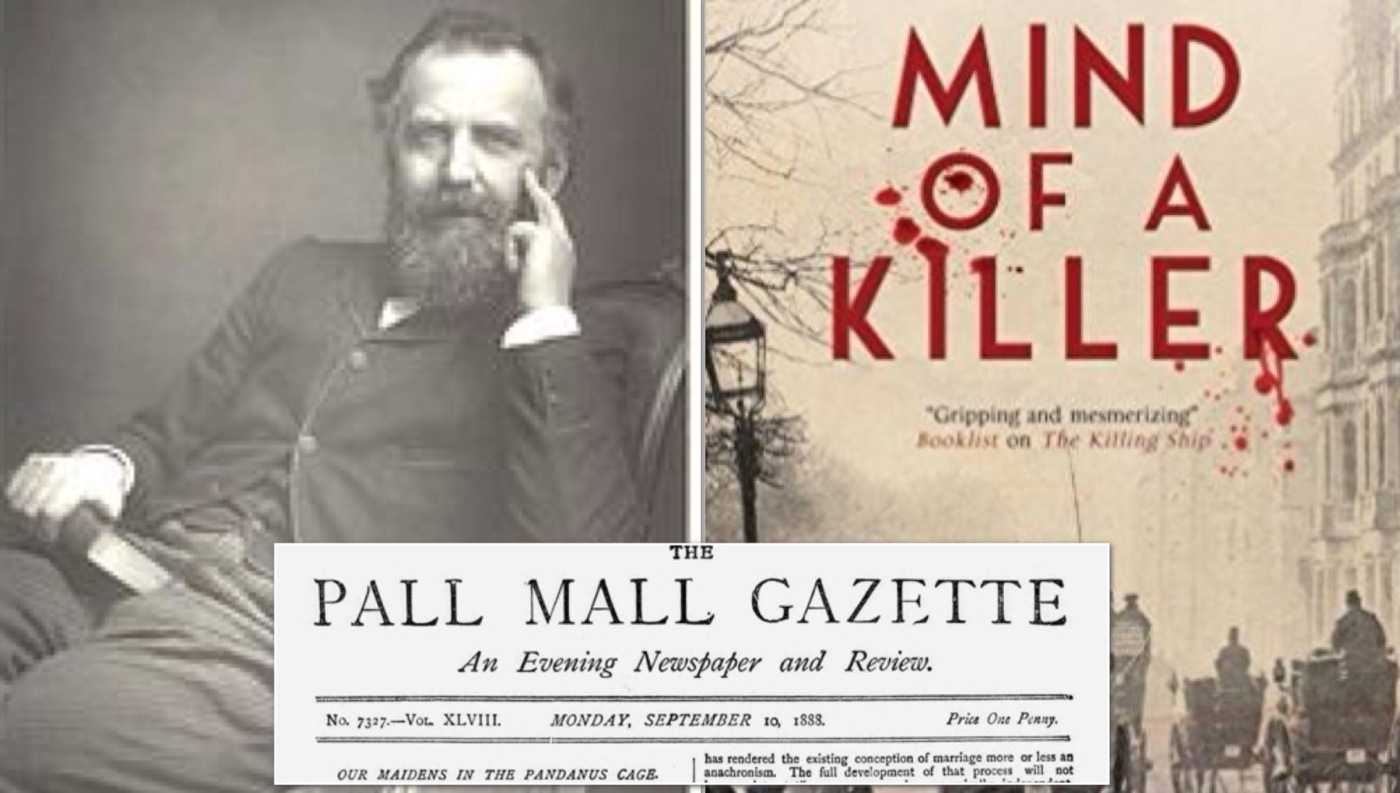
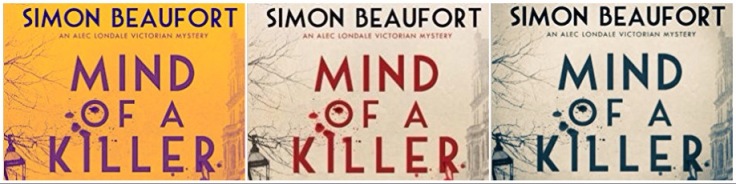
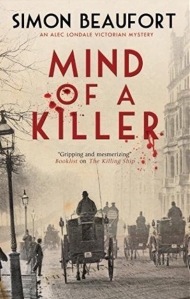 Simon Beaufort provides an exhilarating and madcap journey through the contrasting mileus of Victorian London. We experience gentlemen’s clubs with their subtle ambience of brandy and fine cigars, the visceral stench of low-life pubs and doss houses and the clatter of the hot lead printing presses of a vibrant daily newspaper. Lonsdale – with the assistance of Hulda Friedrichs, a fiercely independent early feminist journalist – painstakingly uncovers a nightmarish plot hatched by scientists who are obsessed with eugenics, and believe that the future of the human race depends on selective breeding and the suppression of ‘the undeserving poor’.
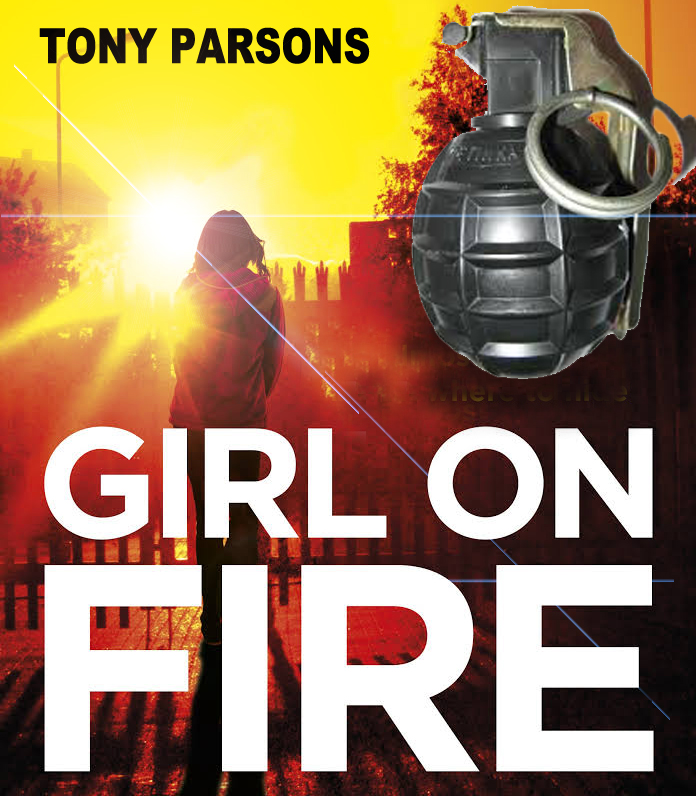
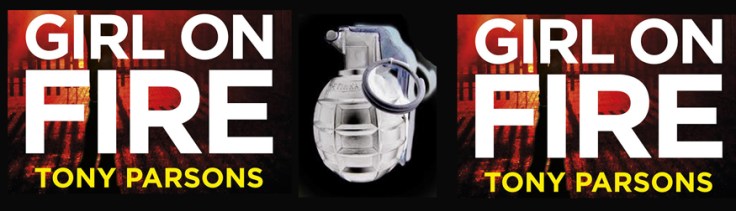
 Wolfe survives, and shoulders his way into the hit team which raids a nondescript terraced house in Borodino Street in East London. Their target? To capture two Pakistani brothers who have adapted simple commercially available drones into weapons of terror. Needless to say, the raid does not go according to plan. The lead police officer is shot dead at the outset, by one of the brothers disguised in a niqab. He is eventually shot dead, as is the remaining brother. But there are questions raised about the death of the latter. Was he shot as he was trying to surrender, or was he simply assassinated by a vengeful police marksman? And where are the two ex-Croatian hand grenades which informers say had been sold to the Khan brothers?
 The novel frequently holds you by the hand – no, make that puts you in an arm lock – and takes you to places you would rather not go. Parsons (right) is not someone with a well stocked cupboard full of tea lights, bunches of flowers and anodyne pleas for togetherness. He is not going to link arms with anyone and place these tributes at scenes of murder and carnage. Least of all will he, via Max Wolfe, be tweeting Je Suis Borodino Street any time soon. Some might say that for a humble DC, Max Wolfe certainly seems to get about a bit, but this is an irrelevant criticism, because what he thinks and sees are essential to the story. Wolfe is a a man of deep compassion and perception. Not only is his narrative reliable – it is painfully accurate and candid. Readers have, of course, the option of averting their gaze or thinking about gentle deaths in Cotswold villages, solved by avuncular local bobbies. Those who choose not to turn away from this brutal autopsy of Britain – and specifically London – in 2018 will not, I suggest, feel rejuvenated, life-enhanced or particularly optimistic by the end of this novel. Rather, they will follow the emotional journey of the celebrated wedding guest:

 Many people in their sixties – particularly those who are comfortably off – plan ahead for their own funerals. Daytime television programmes are interspersed with advertisements featuring either be-cardiganed senior citizens smugly telling us that they have taken insurance with Coffins ‘R’ Us, or rueful widows plaintively wishing that they had been better prepared for the demise of poor Jack, Barry or Derek. However, it would be unusual to hear that the be-cardiganed senior citizen had died only hours after planning and paying for their own send-off from the world of the living.
 During the story, Horowitz (right) drops plenty of names but, to be fair, the real AH has plenty of names to drop. His CV as a writer is, to say the least, impressive. But just when you might be thinking that he is banging his own drum or blowing his own trumpet – select your favourite musical metaphor – he plays a tremendous practical joke on himself. He is summoned to Soho for a vital pre-production meeting with Steven and Peter (that will be Mr Spielberg and Mr Jackson to you and me), but his star gazing is rudely interrupted by none other than the totally unembarrassable person of Daniel Hawthorne, who barges his way into the meeting to collect Horowitz so that the pair can attend the funeral of Diana Cowper.


