

Kenny Gabriel is a street-smart, wise-cracking and self-mocking PI. Given another accent, he could be cruising the neon-lit strip malls of 1950s Los Angeles. But his accent, his gags, his mixture of despair and optimism, all have ‘London’ stamped through them like a pink and sickly stick of seaside rock. Gabriel, had he been on the official side of law and order, would have been retired by now, with an enviable pension, a fond reputation down at the local ‘nick’, and plenty of potential back-handers for his advice on corporate security.
But Mr G is all but penniless. His fifty seven years on this fair planet have produced only a tenuous tenancy on a shabby flat in Soho, and a badly paid job chasing down people who have reneged on a hire car contract, or swindled their partner out of the mortgage on their dispiriting semi-detached house in some grim London suburb.
 So, when Gabriel answers the door bell one day only to behold the wedge-shaped and granite faced personage of Farrelly – chauffeur, enforcer and general gofer for Frank Parr – he is led, like a naughty boy tweaked by his ear, to Parr’s sumptious office building. To say that Parr – now a respectable media mogul – has something of a history, is rather like saying that Vlad The Impaler was someone of interest to Amnesty International. Parr made his money – loads of it, and of the distinctly dirty variety – by publishing magazines which were not so much Top Shelf as stacked in the stratosphere miles above the earth’s surface.
Parr has a job for Gabriel. Harriet ‘Harry’ Parr – daughter of the boss and senior executive of Griffin Media – has disappeared, and her father wants her found. Gabriel has that unfortunate knack, common with fictional PIs, of finding dead bodies. Not only that, he uncovers a veritable rats’ nest of corruption, violent cynicism and corporate greed.
There’s a definite seam of Raymond Chandler running through Soho Dead. Saying that is neither inappropriate flattery nor damnation by faint praise. The plot has the onion skin quality of the great man’s best books, as layer after layer gets peeled back as we get drawn closer to the heart of things. Gabriel’s wisecracks are not as good as Philip Marlowe’s, but then neither are those of any fictional PI since those glorious days. When Gabriel blags his way into a sex club and is then brought face to face with its lady proprietor, it had me thinking of Marlowe’s legendary encounter with General Sternwood in The Big Sleep.
“The woman in the armchair had too much bone structure and not enough skin. Her short hair was grey, but she had young eyes. Time, and whatever had ravaged her face, had spared them, a pair of emeralds pushed into a parchment skull.”
Gabriel is terminally weary, but he forces himself forward as he runs the gauntlet of blows from men and women who are more powerful and less honorable than he is. In the end, he survives, but ever diminished by the deeds of those who share his stage. All that remains are memories and phantoms.
 “For a while, I wandered the streets of Soho, as I had on the day I’d first visited forty years ago. Doorways whispered to me and ghosts looked down from high windows.”
This is a brilliant start to what I anticipate will be a highly regarded series. Soho Ghosts is due out in 2018, but in the meantime, trust me when I say that Greg Keen (right) drags the tarpaulin off one of the oldest established crime fiction genres, dusts it down, gives it a thorough service, polish and tune-up – and delivers something that not only gleams, but purrs with power and authenticity. Greg Keen’s website is here.


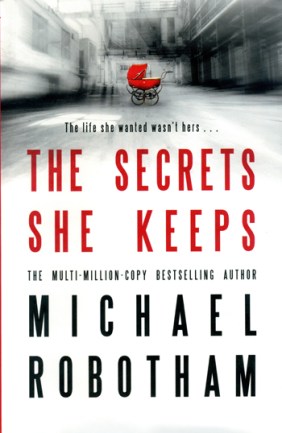 Agatha Fyfle works for peanuts in a ‘Village’ supermarket but Mr Patel, her boss, is not the kind of man to be offering generous maternity leave. He is so tight that he once docked her pay for putting the wrong price on a tin of peaches. The father of her baby is far, far away on a Royal Navy ship patrolling the Indian Ocean, chasing Somali pirates. Despite her nothing job and the desperate ordinariness of her life, Agatha has her imagination and her dreams:


 Charles Harris (right), a best-selling non-fiction author and writer-director for film and television sets in train a disastrous serious of mishaps, each of which stems from Kati’s ostensibly harmless error. Too exhausted from her daily grind making sure that Every Little Helps at everyone’s favourite supermarket, she sends her hapless son, Liam, off to the cashpoint, armed with her debit card and its vital PIN. Sadly, Liam never makes it home with the cash, the pizza guy remains unpaid, and Kati Glass is pitched into a nightmare.
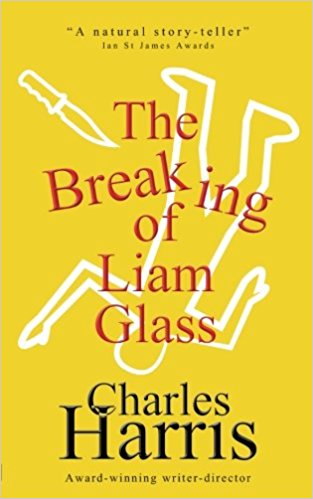 Trying to find out who stabbed Liam Glass is Detective Constable Andy Rackham. He is a walking tick-box of all the difficulties faced by an ambitious copper trying to please his bosses while being a supportive husband and father. The third member of this unholy trinity is Jamila Hasan, an earnest politician of Bengali origin who senses that the attack might be just the campaign platform she needs to ensure that she is re-elected. But what if Liam’s attackers are from her own community? Sadly, in her efforts to gain credibility on the street, Jamila has been duped.


 Annemarie Neary gives us a chilling sense of separate events which are not fatal in themselves but deadly when they collide, and while Ro is making his way to Clapham, the normally self-assured Jess is in trouble at work. She has rejected the advances of a senior partner at an office social, and he uses the rebuff to light a fire under Jess’s professional life.

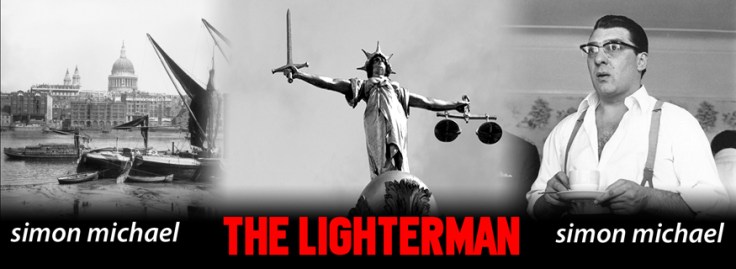
 When we next meet Charles it is 1964, and much has changed. The streets of the old East End, having been substantially rearranged by Hitler’s bombs, have been redeveloped. More significantly, the Jewish people have largely moved on. Many families have prospered and they have moved out to the comfortable suburbs. Charles Horowitz has also prospered, after a fashion. His chosen career is Law, and in order to rise through the ranks of the socially and ethnically tightly knit Inns of Court, he has abandoned Horowitz and reinvented himself as Charles Holborne.
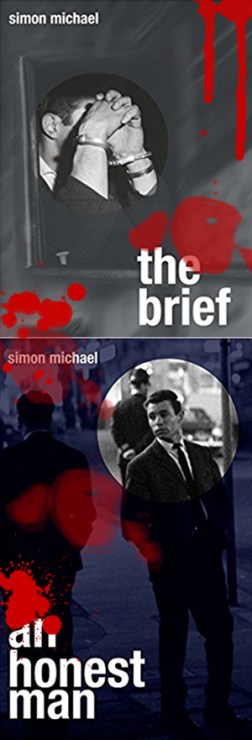 for those who want to complete the picture, but with The Lighterman it is sufficient to say that Charles has made a very undesirable enemy. It is probably merely an exercise in semantics to distinguish between the equally awful twin sons of Charles David Kray and Violet Annie Lee, but most casual observers agree that Ronnie was the worst of two evils. The homosexual, paranoid and pathologically violent gangster has a list of people who have upset him. The first name on that list is none other than Charles Holborne aka Horowitz, and the brutal East End hoodlum is determined that Charles must be done away with.
 Simon Michael (left) combines an encyclopaedic knowledge of London, with an insider’s grasp of courtroom proceedings. I cannot say if it was the author’s intention – only he can concur or disagree – but his writing left me with a profound sense of sadness over what London’s riverside and its East End once were – and what they have become. This is a beautifully written novel which succeeds on three different levels. Firstly, it is a superb recreation of a London which is just a lifetime away, but may as well be the Egypt of the pharaohs, such is its distance from us. Secondly, it is a tense and authentic legal thriller, with all the nuances and delicate sensibilities of the British legal system pushed into the spotlight. Thirdly – and perhaps most importantly – we meet characters who are totally convincing, speak in a manner which sounds authentic, and have all the qualities and flaws which we recognise in people of our own acquaintance. The Lighterman is published by Urbane Publications and is


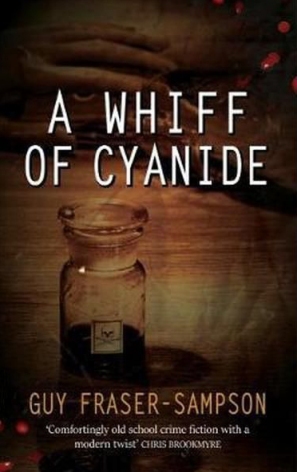 Readers of the two previous books in the Hampstead Murders series, Death In Profile and Miss Christie Regrets, will know what to expect, but for readers new to the novels here is a Bluffers’ Guide. The stories are set in modern day Hampstead, a very select and expensive district of London. The police officers involved are, principally, Detective Superintendent Simon Collison, a civilised and gentlemanly type who, despite his charm and urbanity, is reluctant to climb the promotion ladder which is presented to him. Detective Sergeant Karen Willis is, likewise, of finishing school material, but also a very good copper with – as we are often reminded – legs to die for. She is in love, but not exclusively, with Detective Inspector Bob Metcalfe, a decent sort with a heart of gold. If he were operating back in the Bulldog Drummond era he would certainly have a lantern jaw and blue eyes that could be steely, or twinkle with kindness as circumstances dictate.
 Collison, Metcalfe, Willis and Collins have an ever lengthening list of questions to be answered. Why was Ann Durham brandishing a bottle of cyanide as she presided over one of the convention panels? Who actually wrote her most popular – and best selling – series of novels? Fraser-Sampson (right) spins a beautiful yarn here, with regular nods to The Golden Age during a convincing account of modern police procedure. Not only is the crime eventually solved, but he provides us with a delightful solution to the Willis – Metcalfe – Collins love triangle.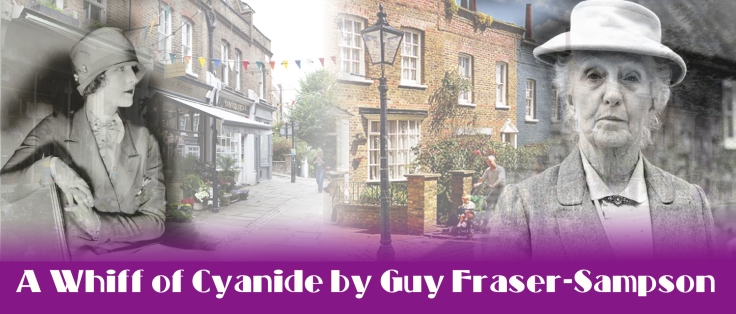


 Now, Thorne becomes involved in another kind of hell on earth, and one where all absent devils have been called home, all leave cancelled, and any recently retired fallen angels pressed back into duty. The fires stoked in this particular hellish pit illuminate the ghastly world inhabited by some British Asian communities who sanction murder in the name of their warped concept of family honour. Among the ghosts which inhabit the darker parts of Thorne’s memory is that of Meena Athwal. She was killed, he is certain, at the behest of her family, but her death remains unavenged in a court of justice.
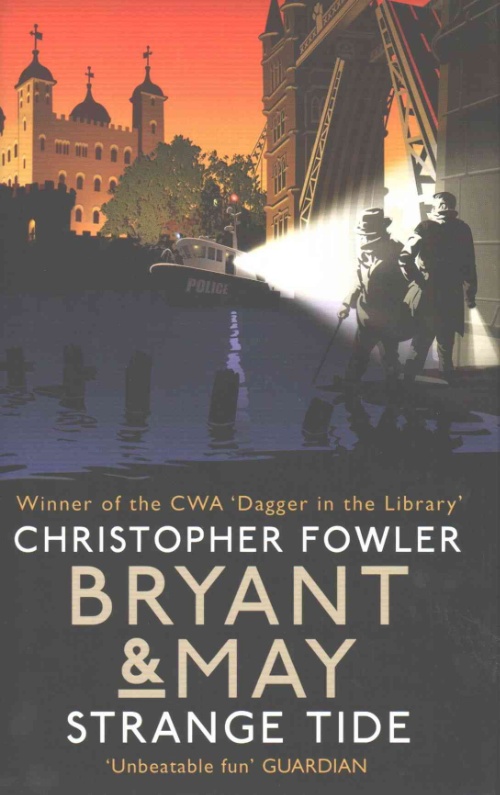

 The Urban Dictionary tells me that a “keeper” is
 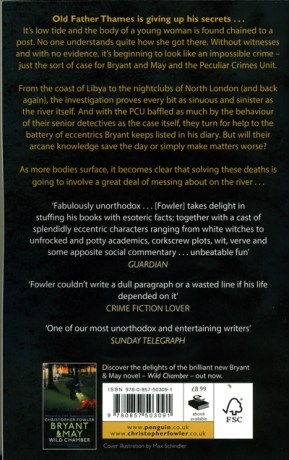 STRANGE TIDE is set, as you may expect, in London, but it’s a London few of us will ever see. It’s a world of forgotten alleyways, strange histories, abandoned amusement arcades, inexplicable legends and murder – always murder. Strange Tide was my book of the year for 2016, and you can read my review of it by following


 Barbara Nadel (left) has created one of the more adventurous pairings in recent private eye fiction. The pair return for another episode set in the modern East End of London. Lee Arnold is a former soldier and policeman but now he is the proprietor of an investigation agency, partnered by a young Anglo Bengali widow, Mumtaz Hakim. Abbas al’Barri was an interpreter back in the first Gulf War, where he became close friends with Arnold. He escaped from Iraq with his family, and settled in London, but now he has a huge problem for which he requires the services of Arnold and Hakim. Fayyad – Abbas’s son – has become radicalised and gone to wage jihad in Syria. After receiving a mysterious package containing a significant religious artifact, Abbas and his wife are convinced that it represents a cry for help from Fayyad who, they believe, is desperate to return home.
 Their plan, it must be said, is fraught with danger and is almost bound to go pear-shaped, but within the confines of crime fiction thrillers, makes for a nail-biting narrative. What could possibly go wrong with Hakim befriending Abu Imad on Facebook and pretending to be a starstruck Muslim lass called Mishal who would like nothing better than to travel out to Syria to be at her hero’s side? Facebook leads to Skype, and with the help of make-up and a head covering, ‘Mishal’ arranges to travel to Amsterdam, complete with Abu Imad’s shopping list from Harrods. As you might expect, everything then goes wrong, in bloody and spectacular fashion.


