Before I became a reviewer, and earned (I hope) the privilege of being sent books and .mobi files by publishers, I had been a lifetime library user. Crime Fiction was my first and last love, and in my regular Saturday afternoon trawl through the shelves, there were certain authors whose names I always sought out. In no particular order, these would include Jim Kelly, Phil Rickman, John Connolly, John Sandford, Val McDermid, Mark Billingham, Jonathan Kellerman, James Lee Burke, Graham Hurley, Christopher Fowler – and Graham Ison.
The Graham Ison books were slimmish-volumes, usually the Brock and Poole series, but my favourites were always the Hardcastle books. Ernie Hardcastle was a London copper in and around the years of The Great War. He could come over brusque in his dealings, but other might use the word ‘avuncular’. He distrusted innovations such as the telephone, but had a true copper’s nose for villains. A couple of his books are reviewed here, but inevitably, ‘time, like an ever-rolling stream, bears all its sons away..‘ Thankfully, in Hardcastle’s Secret Agent, Ernie is still with us, but long since retired, and the Hardcastle concerned is his son Walter, now a rising star in the Metropolitan Police.
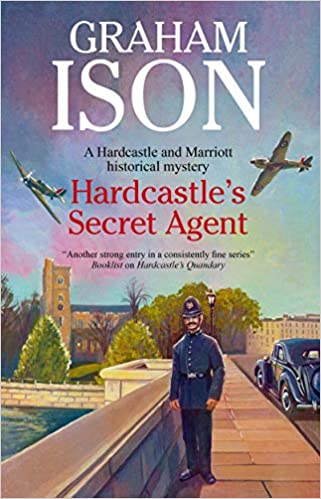 We are, as ever, in London, but it is 1940. The Phony War is over, and the Luftwaffe are targetting industrial sites they believe to be involved in making parts for military aircraft. When several important employees of one such factory are burgled – clearly by an expert – but with nothing other than trinkets stolen, Hardcastle believes he may be on the track of a German spy on the look-out for plans, blueprints or important military information. Hardcastle has to deal with The Special Branch, but finds them about as co-operative as they were with his father a couple of decades earlier. This has a certain tinge of irony, as part of the author’s distinguished police career was spent as a Special Branch Operative.
The search for the German spy withers on the branch, but Hardcastle has other fish to fry. A prostitute – or at least, a young woman who was free with her favours – has been found beaten to death, and the hunt for her killer takes Hardcastle into military quarters.
Eventually, Walter Hardcastle gets both of his men, and on the way we have a vividly recreated world of an England struggling to come to grips with a new world war. Not one that is being fought far away on some foreign field, but one which is brought to people’s very hearths and homes every single night. Hardcastle’s Secret Agent is published by Severn House/Canongate Books and will be out on 1st May.
Sad to relate, Graham Ison died suddenly in late 2020 before he could complete this book. It was finished with the help of his son Roger. Graham Ison was prolific, certainly, and critics might argue that he stuck to a reliable formula in each of his series, and never ventured into unfamiliar territory. Neither was he a darling of the crime fiction festival circuit, but I suspect after decades working as a policeman that never bothered him. What he was, however, was a reliable name for readers who bought his books and – importantly – library borrowers, who knew that they could rely on him for a story well told, and if his words took them into familiar territory, then that was nothing for either reader or writer to be ashamed about.



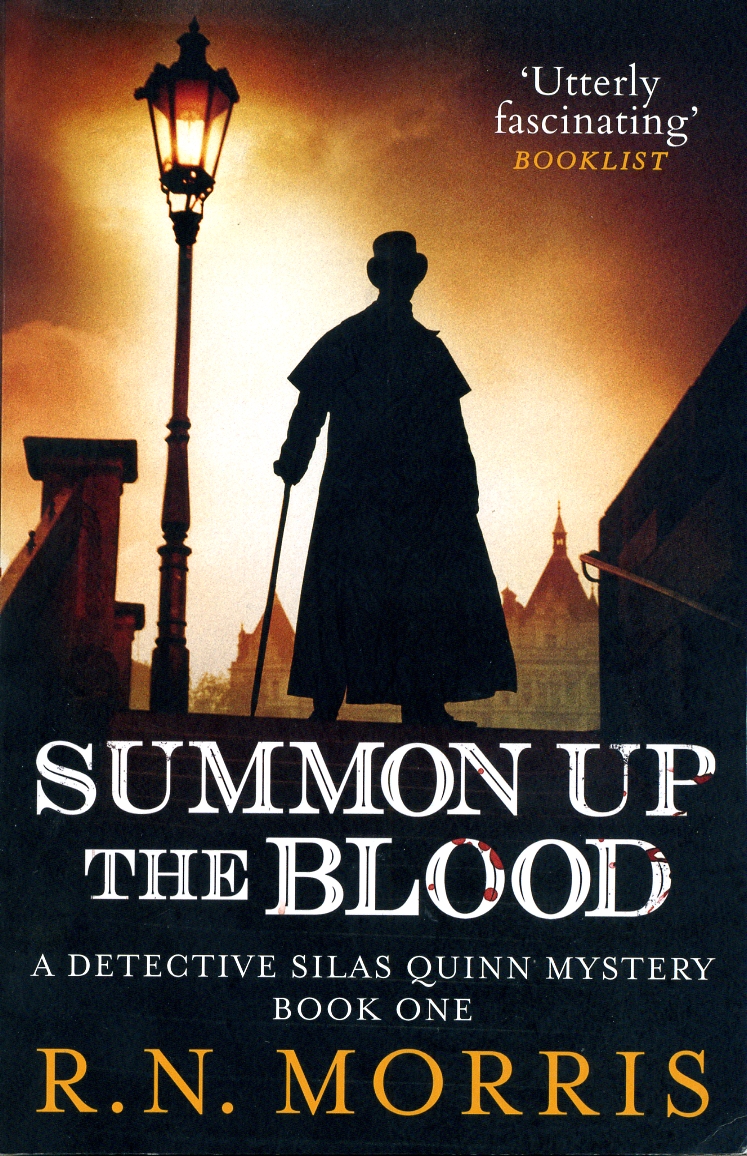 When a rent boy is found dead, his throat cut from ear to ear, there is initially little interest by the police, as the lad is just assumed to have paid the price for being in a risky line of business, but when the post mortem reveals that he has had every drop of blood drained from his body, Quinn is summoned and told to investigate. After a droll episode where Quinn decides to pose as a man smitten by “the love that dare not speak its name”, and blunders around in a dodgy bookshop, but he does find out that the dead youngster was called Jimmy, and had links to a ‘gentleman’s club’ where he would find men appreciative of his talents.
 Thankfully, Morris makes no attempt to get in the politics of homosexuality and the law: his characters simply inhabit the world in which he puts them, and their thoughts, words and deeds resonate authentically. In 1914, remember, the trial of Oscar Wilde and the Cleveland Street Scandal were still part of folk memory. It’s an astonishing thought that had Morris been writing about similar murders, fifty years later in 1964, virtually nothing would have changed – think of the scandals involving such ‘big names’ as Tom Driberg, Robert Boothby and Ronnie Kray, and how their lives have been written up by such novelists as Jake Arnott, John Lawton and James Barlow.



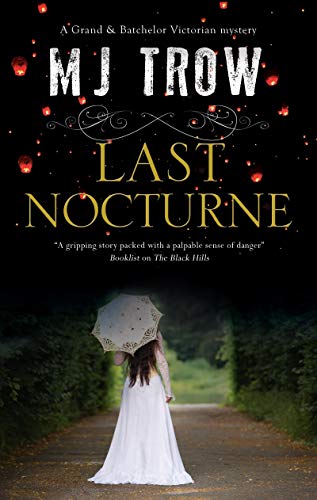 Grand & Batchelor are private investigators based in 1870s London and – much to the relief of James Batchelor, who is a terrible traveller – Last Nocturne has its feet securely on home soil. Grand is from a wealthy New England family, and fought bravely for the Union in The War Between The States, while Batchelor is a journalist by trade. Murder – what else? – is the name of the game in this book, and the victims are, you might say ‘on the game’. Cremorne Gardens were popular pleasure gardens beside the River Thames in Chelsea, but after dark, the ‘pleasure’ sought by its denizens was not of the innocent kind. ‘Ladies of the Night’ are being murdered – poisoned with arsenic – but the killer doesn’t interfere with them, as the saying goes, but instead leaves books by their dead bodies.

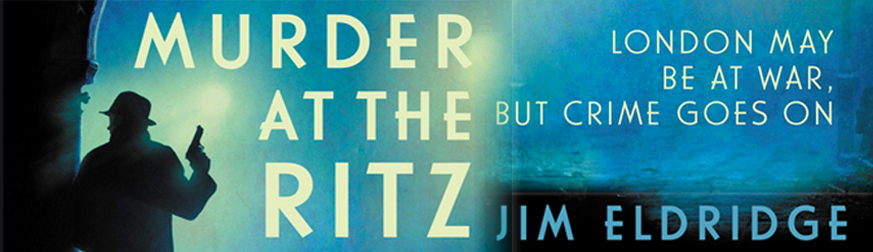
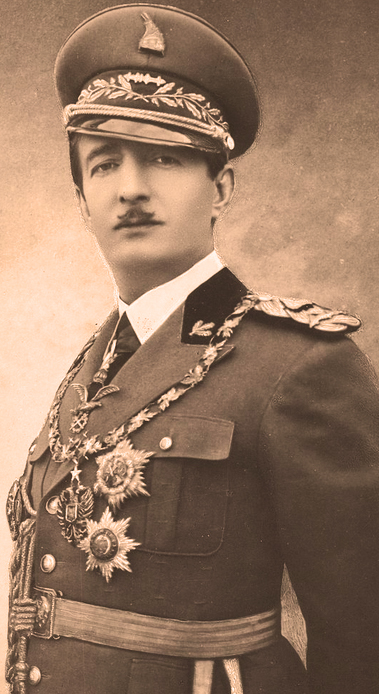 Any novel which features – in no particular order – Commander Ian Fleming, King Zog of Albania, a dodgy lawyer called Pentangle Underhill, and a Detective Chief Inspector named The Hon. Edgar Walter Septimus Saxe-Coburg promises to be a great deal of fun, and Murder At The Ritz by Jim Eldridge didn’t disappoint. It is set in London in August 1940, and Ahmet Muhtar Zogolli, better known as King Zog of Albania (left) has been smuggled out of his homeland after its invasion by Mussolini’s Italy, and he has now taken over the entire third floor of London’s Ritz Hotel, complete with various retainers and bodyguards – as well as a tidy sum in gold bullion.
  Back to the story, and when a corpse is discovered in one of the King’s suites, Coburg is called in to investigate. The attempt to relieve the Albanian monarch of his treasure sparks off a turf war between two London gangs who, rather like the Krays and the Richardsons in the 1960s, occupy territories ‘norf’ and ‘sarf’ of the river. After several more dead bodies and an entertaining sub-plot featuring Coburg’s romance with Rosa Weeks, a beautiful and talented young singer, there is a dramatic finale involving a shoot-out near the Russian Embassy. This is a highly enjoyable book that occupies the same territory as John Lawton’s






 This has the most seriously sinister beginning of any crime novel I have read in years. DI Henry Hobbes (of whom more presently) is summoned by his Sergeant to Bridlemere, a rambling Edwardian house in suburban London, where an elderly man has apparently committed suicide. Corpse – tick. Nearly empty bottle of vodka – tick. Sleeping pills on the nearby table – tick. Hobbes is not best pleased at his time being wasted, but the observant Meg Latimer has a couple of rabbits in her hat. One rabbit rolls up the dead man’s shirt to reveal some rather nasty knife cuts, and the other leads Hobbes on a tour round the house, where he discovers identical sets of women’s clothing, all laid out formally, and each with gashes in the midriff area, stained red. Sometimes the stains are actual blood, but others are as banal as paint and tomato sauce.
 My verdict on House With No Doors? In a nutshell, brilliant – a tour de force. Jeff Noon (right) has taken the humble police procedural, blended in a genuinely frightening psychological element, added a layer of human corruption and, finally, seasoned the dish with a piquant dash of insanity. On a purely narrative level, he also includes one of the most daring and astonishing final plot twists I have read in many a long year.