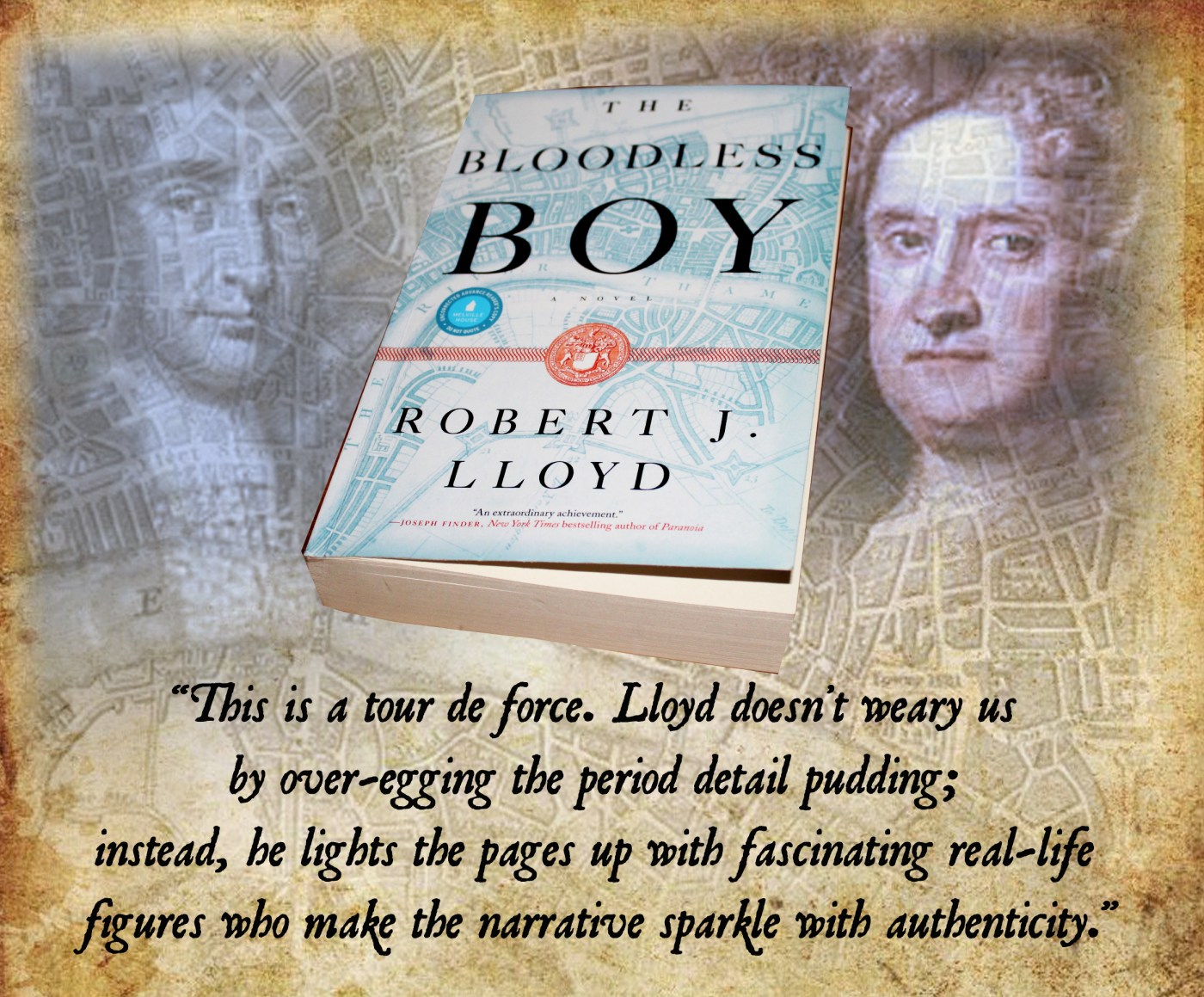

It is the first day of 1678, and snow is settling over a London that is mostly rebuilt after the great conflagration, but still has patches of nettle covered gaps where buildings used to be. Scientist Harry Hunt, assistant to the great polymath Robert Hooke, is summoned to his master’s side to attend what appears to be a a murder scene. On the muddy banks of the open sewer known as the Fleet River, an angler has found the dead body of a boy, perhaps two or three years of age. When examined by Hooke, a the behest of senior magistrate Sir Edmund Bury Godfrey, it is discovered that the boy has been expertly drained of blood. Found upon the body is a letter containing a single sheet of paper, a cypher consisting of numbers and letters arranged in a square.
 Thus begins a thoroughly intriguing murder mystery, steeped in the religious politics of the time. For over one hundred and fifty years, religion had defined politics. Henry VIII and his daughters had burned their ‘heretics’, and although the strife between Charles I and Parliament was mainly to do with authority and representation, many of Oliver Cromwell’s adherents were strident in their opposition to the ways of worship practiced by the Church if England. Now, Charles II is King. He is reputed to have sired many ‘royal bastards’ but none that could succeed to the throne, and the next in line, his brother James, has converted to Catholicism. In most of modern Britain the schism between Catholics and Protestants is just a memory, but we only have to look across the Irish Sea for evidence of the bitter passions that can still divide society.
Harry Hunt is charged with breaking the code, and learns that it is a cypher last used over twenty years early when the current King was smuggled out of the country after his defeat at the battle of Worcester. Hunt and Hooke have another mystery death on their hands, however. With this one, Robert J Lloyd departs from recorded history, in its pages tell us that Henry Oldenburg, the German-born philosopher, scientist, theologian – and Secretary of The Royal Society – died of an undisclosed illness in September 1677, but the author has him shooting himself through the head with an ancient pistol. Lloyd jiggles the facts again – and why not? – with the killing of Sir Edmund Bury Godfrey, whose corpse is found strapped to the fearsome Morice water wheel under London Bridge (below). Sir Edmund was actually found dead in a ditch near Primrose Hill, impaled with his own sword.

We find ourselves immersed in a plot of dazzling complexity which weaves together political and military history, a plot to kill the king, and a highly secret medical experiment undertaken with the best of intentions, but turning into something every bit as horrific as those carried out by Joseph Mengele centuries later. In the middle of the turmoil stands Harry Hunt – an admirable and courageous hero who is underestimated at every step and turn by the men involved in the conspiracy.
 How on earth this superb novel spent many years floating around in the limbo of ‘independent publishing’ is beyond reason. While not quite in the ‘Decca rejects The Beatles‘ class of short sightedness, it is still baffling. The Bloodless Boy has everything – passion, enough gore to satisfy Vlad Drăculea, a sweeping sense of England’s history, a comprehensive understanding of 17th century science and a depiction of an English winter which will have you turning up the thermostat by a couple of notches. The characters – both real and fictional – are so vivid that they could be there in the room with you as you read the book.
Looking back at my reviews over the last eighteen months, I see there is no shortage of novels set in 17th century London, but this is a tour de force. Lloyd (above right) doesn’t just rely on the period detail to bring the history to life, he lights the pages up with fascinating real-life figures who make the narrative sparkle with authenticity.

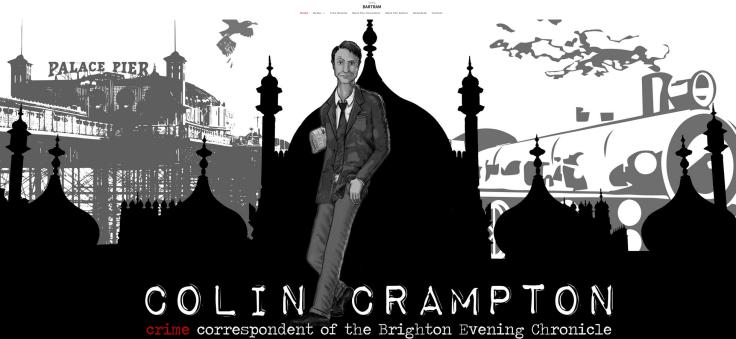

 There were nineteen B & M novels, beginning with Full Dark House in 2003, plus a quartet of graphic novels and short story collections. I say ‘were’, because although Christopher Fowler (left) is still with us, those who have read London Bridge Is Falling Down (2021) will know – and I am sorry if this is a spoiler – that old age and infirmity finally catches up with the venerable pair of detectives. Where to start to talk about this series? The author himself is, as far as I can judge, a modern and cosmopolitan fellow, but his love – and knowledge – of London is all embracing. Christopher Fowler is a one-off in contemporary writing, and completely individual, but speaking as an elderly chap with many years of reading behind me, I can best put him in context with great English writers of the last 150 years or so by looking at various aspects of the novels.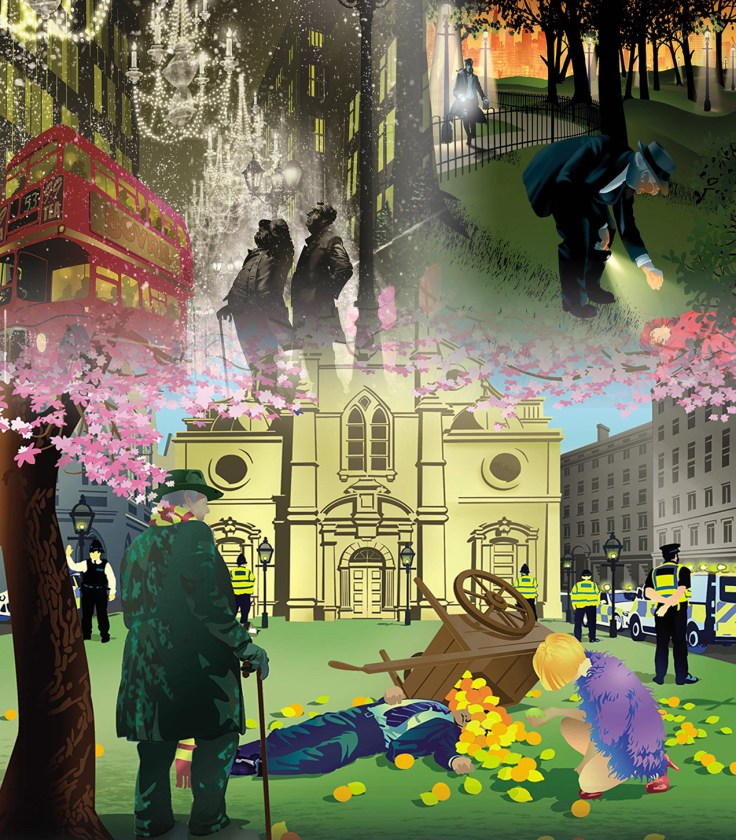

 We are left to imagine what he looks like. He never uses violence as a matter of habit, but his inner rage fuels a temper which can destroy those who are unwise enough to provoke him. Why is he so bitter, so angry, so disgusted? Of himself, he says:



 Investigating duos are always a reliable way to spin a police novel, and in this case we have Inspector Harvey Marmion and Sergeant Joe Keedy of the Metropolitan Police. Marmion is married to Ellen, with a son and daughter. Son Paul has been mentally damaged by his time on the Western Front, and has now disappeared leaving no clue as to his whereabouts, while daughter Alice – also a service police officer – is engaged to Keedy.
 Edward Marston

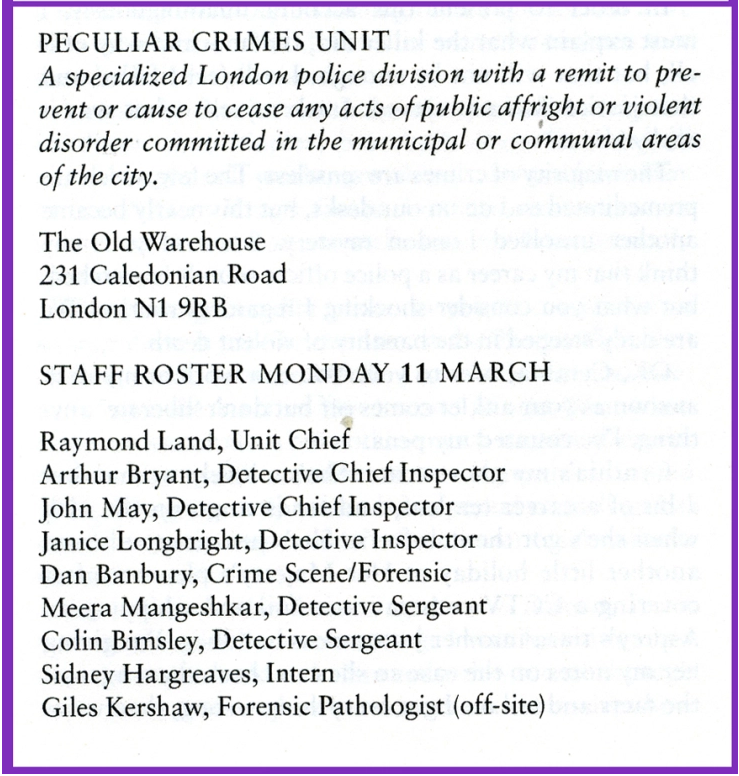
 Quinn and his sergeants – Inchball and Macadam – are The Special Crimes Department of the Metropolitan Police. This department has a passing resemblance to Christopher Fowler’s







 We are in London in the summer of 1879, and young Holmes has yet to meet the man who will write up his greatest cases. Holmes works for a guinea a day, and is striving to build his reputation. Within the first few pages, he has been hired to investigate two cases on behalf of a man who was already a celebrity, and another who would become infamous in his lifetime, but revered and admired after his death. The celebrity is Albert Edward, Prince of Wales, the future King Edward VII, a notorious Lothario whose battleground has been country houses and mansions the length and breadth of the country, the vanquished being a long list of cuckolded husbands. It seems that the heir to the throne has been in the habit of entering his sexual achievements in a diary – a kind of fornicator’s Bradshaw, if you will – but it has gone missing, and Holmes is charged with recovering it.
 One hundred pages in, and it is clear that the author is enjoying a glorious exercise in name-dropping. James McNeill Whistler, Lillie Langtry, Francis Knollys, Patsy Cornwallis-West, Frank Miles, Sarah Bernhardt, John Everett Millais and Rosa Corder (right) are just a few of the real life characters who make an appearance, and it is clear that ‘Sherlock Holmes’ moves in very elegant circles.
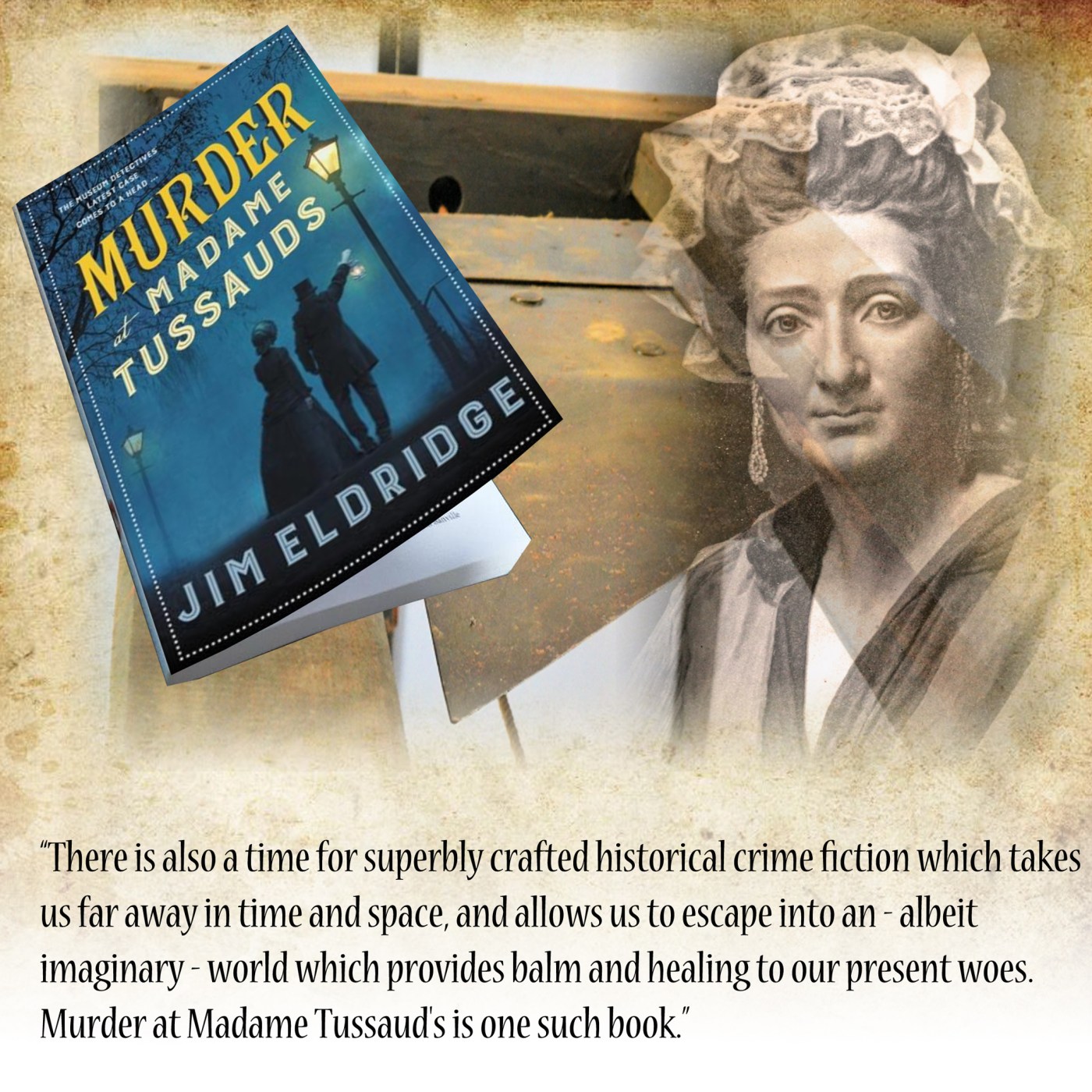
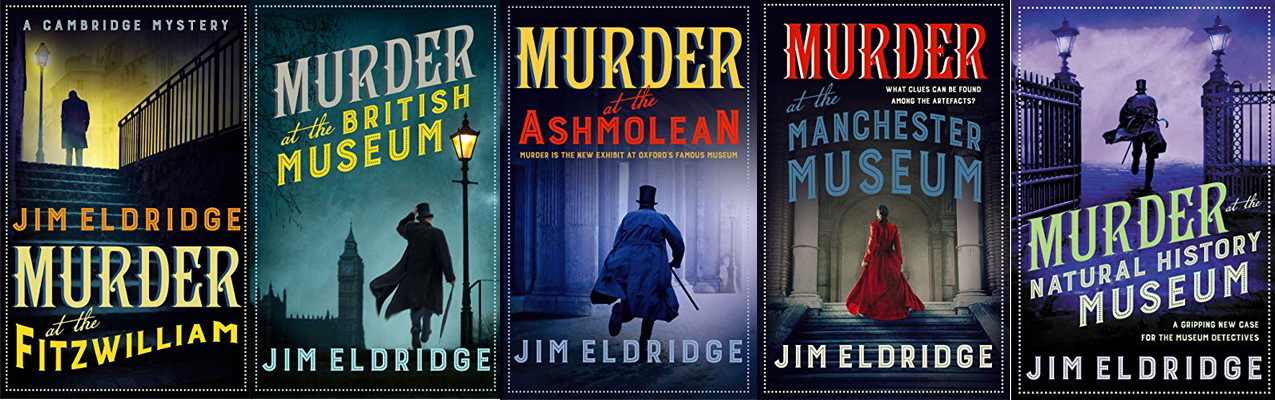
 This shouldn’t be dismissed as ‘comfort reading’. Yes, we know what we are going to get – the atmospheric late Victorian setting, the warm human chemistry between Daniel and Abigail, the absence of moral ambiguity and the certainty that good will prevail. Any genuine reader of fiction – and in particular, crime fiction – will know that, rather in the manner of Ecclesiastes chapter III , there is a time for everything; there is a time for the dark despair of Derek Raymond, there is a time for the intense psychological dramas of Lisa Jewell, and a time for workaday police procedurals by writers like Peter James and Mark Billingham. There is also a time for superbly crafted historical crime fiction which takes us far away in time and space, and allows us to escape into an – albeit imaginary – world which provides balm and healing to our present woes. Murder at Madame Tussaud’s is one such book. It is published by Allison & Busby and is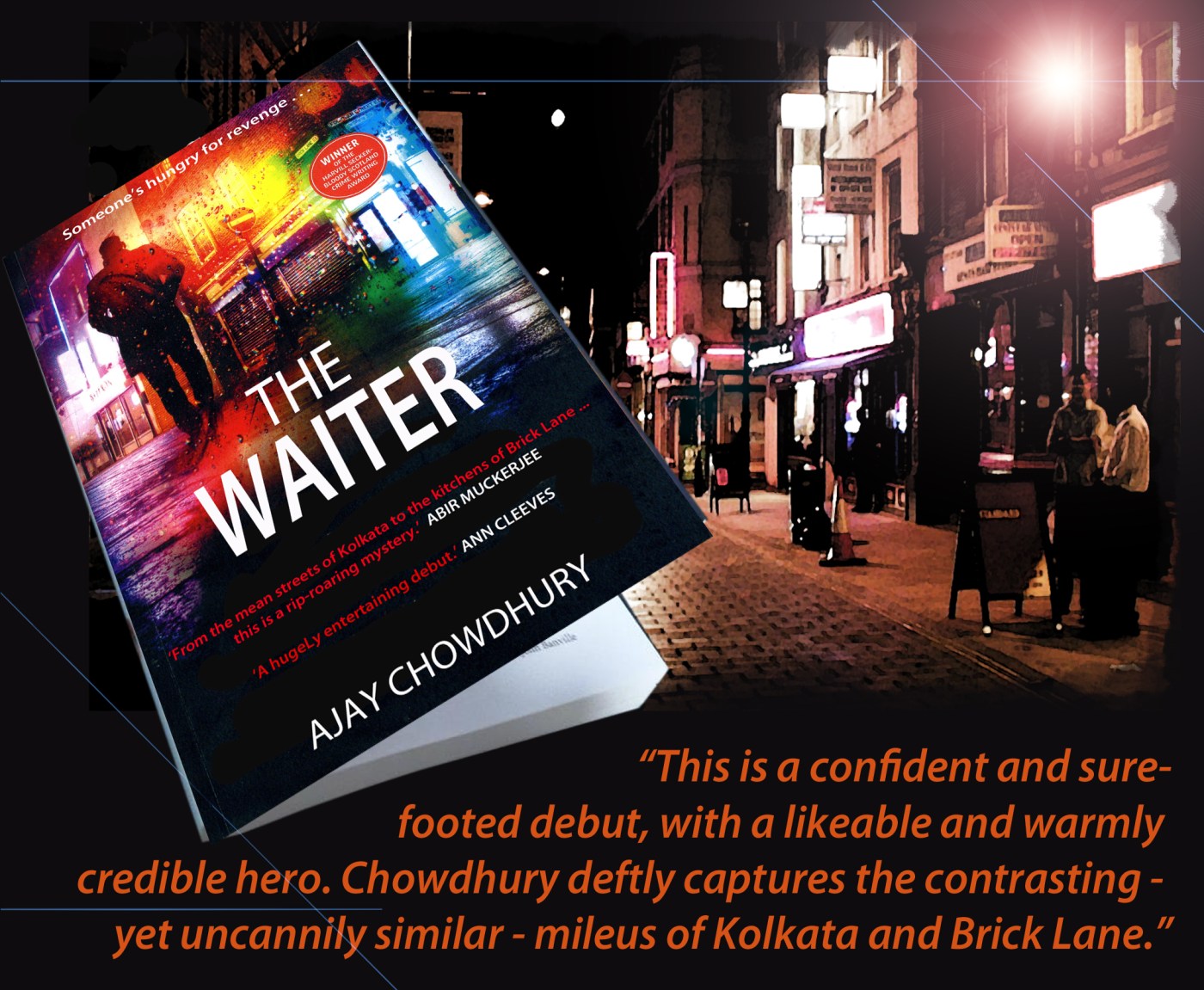

 The restaurant is run by his relatives Saibal and Maya, with help from their daughter Anjali. At this point is worth reminding people that families are the big thing in the sub-continent, and most of the characters in the book are related in one way or another. The story starts on the evening that the restaurant has been booked to provide the food for the lavish 60th birthday party of rich entrepreneur Rakesh Sharma. He and his new wife Neha – half his age – are installed in a lavish mansion on Billionaire’s Row near Hampstead Heath. It’s also worth mentioning at this point that Sharma’s first wife (and son by that union) are still very much on the scene.


