

There is nothing new in historical fiction writers having their own invented characters mix with real life figures. Among the writers who have done this with great success in the crime genre are Philip Kerr, John Lawton, Chris Nickson, and MJ Trow (click the links for further information). I was delighted to be able to review The Bloodless Boy by Robert J Lloyd just about a year ago. He introduced us the (fictional) scientist Harry Hunt and brought back personal memories of ‘O’ Level Physics by featuring Robert Hooke, of Hooke’s Law* fame.
*Hooke’s Law states that the force (F) needed to extend or compress a spring by some distance (x) scales linearly with respect to that distance—that is, Fs = kx, where k is a constant factor characteristic of the spring (i.e., its stiffness), and x is small compared to the total possible deformation of the spring.
I didn’t understand it then, and I still don’t, but no matter. In The Bloodless Boy King Charles II played quite a significant part, but his Roman Catholic wife, Queen Catherine is more to the fore in The Poison Machine, principally because after an eventful sojourn in France, Harry Hunt discovers a plot to murder her. The story begins in London in 1679, where Harry is humiliated when an experiment he is conducting in front of some very distinguished men goes badly wrong. Feeling unsupported by Robert Hooke, he distances himself from the London scientific world by taking on a criminal investigation,
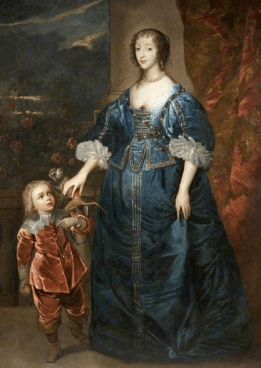 In far-off Norfolk, men repairing flood defences near Denver Sluice have discovered what appears to be the remains of a child inside the rotted skeleton of a boat. Hunt, accompanied by Colonel Michael Field, a grizzled veteran of Cromwell’s army, and Hooke’s niece, Grace. When the trio arrive in Norfolk, Hunt soon determines that the remains are not those of a child, but the mortal remains of Jeffrey Hudson, who was known as the Queen’s Dwarf – the Queen in question being the late Henrietta Maria (left), wife of Charles I. The situation becomes more bizarre when Hunt learns that Hudson is not dead, but living in the town of Oakham, 60 miles west across the Fens. Hunt and his companions’ journey only delivers up more mystery when they find that ‘Jeffrey Hudson’ has left the town. Hunt knows that the jolly boat* which contained the skeleton belonged to a French trader, Incasble, which worked out of King’s Lynn.
*Jolly boats were usually the smallest type of boat carried on ships, and were generally between 16 feet (4.9 m) and 18 feet (5.5 m) long. They were clinker-built and propelled by four or six oars. When not in use the jolly boat normally hung from davits at the stern of a ship, and could be hoisted into and out of the water. Jolly boats were used for transporting people and goods to and from shore.
 Hunt’s odyssey continues. In King’s Lynn, Hunt and his companions are summoned to the presence of the Duchesse de Mazarin. Hortense Mancini is one of the most beautiful women in Europe. She is highly connected, but also notorious as one of Charles II’s (several) mistresses. She reveals that the mysterious dwarf – or his impersonator – may be in possession of a a legendary gemstone – the Sancy – a diamond of legendary worth, and the cause of centuries of intrigue and villainy. The Duchesse bids Harry to travel to Paris, but once there, his fortunes take a turn for the worse.
The layers of deception and double dealing in Lloyd’s plot are sometimes breathtakingly complex, but the page-and-a-half of dramatis personnae at the front of the book is a great help. When Harry Hunt, apparently betrayed by Colonel Fields, finds himself incarcerated sine die in la Bastille, one fears the worst for our intelligent (but not particularly swashbuckling) hero.
Robert J Lloyd once again works his magic in the twin roles of formidable historian and fine storyteller. We have fantastical escapes, improbable machines (a kind of 17thC steampunk) and perilous journeys to entertain us, and they do this most royally. The Poison Machine is published by Melville House and is available now.
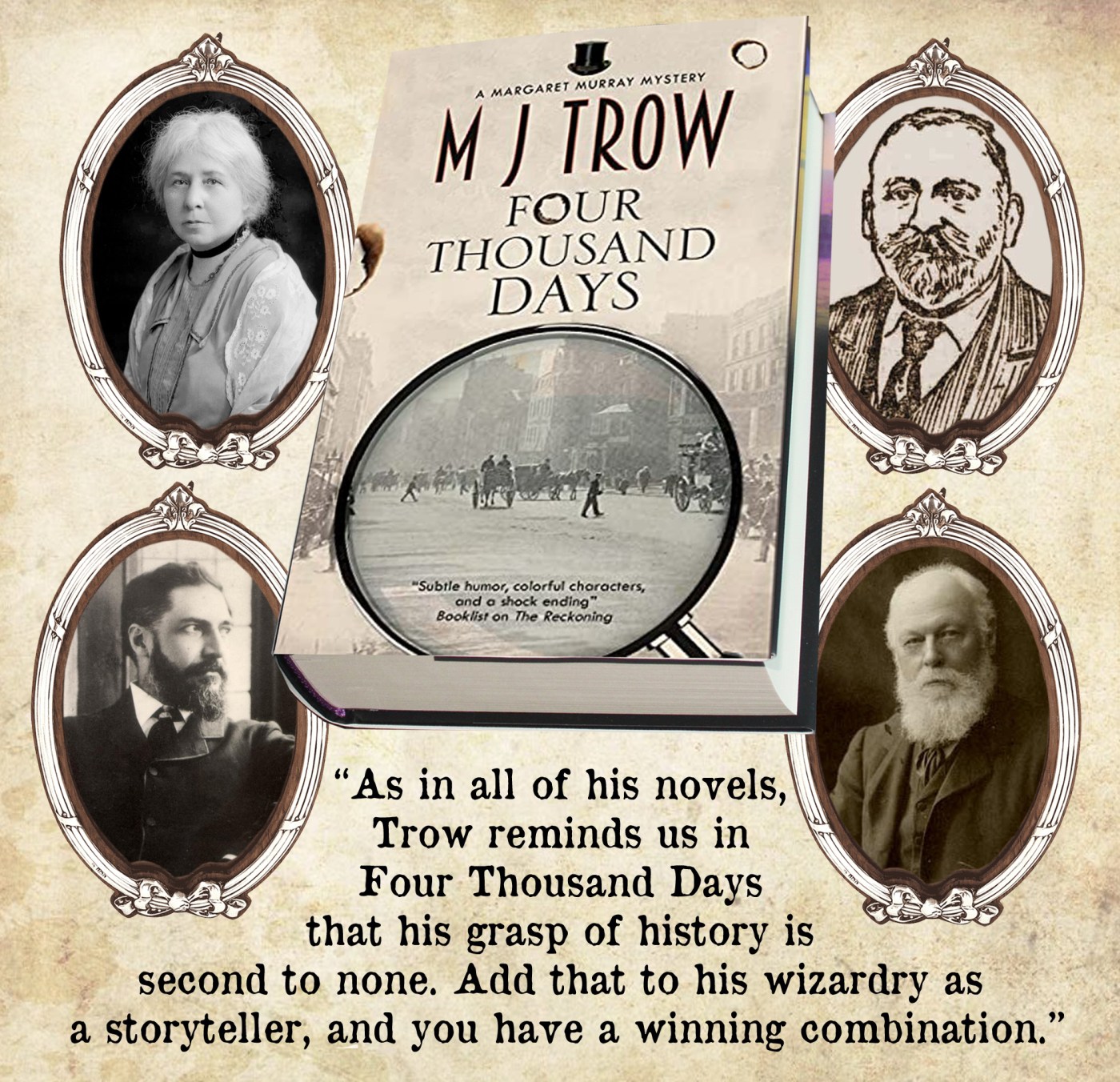








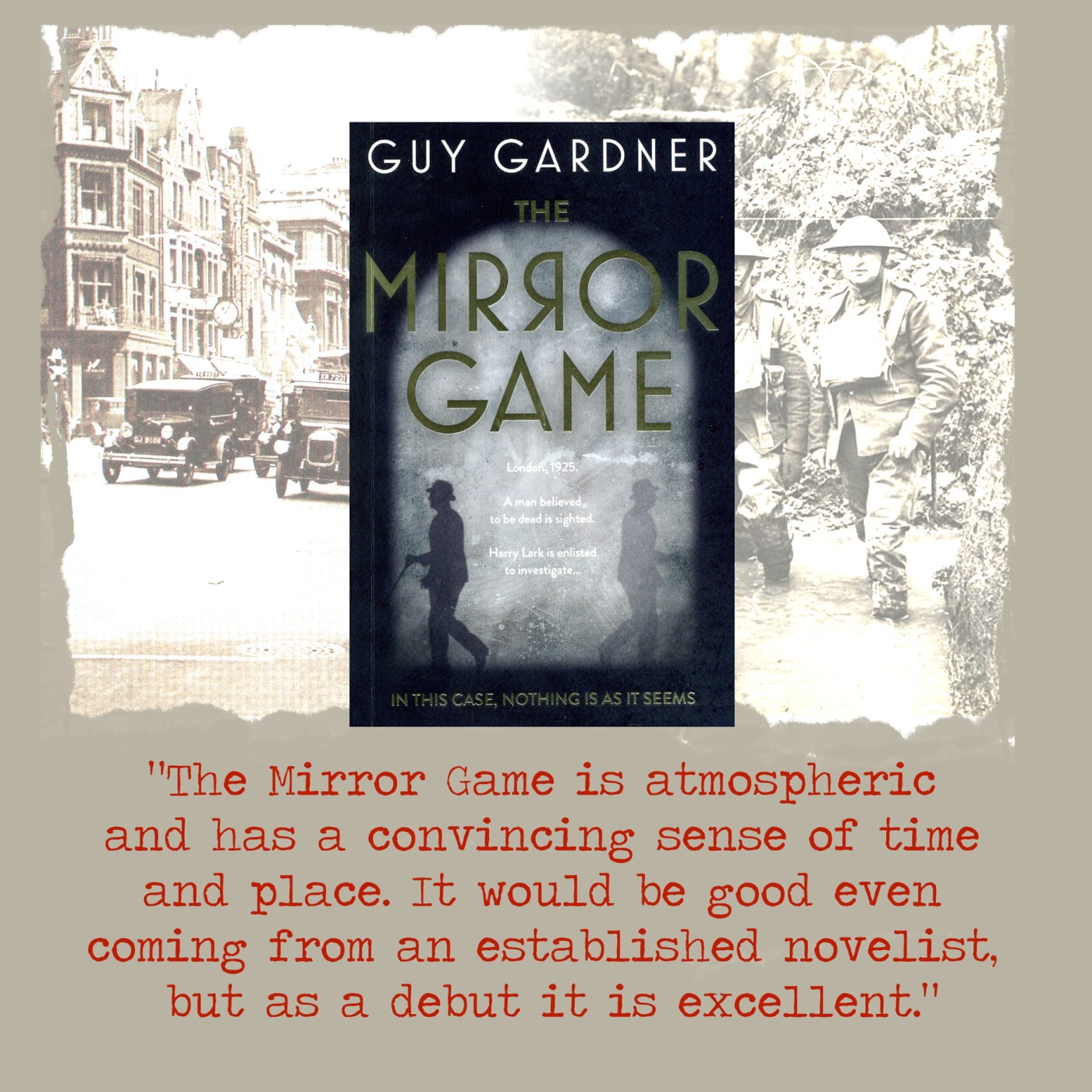

 Investigator and journalist Harry Lark fought for King and Country and emerged relatively unscathed although, like so many other men, the sounds, smells and images of the trenches are ever present at the back of his mind and he has also become addicted to laudanum – a tincture of opium and alcohol. When he is contacted by a friend and benefactor, Lady Charlotte Carlisle, she tells him that she thinks she has seen a ghost. Sitting in Mayfair’s Café Boheme, she has seen a man who is the image of Captain Adrian Harcourt, a pre-war politician who was killed on the Western Front in 1918, and was engaged to be married to her daughter Ferderica. But this man is no phantom who can fade into the wallpaper. Other customers notice him. He is flesh and blood, and approaches Lady Charlotte’s table, stares into her eyes, but then leaves without saying a word. She asks Lark to investigate.
 company, and that some seriously well-connected people have ensured that the truth about their demise has been successfully covered up. Iver’s son has been committed to an institution for mentally and physically damaged WW1 soldiers, and Filton Hall is Harry’s next port of call.


 Jim Eldridge (left) and his aristocratic Detective Chief Inspector Edgar Saxe-Coburg are working their way around the best hotels in 1940s London, investigating murder We have had
  Lurking in the background of this tale is a man who is less than noble, but with more power than all the kings and queens sheltering in London’s best hotel suites. Henry ‘Hooky’ Morton is a London gangster who is building his empire on black market scams, the most profitable of which is his manipulation of the petrol market. We think of fuel supply – or lack of it – as a very modern problem, but in 1940, having fuel to put in your car was crucial to many organisations. Hooky Morton has a problem, though. Someone has infiltrated his gang, and is making him look stupid. Then, Hooky does something really, really stupid and, no nearer identifying the garotte killer or their motives, Saxe-Coburg becomes involved in investigating what is, for any copper, the worst crime of all.

 On his trail is a grotesque cartoon of a copper – DCI Dave Hicks. He lives at home with his dear old mum, has a prodigious appetite for her home-cooked food, is something of a media whore (he does love his press conferences) and has a shaky grasp of English usage, mangling idioms like a 1980s version of Mrs Malaprop.
 “A fuchsia -pink shirt with outsize wing collar, over-tight lime green denim jeans, a brand new squeaky-clean leather jacket and, just for good measure, a black beret with white trim.”

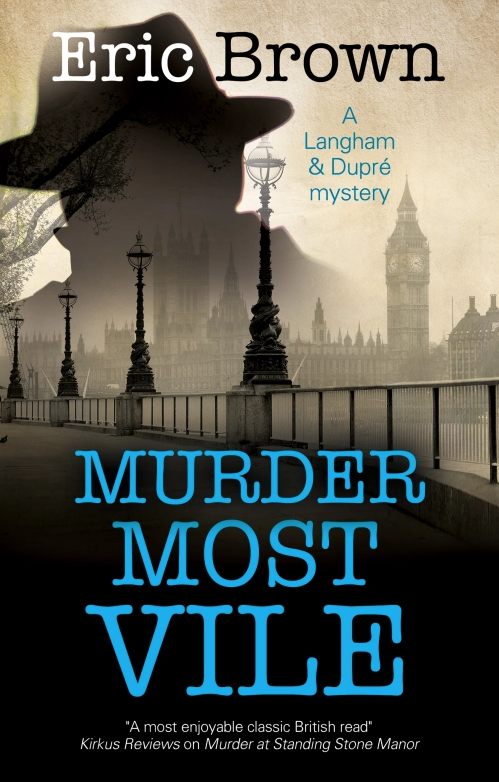 What is happening then, in Murder Most Vile? All too often these days, I am a late arrival at the ball and this is the ninth in a series centred on a pair of investigators in 1950s England. Donald Langham is a London novelist, who runs an investigation agency with business partner Ralph Ryland. Langham’s wife, Maria Dupré, is a literary agent. Here, Langham is engaged by a rather unpleasant and misanthropic – but very rich – old man named Vernon Lombard. Lombard has a daughter and two sons, and the favourite one of the two boys, a feckless artist called Christopher, is missing.
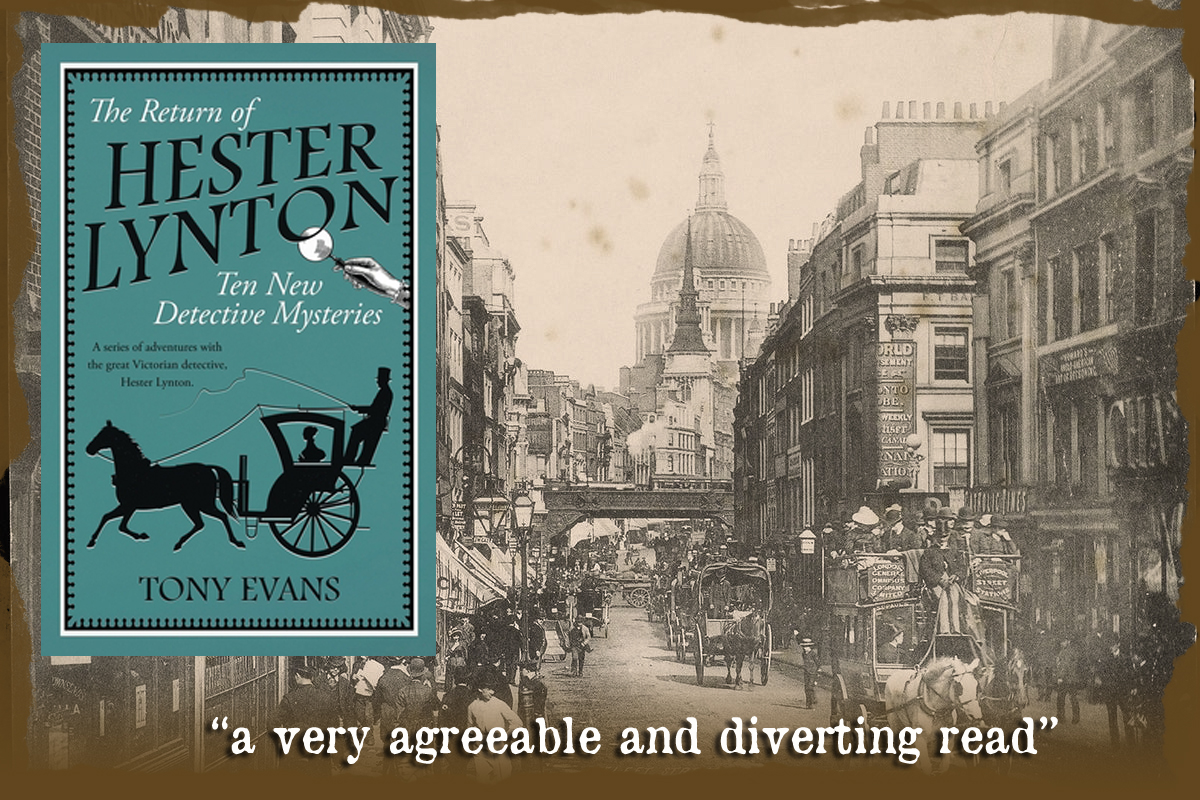

 A rich widower, a self made industrialist, dies and leaves his fortune to be divided between his two nephews. One is a down-at-heel schoolmaster, the other a disreputable roué. The lucky man has to solve a cypher set by their late uncle. The good guy brings the cypher to Hester and Ivy. They solve the conundrum with by way of a knowledge of 18th century first editions, a journey to explore an ancient English church, and by breaking in to a family mausoleum.
 Here, Tony Evans (right) indulges in the first of two shameless – but entertaining – instances of name-dropping. Our two sleuths, weary after a succession of difficult investigations, are enjoying some well-earned R & R in the resort of Whitby. So who do they meet? Think Irish writer and man of the theatre, blood, fangs …..? Gotcha! They are engaged by a fellow holidaymaker, a certain Mr B. Stoker to investigate the disappearance of a housemaid. She has been induced to leave her present employment to go and work for a rather dodgy doctor. Much skullduggery ensues, the housemaid is saved, and Mr Stoker says, “Hmm – this gives me an idea for a story.”


