Search

fullybooked2017

Tag

London

THE MASKED BAND . . . Between the covers

Two things immediately endeared me to the the main character in the book (a.k.a. the author, I imagine) First, he is a fan of country music, and was quick to reference the divine trio of Emmylou, Dolly and Linda. Second, he is no fan of the more self indulgent excesses of modern jazz. But there’s a good story here, too.

The Okay Boomers are a celebrity amateur rock band. In two ways. Confused? The five-piece outfit are actually media celebs themselves, but they wear masks on stage. Masks of Bob Dylan, Mick Jagger, Paul McCartney, Debbie Harry and David Bowie. They play a pub gig in the affluent London district of Barnes, and have an ‘after party’ at the mansion owned by one of the band members. When a body is discovered the next morning, dead as can be on the gravel underneath a balcony,  DI Garibaldi hops on his bike (literally, as he doesn’t drive) and joins the investigators at the crime scene. The dead body is eventually revealed to be that of Frankie Dunne, an unremarkable young man who – apparently – was completely unknown to any of the Okay Boomers.

Bernard O’Keefe has some sly fun with a couple of the celebrities. There’s Larry Benton, a former footballer turned presenter who sees himself as the champion of middle class liberal sentiments, and Charlie Brougham, the handsome, floppy-haired toff whose boyish charm once graced many a British comedy drama. Hmm. Let me ponder. Who could he have been thinking of?

As you might expect, beneath the veneer of showbiz cameradie, the members of The Masked Band have, in private, little good to think or say about each other. In a rather neat bit of technical business Bernard O’Keeffe has five of the band masks go missing from the crime scene, with the  only surviving mask – that of Mick Jagger – placed on the face of the defenestrated corpse, thus placing the latex Bowie, Dylan, Harry and McCartney faces out there in the community and ready to be used and abused.

We know from the brief and enigmatic prologue, that a young man who has drunk well rather than wisely heads of in search of his girlfriend and his missing ‘phone. He arrives at the house where he thinks both are and ….. end of prologue.

Were you to organise a convention of fictional Detective Inspectors you would need something larger than the average town hall. So how does DI Jim Garibaldi measure up? Italian heritage, obviously; lapsed Roman Catholic, parents died together in a road accident – hence his refusal to learn to drive; his marriage broke down, but he has a bond with his son, renewed every time they go to Loftus Road to watch QPR; he is widely read but wears his learning lightly.

Garibaldi is an engaging central character. Like all the best fictional DIs, he is prepared to think outside the box. The quirky copper resolving cases that baffle his senior officers is an oft repeated trope in police procedural novels, but it works well here. The identity of the person responsible for Frankie Dunne’s death does not exactly come out of the blue, but it is cleverly hidden until the final pages. This is a thoroughly engaging police procedural tale with just the right blend of mystery, dry humour and credible characters. The Masked Band is published by the Muswell Press and is out now.

THE QUEEN OF FIVES . . . Between the covers

qo5005 copy

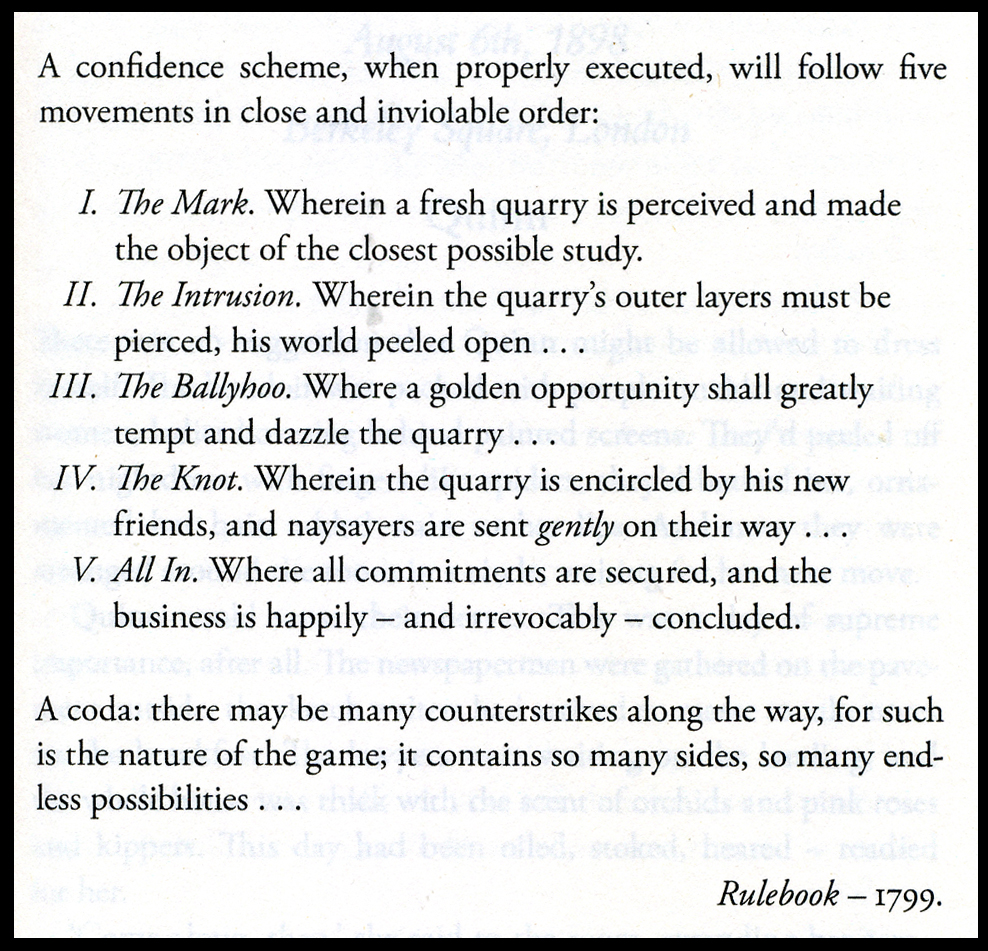
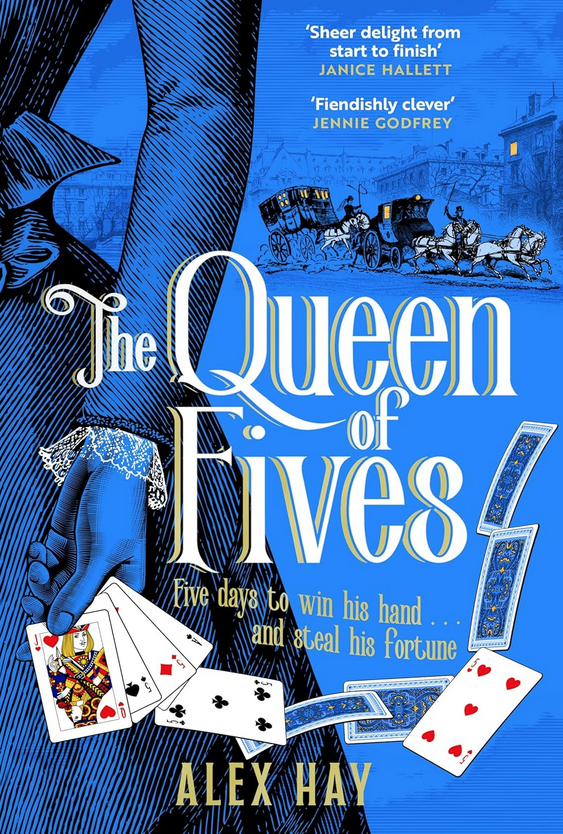
Alex Hay spins a yarn that is a preposterous as they come, but the more audacious the schemes of Quinn le Blanc become, the more entertainment the book provides. Quinn is a confidence trickster, dedicated to separating fools and their fortunes. Her home is a house in Spitalfields, and we are in the last years of Queen Victoria’s reign, a full ten years since the streets and alleys near le Blanc’s house echoed with the cries of “murder!” as yet another lady of the night was struck down by Britain’s most infamous serial killer. I may be be wrong, but the author may be giving a nod to Victorian theatre techniques, and the ability of its writers and directors to fool audiences with special effects. These, superbly described in The Fascination, by Essie Fox, are from a time long before CGI and earlier studio fakery. Le Blanc has one task. In five days, she has to meet and snare one of London’s most eligible bachelors, Max Kendal. He is alleged to be improbably wealthy, but possibly a case of ‘asset rich,  cash poor.’ With the aid of Mrs Airlie, a refined former fraudster, she prepares to set her trap. The ‘Fives’ in the book’s title refers to a kind of protocol which has five separate stages to guide the potential fraudster.

Gospel

Quinn receives a surprise invitation to the Duke’s ball, but she is suspicious:

“Quinn could smell it: the scent of the game, sweet and rotten. She didn’t trust the Duke, didn’t trust this card. She needed to find out what exactly he was concealing. The serpent was uncoiling in her heart.”

Being a high class female confidence trickster is not just a matter of desire, deception and decolletage. Quinn has to be able to do the kind of small talk the woman she was impersonating would be comfortable with. At the Duke’s ball:

“Yes, she was entranced by hunting, shooting, fishing, riding, stalking, hymns, cows,, dogs, lakes, children, her dear- departed parents, embroidery, automobiles and English beef.”

By the time Quinn has worked her way to the third stage of the scheme – The Ballyhoo – Alex Hay has made us aware that there is at least one other player in the game who intends nothing but malice and and disruption to Quinn’s plans. This mysterious person is introduced as The Man in the Blue Silk Waistcoat, but they clearly have shape shifting powers when they metamorphose into The Woman in the Cream Silk Gown. This person is not the only challenge facing Quinn. Victoria – Tor- Kendal, Max’s sister, is a force of nature. She is unconventional and a sexual predator, but her main concern is for her own fortunes should Max marry. The siblings’ stepmother, Lady Kendal is deceptively demure, but beneath her lightweight airs and graces is a formidable intelligence and steely self-will.

“There was something impenetrable about Lady Kendall. Something opaque, as if her roots had been dug deep, deep into the ground. She gave the outward impression of perfect, doll-like refinement, but there was absolute strength there.”

Alex Hay eventually lets us know the identity of the mysterious shape-shifter who is determined to sabotage Quinn’s attempt to snare the Duke and his fortune. Then, in a delicious twist, we learn that the Duke’s apparent sincerity regarding a marriage is just as insubstantial as that of Quinn. Not to spoil the fun, but I can’t resist a little teaser. If you recognise these lines, then you will know what is going on.

“He sipped at a weak hock and seltzer
As he gazed at the London skies”

Throughout the novel, the prose is rich, florid, and decidedly decadent – totally appropriate to what cultural historians have termed the ‘fin de siècle’, a period of dramatic contrasts between rich and poor, morally indulgent and haunted by the ghosts of Swinburne, Wilde, Beardsley, Verlaine and Sickert. The wedding breakfast prior to the marriage of Quinn and Max is wonderfully grotesque. Hieronymus Bosch had been dead for nearly four centuries, while it would be twenty more years before Otto Dix and George Grosz assaulted bourgeois sensibilities with their savage cartoons. Alex Hay trumps them all:

“Around them, the footmen were placing mountains of food upon the table. Collared eels, roast fowl, slabs of tongue, joints of beef, biscuits, wafers, ices, cream and water. The mayonnaise shuddered, glutinous and sick-making. Everything smelled taut, stewed, drenched in vinegar.”

This is a wonderful example of how a spectacularly good novel does not have to feature characters with whom we claim moral kinship. Quinn is simply awful – an unscrupulous predator with the moral compass of a centipede. Tor Kendal is a narcissistic ‘problem child’ with zero awareness of social or human sensibilities. Perhaps the closest to being a ‘good chap’ is Duke Maximilian, but it is not easy to decide if he is “nice but dim” or just another player in the brutal chess game played by the minor nobility in late Victorian England. This is a terrific read which assaults our senses with descriptions of the more bizarre aspects of English social life in the dying years of the 19th century. Best of all, it has gyroscopic plot which spins on its own axis innumerable times before Alex Hay persuades us that it all makes sense. Published by Headline Review The Queen of Fives is available now.

MURDER FOR BUSY PEOPLE . . . Between the covers

MFBPspine010 copy

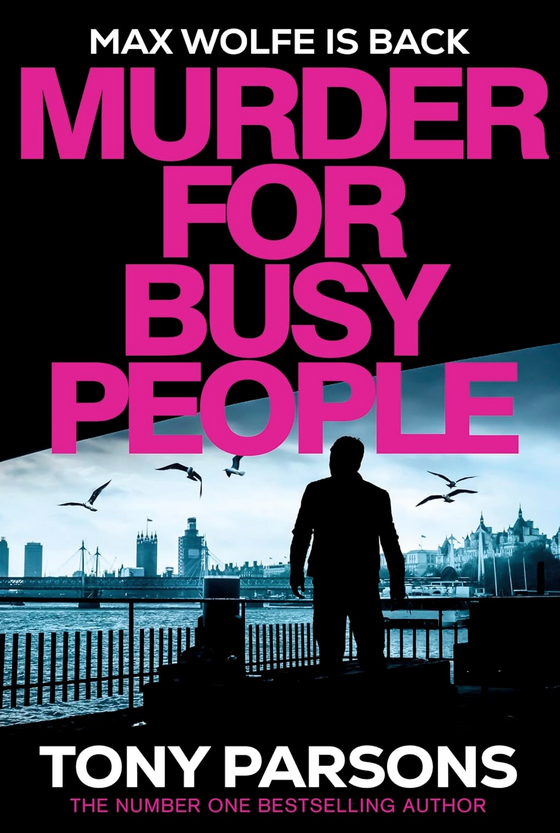
The good news is that DS Max Wolfe is back, and the even better news is that, after a long absence, our man is in very good form. As a young uniformed copper, only days out of Hendon Police College, Wolfe was first on the scene at a safe heist in a palatial London villa. All he found was a gaping hole in the wall, two corpses – and a young woman called Emma Moon, a girlfriend of the mobsters who committed the heist. Wolfe put the cuffs on her, she was tried, convicted, and served a long jail term, during which her troubled son committed suicide. Never once, during the whole process, did she utter a word about those who profited from the robbery. Now, she is out, suffering with terminal cancer, but on a ice cold revenge mission to kill as many of her former associates as she can in the brief time she has left.

Old Max Wolfe hands will know that there is an autobiographical strand running through the novels. Parsons’ breakthrough book was Man and Boy, an account of a male single parent. Here, Wolfe brings up his daughter Scout, rather than a son. Both Wolfe and Parsons are lovers of a dog called Stan, and it was sad to see an RIP notice to the real Stan in the frontispiece of this novel.  Max Wolfe lives within sight, sound and smell of the historic meat market known as Smithfield, for centuries the beating heart of a country that loves beef, pork and lamb. Parsons may not have known, when this book was signed off to the printers, that the death knell would be sounded on this historic site. It will, no doubt, be demolished and something trite and anodyne built in its place. This is a purely personal paragraph, as Parsons doesn’t preach, but I think London is gone for us now: pubs are closing at an alarming rate, institutions like the iconic chop house Simpsons of Cornhill lie empty, derelict and vandalised. Philip Larkin was right when he wrote, “And that will be England gone.”

Wolfe juggles several criminal – and personal – issues. He knows that a group of Jack-The-Lad firearms officers have a flat where they abuse young women, wrongly arrested when they flash their warrant cards. The murder of a young woman of the streets, Suzanne, seems unsolvable. On a personal level, he struggles to keep tabs on Scout, his twelve-year-old daughter. She is wilful, disobedient, but highly intelligent. Every single second while he is working, he is worried about where she is, and what she is doing. One by one, the foot soldiers of the  heist succumb, each apparently, to natural causes. Wolfe does, in the end, unmask the killer, but more by accident that intention.

Apart from being a gripping read from the first page to the last, this novel is remarkably prescient. I believe that there are many months between the final edition of a book being sent to the printers, and its appearance on bookshop shelves. Parsons weaves two very recent issues into the warp and wedt of his novel. One is a subtle and reflective elegy on Smithfield and its sanguinary history. Just weeks ago, an enquiry released its findings into the killing of a London criminal at the hands of firearms officers. Parsons lets us know, in excruciating detail, the hell that descends on any officer who fires a fatal shot.

Max Wolfe is both convincing and endearing. He doesn’t always get things right. Here, his judgment of Sarah Moon veers from spot-on to plain-wrong (and back again) several times. For all that certain critics and reviewers turn up their noses at Tony Parsons because of his political views, and the newspapers he has written for, the last pages of this book reveal what I have known ever since I met the man at a publishers’ party. He is observant, fiercely honest, and a deeply sensitive writer. Max Wolfe may be only marginally autobiographical but, like his creator, he only dances to the tunes he hears in his own head, and not those streamed in from elsewhere. Murder For Busy People will be published by Century on 2nd January.

Screen Shot 2024-12-19 at 17.29.08

THE LOST VICTIM . . . Between the covers

TLV header

The search for the killer of a child long dead is a recurring trope in crime fiction, and it carries with it all manner of similar plot strands. There will be dusty police files, parents – probably elderly by now – and still clinging to the faint hope that there might be answers; almost certainly we will meet police officers who made mistakes, made the wrong call, or took crucial short-cuts; there will be intriguing glimpses into what life was like twenty, thirty years earlier, and a sense of the truth being buried under too many lies, too many errors, too little police time, and – perhaps – a victim who was not attractive enough to the media.

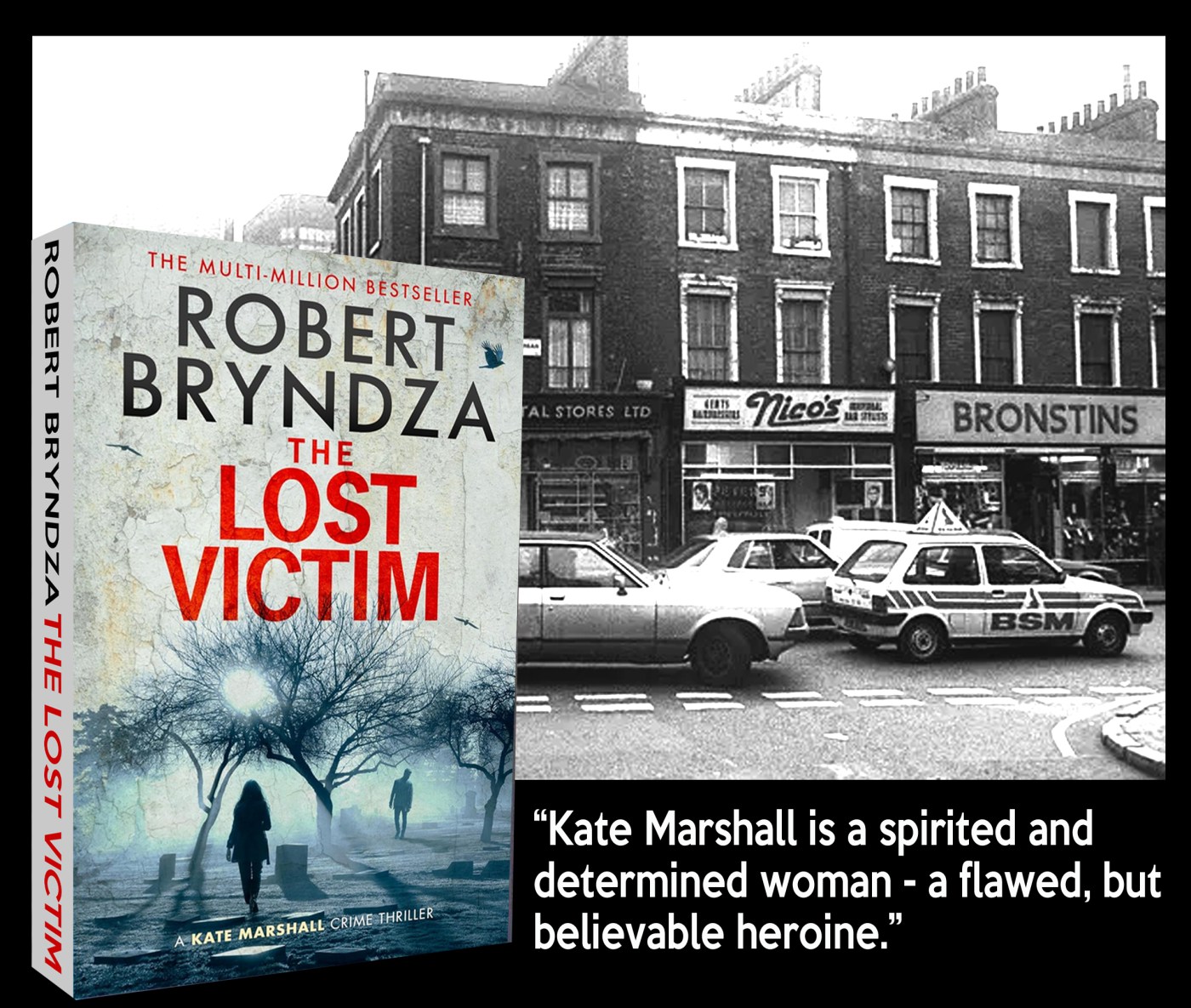
We get all this – and more – from Robert Bryndza’s The Lost Victim. Three decades earlier, before King’s Cross in London was a dazzling hub of boutique restaurants, state-of-the-art apartments and conference venues, a teenage girl named Janey Macklin was sent by her mum to buy a packet of fags from a newsagent’s shop, which sat among the grim streets, derelict warehouses, dark railway arches, smoke-filled pubs and knocking shops that made up London N1C 4AX in 1988. Janey never returned to the pub with her mum’s cigarettes. Her body was never found, despite traces of her blood being recorded in and around the places where she was last seen.

On the balance of probability, Robert Driscoll was convicted of her murder, but after a decade in jail, his case was reviewed and with a much smarter barrister than he was given at his first trial, Driscoll was released. Contemporary with Janey’s disappearance, a series of girls were being abducted and savaged by a man the press dubbed ‘ The Nine Elms Cannibal’. This time , there was no miscarriage of justice, and Peter Conway was caught, tried and convicted. He was a police officer, and married to Kate Marshall. Kate, also a copper, survived a bout of alcoholism brought about by the trauma, left the force, but has now reinvented herself as a private investigator, partnered by Tristan Harper, and based in Devon.

When she is contacted by a media agency who say they are preparing a True Crime series based on Janet’s disappearance, and need her to provide material, she reluctantly agrees. Since the case overlaps the story of her murderous husband, she senses that she might be about to be exploited, but it is the middle of winter, and her case load is not so heavy that she can afford to refuse.It does not take long for Kate Marshall to realise that she is being played by these media spivs. Not only that, a man in a relationship with one the agency’s employees was, almost certainly, a person of interest in the original investigation into Janey Macklin’s disappearance.

With awful scenes from her own past flitting in and out of her mind, Kate digs deeper and deeper into what happened on that chilly December evening, all those years ago. She is working for nothing, and running on fumes. Robert Bryndza doesn’t spare us from the numbing sense of loss felt by the people who knew and loved Janey, and when her remains are eventually found, we are left with an almost tangible sense of loss. We know her as a person; the girl who liked a bag of chips on a Friday night; the girl who went to ballet classes, perhaps dreaming of a future that could never have been realised.

I first encountered Kate Marshall in Nine Elms, which goes some way to putting her life into perspective. Click this link to read my review of that novel. In The Lost Victim we come face to face with truly vile human beings, thankfully behind bars for desecrating the lives of young people. Kate Marshall is a spirited and determined woman – a flawed, but believable heroine. The Lost Victim is published by Raven Street Publishing, and will be available on 11th July.

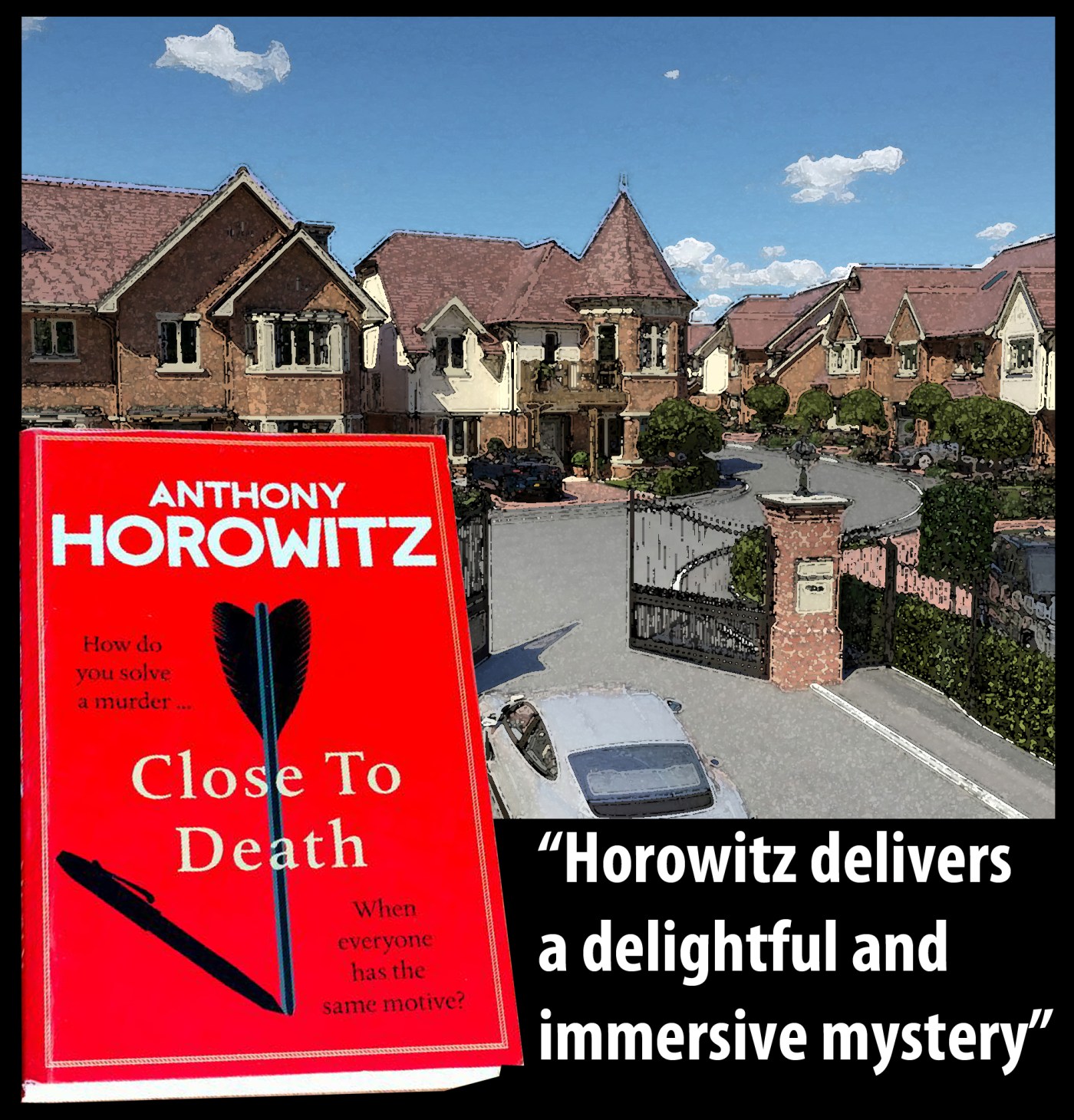
CLOSE TO DEATH . . . Between the covers

ctd spine021 copy

This series of novels has a unique concept. The author appears, more or less, as himself. We briefly meet his agent, his wife and his editor, while we learn about his hits and misses, both as a screenwriter, playwright and with his re-imagining of James Bond. When fiction appears, it is in the shape of an enigmatic former Metropolitan Police officer, Daniel Hawthorne. He was dismissed from the force after an ‘unfortunate accident’ happened to a deeply malevolent paedophile who was in police custody. Since then he has gone freelance, and has been instrumental in solving several high profile murder cases, working as an ‘advisor’ to the police. The four previous books in the series have Hawthorne investigating crimes, with Horowitz chronicling the events. I reviewed The Sentence is Death, and The Word Is Murder.  Click the links to read what I thought.

This time things are slightly different. Horowitz has a deadline for a fifth book, is all out of ideas, and he hasn’t seen Hawthorne for ages. When he does find him, the former copper will only play ball by allowing a past case to be used, and he will co-operate by giving Horowitz the case notes – but just one packet at a time.

The murder was that of a hedge fund manager who was found dead in his house with a crossbow bolt through his throat. The house was one of six in Riverview Close (hence the novel’s title) in Richmond, South London. The little estate is self contained and with just the one security gate, so what we have here is not a locked room mystery, but a locked estate mystery. The residents are:

Adam Strauss and his wife Teri. Strauss is a former TV personality, but is now a professional chess player. Their house is called The Stables.

In Well House lives Andrew Pennington. He is retires, a widower and was once a well respected barrister.

May Winslow and Phyllis Moore are elderly ladies who share The Gables. They were both once nuns, and they run a little bookshop that specialises in Golden Age crime fiction.

Woodlands is the home of Roderick and Felicity Browne. He is a wealthy dentist, known as ‘dentist to the stars’ for his clientele of showbiz celebrities. Felicity has a degenerative disease and is mostly housebound.

Tom and Gemma Beresford live in Gardener’s Cottage. He is a local GP, while she has a high profile business making designer jewellery.

Finally, at Riverview Lodge we have the man on whose death this book centres. Giles Kenworthy is an old Etonian who, apparently makes a great deal of money in the city. He met his wife Lynda when she was an flight attendant on one of his overseas trips. They have two very boisterous boys, and several cars, which they tend to park with little consideration for the other people in the Close.

Kenworthy has also put in for planning position for a swimming pool and changing facility which the other residents believe will completely devalue the Close. Quiet words, along the lines of, “I say old chap, would you mind ….?” have had no effect whatever, and so a ‘clear the air’ meeting is called for everyone, but the Kenworthys don’t show up.

When Kenworthy is found murdered, it is quickly established by the Metropolitan Police, led by Detective Superintendent Tariq Khan, that the murder weapon was a crossbow belonging to Roderick Browne who, however, is mystified by how anyone could have broken into his garage and stolen the weapon. Khan is persuaded to engage the services of Hawthorne and his assistant, a man called John Dudley.

At this point, I should step away slightly and explain the complex structure of the story. It operates with different time frames and narrators. There is the author’s ‘now’ (actually 2019) where he describes his increasingly difficult relationship with Hawthorne, and the pressure he is under to complete the book. The main events in Riverview Close take place in the summer of 2014, and we observe these through the eyes of the inhabitants, but we are also a fly on the wall during the police investigation, and some of the subsequent work, independently, of Hawthorne and Dudley.

If this sounds complicated, it’s because it is. One of the little ironies is that at one point during the book Horowitz describes how he is not drawn to the fantastical nature of many classic locked room mysteries, but he has Hawthorn deliver a splendid speech when he, Dudley and Khan believe they are about the unmask the killer:

What I’ve realised, since I arrived at Riverview close, is that nothing here is what it seems. Nothing! Every clue, every suspect, every question, every answer … It’s all been carefully worked out. Everyone who lives here has been manipulated too. So have you. So have. Something happens and you think that it somehow connects with the murder – but you’re wrong. it’s been designed to trick you. Smoke and bloody mirrors. I’ve never seen anything like it.”

Bottom line. For all its complexity and elaborate narrative framework, does Close to Death work? Yes, of course. Horowitz is too good a writer to trip up, and – as ever – he delivers a delightful and immersive mystery. The book is published by Century and will be out on 11th April.

HUNTS . . . Between the covers

HUNTS HEADER

The first thing to say is that the title won’t make much sense if you just randomly saw it on a shelf, but pick it up and you will see it is the first part of a trilogy, the two following novels being Skins and Kills. We meet Arran Cunningham, a young Scot. He is a Metropolitan Police officer working in Hackney, East London. Not being a Londoner, I have no idea what Hackney is like these days. I suspect it may have become more gentrified than it was in the spring of 1988. What Cunningham sees when he is walking his beat is something of a warzone. There is a large black population, mostly of Jamaican origin, and the lid is only just holding its own on a pot of simmering racial tensions, turf wars between drug gangs and a general air of despair and degeneration.

The pivotal event in the novel is a mugging (for expensive trainers) that turns into rape. The victim is a black teenager called Nadia Carrick. The attackers are a trio of young white men, led by a boy nicknamed Spider. They are unemployed, drug addicted, and live in a squat. Nadia tries to conceal the attack from her father, Stanton, but eventually he learns the true extent of her nightmare, and he seeks retribution. Stanton Carrick is an accountant, but a rather special one. His sole employer is Eldine Campbell, ostensibly a club and café owner, but actually the main drugs boss in the borough, and someone who needs his obscene profits legitimised.

Carrick is also a great friend of Arran Cunningham, who learns what has happened to Nadia. Purely by luck he saw Spider and his two chums on the night of the incident, but was unaware at the time of what had happened. Rather than use his own men to avenge Nadia’s rape, Eldine Campbell has a rather interesting solution. He has what could be called a “special relationship’ with a group of police officers, led by Detective Chief Inspector Vince Girvan, and he assigns them the task of dealing with with the perpetrators.

Meanwhile, Girvan has taken a special interest in Arran Cunningham, and assigns him to plain clothes duties, the first of which is to be a part of the crew eliminating Spider and his cronies. In at the deep end, he is not involved with their abduction, but is brought in as the trio are executed in a particularly grisly – but some might say appropriate – fashion. There is problem, though, and it is a big one. He recognises Spider’s two accomplices, but the third man is just someone random, and totally innocent of anything involving Nadia.

The three bodies are disposed of in the traditional fashion via a scrapyard crushing machine, but Cunningham is in a corner. His dilemma is intensified when his immediate boss, DI Kat Skeldon, aware that there is a police force within a police force operating, enrols him to be ‘on the side of the angels.’ As if things couldn’t become more complex, Cunningham learns that Stanton Carrick is dying of cancer.

JLDDurnie’s plot trajectory which, thus far, had seemed on a fairly steady arc, spins violently away from its course when he reveals a totally unexpected relationship between two of the principle players in this drama, and this forces Cunningham into drastic action.

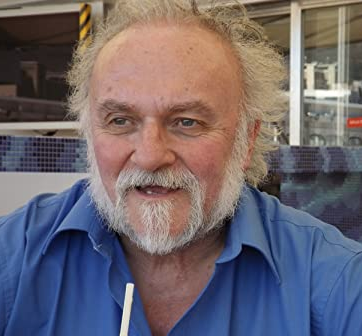
The author (left) was a long-serving officer in the Met, and so we can take it as read that his descriptions of their day-to-day procedures are authentic. In Arran Cunningham, he has created a perfectly credible anti-hero. I am not entirely sure that he is someone I would trust with my life, but I eagerly await the next instalment of his career. Hunts is published by Caprington Press and will be available on 8th January.

CHRISTOPHER FOWLER . . . 1953 – 2023

CF header

Christopher Fowler has died, and my heart is full.

He never made any secret of his illness, but kept friends and admirers up to date via his blog and Twitter messages. We all know that cancer is an absolute bastard, and its worst trait is that it is a death by a thousand cuts, Give a little – take a little bit more.

Grief is a strange thing. Too strong a word to use when someone you have never met in person dies? I remember being appalled and left feeling empty on that December morning in 1980 when people in Britain woke up to the news that John Lennon had been murdered. Sorry if this sounds about  me, but I am simply trying to show that one can grieve for the death of someone – never met –  when that person has been a substantial stone in one’s cultural wall. Lennon and The Beatles were the soundtrack to my late teens. With The Beatles, Hard Day’s Night, Revolver – scratched vinyl LPs taken from party to party, played endlessly as one tried to engineer a “slow” with some willowy teen girl, long since a grandmother. Christopher Fowler’s Bryant & May books were, for me,  equally iconic. Full of silly gags about long-forgotten brand names, comedic echoes of George and Weedon Grossmith,  a knowledge of arcane London streets and alleys fully equal to that of Iain Sinclair (but more comprehensible) and – above all – a glorious distillation of the essence of what it is to be English that stands alongside the perceptions of John Betjeman and Philip Larkin. Never triumphant or xenophobic, mind you, but always with a poignant sense of the people who walked those London streets long before we did.

I never met Christopher, but we exchanged messages on social media, and I remember one lovely email from him about a review I had written of a B & M book, and he was as pleased as punch that I “got” what he was on about. We had an informal and indefinite arrangement to have a pint at some stage in The Scotch Stores on Caledonian Road. Sadly, that pint will remain undrunk.

When dear old Arthur Bryant ‘died’ at the end of London Bridge is Falling Down, I felt as one with the of thousands of grateful readers, people who loved the sounds and smells of hidden London, appreciated the jokes, chuckled quietly at the nostalgic product placing contained in the depths of Arthur’s coat pockets, and shared the poignancy of those moments when the two old gentlemen gazed down at the river from their special place, Waterloo Bridge – the final eleven words of the biblical quote known as Let Us Now Praise Famous Men will resonate as long as there are books to be read, jokes to be shared and dreams to be dreamed.

But these were merciful men whose righteousness hath not been forgotten.

BREAKING THE CIRCLE . . . Between the covers

BTC

MJ Trow introduced us to the principle characters in this novel in the autumn of 2022 in Four Thousand Days (click to read the review) That was set in 1900, and had real-life archaeologist Margaret Murray solving a series of murders, helped by a young London copper, Constable Andrew Crawford. Now, it is May 1905, Andrew Crawford is now a Sergeant, has married into a rich family, and Margaret Murray is still lecturing at University College.

When a spiritualist medium is found dead at her dinner table, slumped face down in a bowl of mulligatawny soup, the police can find nothing to suggest criminality. It is only later, when a black feather appears, having been lodged in the woman’s throat, that Andrew Crawford suspects foul play. His boss, however is having none of it.

Two more mediums go to join the actual dead whose presence they ingeniously try to recreate for their clients, and the hunt is on for a serial killer. Crawford enlists the help of Margaret Murray, and under a pseudonym, she joins the spiritualist group to which the first murder victim has belonged. After an intervention by former Detective Inspector Edmund Reid who, amazingly, manages to convince people attending a seance that he is one of Europe’s most renowned spiritualists, we have a breathtaking finale in Margaret Murray’s dusty little office in University College.

Without giving too much away, I will tease you a little, and say that the killer is trying to find something, but isn’t sure who has it. There is a pleasing circularity here, by way of Jack the Ripper. Edmund Reid was one of the senior coppers who tried to bring the Whitechapel killer to justice, and MJ Trow has written one of the better studies of that case. One of the (many) theories about the motivation of JTR was that he was seeking revenge on the woman who gave him – or someone close to him – a fatal dose of syphilis, and he was simply working his way down a list.

Trow was for many, many years a senior history teacher at a school on the Isle of Wight, and he appeared as his thinly disguised ‘self’ in the long running series of books featuring Peter ‘Mad Max’ Maxwell. I can’t think of another writer whose encyclopaedic knowledge of the past has been the steel backbone of his books. Don’t, however, make the mistake of thinking there is an overload of fact to the detriment of entertainment. Trow is a brilliantly gifted storyteller and, as far as I am concerned, Victorian and Edwardian London belong to him. Breaking The Circle is published by Severn House, and is out now. For our mutual entertainment, I have including a graphic which shows some of the real life individuals who appear in the story.

Characters


For more on MJ Trow and his books, click on the author image below.

Screen Shot 2023-01-04 at 20.24.06


THE POISON MACHINE . . . Between the covers

TPM HEADER

There is nothing new in historical fiction writers having their own invented characters  mix with real life figures. Among the writers who have done this with great success in the crime genre are Philip Kerr, John Lawton, Chris Nickson, and MJ Trow (click the links for further information). I was delighted to be able to review The Bloodless Boy by Robert J Lloyd just about a year ago. He introduced us the (fictional) scientist Harry Hunt and brought back personal memories of ‘O’ Level Physics by featuring Robert Hooke, of Hooke’s Law* fame.

*Hooke’s Law states that the force (F) needed to extend or compress a spring by some distance (x) scales linearly with respect to that distance—that is, Fs = kx, where k is a constant factor characteristic of the spring (i.e., its stiffness), and x is small compared to the total possible deformation of the spring.

I didn’t understand it then, and I still don’t, but no matter. In The Bloodless Boy King Charles II played quite a significant part, but his Roman Catholic wife, Queen Catherine is more to the fore in The Poison Machine, principally because after an eventful sojourn in France, Harry Hunt discovers a plot to murder her. The story begins in London in 1679, where Harry is humiliated when an experiment he is conducting in front of some very distinguished men goes badly wrong. Feeling unsupported by Robert Hooke, he distances himself from the London scientific world by taking on a criminal investigation,

Screen Shot 2022-10-16 at 19.18.26In far-off Norfolk, men repairing flood defences near Denver Sluice have discovered what appears to be the remains of a child inside the rotted skeleton of a boat. Hunt, accompanied by Colonel Michael Field, a grizzled veteran of Cromwell’s army, and Hooke’s niece, Grace. When the trio arrive in Norfolk, Hunt soon determines that the remains are not those of a child, but the mortal remains of Jeffrey Hudson, who was known as the Queen’s Dwarf – the Queen in question being the late Henrietta Maria (left), wife of Charles I. The situation becomes more bizarre when Hunt learns that Hudson is not dead, but living in the town of Oakham, 60 miles west across the Fens. Hunt and his companions’ journey only delivers up more mystery when they find that ‘Jeffrey Hudson’ has left the town. Hunt knows that the jolly boat* which contained the skeleton belonged to a French trader, Incasble, which worked out of King’s Lynn.

*Jolly boats were usually the smallest type of boat carried on ships, and were generally between 16 feet (4.9 m) and 18 feet (5.5 m) long. They were clinker-built and propelled by four or six oars. When not in use the jolly boat normally hung from davits at the stern of a ship, and could be hoisted into and out of the water. Jolly boats were used for transporting people and goods to and from shore.

Sancy diamond ndexHunt’s odyssey continues. In King’s Lynn, Hunt and his companions are summoned to the presence of the Duchesse de Mazarin. Hortense Mancini is one of the most beautiful women in Europe. She is highly connected, but also notorious as one of Charles II’s (several) mistresses. She reveals that the mysterious dwarf – or his impersonator – may be in possession of a a legendary gemstone – the Sancy – a diamond of legendary worth, and the cause of centuries of intrigue and villainy. The Duchesse bids Harry to travel to Paris, but once there, his fortunes take a turn for the worse.

The layers of deception and double dealing in Lloyd’s plot are sometimes breathtakingly complex, but the page-and-a-half of dramatis personnae at the front of the book is a great help. When Harry Hunt, apparently betrayed by Colonel Fields, finds himself incarcerated sine die in la Bastille, one fears the worst for our intelligent (but not particularly swashbuckling) hero.

Robert J Lloyd once again works his magic in the twin roles of formidable historian and fine storyteller. We have fantastical escapes, improbable machines (a kind of 17thC steampunk) and perilous journeys to entertain us, and they do this most royally. The Poison Machine is published by Melville House and is available now.

Blog at WordPress.com.

Up ↑