The publisher’s website tells us:
“Tony Evans has been a full-time writer since 2008. He has written several novels of historical mystery, Gothic fiction and suspense, including the popular Jonathan Harker mystery series and the Hester Lynton detective novels, as well as study guides and novel adaptations. Tony lives in the Yorkshire Dales with his wife, and enjoys walking and the outdoors.”
So, what do we have in this second volume of short stories, the follow up to The Early Hester Lynton Mysteries (2013) ? A female detective, obviously – and her companion Ivy Jessop – and the familiar backdrop of Victorian London and crimes carried out – for the most part – by the gentry, or sometimes by the impoverished middle classes. There are ten stories.
The Case of the Fanshaw Inheritance
 A rich widower, a self made industrialist, dies and leaves his fortune to be divided between his two nephews. One is a down-at-heel schoolmaster, the other a disreputable roué. The lucky man has to solve a cypher set by their late uncle. The good guy brings the cypher to Hester and Ivy. They solve the conundrum with by way of a knowledge of 18th century first editions, a journey to explore an ancient English church, and by breaking in to a family mausoleum.
The Case of the Stolen Leonardo
When a small, but obviously valuable painting by the great artist disappears from the Ronsard gallery, Hester’s cousin, Inspector Albert Brasher of the Metropolitan Police – who has been given the task of investigating the theft – is at his wits’ end, and turns to his relative for help. She solves the case, with the inadvertent help of an aristocratic dealer in stolen artwork. The culprit – who is also a very clever forger – is found, but his motive for the crime triggers Hester’s compassion, and she arranges a very equitable solution to the case.
The Case of the Missing Professor
When Professor Ambrose Dixon goes missing, Hester is summoned to the Directorate of Military Intelligence. Dixon – a distinguished chemist – has been working for the War Office on a revolutionary new explosive, the formula for which – if it fell into the wrong hands – could destabilise the delicate military and political balance of Western Europe. Hester discovers the whereabouts of the professor, a dangerous impostor at the heart of the country’s intelligence service, and – perhaps – the code which can unlock the formula to Dixon’s secret.
The Mystery of the Locked Room
The cases thus far have been relatively restrained affairs, but when Hester and Ivy are called in to investigate an apparent suicide in a genteel house just outside Maidstone, there is blood aplenty. We all know that suicides in crime novels are usually cleverly disguised murders, and this is no exception. Locked room mysteries usually involve mechanical ingenuity, and this case Hester is too clever for the would-be engineer, who also falls foul of Ivy’s skill with a pearl-handled revolver.
The Adventure of the Diamond Necklace
We are now in full melodrama mood, with swarthy “furriners” (in this case a particularly oily Italian), a criminal mastermind, young ladies being kidnapped by cosh wielding London low lifes, and the priceless piece of jewellery of the title. One of Hester’s many talents is to effortlessiy forge handwriting after the briefest glimpse at an example of the original, and she uses this skill to hoodwink a prestigious private bank into revealing the contents of a safe deposit box.
The Case of the Kidnapped Schoolboy
When a nine year-old lad disappears from his bedroom in a genteel Putney villa, Hester and Ivy play two of the oldest detective games in the book – cherchez la femme and follow the money. With the help of a couple of burly railway policemen the villains are unmasked on the Dover platform of Charing Cross Station.
The Puzzle of the Whitby Housemaid
 Here, Tony Evans (right) indulges in the first of two shameless – but entertaining – instances of name-dropping. Our two sleuths, weary after a succession of difficult investigations, are enjoying some well-earned R & R in the resort of Whitby. So who do they meet? Think Irish writer and man of the theatre, blood, fangs …..? Gotcha! They are engaged by a fellow holidaymaker, a certain Mr B. Stoker to investigate the disappearance of a housemaid. She has been induced to leave her present employment to go and work for a rather dodgy doctor. Much skullduggery ensues, the housemaid is saved, and Mr Stoker says, “Hmm – this gives me an idea for a story.”
The Case of the Russian Icon
Not so much blood and gore in this tale but more a case of a victimless crime. A widow is duped into selling what turns out to be a valuable religious artifact for a pittance, only to find it on sale in a smart London gallery for many times more than the unscrupulous dealer paid for it. No crime has been committed, but Hester Lynton takes it upon herself to exact some natural justice, and she does so by employing the craftsmanship of the forger who we met in The Case of the Stolen Leonardo.
The Case of the Naked Clergyman
My first image of this involved the legendary Parson’s Pleasure on the Oxford Cherwell, where naked vicars – and other chaps – were allowed to bathe, but this story is rather more sinister. An elderly widower cleric has been behaving strangely, and his exploits have included dancing around in the buff, bathed in moonlight. Hester and Ivy soon discover that a hefty inheritance and an access to mind-altering pharmaceuticals are the cause of the problem.
The Problem of Oscar Wilde
Another hefty name-drop concludes this selection of tales, and the Irish man of letters turns up on Hester’s doorstep and asks for help. The problem is letters, and these are missives sent by Oscar Fingal O’Flahertie Wills to someone he admires (a ‘gentleman’, of course). A sum of £200 is demanded for the return of the billets-doux. Hester and Ivy manage to derail this particular attempt to ‘out’ the great writer but, sadly, we all know his reprieve was to be only temporary.
This is a very agreeable and diverting read. Of course, we all know of another consulting detective in Victorian London, and one who also has a companion who writes up the cases, and often dashes about the Home Counties by train after consulting Bradshaw’s Handbook. Additionally, this fellow (with his astonishing powers of observation) and his friend also had a housekeeper who usually showed clients up to their rooms – but no matter. Hester Lynton may be a Holmes pastiche in skirts, but as long as these books are well written, then I – and thousands of others, I hope – will continue to enjoy them. The Return of Hester Lynton is published by Lume Books and is out now.
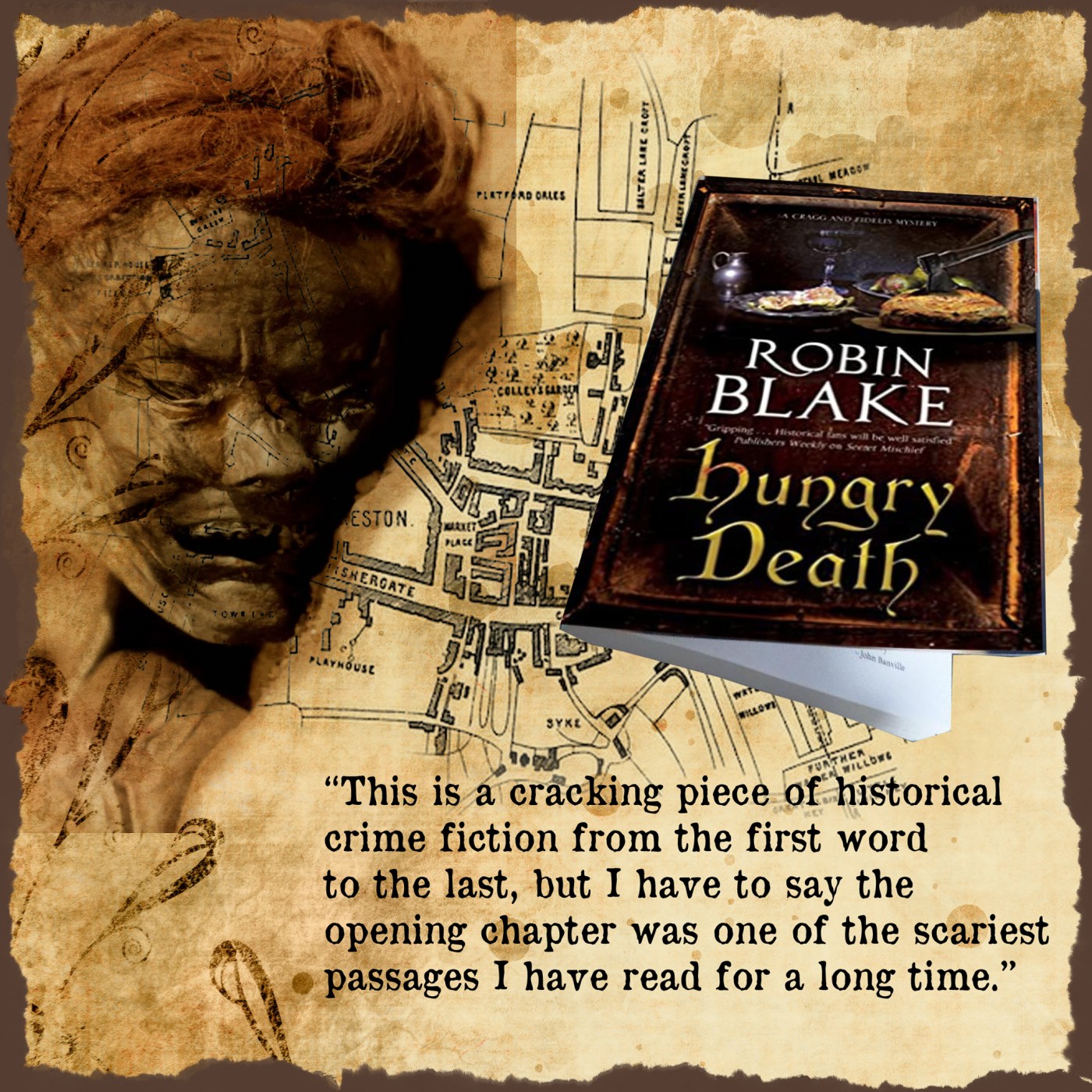
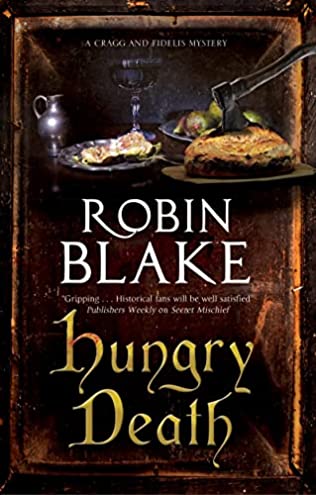 Cragg is instructed to ride out to a lonely moorland farmhouse, and what he finds surpasses any of the previous horrors his calling requires him to confront. He finds an entire family slaughtered, by whose hand he knows not, unless it was the husband of the house, himself hanging by a strap hooked over a beam. To add even more mystery to the grisly tableau, Cragg learns that the KIdd family were members of a bizarre dissenting cult which encourages its members into acts of brazen sexuality. Then, in a seemingly unconnected incident, the gardener at a nearby mansion, trying to improve the drainage under his hothouse, discovers another body. This corpse may have been in the ground for centuries, as it has been partly preserved by the peat in which it was buried. When Fidelis conducts an autopsy, however, he concludes that the body is that of a young woman, and was probably put in the ground within the last decade or so.



 Chris Nickson’s Leeds is a very different place. In the

 Thus begins a thoroughly intriguing murder mystery, steeped in the religious politics of the time. For over one hundred and fifty years, religion had defined politics. Henry VIII and his daughters had burned their ‘heretics’, and although the strife between Charles I and Parliament was mainly to do with authority and representation, many of Oliver Cromwell’s adherents were strident in their opposition to the ways of worship practiced by the Church if England. Now, Charles II is King. He is reputed to have sired many ‘royal bastards’ but none that could succeed to the throne, and the next in line, his brother James, has converted to Catholicism. In most of modern Britain the schism between Catholics and Protestants is just a memory, but we only have to look across the Irish Sea for evidence of the bitter passions that can still divide society.
 How on earth this superb novel spent many years floating around in the limbo of ‘independent publishing’ is beyond reason. While not quite in the ‘Decca rejects The Beatles‘ class of short sightedness, it is still baffling. The Bloodless Boy has everything – passion, enough gore to satisfy Vlad Drăculea, a sweeping sense of England’s history, a comprehensive understanding of 17th century science and a depiction of an English winter which will have you turning up the thermostat by a couple of notches. The characters – both real and fictional – are so vivid that they could be there in the room with you as you read the book.

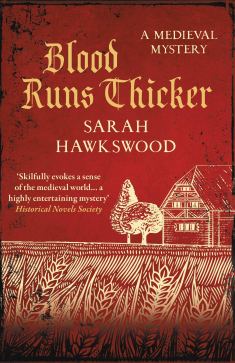
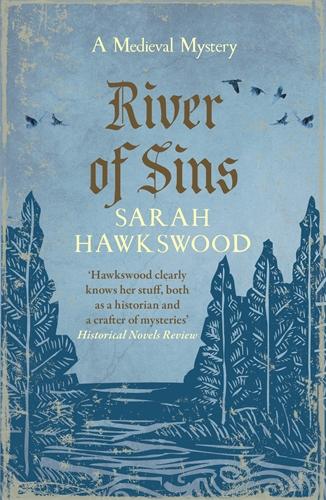
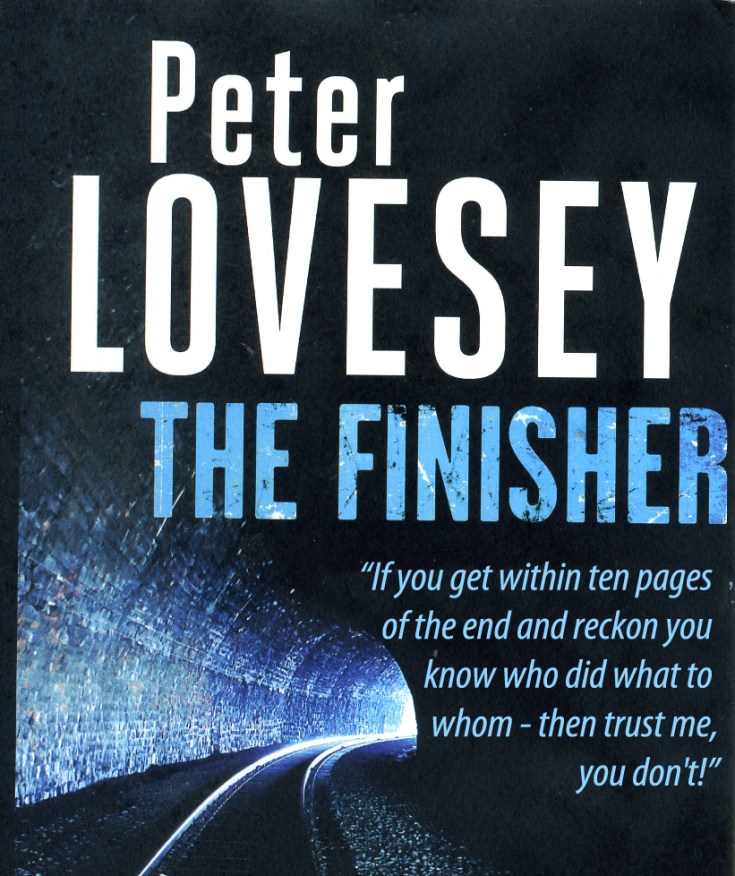
 To Bath now, and a character created by (I think) Britain’s longest living (and still writing good books) crime author. Peter Lovesey was born in Middlesex in September 1936 and, after National Service and a career in teaching, he published his first novel in 1970. Wobble To Death was the first of a hugely successful series of historical novels featuring Sergeant Daniel Cribb and his assistant Constable Thackeray. Older readers will remember the superb BBC TV adaptations starring Alan Dobie (left) as Cribb. The stories were also dramatised by BBC radio.


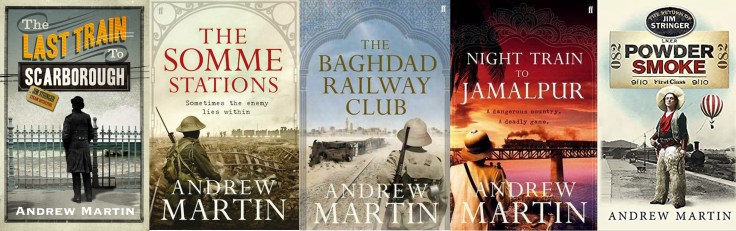
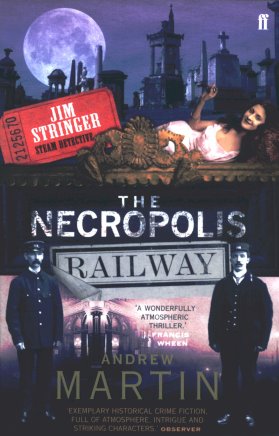 Ever onwards, and ever northward to the ancient city of York. For all that it houses the magnificent medieval minster and has a history going back to the Eboracum of Roman times, fewer people remember that York was also a great railway city, and there can be no more appropriate place to house the National Railway Museum. Like many men now in the autumn of their years I was an enthusiastic trainspotter back in the days of steam, so it is – I hope – perfectly understandable that I have chosen the Jim Stringer novels by Andrew Martin for this stop on our trip. Martin introduced Stringer in The Necropolis Railway (2002) when Stringer is very much at the bottom of the railway hierarchy, and working in London, but by 2004 in The Blackpool Highflyer, Stringer has married his landlord’s daughter – the beautiful Lydia – and has been promoted to a job in York.

 His creator, Nick Oldham, knows of what he writes, as he is a former police officer, and the 29th book in this long running and successful series is due out at the end of November. So, what can readers expect from a Henry Christie story? It depends where you start, of course, because if you go back to the beginning in 1996, Peter Shilton was still in goal, but for Leyton Orient, England lost to Germany (on penalties, naturally) in the Euros semi-final, the trial of men accused of murdering Stephen Lawrence collapsed and John Major was in his second term as British Prime Minister. In A Time For Justice Christie is a relatively junior Detective Inspector – and someone who is seriously out of favour with his bosses, and has to tackle a cocky mafia hitman who thinks the English police are a joke. As the novels progress over the years, Christie rises through the ranks, but he is still someone who is viewed with some suspicion by the few officers who outrank him – the chief constables and their assistants.
 Henry Christie is always hands on, and he has the scars – mostly physical, but one or two mental lesions – to prove it. His personal life has been a mixture of love, passion, tragedy and disappointment. His geographical battle grounds are usually confined to the triangle formed of Preston, Lancaster and Blackpool. This is an area that Oldham (right) himself knows very well, of course, thanks to his years as a copper, but it is also very cleverly chosen, because it allows the author to play with very different human and geographical landscapes. The brooding moorland to the east is a wonderful setting for all kinds of wrong-doing, while the seaside town of Blackpool, despite the golden sands, donkey rides, candy floss and cheerful seaside ambience, houses one of the worst areas of deprivation in the whole country, with run-down and lawless former council estates controlled by loan sharks, traffickers and criminal families of the worst sort.



 We are left to imagine what he looks like. He never uses violence as a matter of habit, but his inner rage fuels a temper which can destroy those who are unwise enough to provoke him. Why is he so bitter, so angry, so disgusted? Of himself, he says: