We are in pre-revolutionary America, Massachusetts to be precise, and it is 1768. Five years earlier, the Seven Years War between Great Britain and France had ended with The Treaty of Paris, and much of France’s former possessions in North America now lay in British hands. Despite the ending of formal hostilities, the French are still meddling in the affairs of the colony, and their mischief-making further stirs a political situation which is, day by day, becoming more unsettled. The citizens of Massachusetts are becoming more dissatisfied with rule from London and with King George’s redcoats are an ever-more ominous presence.

It is against this restless background that we meet Duncan McCallum, an exiled Scotsman with medical training who is bondsman to Sarah Ramsey, the widow of a nobleman. They are, as they say these days, ‘an item’ but, in terms of the narrative, very coyly so.
When the Arcturus, a ship from London, blows up in Boston harbour, McCallum is summoned to view the consequences, and they are stomach churning. Body parts of the crew are washed up on the beach, chomped by marauding sharks and pecked by gulls. Even men whose bodies remain more or less intact are denied dignity in death as their shrouds comprise drifts of seaweed and predatory crabs.
 As McCallum investigates the tragedy, it becomes clear that the ship was sabotaged. But what was within its cargo that made someone think it imperative that it should never reach its destination? A party of British soldiers are on hand determined to guard the scene of the wreck from inquisitive eyes, but who is the man named Beck who is pretending to be an army officer, but is so obviously not a military man?
We learn that the whole sorry affair is connected to documents vital to the plans of a mysterious group known as The Sons of Liberty, a group of powerful men whose ultimate aim is to fight for the independence of the American colonies from Great Britain. We meet, fleetingly, Samuel Adams and John Hancock, who went on to become prominent Patriots in The Revolutionary War which was to begin in earnest with “the shot heard ’round the world.” at Lexington in 1776.
Agent Beck makes it know that McCallum is responsible for the Boston deaths, and a warrant is issued for his arrest. McCallum has no option but to head north to evade the bounty hunters and soldiers who will not rest until he is swinging from a gibbet. As he moves through the wild countryside, accompanied by an electic collection of Native Americans, an evangelical priest, a traveling conjurer – and a monkey – McCallum knows he will never be safe until he finds the truth about the events in Boston until he finds the instigators of that fatal conspiracy.
 If your knowledge of that period of American history is sketchy, than fret ye not. Pattison (right) provides a wealth of detail about real life events which were taking place during McCallum’s fictional quest to clear his name. I use the word ‘quest” advisedly, as the novel has a distinct Lord of The Rings feeling – “Roads go ever on”.
There is some genuine detective work – and some very graphic violence – wrapped up in the period detail, and Pattison is clearly a man who has charted the catastrophic decline and subjugation of the Native Americans, their culture, their awareness and their sensitivity to landscape. It may be of little consolation to us modern readers, but Pattison shows that the European assault on this vibrant and diverse society did not just happen on our watch.
Savage Liberty is the fifth installment of the Duncan McCallum series which began with Bone Rattler in 2009. It will be published by Counterpoint on 7th June.You can read a review of an earlier Eliot Pattison novel Skeleton God, set in contemporary Tibet, by clicking the blue link.



 Colin’s day has already been bad enough. He has been summoned to the office of Frank Figgis, the News Editor, and given a daunting task. The newspaper’s Editor, Pope by name (dubbed “His Holiness”, naturally) has a brother called Gervaise. Gervaise is in trouble. He has been mixing with some rather unsavoury characters, namely the adherents of Sir Oscar Maundsley, the aristocratic former fascist leader. Interned by Churchill during the war, he now dreams of Making Britain Great Again.

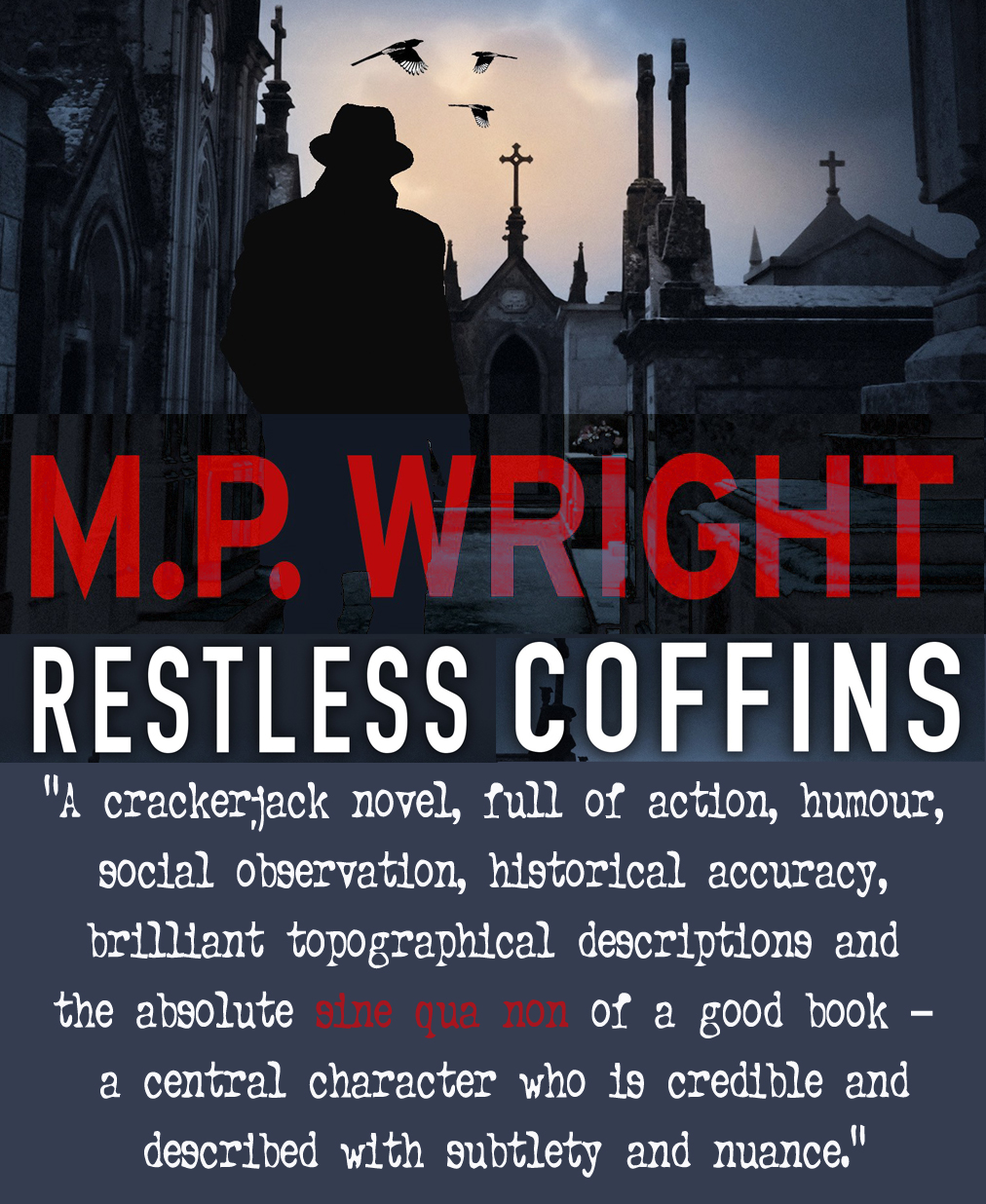
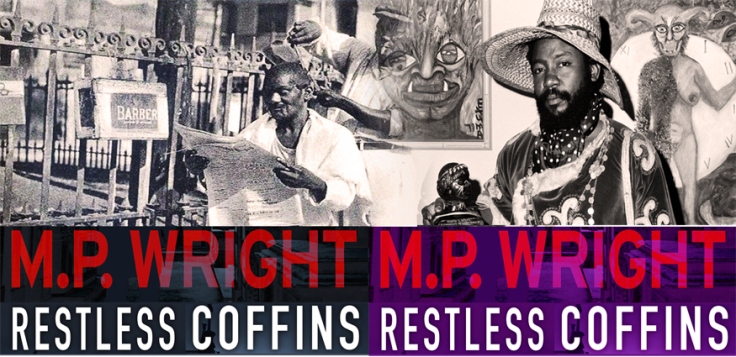
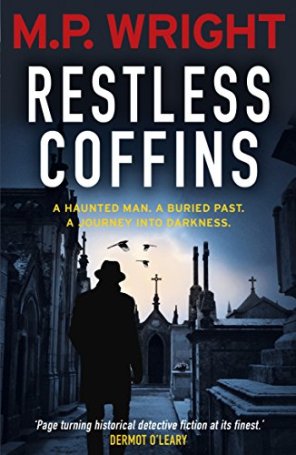 Ellington, broke and broken-hearted has ended up in 1960s Bristol, where he uses his police training to eke out a living as a private investigator. When he receives the news that his only sister, Bernice, has died in Barbados, he is compelled to return home to wind up her affairs. Hovering in the background, however, is Ellington’s violent criminal cousin Victor, who has reappeared after rumours of his tumbling to his death on the rocky slopes of Bristol’s Clifton Gorge prove to be greatly exaggerated. When Ellington arrives in New York after the first leg of his journey home, he rapidly realises that ‘born-again’ Vic is involved in something much more dangerous – and potentially lethal – than his previous mildly illegal entrepreneurship within the West Indian community in Bristol.
 Wright has made the decision to phonetically transcribe all the dialogue between the main characters in his books. I have to admit that in Heartman it was a source of irritation to me, but such is the pace and vigour of the action in Restless Coffins that it didn’t seem to matter as much this time around. The new ‘crime’ of Cultural Appropriation seems to me to be one of the most pointless, misguided and irrelevant of fashionable 21st century dogmas, so you will hear no complaint from me about a white Englishman writing a novel with an almost entirely black cast, complete with speech patterns, vocabulary and inflections.
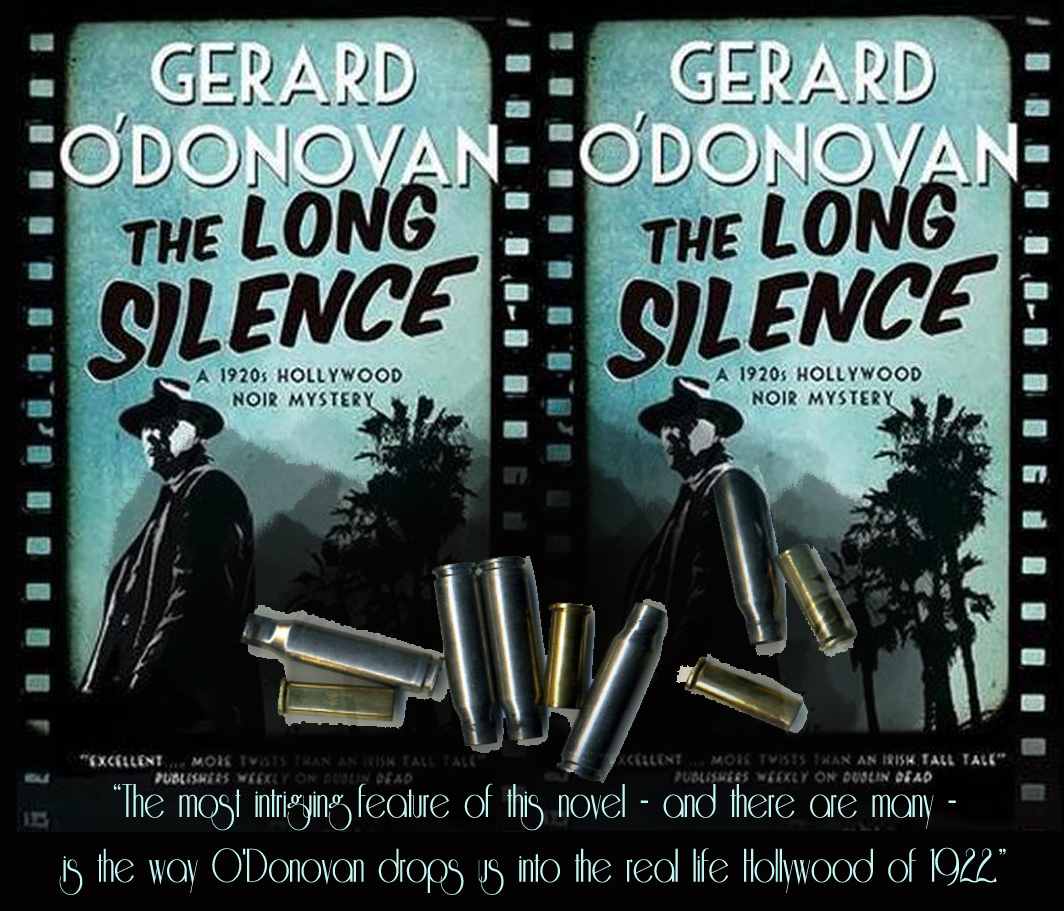
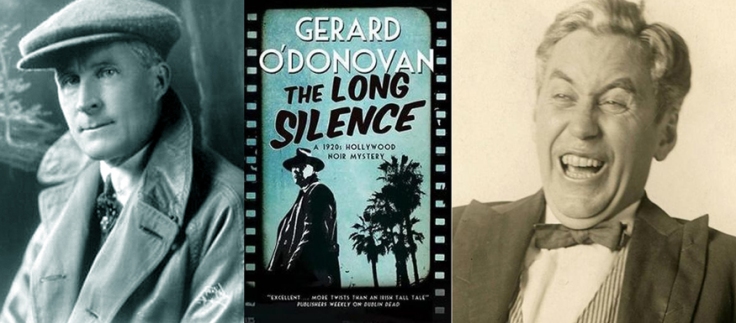
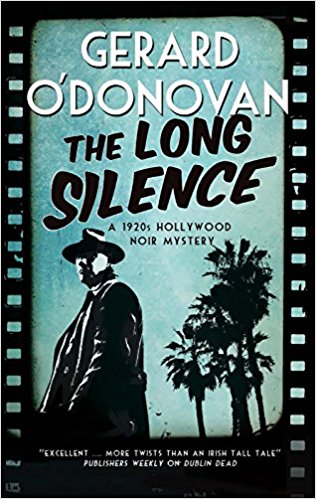 The most intriguing feature of this novel – and there are many – is the way O’Donovan drops us into the real life Hollywood of 1922. I knew something about the demise of Roscoe ‘Fatty’ Arbuckle, was aware of Mack Sennett and, of course, the names Douglas Fairbanks and Mary Pickford resonate with people of my generation who are reasonably well-read. But I had neither heard of – nor seen pictures of – Mabel Normand and, thanks to the wonders of Google, I could see instantly how she was able to mesmerise a generation of movie goers and readers of magazines. Those eyes! Tom Collins tells us about them quite early in the book.
 This is a cracker of a book. To the casual observer, looking on from the safe distance of the best part of a century, Hollywood in the 1920s appears innocent and other-worldly. We might smile at the fluttering eyelashes and coy gestures of the female stars, and the black-and-white (both figuratively and literally) lack of ambiguity of the male heroes and villains but in reality the movie world was just as venal, corrupt and hard nosed as it is today. Gerard O’Donovan (right) lifts the stone from the ground and we see all manner of unpleasant – and deadly – creatures scurrying around in the unwelcome light. The first pages of the book might suggest that Tom Collins has told us all that he has to say, but I hope this is not the case. The Long Silence is published by Severn House, is available now in hardback and will be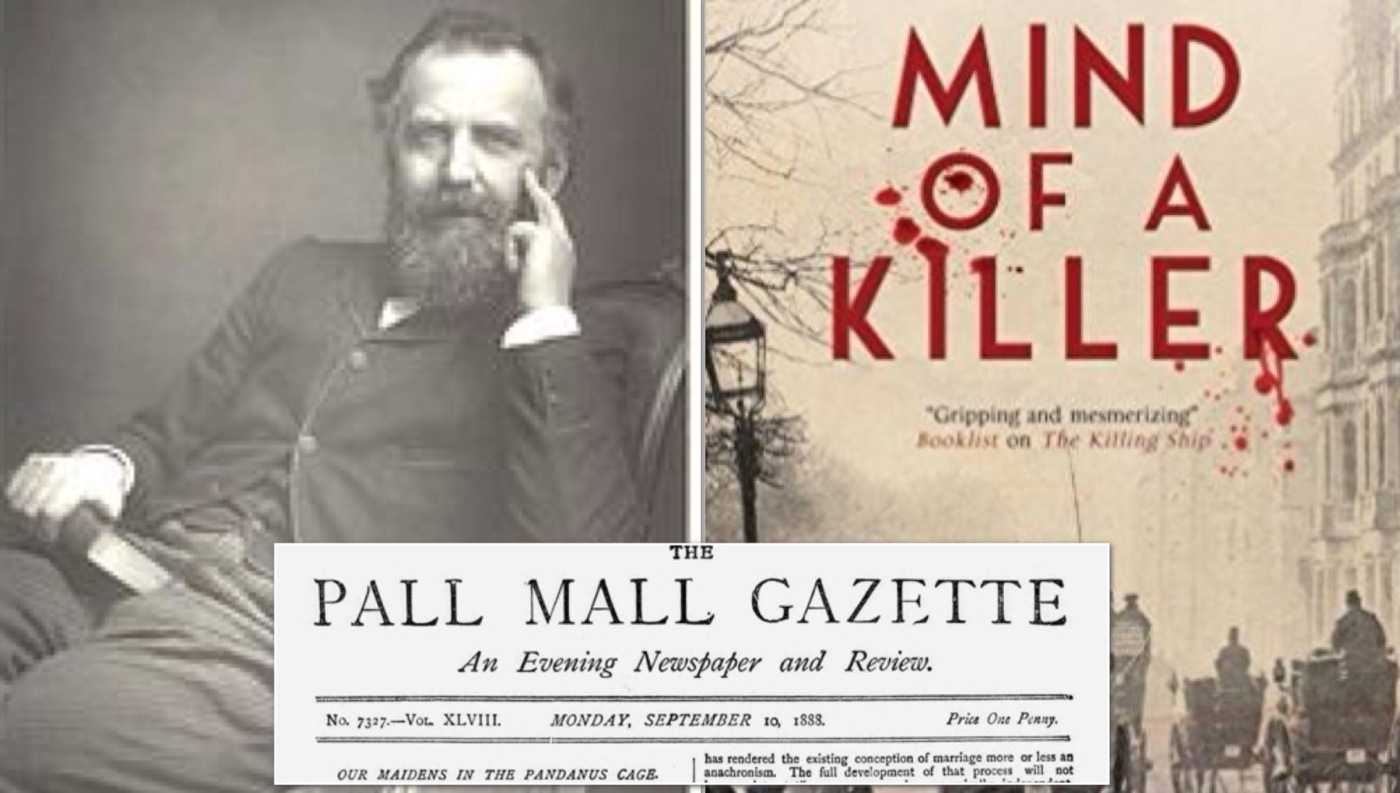
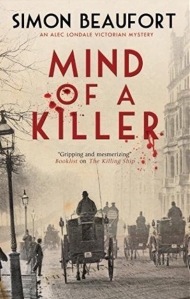 Simon Beaufort provides an exhilarating and madcap journey through the contrasting mileus of Victorian London. We experience gentlemen’s clubs with their subtle ambience of brandy and fine cigars, the visceral stench of low-life pubs and doss houses and the clatter of the hot lead printing presses of a vibrant daily newspaper. Lonsdale – with the assistance of Hulda Friedrichs, a fiercely independent early feminist journalist – painstakingly uncovers a nightmarish plot hatched by scientists who are obsessed with eugenics, and believe that the future of the human race depends on selective breeding and the suppression of ‘the undeserving poor’.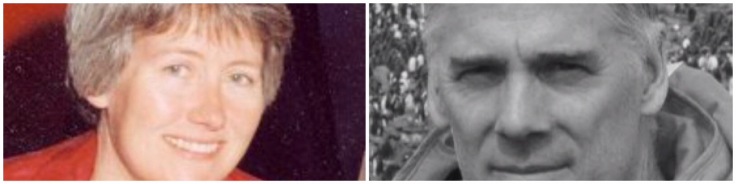

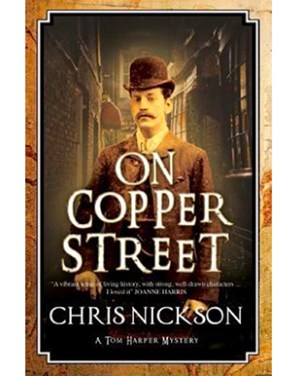
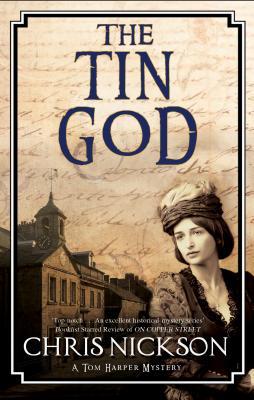 Outraged leading articles appear in local newspapers, but someone believes that the sword – or something equally violent – is mightier than the pen, and a homemade bomb destroys a church hall just before Annabelle Harper is due to speak to her supporters. The caretaker is tragically killed by the explosion, and matters go from bad to worse when more bombs are found, and several of the women candidates are threatened.




 “One of the greatest anti-heroes ever written,” says Lee Child of Bernie Gunther, the world weary, wise-cracking former German cop, and sometime acquaintance of such diverse historical characters as Reinhard Heydrich, Joseph Goebbels, Eva Peron and William Somerset Maugham. I was several chapters into this, the latest episode in Gunther’s career, when I heard the dreadful news of the death of his creator, Philip Kerr (left) at the age of 62. “No age at all,” as the saying goes.
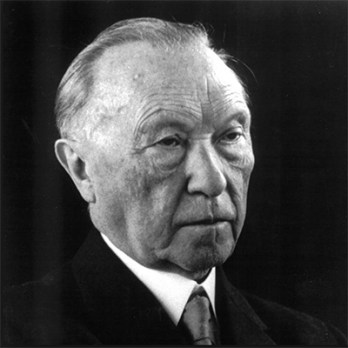 Hitler could certainly have taken a lesson from the Old Man (Adenauer, left) It was not the men with guns who were going to rule the world but businessmen …. with their slide rules and actuarial tables, and thick books of obscure new laws in three different languages.”

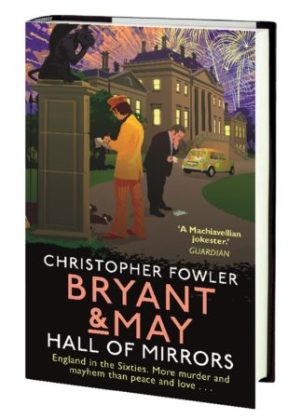 If a more extraordinary duo of fictional detectives exists than Christopher Fowler’s Bryant & May, then I have yet to discover them. The peculiar pair return in Hall of Mirrors for their fifteenth outing, and this time not only are they far from their beloved London, but we see a pair of much younger coppers on their beat in the 1960s. Fowler’s take on the period is typified by each of the fifty chapters of the novel bearing the title of a classic pop hit. We are also reminded of the strange fashions of the day.