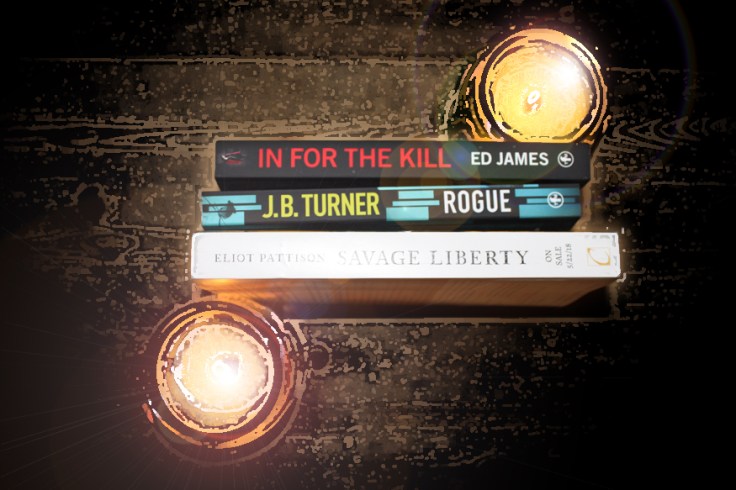
IN FOR THE KILL by ED James
 East London cop DI Steve Fenchurch makes a welcome return for the fourth book in this popular series by Ed James (left). It is part of urban folklore that attractive female students are sometimes tempted to use their charms to attract Sugar Daddies who will help with their fees and living costs. When one such young woman is found strangled in her bedroom, Fenchurch soon discovers that she was in the pay of a notorious city gangster. With his superiors poised to pounce on him at the first sign of a professional mistake, and his family in mortal danger, Fenchurch is faced with a no-win dilemma. If he persists in finding out who killed the young woman, he will attract incoming fire from very powerful people. If he just keeps his head down and allows the investigation to drift into the ‘unsolved’ file, his bosses will have him clearing his desk and locker before he can utter the word ‘sacked’. In For The Kill is published by Thomas & Mercer and will be available from 19 April in Kindle, paperback and MP3 CD.
ROGUE by JB Turner
 This is first in what promises to be a popular series with readers who love their novels spiced with the double-dealing and other shenanigans which are part and parcel of the work of American intelligence organisations. Nathan Stone is a former CIA covert operative who has been critically wounded, and thought to be dead. But behind closed doors, he has been rehabilitated by a highly secretive government organization known as the Commission, given a new identity and appearance, and remoulded into a lethal assassin. His brief: to execute kill orders drawn up by the Commission, all in the name of national security. Turner (right) provides enough thrills to keep even the most jaded reader on their toes. Rogue is published by Thomas & Mercer, and will be available in June.
SAVAGE LIBERTY by Eliot Pattison
 I first came across Pattison (left) and his Revolutionary Wars hero Duncan McCallum when I was writing for Crime Fiction Lover. I reviewed Blood Of The Oak in March 2016, and you can read the piece by following the blue link. More recently, wearing my Fully Booked hat, I enjoyed Pattison’s Skeleton God, set in Tibet, light years away both in time and context from eighteenth century America. Savage Liberty brings us a further chapter in the eventful life of Duncan McCallum. The action begins in 1768. We are in Boston, where a ship from London has exploded, leaving the body parts of its crew and passengers scattered like flotsam in the cold waters. McCallum is a trained physician and his analytical mind soon detects the work of French secret agents. His investigations bring him onto extreme peril, however, and he finds himself in a jail cell accused of treason, with the hangman’s rope just days away. McCallum realises that his only hope is to escape and bring the true villains to justice. Savage Liberty is published by Counterpoint, and will be available in June




 In this imaginative retelling of the now infamous events in the Bavarian capital in 1938, David Laws gives us a young present-day researcher trying to find out the truth about her grandfather’s part in a series of meetings which shaped history. What evidence did he have that Neville Chamberlain was being duped by Hitler? Why did he almost certainly give his life to prevent the deal going through? Emma Drake finds the answer not in dusty telegrams or carbon copied communiques, but in a present day forest just fifty miles from the site of the lasting testament to Nazi infamy –
  From the grim and silent testimony of a Polish forest to the bustling and utterly cosmopolitan world of Venice, courtesy of Donna Leon and her immensely popular Italian copper, Commissario Guido Brunetti. It seems barely credible that this is number twenty seven – no, that’s no misprint, 27 – in the series. While trying to discover the source of an information leak from within his own department, and investigating the savage attack on a family friend, Brunetti seeks solace – and a possible solution – from the pages of Sophocles’ Antigone. The Temptation of Forgiveness will be out on 5 April from William Heinemann/Cornerstone in
  Miller created quite a stir with his debut novel, Norwegian By Night, and now he aims to repeat the achievement with the story of Chief Inspector Sigrid Ødegård who has to leave her native Norway and travel to America to find the truth behind her brother’s disappearance. In addition to apparently disappearing off the face of the earth, he is implicated in the death of a prominent African-American academic. And this is 2008, election year, nerves are in shreds, and across the political world innocent mistakes are treated as mortal insults. In addition to plying her police officer skills, Sigrid Ødegård needs to learn a whole new set of behavioural responses if she is to get the the bottom of her brother’s disappearance. American By Day is published by Transworld/Doubleday and will be

 In this febrile atmosphere are many men and women who have memories of “the last lot”. One such is the latest creation from Jim Kelly, (left) Detective Inspector Eden Brooke. He saw service in The Great War, but were someone to wonder if his war had been ‘a good war’, they would soon discover that he had suffered dreadful privations and abuse as a prisoner of the Turks, and that the most physical legacy of his experiences is that his eyesight has been permanently damaged. He wears a selection of spectacles with lenses tinted to block out different kinds of light which cause him excruciating pain. For him, therefore, the nightly blackout is more of a blessing than a hindrance.


 When it comes to creating a sense of place in their novels, there are two living British writers who tower above their contemporaries. Phil Rickman, (left) in his Merrily Watkins books, has recreated an English – Welsh borderland which is, by turn, magical, mysterious – and menacing. The past – usually the darker aspects of recent history – seeps like a pervasive damp from every beam of the region’s black and white cottages, and from every weathered stone of its derelict Methodist chapels. Jim Kelly’s world is different altogether. Kelly was born in what we used to call The Home Counties, north of London, and after studying in Sheffield and spending his working life between London and York, he settled in the Cambridgeshire cathedral city of Ely.
 It is there that we became acquainted with Philip Dryden, a newspaperman like his creator but someone who frequently finds murder on his doorstep (except he lives on a houseboat, which may not have doorsteps). While modern Ely has made the most of its wonderful architecture (and relative proximity to London) and is now a very chic place to live, visit, or work in, very little of the Dryden novels takes place in Ely itself. Instead, Kelly, has shone his torch on the bleak and vast former fens surrounding the city. Visitors will be well aware that much of Ely sits on a rare hill overlooking fenland in every direction. Those who like a metaphor might well say that, as well as in terms of height and space, Ely looks down on the fens in a haughty fashion, probably accompanying its haughty glance with a disdainful sniff. Kelly (above) is much more interested in the hard-scrabble fenland settlements, sometimes – literally – dust blown, and its reclusive, suspicious criminal types with hearts as black as the soil they used to work on. Dryden usually finds that the murder cases he becomes involved with are usually the result of old grievances gone bad, but as a resident in the area I can reassure you that in the fens, grudges and family feuds very rarely last more than ninety years
 In the Peter Shaw novels, Kelly moved north. Very often in non-literal speech, going north can mean a move to darker, colder and less forgiving climates of both the spiritual and geographical kind, but the reverse is true here. Shaw is a police officer in King’s Lynn, but he lives up the coast near the resort town of Hunstanton. Either by accident or design, Kelly turns the Philip Dryden template on its head. King’s Lynn is a hard town, full of tough men, some of whom are descendants of the old fishing families. There is a smattering of gentility in the town centre, but the rough-as-boots housing estates that surround the town to the west and the south provide plenty of work for Shaw and his gruff sergeant George Valentine. By contrast, it is in the rural areas to the north-east of Lynn where Shaw’s patch includes expensive retirement homes, holiday-rental flint cottages, bird reserves for the twitchers to twitch in, and second homes bought by Londoners which have earned places like Brancaster the epithet “Chelsea-on-Sea.”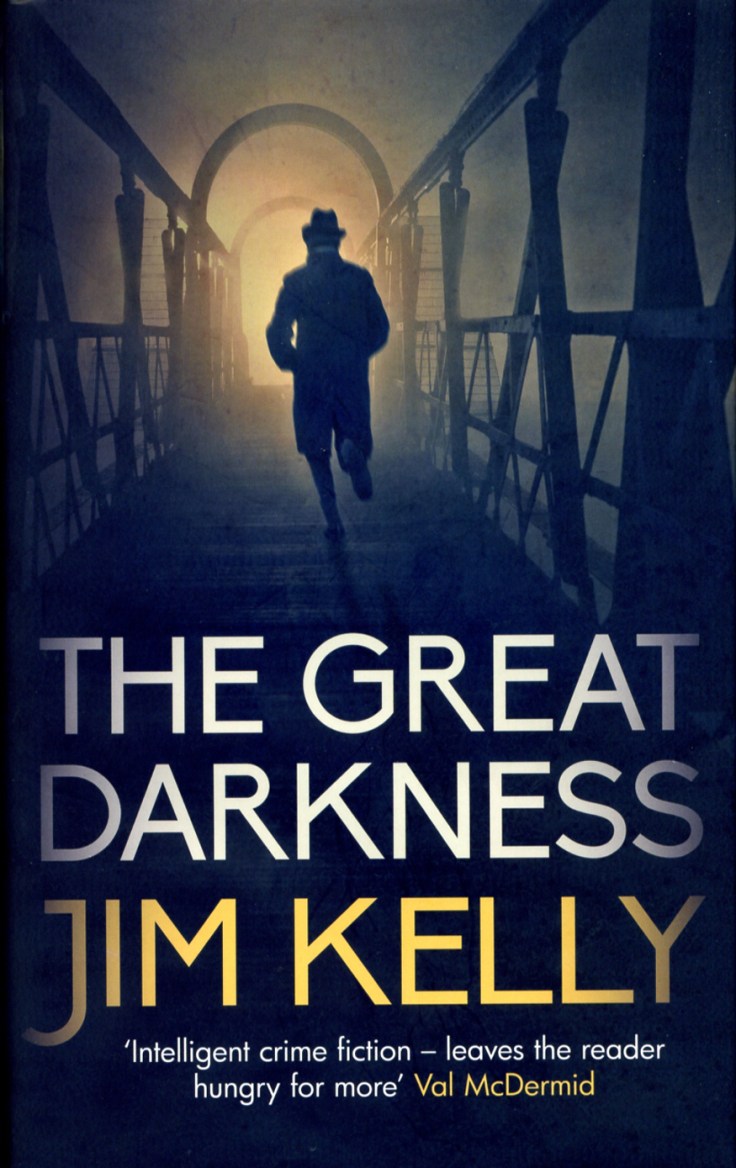


 I met Joseph Knox (left) at a publisher’s showcase event in London, where he presented his debut novel,
  Just as George MacDonald Fraser had his magnificent bounder Harry Flashman working his way through all the major political and military events of the the second half of the 19th century, so Philip Kerr (right) has positioned his wearily honest – but cynical – German cop Bernie Gunther in the 20th. We know Gunther fought in The Great War, but his service there is only, thus far, alluded to. We have seen him interact with most of the significant players in the decades spanning the rise of the Nazis through to their defeat and escape into post-war boltholes such as Argentina and Cuba. In the 13th book of this brilliant series, Gunther, joints creaking with advancing old age, is now working for an insurance company who want him to investigate a possible scam involving a sunken ship. His work takes him to Athens, where he discovers an unpleasantly familiar link to evil deeds committed under the baleful gaze of Adolf Hitler and his henchmen. Some of Bernie Gunther’s earlier exploits are covered
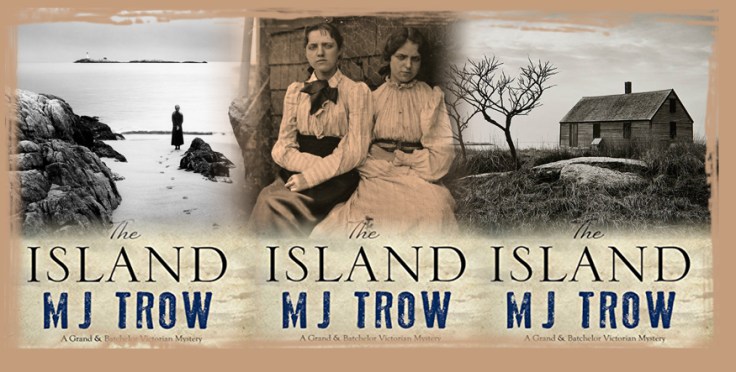
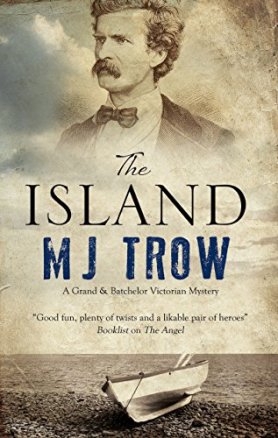 The Island is the latest episode in the eventful partnership between two gentleman detectives in Victorian London. James Batchelor is a former journalist, a ‘gentleman’ in manners and intelligence, if not by upbringing, while his colleague Matthew Grand is an American former soldier, and scion of a very wealthy patrician New Hampshire family. We first met them in
  A few words in praise of the author. Meiron Trow (right) is one of the most erudite and entertaining writers in the land. Over thirty years ago he began his tongue in cheek series rehabilitating the much-put-upon Inspector Lestrade, and I loved every word. I then became hooked on his Maxwell series, featuring a very astute crime-solving history teacher who, while eschewing most things modern, manages to be hugely respected by the sixth-formers (Year 12 and 13 students in new money) in his charge, while managing to terrify and alarm the younger ‘teaching professionals’ who run his school. I was well into the Maxwell series before I realised that MJ Trow and I had two things (at least) in common. Firstly, he went to the same school as I did, although I have to confess he was a couple of years ‘below’ me and would have been dismissed at the time as a pesky ‘newbug’. Secondly, and much more relevant to my love of his Maxwell books, I discovered that we were both senior teachers in state secondary schools, and shared a disgust and contempt for the tick-box mentality characterising the so-called ‘leadership’ of high schools.
 I digress, so back to New Hampshire in the early spring of 1873. The guests begin to arrive, and the ‘downstairs’ staff under the stern eye of the enigmatic butler, Waldo Hart, are emulating the proverbial blue-arsed fly. Trow, at this point, gleefully takes the template of the traditional country house mystery, and has his evil way with it. Despite the title of the book, we are not quite in Soldier Island (And Then There Were None) territory, but Rye is far enough from Boston to make sure that when the first murder happens, the real policemen are too far away and too engrossed with their city crime to pay much attention, even when when of the possible suspects is a certain Mr Samuel Langhorne Clemens. (left)
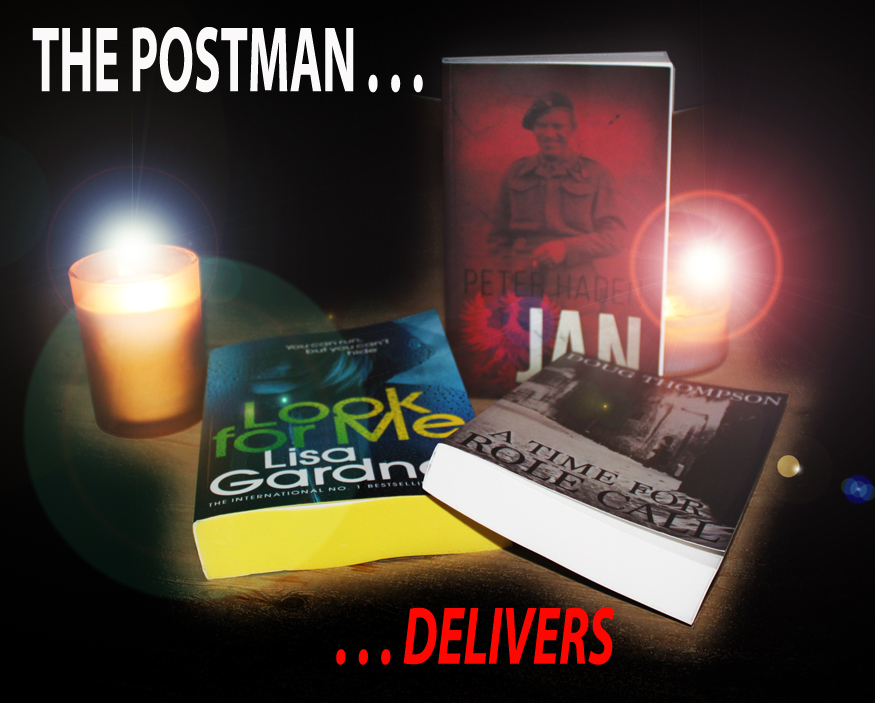

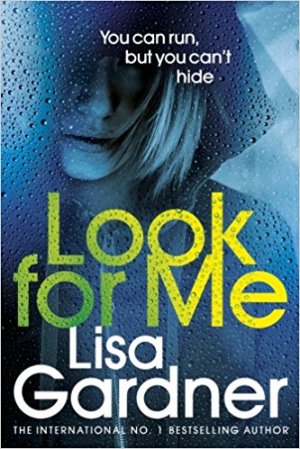 Look For Me is a return to active duty for Boston Detective D D Warren. In the twelfth book of an obviously popular series, Gardner brings back a character – Flora Dane – from an earlier book, Find Her, in which Dane was a resilient but haunted survivor of kidnap and abduction. Now, Dane’s thirst for vengeance on her tormentor is a mixed blessing for Warren who is faced with a murder scene of almost unimaginable violence. Four members of the same family lie slaughtered in the family home, a refuge transformed into a charnel house. But where is the fifth member of the family? Has the sixteen year-old girl escaped, or is her disappearance the prelude to an even greater evil? Look For Me is published by Century, part of the Penguin Random House group, and will be available in early February 2018. You can pre-order a copy
  Polish history in the twentieth century shows us a region constantly in the thick of conflict between rival military forces. It was the scene of many of the battles on the Eastern Front during WWI, and Poland suffered hugely at the hands of the Nazis during WWII. The very worst concentration camps set up by Hitler were on what is now Polish territory. Then, post-war, came what was, to all intents and purposes, a Russian occupation. Peter Haden’s novel Jan actually deals with a real person, his uncle, Jan Janicki and his exploits both before and during the Nazi occupation of his homeland. The novel tells of a flight from desperate domestic poverty, the humiliation of working for the ruthless German invaders, but then a determination to fight back, which sees Jan laying his life on the line to support the Polish resistance movement. Jan is published by Matador, and is available from
 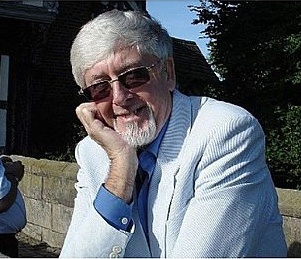 From Poland to Italy, where much of A Time For Role Call by Doug Thompson (left) is set. Former Professor of Modern Italian language, history and literature, Doug Thompson draws on his intimate knowledge of Italy to write a lively novel with a feisty protagonist and colourful cast of supporting characters. Sally Jardine-Fell is recruited by the wartime Special Operations Executive to travel to Italy. Her mission? To insinuate herself into the life of none other than Count Galeazo Ciano, Foreign Minister to Il Duce – Benito Mussolini – himself. Inevitably, things do not go according to plan, and, despite both the war and Mussolini himself becoming consigned to history, events conspire against Sally, and she finds herself in a cell, charged with murder. A Time For Role Call is published by Matador, and is available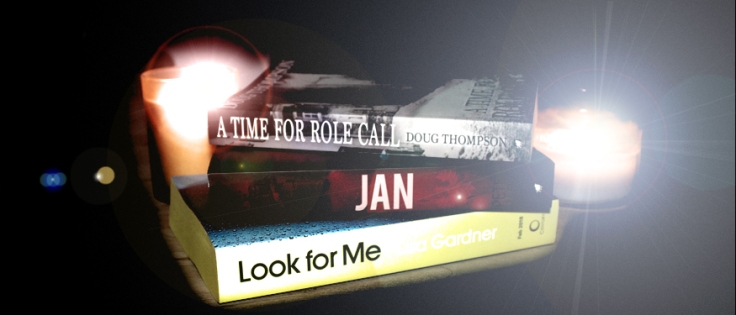


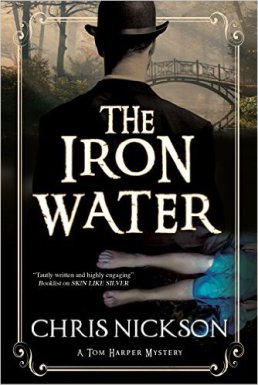
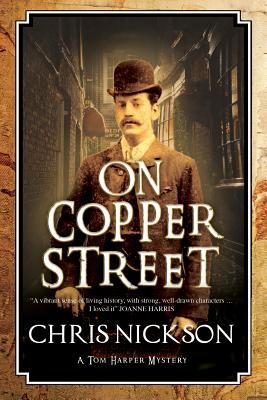
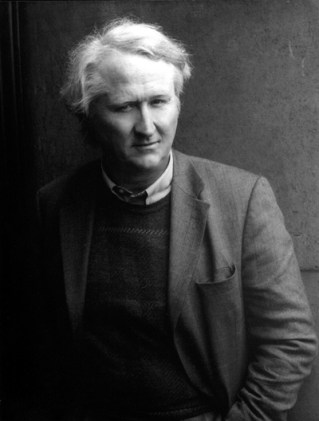
 I have become a huge admirer of the writing of Chris Nickson (left) . He says on his website:
 You will be pushed to find better opening words to a novel even were you to search all year: