
London. 1873. It would be another fourteen years before a gentleman calling himself a Consulting Detective would make his first appearance in Beeton’s Christmas Annual, but Matthew Grand and James Batchelor are just that – people consult them, and they try to detect things. That is pretty much where any resemblance to the residents of 221B Baker Street ends. Neither Grand nor Batchelor is nice but dim, nor is either given to bashing out a melancholy bit of Mendelssohn on a Stradivarius. Matthew Grand, though, has seen military service; rather than battling the followers of Sher Ali Khan in Afghanistan, he has had the chastening experience of fighting his fellow Americans during the War Between The States a decade earlier. While James Batchelor is an impecunious former member of The Fourth Estate, his colleague comes from wealthy New Hampshire stock.
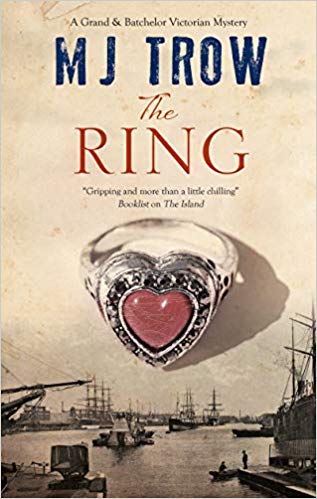 The River Thames plays a central part in The Ring. Although Joseph Bazalgette’s efforts to clean it up with his sewerage works were almost complete, the river was still a bubbling and noxious body of dirty brown effluent, not helped by the frequent appearance of human bodies bobbing along on its tides. In this case, however, we must say that the bodies come in instalments, as someone has been chopping them to bits. PC Crossland makes the first grisly discovery:
“… he knew exactly what the white thing was. It was the left side of what had once been a human being, sliced neatly at the hip and below the breast. There was no arm. No head. No legs.”
Trow gives us a Gilbertian cast of comedy coppers, in this case the River Police, led by the elephantine Inspector Bliss. While Bliss and his minions are trying to put together a case – and also the various limbs and organs of an unfortunate woman – Grand and Batchelor are visited by Selwyn Byng, an unseemly and ramshackle character, who believes his wife has been abducted, and has the ransom note to prove it. Byng may look cartoonish, and lack moral fibre; “Where’s your stiff upper lip?” “Underneath this loose flabby chin!” (quoted with due reverence to Tony Hancock and Kenneth Williams) but he has a bob or two, and so our detectives take on the search for the missing Emilia Byng.
It occurs to me that in dismissing any resemblance between H&W and G&B I am missing out one very important personage, and that is the housekeeper. The much revered Mrs Hudson is felt, rather than seen or heard, but Mrs Rackstraw is another matter entirely. The formidable woman dominates the apartment supposedly ruled over by the two young gentlemen:
“Mrs Rackstraw had been brought up in a God-fearing household and didn’t really hold with young gentlemen of their calibre not going to church. Had they been asked, both Grand and Batchelor would have preferred the constant nagging; her frozen silence and the way the boiled eggs bounced in their cups as she slammed them down on the table was infinitely worse.”
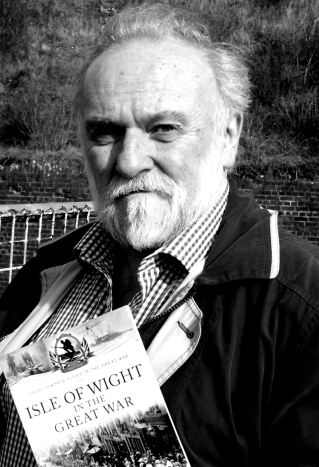 MJ Trow (right) has been entertaining us for over thirty years with such series at the Inspector Lestrade novels and the adventures of the semi-autobiographical school master detective Peter Maxwell. Long-time readers will know that jokes are never far away, even when the pages are littered with sudden death, violence and a profusion of body parts. Grand and Batchelor eventually solve the mystery of what happened to Emilia Byng, both helped and hindered by the ponderous ‘Daddy’ Bliss and a random lunatic, recently escaped from Broadmoor. Trow writes with panache and a love of language equalled by few other British writers. His grasp of history is unrivalled, but he wears his learning lightly. The Ring is a bona fide crime mystery, but the gags are what lifts the narrative from the ordinary to the sublime:
“They adjusted their chairs and faced the wall. Mr and Mrs Gladstone stared back at them from their sepia photographs, jaws of granite and eyes of steel. Since he was the famous politician and she was merely loaded and fond of ice-cold baths, he sat in the chair and she stood at his shoulder, restraining him, if the rumours were true, from hurtling out of Number Ten in search of fallen women.”
The Fully Booked review of The Island, the previous Grand and Batchelor mystery, is here. The Ring is published by Severn House, and will be out on 28th September.



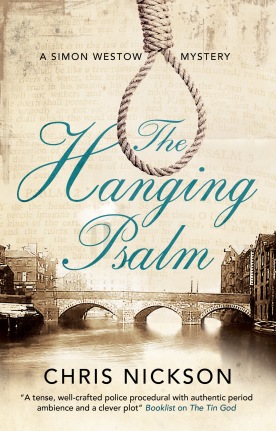 Nickson’s latest book introduces a new character, Simon Westow, who walks familiar streets – those of Leeds – but our man is living in Georgian times. England in 1820 was a kingdom of uncertainty. Poor, mad King George was dead, succeeded by his fat and feckless son, the fourth George. Veterans of the war against Napoleon, like many others in later years, found that their homeland was not a land fit for heroes. The Cato Street conspirators, having failed to assassinate the Cabinet, were executed.
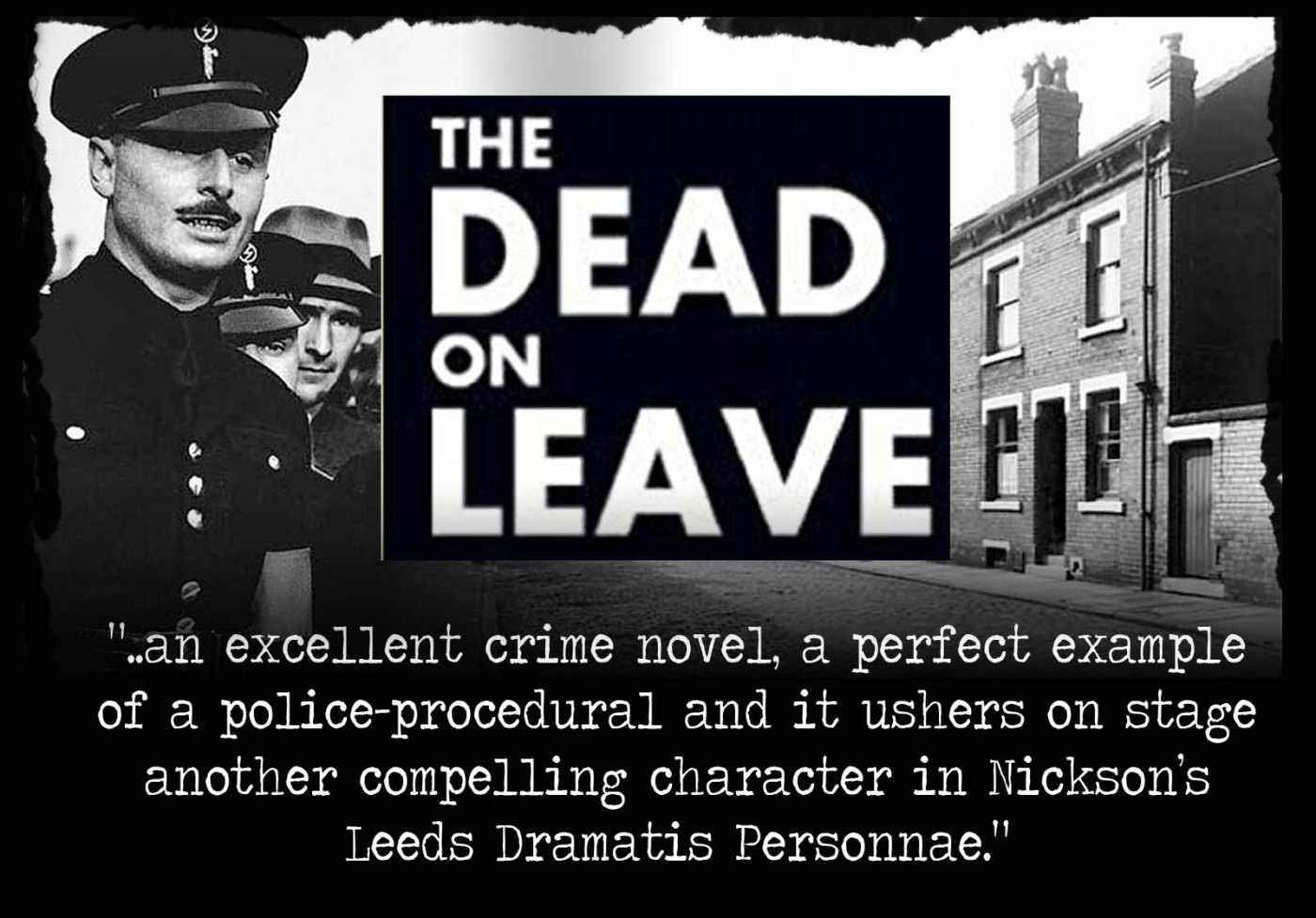

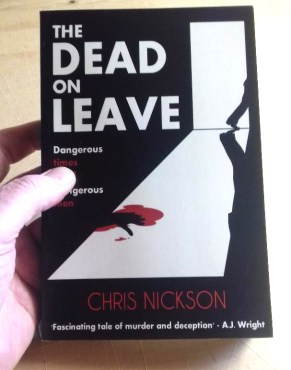 It appears the dead man is a would-be follower of Sir Oswald Mosley, charismatic leader of the British Union of Fascists and, after an appearance in Leeds by Mosley and his Blackshirts turns into a riot, it is tempting for the police to think that the murder is politically inspired. As Raven tries to make sense of the killing, he has his own demons to face. Like many other Yorkshiremen, Raven is a Great War veteran, even though his war was brief and horrific. Only able to see active service in the dog-days of the conflict, he was unlucky enough to be close to a fuel dump which was hit by a stray shell. There’s a line from a song about that war, which goes,
 The Dead On Leave is very bleak in places. Hope is in short supply among the working people in Leeds, and men have no qualms about building a wooden platform for Moseley to rant from, because a job is a job; consciences are a luxury way beyond the reach of folk whose families have empty bellies. Nickson (right) is a writer, with social justice at the front of his mind and he wears his heart on his sleeve. I doubt that he and I agree on much in today’s political world, but I can think of no modern British author who writes with such passion and fluency about historical social issues.


 As McCallum investigates the tragedy, it becomes clear that the ship was sabotaged. But what was within its cargo that made someone think it imperative that it should never reach its destination? A party of British soldiers are on hand determined to guard the scene of the wreck from inquisitive eyes, but who is the man named Beck who is pretending to be an army officer, but is so obviously not a military man?
 If your knowledge of that period of American history is sketchy, than fret ye not. Pattison (right) provides a wealth of detail about real life events which were taking place during McCallum’s fictional quest to clear his name. I use the word ‘quest” advisedly, as the novel has a distinct Lord of The Rings feeling – “Roads go ever on”.


 Colin’s day has already been bad enough. He has been summoned to the office of Frank Figgis, the News Editor, and given a daunting task. The newspaper’s Editor, Pope by name (dubbed “His Holiness”, naturally) has a brother called Gervaise. Gervaise is in trouble. He has been mixing with some rather unsavoury characters, namely the adherents of Sir Oscar Maundsley, the aristocratic former fascist leader. Interned by Churchill during the war, he now dreams of Making Britain Great Again.
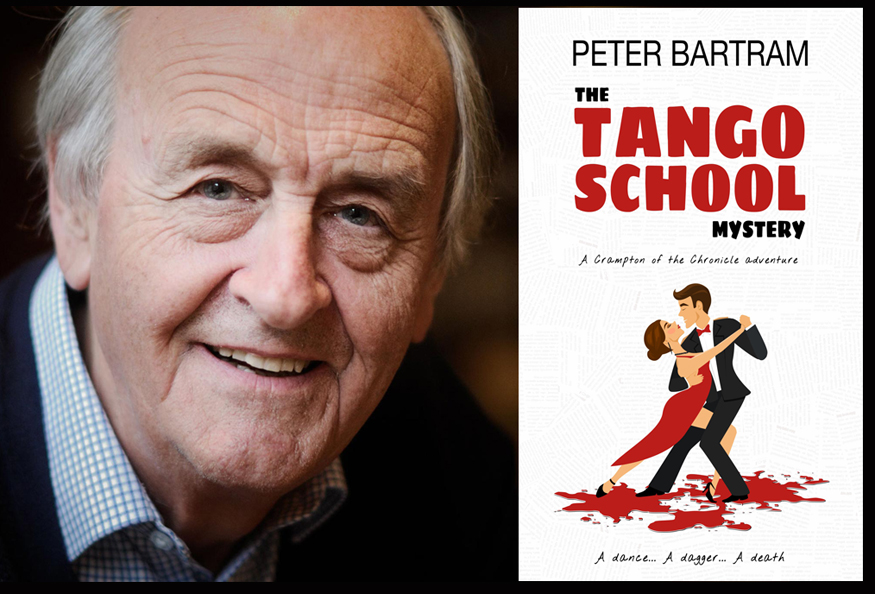

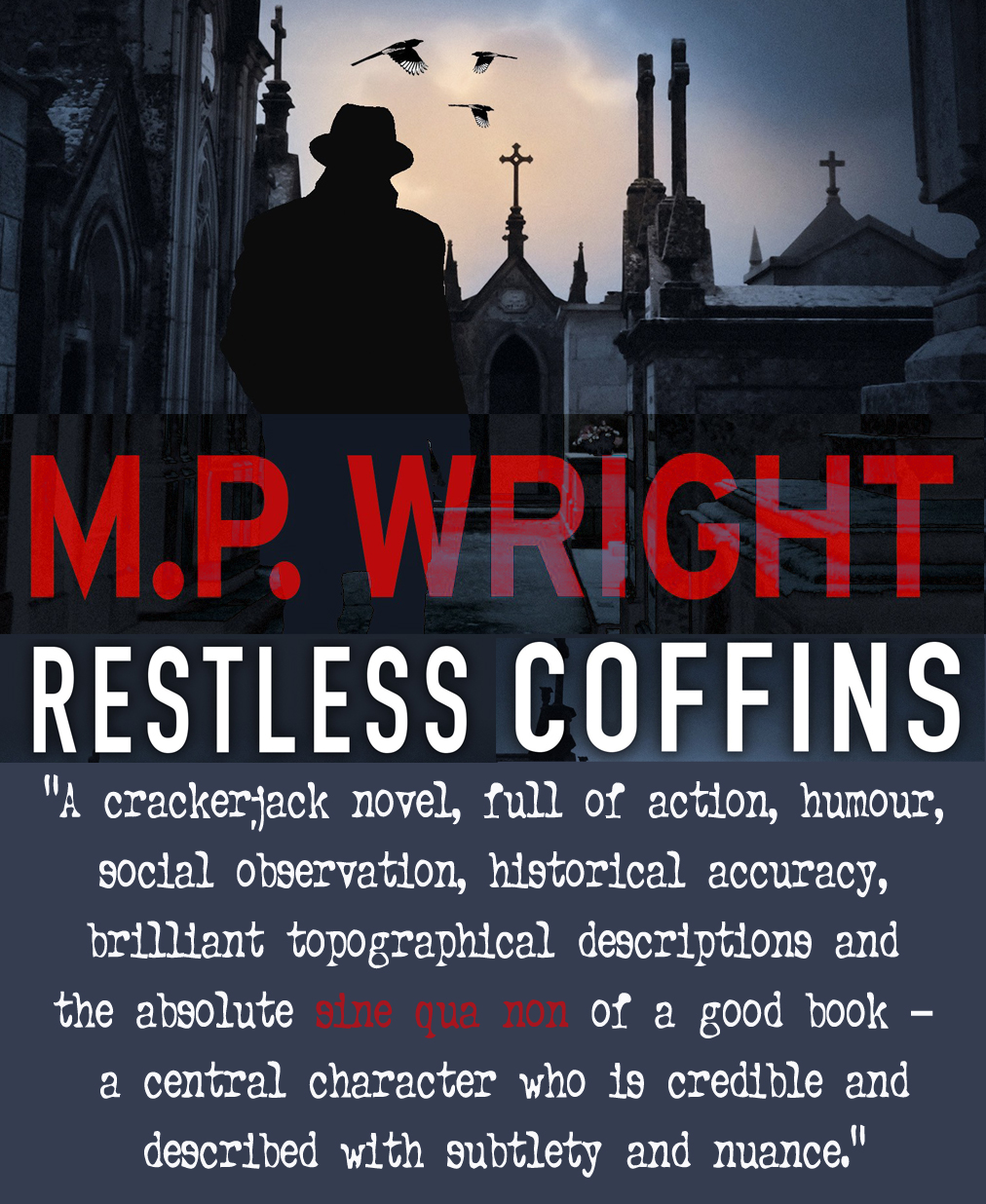
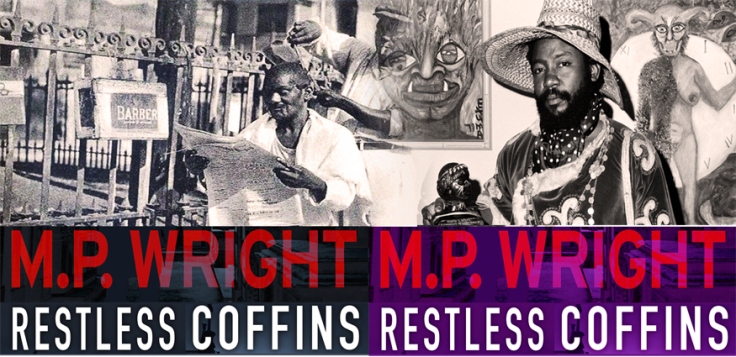
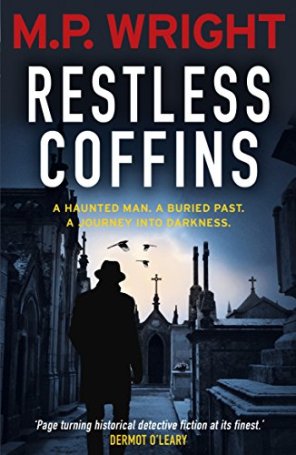 Ellington, broke and broken-hearted has ended up in 1960s Bristol, where he uses his police training to eke out a living as a private investigator. When he receives the news that his only sister, Bernice, has died in Barbados, he is compelled to return home to wind up her affairs. Hovering in the background, however, is Ellington’s violent criminal cousin Victor, who has reappeared after rumours of his tumbling to his death on the rocky slopes of Bristol’s Clifton Gorge prove to be greatly exaggerated. When Ellington arrives in New York after the first leg of his journey home, he rapidly realises that ‘born-again’ Vic is involved in something much more dangerous – and potentially lethal – than his previous mildly illegal entrepreneurship within the West Indian community in Bristol.
 Wright has made the decision to phonetically transcribe all the dialogue between the main characters in his books. I have to admit that in Heartman it was a source of irritation to me, but such is the pace and vigour of the action in Restless Coffins that it didn’t seem to matter as much this time around. The new ‘crime’ of Cultural Appropriation seems to me to be one of the most pointless, misguided and irrelevant of fashionable 21st century dogmas, so you will hear no complaint from me about a white Englishman writing a novel with an almost entirely black cast, complete with speech patterns, vocabulary and inflections.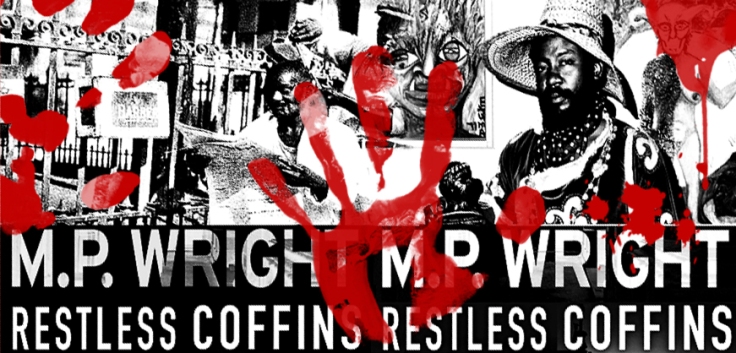
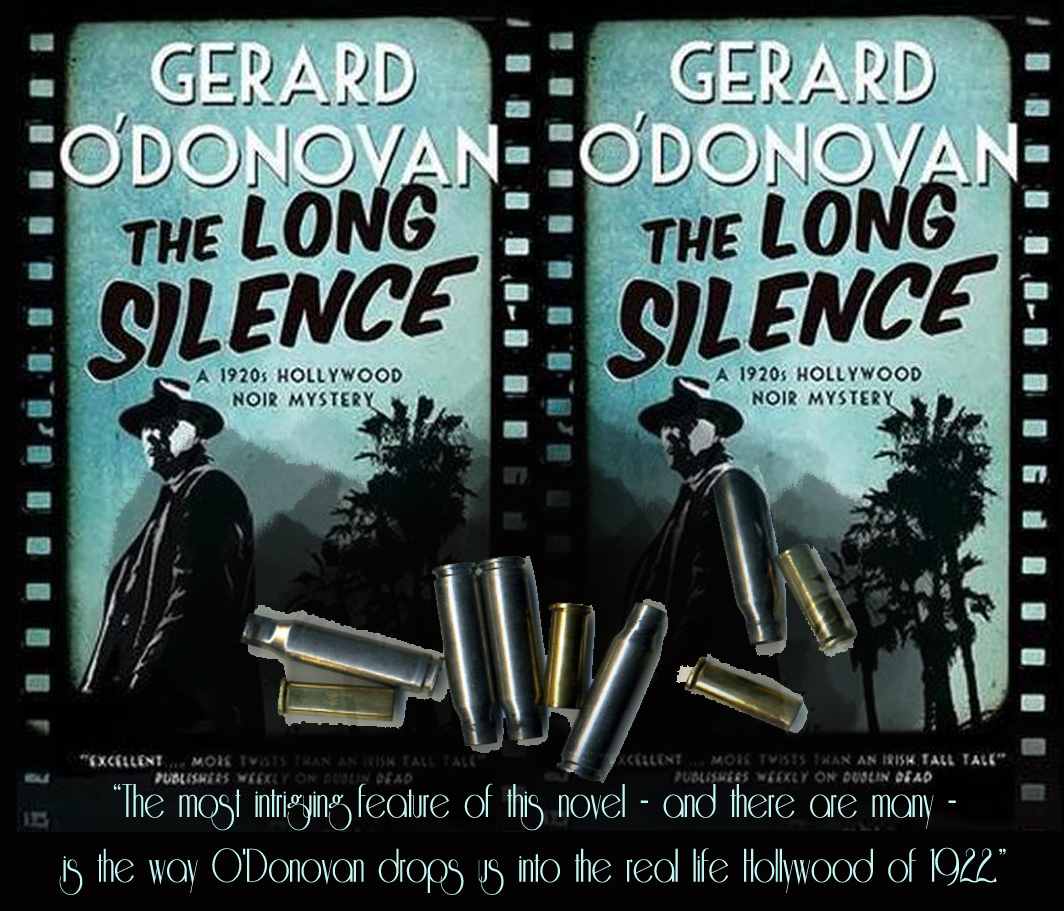
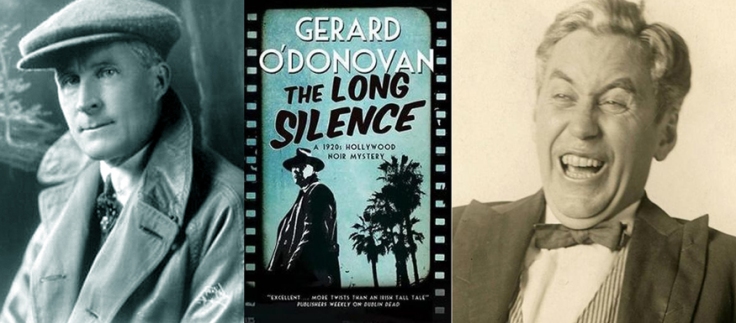
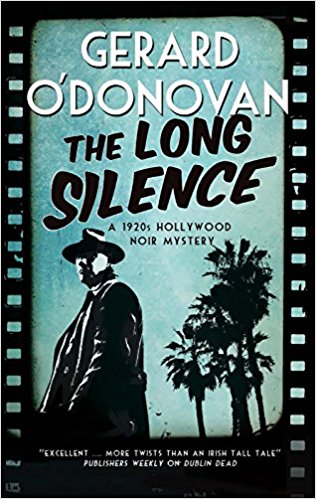 The most intriguing feature of this novel – and there are many – is the way O’Donovan drops us into the real life Hollywood of 1922. I knew something about the demise of Roscoe ‘Fatty’ Arbuckle, was aware of Mack Sennett and, of course, the names Douglas Fairbanks and Mary Pickford resonate with people of my generation who are reasonably well-read. But I had neither heard of – nor seen pictures of – Mabel Normand and, thanks to the wonders of Google, I could see instantly how she was able to mesmerise a generation of movie goers and readers of magazines. Those eyes! Tom Collins tells us about them quite early in the book.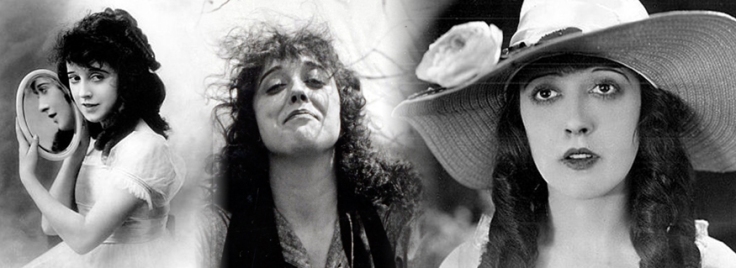
 This is a cracker of a book. To the casual observer, looking on from the safe distance of the best part of a century, Hollywood in the 1920s appears innocent and other-worldly. We might smile at the fluttering eyelashes and coy gestures of the female stars, and the black-and-white (both figuratively and literally) lack of ambiguity of the male heroes and villains but in reality the movie world was just as venal, corrupt and hard nosed as it is today. Gerard O’Donovan (right) lifts the stone from the ground and we see all manner of unpleasant – and deadly – creatures scurrying around in the unwelcome light. The first pages of the book might suggest that Tom Collins has told us all that he has to say, but I hope this is not the case. The Long Silence is published by Severn House, is available now in hardback and will be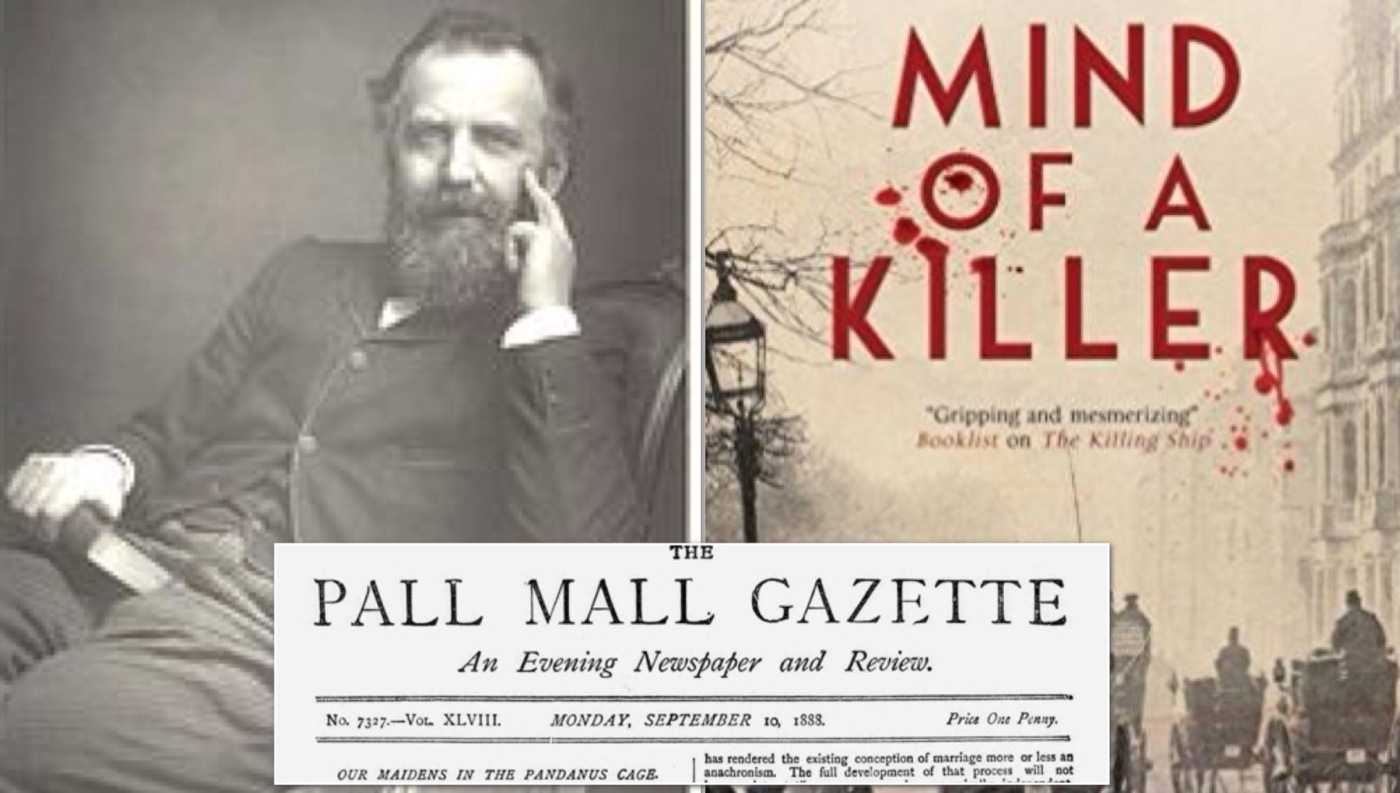
 Simon Beaufort provides an exhilarating and madcap journey through the contrasting mileus of Victorian London. We experience gentlemen’s clubs with their subtle ambience of brandy and fine cigars, the visceral stench of low-life pubs and doss houses and the clatter of the hot lead printing presses of a vibrant daily newspaper. Lonsdale – with the assistance of Hulda Friedrichs, a fiercely independent early feminist journalist – painstakingly uncovers a nightmarish plot hatched by scientists who are obsessed with eugenics, and believe that the future of the human race depends on selective breeding and the suppression of ‘the undeserving poor’.


 fullybooked2017