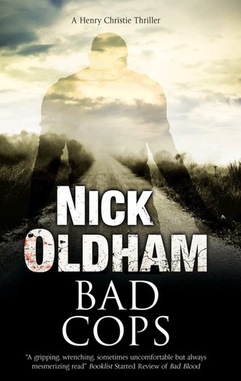
It is fair to say that Nick Oldham’s Lancashire copper Henry Christie has been around the block a few times. Twenty-four times, to be precise. Bad Cops is his twenty-fifth trip and Detective Superintendent Christie is off work, recovering from a gunshot wound. He has been making vague promises to his pub landlady girlfriend Alison that his days at the sharp end of British law enforcement are over, and he is going to spend his last days on the force sitting safely behind his desk until his pension pot matures and he can retire to The Tawny Owl and concentrate on pulling pints and working the restaurant’s elaborate coffee machine.
 His resolve weakens, however, when he is visited by two of his more senior officers, his own Chief Constable and the newly appointed boss of the Central Yorkshire force, John Burnham. The Yorkshire police has suffered a disastrous inspection, and Burnham has been appointed to cleanse the Augean Stables.
Christie is assured that he will only be required to cast his experienced eye over the murder books pertaining to two unsolved killings look for omissions and inconsistencies, and report back to Burnham. What follows is a journey into a nightmarish world of police corruption, people trafficking, financial fraud – and contract killing.
Nick Oldham gives us a fascinating cast of characters. Readers new to Henry Christie will discover a bruised and (frequently) battered old style officer who, like Tennyson’s Ulysses, is “not now that strength which in old days moved earth and heaven.” Even he accepts that his philandering days are over, much as he is attracted to his investigating partner Detective Sergeant Diane Daniels. Those of us who have followed breathlessly in Christie’s turbulent wake in previous novels will know that Nick Oldham doesn’t mess about when creating villains, but he has certainly outdone himself here with Detective Chief Inspector Jane Runcie, who is as corrupt, foul-mouthed, sexually predatory and downright malevolent as anyone he has previously brought to the page.
 Oldham (right) is a retired copper himself, so readers are guaranteed procedural details which are described with total authenticity, whether they be the smelly reality of unmarked police cars used for observation, complete with the detritus of discarded fast food wrappers and the inevitable flatulent consequences, and an intriguing – and quite scary – use for Blutac and two pence pieces.
Like the previous Henry Christie novels Bad Cops is short, sharp, and sometimes shocking. You will get through it in a couple of sessions at the most and if ever a novel deserved the old latin adage multum in parvo it is this. Oh, yes, one last thing. If you can find a more powerful and gut-wrenching final paragraph this year, I’ll buy you a pint. Or six. Bad Cops is published by Severn House and is out now.

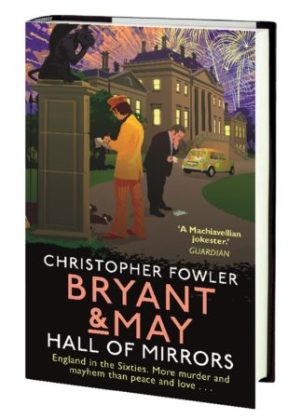 If a more extraordinary duo of fictional detectives exists than Christopher Fowler’s Bryant & May, then I have yet to discover them. The peculiar pair return in Hall of Mirrors for their fifteenth outing, and this time not only are they far from their beloved London, but we see a pair of much younger coppers on their beat in the 1960s. Fowler’s take on the period is typified by each of the fifty chapters of the novel bearing the title of a classic pop hit. We are also reminded of the strange fashions of the day.


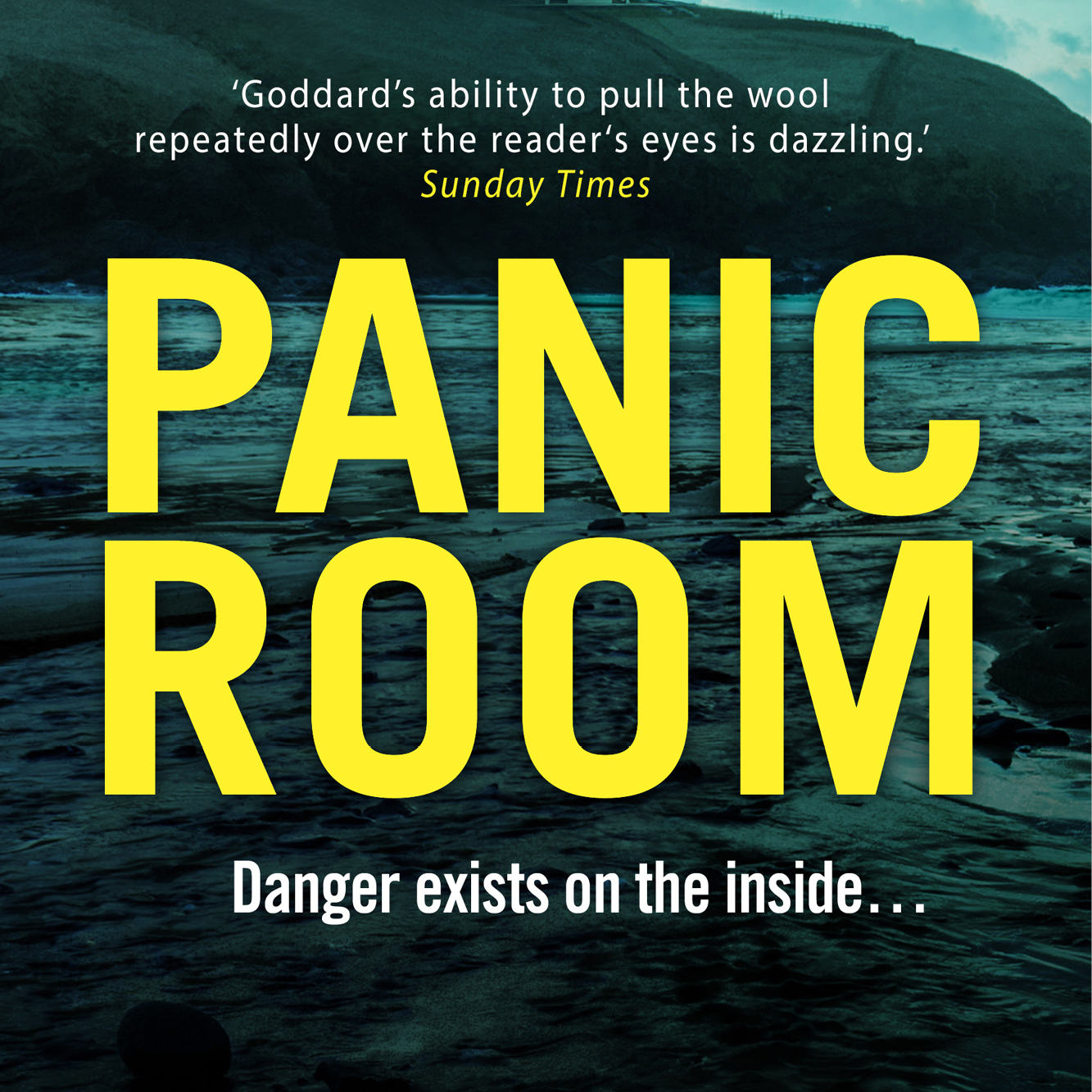
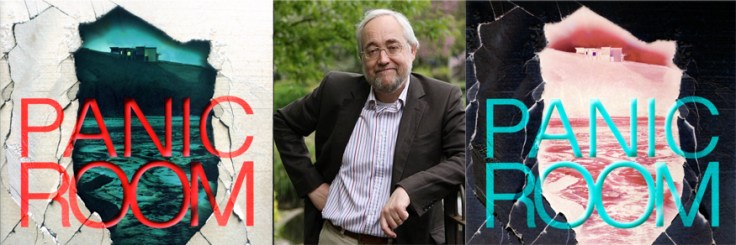

 Don Challenor is what Monty Python might have called at ex-estate agent. He is no more. He has over-egged his last pudding and hyped up his last hovel. The prestigious London property sellers Mendez Chinnery have, as the saying goes, let him go. He has been, to quote the late lamented Alan Clark, economical with the actualité once too often. He is at that stage of life when it is becoming harder and harder to slip into a new job. Not only is he sans employment, but he is also sans wife. Fran has married again and is still lawyering away, but with a new husband and his children. Challenor is surprised, then, when she makes contact to offer him a cash in hand one-off job. It sounds simple. He is to travel down to Cornwall, assess an executive-style property, and present her with a glowing file which will attract well-heeled buyers like moths to a flame. The house, Wortalleth West, was formerly owned by millionaire businessman Jack Harkness, but it has now been signed over to his former wife as part of a divorce settlement.


 Thor scrapes by as a barman in a local pub, and has a rudimentary bedsit over the local post office, but his world is turned on its head when he discovers that someone is trying to kill him. Not without taking a knock or two, Thor survives, and concludes that the attempts on his life are connected to the efforts of developers to buy up his patch of the Loxley land to add to a much bigger chunk of Crook territory. The result will be thousands of newcomers to the area, complete with pressing demands for new schools, new infrastructure and new services.
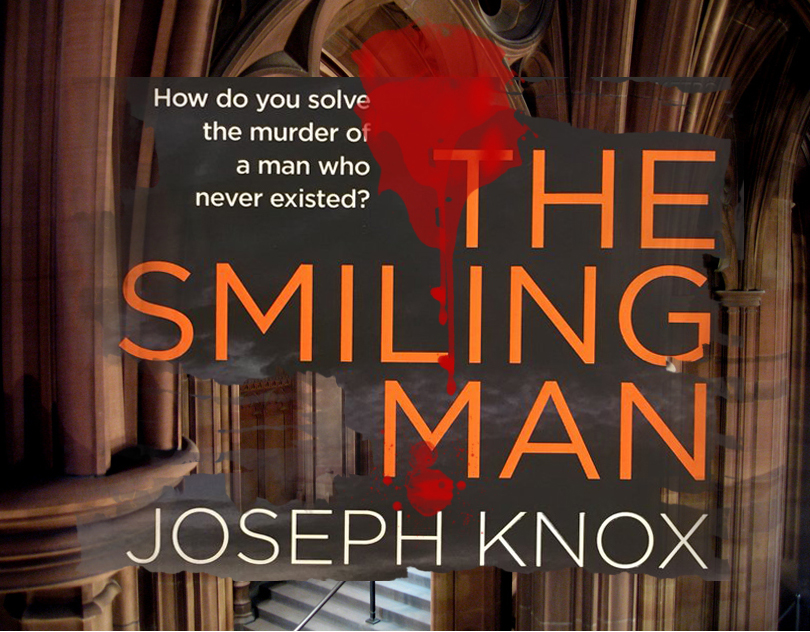

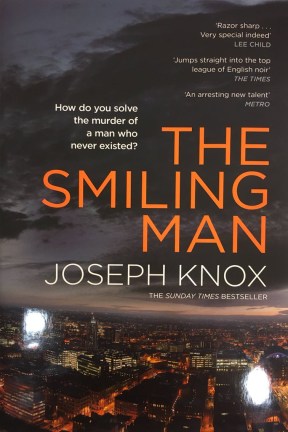 This is all too much like hard work for Sutcliffe, but despite warnings from his saturnine superior, Superintendent Parr, Waits digs deeper. He uncovers a labyrinthine series of connections between an absent solicitor doing his rich-white-man things among the bar girls of Thailand, an apparently gay businessman and his estranged wife, the corpse (now renamed The Smiling Man), and another hotel room, its floor saturated with pint after pint of human blood.
 This is little short of a modern masterpiece. You might imagine Joseph Knox (right) to be a weathered, life-weary cynical misanthrope, hunched in a corner of the pub, savouring a roll-up, rather like a latter day Derek Raymond, but anyone who has had the privilege of meeting Joseph will know that this is far from the case. He is well versed in the art of Noir, though, as he revealed when he spoke to us around the time that his first novel, Sirens, was published.
 In this febrile atmosphere are many men and women who have memories of “the last lot”. One such is the latest creation from Jim Kelly, (left) Detective Inspector Eden Brooke. He saw service in The Great War, but were someone to wonder if his war had been ‘a good war’, they would soon discover that he had suffered dreadful privations and abuse as a prisoner of the Turks, and that the most physical legacy of his experiences is that his eyesight has been permanently damaged. He wears a selection of spectacles with lenses tinted to block out different kinds of light which cause him excruciating pain. For him, therefore, the nightly blackout is more of a blessing than a hindrance.
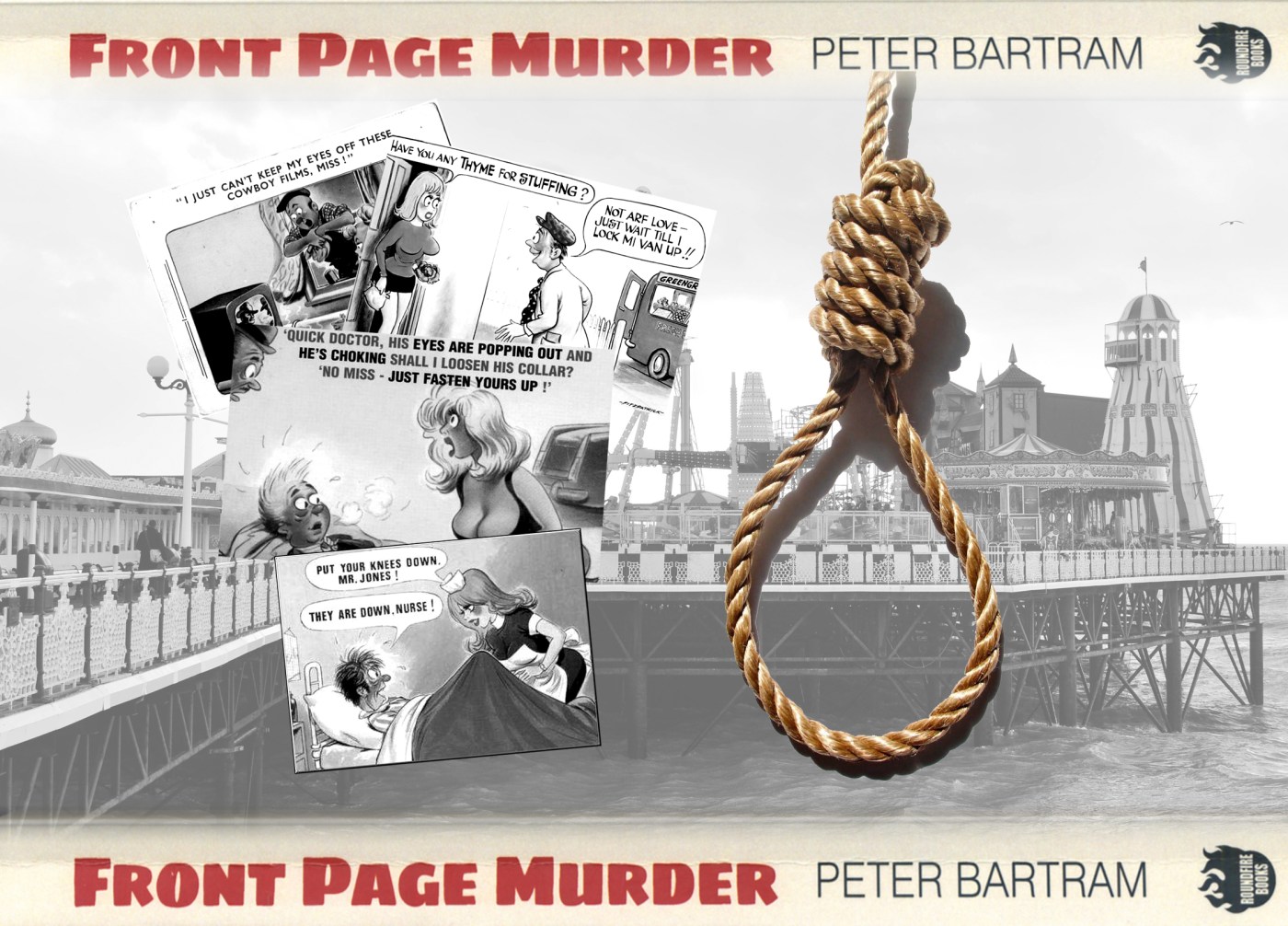

 In the latest novel from Peter Bartram (left) his alter ego Colin Crampton, a reporter for the Evening Chronicle in 1960s Brighton, faces his toughest challenge yet. Local artist Archie Flowerdew is due to be hanged on Christmas Eve unless Crampton and his intrepid Australian girlfriend Shirley can stop this affront to Christmas cheer by proving that Flowerdew did not murder a rival artist.
 Persuaded by the condemned man’s niece, Tammy, Crampton gets to work, and finds no shortage of other Brighton folk who would have clapped their hands in glee upon hearing of Despart’s demise. The plot thickens delightfully, as we encounter a crooked art dealer, a lecherous vicar, a camp artist (complete with velvet trousers) and the usual cast of boozy, chain-smoking searchers-after-truth (or a good headline) on the staff of the Evening Chronicle.
 Bartram introduces a fascinating contemporary note by featuring the Home Secretary at the time, Henry Brooke. He was appointed by Harold Macmillan after the Prime Minister’s infamous ‘Night of The Long Knives in 1962. Brooke (left) was to prove one of the least distinguished holders of the post, however, and he was pilloried without mercy by the BBC’s satirical show That Was The Week That Was. They dubbed the hapless Brooke ‘The most hated man in Britain’, and Bartram recalls their mocking phrase, “If you’re Home Secretary, you can get away with murder.”


