
England. 11th April 1981. While the music charts bubble with the froth of Bucks Fizz, Shakin’ Stevens, Adam and the Ants and The Nolans, London – at least the place south of the river called Brixton – is aflame with violence, racial hatred and mayhem. As the police struggle to control the streets a middle aged Detective Inspector called Henry Hobbes is bused in to help. No matter that Hobbes – and many other senior detectives likewise – is a stranger to riot control, it is a case of all hands on deck.
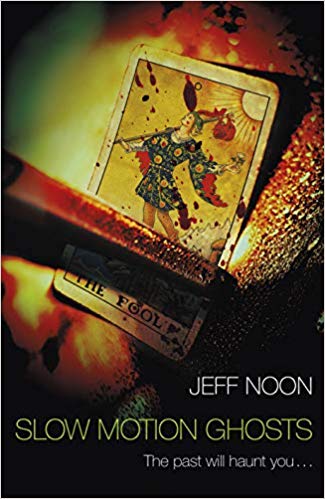 Later that year, with Brixton quieter, despite other English towns and cities erupting in copycat anger, Hobbes has become embroiled in a bitter internal dispute. A fellow copper, Charlie Jenkes (who rescued Hobbs from the mob on that fateful April night) after being indicted for savagely beating a black suspect, has taken his own life. And the officer who testified to Jenkes’s violence? Henry Hobbes, who, with that single act of honesty, is branded as a Judas by his own colleagues.
But now Hobbes has something to distract him from his disintegrating family life and his pariah status among fellow officers. A young man is found dead, wth his body gruesomely mutilated. Brendon Clarke was a minor celebrity, the lead singer with an aspiring band called Monsoon Monsoon, whose chief claim to fame is that they play the music of another dead rockstar – Lucas Bell. Bell’s celebrity rests on hs apparent suicide, his angst-ridden persona, and, most of all, his adoption of the identity of King Lost, a charismatic figure with a gruesome mask.
As Hobbes tries to unpick the complex knot which ties together the identities of Brendan Clarke and Lucas Bell, he discovers that the King Lost legend has its roots in a bizarre fantasy world created by a group of teenagers in the Sussex town of Hastings. With more murders being linked to the world of King Lost, Hobbes is drawn into an investigation which exposes child abuse, blackmail, madness and revenge.
Genre compartmentalising books is not always helpful, but it is fair to say that Noon’s previous novels have used tropes from science fiction, psychedelia and dystopian fantasy. Slow Motion Ghosts adopts conventions of the police procedural, but is more adventurous, asks more questions and has a distinctly noir-ish feel. Noon uses his knowledge of the music scene to bore down into the strange phenomenon of the celebrity cult, and the lengths to which worshippers of dead heroes are prepared to go in order to keep their fantasies alive.
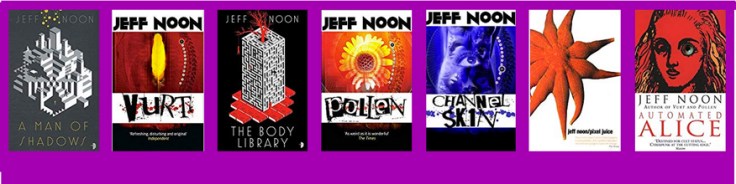
Jeff Noon was born in Droylsden in 1957. He was trained in the visual arts, and was musically active on the punk scene before starting to write plays for the theatre. His first novel, Vurt, was published in 1993 and went on to win the Arthur C. Clarke Award. He reviews crime fiction for The Spectator.
Slow Motion Ghosts is published by Doubleday, and is out now.
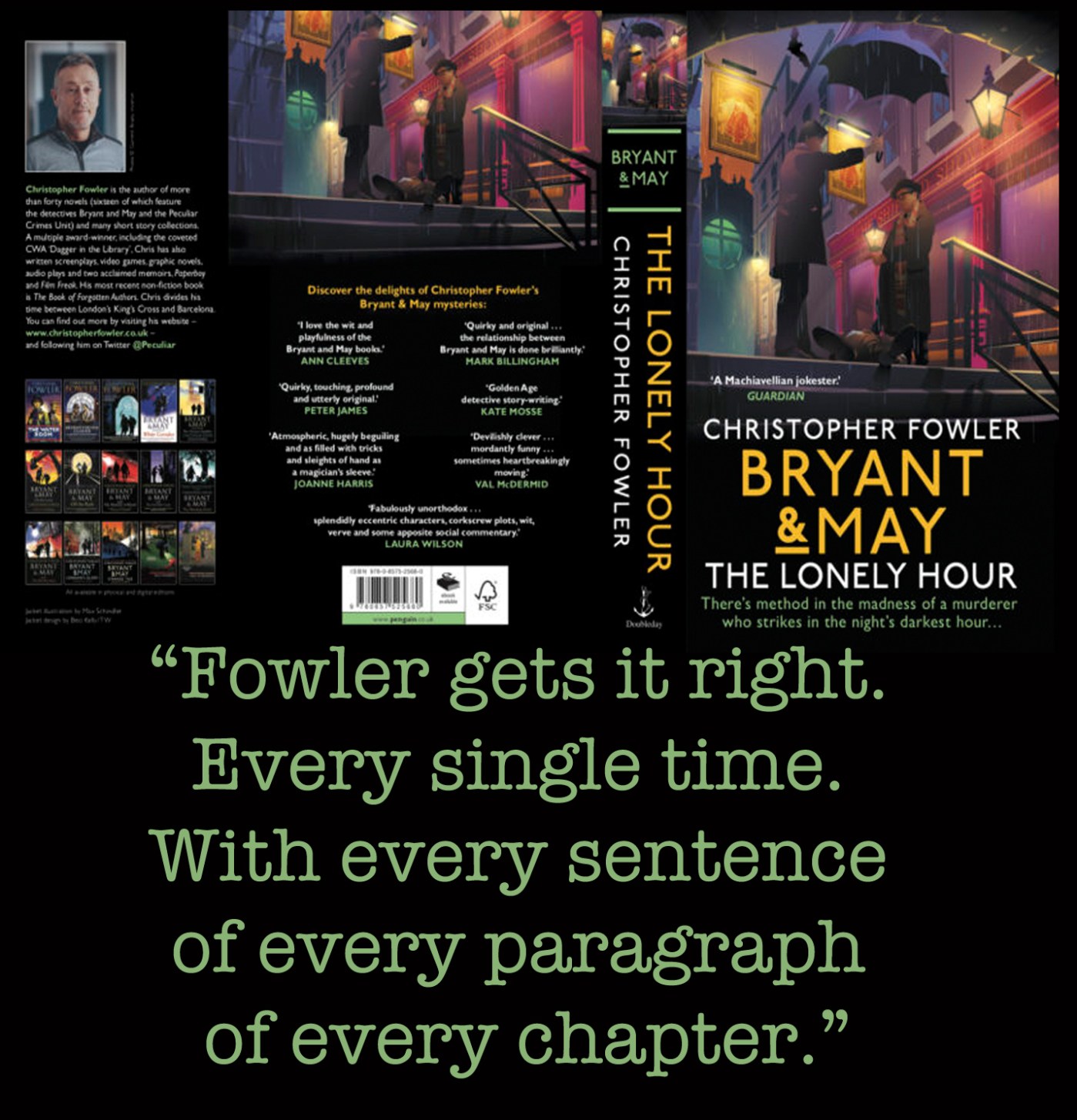
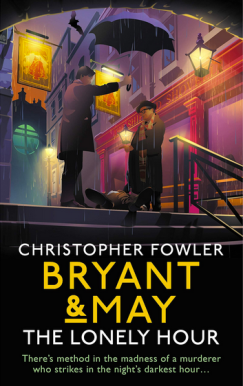 Bryant and May – and the rest of the Peculiar Crimes Unit – have been threatened with closure before, but this time their impatient and disapproving police bosses mean business. The PCU, both collectively and individually flounder around trying to work out what connects the corpses, and who is expertly wielding the trocar. Like Andrew Marvell’s ‘Time’s Winged Chariot’, the accountants and political schemers of the Metropolitan Police are ‘hurrying near’, and failure to catch this killer will certainly mean that the shambolic HQ of the Peculiar Crimes Unit on Caledonian Road will soon be in need of new tenants.
 Thanks to Bryant’s genius, the mystery is solved and the killer brought to justice, but these are certainly the grimmest days ever for the PCU, and as this brilliantly entertaining story reaches its conclusion, Fowler (right) slowly but irrevocably turns the tap marked Darkness to its fully open position. The Lonely Hour is published by Doubleday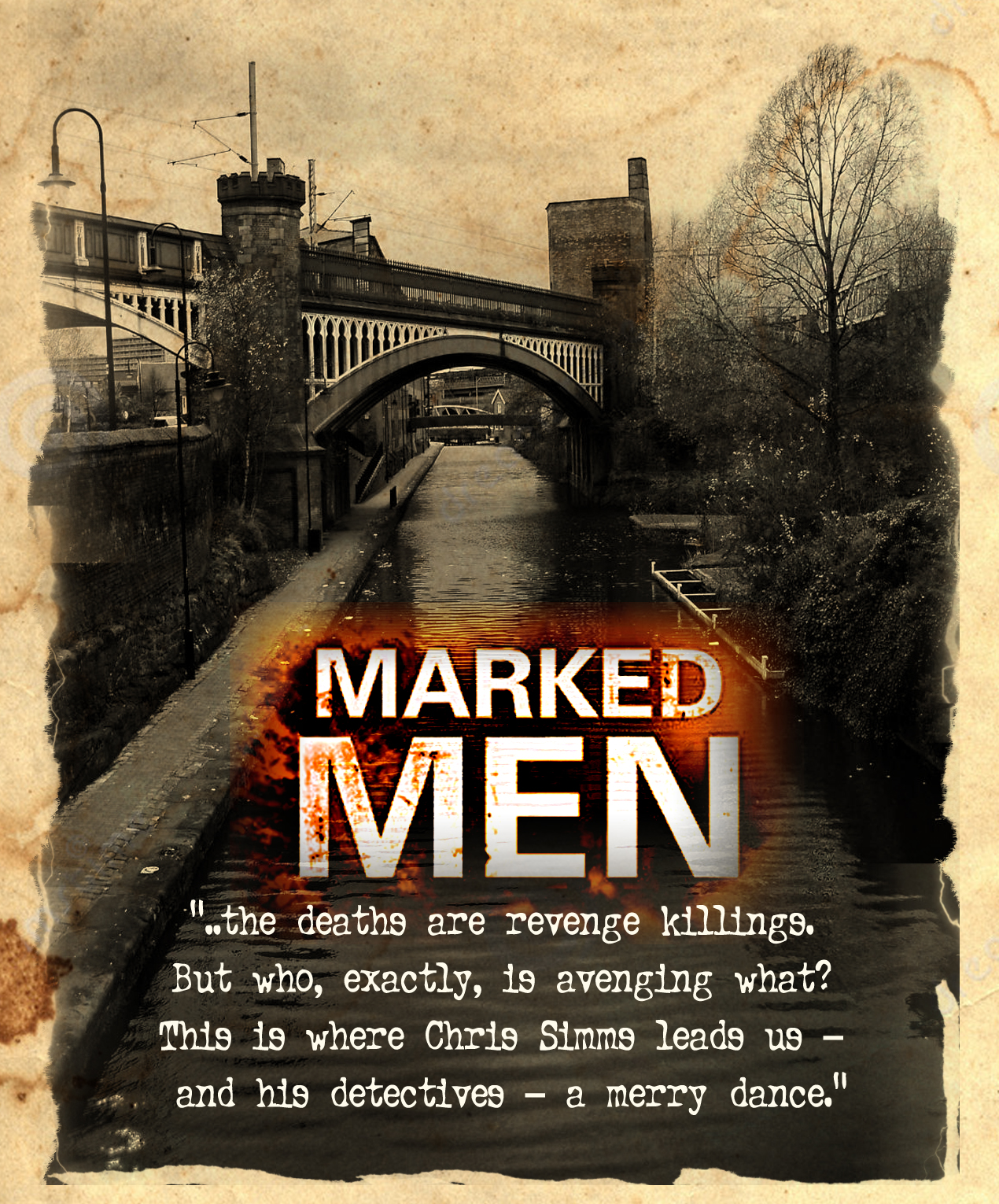
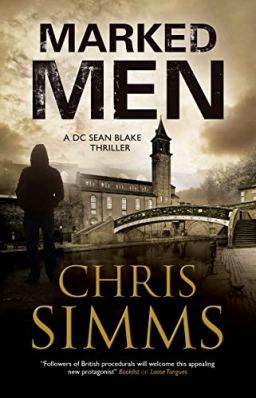 Marked Men begins on an idyllic Spanish beach, but then switches to the less salubrious setting of urban Manchester, and we only learn the significance of the opening much later in the plot. This way of starting a novel has become rather well-worn, but Simms handles it well and times to perfection the revelation of its significance. The Manchester action begins with Blake in waders and hard hat at the bottom of a drained lock on a local canal. There is a body, naturally, with more to follow, and as Blake and his immediate boss, DS Dragomir criss-cross the city trying to make sense of the crime scenes we – like them – are drawn into thinking that the deaths are revenge killings. But who, exactly, is avenging what? This is where Chris Simms leads us – and his detectives – a merry dance. There is a clue, but I have to confess I didn’t get it any quicker than did Blake and Dragomir.



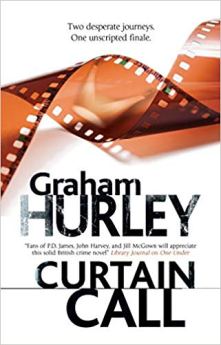 Enora’s reunion with her one-time lover has unintended consequences, particularly in relationship to her son, who turns up in London having fallen out with his father who, in turn is facing bankruptcy after a severe career downturn. There is crime – of a sort – in the novel, most horrifically when Culligan’s Syrian boyfriend is beaten within an inch of his life, but Curtain Call is much more complex and multi-layered. Admirers of the Faraday novels will love the fact that Saucy was a long-time confrère of the ebullient and occasionally unhinged King of the Portsmouth underworld, Bazza Mackenzie, a nemesis who Joe Faraday spent twelve memorable novels trying to put behind bars.

 Thus begins another case for Professor Matt Hunter, a university lecturer in religion and belief. He has previously helped the police in cases which involve sacred or supernatural matters (see the end of this review) and he is called in when it becomes clear that the wielder of the axe was none other than the teenage son of the Reverend David East, and that the boy was under the spell of a cult of deviant Christians whose central belief is that God The Father is a brutal tyrant who murdered his only son. They are also convinced that all other humans but them are ‘Hollows’ with evil in their eyes. Consequently, they shun all contact with the outside world, and live in a remote farmhouse, deep in the hills at the end of a rutted farm track.
 One of the most intriguing aspects of the Matt Hunter books is the relationship between the fictional former man of God and the very real and present minister in the Baptist church, the Reverend Peter Laws himself . We get a very vivid and convincing account of how Hunter has lost his faith, but also the many facets of that belief that he has come to see as inconsistent, illogical, or just plain barbaric. It suggests that Laws has identified these doubts in his own mind but, presumably, answered them. In these days of CGI nothing is impossible, so a live debate between Reverend Laws and Professor Hunter would be something to behold.
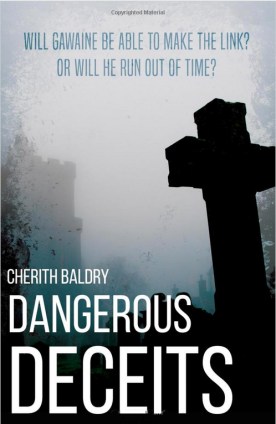 You might guess that a crime novel featuring an amateur detective called Gawaine St Clair is not going to take you down many mean streets; furthermore, were one to Frenchify its chromatic tint, then it would probably be nearer beige than noir. This being said, if you are a Golden Age fan, like dry humour, enjoy a clue-laden whodunnit and are never happier than when luxuriating in the follies and foibles of the English middle classes, then Cherith Baldry’s Dangerous Deceits will be a joy.
 Gawaine may be too arch and precious for some tastes but he fits perfectly into the Home Counties landscape with its manicured village greens and faux Tudor dwellings. I thoroughly enjoyed Dangerous Deceits and Father Tom’s killer is unmasked not amid the dusty shelves of a country house library, but in the altogether more fractious atmosphere of an extraordinary (in the procedural sense) meeting of the Ellingwood PCC. The solution, as in many a whodunnit, rests with everyone – including Gawaine, the local coppers and, in this particular case, me – making a seemingly obvious assumption early in the piece.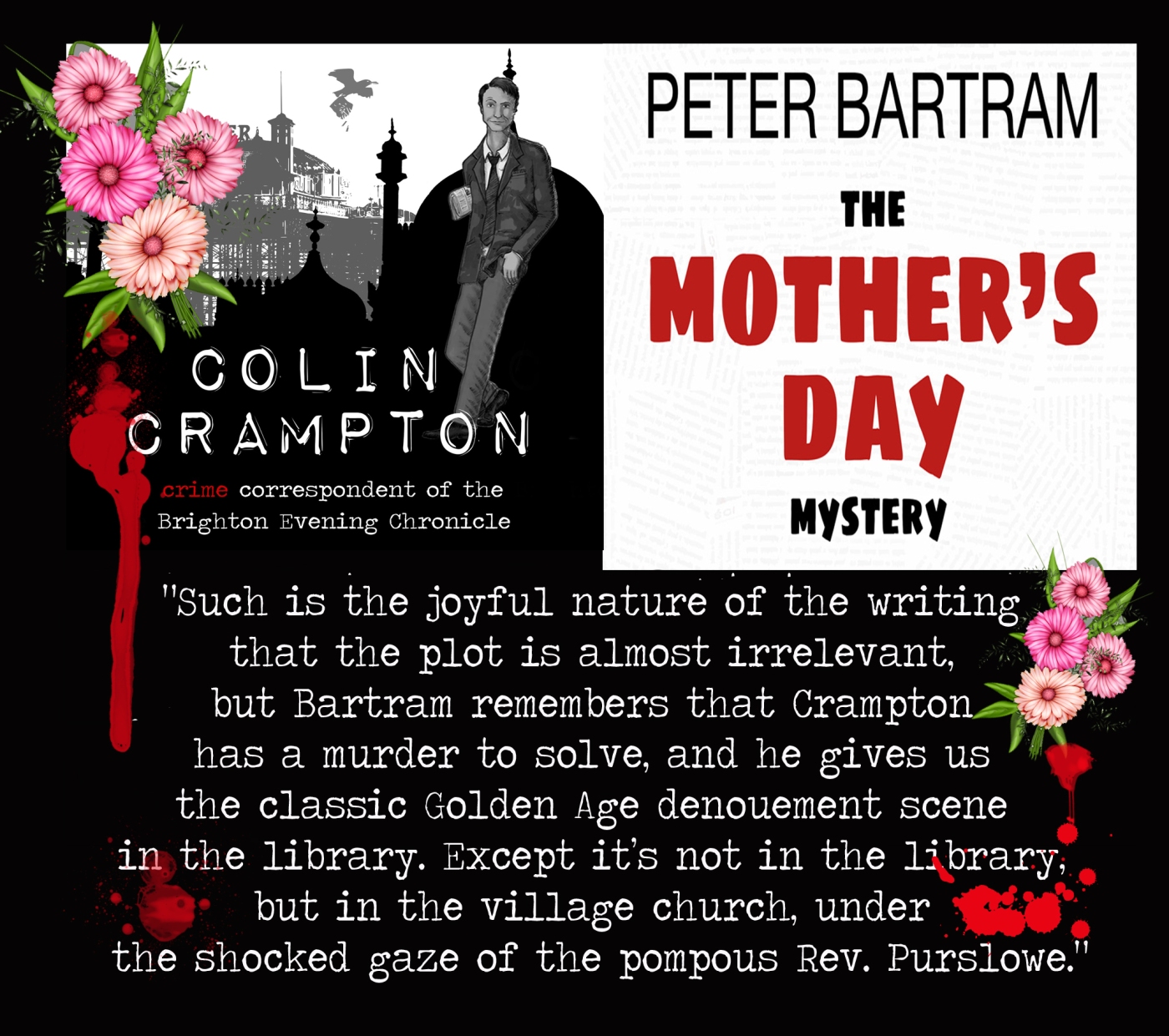
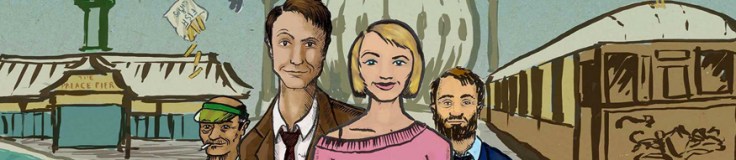
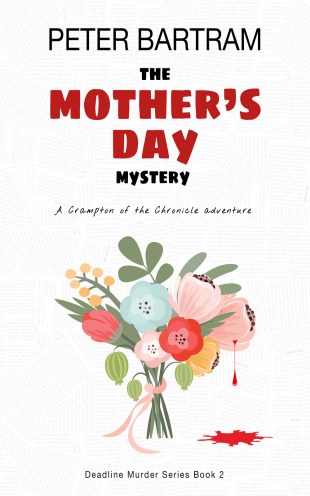 In The Mother’s Day Mystery, Crampton discovers the body of a schoolboy who has evidently been knocked off his bike and fatally injured. What on earth was Spencer Hooke doing away from his dormitory in Steyning Grammar School at the dead of night, cycling along a lonely and windswept clifftop road? In pursuing this conundrum, Crampton whisks us into a world of stage vicars, seedy pub landlords, archetypal leather-elbowed schoolmasters and impecunious toffs. There are jokes a-plenty, and Bartram indulges himself – and those of us who are, similarly, in the autumn of our years – with many a knowing cultural reference that might puzzle younger readers. He takes us into a wonderful sweet shop, the kind which can nowadays only be found in museum recreations:
 Anyone who is a student of English humour will soon see that Bartram is part of a long and distinguished tradition of comic writers who find meat and drink in the absurdities of English life and social structures. In the world of crime fiction, however, comedy does not always sit well with murder and bloodshed. The great and sadly under-appreciated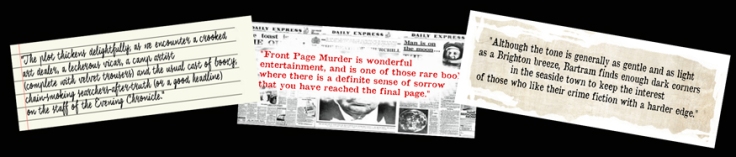
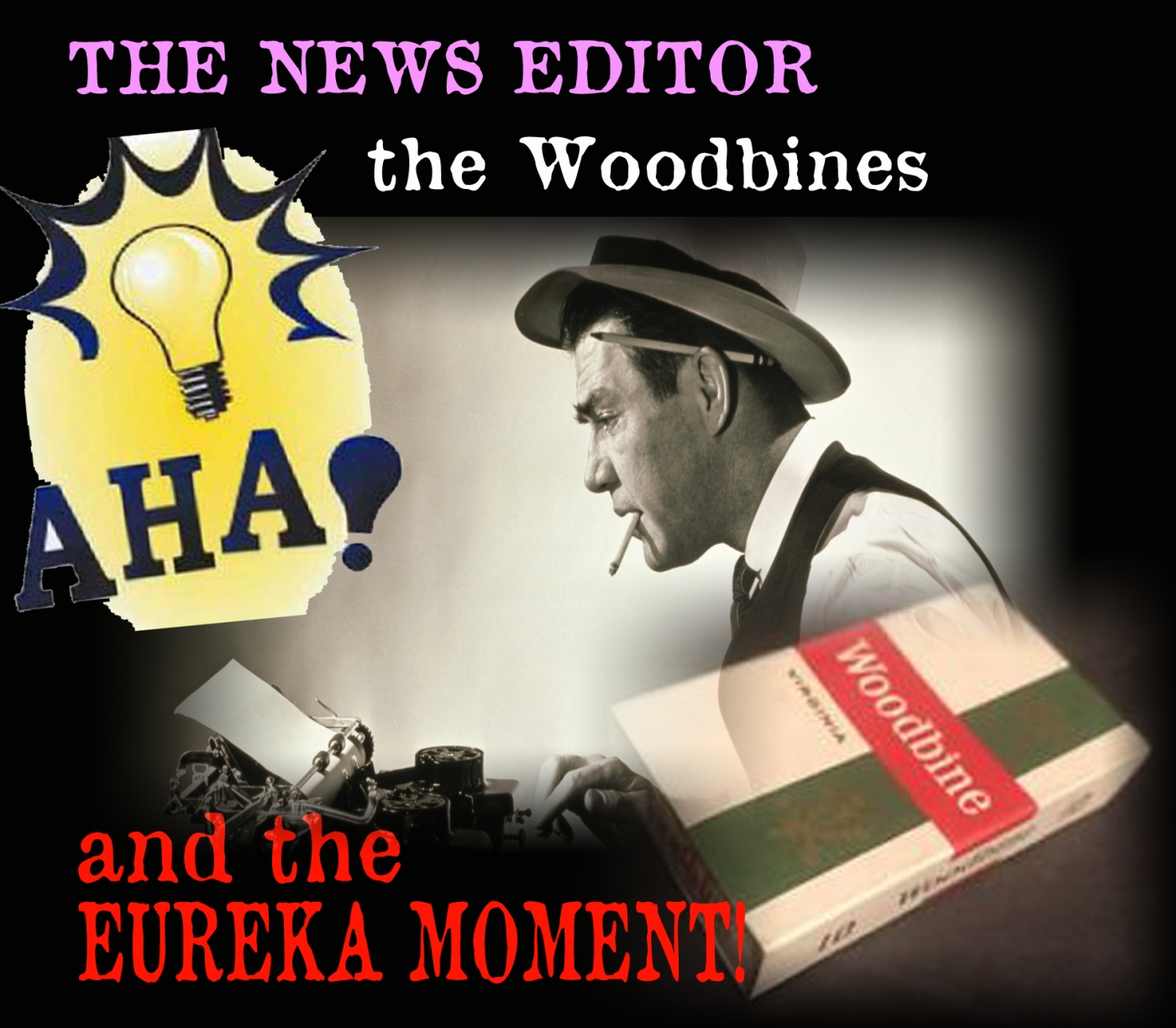
 Peter Bartram (left) is an old school journalist who has turned his life’s work into an engaging crime series set in 1960s Brighton, featuring the resourceful reporter on the local paper, Colin Crampton. Peter now reveals how he came to invent his alter ego. You can read reviews of three Crampton of The Chronicle novels by clicking the title links below.
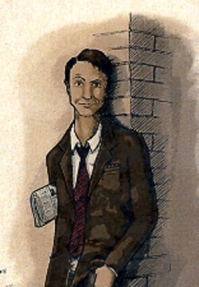 And that was when I remembered my first news editor. I never saw him without a Woodbine hanging off his lower lip. And so Frank Figgis, news editor of the Evening Chronicle, was born. Of course, there was still lots to think about – especially more regular characters. But with Colin (right) and Frank I felt I was on my way. Both of them have big roles to play – along with other regulars, especially Colin’s girlfriend Shirley Goldsmith – in the latest tale The Mother’s Day Mystery.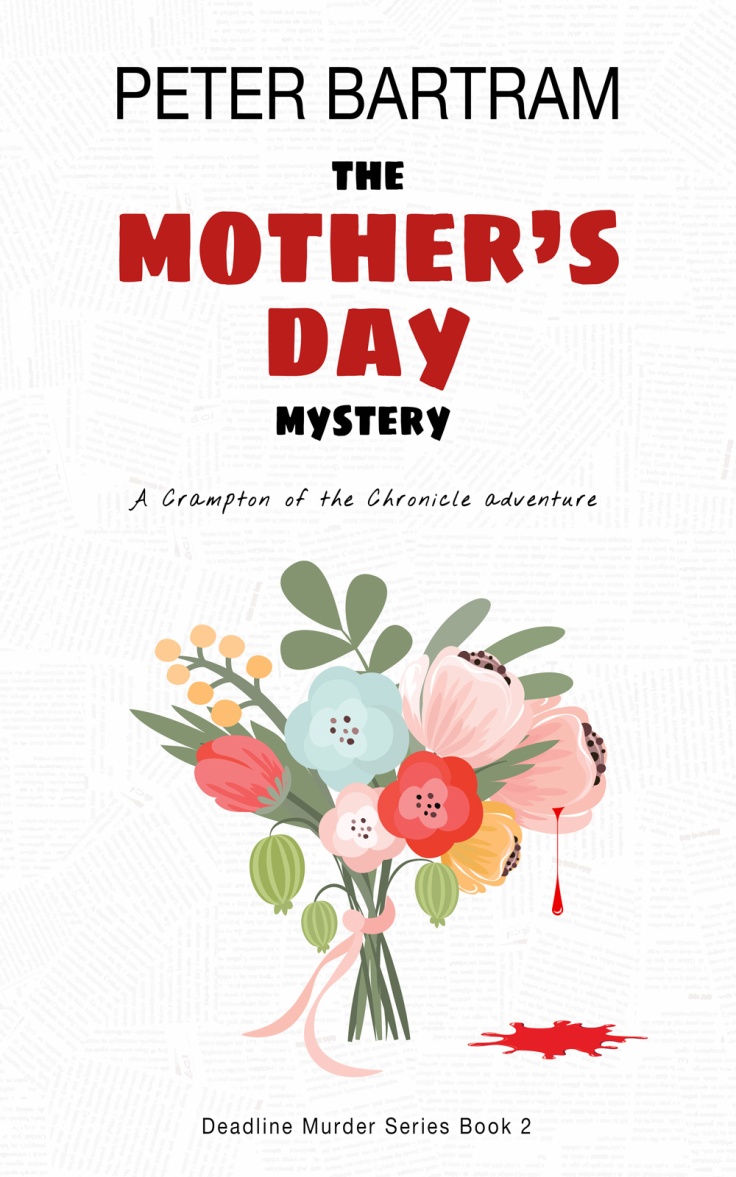


 This very English mystery revolves around the death of a distinguished biographer, Ralph Maguire. Maguire is in the terminal throes of dementia, and in his moments of lucidity he is trying finish his book about a celebrated actor.


 fullybooked2017