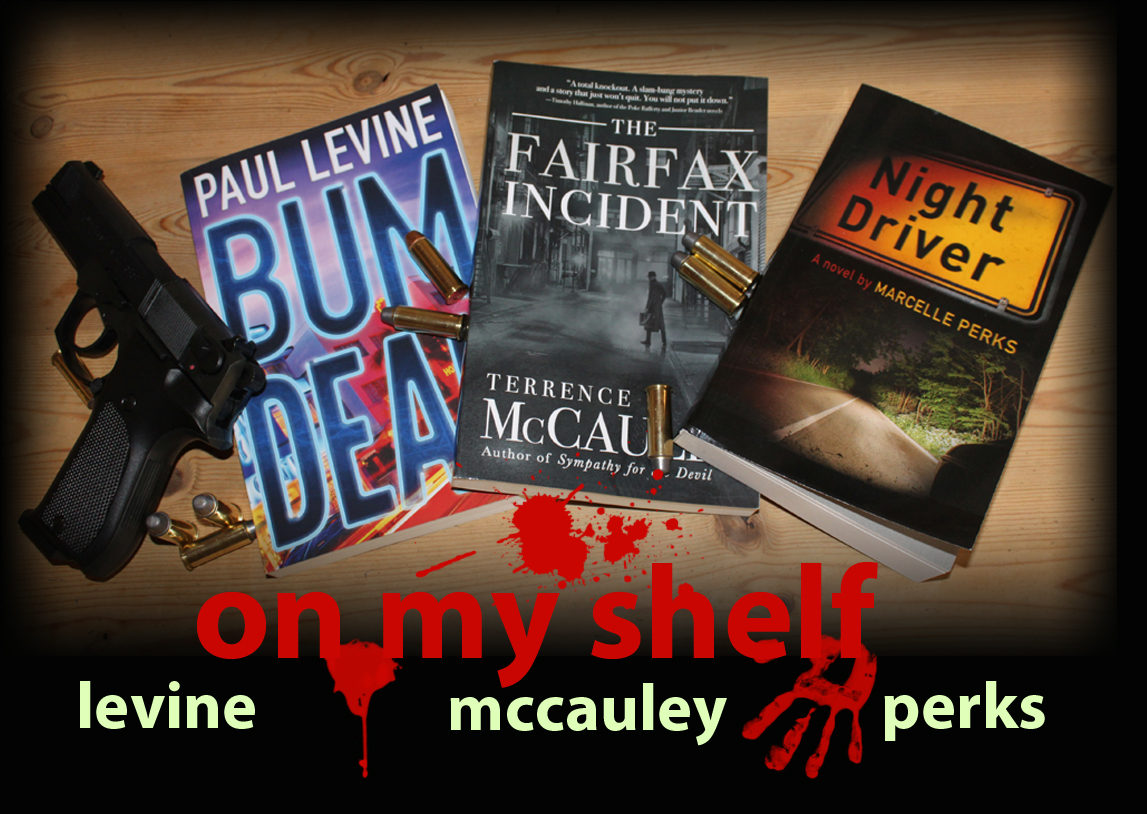

BUM DEAL by Paul Levine
 Paul Levine is an American author of crime fiction, particularly legal thrillers. He has written two series, known generally by the names of the protagonists: Jake Lassiter and Solomon vs. Lord. In Bum Deal, published by Thomas & Mercer and out now old football injuries, ostensibly healed, may have left Jake Lassister a terrifying legacy. He has begun to suffer crushing headaches and episodes of memory loss. Does Lassiter have chronic traumatic encephalopathy (CTE), the fatal brain disease?
That’s the backdrop of Bum Deal in which Lassiter, after two decades as a criminal defence lawyer, switches teams and becomes a prosecutor. Why the move? Is he burned out? Or is the reason he’s switching teams more alarming? Have all those concussions come back to haunt him? Dr. Melissa Gold, a neuropathologist, thinks so. She prescribes experimental treatments intended to stop, or at least slow, the progress of his traumatic brain injury.
Despite the health scare, Lassiter is appointed to prosecute a prominent Miami surgeon for killing his wife. Only problem, there are no witnesses, no fingerprints, no DNA, no weapon, not even a body. How will Lassiter even prove that the missing woman is dead, much less that her husband killed her? Looming over Lassiter is a greater risk than merely losing a case. As the trial approaches, his symptoms become more severe and the jury’s verdict becomes the least of his worries.
THE FAIRFAX INCIDENT by Terrence McCauley
 Terrence McCauley is an enthusiastic contributor to Thuglit, which describes itself thus:
..”the short fiction magazine that’s been kicking crime fiction’s ass since 2005. Offering eight punches to the gut, six times a year.”
Readers will not be surprised, then, to hear that McCauley’s latest novel is a violent thriller set in the maelstrom of prohibition era New York City. Charlie Doherty is a disgraced cop who has used his influence and street-smarts to set up a PI business. When a rich widow walks into his Manhattan office and asks him to prove that her husband’s suicide was actually murder, Doherty lifts his eyes to the heavens, thanks all the Irish saints he can remember, and dreams of the many ways he his going to enjoy the widow Fairfax’s fat cheque. Investigating the apparent suicide of Walter Fairfax, however, wipes the grin form Doherty’s face as he is forced to confront some of the most implacably evil men not just in New York, but much further afield.
The Fairfax Incident is published in paperback and as a Kindle by Polis Books
NIGHT DRIVER by Marcelle Perks
 Marcelle Perks is no novice writer, but with earlier titles such as Incredible Orgasms: Yes, Yes, Yes, Yes and Secrets of Porn Star Sex: Brilliant Ideas for No-holds Barred Pleasure, this thriller signals a temporary change of direction. Perks lives and works in Germany, and it is there that we meet Frannie, an English expat, heavily pregnant and with her marriage on the rocks. Having learnt to drive in a bid to boost her self esteem, she takes to deserted early-hours roads to build her confidence at the wheel. Fate takes a hand, however, and when her path crosses that of Lars Stigelegger, a homicidal truck driver, Frannie is drawn into a world of trafficking, prostitution and violence. Pre-publication comments suggest that Night Driver is:
♦ Tom’s Midnight Garden as a road movie with a serial killer thrown in.
♦ Duel for the post-Brexit age.
♦ A gripping Euro drama with a shocking twist.
The novel is based on the true crime case of Fritz Haarman, Germany’s most notorious serial killer. Night Driver is out on 2nd August from Urbane Publications.



 Watching You by Lisa Jewell takes us to the chic urban village of Melville Heights. Jack Mullen is a successful consultant in cardiology, while his wife Rebecca is “something in systems analysis.” A couple of doors down live the Fitzwilliam family. Tom is a charismatic and nationally renowned Head Teacher with an impressive record of turning round failing high schools. His adoring wife Nicola has no CV as such, unless you want to list an over-awareness of body image and a devotion to the latest fads in fashion and diet. Their teenage son, Freddie – an only child, naturally – is very keen on all things technical, particularly digital binoculars, spy software, and a fascination with the lives and movements of anyone he can see from his bedroom window.
 This is a clever, clever murder mystery. Lisa Jewell gives us the corpse right at the beginning – while keeping us guessing about whose it is – and then, by shrewd manipulation of the timeline we are introduced to the possible perpetrators of the violent death. By page 100, they have formed an orderly queue for our attention. Of course there’s beautiful, feckless Joey and her husband Alfie. Freddie Fitzwilliam is clearly at the sharp end of the Asperger spectrum, but what about his bird-like – and bird-brained mother? Schoolgirls Jenna and Bess are clearly fixated – for different reasons – on their headteacher, and as for Jenna’s mum, with her persecution complex and incipient madness, she is clearly on the brink of doing something destructive, either to herself or someone else. And who is the mysterious woman who flew into a rage with Tom ten years earlier while the Fitzwilliams were on a family holiday to the Lake District?
 Lisa Jewell peels away veil after veil, but like Salome in front of Herod, she tantalises us with exquisite cruelty. Just when we think we have understood the truth about the complex relationships between the characters, we are faced with another enigma and a further conundrum. There are flashes of absolute brilliance throughout this gripping novel. The relationship between Jenna and Bess is beautifully described and even though we suspect he may end up with blood on his hands, Freddie’s strange but exotic view of the world around him makes him completely appealing. In the end, of course,we learn the identity of the corpse and that of the murderer but, just like the Pinball Wizard, there has got to be a twist. Lisa Jewell (left) provides it with the last 39 words of this very special book, and it is not so much a twist as a breathtaking literary flourish.


 I have a close friend who keeps himself fit by walking London suburbs searching charity shops for rare – and sometimes valuable – crime novels. On one particular occasion he was spectacularly successful with a rare John le Carré first edition, but he is ever alert to particular fads and enthusiasms of mine. Since I “discovered” PM Hubbard, thanks to a tip-off from none other than
  Seldom, however, can a treasure have been protected by two more menacing guardians in Aunt Elizabeth and her maid-of-all-work Coster. Remember Blind Pew, one of the more terrifying villains of literature? Remember Tod Browning’s Freaks (1932) and the decades that it was hidden from sight? With a freedom that simply would not escape the censor today, Hubbard (right) taps into our visceral fear of abnormality and disability. Hubbard has created two terrifying women and a dog which is makes Conan Doyles celebrated hound Best In Show. The dog first:
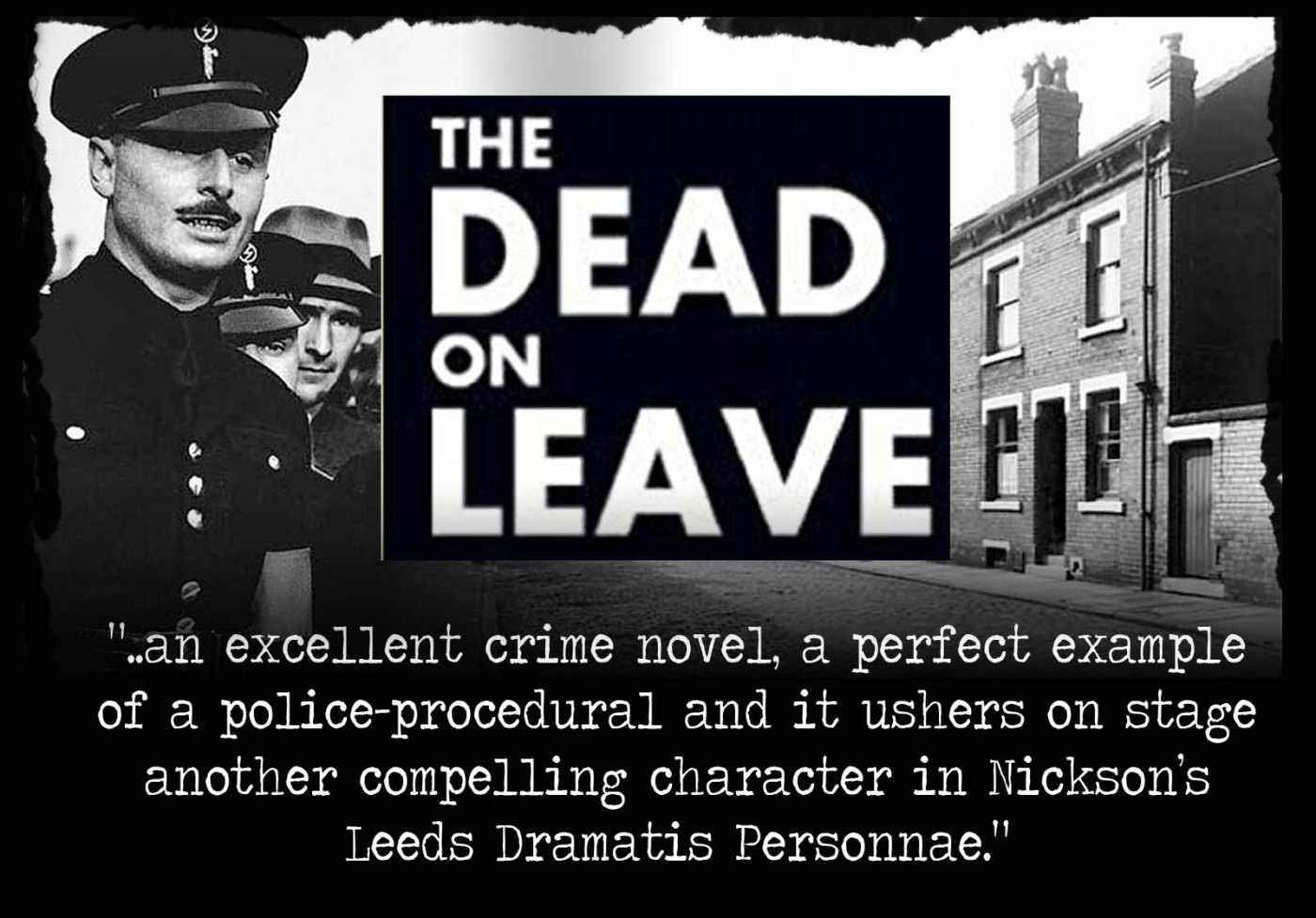

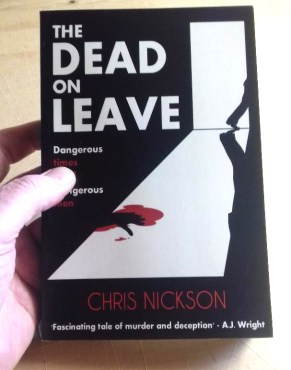 It appears the dead man is a would-be follower of Sir Oswald Mosley, charismatic leader of the British Union of Fascists and, after an appearance in Leeds by Mosley and his Blackshirts turns into a riot, it is tempting for the police to think that the murder is politically inspired. As Raven tries to make sense of the killing, he has his own demons to face. Like many other Yorkshiremen, Raven is a Great War veteran, even though his war was brief and horrific. Only able to see active service in the dog-days of the conflict, he was unlucky enough to be close to a fuel dump which was hit by a stray shell. There’s a line from a song about that war, which goes,
 The Dead On Leave is very bleak in places. Hope is in short supply among the working people in Leeds, and men have no qualms about building a wooden platform for Moseley to rant from, because a job is a job; consciences are a luxury way beyond the reach of folk whose families have empty bellies. Nickson (right) is a writer, with social justice at the front of his mind and he wears his heart on his sleeve. I doubt that he and I agree on much in today’s political world, but I can think of no modern British author who writes with such passion and fluency about historical social issues.

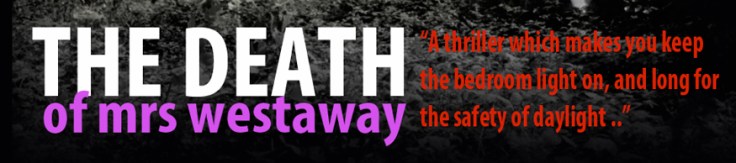
 Hal Westaway is no crook. She is not an opportunist. She has a conscience. She instinctively understands the difference between meum and teum. And yet. And yet. The gangster from whom she unwisely took out a desperation loan is angry and anxious for his 300%. Hal’s Brighton flat has already been turned over, and she knows that broken bones are next on the agenda. So, she accepts the invitation from the late Mrs Westaway’s solicitor to travel down to Cornwall to meet the family she never knew she had.
 Ruth Ware (right) is not the first writer – nor will she be the last – to explore the lurid charms of a decaying mansion, its ghosts both real and imagined, and the dusty terrors of death, but she makes a bloody good job of it in The Death of Mrs Westaway. Hal Westaway is a delightful character, and you would require a heart of the hardest granite not to sympathise with her and the exquisite dilemma she faces. The plot is a dazzling mix of twists, surprises, and just the right amount of improbability. The Death of Mrs Westaway is a thriller which makes you keep the bedroom light on, and long for the safety of daylight. It looks like being another bestseller for Ruth Ware, and you can judge for yourselves on June 28th, when the book will be published by


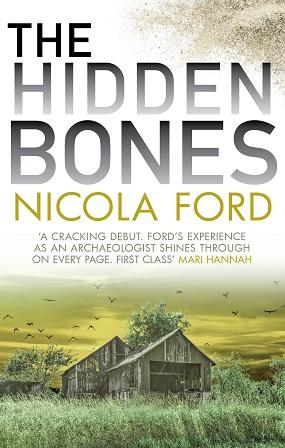 Clare Hills is an archaeologist who is struggling to hold her life together after the death of her husband. Her grief at his passing is tempered by the fact that he has left her virtually penniless. When she is invited by her former tutor, Dr David Barbrook, to help explore and archive the papers of Gerald Hart, she welcomes the chance to use her expertise. Hart was a gentleman archaeologist whose Palladian villa, Hungerbourne Manor, was the centre of his life’s work – investigating the Hungerbourne Barrows. The Bronze Age burial sites were Hart’s obsession, but whatever secrets they held, he seems to have taken them with him to his grave.
 I have many guilty pleasures, and one of them is being a sucker for a crime novel where the landscape plays a vital part in the plot. My two particular favourite writers in this regard are Phil Rickman and Jim Kelly, but with this excellent debut novel, Nicola Ford (right) has elbowed herself into their company.


 Detectives come in all nationalities these days. Anya Lipska in her Kiszka and Kershaw series has explored the Polish angle, while one of the most formidable female operators in fiction, Victoria Iphigenia Warshawski is, of course Polish on her father’s side. Now, Hania Allen (left) introduces us to DS Dania Gorska, described as “a stranger in a foreign land.” Crime however is multi-lingual and knows no national boundaries, and Gorska is assigned to the Police Scotland Specialist Crime Division in Dundee, on the banks of the River Tay. The Polish-born police officer becomes involved in the investigation of a bizarre series of killings which seem connected to a druidic cult.The Polish Detective is
  This international military thriller also has a Polish connection. A despotic Russian president has built a devastating new weapon, and its first strike is against Warsaw, via malware which destroys the country’s banking system. As the rest of Europe’s financial world goes into a fatal tailspin, the President of The United States has to meet fire with fire, and she calls in flying ace Brad McLanahan and his deadly Scion team to thwart the ambitions of the megalomaniac Gennady Gryzslov. Price of Duty, by Dale Brown (right) was previously published in hardback and Kindle, but will be available as a Corsair paperback


 I was working in Australia when Peter Weir’s 1975 film Picnic At Hanging Rock premiered. I remember pub and dinner party talk for months after being dominated by interpretations and explanations about what might have happened to the ‘lost girls’. In the endpapers of Last Time I Lied American author Riley Sager, (left) acknowledges his debt to this film (and the short story on which it was based). Instead of a 1900 Melbourne, Sager beams us into up-country New York State in, more or less, our times.
 Emma’s summer idyll is destined to come to an abrupt and tragic end, however, when the three older girls in the cabin disappear one night, never to return. Despite the massive search and rescue operation, Vivian, Natalie and Allison remain missing, and Franny is forced to close the camp in disarray.


